
After eight months of rigorous regulatory scrutiny, the U.S. Department of Justice has given unconditional approval to Paramount Skydance’s $111 billion acquisition of Warner Bros. Discovery, a landmark media combination that reshapes the landscape of Hollywood and global streaming while drawing sharp criticism over potential political influence and antitrust harm. The department’s Antitrust Division concluded the tie-up would not undermine competition or harm U.S. consumers, even suggesting it could bolster competitive pressures in an increasingly crowded media space. The greenlight marks a defining victory for David Ellison, CEO of Paramount, whose father Larry Ellison—billionaire co-founder of Oracle and a close personal ally of former President Donald Trump—provided the bulk of the financing to seal the deal. The approval capped a contentious months-long bidding process that pitted Paramount against streaming giant Netflix, with Ellison’s personal financial guarantee ultimately winning over Warner Bros. Discovery’s board of directors after Netflix withdrew from the contest. Even as the federal government signed off, the merger faces significant remaining hurdles on multiple fronts. A coalition of 10 U.S. states, led by California, is preparing to file an antitrust lawsuit as soon as this month, with California Attorney General Rob Bonta confirming this week that the acquisition remains an active investigation. European Union regulators are also conducting their own parallel review of the combination, adding another layer of regulatory uncertainty. Critics of the merger have raised two core sets of objections. On one side, a group of Senate Democrats led by Senator Elizabeth Warren raised alarms that the deal could be tainted by political favoritism and corruption, calling on the Justice Department to base its decision solely on law and factual evidence rather than outside influence. On the other side, the Hollywood creative community has broadly opposed the combination, with hundreds of actors and directors signing an open letter warning the merger will further reduce production output in an industry already reeling from years of aggressive consolidation and widespread cost-cutting. The Justice Department directly rejected these industry concerns, stating that the evidence compiled during its eight-month review did not support claims that the merger would reduce media content production. The origin of the mega-deal stretches back to 2023, when Netflix and Paramount launched competing bids to acquire Warner Bros. Discovery and its vast, highly valuable catalog of classic film and television content. Many Hollywood stakeholders initially backed Netflix as a more favorable alternative to Paramount, but Paramount’s steadily rising offer—backed by the Ellison family’s deep financial resources—eventually pushed Netflix to abandon its bid, clearing the way for Paramount to lock up the board’s support. Once completed, the combined entity will control an unparalleled portfolio of media assets, including global news outlet CNN, Warner Bros. Pictures, one of Hollywood’s largest film studios, and the popular HBO Max streaming platform, creating a new media giant poised to compete with the largest streaming and entertainment companies in the world.
分类: business
-

Warner Bros $111bn sale to Paramount approved by US Justice Department
In a major turning point for the global media and entertainment landscape, the U.S. Department of Justice has granted formal approval to Paramount Skydance’s $111 billion acquisition of Warner Bros Discovery, clearing a critical regulatory hurdle that paves the way for one of the largest media mergers in Hollywood history. The green light allows the proposed takeover of the major Hollywood studio—home to leading media properties including global news outlet CNN and premium streaming platform HBO—to move forward after months of regulatory review.
This high-stakes merger has been mired in controversy from its earliest stages, drawing scrutiny on multiple fronts. Early on, Paramount Skydance engaged in a high-profile bidding war with streaming giant Netflix for control of Warner Bros Discovery, while industry observers and policymakers have raised repeated alarms about the growing concentration of power in the entertainment sector. Political scrutiny has also centered on David Ellison, CEO of Paramount Skydance and son of billionaire tech entrepreneur Larry Ellison, a prominent donor to former President and 2024 presidential candidate Donald Trump.
Despite the federal approval, the merger is far from finalized. Multiple state attorneys general, led by California’s top law enforcement official Rob Bonta, are currently conducting independent reviews of the deal, and legal action to block the transaction remains a distinct possibility. Back in late February, Bonta publicly stated that he feared a takeover of Warner Bros Discovery would accelerate industry consolidation and erode competitive conditions in the U.S. entertainment market. Earlier this June, the attorney general confirmed he was on the cusp of a decision on whether to file formal litigation to stop the merger, and his office declined to provide any additional comment when contacted by reporters last Friday.
Opposition to the deal has also spread widely across the creative community in Hollywood. Back in April, more than 1,400 A-list actors, award-winning directors and established filmmakers signed an open letter publicly condemning the proposed merger. The signatories argued that the combined entity would squeeze independent creators out of the market, eliminate thousands of jobs across the film and television production ecosystem, drive up content distribution costs for consumers, and drastically reduce the range of programming choices available to audiences across the United States and around the globe. As state regulators wrap up their reviews, the future of the transformative media merger hangs in the balance, with implications that will reshape the entertainment industry for decades to come.
-
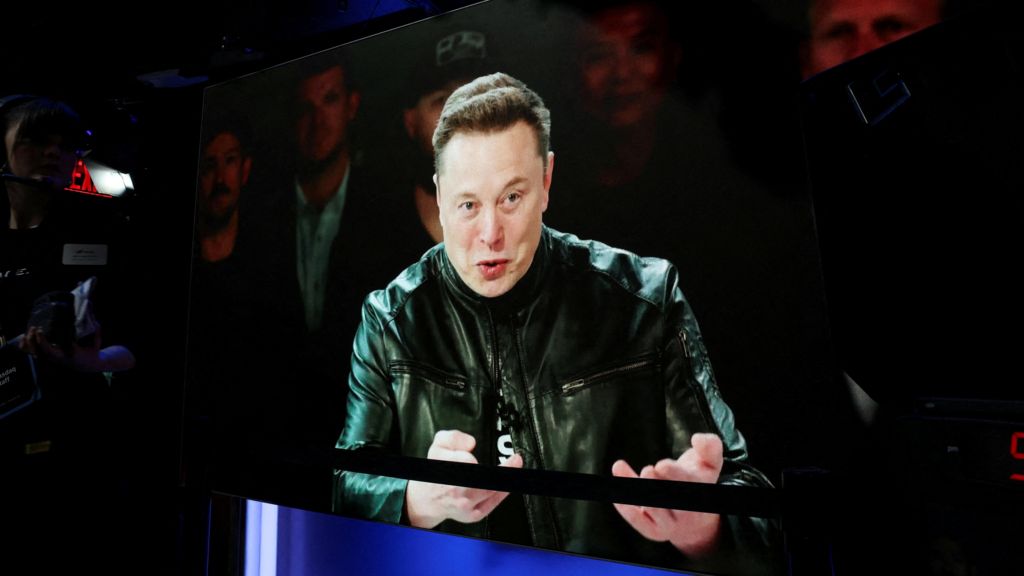
Elon Musk becomes world’s first trillionaire as SpaceX soars in stock market debut
On a historic Friday that reshaped global business and inequality dynamics, Elon Musk crossed an unprecedented financial threshold to become the world’s first trillionaire, driven by a roaring market debut of his aerospace and artificial intelligence firm SpaceX that went down as the largest initial public offering in stock market history.
SpaceX opened trading on the New York-based Nasdaq exchange with a total market valuation of $2.2 trillion, after pricing its initial shares at $135 apiece. Buoyed by overwhelming investor enthusiasm for Musk, the commercial space sector, and emerging AI, opening trades jumped to $150 per share, and the price briefly peaked at $176.50 before closing the session at $160.95. The blockbuster IPO raised $75 billion in fresh capital for the company, which earmarked the funds to accelerate development of reusable rocket technology and advance its artificial intelligence projects.
Musk’s 42% ownership stake in SpaceX alone closed the day valued at roughly $884 billion, when combined with his 12% stake in electric vehicle manufacturer Tesla, his total net worth pushed just over the $1 trillion mark, cementing his position as the world’s wealthiest individual by a wide margin. For context, Musk’s on-paper net worth is roughly equivalent to the entire annual gross domestic product of European nations Poland and Switzerland.
This unprecedented milestone for a private individual immediately ignited fierce global debate over skyrocketing wealth concentration. High-profile progressive U.S. politicians Bernie Sanders and Elizabeth Warren were quick to condemn the development, with Warren arguing that Musk’s new trillionaire status should serve as a urgent ‘wake up call’ that reinforces the urgent need for targeted wealth taxation on the world’s ultra-wealthy.
It is important to note that Musk’s new status is based on the valuation of his equity holdings, not liquid cash reserves, and he is bound by a lock-up agreement that bars him from selling any of his SpaceX shares for at least 12 months. Beyond Musk, the IPO has delivered life-changing windfalls for more than 4,400 current and former SpaceX employees, who received company equity as part of their compensation packages and are now set to become millionaires from the listing.
The historic listing also renewed public scrutiny of Musk’s increasingly high-profile political engagements in recent months. Musk, who currently leads U.S. President Donald Trump’s Department for Government Efficiency (DOGE), oversaw the shutdown of the U.S. Agency for International Development (USAID) as part of the department’s cost-cutting agenda. Researchers publishing in *The Lancet* medical journal have warned that the cuts to USAID could lead to more than 14 million additional preventable deaths globally by 2030. He has also had repeated public clashes with UK Prime Minister Keir Starmer, most recently over the murder of 18-year-old British student Henry Nowak. He has also drawn sharp criticism for his stances on immigration policy from governments on both sides of the Atlantic.
Unlike many established public companies, SpaceX’s $2.2 trillion valuation is rooted overwhelmingly in investor optimism about its long-term future potential rather than proven consistent profitability. Recent regulatory financial filings show the company has recorded cumulative losses of more than $9 billion across 2025 and the first half of 2026, driven by massive upfront spending on AI development, rocket infrastructure, and other capital projects. The company did not provide a clear timeline for when it expects to turn a profit in its pre-IPO filings with the U.S. Securities and Exchange Commission (SEC).
Today, SpaceX already operates a leading commercial rocket launch business, manages the growing Starlink satellite internet constellation, and owns xAI, the artificial intelligence firm behind the controversial chatbot Grok. Its long-term ambitions outlined in its IPO prospectus far exceed its current operations: the company states its core mission is ‘To build the systems and technologies necessary to make life multiplanetary, to understand the true nature of the universe and to extend the light of consciousness to the stars.’ Musk has long publicly championed the goal of colonizing Mars and has also floated plans to build cloud data centers in orbit.
Ahead of the Nasdaq listing, protesters gathered in New York’s Times Square to demonstrate against Musk and the company, echoing widespread public criticism of his wealth and political actions. Market analysts hold mixed views on the company’s post-IPO trajectory. Susannah Streeter, chief investment strategist at asset manager Wealth Club, noted that the outsized jump in share price reflects how deeply investors have bought into Musk’s ambitious long-term vision. ‘He has long been reaching for the stars with his extra-terrestrial ambitions, and it appears plenty of investors share his enthusiasm for the future,’ Streeter said. However, she also warned that Friday’s rally is ‘being driven as much by hype and scarcity as fundamentals.’
Industry observers have also raised concerns about unintended exposure to SpaceX’s expected volatility for ordinary savers. Many pension funds and retail savings products invest in broad market index funds that automatically include shares of the largest public companies, meaning millions of ordinary savers will be exposed to any future swings in SpaceX’s share price. Samuel Kerr, who leads equity capital markets research for Mergermarket, emphasized that the real test for SpaceX will not be its first-day trading performance but its ability to sustain its valuation over the long term. ‘The question on SpaceX is less about the immediate trading after IPO,’ Kerr said. ‘It’s more about how the price holds over the longer term.’
-

Is China really deflating deflation? It’s harder than Beijing thinks
Amid growing optimism that China has turned the page on its 2025 deflation crisis, new analysis warns the foundations of this recovery remain fragile, drawing stark parallels to Japan’s 30-year battle with entrenched deflationary pressures that continues to hobble growth today.
Official data from May shows China’s consumer price index climbing 1.2% year-on-year, while producer prices surged 3.9% driven by rising input costs for energy, semiconductors and industrial metals. Many economists have pointed to this uptick as the clearest evidence yet that the deflationary era is ending, giving way to a period of controlled reflation. But experts warn that surface-level inflation readings do not address deep structural imbalances that have kept deflationary sentiment alive, just as they did in Japan starting in the 1990s.
Two critical structural reforms stand between Beijing and a durable end to weak price pressures, neither of which the Chinese government has pursued with urgent action. The first is resolving the ongoing deep-seated housing market crisis, which increasingly mirrors the bad-loan spiral that dragged down Japan’s economy starting in the 1990s. With roughly 70% of Chinese household wealth tied directly to real estate, stabilizing property markets across the country’s 70 largest cities is a non-negotiable prerequisite to reviving consumer spending and sustaining annual GDP growth between 4.5% and 5%, analysts note. The second priority is building a robust, nationwide social safety net that would allow China’s 1.4 billion citizens to feel secure enough to increase consumption instead of maintaining high precautionary savings.
Japan’s decades-long experience serves as a critical cautionary tale for Chinese policymakers. Even as the Bank of Japan (BOJ) prepares to raise its benchmark interest rate to 1% next week – the farthest it has moved from the zero lower bound in more than 30 years – deep deflationary undercurrents still persist across the Japanese economy.
On paper, Japan appears to have finally escaped its decades-long low-price trap: the BOJ projects full-year 2026 inflation will hit 2.8%, a reading that seems to confirm reflation is taking hold. But beneath the headline data, real wage growth remains negative, with earnings consistently lagging rising prices, and weakening domestic demand as a direct result. This has created a slow-burn stagflation dynamic, and Tokyo has still failed to implement the structural reforms needed to close the gap between rising living costs and stagnant household incomes.
“For the Japanese economy to fully break free from its long-standing deflationary mindset, it’s imperative for the government and the central bank to align, articulate their risk assessments, maintain honest and transparent dialogue with financial markets, and resolutely execute bold, long-term growth investments,” said Toshihiro Nagahama, chief economist at the Dai-ichi Life Research Institute.
Nagahama argues that today’s global economy is being shaped by an unusually dense web of overlapping shocks: the ongoing war in Ukraine, widespread volatility across the Middle East, and historic turning points in central bank monetary policy across major advanced economies. The connecting thread across these shifts is clear: geopolitical developments are now driving global economic outcomes, rather than the reverse. With the potential for expanded conflict in Iran creating major uncertainty, Nagahama warns that governments cannot anchor economic strategies to optimistic best-case scenarios. Instead, they must plan for worst-case risks, including the possibility of multi-year disruptions to shipping through the Strait of Hormuz, a critical energy chokepoint whose closure would reshape global energy trade flows and inflation dynamics for years to come.
“While these shifts present a formidable trial for Japan, they also represent a historic opportunity,” Nagahama notes. “As the country sheds its decades-long deflationary mindset and restores nominal growth, these external shocks serve as a critical test for fully escaping the paradigm of contracting equilibrium.”
Yet Japan may not get the sweeping policy rethink it needs to escape this trap. Prime Minister Sanae Takaichi’s economic framework still relies heavily on the ultralow interest rates and weak yen policy that Tokyo has leaned on for nearly 30 years. That is why next week’s widely expected rate hike to 1% has already sparked pushback from Japanese political leaders who prefer the comfort of decades-old monetary policy over painful structural reform.
The timing of the BOJ’s June 16 rate-setting meeting is awkward: it will proceed without Governor Kazuo Ueda, who has been hospitalized with a liver infection. Even so, Nomura economist Mari Iwashita notes that Ueda’s absence is unlikely to change the final outcome of the vote. Still, Takaichi’s administration has publicly pressured the BOJ to hold off on tightening. Last year, she even dismissed the idea of rate hikes as “stupid,” despite growing evidence that Japan’s 27-year experiment with near-zero interest rates has backfired. Her government is the 14th Japanese administration since the late 1990s to double down on a weak-yen strategy designed to boost exports and lift headline GDP.
Far from reviving entrepreneurial and business confidence across Japan, this approach has dulled risk-taking incentives. Decades of near-free money reduced the urgency for policymakers to boost national competitiveness and for corporate leaders to pursue innovation, restructuring and calculated risk-taking. That long-running complacency is visible today: Japanese industry is watching uneasily as Chinese EV maker BYD upends the global electric vehicle market and Chinese AI firm DeepSeek reshapes the global artificial intelligence landscape – the same kind of disruptive innovation Japanese companies dominated back in the 1980s.
Since taking office in October, Takaichi has shown little interest in breaking from this long-standing script. Her “Sanaenomics” agenda is essentially a continuation of former Prime Minister Shinzo Abe’s Abenomics framework, built on the same reliance on ultralow rates and a deliberately undervalued yen. The core problem with this approach is that Japan’s current inflation is not the healthy, demand-driven growth that policymakers once hoped for. It is fueled by high import costs for energy, food and other essential goods – classic cost-push inflation, not the demand-led price gains that signal rising household and business confidence. In short, it is unhealthy inflation that erodes living standards rather than reflecting broad-based growth.
A strikingly similar dynamic is now unfolding in China. The gap between surging producer price inflation and muted consumer price growth is the widest it has been since June 2022. This divergence indicates that Chinese manufacturers are still struggling to pass higher input costs on to end consumers, leaving corporate profit margins under intense pressure. If this margin squeeze persists, it could have severe consequences for wage growth across the world’s second-largest $20 trillion economy, undermining household spending and weakening Beijing’s narrative of a successful end to deflation.
This trajectory explains why Eurasia Group CEO Ian Bremmer began 2026 warning that “China’s deflation trap” would not disappear as easily as many optimistic analysts predict. Bremmer argues that Chinese leader Xi Jinping continues to prioritize political control and technological supremacy over the consumption stimulus and structural reforms that could break the deflationary cycle. “Beijing has the means to prevent a full-blown crisis, but living standards will deteriorate, the fallout will spread abroad, and the world’s second-largest economy will remain stuck in a trap of its own making,” Bremmer said.
Five consecutive years of falling home prices have created “household wealth destruction on par with America’s 2008 crash, except it’s still accelerating,” Bremmer added. “Consumer confidence, investment, and domestic demand have cratered with it. Beijing bet big that high-tech manufacturing would fill the gap left by a contracting property sector. Instead, state-driven investment has created massive overcapacity, and weak domestic demand means there aren’t enough buyers to absorb the excess production.”
One clear outcome of Beijing’s policy priorities is that too many Chinese firms are competing for a shrinking pool of domestic demand, forcing widespread price cuts to stay in business. “Margins collapse, forcing even well-run firms to cut wages and jobs to stay afloat,” Bremmer notes. “Workers spend less. Demand weakens further, so firms cut prices again. Meanwhile, debts grow harder to service with each turn of the cycle. Banks and local governments keep zombie firms alive — rolling over loans, protecting local champions — which keeps overcapacity entrenched.”
Former U.S. President Donald Trump’s 2025 tariffs on Chinese goods made the situation even worse, closing off a critical export market and forcing Chinese firms to choose between cutting prices to find new buyers outside the U.S. or absorbing the extra costs of transshipping goods through third countries to access American consumers. Either choice further squeezes corporate margins, and today more than a quarter of all listed Chinese firms are unprofitable, the highest share in 25 years, creating a self-reinforcing debt-deflation cycle, Bremmer concludes.
The core takeaway from decades of Japanese experience and current Chinese trends is that deflationary pressures can persist long after headline inflation turns positive, quietly eroding consumer and business confidence over time. This dynamic is why global markets are increasingly pricing in the possibility of monetary easing from the People’s Bank of China (PBOC) in the coming months – a move that would likely weaken the yuan and widen China’s already large trade surplus.
As Council on Foreign Relations economist Brad Setser puts it: “Of course, no one explicitly says they would welcome a bigger surplus. But if an international institution’s policy advice is monetary easing — to fight deflation — and fiscal consolidation because of off-balance-sheet risks, plus more exchange-rate flexibility, it is effectively advocating for the country to export its way out of its domestic troubles.”
Beijing has so far been reluctant to allow sharp yuan depreciation, for three key strategic reasons. A stable or slowly appreciating currency reduces the risk of offshore debt defaults among heavily indebted Chinese property developers. It also supports Xi’s long-term ambition to position the yuan as a credible alternative reserve currency to the U.S. dollar. Finally, it helps manage trade tensions with the second Trump White House, which remains highly sensitive to any policy that appears to give Chinese exporters an unfair competitive advantage.
Regardless of how 2026 unfolds for the Chinese economy, hopes that Xi’s administration has successfully defeated deflation could be heading for a sharp correction. Japan’s decades-long experience proves that even when headline economic data suggests reflation is gaining traction, the deeply entrenched deflationary mindset among households and businesses is extremely difficult to reverse.
-

Iran war is straining African airlines, industry body warns
NAIROBI, KENYA – The ongoing conflict in Iran has triggered a sharp upward swing in global jet fuel prices, amplifying existing supply chain pressures across African aviation and pushing regional carriers to re-evaluate their route networks. The crisis has laid bare a dangerous overreliance on imported refined jet fuel that leaves the continent’s airlines exposed to sudden global market shocks, according to the African Airlines Association (AFRAA).
Long before the outbreak of the Iran war, African carriers already faced a steep cost disadvantage: AFRAA data shows they paid roughly 17% more for jet fuel than the global average. This new wave of price hikes has squeezed already razor-thin profit margins across the entire sector, putting significant strain on carrier balance sheets.
“The impact is dire, a major shock for all our members,” AFRAA Secretary-General Abderahmane Berthe told the Associated Press in an interview. “Fuel makes up between 30% and 40% of an airline’s total operating costs. Any price increase hits their bottom line immediately.”
The entire global aviation industry has turned its attention to the Strait of Hormuz, the critical global energy chokepoint that carried roughly one-fifth of the world’s total oil and refined fuel shipments before Iran effectively closed the waterway to commercial shipping when the war began in February. For African airlines, the fallout from this closure is far more severe than for carriers in other regions, due to longstanding structural weaknesses: higher baseline procurement costs and far smaller financial buffers to absorb unexpected market shocks.
Berthe explained that while some airlines have introduced limited fuel surcharges to offset costs, most cannot pass the full brunt of price increases on to passengers for fear of crashing travel demand. Instead, they are forced to absorb the extra costs directly, eating into already limited profits.
Supply disruptions have also sparked urgent concern at key African aviation hubs, including Nairobi in Kenya and Addis Ababa in Ethiopia, where consistent, reliable jet fuel access is non-negotiable for both regional and long-haul international operations. To adapt, a number of carriers have already begun restructuring their route networks: cutting flight frequencies, pausing service on low-demand routes, and reworking their entire schedules to mitigate rising costs and fuel supply uncertainty.
The ongoing crisis has reignited longstanding calls for African nations to invest in expanding domestic petroleum refining capacity, to cut the continent’s heavy dependence on imported refined jet fuel. “We need African solutions to African problems,” Berthe emphasized. “Many African countries are major crude oil producers, yet we still rely entirely on non-African suppliers for the refined jet fuel our aviation sector needs to operate.”
Attention is increasingly shifting to large-scale regional projects already in operation that could ease this dependency, most notably Nigeria’s giant Dangote Refinery. The facility is projected to become a major supplier of refined fuel across the continent, including to key aviation hubs in Kenya, Ethiopia, and South Africa. Already, major hubs like Addis Ababa have begun sourcing fuel from Dangote to stabilize supplies, a shift that Berthe says is already helping ease pressure on regional fuel supply chains amid the current crisis.
Even amid these mounting pressures, demand for air travel across Africa remains robust. AFRAA projects annual passenger growth of roughly 6% for African carriers in coming years, a growth rate that outpaces many mature global aviation markets. Still, Berthe warned that prolonged market shocks from the Iran war could cause lasting damage to both airline profitability and cross-continental connectivity.
“If this crisis drags on, the impact on African airlines will be very severe,” he said. “If Africa wants a truly resilient, sustainable aviation sector, it must secure its own fuel future.”
-

Elon Musk gets public trading of SpaceX underway from Texas
SpaceX, the aerospace manufacturer and space transportation firm founded by billionaire entrepreneur Elon Musk, has officially kicked off its public trading journey from a base in Texas, marking one of the most anticipated milestones in the history of corporate public offerings. In comments released alongside the launch, Musk opened up about the company’s humble origins, revealing that when he first established SpaceX decades ago, he personally estimated that the venture had less than a 10 percent probability of ever achieving meaningful success. Against all early projections, the aerospace trailblazer has evolved from a risky startup experiment into a global industry leader, and its impending public listing is set to become the largest initial public offering in corporate history. The launch of public trading from Texas underscores the company’s deep roots in the U.S. southern space corridor, a region that has become a central hub for SpaceX’s launch operations and long-term strategic development. For years, SpaceX has disrupted the global space industry, delivering groundbreaking advancements in reusable rocket technology, securing billions in NASA and commercial contracts, and advancing ambitious projects including the Starlink satellite internet constellation and the Starship development program targeted at deep space exploration missions to Mars. The transition to public ownership opens a new chapter for the company, allowing outside investors to take a stake in Musk’s long-term interplanetary vision while bringing unprecedented capital to accelerate its expanding portfolio of projects.
-
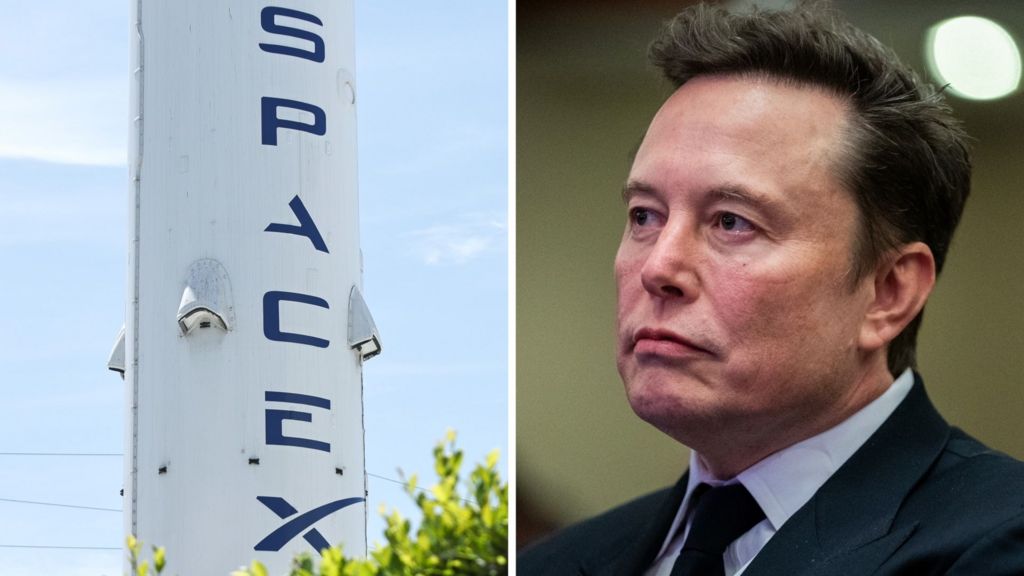
Watch: Three things to know about SpaceX’s stock market debut
SpaceX, the Elon Musk-founded aerospace and space exploration giant, is on the cusp of one of the most anticipated initial public offerings in recent market history. The BBC’s global business correspondent Samira Hussain has broken down the most critical details that investors and industry observers need to understand ahead of this landmark market entry. This IPO is far more than just another corporate listing: it represents a coming-of-age moment for the commercial space industry, which has evolved from a niche government-dependent sector to a multi-billion dollar private market attracting widespread investor interest. Hussain’s breakdown clarifies three core areas that shape expectations for the offering: the company’s unique market position, the risks and opportunities facing potential shareholders, and what the debut signals for the future of private space innovation. As one of the most valuable private startups in the world, SpaceX’s transition to a publicly traded company has been years in the making, with its existing portfolio of revolutionary projects — from satellite internet through Starlink to NASA crewed missions to the International Space Station — already redefining what private companies can achieve in low Earth orbit and beyond. Hussain’s explanatory analysis cuts through the hype surrounding the IPO, giving audiences a clear, accessible breakdown of the factors that will define the success of this historic stock market debut.
-
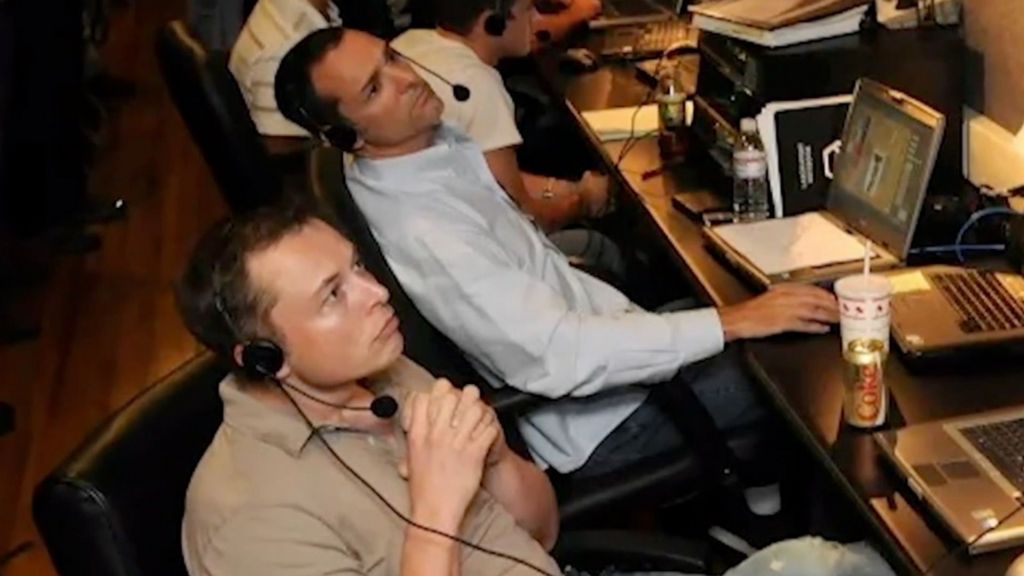
‘I was employee number one’: SpaceX co-founder reacts to firm’s market debut
Twenty-two years after stepping away from a legacy aerospace career to help launch a radical new space venture, Tom Mueller, SpaceX’s very first hire and co-founder alongside tech entrepreneur Elon Musk, has opened up about his experiences as the company prepares for a high-stakes public market debut. In an exclusive interview with BBC correspondent Michelle Fleury, Mueller, who built the company’s first rocket engines from scratch in a cramped Los Angeles warehouse, recalled the early days of the startup when few industry insiders believed a private company could challenge established government-led space programs.
As the driving force behind SpaceX’s groundbreaking Merlin and Raptor rocket engine designs, Mueller witnessed every milestone of the company’s transformation: from the early failed launch attempts that nearly sank the venture to the historic first reusable rocket landings that revolutionized space access. Now, as the company moves toward its public listing that is projected to value SpaceX at well over $100 billion, Mueller shared his perspective on how the small team of passionate engineers grew into the world’s leading commercial space enterprise. The long-awaited market debut is expected to reshape the private space industry, unlocking billions in new capital for SpaceX’s ambitious projects including the Starlink satellite internet constellation and the NASA-led Artemis program’s lunar landing mission. Mueller’s reflections offer a rare insider look at the origins of a company that has redefined what private enterprise can achieve in space exploration.
-

Beijing reins in Alibaba, JD.com over destructive 618 price cuts
In the lead-up to China’s annual high-stakes 618 mid-year shopping festival, shares of the country’s largest e-commerce firms dropped sharply on Thursday, after Beijing’s top municipal market regulator summoned five major online platforms to address allegations of deceptive and unfair promotional practices.
Leading the sell-off, Alibaba’s Hong Kong-listed stock fell 5.4% to close at HK$107.40 (US$13.8), while rival JD.com declined 2.9% to HK$108.9. PDD Holdings, the parent company of domestic platform Pinduoduo and global shopping app Temu, also recorded losses during early trading on the Nasdaq exchange.
The Beijing Municipal Administration for Market Regulation named the five platforms under investigation as Taobao (owned by Alibaba), JD.com, Pinduoduo, Douyin and Xiaohongshu, citing multiple confirmed violations: misleading promotional claims, opaque operating rules, and inadequate disclosure of third-party seller information. The action marks the latest step in a months-long nationwide campaign to curb what Chinese regulators describe as cutthroat “rat race” competition that erodes fair market conditions.
Regulators specifically flagged that many platforms failed to post the full terms of subsidy and consumer voucher campaigns in visible locations for shoppers. In multiple cases, platforms did not disclose how much total funding was allocated for promotions, or how costs were split between platforms and participating merchants. “Platforms must shift from competing on subsidies and prices to competing on innovation and service,” the administration stated in its public notice. Pinduoduo was additionally cited for including unilateral clauses in its business terms that shielded the platform from legal liability in product quality disputes, a practice that violates mandatory Chinese consumer protection regulations.
The regulator has ordered all five platforms to immediately revise their 618 promotional rules to meet compliance standards, and confirmed ongoing monitoring of the platforms’ activities throughout the shopping event. This most recent summons is not an isolated action: regulators first gathered 17 major e-commerce platforms on May 25 to outline a full set of prohibited practices ahead of 618, and launched the first wave of the crackdown back in March, when 12 major platforms including Ctrip, Meituan, Douyin and Kuaishou were summoned over earlier violations.
Regulators have outlined five core prohibitions for this year’s 618 event: no irrational, oversized subsidy campaigns; no false or exaggerated advertising; no platform clauses that unilaterally shift all consumer dispute liability to third-party merchants; no unsolicited commercial messaging to consumers; and no failure to clearly post refund and cancellation policies for travel and accommodation bookings.
During the March crackdown, investigators uncovered multiple harmful practices that shifted the entire cost of promotional pricing onto merchants. Taobao Flash Buy was singled out for enrolling food and beverage merchants into discount campaigns without their explicit consent, and cutting listed product prices without notifying sellers. In one documented case, a merchant’s mutton skewer and stuffed pancake set, originally priced at 19.8 yuan (US$2.74), left the merchant with just 2.58 yuan in revenue per order after platform-imposed discounts. A second merchant saw its 18-yuan order of dumplings repriced to leave just 1.25 yuan per sale, a figure far below the cost of ingredients.
Online travel giant Ctrip was also found to have violated fair trade rules, penalizing hotels with traffic restrictions and demanding full commission for bookings that were not actually facilitated by the platform. For example, the platform classified guest extensions of stays arranged directly at a hotel front desk, or re-bookings made through other channels after cancellation, as “customer diversion” and penalized properties accordingly. Regulators ordered Ctrip to remove a proprietary price-tracking tool that monitored hotel rates across all sales channels and forced properties to match the lowest available price, a practice that squeezed merchant profit margins.
This regulatory crackdown comes one day after the National Bureau of Statistics released May consumer inflation data that fell short of market expectations. China’s consumer price index rose 1.2% year-on-year in May, matching April’s growth rate but below analyst forecasts of 1.3%. Month-over-month, CPI dropped 0.1%, a sharp reversal from the 0.3% gain recorded in April. Weak inflation data has added to broader concerns over soft domestic consumption, with total retail sales of consumer goods growing just 1.9% year-on-year in the first four months of 2026, a steep drop from 4.7% growth in the same period of 2025. While online retail of physical goods recorded 5.7% year-on-year growth over the same period, outpacing overall retail expansion, the broader economic trend points to a slow-building deflationary spiral that Chinese policymakers have struggled to counter.
Many industry observers and commentators have framed the regulatory crackdown as a necessary correction to a harmful market dynamic. A Xinjiang-based columnist writing under the pen name A Wen argued that public perceptions of platform subsidies as acts of corporate generosity are deeply misplaced. “Their subsidies are not generosity, but a tool for market domination,” he explained. “Platforms use them to strong-arm merchants into compliance and to lock consumers into habits that translate into long-term control. The money is never simply a platform’s to spend as it pleases. Behind every subsidy campaign is traffic manipulation, rule-setting and the financial survival of merchants.”
He added that the industry’s obsession with low prices as the only metric of success has dragged the entire sector into a race to the bottom: “Platforms subsidize a little, merchants concede a little, consumers feel they got a deal. But no one actually profits. Established brands get squeezed into generic products, generic products get undercut by street-stall goods, and street-stall goods give way to counterfeits. The entire supply chain ends up competing on who can hold out the longest.” He described the ongoing subsidy war as a classic prisoner’s dilemma, where no single platform dares to stop offering deep cuts even as all players recognize the downward spiral is unsustainable. He noted that the current regulatory intervention is not just a warning, but a necessary step to draw a clear line between legitimate competition and destructive market attrition.
However, some market analysts have warned that curbing aggressive discounting could carry unintended economic consequences. Consumers who have grown accustomed to deeply discounted online prices may choose to reduce overall spending rather than shift to higher-priced, higher-quality products, they argue. A pullback in online sales would further weaken China’s overall retail growth, which has already slowed sharply in recent quarters.
The crackdown comes against a long backdrop of shifting Chinese consumer policy. After ending nearly three years of nationwide Covid-19 lockdowns in late 2022 and fully reopening the economy in 2023, China saw a 7.2% rebound in total retail sales that year, but growth has slowed steadily since. In 2024, the State Council launched a national trade-in subsidy program to encourage consumers to replace old smartphones, home appliances and automobiles, offering a 15% rebate capped at 500 yuan per eligible item. The program has been credited with supporting retail growth of 3.5% in 2024 and 3.7% in 2025, and has been extended through 2026, even as consumer confidence remains fragile amid soft household income growth.
-

SpaceX IPO set for liftoff in record market debut
As the opening bell rings at New York’s Nasdaq exchange in Times Square on Friday, one of the most anticipated and largest initial public offerings in Wall Street history is set to get underway: Elon Musk’s SpaceX is making its public debut, a milestone that redefines the boundaries of private sector ambition and billionaire wealth.
On Thursday, SpaceX filed documentation with U.S. market regulators confirming its pricing of more than 555 million shares at $135 apiece. The valuation lands just under $1.8 trillion, catapulting the aerospace and technology conglomerate into the top 10 of the largest publicly traded companies on Wall Street—surpassing the current market capitalizations of Tesla, Meta Platforms, and Walmart. The primary share offering alone is projected to raise more than $75 billion, smashing the previous IPO record set by Saudi Aramco’s $29.4 billion 2019 debut. If underwriters exercise options for an additional 83 million shares, total proceeds could climb above $86 billion, a figure unmatched in the history of public markets.
Founded by Musk as a small rocket startup in 2002, SpaceX has expanded far beyond its original mission of interplanetary exploration. Today, it operates the world’s largest commercial satellite constellation through Starlink, functions as a primary launch provider for NASA and commercial missions, and has absorbed Musk’s artificial intelligence firm xAI—along with the social media platform X, formerly known as Twitter. Trading under the ticker symbol “SPCX”, SpaceX leads the wave of major AI-focused companies preparing to enter public markets, beating competitors OpenAI and Anthropic, both of which have only recently filed initial regulatory documentation for their own planned offerings.
The record-breaking listing comes just over one year after Musk stepped back from his role in former President Donald Trump’s administration, where he led the controversial “DOGE” initiative aimed at slashing federal government spending while holding onto his CEO positions at both Tesla and SpaceX. In recent years, Musk has transformed from a broadly celebrated technology innovator into one of the world’s most polarizing public figures: his open support for Trump and right-wing populist movements across Europe, paired with a long history of incendiary statements on X, has drawn widespread criticism and public pushback.
Even amid this controversy, investor enthusiasm for the IPO has been unprecedented. Bloomberg reports that the offering was more than four times oversubscribed, with strong demand from both institutional and retail investors—who have been allocated 20 percent of the available shares. The IPO is expected to create thousands of new millionaires and multiple new billionaires, as current and former employees, as well as early backers from the company’s 23-year history, prepare to cash out a portion of their long-held stakes. If the debut performs as expected, Musk will become the first person in recorded history to hold a net worth exceeding $1 trillion, a milestone that would push his fortune to nearly three times that of the world’s second-richest person, Google co-founder Larry Page. Entering Friday’s trading session, Musk’s current net worth already stands at $782 billion, per Forbes’ real-time billionaire rankings.
Not all observers have welcomed the historic offering, however. Oxfam America senior director of economic justice Nabil Ahmed argued that a trillion-dollar fortune held by a single individual is incompatible with both an equitable economy and a functional healthy democracy. On the eve of the listing, activist protesters positioned a giant inflatable of Musk outside Nasdaq’s headquarters to draw attention to concerns that xAI’s Grok chatbot can be used to generate non-consensual deepfake sexual imagery.
Wall Street analysts also remain divided over the sustainability of SpaceX’s near-$1.8 trillion valuation. The company’s ambitious growth projections rely on Musk delivering on a slate of science fiction-level promises that require unproven technology, including placing data centers in low-Earth orbit and establishing permanent human settlements on Mars. Much of the company’s long-term value is also tied to the massive expansion of Starlink satellite internet and the growth of xAI’s Grok chatbot, which has so far failed to gain significant market traction against competitors like OpenAI’s ChatGPT. While SpaceX grew rapidly to $18.7 billion in revenue in 2025, it also posted a net loss of $4.9 billion for the year, driven largely by massive capital spending to expand AI computing capacity. In its public filing, SpaceX projects it could eventually generate more than $28.5 trillion in cumulative revenue across its operating segments—a prediction that has left many market observers skeptical.
As markets open on Friday, all eyes are on Wall Street’s reaction to the offering, which will set a precedent for the wave of big tech and AI IPOs expected to follow in the coming months.