分类: business

  • 2026 NY auto show features latest cars and EVs

    2026 NY auto show features latest cars and EVs

    The 2026 New York International Auto Show opened its media preview day Wednesday at Manhattan’s Javits Center, bringing together automakers from every corner of the globe to unveil their latest production models and concept vehicles, with electric mobility taking center stage across the exhibition floor. The show will open to the general public from April 3 through 12, launching at a pivotal moment for the U.S. automotive market: following the expiration of the federal $7,500 EV tax credit, consumer demand for electric vehicles has slowed, creating unprecedented headwinds for domestic and international brands alike.

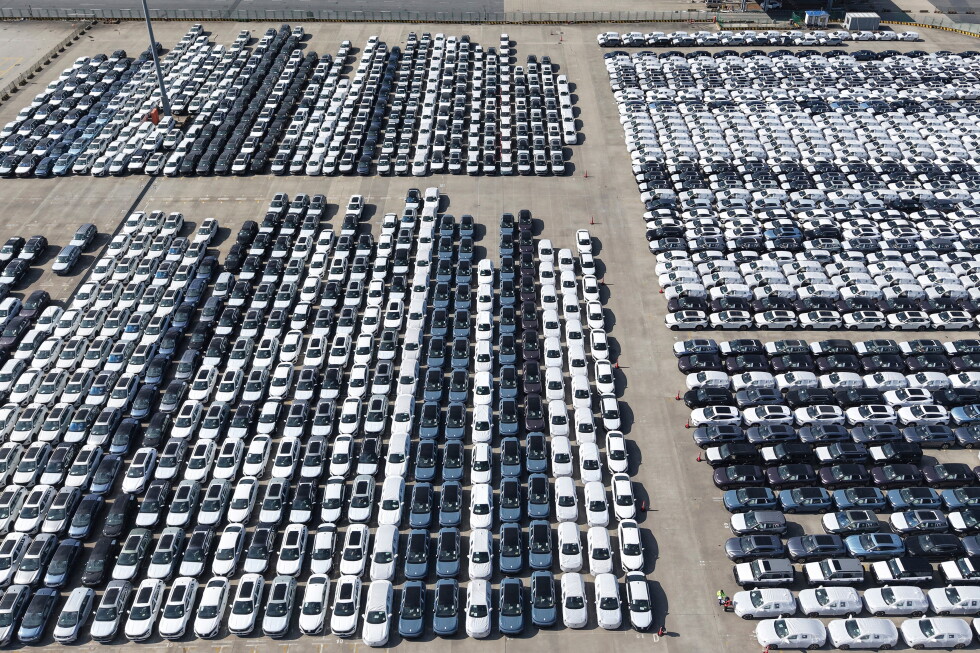
    Despite these near-term market challenges, a growing consensus among attendees acknowledges the expanding global influence of Chinese electric vehicle manufacturers, with many industry leaders arguing that open competition benefits both innovation and end consumers. Jens Sverdrup, chairman and chief commercial officer of Denmark-based luxury hypercar maker Zenvo Automotive, used the show to debut his brand’s $3 million Aurora hybrid sportscar, and offered unfiltered praise for the quality and competitiveness of Chinese-built EVs in comments to China Daily.

    “We see plenty of Chinese brands operating in Europe, and they’re really, really good,” Sverdrup said. “Every time I see a BYD, I’m impressed by the build quality and performance. Chinese manufacturers definitely have a head start when it comes to production efficiency and scalable technology.” Sverdrup, whose company exports at least 60% of its output to the U.S. market — with additional sales across Europe, Japan, Singapore and Hong Kong — pushed back against protectionist policies targeting Chinese automakers, arguing that open competition drives progress across the entire industry.

    “Instead of hiding behind protectionism, we should embrace competition and work to build better products,” Sverdrup added. “Chinese EVs are great cars, there is nothing wrong with them. When it comes to technology, build quality, and affordable pricing, there is a lot that the rest of the world has to catch up on. Open competition benefits consumers above all else — at the end of the day, the best product should win.”

    Current U.S. trade policy for Chinese EVs remains in flux following recent shifts in political leadership. Former President Joe Biden implemented a 100% tariff on Chinese-made electric vehicles in 2024, a move widely interpreted as a barrier to limit Chinese brands’ access to the U.S. market. While Chinese EVs held minimal market share in the U.S. before the tariff hike, the new duties paired with evolving federal restrictions on connected vehicle technology have effectively blocked most potential expansion by Chinese brands. The current administration under President Donald Trump has signaled a potential shift: in a January speech at the Detroit Economic Club, Trump stated he would allow Chinese automakers to enter the U.S. market over the next two years, provided they manufacture vehicles in American factories using domestic labor.

    Established global brands with existing trans-Pacific operations emphasized the importance of open, mutually beneficial market access at the show. Mike Levine, North America product communications director for Ford Motor Co., noted that Ford China, headquartered in Shanghai, has become a core part of the company’s global footprint. “China is a very important overseas market for us,” Levine said, adding that the company used the 2026 show to celebrate a major milestone: 30 years of the Ford Expedition full-size SUV. To mark the occasion, Ford unveiled the 2027 Expedition 30th Anniversary Appearance Package, finished in a one-of-a-kind blue ember paint sourced from the Ford Mustang line. Since the nameplate launched in 1996, Ford has sold nearly 3 million Expeditions globally.

    South Korean automaker Hyundai also marked a major anniversary at the show, celebrating 40 years of operations in the U.S. market while unveiling its new Hyundai Boulder Concept, a rugged off-road-focused SUV built for adventure-oriented consumers. Hyundai North America president and CEO Jose Munoz highlighted the company’s deep U.S. investment commitments as a core driver of its long-term success, pointing to the $26 billion the company has poured into the U.S. market, which supports 570,000 direct domestic jobs with an additional 25,000 new jobs on the way. “For the entire industry right now, the biggest priority is rebuilding consumer confidence,” Munoz said. “We’re backing that confidence with massive investment, 58 new models for the U.S. market — 36 for our Hyundai line, 22 for Genesis — that give consumers unmatched choice and value.”

    Beyond industry showcases, the 2026 show also drew automotive and entertainment figures. Korean-American actor and lifelong car enthusiast Sung Kang, best known for his role as Han Lue in the *Fast & Furious* film franchise, appeared at the show to promote his upcoming independent film *Drifter* — a car-centric project he wrote, directed, and starred in that is set for theatrical release in the coming months. A panel of U.S. automotive industry experts also called on federal policymakers to create more consistent, stable regulatory and trade policy to support long-term growth of the U.S. auto sector, with multiple attendees agreeing that global participation from all major manufacturing nations makes the entire international automotive ecosystem stronger.

  • Trump Fed pick Warsh eyes a ‘family fight’ shakeup

    Trump Fed pick Warsh eyes a ‘family fight’ shakeup

    When former U.S. President Donald Trump named Kevin Warsh as his pick for Federal Reserve Chair on January 30, 2026, global financial markets immediately zeroed in on one prevailing question: Would the long-time inflation hawk retain his tough stance on price growth, or would he bend to the president’s long-standing demand for lower benchmark interest rates?

    But two New York University economists argue that this widespread focus misses the bigger, underdiscussed story. Drawing on decades of peer-reviewed research on central banking practice and an extensive 2023 interview with Warsh conducted for an upcoming book on the Federal Reserve, the pair argue that the most transformative change under Warsh’s leadership would not be shifts in interest rate levels, but an overhaul of how the Fed conducts internal deliberations and communicates its policy decisions to the public.

    The 2023 interview revealed two core throughlines in Warsh’s thinking on central banking. The first, a long-stated commitment to anchoring price stability, aligned with market expectations. The second, however, offered surprising insight into his policy priorities: a deep desire to reimagine the Fed’s current framework for internal policy debate and public communication.

    During the conversation, Warsh shared a formative anecdote from 2006, when he was first nominated to the Fed’s Board of Governors and sought guidance from legendary former Fed Chair Paul Volcker. Volcker’s first instruction was to set interest rates “about right” — a phrase Warsh says acknowledges the unavoidable reality that policymakers can never calculate the exact optimal policy rate with perfect precision, given the complexity of the U.S. economy.

    But Volcker shared a second, far more important lesson that has stayed with Warsh: Always project confidence and intentionality in the Fed’s actions. For Warsh, this framing underscores a core truth of modern central banking: setting policy is only half the job; the other half is framing outcomes as the product of rigorous, thoughtful deliberation to maintain public and market confidence.

    Warsh has long advocated for what he calls the “family fight” model of monetary policymaking: robust, unfiltered disagreement among committee members behind closed doors, followed by a unified public message once a final decision is reached. He pointed to the 2007-2009 financial crisis under then-Chair Ben Bernanke as a successful example of this approach: heated debates unfolded in the chair’s office until the Federal Open Market Committee (FOMC) reached a consensus, after which all members spoke with one cohesive voice to markets. For large, systemically important institutions — particularly during periods of economic crisis — projecting a unified public stance is non-negotiable, Warsh argues.

    This framework shaped Warsh’s 2014 policy review for the Bank of England, where he recommended that policy meetings open with unrecorded, off-the-record discussion to enable this type of open debate. His core concern is that the current norm of releasing full meeting transcripts years after the fact changes how policymakers speak: when officials know their words will eventually face public scrutiny, they tend to hedge their positions and avoid blunt, honest takes rather than sharing unvarnished perspectives. This dynamic, he argues, weakens the quality of decision-making by discouraging genuine debate.

    Warsh’s stance represents a sharp break from the Fed’s 30-year trajectory toward greater transparency, a shift that policymakers have framed as critical to reducing market uncertainty, anchoring economic expectations, and improving policy effectiveness. The shift began in 1994 under then-Chair Alan Greenspan, when the Fed first started publicly announcing its interest rate decisions — a major break from decades prior, when markets were forced to infer policy shifts from the Fed’s open market operations. Bernanke expanded this transparency push after the 2008 crisis, introducing quarterly press conferences, forward guidance on future interest rate moves, and the publication of FOMC members’ interest rate projections, widely known as the “dot plot.” Subsequent chairs Janet Yellen and Jerome Powell retained this framework, with Powell holding a press conference after every FOMC meeting and working to replace cryptic “Fed speak” with clear, accessible language. Today, the Fed is far more transparent than at any point in its history, regularly explaining both its decisions and its interpretation of broader economic trends.

    Warsh, however, remains deeply skeptical of this push for ever-greater transparency. In the 2023 interview, he argued that publishing individual policymakers’ projections encourages a “troubling convergence of views” that stifles genuine, productive disagreement within the FOMC. In his view, short-term economic forecasts offer limited practical benefit while subtly biasing how officials think about future policy, locking in consensus before new data can shift perspectives.

    His critique extends to all forms of expansive central bank communication. He argues that oversharing policy intentions makes it harder for policymakers to adjust course when economic conditions change, noting that extensive pre-commitment to a policy path erodes a central banker’s “ability to change his mind.” For Warsh, a central bank that cannot adapt its position when new information emerges cannot be considered credible — and credibility, he argues, comes from adaptability, not rigid consistency, a stance that would put widely used tools like the dot plot into question.

    The debate over Fed communication carries far more weight than many observers recognize, because modern financial markets respond just as much to central bank signals as they do to actual policy actions. Investors do not wait for rate changes to adjust their portfolios; they rebalance holdings based on expectations of future Fed moves. Proponents of current transparency practices argue forward guidance and published projections reduce volatility by helping markets anticipate policy shifts.

    A shift toward Warsh’s model would not inherently push interest rates higher or lower, but it would almost certainly make policy less predictable — even though the unified public stance he favors would offset some of that uncertainty. Markets would likely become more sensitive to incoming economic data, as fewer explicit signals about the Fed’s long-term intentions would be available to price in.

    These impacts stretch far beyond Wall Street trading floors. Mortgage rates, corporate investment plans, and business hiring decisions all rely on expectations of future borrowing costs. The current framework of clear communication stabilizes these expectations, while a shift toward greater policymaker discretion would give the Fed more flexibility to respond to unexpected economic shocks.

    Based on his 2023 comments, Warsh’s priority would be to trade some of that current predictability for greater policy adaptability. Under his leadership, the public would likely receive less explicit guidance about where policy is heading, but policy could adjust faster when economic conditions shift.

    The authors note that they cannot predict whether Warsh would push for lower rates or stick to Volcker’s mantra of getting policy “about right.” But Warsh’s own public and private comments make clear that his first priority would be reshaping how the Fed debates, signals, and defends its policy decisions — and in modern central banking, changing how the Fed communicates can ultimately change the very nature of policy itself.

  • South Africa gets ready for battery production

    South Africa gets ready for battery production

    Against a backdrop of surging global demand for renewable energy storage solutions, South Africa is moving forward with plans to launch its first domestic lithium-iron phosphate (LFP) battery cell production sector, building on collaborative partnerships with experienced Chinese industry players, multiple industry and government stakeholders have confirmed.

    Regional resource endowments position southern Africa uniquely well to support the emerging battery industry, according to Irshaad Kathrada, chief executive officer of South Africa’s Localisation Support Fund, a non-governmental organization focused on local industrial development. Kathrada noted that South Africa and its regional neighbors, including mineral-rich Zimbabwe and Mozambique, hold abundant raw material reserves required for battery production. When it comes to building a competitive domestic battery sector from scratch, he added, China’s decades of scaled manufacturing experience and technological advancement make it an indispensable strategic partner.

    While South Africa boasts a large general labor force, the country currently faces a gap in specialized skilled battery manufacturing professionals, as many local technical experts have relocated abroad in recent years for better career opportunities. This means attracting overseas talent and building local skills through international collaboration will be a core priority for the sector’s development, Kathrada explained.

    Beyond meeting local renewable energy needs, the African Continental Free Trade Area (AfCFTA) agreement creates massive untapped potential to scale South African battery production for regional, European and global export markets, Kathrada emphasized. LFP battery cells, the type South Africa aims to produce, have become a dominant technology across fast-growing renewable energy segments, including electric vehicles and grid-connected renewable energy storage systems.

    A recent feasibility analysis from EY-Parthenon Africa confirms that launching a large-scale gigafactory in South Africa is a sound operational and commercial investment. Heather Orton, head of strategy and innovation at EY-Parthenon Africa, told reporters that a 5 to 10 gigawatt-hour annual capacity LFP gigafactory checks out on both technical and commercial grounds under all tested scenarios. “There is sufficient existing and projected demand across the region to support multiple local manufacturers and anchor a complete, competitive new battery value chain here over the next 10 years,” Orton said.

    Global market projections underscore the scale of the opportunity. Orton noted that the total global battery cell market is forecast to jump from 1.6 terawatt-hours in 2024 to 4.9 terawatt-hours by 2034, with total demand for battery storage in southern Africa alone expected to hit 55 gigawatt-hours over that period. She added that developing a full battery storage project typically takes up to three years from planning to operation, with roughly 12 months of that timeline allocated to securing required legislative and regulatory approvals. Beyond revenue growth, Orton stressed that building a domestic battery manufacturing sector will deliver major public benefits, including creating thousands of new local jobs and strengthening South Africa’s overall national energy security.

    South Africa’s official development finance body, the Industrial Development Corporation, stands ready to support the sector’s launch by acting as a funding catalyst, according to Kgashane Mohale, a senior industrial specialist at the agency. Mohale confirmed that South Africa remains actively open to forging partnerships with Chinese battery manufacturers that bring proven industry experience and technical capacity to the table.

    Deshan Naidoo, founder and managing director of South African renewable energy firm Afrivolt, said South Africa has a once-in-a-generation opportunity to build a competitive, export-focused battery manufacturing industry, and can draw key lessons from China’s successful sector development. China’s targeted policy support, research and development investment and industry incentives have allowed it to become the global leader in renewable energy and battery manufacturing, a position that cannot be ignored, Naidoo explained. “We need to work alongside Chinese partners to close our local skills gap, and our industry is fully ready to collaborate on this development journey,” he said. Joint projects with Chinese firms will not only bring capital and technology to South Africa, but also facilitate critical skills transfer that will build long-term local industry expertise, he added.

    Local academic institutions are also preparing to support the emerging sector. Sean Jobson, a professional engineering technologist at the University of Johannesburg, said the university is eager to collaborate with public and private stakeholders working to establish domestic battery manufacturing. The institution already has an active research program focused on battery technology and renewable energy innovation, ready to contribute to the sector’s development.

  • IndiGo names former British Airways chief Willie Walsh as CEO

    IndiGo names former British Airways chief Willie Walsh as CEO

    India’s dominant domestic air carrier IndiGo has turned to a global aviation industry stalwart to steady its operations, announcing the appointment of Willie Walsh as its incoming chief executive officer. The move comes just one month after the sudden resignation of former CEO Pieter Elbers, who stepped down from the role effective March 10, with the resignation officially framed as a personal decision. But industry observers and analysts have broadly linked Elbers’ exit to the massive operational crisis that rocked the airline just three months prior, the most severe disruption in the carrier’s 20-year operating history.

    In December 2025, the airline was forced to cancel roughly 4,500 scheduled flights, leaving thousands of passengers stranded across airports throughout India. As India’s largest airline by market share, holding approximately 60% of the country’s domestic aviation segment, the disruption had outsized impacts on Indian travelers. Many passengers missed milestone life events including weddings and funerals, and all affected travelers were forced to quickly source costly, last-minute alternative travel arrangements at a peak travel period.

    The root of the disruption traces back to new national pilot duty and rest regulations rolled out by Indian aviation authorities, designed to cut down on dangerous crew fatigue. In a post-crisis acknowledgment, IndiGo’s leadership admitted it had significantly miscalculated the number of active pilots it would need to maintain full operations after the rules went into effect. Following an investigation into the chaos, India’s civil aviation regulator imposed a $2.45 million fine on the carrier and publicly reprimanded multiple senior company leaders, including Elbers, for poor crisis management.

    After Elbers’ departure, IndiGo co-founder Rahul Bhatia stepped in to serve as interim CEO, a role he will retain until Walsh officially takes over leadership of the airline. Walsh is set to join IndiGo in August 2026, once his current term as Director General of the International Air Transport Association (IATA) concludes.

    Walsh’s 50-year career in aviation is one of steady upward progression from entry-level pilot to global industry leadership. He launched his career in the late 1970s as a cadet pilot with Irish flag carrier Aer Lingus, working his way up through flight operations roles before being named Aer Lingus CEO in 2001. He went on to take the top leadership role at British Airways in 2005, and later became the founding CEO of International Airlines Group (IAG), the parent holding company of both BA and Aer Lingus, holding that role until his retirement from the group in 2020. He stepped into the IATA director general role shortly after leaving IAG.

    In a prepared statement following his appointment, Walsh noted that the global aviation sector is undergoing a period of rapid transformation, adding that IndiGo is uniquely positioned to lead this shift in the South Asian market. IndiGo chairman Vikram Singh Mehta echoed that confidence in the new CEO, highlighting Walsh’s decades of experience leading large-scale global airline operations and navigating volatile, complex market conditions as the exact skill set needed to guide IndiGo into its next phase of strategic growth.

    Today, IndiGo operates a fleet of more than 400 aircraft, running thousands of daily domestic flights across India alongside a growing portfolio of international routes. The carrier has recently made expansion into the premium long-haul international travel segment a core strategic priority, making steady, stable leadership critical to executing that growth plan.

  • Australia’s largest wild prawn business collapses, costing 200 jobs

    Australia’s largest wild prawn business collapses, costing 200 jobs

    After decades of growth from a small family fish and chip shop to a national seafood industry leader, Australia’s largest wild-caught prawn producer Raptis and Sons Group has collapsed, sending ripples of economic uncertainty through coastal communities across the country and leaving 200 workers unemployed.

    Founded in the 1950s by Greek first-generation migrants Anna and Arthur Raptis Snr in Adelaide, the company built a sprawling fishing empire over three generations. It operated wild prawn harvests across four jurisdictions—South Australia, Western Australia, the Northern Territory and Queensland—and fin fish fisheries in waters off the NT, Queensland and New South Wales. Beyond fishing, the group owned popular seafood brands Agrios, Seaport and Ocean Pearl, ran a processing and packing facility in Brisbane, and distributed its own and third-party seafood to major national wholesale markets including the Sydney Fish Markets, as well as international buyers. Its 19-vessel fleet includes 15 boats based out of the tiny Gulf of Carpentaria town of Karumba, which has a total population of just 500 and relies heavily on Raptis’ operations to sustain its local economy.

    Appointed as administrators in March, insolvency practitioners have confirmed that all efforts to secure a buyer for the struggling business have failed. The company first launched a sale process in late 2024, drawing initial interest from multiple prospective investors, but no deal was finalized to save the business. Earlier hopes that a new buyer could inject emergency funding to allow the fleet to participate in the 2025 banana prawn season, which runs from April 1 to mid-June, have also been dashed, after negotiations for interim financing collapsed without agreement.

    Financial documents filed by administrator Ben Campbell reveal the full scale of the company’s liabilities. While Raptis holds more than $26 million in equity, it owes $35.2 million to the National Australia Bank. In total, 296 separate parties—including employees, local businesses and government agencies—are owed a collective $31.6 million. Company directors Jim Raptis and Christine Raptis are among the creditors owed $2.7 million in total. At the time of administration, the company employed 196 people: 123 full-time staff, four part-time workers and 69 casual employees, all of whom now face unemployment.

    Industry insiders and administrators point to a perfect storm of market and operational challenges that drove the business to collapse. The core triggers cited are a severe oversupply of banana prawns during the 2022/2023 season, followed by two consecutive years of lower-than-expected catch volumes, and rapidly rising operating costs that squeezed profit margins to unsustainable levels. Most notably, a national diesel shortage that followed the global energy price shock drastically increased fuel costs for the company’s fleet, adding further financial pressure.

    Veteran federal MP Bob Katter, whose electorate covers Karumba, has blamed Queensland state government policies restricting fishing licenses and the national fuel crisis for delivering the fatal blow to the historic business. He warns that the collapse is part of a broader, decades-long decline of Australia’s domestic fishing industry, driven by restrictive regulation that has already shrunk the Karumba fleet by two-thirds during his political career.

    Katter argued that environmental policies supported by green activists have gutted local fishing activity, pointing out that Australia now imports 40 percent of its seafood, a share that is projected to grow as more domestic operations close. “The fuel crisis hitting the once great fishing industry of North Queensland – soon there won’t be any left,” Katter told NewsWire. “The fuel crisis is going to kill what’s left of the fishing industry that’s been killed off by the greenies. I have said continuously we will go without fuel, and now what I am telling my fellow Australians is, ‘you will go without food’.”

    For small regional centers like Karumba, the collapse of the town’s largest employer leaves an uncertain future, with local businesses that rely on the fishing fleet now bracing for secondary economic shocks as jobs and economic activity disappear from the community.

  • Business sentiments in Japan improving despite Iran worries

    Business sentiments in Japan improving despite Iran worries

    TOKYO – The Bank of Japan’s closely watched quarterly tankan survey, published Wednesday, has delivered a fourth consecutive quarter of improving business sentiment among the nation’s large manufacturing firms. The key diffusion index, which measures the gap between companies reporting positive business conditions and those forecasting a downturn, edged up to 17 in March, up one point from the December reading.

    This modest uptick comes despite mounting global and domestic economic headwinds, fueled by the ongoing conflict in Iran that has stirred widespread anxiety over energy supply security and broader Japanese economic growth. Unlike the manufacturing sector’s gain, sentiment among large non-manufacturing businesses, spanning retail, hospitality and other service segments, held steady at 36, matching the previous survey’s reading.

    While Japan’s overall inflation rate has stayed far more muted than in many other advanced economies, upward pressure on fuel prices and a range of consumer goods has accelerated concerns across markets and households. Geopolitical uncertainty surrounding the duration of the Iran conflict and unpredictable policy signals from former U.S. President Donald Trump have added to market volatility, pushing Japan’s benchmark Nikkei 225 index into sharp swings over recent weeks.

    A depreciating yen and soaring energy costs have combined to push up living costs for ordinary Japanese consumers, leading a growing number of analysts to forecast that the Bank of Japan could move to raise interest rates at its upcoming monetary policy meeting. The central bank wrapped up years of negative interest rates, implemented to combat decades of stubborn deflation, when it normalized monetary policy in 2024. It has held its benchmark policy rate steady at 0.75% since the beginning of the year, and its next policy board gathering is scheduled for April 27-28.

    Historically, a weaker yen has been a boon for Japan’s export-led economy, which built its global reputation on high-volume shipments of automobiles and consumer electronics. When the yen depreciates, overseas earnings earned in foreign currencies translate back to larger yen denominated profits for exporting firms. But in recent decades, Japan’s economic dynamics have shifted dramatically: as a resource-poor nation, Japan now imports nearly all of its energy needs, along with large volumes of food and critical manufacturing components. A weak yen now raises import costs sharply, eroding household purchasing power and cutting into corporate margins for import-dependent firms. The U.S. dollar has continued its rapid ascent against the yen in recent trading sessions, amplifying these inflationary pressures.

  • Asia stocks jump after Trump suggests Iran war could end in weeks

    Asia stocks jump after Trump suggests Iran war could end in weeks

    Global financial markets reacted with a sharp surge in Asian equities during Wednesday’s early trading session, driven by an unexpected announcement from former U.S. President Donald Trump that American military forces will complete their withdrawal from Iran within two to three weeks — regardless of whether a diplomatic agreement is reached with Tehran’s government.

    In early morning trading, Japan’s benchmark Nikkei 225 index climbed by nearly 4 percentage points, while South Korea’s primary Kospi index jumped more than 6%. Despite this significant upward movement, both major regional indexes remain below their pre-conflict levels, prior to the outbreak of the Iran war on February 28.

    While equities gained ground, oil markets continued to edge upward: June-delivery Brent Crude, the global benchmark for oil pricing, traded 1.2% higher at $105.36 per barrel, equal to approximately £79.61. This uptick follows a historic monthly surge in May-delivery Brent during March, when the contract jumped 64% — its largest one-month gain in more than three decades. That spike came after Iran threatened to block all commercial shipping through the Strait of Hormuz, a critical chokepoint that carries roughly 20% of the world’s daily oil supply.

    Speaking from the Oval Office on Tuesday, Trump told reporters that Iran is “begging to make a deal” to end the conflict, but added that reaching an agreement is “irrelevant” to the United States’ planned withdrawal timeline.

    Hours before Trump’s statement, Iranian President Masoud Pezeshkian confirmed that his administration holds the “necessary will” to reach a negotiated end to the war, but outlined that Tehran requires concrete security guarantees to prevent future cross-border aggression from resuming.

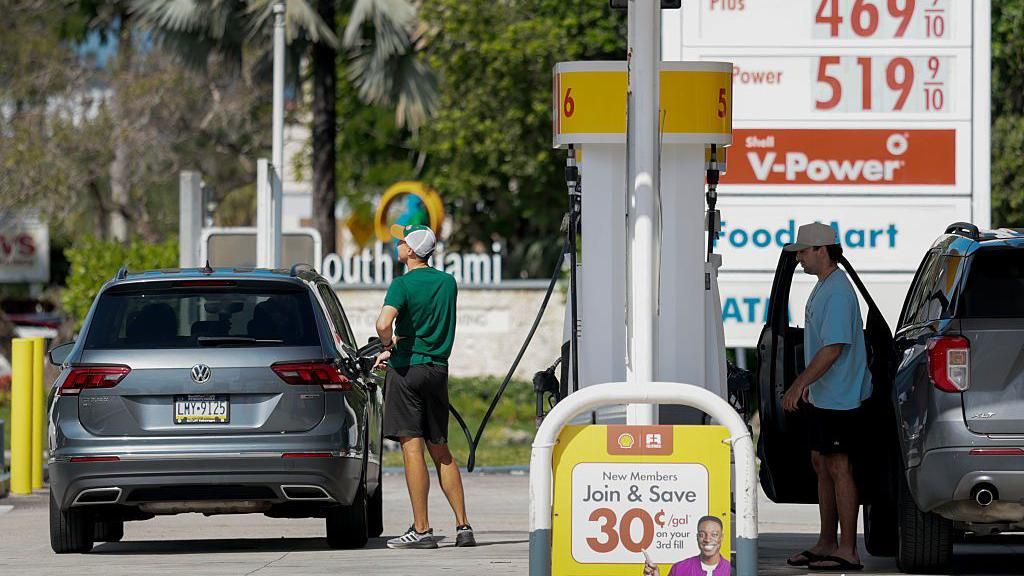
    For context, global oil pricing relies on monthly futures contracts, where buyers agree to purchase crude at a set price for future delivery. When futures prices rise, the increase is almost always passed through to consumers in the form of higher gasoline, diesel, and jet fuel prices, as oil is a core input for nearly all global transportation and manufacturing activity.

    Goh Jing Rong, an energy markets analyst at Singapore Management University, explained that the March 2025 price surge was the largest single monthly jump for Brent crude since the 1990 Gulf War, when Iraq’s invasion of Kuwait removed both countries’ production from global markets and triggered a historic energy supply shock. Goh added that the current rally is driven overwhelmingly by market fear: the threat of a full shutdown of the Strait of Hormuz has created widespread anxiety over potential global supply disruptions.

    “Prices have also been pushed up by growing concerns over rising insurance premiums for oil tankers traversing the region, and the vulnerability of other critical shipping waterways in the Middle East,” Goh added.

    In recent days, the escalation of conflict has widened after Iran-backed Houthi militants in Yemen entered the conflict, raising new fears that the group could disrupt commercial shipping through the Red Sea, another key global trade route for energy and goods.

    Ole Hansen, head of commodity strategy at Danish investment bank Saxo Bank, noted that another factor pushing prices higher is aggressive bidding from oil refiners, who are rushing to build inventory and boost production amid widespread global shortages of jet fuel and diesel. “Refiners are competing to lock in crude supplies to meet existing demand gaps, which is putting additional upward pressure on benchmark prices,” Hansen explained.

    The current conflict has hit Northeast Asian economies particularly hard: both Japan and South Korea rely heavily on imported energy from the Middle East, leaving them more exposed to supply disruptions and price spikes than most other developed economies.

  • Apartment approvals soar 191pc as Australia faces rate rises

    Apartment approvals soar 191pc as Australia faces rate rises

    Australia’s new residential construction sector saw a dramatic jump in project approvals during February, even in the face of consecutive central bank interest rate hikes, though the country continues to fall short of its ambitious national housing supply goal, new official data shows.

    New statistics released by the Australian Bureau of Statistics (ABS) reveal that total dwelling approvals climbed 29.7% month-on-month in February, hitting 19,022 projects. The strong uptick was driven almost entirely by multi-unit developments: raw data shows apartment approvals skyrocketed 191.2% to 5,398 units, marking a 29.8% annual increase compared to February 2023. Townhouse approvals also rebounded sharply, rising 73.8% to 2,981 dwellings after a 38.7% drop in January.

    Despite the monthly surge, experts warn the overall pace of new home development is still not enough to meet the targets set out in the National Housing Accord, which aims to build an extra 1 million new homes over five years to address critical national supply shortages. To hit this goal, Australia needs to approve and complete roughly 20,000 new homes every month, but long-term approval trends remain well below this benchmark.

    AMP senior economist My Bui noted that monthly approval data is notoriously volatile, so a longer-term perspective offers more accurate insight into the sector’s trajectory. Looking across a longer timeframe, annualized approval levels have held steady around 196,000 new homes per year. While this volume roughly balances demand amid the current slowdown in population growth, it falls far short of the 240,000 annual approvals needed to make up for the cumulative supply shortfall that built up during the rapid population growth of 2023 and 2024. Bui added that completion rates have also failed to pick up as projected, remaining flat rather than following the upward trend that earlier approval numbers suggested would emerge by 2025.

    Notably, February’s approval surge occurred even after the Reserve Bank of Australia (RBA) implemented a 25-basis-point cash rate hike that pushed the benchmark rate to 3.85% that month. The central bank followed with another 25-basis-point increase in March, lifting the cash rate to 4.10%, and financial markets broadly expect another rate hike when the RBA’s board meets again in May.

    Beyond project approvals, the total value of the nation’s residential development pipeline also hit a new record high in February. Total combined approval value across all construction types reached $20.43 billion, representing a 14.4% annual increase. Residential construction alone accounted for most of the growth, jumping 30.8% to an all-time high of $12.5 billion, with new home builds rising 35.9% to $11.21 billion. That growth was partially offset by a 1.2% dip in renovation and extension project approvals, which fell to $1.29 billion. Non-residential construction, including offices, retail spaces and industrial facilities, also saw a 4.4% drop in approvals to $7.93 billion, following an unusually strong performance in January.

    As the development pipeline grows, national property market data indicates the sector has hit a clear turning point in its current cycle, with rising interest rates beginning to temper the rapid home price growth seen over the past two years. New figures from property analytics firm REA Group show national median home prices rose just 0.3% in March, pushing the national median value to $908,000. While that leaves prices 9.4% higher than one year ago – a gain of roughly $94,800 for the median property – the pace of growth has slowed significantly.

    REA Group senior economist Eleanor Creagh explained that slowing price growth confirms a clear shift in market momentum, as rising borrowing costs weigh on buyer activity. “Recent rate rises will weigh on buyer sentiment, borrowing capacity, and erode already poor affordability,” she said. However, Creagh noted that persistent supply shortages are preventing prices from falling, even as interest rates rise. A resilient national labor market, ongoing population growth, and targeted support for first-time home buyers continue to keep demand strong against a backdrop of severely limited available housing stock, she added.

  • Middle East war: global economic fallout

    Middle East war: global economic fallout

    The ongoing conflict in the Middle East has triggered widespread economic disruptions across continents, reshaping energy markets, straining national energy reserves, and driving volatile swings in global financial systems in recent weeks. While diplomatic signals of a potential de-escalation have temporarily calmed market jitters, the tangible damage to critical energy infrastructure and persistent supply chain risks continue to pressure economies worldwide.

    On Wednesday, global financial markets posted sharp gains following two consecutive days of upward momentum, driven by remarks from key leaders hinting at a possible end to hostilities between Iran and Western-backed forces. U.S. former President Donald Trump indicated that the conflict could wrap up within approximately two weeks, while Iranian President Masoud Pezeshkian confirmed Tehran holds the political will to reach a ceasefire with Israel and the United States – though he emphasized the need for ironclad guarantees to prevent future outbreaks of violence. The upbeat diplomatic signals sent Asian stocks soaring: Japanese and South Korean benchmark indexes jumped in early morning trading, following a massive rally on Wall Street a day earlier that saw the blue-chip Dow Jones Industrial Average close up 2.5%, and the technology-focused Nasdaq Composite surge 3.8%. Oil prices also pulled back from recent multi-year highs on the ceasefire hopes, though benchmark crude still held firmly above the $100 per barrel threshold, underscoring persistent supply uncertainty.

    Beyond market volatility, the conflict has already inflicted permanent damage to critical regional infrastructure. Iranian state media reported this week that a major desalination plant on Qeshm Island, located near the strategically vital Strait of Hormuz – the chokepoint through which roughly 20% of global oil supplies transit daily – has been completely knocked out of service by targeted strikes. Health ministry official Mohsen Farhadi told Iran’s ISNA news agency that the facility cannot be repaired in the short term, cutting off a key source of fresh water for the island’s population. Separate reports confirmed an Iranian attack ignited a fire on the Al Salmi, a 332-meter Kuwaiti-flagged crude tanker docked at Dubai’s port. No casualties were reported, and Dubai fire crews successfully extinguished the blaze within hours, but the incident highlighted the growing risk to commercial shipping in the region.

    Geopolitical risks have also disrupted transit for global shipping operators. China’s foreign ministry announced Tuesday that three Chinese-registered vessels have successfully completed transit out of the Strait of Hormuz, with assistance from unspecified relevant parties. Tracking data confirms two container ships operated by Chinese shipping giant Cosco made the passage on Monday, though Beijing has not released any details on the identity or status of the third vessel.

    The economic fallout of the conflict is already being felt far beyond the Middle East, with consumer prices and energy policy being upended across Europe, Africa, and Asia. In the Eurozone, March inflation climbed to 2.5% – the highest reading recorded since January 2025 – driven almost entirely by skyrocketing energy costs tied to Middle East supply disruptions. According to Jean Maynier, head of global maritime analytics firm Kpler, Asian economies face the most severe impact, with the region already sliding toward a full-blown energy crisis. Maynier told Agence France-Presse that Asian nations do not hold enough domestic energy reserves to offset the gap left by disrupted Middle Eastern supplies, noting that shortages will be felt across both large emerging economies like China and smaller developing nations including the Philippines and Indonesia.

    To cope with the looming shortages, governments across the Global South have already implemented emergency energy conservation measures. Indonesia became one of the first major Asian economies to announce fuel rationing this week, alongside a mandatory work-from-home order for all civil servants, as the country moves to preserve existing energy stockpiles amid global price hikes. Jakarta has also ruled out any immediate fuel price increases, despite growing pressure on the national budget from the conflict. In East Africa, Ethiopia announced that it would prioritize fuel allocations for essential goods transport and public transit vehicles, as widespread shortages linked to the conflict grip the country. South Asia has seen even more drastic action: Sri Lanka this week announced a nearly 40% increase in electricity prices, effective Wednesday, to offset energy shortages stemming from the Middle East war. This marks the third fuel price hike the country has implemented this month, bringing total increases to more than 33%, and Sri Lanka has already moved to a four-day working week for public employees to cut overall energy consumption.

  • ASX rallies on hopes of oil crisis ending after new Trump timeline

    ASX rallies on hopes of oil crisis ending after new Trump timeline

    A fresh announcement from former U.S. President Donald Trump outlining a timeline for a U.S. military drawdown in the conflict with Iran has triggered a sharp, broad-based rally across global equity markets, lifting Australia’s benchmark ASX 200 and all major Wall Street indices as investors grew increasingly optimistic the oil market crisis could be coming to an end.

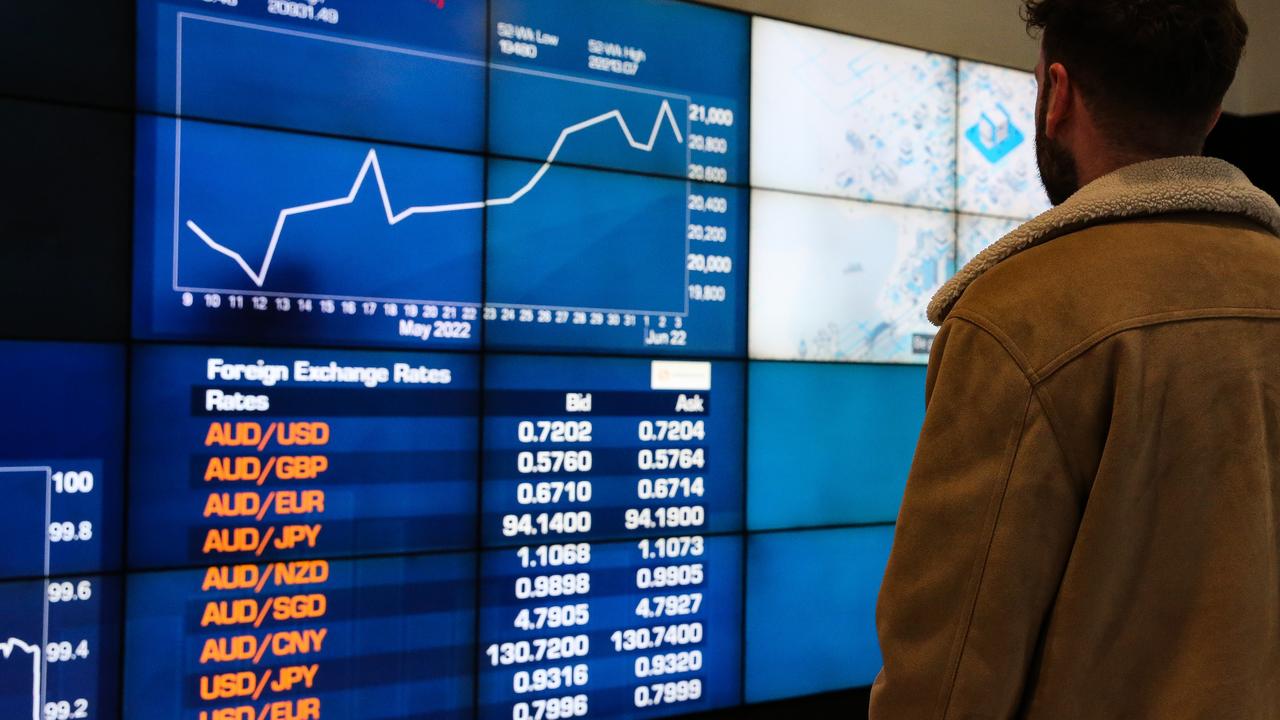
    On opening bell, ASX 200 futures jumped 137.10 points, a 1.62% gain that pushed the benchmark to 8618.90, following a powerful positive lead from U.S. markets that closed the prior trading session with steep gains. All three major Wall Street indices climbed nearly 2.5% or more on the session: the S&P 500 notched a 2.9% increase, the tech-focused Nasdaq Composite surged 3.83%, and the Dow Jones Industrial Average, a blue-chip index heavy on industrial stocks, added 2.49%.

    This market upswing comes on the heels of a brutal March for Australian equities. At Tuesday’s close, the ASX 200 had posted a 7.8% monthly drop, its worst monthly performance since June 2022. The decline was driven largely by widespread investor fears that a prolonged military conflict in the Middle East would keep energy prices elevated, with crude prices surging as much as 50% in a short window amid the tension.

    Speaking to reporters in the Oval Office overnight, Trump offered a clear timeline for de-escalation, responding to a question about when U.S. military involvement in the conflict with Iran would conclude by saying he expects American forces to withdraw within “two or three weeks”. “I think two or three weeks. We’ll leave because there’s no reason for us to do this,” Trump stated, adding “We’ll be leaving very soon.”

    Tony Sycamore, a senior market analyst at IG, noted that two key factors combined to drive the overnight market surge: fresh signals of de-escalation in the Iran conflict, and cooler-than-expected U.S. labor data that raised expectations the Federal Reserve could cut interest rates in the near term. “Starting with energy prices and the ongoing situation in the Middle East: West Texas Intermediate crude oil is set to finish the day at $US101.56, reversing from the $US106.86 high it hit earlier in the session,” Sycamore explained. “This sell-off was initially triggered by de-escalation headlines that began breaking during the Asian session yesterday, notably President Trump signalling he is willing to wind down the US military campaign against Iran.”

    The sudden shift in market sentiment underscores how closely global equity and commodity markets are tied to geopolitical risk in the Middle East, with even tentative signs of conflict de-escalation enough to reverse weeks of investor anxiety driven by surging oil prices.