TOKYO – As the first full trading week of April got underway, most Asian markets that remained open for trading posted moderate gains on Monday, with investor sentiment tightly tethered to three major destabilizing factors: the ongoing armed conflict in Iran, soaring global crude oil prices, and upcoming policy statements from former U.S. President Donald Trump.
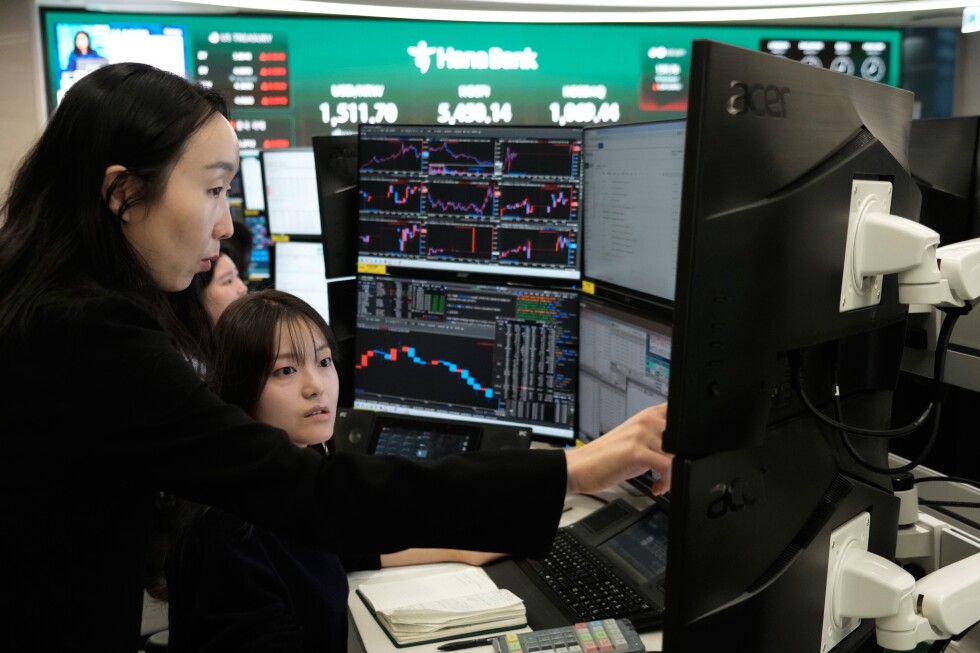
Japan’s benchmark Nikkei 225 climbed 0.7% to 53,514.39 during afternoon trading, while South Korea’s Kospi index notched a 1.4% gain to reach 5,450.33. Several major regional markets remained closed for public holidays: Australian markets were shut for Easter observance, while both Shanghai and Hong Kong exchanges suspended trading for a traditional Chinese holiday.
The core source of market anxiety stems from a growing standoff over the Strait of Hormuz, one of the world’s most critical chokepoints for global energy shipments. Trump has issued a deadline for Tuesday, threatening to strike Iran’s critical infrastructure hard if the Iranian government does not reverse its closure of the strait. As of Monday, there had been no indication that Iran would back down from its closure, keeping markets on edge.
Global energy markets have been roiled by the standoff in recent weeks, with prices surging on widespread fears that the conflict in Iran will drag on longer than initially projected. Energy markets were closed on the prior Friday, so Monday marked the first trading opportunity for many investors to price in new developments. On Monday, benchmark U.S. crude edged down 42 cents to settle at $111.12 per barrel, while Brent crude, the global pricing standard for oil, gained 64 cents to hit $109.67 per barrel.
While the United States only sources a small share of its imported oil from the Persian Gulf region, global oil pricing operates as a unified commodity market, meaning disruptions in the region ripple through to every consumer economy worldwide. Import-reliant East Asian economies are particularly exposed to the closure: resource-poor Japan, for example, imports the vast majority of its energy needs and depends heavily on unimpeded access to the Strait of Hormuz.
To offset potential supply disruptions, regional governments have already begun rolling out contingency plans. Japanese Prime Minister Sanae Takaichi told lawmakers recently that Japan would release its national oil reserves and is working to establish alternative shipping routes. South Korea’s trade ministry, meanwhile, announced plans to deploy at least five vessels to Saudi Arabia in the coming weeks to set up new oil transport pathways via the Red Sea.
“As we kick off the first full trading week of April, the word uncertainty is paramount. Last year it was centered on the impact of ‘Liberation Day’ tariffs, this year it’s uncertainty surrounding the ongoing Iranian War,” explained Jay Woods, a market analyst at Freedom Capital Markets based in New York.
U.S. stock markets were closed for Good Friday on the prior trading day and were set to reopen for regular trading on Monday. Multiple European markets also suspended trading on Friday for the Easter holiday, adding to thin trading volumes and elevated volatility across global assets.
In foreign exchange markets, the U.S. dollar posted a tiny decline against the Japanese yen, slipping to 159.56 yen from 159.63 yen in the prior trading session. The euro, meanwhile, inched up slightly to trade at $1.1523, up from $1.1517 a day earlier.