A widespread Canadian wildfire crisis has spilled beyond national borders, igniting a sharp diplomatic rift between longtime North American neighbors Canada and the United States after former President Donald Trump demanded Canada compensate the U.S. for smoke-related damages and threatened new import tariffs. The confrontation unfolded publicly Sunday, when Trump raised the issue directly to Canadian Prime Minister Mark Carney as the two attended the World Cup Final in Qatar.
Right now, more than 900 active wildfires are burning across vast swathes of Canada, having already scorched roughly 28,000 square kilometers of forest and land. The fast-moving blazes have forced thousands of residents to flee their homes, leveled entire communities, and sent thick plumes of toxic smoke drifting south across the U.S. border, blanketing major East Coast cities including Washington D.C. and New York City in hazardous air.
Trump’s latest remarks came one week after he first raised the prospect of tariffs, repeating the threat on social media Friday as smoke obscured skies across a large portion of the eastern U.S. “If we can help them, we’ll help them. But maybe they should pay some damages or something,” Trump told Carney during Sunday’s event.
Ontario Premier Doug Ford pushed back forcefully on the comments during a Monday press briefing, calling on Trump to extend emergency support to Canada, a close U.S. ally, instead of leveraging the crisis to push for trade penalties. “Why don’t you start helping us?” Ford questioned, pushing back against what he called “a bunch of rubbish” from the U.S. leader. Ford reminded Trump that Canada has repeatedly stepped in to support the U.S. during its own major natural disasters, including the 2024 Hurricane Helene and devastating California wildfires in recent years. “Maybe one day you’re going to need our help,” Ford warned.
The wildfire crisis has already inflicted severe damage across Ontario, where 1,800 residents have been evacuated from high-risk areas. Over the weekend, the Whitewater Lake First Nation community, a culturally significant gathering site for the Indigenous group centered around seasonal hunting, fishing and recreational camps, was completely destroyed by the blaze. “It was full of beaches, sand beaches, good fishing, good hunting – the wildlife was beautiful. We had eagles that were always there,” Whitewater Lake First Nation Chief Pauline Drake told CBC News Sunday. “I don’t know how the wildlife is now. That’s very concerning, because they were part of our upbringing there.”
During a visit to hard-hit Thunder Bay, Ontario over the weekend, Ford pledged the provincial government would commit unlimited resources to protect residents and respond to the crisis: “We will do and spend whatever it takes to protect people from these devastating wildfires.”
The crisis is not limited to Ontario. In western Canada’s British Columbia province, the entire city of Kimberley has been placed under a mandatory evacuation alert, putting roughly 9,000 residents on notice to prepare to leave their homes at a moment’s notice.
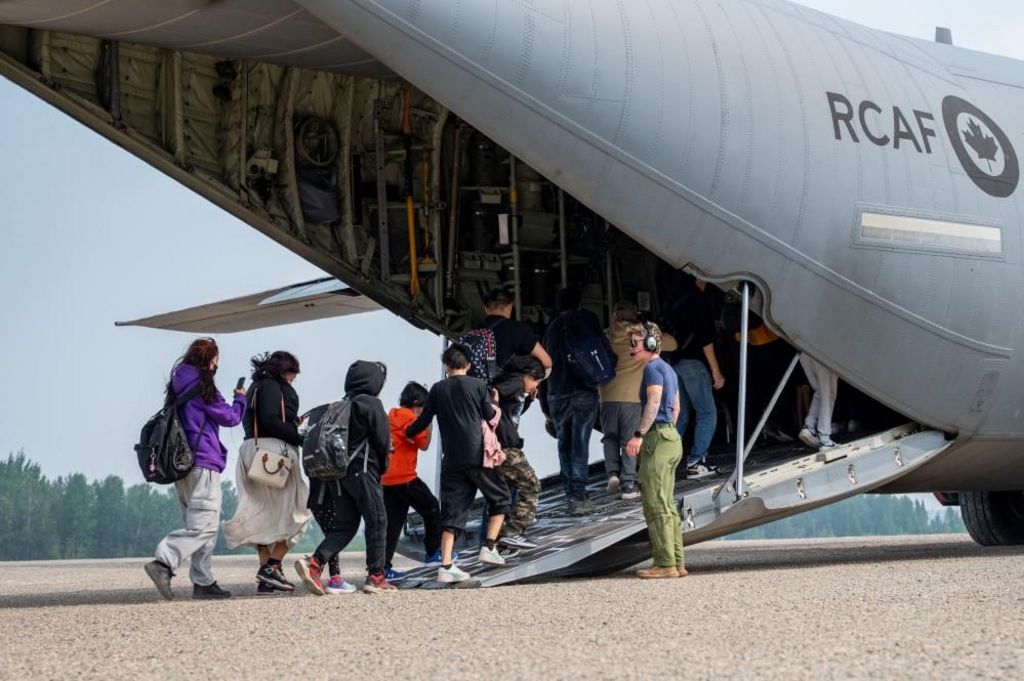
Prime Minister Carney released an official statement Sunday noting that his government had already mobilized a massive emergency response to the blazes, deploying more than 5,000 professional firefighters, nearly 300 waterbombers, helicopters and evacuation aircraft to contain and suppress the fires. “It’s an enormous, complex effort that ultimately depends on dedicated and brave individuals who work relentlessly to keep Canadians safe,” Carney said.
The cross-border smoke impacts and Trump’s aggressive rhetoric have ratcheted up existing trade and diplomatic tensions between the two nations, turning a domestic natural disaster into a pressing international issue.