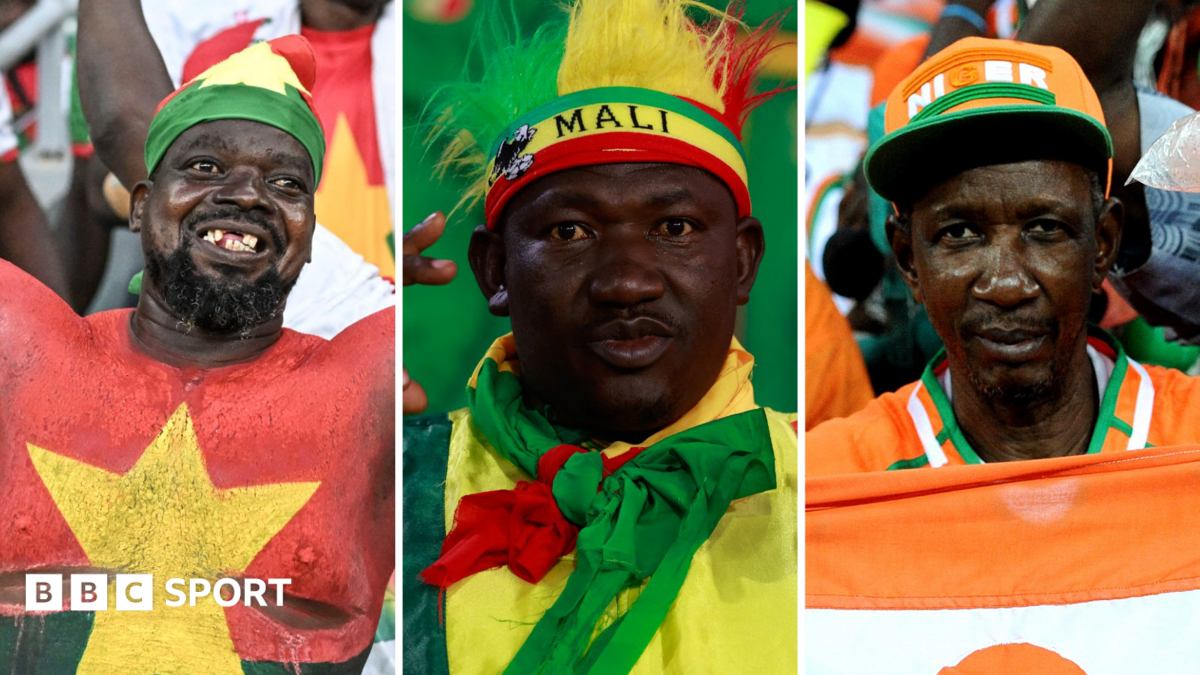
Three Sahel nations led by military-led transitional governments — Burkina Faso, Mali, and Niger — have launched a historic joint bid to host the 2032 edition of the Confederation of African Football (Caf)’s flagship continental tournament, the Africa Cup of Nations (Afcon). The announcement comes as Caf formally opened the application window for the 2028, 2032 and 2036 editions of the competition, opening the door for new and returning hosts to pitch their vision for the future of African football.
Per a statement from the Malian Football Federation (Femafoot), the three neighboring countries have centered their joint candidacy around three core pillars: cross-border solidarity, regional integration, and the long-term sustainable development of football across the African continent. The federation confirmed that it will collaborate closely with national and regional authorities to develop a “robust, credible bid” that aims to introduce a fresh, forward-thinking approach to organizing continental football’s most prestigious event.
Geographically and politically, the three candidates share deep ties beyond their shared Sahel border region. Last year, the trio formally exited the Economic Community of West African States (Ecowas), the region’s long-standing economic and political bloc, to form the Alliance of Sahel States (AES). This new alliance was designed to deepen cross-border cooperation across a range of critical sectors, including security, infrastructure development, trade, and broader economic growth. More recently, the alliance has expanded its cooperation beyond governance and security: on Tuesday, Burkina Faso’s transitional parliament approved the creation of joint regional media outlets, Daande Liptako Radio and Tafouk TV, which will serve as official platforms for the AES to share its messaging and strengthen information and communication coordination across the bloc.
Despite this coordinated push for regional integration, the three nations face significant headwinds ahead of the bid evaluation process. The entire Sahel region continues to grapple with widespread security instability, fueled by persistent insurgent attacks from armed jihadist groups operating across porous national borders. Politically, the three military-led governments have shifted away from long-standing security partnerships with Western nations and have strengthened diplomatic and military ties with Russia in recent years, creating an added layer of geopolitical complexity for Caf to navigate.
In an interview with BBC Sport Africa, Caf President Patrice Motsepe addressed key questions around the bid, including whether the continental governing body would require formal security guarantees before advancing the proposal for evaluation. Motsepe made clear that the three Sahel nations would receive equal treatment during the bidding process, noting they “will have as good a chance as everybody else” of securing hosting rights. “They are not going to be disadvantaged or prejudiced by the fact that they are military juntas, but you raise a very important point,” he added.
Motsepe acknowledged that safety and security for players, fans, and officials are non-negotiable requirements that will be thoroughly vetted as part of the evaluation process, though no final decision on the 2032 host has been reached. He also noted that Caf must “deal with reality” when evaluating bids, stressing that “of course, democracy and freedom of speech and regular elections, that’s non-negotiable. And that’s critical.” Despite the outstanding political and security questions, Motsepe confirmed he plans to travel to the three countries in the coming months to hold discussions focused specifically on their football hosting proposal.
Final hosting rights for all three upcoming Afcon editions will be determined by Caf’s executive committee, a process Motsepe emphasized aligns with the organization’s commitment to transparent, ethical governance aligned with global best practices. “There are so many presidents who think I have the power to decide that the Afcon is going to go to a certain country. I don’t want that power because part of my duty is to create a culture where Caf functions in a manner that reflects ethics and governance and transparency, but also global best practises,” he explained.
Motsepe outlined the strict standards all bidding nations must meet, regardless of their political status: “The standards are very high. We have to be convinced that there will be free movement of our fans and spectators in and out. We have to be convinced – and this applies to every country – that our fans and our guests will be safe, will be protected by the police and [there will be] good infrastructure.”
The joint bid discussion took place during a meeting between the three national football federation presidents and Motsepe in New York on Saturday, held on the sidelines of the 2026 FIFA World Cup final. Colonel-Major Djibrilla Hima Hamidou, a FIFA Council member and honorary president of Niger’s football federation, also participated in the talks.
Notably, Burkina Faso previously hosted Afcon as a sole host in 1998, and Mali followed with its own solo hosting of the tournament in 2002. By comparison, Niger has only qualified for the Afcon finals twice in its history, in 2012 and 2013, and has never hosted the continental event. If the joint bid is successful, it will mark the second time three nations co-host the tournament: the 2027 Afcon (originally scheduled for 2026) will be hosted jointly by Kenya, Tanzania and Uganda, marking the first tri-nation co-hosting in the competition’s history.
Looking ahead to the future of Afcon, the tournament will shift to a four-year cycle starting after the 2028 edition, moving away from the current two-year schedule that has been in place for decades. Motsepe also confirmed that Caf has received “exciting bids” for all three upcoming tournament cycles, and is currently evaluating a proposal to expand the final tournament field from 24 teams to 28 teams to give more African nations a chance to compete on football’s biggest continental stage.