TOKYO – A recent burst of momentum from Chinese artificial intelligence startup Moonshot AI gave a much-needed lift to China’s wobbly stock markets, with the firm’s breakthrough new model reminding global investors just how quickly Chinese technology is narrowing the gap with Silicon Valley’s leading players. This bright spot for China’s fast-growing new economy, however, is overshadowed by deep-seated troubles in the nation’s old economic order that are drawing growing global concern at a precarious moment for the Chinese Communist Party under Xi Jinping.
A years-long property sector crisis, near-record youth unemployment, strained local government balance sheets, and chronically weak consumer demand have dragged on market sentiment, prompting Beijing’s so-called “national team” of state-backed market actors to intervene once again. Following a sharp selloff in technology stocks, Xi’s inner circle has activated its standard cohort of regulatory bodies, state-backed investment funds, insurers, and asset managers to shore up market confidence. In a single Sunday of action alone, Beijing-linked funds announced nearly $8.9 billion in planned domestic stock purchases.
State-led market intervention has a well-documented history of stabilizing Shanghai share prices, with the most high-profile intervention occurring in the summer of 2015, when Chinese stocks lost one-third of their value in just a matter of weeks. That crisis triggered a whole-of-government response: waves of state capital injected into markets, trading suspensions for thousands of listed companies, a freeze on initial public offerings, and rules allowing mainland Chinese investors to pledge residential property as collateral for margin trading loans. Beijing even launched public campaigns framing domestic stock purchases as an act of national patriotism.
Since 2015, the national team has been called into action repeatedly: during the 2018 margin call crisis tied to share-pledged financing, through the 2021–2022 COVID-19 pandemic disruptions, during 2023 ETF volatility, amid fallout from former U.S. President Donald Trump’s trade tariffs, and now, as technology stocks face another wave of turbulence. This current intervention follows widespread investor jitters over inflated chip sector valuations, amplified by extreme volatility in South Korean and Taiwanese markets. So far, the government’s effort to put a price floor under equities has delivered short-term results.
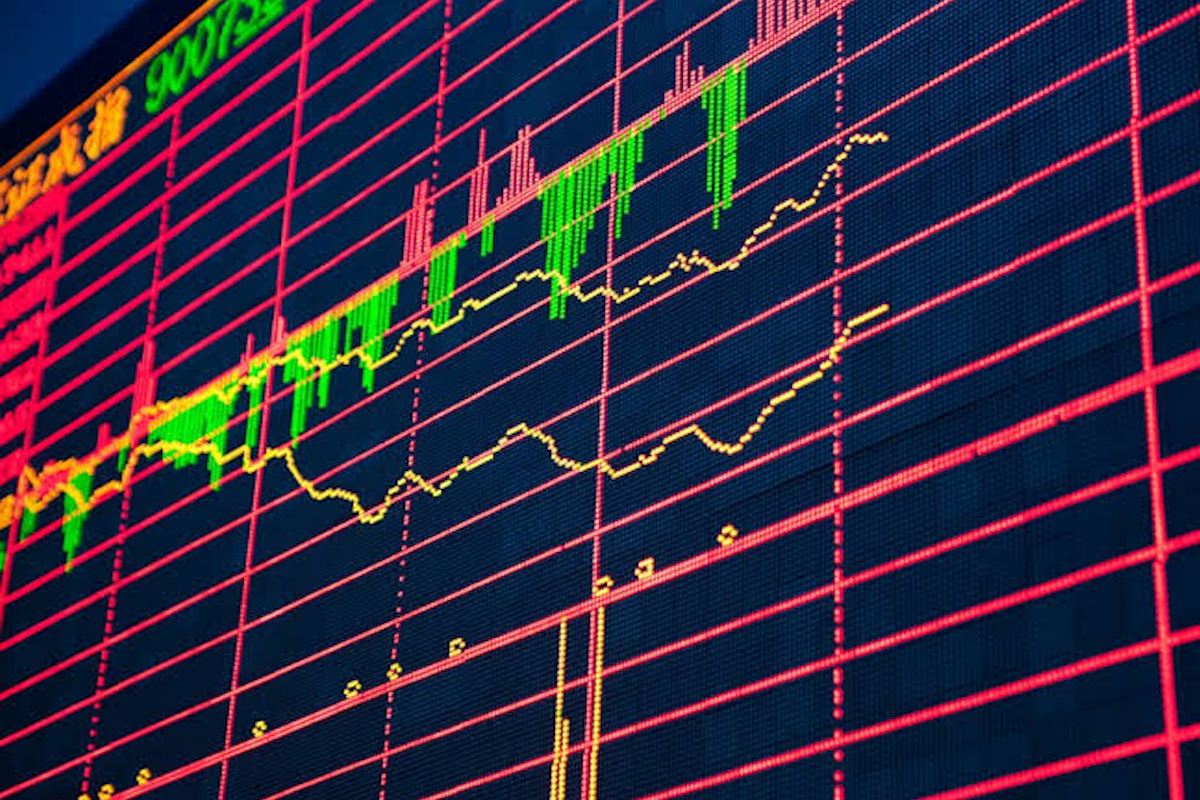
After the ChinaAMC STAR 50 ETF – China’s largest chip-focused exchange-traded fund – plummeted 17% in a week, the sharpest selloff driven by deleveraging since 2015, reported purchases by the national team calmed investor nerves. By Tuesday, coordinated buying pushed the STAR 50 Index up 11% in a single session, its biggest one-day rally in roughly two years. The benchmark Shanghai Shenzhen CSI 300 Index now stands 1.7% higher year-to-date.
“The national team’s buying of the STAR 50 ETF provided exactly that signal, prompting funds to wade back in after interpreting the move as an official vote of confidence,” Zhuang Jiapeng, a fund manager at Shenzhen-based JM Capital, told Bloomberg. It also reassured AI investors who, Zhuang says, “had been searching for any sign that policymakers were still willing to back the trade.”
Despite this short-term stabilization, analysts widely agree that these interventions only address market symptoms, not the underlying structural causes of China’s economic anxiety. “China’s national team is offering market protection, not macro repair,” said Geoffrey Yu, a strategist at BNY Mellon. “State-backed equity purchases can stabilize benchmarks and reduce downside pressure, but they don’t solve weak domestic demand or the ongoing property drag. Beijing can protect prices, but confidence still requires a stronger growth impulse.”
Even a 27% year-on-year jump in June exports, strong enough to put Beijing on track for a second consecutive annual trade surplus exceeding $1 trillion, is not enough to offset deep domestic economic strains. Analysis from Gavekal Dragonomics finds that China’s ratio of annual exports to total manufacturing sales rose to 24% in the first four months of 2026 – the highest level since the country joined the World Trade Organization in 2001. In 2019, that ratio stood at just 18.3%. Gavekal economists noted that this share “would be considered high for a small export-focused economy; for the world’s second largest economy, it’s remarkable.”
The core challenge remains that domestic headwinds are too strong for export growth to fully offset. Xu Tianchen, an economist at the Economist Intelligence Unit, expects “continued export strength, mostly driven by AI” supported by looser policy settings. “But,” he adds, “domestic demand remains a drag. Retail sales remain pretty flat and fixed asset investment was negative last month.”
Carlos Casanova, an economist at Union Bancaire Privée, points out that the 5.3% year-on-year gain in industrial production is “increasingly concentrated in high tech and semiconductor-related goods. In other words, the gap between exports and industrial output widened, suggesting that the current export-at-all-costs strategy is delivering limited spillovers to the broader economy and raising doubts about its durability.” Casanova adds that domestic demand remains “subdued,” while year-to-date fixed asset investment fell 5.7% through June, led by an 8.5% contraction in private investment. Real estate investment is down 18% year-to-date, and residential property sales have fallen 13.7%.
In short, strong exports can no longer act as a cure-all for China’s economic ills, not when persistent domestic weakness is eroding confidence among both households and businesses. The AI boom is amplifying the K-shaped divergence in China’s economy, lifting high-tech production while leaving most traditional sectors behind. Xiangrong Yu, Chief China Economist at Citigroup, notes that “the benefits of this boom, however, aren’t spreading evenly across the broader economy. Consumer confidence remains subdued, having stayed negative for more than four years.”
Households, Yu adds, “continue to save heavily, maintain large excess deposits, and show limited willingness to take on additional borrowing. Meanwhile, fading policy support and earlier stimulus effects contributed to a contraction in retail sales in May, the first decline since COVID.” Property markets, Yu says, “tell a similar story.” Conditions have improved marginally in a handful of first-tier cities that benefit from AI-related economic activity, but the national market remains broadly weak. “More generally, AI is creating pockets of strength rather than generating a broad recovery in domestic demand,” Yu explains.
This uneven pattern extends to investment trends: AI-related investment remains robust, driven by heavy spending on hyperscale data centers and digital infrastructure, while “investment in many traditional sectors faces mounting headwinds from delayed fiscal deployment, uncertainty linked to geopolitical developments, anti-involution pressures, and squeezed profit margins.”
The deeper, long-standing issue is that Beijing has continued to delay the sweeping structural reforms needed to stabilize China’s investment climate. The property crisis is now in its fifth year, generating the longest stretch of sustained deflation China has seen since the 1997 Asian financial crisis. Weak household demand and near-record youth unemployment have crushed consumer confidence, which explains why China’s 1.4 billion residents continue to save more than they spend.
Permanently beating deflation requires convincing Chinese households to put their $22 trillion in accumulated excess savings into circulation. This household savings stockpile is more than four times Japan’s annual GDP, a reference point that carries heavy weight: Japan’s decades-long period of stagnation demonstrates the high cost of delaying structural reform. The issues are deeply interconnected: roughly 70% of Chinese household wealth is tied directly to residential real estate. Analysts argue that if China’s economy were more transparent, stable, and offered households viable alternative investments to property, citizens would feel far less pressure to move capital overseas. Beijing’s current policy of limiting cross-border capital outflows does not address the root problem; what is needed is deliberate work to rebuild trust, enough to convince households to invest their savings domestically.
Beijing’s latest intervention to prop up volatile stock markets is just another short-term stopgap. Encouraging pension funds and mutual funds to increase domestic equity holdings, and prodding households to buy more shares, may support market prices through the current quarter, but it does nothing to resolve long-term weaknesses. These measures are only necessary because Beijing has moved too slowly to address the economy’s underlying structural cracks.
A major ongoing debate in global financial circles centers on whether Beijing will choose to devalue the yuan to stimulate growth. The potential benefits are clear: a weaker yuan would further boost export competitiveness, putting Beijing on track to hit 4.5% to 5% GDP growth this year. But significant downsides have so far dissuaded Xi’s administration from pursuing this path. First, a weaker yuan would make it far harder for heavily indebted property developers to service their offshore dollar bonds, increasing default risks across Asia’s largest economy – a development the Chinese Communist Party would prefer to avoid this side of 2025, after the high-profile collapse of Evergrande. Second, the monetary easing required to push the yuan lower would undo years of progress on reducing excessive leverage across China’s financial system, progress Beijing has prioritized in recent years to improve the quality of GDP growth.
As a result, Xi Jinping and Premier Li Qiang have been reluctant to allow the People’s Bank of China to pursue more aggressive monetary easing, even as deflationary pressures deepen. Many analysts argue that Beijing has proven more skilled at rhetorical commitments to reform than delivering tangible changes that would earn the trust of global investors. Too often, the article argues, Beijing has prioritized attracting foreign capital as a goal in itself, rather than first strengthening the financial system and regulatory framework to accommodate that capital sustainably.
For example, WTO accession 25 years ago reshaped the global economy to China’s advantage but did far less to rebalance China’s own growth drivers. The 2016 inclusion of the yuan in the IMF’s special drawing rights basket did not accelerate capital account liberalization or reduce capital controls as much as global observers hoped. The 2019 inclusion of A-shares in the MSCI global index did not suddenly strengthen China’s financial system, increase government transparency, improve shareholder protections, or reduce the risks posed by the country’s massive shadow banking sector.
Analysts conclude that genuinely strengthening the Chinese economy, and building a sustainable long-term stock rally backed by the national team, requires heavy lifting: curbing the outsized dominance of state-owned enterprises, expanding economic space for the private sector, and eliminating the risks of persistent bubbles in debt, credit, and asset markets. Developing deep, vibrant debt capital markets would catalyze growth across all sectors, particularly the high-tech industries that Premier Li has prioritized over the last year. Ending the regulatory uncertainty that has marked recent years, especially for internet platform companies, would also help attract more stable international capital to support China’s move up the global value chain.
This week’s stock market bounce in Shanghai may suggest investors are willing to give Beijing the benefit of the doubt for now. But analysts argue it is past time for Beijing to implement meaningful reforms to strengthen its financial system, so that stock prices rise for fundamental economic reasons, not just because of state-backed buying.