作者: admin

  • Prototype of robotic cargo vessel aces tests in space

    Prototype of robotic cargo vessel aces tests in space

    China has marked a new milestone in commercial space innovation with its Qingzhou (Light Ship) robotic cargo spacecraft prototype successfully completing a series of critical in-orbit tests, according to its developer. The Innovation Academy for Microsatellites at the Chinese Academy of Sciences, based in Shanghai, announced in an April 16 press release that after passing all initial flight control evaluations, the prototype has been maneuvered to a 600-kilometer-altitude higher orbit, where it will now enter an extended long-term operation phase to continue validating core technologies, assess long-duration operational stability, and carry out additional experimental assignments.

    Launched on March 30 from the Jiuquan Satellite Launch Center in northwestern China aboard a Kinetica 2 rocket, the 4.2-metric ton single-section prototype has delivered all satisfactory test results, the academy confirmed. A number of cutting-edge new technologies integrated into the vessel have performed far better than expected in the harsh space environment: foldable ultra-thin flexible monocrystalline silicon solar cells, which cost just one-tenth of traditional spacecraft solar cells, have operated flawlessly throughout the testing period. The newly developed air-to-space communication module has also exceeded performance expectations, achieving stable data transmission across distances of more than 450 kilometers. In addition, 3D-printed components and parts constructed from advanced new lightweight materials have maintained consistent, stable operation in orbit with no reported anomalies.

    The prototype’s standardized payload platform comes equipped with a convenient “plug-and-play” function for cargo and experimental payloads, which has already supported the testing of six separate emerging space technologies, including active vibration isolation systems and in-orbit metal manufacturing. On April 2 and 3, the Qingzhou prototype successfully completed two major mission milestones: it deployed two small secondary satellites, and conducted a series of long-distance approach and departure coordination tests with the New March 01 satellite, accumulating valuable data for future autonomous space rendezvous technologies.

    According to project researchers, data gathered from the prototype’s operation will not only provide critical technical support for the full-scale development of the operational Qingzhou cargo spacecraft fleet, but also chart a practical, cost-effective path for future low-cost commercial space activities and international space cooperation.

    Full technical specifications released by the academy show that the operational Qingzhou cargo vessel will have a total cargo stowage volume of 9 cubic meters, with a four-tier rack system featuring 40 standardized slots that can flexibly accommodate a wide range of cargo types, from daily crew supplies to large scientific experiment equipment. This modular design is tailored to meet the diverse logistical resupply needs of China’s Tiangong space station, supporting a wide range of mission requirements. To further streamline cargo operations, the Qingzhou is equipped with an intelligent onboard cargo management system that enables automatic identification, real-time tracing, and smart sorting of all stored goods. Astronauts can quickly locate required items via voice command, drastically cutting down the time spent on cargo retrieval and reducing the extra workload of crew members during their in-orbit missions.

    Prior to the development of Qingzhou, China’s only operational cargo spacecraft for Tiangong resupply missions was the larger Tianzhou series, developed and built by the China Academy of Space Technology. To date, nine Tianzhou vessels have been launched, with eight of them successfully delivering fuel, supplies, and experiment equipment to the Tiangong space station, supporting the continuous operation of China’s permanent outpost in low Earth orbit.

  • China records over 1 billion online audiovisual users, topping all other internet apps

    China records over 1 billion online audiovisual users, topping all other internet apps

    In a new industry report released this Wednesday at a national online audiovisual conference held in Chengdu, the capital of southwest China’s Sichuan province, the China Netcasting Services Association announced a major milestone for the country’s digital content sector: as of December 2025, the total number of online audiovisual users in China hit 1.099 billion, making it the most widely used internet service by user base in the country.

    The report confirms that the online audiovisual industry has maintained its position as China’s dominant digital service, demonstrating extraordinary resilience and enduring mass appeal even as competition across the country’s digital landscape continues to intensify. Beyond the user growth milestone, the report outlines robust expansion across multiple core industry metrics. In 2025, the total market size of China’s online audiovisual sector grew 5.3 percent year-over-year to reach nearly 1.29 trillion yuan, equivalent to approximately 188 billion U.S. dollars. The number of registered enterprises operating in the space has also surpassed 800,000, with micro-sized businesses accounting for 87.8 percent of all market participants, signaling a dynamic, accessible market for new and small-scale creators and operators.

    Among all online audiovisual formats, short-form video has emerged as the primary engine of the sector’s ongoing growth. It is the only major category of internet application in China that recorded simultaneous increases in total user count and daily usage rate in 2025. Notably, short video platforms have also become the main on-ramp for first-time internet users in China, with 44.6 percent of new internet users accessing the web for the first time via short video applications.

    User engagement with online audiovisual content also reached new heights last year. The report found that the average daily time spent by users viewing online audiovisual content hit 201 minutes per person. One of the fastest-growing segments is micro-dramas, short-form serialized content that has exploded in popularity, jumping in usage to rank as the second most popular audiovisual format nationwide, outpacing traditional long-form video and trailing only short-form clips.

    The report also highlighted the transformative impact of artificial intelligence on the sector, which is reshaping content creation and consumption patterns. In 2025, more than 2 billion AI-generated audio and video clips were produced in China, representing a 14-fold year-over-year increase. Surveys included in the report found that more than half of all online audiovisual users regularly consume AI-generated short video content.

    Zhou Jie, deputy secretary-general of the China Netcasting Services Association, noted that the integration of generative artificial intelligence into digital content creation has become a core growth driver for the industry. This technological fusion is unlocking untapped creative capacity and fundamentally reshaping how audiences interact with online content, he added.

  • White House says US-Iran ceasefire extension ‘not true at this moment’

    White House says US-Iran ceasefire extension ‘not true at this moment’

    WASHINGTON – In a Wednesday press briefing at the White House, Press Secretary Karoline Leavitt pushed back against recent speculation that the current US-Iran ceasefire would be extended beyond its scheduled expiration, stating that a ceasefire extension is “not true at this moment.”

    The current two-week truce, which has paused active conflict for weeks between the two sides, is scheduled to expire next week, with no current extension locked in place. Despite this lack of extension, Leavitt noted that the Trump administration remains upbeat about ongoing diplomatic efforts to reach a permanent deal that would bring the weeks-long conflict to a close. “We feel good about the prospects of a deal,” Leavitt told reporters during the briefing.

    When pressed for details on when negotiations between the United States and Iran will restart, Leavitt declined to confirm a specific timeline. She did confirm that any future talks would be held in Pakistan, where negotiations stalled over the weekend, keeping the diplomatic site consistent with earlier rounds of discussions.

    The latest remarks from the White House follow a series of comments from US President Donald Trump this week that have framed the conflict as nearing an end. On Tuesday, Trump told reporters that new US-Iran talks “could be happening over the next two days” in Pakistan. Early Wednesday, he added that the US-led conflict against Iran – conducted in partnership with Israel – is “very close to being over,” though he offered no specific, clear timeline for when a final deal would be reached or the conflict would formally end.

    The current uncertainty around the ceasefire extension comes amid broader regional tensions, with parallel diplomatic efforts ongoing between Israel and Lebanon over Hezbollah disarmament, and public divides among US political and cultural stakeholders over the terms of any potential final deal. Even as the truce approaches its expiration date, the Trump administration has signaled it continues to prioritize diplomatic resolution over a resumption of large-scale active conflict.

  • Trump says Israel, Lebanon leaders to hold talks Thursday

    Trump says Israel, Lebanon leaders to hold talks Thursday

    U.S. President Donald Trump has made an unexpected announcement claiming that the top leaders of Israel and Lebanon will hold their first ever direct conversation Thursday, a move that would mark a major breakthrough in decades of frozen relations between the two neighboring states. But as of Thursday morning, neither the Israeli nor Lebanese governments have verified the announcement, leaving the diplomatic development shrouded in uncertainty.

  • Kazakhstan sentences 19 for protest against repression in China’s Xinjiang region

    Kazakhstan sentences 19 for protest against repression in China’s Xinjiang region

    In a landmark decision that human rights advocates call an unprecedented shift in Central Asian geopolitical alignment, a Kazakh court has convicted 19 ethnic Kazakh activists who staged a protest against China’s long-running crackdown in the Xinjiang Uyghur Autonomous Region in late 2023. The ruling marks the harshest crackdown to date on voices critical of Chinese policy in the neighboring country, according to regional experts and rights watchdogs.

    The November 2023 demonstration, held near Kazakhstan’s border with China, saw the activists call for the release of a Kazakh citizen detained by Chinese authorities in Xinjiang. During the protest, participants burned Chinese national flags and portraits of Chinese leader Xi Jinping, actions that Beijing later decried as a deliberate provocation. All 19 individuals convicted are citizens of Kazakhstan.

    Court documents and local media reports confirm the sentencing: 11 of the activists received five-year prison terms on charges of “inciting discord,” while the remaining eight were handed down suspended sentences with strict movement restrictions. Shinquat Baizhan, the legal representative for the convicted group, has publicly verified these details.

    Background to the verdict stretches back to 2017, when the Chinese government launched a sweeping security campaign in Xinjiang that interned more than one million Uyghurs, Kazakhs and other Muslim-majority ethnic minority groups in mass detention camps and prisons. While Beijing claims the campaign targeted extremism and has since wound down large-scale detentions, the region remains under heavy authoritarian control, with severe constraints on religious practice, cultural expression and cross-border movement. More than one million ethnic Kazakhs reside in Xinjiang, with thousands detained and countless others separated from family members across the border in Kazakhstan.

    For Kazakhstan, a Central Asian nation of 19 million people that counts China as its largest trading and investment partner, Xinjiang policy has long been a sensitive diplomatic issue. Yalkun Uluyol, a China researcher with Human Rights Watch, explained that Kazakh authorities launched criminal probes into the protesters only after receiving a formal diplomatic protest from the Chinese consulate in Almaty, Kazakhstan’s largest commercial city. The Associated Press obtained and reviewed the diplomatic note, in which Beijing called the demonstration “an open provocation against the national dignity of the People’s Republic of China and an insult to the Chinese Communist Party and the Chinese people.”

    When contacted for comment on the verdict, China’s Ministry of Foreign Affairs framed the proceedings as an exclusive internal matter for Kazakhstan, adding that the country is a “friendly neighbor” that “understands China’s position on Xinjiang governance.” Kazakhstan’s foreign ministry declined to provide any comment on the case.

    The convicted protesters are all affiliated with Atajurt, a grassroots human rights organization that advocates for ethnic Kazakhs affected by repression in Xinjiang. The group has long operated under pressure in Kazakhstan, an authoritarian state that has little tolerance for domestic dissent. In 2019, authorities arrested Atajurt founder Serikzhan Bilash, forcing him into exile after he signed an agreement pledging to end all political activity. Until recently, however, the Kazakh government allowed limited Atajurt operations, acknowledging widespread public sympathy in the country for ethnic Kazakhs suffering persecution across the border.

    That quiet tolerance has now evaporated, Uluyol said, as Kazakhstan deepens its economic and political ties to Beijing. “This is unprecedented. It signals that Kazakhstan is willing to sacrifice freedom of its people to maintain good relations with Beijing,” he noted. Prior to this ruling, individual activists speaking out on Xinjiang had faced pressure, but rights groups confirm this is the first time such a large group of activists has been given prison sentences for their advocacy.

    Exiled Atajurt founder Bilash, now residing in the United States, warned the convictions will have far-reaching consequences for human rights documentation and support in Xinjiang. For years, the group has provided financial aid to families of detained ethnic Kazakhs, submitted testimonial evidence to the United Nations and foreign embassies, and collected hundreds of first-hand accounts from people searching for missing relatives detained in China.

    “The world will lose more than just a human rights organization; it will lose the biggest window into the humanitarian disaster in neighboring Xinjiang,” Bilash said.

  • Turkey launches internet crackdown ahead of funerals for shooting victims

    Turkey launches internet crackdown ahead of funerals for shooting victims

    Turkey has initiated a sweeping nationwide crackdown on social media content glorifying two back-to-back school shooting attacks that have shaken the nation, with authorities ordering dozens of arrests just hours before funeral services are held for the victims, most of whom are elementary school children. The two violent incidents unfolded over 48 hours this week, leaving a total of nine people dead and 29 others injured, triggering widespread grief and renewed calls for stronger safety protections for students across the country.

    The first attack took place on Tuesday in the southeastern province of Sanliurfa, carried out by a former student at his old high school. The 16 people wounded in the incident, and the attacker died by suicide when law enforcement officers cornered him, according to official statements. The deadlier attack came the next day in the southern province of Kahramanmaras, where a 14-year-old student brought five firearms into his school and opened fire on classmates and staff. Eight of the nine people killed in the attack were 10- and 11-year-old children, and the ninth fatality was their 55-year-old teacher. Both shooting suspects are now dead, though officials have not yet confirmed the exact circumstances of the 14-year-old’s death at the scene.

    Investigators confirmed that the 14-year-old suspect, the son of a former police officer, planned the attack well in advance. Digital documents recovered from his computer dated April 11 show he wrote that he “intended to carry out a major operation in the near future.” Law enforcement has detained his father, and local Turkish media reports confirm his mother, a working teacher at the school, has also been taken into custody for questioning. Initial investigation also revealed the teen referenced a notorious U.S. mass shooter on his social media profile: he used an image of Elliot Rodger, who killed six people at the University of California, Santa Barbara in 2014 before dying by suicide, as his WhatsApp profile photo. Both police and prosecutors have confirmed no links to terrorist organizations have been found so far, and officials have labeled the incident an isolated act of violence. Funerals for the eight child victims and their teacher are scheduled to take place Thursday in Kahramanmaras, and all schools in the province will remain closed through Friday out of respect.

    In response to widespread social media content praising the two attacks, Turkish law enforcement launched an immediate crackdown on posts and users glorifying the violence. As of Thursday, 83 people have been detained on charges including spreading harmful content that disrupts public order and praising violent criminal activity. Authorities have also blocked access to 940 social media accounts and shut down 93 Telegram groups that shared content sympathetic to the shooters. Mass school shootings are extremely rare in Turkey, and the twin attacks have sparked widespread public outrage and action. Dozens of representatives from Turkey’s main teachers’ union gathered outside the national education ministry in Ankara Wednesday to call for a nationwide two-day strike, carrying banners that read “We will not surrender our schools to violence.”

    President Recep Tayyip Erdogan released an official statement expressing deep sorrow over what he called Wednesday’s “tragic attack,” and pledged that the investigation would uncover every detail of the incident “in all its aspects.”

  • War memorial visit a reminder of sacrifice, unity

    War memorial visit a reminder of sacrifice, unity

    Ahead of the 2026 Tengchong Mt Gaoligong Ultra marathon held in Yunnan, Southwest China, 10 American runners and their family members made a meaningful stop that went far beyond pre-race preparation: a visit to a local war memorial honoring the Chinese People’s War of Resistance Against Japanese Aggression (1931–1945). The trip offered the group a deeply personal look at the shared wartime history that binds China and the United States, a history too often overlooked in modern discourse.

    The memorial, located in the strategic border city of Tengchong, centers its exhibits on two defining chapters of WWII history in the region: the campaigns of the Chinese Expeditionary Force, which fought to retake the vital China-Myanmar supply line from Japanese occupation, and the legacy of the Flying Tigers, the official American Volunteer Group that played a critical role in the Allied war effort in Asia. Formed in 1941, the Flying Tigers conducted dangerous supply runs along the treacherous “Hump” air route connecting India to China’s Kunming and Chongqing, delivering critical resources to Chinese and American ground forces fighting on the front lines.

    For 80-year-old Bob Becker, whose father and uncle both served in World War II in the region, the visit was far more than a historical tour. Walking through the memorial’s halls, studying well-preserved flight suits, personal artifacts, and candid photographs of American airmen interacting with local Chinese civilians, as a guide detailed how Flying Tigers members fought side-by-side with Chinese troops and civilians, Becker was overcome with emotion. “It was very impressive and I got emotional. I felt a real connection because my father and my uncle both fought in World War II here,” he said. He added that he was deeply moved by the selfless spirit of all those who fought, their commitment to standing for justice, and their dedication to the greater good.

    Becker shared a hopeful vision for future cross-cultural exchange, saying he hopes more Americans will travel to the site to experience these shared historical stories firsthand, and come away with a deeper understanding of the long-standing historic bond between the people of China and the United States.

    Other participants echoed the meaning of the experience. Greg Pressler, another participating American runner, stressed that the visit reinforced why collective memory of war is so critical. “When we forget history, we are at risk of repeating it,” he noted. In an era of growing global instability, Pressler said hearing accounts of sacrifice from both Chinese people and foreign volunteers who came to China’s aid was incredibly moving. The memorial, he added, makes clear just how much can be achieved when people set aside their differences to stand with one another in need.

    For endurance athlete David Green, the trip even renewed a sense of optimism. Learning the detailed history of how the two nations collaborated closely to defeat aggression offered a powerful example of what can be accomplished when nations work toward a common goal. “It renews my hope,” he said, “that people, even from different backgrounds, can unite together.”

  • War in the Middle East: latest developments

    War in the Middle East: latest developments

    The ongoing Middle East conflict, triggered by US-Israeli airstrikes on Tehran that began on February 28, has produced a wave of interconnected political, economic and military developments across the globe, spanning diplomatic efforts, energy market shifts, security operations and financial market reactions.

    One of the most immediate points of confusion emerged following remarks by former US President Donald Trump, who claimed that Israeli and Lebanese leaders planned to hold direct talks on Thursday. However, a senior anonymous official source confirmed to Agence France-Presse that Lebanese authorities have no knowledge of any scheduled contact with Israel, and no official notification of such negotiations has been delivered through formal diplomatic channels.

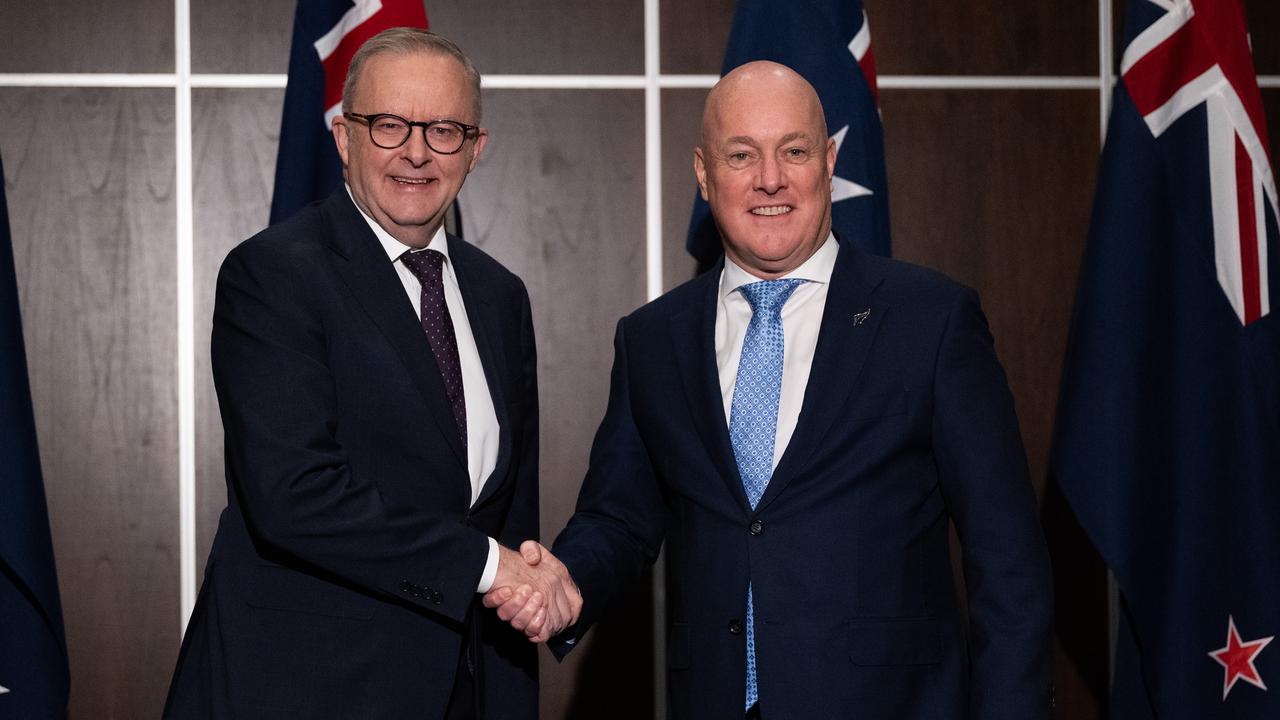
    As global energy markets face heightened volatility tied to the conflict, the Australian government has moved quickly to shore up its strained domestic fuel reserves. Prime Minister Anthony Albanese announced Thursday that Canberra has finalized a deal to secure an extra 100 million liters of diesel supplied by Brunei and South Korea, addressing growing concerns over supply chain disruptions tied to Middle East hostilities.

    For the global semiconductor industry, Taiwanese manufacturing giant TSMC, the world’s largest contract chipmaker, moved to calm investor fears this week. The company stated that it does not anticipate near-term disruptions to its access to critical industrial materials including helium and hydrogen, even as the conflict disrupts regional trade routes.

    On the security front, Iranian state media outlet IRNA reported that the country’s Revolutionary Guards have detained four individuals suspected of espionage on behalf of Israel’s Mossad intelligence agency, per an official statement from the elite military force.

    Pakistan is actively pushing for diplomatic de-escalation ahead of a potential second round of peace talks between the US and Iran. Pakistani Prime Minister Shehbaz Sharif confirmed he held a meeting with Saudi Arabia’s de facto leader Crown Prince Mohammed bin Salman in Jeddah, as part of a regional tour that also includes Qatar. Both Saudi Arabia and Qatar have been targeted by Iranian retaliatory strikes following the initial US-Israeli attacks on Tehran that sparked the full-scale war. Sharif wrote on social platform X that he reaffirmed Pakistan’s unwavering commitment to facilitating dialogue between Washington and Tehran, with the goal of reaching a lasting peace agreement for the region.

    Tensions remain high around the Strait of Hormuz, the world’s most critical chokepoint for global oil and gas exports. Top military adviser to Iran’s supreme leader Mojtaba Khamenei issued a stark warning: if US forces launch a ground invasion of Iran, Iranian forces will take American troops hostage, and will sink any US vessels that enforce a military blockade on the strait. Hardline Iranian politician Mohsen Rezaei doubled down on the threat, claiming that a US ground invasion would play into Iran’s hands, saying “we would take thousands of hostages, and then for each hostage we would get a billion dollars”.

    The US has expanded its economic pressure on Iran this week, unveiling a new round of sanctions targeting more than 20 individuals tied to Iranian oil transportation, alongside multiple companies and tankers linked to the shipping network run by petroleum magnate Mohammad Hossein Shamkhani. Shamkhani is the son of Ali Shamkhani, a senior security official and adviser to Iranian supreme leader Ali Khamenei; both father and son were killed in the opening US-Israeli airstrikes on February 28 that launched the war. US Treasury Secretary Scott Bessent said in an official statement that the Treasury department is moving aggressively under its “Economic Fury” campaign to target regime elites who profit at the expense of ordinary Iranian citizens.

    The humanitarian toll of the conflict is set to grow sharply, according to World Bank Chief Economist Indermit Gill. Speaking to AFP, Gill warned that global ripple effects from the war could push an additional 60 million people into acute food insecurity. Gill noted that 300 million people already face severe hunger globally, and that figure could jump by 20% very rapidly as the conflict’s economic and trade disruptions spread.

    Despite the rising humanitarian risks, global stock markets have rallied sharply this week on growing optimism for a diplomatic breakthrough. Japanese stock indices hit an all-time record high on Wednesday, driven by investor hopes that the US and Iran will extend their existing ceasefire to allow for further talks to end the war and reopen the Strait of Hormuz. All major Wall Street indices also closed at record highs the same day.

    Israeli Prime Minister Benjamin Netanyahu reaffirmed alignment with US goals in a televised address Wednesday, saying that Israel and the United States share identical objectives when it comes to containing Iran. “We want to see enriched material removed from Iran; we want to see the elimination of enrichment capability within Iran; and, of course, we want to see the (Hormuz) strait reopened,” Netanyahu stated.

  • Pope heads to epicenter of Cameroon’s separatist conflict to preach message of peace

    Pope heads to epicenter of Cameroon’s separatist conflict to preach message of peace

    YAOUNDE, Cameroon – In a high-stakes visit focused on reconciliation and accountability, Pope Leo XIV has arrived in Cameroon as part of his groundbreaking four-nation tour of Africa, marking the first papal visit to the continent by the first American pope. His journey centers on Bamenda, the heart of a long-simmering separatist conflict in Cameroon’s Anglophone northwest that humanitarian organizations have labeled one of the globe’s most underreported and neglected humanitarian crises.

    The 93-year-old pontiff is scheduled to lead an interfaith peace gathering Thursday in Bamenda, a city located just kilometers from Cameroon’s western border with Nigeria. The dialogue will bring together leaders from across Cameroon’s religious and traditional communities, including a Mankon traditional ruler, a Presbyterian Church moderator, a Muslim imam, and a Catholic nun. The gathering is designed to amplify the work of local interfaith movements that have spent years working to end the violence and support thousands of civilians left traumatized by the conflict. Following the peace meeting, Pope Leo will celebrate an open-air Mass for local residents.

    The conflict, which stretches back to 2017 when separatists launched an armed rebellion for an independent Anglophone state called Ambazonia, has deep roots in Cameroon’s colonial history. After World War I, the former German colony of Cameroon was split into two territories administered by Britain and France. In a 1961 United Nations-supervised referendum, the two British-administered Anglophone regions voted to unite with the independent French-speaking Republic of Cameroon. Separatist leaders argue that for decades, the Anglophone minority has faced systematic political and economic marginalization at the hands of the country’s French-speaking majority. The ongoing conflict has killed more than 6,000 people and forced more than 600,000 residents to flee their homes, per data from the International Crisis Group, even as global media and diplomatic attention has largely overlooked the crisis.

    In a notable gesture ahead of the pope’s visit, separatist military factions announced a three-day ceasefire to facilitate safe passage for the papal delegation and local worshippers. Lucas Asu, spokesperson for the separatist Unity Alliance, framed the pause in fighting as a demonstration of the movement’s commitment to humanitarian principle even amid active conflict. “This pause reflects a deliberate commitment to responsibility, restraint and respect for human dignity, even in the context of ongoing conflict,” Asu said, adding that the pope’s visit should remain a spiritual rather than political event, and should not be interpreted as an endorsement of Cameroon’s sitting government.

    Upon his arrival in Cameroon Wednesday, the first stop of his leg in the country, Pope Leo delivered a blunt address to the nation’s leadership, calling for an end to systemic graft in the resource-rich nation. He directly urged that “the chains of corruption” be broken, in a public rebuke to long-ruling President Paul Biya. At 93, Biya is the world’s oldest sitting head of state, having held uninterrupted power since 1982. He secured a disputed seventh term in 2018 and claimed victory in last year’s contested election that extended his rule to an eighth term, a result that opposition leaders rejected as fraudulent.

    While the frequency of deadly attacks has dropped in recent years, the conflict remains far from resolved. International-mediated peace negotiations between the Cameroonian government and separatist factions have stalled, with both sides repeatedly accusing the other of negotiating in bad faith. This visit marks a rare moment of global attention on a crisis that has spent years off the international agenda, with hopes among local peacebuilders that the papal spotlight will reinvigorate efforts toward a lasting negotiated settlement.

    This Associated Press religion coverage is produced through AP’s collaboration with The Conversation US, with funding from Lilly Endowment Inc. AP retains sole editorial responsibility for all content.

  • HH-200 commercial cargo drone completes debut flight

    HH-200 commercial cargo drone completes debut flight

    China’s top aerospace manufacturer, Aviation Industry Corp of China (AVIC), has marked a key milestone in the nation’s commercial unmanned aerial transport sector with the successful first flight of its new HH-200 large cargo drone, the company confirmed in an official statement released on Wednesday. Developed by AVIC’s Xi’an Aircraft Industry Group, the prototype aircraft lifted off from an airport in Weinan, Shaanxi Province at 9:35 a.m. local time, completed a 15-minute airborne test, and touched down safely at the departure airfield. Throughout the maiden flight, all on-board systems operated as designed, the aircraft maintained stable performance, and every pre-planned test maneuver was executed without issue. The development of the HH-200 comes in response to two key driving forces: the rapid growth of China’s express logistics industry and the government’s ongoing policy push to unlock the economic potential of the country’s low-altitude airspace.

    According to official specifications from the program’s engineering team, the twin-engine HH-200 measures 12.2 meters in length with a 16.8-meter wingspan, and is rated to carry maximum payloads of 1.5 metric tons. It has a maximum cruising speed of 310 kilometers per hour and a maximum flying range of 2,360 kilometers, with a standard cargo hold volume of 12 cubic meters that can be expanded to 18 cubic meters for larger loads.

    Meng Fantao, technical director of the HH drone series, explained that the HH-200 was engineered to fully comply with civil aviation safety standards, and is equipped with cutting-edge intelligent autonomous flight capabilities and AI-powered automatic obstacle avoidance systems. The aircraft boasts an impressive service life of 50,000 flight hours and 15,000 takeoff-landing cycles, with a full life-cycle operating cost of just 0.68 U.S. dollars per ton-kilometer – one-third the operating cost of comparable manned cargo aircraft with the same carrying capacity. Furthermore, the drone features a user-friendly loading and unloading design that allows just two ground operators to complete the entire process in five minutes. The HH-200 can operate from runways as short as 500 meters, is capable of taking off and landing from high-altitude airfields located more than 4,200 meters above sea level, and can operate reliably in extreme temperature conditions ranging from -40°C to 50°C.

    The versatile platform can deliver essential goods to hard-to-reach locations including mountainous regions, remote islands, snow-covered highlands and plateaus. It can also be quickly reconfigured to support a wide range of other mission profiles, including emergency disaster rescue, wildfire suppression, weather modification, aerial remote sensing, and agricultural and forestry pest and disease control. As of the first flight date, the HH-200 has already received 20 letters of intent from commercial buyers, and AVIC plans to establish deep collaborative partnerships with domestic express delivery companies to accelerate the commercial rollout of the entire HH drone series. This successful maiden flight is not an isolated effort for AVIC; the state-owned aerospace giant has already developed and conducted test flights for multiple other cargo drone models, including the smaller HH-100 and the TP2000, as China builds out its domestic commercial unmanned freight sector.