What started as a throwaway online joke has snowballed into a viral youth-driven movement that is set to take its first step from digital feeds to physical streets in India’s capital this weekend. The Cockroach Janata Party (CJP), which has collected millions of young followers across social media platforms in just three weeks, will hold its first public demonstration Saturday at New Delhi’s iconic Jantar Mantar, a historic site long favored for political protests. The gathering marks the movement’s first major test: whether its explosive online popularity can translate into tangible on-the-ground grassroots mobilization around widespread youth frustration over stagnant economic prospects, scarce jobs, and a failing education system.
The unexpected origins of the movement trace back to a controversial comment from India’s Chief Justice Surya Kant back in May. During a public hearing, the justice compared unemployed youth and government critics to cockroaches, sparking immediate backlash from young Indians already frustrated by limited opportunity. Abhijeet Dipke, a political communications strategist and Boston University student originally from India, seized on the insulting label to launch a parody political party, rebranding the cockroach as a badge of resilience rather than an insult.
The movement’s growth has been staggering. Within just seven days of launching its website and social media profiles, CJP’s Instagram page alone amassed more than 15 million followers, and the movement’s reach has only expanded since. Its supporters proudly call themselves “cockroaches,” leaning into self-deprecating, satirical humor that masks sharp political criticism. Content shared across CJP channels — from memes to short videos — skewers widespread corruption, systemic unemployment, and long-standing political dysfunction in India. Supporters lean into the joke: they openly describe themselves as unemployed, chronically online, and locked out of meaningful political power, but beneath the punchlines lies a serious critique of Prime Minister Narendra Modi’s ruling government. CJP supporters argue that ordinary young Indians have been left with far fewer economic and social opportunities than promised by current leadership.
Young people make up more than 25% of India’s total population, and many have grown increasingly disillusioned with traditional political institutions. Critics of Modi’s Hindu nationalist Bharatiya Janata Party (BJP) point to rising religious polarization, widening economic inequality, and mounting cost-of-living pressures as core sources of discontent that have fueled CJP’s rapid rise.
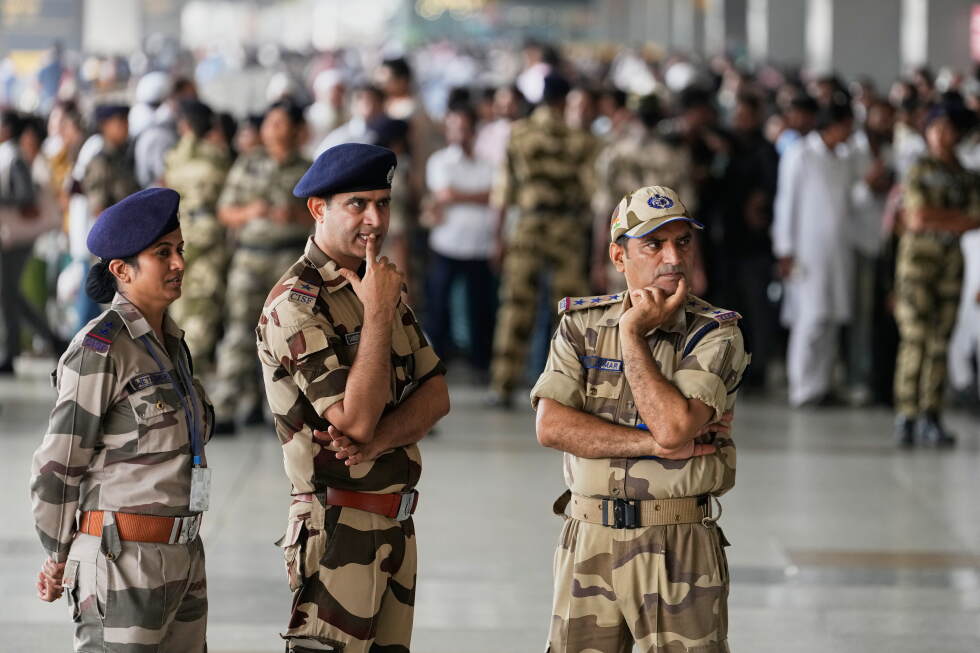
Dipke, the movement’s founder, is set to return to New Delhi from the United States Saturday morning to lead the demonstration, with local authorities already preparing for his arrival: steel barricades have been installed at the arrivals area of New Delhi’s Indira Gandhi International Airport ahead of his landing.
Organizers have rallied supporters online for weeks ahead of the protest, with a core demand that Education Minister Dharmendra Pradhan step down. The call for his resignation grew out of a May exam irregularity scandal that quickly expanded into a broader reckoning with India’s underfunded, unequal education system and its connection to persistent youth unemployment. Participants have been instructed to bring only two items: India’s national flag, and a book, which CJP says symbolizes the universal right to education and equal opportunity for all. Organizers have also repeatedly stressed that the demonstration must remain peaceful, and urged attendees to avoid any confrontation with law enforcement. On Friday, the official CJP account on X posted a defiant call to action: “Time to turn this tiny joke into a revolution.”
Skeptics, most notably supporters of the ruling BJP, have dismissed CJP as nothing more than a fleeting social media gimmick. They argue that the movement’s massive online following will not translate to large street turnout, and that its viral rise will fade as quickly as it began.
Even beyond questions of turnout, the movement faces significant structural barriers. Over the decade that Modi has held office, Indian authorities have repeatedly moved to suppress anti-government dissent, cracking down on high-profile protests ranging from demonstrations against a controversial citizenship law to the year-long farmers’ protests that brought parts of north India to a standstill. Many protest organizers and activists have faced legal action, and hundreds have been arrested on vague or politically motivated charges, part of what critics call a broader campaign to eliminate opposition to the Modi government.
CJP’s rapid ascent is not an isolated incident: it mirrors a growing regional trend across South Asia, where social media-born youth movements have increasingly led large-scale anti-government uprisings. In recent years, similar movements have powered the overthrow of sitting governments in Sri Lanka and Bangladesh, and fueled sustained unrest in Nepal, signaling a shifting landscape of political dissent led by young, digitally native populations.
While it remains unclear how many demonstrators will turn out for Saturday’s protest, the gathering will serve as a critical early indicator of whether what began as an online joke can grow into a sustained political force that challenges the status quo in the world’s largest democracy.