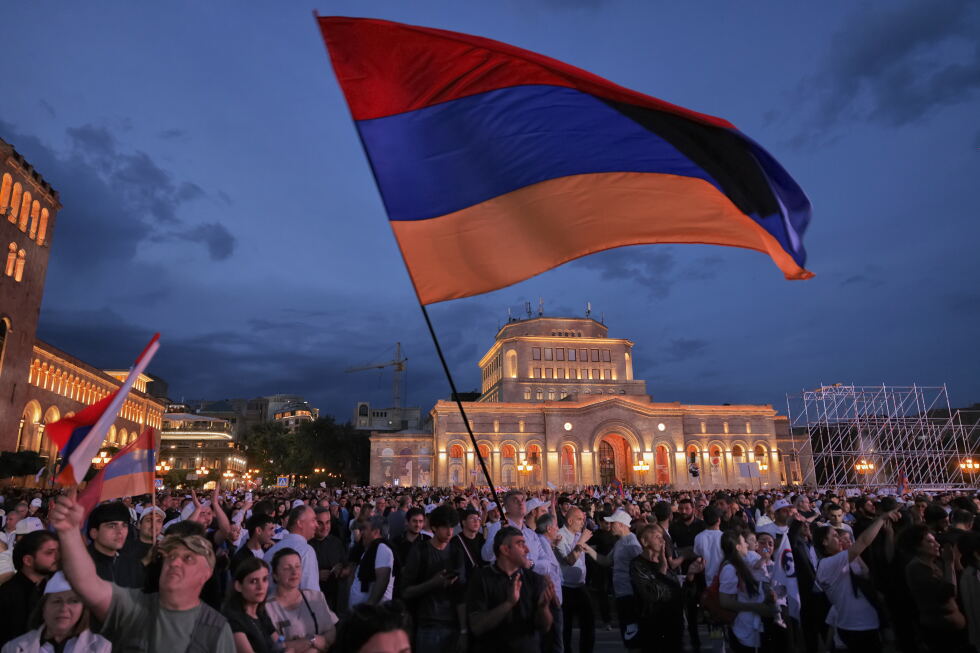
As Armenians head to the polls on Sunday for nationwide parliamentary elections, the small Caucasus nation stands at an unprecedented turning point in its modern history. For the first time, the entire election campaign has centered on one existential question: whether Armenia will formally shift its long-standing geopolitical orientation away from Moscow and toward closer integration with the European Union and the United States. Incumbent Prime Minister Nikol Pashinyan, who leads the Civil Contract party widely forecast to retain its parliamentary majority, has already set the country on an unmistakable Western-facing trajectory, drawing fierce pushback from pro-Russian opposition blocs and direct economic pressure from the Kremlin.
The rift between Armenia and its traditional ally Russia opened dramatically in 2023, when Azerbaijan reclaimed full control over the disputed Karabakh region after three decades of de facto control by ethnic Armenian forces backed by Yerevan. Pashinyan’s government accused Russian peacekeepers deployed to the region of failing to fulfill their security mandate and halt Azerbaijan’s military offensive. With Moscow heavily engaged in its ongoing conflict in Ukraine, the Kremlin rejected the accusations, noting its peacekeeping contingent was never authorized to intervene in the offensive. That episode shattered long-held public trust in Russia as a reliable security guarantor for Armenia. “Russia’s image as a guarantor of Armenian security was not grounded in reality, and it all collapsed after the 2023 Karabakh war,” explained Alexander Iskandaryan, director of the Yerevan-based Caucasus Institute.
“These are the first elections in Armenia’s history where geopolitical orientation has become a decisive issue,” Mikayel Zolyan, an analyst and former Armenian MP, told the Associated Press from Yerevan. “Until now, Armenia has remained within Russia’s sphere of influence, and this was taken for granted, but now, for the first time, this status quo is being called into question.”
Over the past two years, Pashinyan has moved cautiously but deliberately to loosen Russia’s grip on Armenian politics and policy. In 2023, Armenia joined the International Criminal Court, a move that angered the Kremlin, and in 2024, it suspended its participation in the Moscow-led Collective Security Treaty Organization, a post-Soviet military alliance. Yerevan has also formally declared its aspiration to join the European Union and hosted the high-profile European Political Community summit in its capital in early May. A clear election victory would give Pashinyan a popular mandate to lock in this geopolitical shift and finalize a long-awaited peace agreement with neighboring Azerbaijan.
Western powers have already moved to demonstrate the tangible benefits of closer alignment with Armenia. In August, former U.S. President Donald Trump hosted Pashinyan and Azerbaijani President Ilham Aliyev to sign a landmark declaration ending decades of cross-border hostilities, which includes provisions to establish a new transit corridor connecting Azerbaijan to its Nakhchivan exclave. A preliminary agreement reached in February could clear the way for a U.S. firm to construct a new nuclear reactor to meet Armenia’s domestic energy needs. European Commission President Ursula von der Leyen has also pledged that the EU is ready to invest heavily in Armenia’s energy sector and its fast-growing digital economy, and has publicly endorsed Pashinyan’s reform agenda. Trump has personally backed Pashinyan, calling him a “great friend” and a leader who is building a “strong, wealthy, and very secure” Armenia.
Against this Western outreach, Armenia’s fragmented political opposition remains dominated by staunchly pro-Russian groups that broadly oppose the normalization of ties with Azerbaijan and blame Pashinyan for the loss of Karabakh. Nineteen separate political forces – two electoral blocs and 17 individual parties – are contesting the 100 parliamentary seats. Pashinyan’s main challenger is the Strong Armenia Party, led by Armenian-Russian billionaire Samvel Karapetyan, who is currently on trial on charges of calling for the overthrow of the current government, charges he firmly denies. Strong Armenia advocates for deepening economic and political ties with Moscow and accuses Pashinyan of intentionally provoking conflict with Russia. Another prominent contender is the Hayastan Bloc, led by former Armenian President Robert Kocharyan, who has repeatedly accused Pashinyan of “seriously undermining” Armenia’s historic relationship with Russia.
The Kremlin has gone far beyond rhetorical support for the opposition to apply direct economic pressure on Armenia in an attempt to derail Pashinyan’s Western pivot. Russian President Vladimir Putin has openly compared Armenia’s current trajectory to that of Ukraine, warning that pursuing EU membership carries the same dire consequences. In recent weeks, Moscow has imposed sweeping new import restrictions on Armenian agricultural and manufactured goods, citing unsubstantiated sanitation violations to block shipments of Armenian flowers, select grades of cognac and wine, eggplants, potatoes, dried fruit, fish and other key exports. Armenia’s membership in the Russian-led Eurasian Economic Union (EEU), a post-Soviet customs union, has been placed under formal review following a May member summit in Kazakhstan, with explicit threats to fully suspend Yerevan’s membership by the end of 2025. The EEU’s four other member states – Russia, Belarus, Kazakhstan and Kyrgyzstan – also demanded Armenia hold a public referendum on whether to remain in the bloc or pursue EU membership, a demand Pashinyan has flatly rejected.
Official Armenian government data shows that 38% of the country’s total exports went to EEU member states in 2025, with the overwhelming majority bound for Russia, compared to just 8% of total trade directed to the EU. In response to Russia’s trade restrictions, von der Leyen announced last Thursday that the 27-nation EU would provide 50 million euros ($58 million) in emergency financial support to Armenia, calling Russia’s actions blatant “economic coercion” that weaponizes interdependent trade ties to achieve political goals.
Many analysts warn that even with Western backing, Armenia faces a deeply uncertain path as it seeks to reduce its reliance on Moscow. Russia retains extensive leverage over the country, controlling large portions of Armenia’s key energy and infrastructure networks and continuing to supply heavily discounted natural gas. “It’s completely unrealistic to say that Armenia can somehow overcome Russian influence in a short period of time,” Zolyan noted.
Armenian civil society groups and international election monitors have also documented widespread attempts at foreign interference in the lead-up to the vote. Independent Armenian election watchdog the Union of Informed Citizens has recorded multiple instances of Russian meddling, including coordinated social media disinformation campaigns, cyberattacks against government and civil society targets, illicit vote buying, and bribes paid to pro-Russian journalists. The Kremlin has repeatedly denied any interference in Armenia’s electoral process. These findings align with a recent assessment from a delegation of the Parliamentary Assembly of the Council of Europe, which visited Yerevan in May. The delegation confirmed that foreign interference includes illicit political financing, cyber operations, economic coercion, and direct attempts to manipulate vote outcomes. “These hybrid tactics aim not only to sway public opinion but to secure long-term geopolitical leverage over Armenia,” the delegation said.