作者: admin

  • The insider trading suspicions looming over Trump’s presidency

    The insider trading suspicions looming over Trump’s presidency

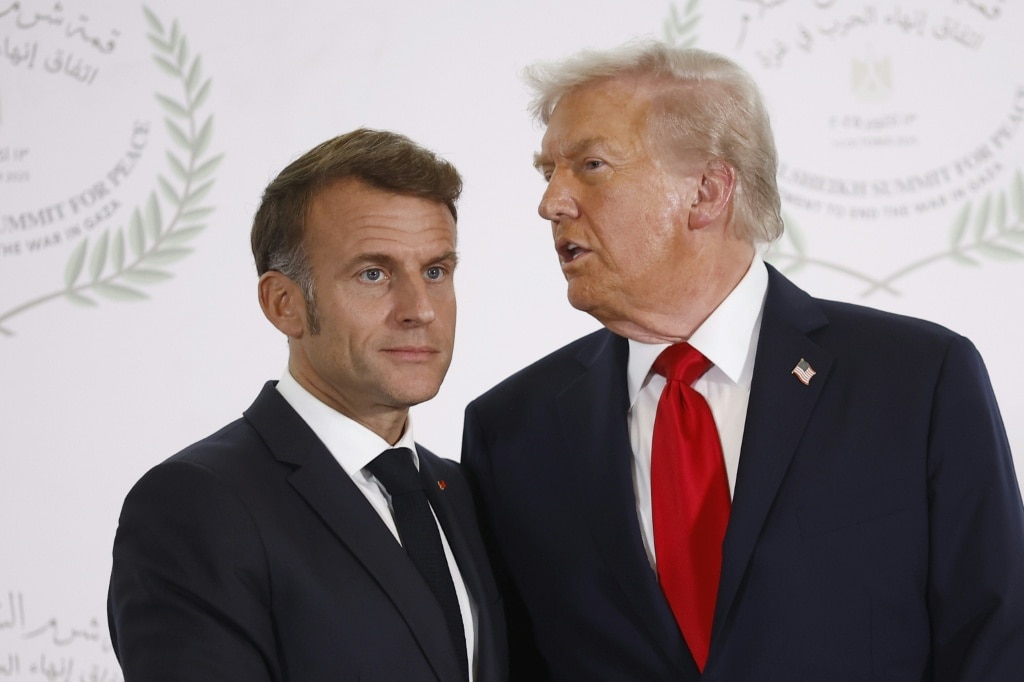
    A joint analysis conducted by the BBC has uncovered a striking, consistent pattern of abnormal, large-scale trading activity across multiple financial and prediction markets that consistently precedes major market-moving policy announcements from U.S. President Donald Trump during his second term, raising urgent alarms among analysts about potential illegal insider trading that could benefit connected insiders at the expense of ordinary investors.

    Market observers have tracked repeated instances of sudden, massive spikes in trading volume just minutes or hours before Trump’s public statements or posts are released, across everything from crude oil futures to broad stock index funds and blockchain-based prediction markets for geopolitical events. The BBC’s cross-referencing of trade timestamp data and public announcement schedules confirms that these sudden trading surges never fail to line up with the direction of market shifts that follow Trump’s revelations.

    One of the most high-profile examples occurred during the U.S.-Iran war. After nine days of conflict, Trump told CBS News that the war was “pretty much very complete,” a statement that sent global oil prices plummeting 25% within a minute of the news being made public via a reporter’s X post at 19:16 GMT. However, market data shows a massive wave of bets on falling oil prices entered the market a full 47 minutes earlier, at 18:29 GMT, netting the early traders millions in profit.

    A second oil market incident unfolded just two days after Trump threatened to “obliterate” Iran’s power infrastructure. When the president unexpectedly posted on Truth Social that Washington had held “VERY GOOD AND PRODUCTIVE CONVERSATIONS” with Tehran aimed at a full cessation of hostilities, U.S. benchmark oil prices dropped 11% immediately after the post. Again, abnormal volumes of bearish oil bets hit the market 14 minutes before Trump’s post went live, an activity one senior oil analyst described as “unquestionably abnormal.”

    Outside of Middle East energy markets, the same pattern emerged in U.S. stock trading following Trump’s 2025 tariff announcement. After enacting sweeping tariffs on nearly all U.S. trading partners that triggered a global market selloff, Trump announced a 90-day pause on the levies for all nations except China. The S&P 500 notched a 9.5% one-day gain, one of the largest in post-WWII history. Data shows that just after 18:00 BST, trading volumes for an S&P 500-tracking fund jumped from a steady hundreds of contracts per minute to more than 10,000, with one group of traders placing more than $2 million in bullish bets even after seven straight days of market losses. Those early trades generated an estimated $20 million in profit. The pattern prompted senior Senate Democrats to send a formal letter to the U.S. Securities and Exchange Commission (SEC) calling for a full investigation into whether administration insiders or allies were profiting at the expense of the general public. Both the SEC and White House declined to comment on the allegations when contacted by the BBC.

    The rise of unregulated blockchain-powered prediction markets, which allow users to bet on geopolitical and policy outcomes, has added a new layer of scrutiny. Notably, Donald Trump Jr. holds an investment stake in major prediction platform Polymarket, serves on its advisory board, and also acts as a strategic advisor to a second leading platform, Kalshi. The BBC has reached out to Trump Jr. for comment, with no response received as of publication.

    In one high-stakes prediction market case, an anonymous account named Burdensome-Mix registered on Polymarket in December 2025, and accumulated a total $32,500 bet that Venezuelan President Nicolás Maduro would be removed from office by the end of January 2026. Just one day after the final bet was placed, Maduro was seized by U.S. special forces and ousted, netting the anonymous account a $436,000 payout. Shortly after the win, the account changed its username and has not placed any additional trades. A separate incident in February 2026 saw six newly created Polymarket accounts collectively earn $1.2 million after correctly betting that a U.S. strike on Iran would occur by the end of that month, with five of the six accounts ceasing all activity immediately after cashing out. One remaining account later earned an additional $163,000 for correctly betting on an April 7 U.S.-Iran ceasefire, which was announced on exactly that date.

    In response to growing scrutiny, both Polymarket and Kalshi introduced new anti-insider trading rules in March 2026. Polymarket said in a statement to the BBC that it upholds the highest standards of market integrity and proactively collaborates with regulators and law enforcement. Prediction markets fall under the jurisdiction of the U.S. Commodity Futures Trading Commission (CFTC), which did not respond to requests for comment, though its chair recently reaffirmed the agency has “zero tolerance” for fraud and insider trading. The White House also confirmed it sent an internal email last month warning staff against using non-public information to place bets on prediction markets, while spokesperson Davis Ingle called any unproven claims of administration misconduct “baseless and irresponsible reporting.”

    While illegal insider trading has been on the books for most U.S. market participants since the 1933 Securities Act, and was extended to cover federal government officials in 2012, no official has ever been prosecuted under the 2012 expansion. Financial regulation expert Paul Oudin, a professor at ESSEC Business School, notes that enforcement of these rules remains extremely challenging in practice. “Financial regulators cannot bring a prosecution unless they can definitively identify the source of the leaked information,” Oudin explained. “You can have massive, obvious trading that proves someone had advance knowledge of what Donald Trump was going to announce, but there is still a very strong chance no one will ever face charges.” To date, no U.S. financial regulator has publicly acknowledged or opened formal proceedings around any of these alleged insider trading incidents.

  • Hong Kong fire victims to return to burned homes, grieving losses and grappling with trauma

    Hong Kong fire victims to return to burned homes, grieving losses and grappling with trauma

    Five months after Hong Kong’s deadliest residential fire in decades tore through the Tai Po suburban district’s Wang Fuk Court apartment complex, killing 168 people and displacing thousands, the first wave of surviving residents is preparing to step back into what is left of their fire-scorched homes starting Monday.

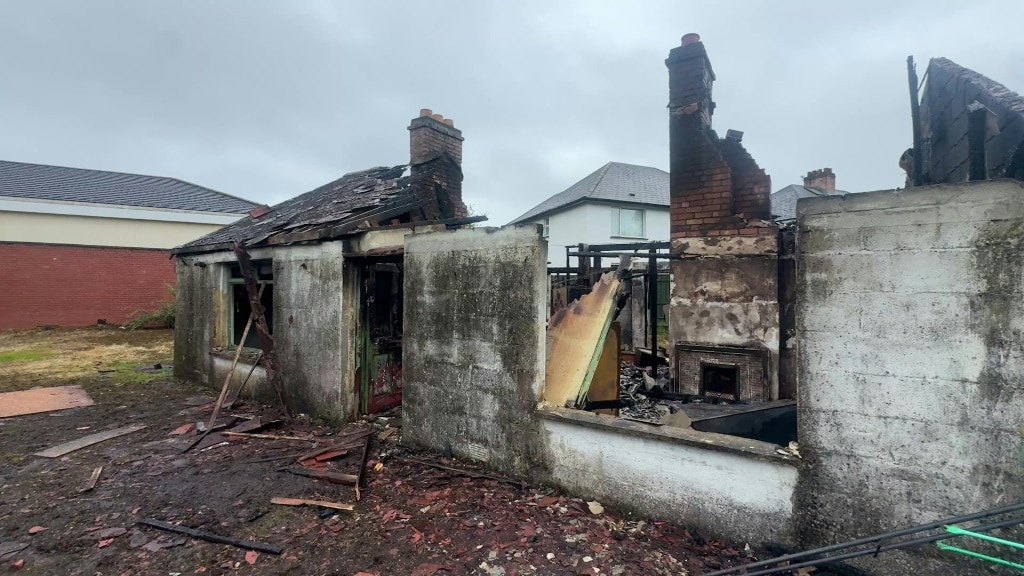
    For 78-year-old Keung Mak, the impending visit to the first-floor apartment he shared with his wife Kit Chan for more than 40 years, where they raised their children, brings nothing but heavy grief. Images shared by his social worker already laid bare the full scope of the destruction: the apartment’s ceiling burned through to expose exposed steel rebar, floors heaped with shattered charred tiles, and portions of the structure compromised enough to require temporary reinforcement to avoid collapse. Mak says he never imagined his home of four decades would be reduced to such ruin, and he expects almost none of the family’s cherished personal items to survive. Fishing rods gifted to him by his son, 50-year-old wedding photos, and decades of handwritten letters from their child – all items irreplaceable for their sentimental value – are almost certainly gone, Chan, 74, says. “Not even a single piece of paper will be left,” she added. Under current access rules, only two people can enter the severely damaged unit, so only Mak and their son will visit Monday – a restriction Chan hopes officials will relax to let her see her former home one last time.

    The re-entry process, which will allow residents to retrieve any salvageable belongings, is expected to stretch into early May, with strict limits on group size and time spent inside: most households get up to three hours, with up to four people allowed in, while only one person can enter the most unstable units. The visit will be a uniquely grueling test for elderly residents, who made up more than a third of the 4,600 people who lived in the complex before the blaze. With all elevators knocked out of service by the fire, hundreds of seniors aged 65 and older – more than 1,400 in total have registered to return, according to public broadcaster Radio Television Hong Kong – have even undertaken targeted fitness training to prepare to climb stairs up to the 31st story of the damaged towers. Blackened, soot-stained building exteriors still stand as a constant, stark reminder of the November tragedy, and few residents hold out hope of recovering any meaningful mementos from their destroyed units.

    Nearly five months on, residents are still waiting for official conclusions from the ongoing public inquiry into the fire’s cause, while they themselves have been scattered across Hong Kong, most housed in temporary government accommodation as they weigh resettlement options. Early findings from the independent inquiry have already revealed damning details: an attorney for the committee confirmed that nearly all fire safety systems in the seven affected buildings failed on the day of the blaze due to preventable human error. Authorities have also confirmed three men were arrested in March on suspicion of looting abandoned units in the weeks after the fire, leaving many residents wary of what they will find when they return.

    For many survivors, the re-entry brings tangled, conflicting emotions. Thirty-nine-year-old Cyrus Ng, whose parents lived in a 10th-floor unit at Wang Fuk Court for more than a decade before he moved out, says he struggled with insomnia, anger and grief in the immediate aftermath of the disaster. While he has found a measure of emotional stability in the months since, he has not come to terms with the tragedy, and remains firm in his demand for full accountability. “We know there are suspicious issues behind this,” Ng said. “I hope we can really find the truth.” Ng’s parents’ unit escaped the worst of the fire damage, so he is both anxious about the emotional toll the visit will take on his elderly parents, and hopeful they will be able to retrieve critical documents, old photos and clothing that hold deep personal meaning. He also shares the widespread concern over potential theft, and plans to document the unit’s condition with photos during his visit to push back against the government’s proposed demolition plan.

    Hong Kong officials have already stated that cost-effective repairs to the seven fire-damaged buildings are unfeasible, and have proposed demolishing the structures and buying back homeownership rights from displaced residents, a plan based on survey data collected from residents. But many survivors have pushed back on the proposal, pointing to inquiry data showing only half of the 1,700 units in the seven buildings suffered any level of damage. Ng believes that at least some of the less damaged structures could be repaired to allow residents to return if they wish, even as his own parents consider accepting the government’s offer of replacement housing elsewhere.

    Even residents of the only complex building that escaped the fire face unresolvable trauma, and hold mixed views on the government’s plan. Stephanie Leung, who lives in the unscathed block, says her family cannot imagine staying in the apartment permanently. Every time they look out at the seven blackened towers where former neighbors and schoolmates lost their lives, the nightmare of the fire comes rushing back. “Whenever I go back, I want to cry,” she said. Leung hopes the government will extend the buyback and demolition option to her block as well, while allowing residents who wish to stay to remain. For all residents, Monday’s first visits back to the ruins are not just a chance to recover belongings – they are another painful step forward in a long, uncertain journey toward recovery that remains far from over.

  • China boosts IP protection for new sectors

    China boosts IP protection for new sectors

    Against the backdrop of a global push to cultivate new economic growth drivers and accelerate technological transformation, China’s top intellectual property regulatory body is ramping up targeted protection measures for intellectual property (IP) in fast-growing emerging sectors ranging from artificial intelligence to big data, as part of the country’s broader strategic framework to advance the development of new quality productive forces. This announcement was made by Shen Changyu, Commissioner of the China National Intellectual Property Administration (CNIPA), in an exclusive interview with China Daily, delivered ahead of World Intellectual Property Day, which falls annually on April 26.

    Shen’s comments come just as the country prepares to launch its annual National Intellectual Property Publicity Week, a seven-day event designed to showcase China’s nationwide IP development achievements and raise public awareness of IP rights.

    As global technological revolutions and industrial upgrading gain momentum, Shen explained that cutting-edge emerging technologies including AI, integrated circuits, biomedicine, quantum technology, 6G communications, and brain-computer interfaces are fundamentally reshaping global economic structures. This rapid evolution has created new, unmet requirements for robust, adaptive IP protection frameworks that can keep pace with innovation.

    According to Shen, CNIPA has already rolled out a series of targeted policy measures over recent years that have delivered tangible progress toward fostering innovation and driving high-quality economic growth. Key priorities moving forward include continued refinement of IP-related legal frameworks, acceleration of trademark and patent examination workflows, and optimization of support services to facilitate IP commercialization across all emerging technology fields.

    Official 2025 data underscores the rapid growth of innovation in these key sectors. Among China’s entire stock of valid invention patents, computer technology and medical technology recorded the fastest year-over-year growth rates, with the total volume of AI-related patents held in China now ranking first globally. By the end of 2025, the number of new trademark registrations linked to AI and other emerging sectors reached 324,300, pushing the total number of valid trademarks in these fields to 4.39 million — a 5.94 percent increase from 2024.

    “These numbers reflect sustained market enthusiasm for trademark development in emerging areas, and demonstrate both growing innovation vitality across China’s tech ecosystem and rising awareness of trademark protection among technology enterprises,” Shen noted.

    To improve both the quality and efficiency of IP examination processes, CNIPA has streamlined administrative procedures and updated core regulatory rules multiple times. Notably, the country’s patent examination guidelines have undergone three revisions — in 2019, 2023, and most recently 2025 — specifically to address the unique challenges posed by AI-related patent applications.

    “The 2025 revision introduces a dedicated standalone section for artificial intelligence and big data for the first time, with a strong emphasis on integrating ethical oversight into the examination process,” Shen explained. “It clarifies that all core technical applications must align with existing legal standards, social morality, and public interest, so we can build strong safety guardrails that support the healthy development of the AI sector.”

    CNIPA is also actively involved in updating higher-level national legislation to address new industry needs. The agency is contributing to revisions of China’s Trademark Law and the Integrated Circuit Layout Design Protection Regulation, efforts designed to respond to public concerns and create clear legal support for the development and protection of core domestic technologies. Last year, the draft Trademark Law revision completed its first reading before the Standing Committee of the National People’s Congress, China’s top legislative body. The draft targets longstanding issues such as malicious trademark registration and trademark misuse, directly addressing the urgent need for stronger protection of AI-driven innovation, according to Shen.

    In a further practical adjustment to accommodate new sectors, CNIPA has added 890 standardized goods and service classification items specifically for big data, AI, and other emerging industries. “This reform resolves pressing on-the-ground problems, including the lack of corresponding classification categories for trademark registration in new fields and unclear boundaries for IP protection,” Shen said. “By cutting branding costs for businesses and reducing the risk of IP infringement, this move ultimately optimizes both the innovation and business environment, providing solid IP support for the healthy, orderly growth of strategic emerging and future-focused industries.”

    These efficiency-focused reforms have already delivered measurable results. In 2025, China’s average trademark examination period held steady at four months, while the average invention patent review period was cut to 15 months. Both examination timelines are the fastest of any major global economy for IP review processes of this scale, Shen added.

    Commissioner Shen also highlighted the critical economic role of IP commercialization, noting that it serves as the key bridge between raw innovation and real-world industrial application, making it a core priority for developing new quality productive forces. In 2025 alone, CNIPA accredited 65 new specialized centers dedicated to supporting IP commercialization, 48 of which focus specifically on emerging industries. These centers are designed to promote synergistic development between IP creation and industrial growth.

    Over the course of the 14th Five-Year Plan (2021-2025), CNIPA delivered specialized public IP services — including IP search and analysis, industry navigation, infringement early warning, overseas IP rights protection, and targeted training — to more than 50,000 domestic enterprises across the country.

    On the international stage, China has actively pursued multilateral and bilateral exchanges and cooperation on emerging IP governance issues. By working closely with the World Intellectual Property Organization and foreign IP offices to coordinate global AI governance frameworks, China aims to ensure its perspective is heard and its influence expands in the global IP landscape, Shen said.

    Looking ahead to the 15th Five-Year Plan period (2026-2030), Shen confirmed that CNIPA will continue to center its work on addressing core innovation challenges in emerging fields. The agency will continuously refine IP-related legal and regulatory frameworks while proactively tracking evolving global industry trends to keep pace with rapid technological change.

  • Art on trial – a sculptor’s arrest highlights new extremes for censorship in China

    Art on trial – a sculptor’s arrest highlights new extremes for censorship in China

    ### Background: The Gao Brothers’ Decades of Provocative Artistic Practice
    Gao Zhen and Gao Qiang, the sibling contemporary art duo, first rose to public attention in China’s domestic art circle during the 1990s and early 2000s, eventually building a global reputation for bold, satirical works that challenge the political legacy of their home country. For the brothers, the legacy of Mao Zedong – founder of the People’s Republic of China, whose rule oversaw decades of traumatic upheaval including the Great Famine and the Cultural Revolution that killed tens of millions – has been a persistent thematic core. Their own family bore direct trauma from that era: their father was labeled a class enemy during the Cultural Revolution and detained in an extrajudicial facility, a personal grievance that has shaped their creative output.

    Among their most controversial works are two pieces created for exhibition in 2009: *The Execution of Christ*, a bronze sculpture that depicts Jesus Christ at gunpoint, with every member of the firing squad sculpted in the likeness of Mao, and *Mao’s Guilt*, a life-sized statue of the former leader kneeling in a pose of supposed contrition. For most of their decades-long career, these works did not draw severe official punishment. That landscape shifted dramatically after 2012, when Xi Jinping took power and began a widespread contraction of space for independent creative expression across China’s cultural sectors. In 2021, Beijing strengthened criminal statutes banning insult to the country’s “revolutionary heroes and martyrs,” a category that places Mao above all other figures as an untouchable symbol of the Chinese Communist Party (CCP)’s legitimacy. Soon after the amendment passed, Gao Zhen – who by that point had already relocated to New York as a permanent resident, leaving his brother based in China – left the country for the U.S. in 2022.

    ### The 2024 Arrest and Secret Trial
    Fifteen years after the controversial sculptures were first exhibited, the long-simmering legal reckoning arrived. While visiting family in Beijing in mid-2024, 69-year-old Gao Zhen was taken into custody directly from his suburban studio. In the immediate aftermath of his arrest, Chinese authorities seized all of his stored artworks and imposed an exit ban on his wife and 7-year-old son, barring them from leaving the country. Last month, Gao was tried behind closed doors on charges of “insulting revolutionary heroes and martyrs” – a criminal offense that carries a maximum penalty of three years imprisonment.

    The trial has received almost no uncensored coverage within China, where most domestic state-aligned media have framed Gao as a fraud who “caters to Western political interests” by producing work that defames revered national figures. But Gao Qiang, the younger brother who remains connected to the case, says the trial sends an unambiguous warning to all creators in China and beyond. “Even if a work was made 15 years ago, it can still be turned into a crime if today’s political climate changes,” he told the BBC in an interview, adding that the prosecution of his brother is part of a broad, accelerating crackdown on dissident expression that touches visual arts, cinema, music, literature and digital online content.

    China’s central government has not issued any public comment on Gao’s case or the trial. But independent China analysts say the case exposes a growing pattern of increasingly extreme political control by the CCP, which now polices expression both retroactively – prosecuting work created years or decades earlier under new legal standards – and transnationally, targeting creators even when they reside outside of China’s borders.

    ### Broader Context: The Deepening Crackdown on Creative Dissent
    Pulitzer Prize-winning journalist Ian Johnson, who has spent decades documenting political repression in China, argues that the current era represents “probably the darkest period of time in decades” for artistic and expressive freedom under CCP rule. “In the half-century since the Cultural Revolution ended in 1976, this is the most prolonged crackdown that we’ve seen – far eclipsing the period after the Tiananmen massacre in 1989,” Johnson notes, adding that the CCP is now less willing than ever to tolerate even mild criticism of its top leaders.

    Many observers link the CCP’s growing boldness in cracking down on dissent to shifting global political norms. As democratic standards erode across much of the world, analysts say Beijing has calculated that it can pursue aggressive repression without meaningful pushback from Western nations that have increasingly stepped back from defending global human rights standards. This month, the United Nations Office of the High Commissioner for Human Rights joined a growing coalition of international advocacy groups to call for Gao’s immediate release, noting that his case “raises concerns with regard to retroactive application of criminal law and use of criminal sanctions to punish artistic expression.”

    Beyond threats to expressive freedom, grave concerns have emerged over Gao Zhen’s physical health while in custody. Gao lives with multiple chronic conditions, including lumbar spine disease, arthritis, degenerative eye problems, and chronic urticaria, an inflammatory skin condition that causes persistent painful rashes. According to Gao Qiang, his brother has met with his legal counsel while confined to a wheelchair on multiple occasions, has frequently been too unwell to get out of bed, and has shown visible signs of malnutrition. Repeated requests from his legal team to grant him medical bail have all been rejected by authorities, leaving his younger brother warning that the risks to his life are “grave.”

    For the CCP, the sensitivity around criticism of Mao stems from the ideological foundations of the party’s rule. While the party officially acknowledges some of Mao’s mistakes, it maintains his status as a sacred founding figure, and any public challenge to his legacy is seen as an implicit challenge to the CCP’s own right to rule. That dynamic has led to a steady stream of artists, writers and activists being targeted for violating unwritten rules around discussing national leaders: high-profile cases include Ai Weiwei, the internationally renowned artist detained on “economic crime” charges in 2011 after voicing support for pro-democracy protests, and Liu Xiaobo, a human rights activist and Nobel Peace Prize laureate who died in custody in 2017 after being imprisoned for organizing a pro-democracy manifesto.

    In recent years, the CCP’s dragnet for dissident expression has expanded far beyond China’s own borders. “Artists and writers have long been in the Chinese government’s crosshairs – but the authorities are now extending that reach beyond physical borders,” explains Sophie Richardson, spokesperson for the Network of Chinese Human Rights Defenders. Beyond punitive measures like exit bans for family members of exiled creators, Richardson says Beijing now regularly pressures foreign cultural institutions to censor works critical of the CCP, part of a global campaign to curtail independent artistic expression.

    ### The Unprecedented Nature of Gao’s Case
    Gao Zhen’s prosecution is notable even in the context of the CCP’s ongoing crackdown because of its retroactive application: the works in question were created and exhibited 15 years ago, years before the strengthened legal statute under which he is now prosecuted. What is more, observers note that Gao never directly called for the overthrow of the CCP or openly criticized current leader Xi Jinping, placing him outside the category of “classic dissidents.”

    “Even if he’s not a classic dissident, the Party is now so sensitive toward history that it felt it had to detain and try him,” Johnson explains.

    That growing boldness is felt acutely by exiled dissident artists already living outside China. Badiucao, a Shanghai-born artist based in Melbourne who has built a global reputation for works critical of the CCP and Xi Jinping, says the arrest of Gao Zhen demonstrates that the CCP no longer hesitates to wield power openly even when it draws international attention. “It is really determined to wield power without hesitation, compared with old times,” he says, adding that the shift is rooted in global political changes. “I do not feel safe every day, because now I know the Chinese government do not care about international reputation anymore.”

    Beijing’s decision to hold Gao’s trial entirely behind closed doors, barring even family members and foreign diplomats from attending, exposes the regime’s discomfort with public scrutiny, according to Gao Qiang. “If exposed to public view, the legal weakness, political vindictiveness, and symbolic nature of the prosecution would become impossible to hide,” he says. Badiucao echoes that analysis, noting that an open trial would paradoxically bring global attention to the very works Beijing is trying to suppress: “That’s the paradox when you’re trying an artist. Because at the end of the day, the reason why we create art is we want it spreading one way or another. A public trial is almost like a national or international show in MoMA: now the whole world will know which work is particularly offensive to what leader.”

    Despite Beijing’s efforts to sidelined the case, Gao Qiang is calling on the global community to keep attention on his brother’s prosecution. “This is about far more than the fate of one Chinese artist – it is a test of freedom of expression, historical memory, and the most basic boundaries of the rule of law,” he says. If the international community responds to Gao’s prosecution with silence, he warns, it will set a dangerous global precedent: “that a state may retroactively redefine the meaning of art and turn satire, reflection, and memory themselves into crimes. Gao Zhen is under threat today; tomorrow it could be any writer, filmmaker, musician, or critic.”

  • Gallagher tight-lipped on CGT reform after reports of return to Keating-era discount

    Gallagher tight-lipped on CGT reform after reports of return to Keating-era discount

    As the countdown to Australia’s May 12 federal budget ticks onward, speculation over potential reforms to the nation’s capital gains tax (CGT) framework has intensified, leaving Finance Minister Katy Gallagher dodging repeated questions about the Albanese government’s exact plans. Recent media reports have shifted public expectations, indicating Treasurer Jim Chalmers is not pushing for a full scrapping of the current 50% CGT discount — a signature policy of the 1999 Howard government — but rather a scaled-back adjustment that would revert the system to an inflation-adjusted model last used during the Keating era.

    The current flat 50% discount applies to nominal capital gains, meaning it reduces tax on the full stated increase in an asset’s value regardless of whether that gain is eroded by inflation. By contrast, the Keating-era model would only tax gains that represent a real increase in value after accounting for rising consumer prices, a structure that changes how tax burdens are calculated for asset holders.

    Calls for a full repeal of the existing discount have grown in recent months, driven by a Greens-led Senate inquiry that published its findings in March. The inquiry concluded the current CGT concession skews Australia’s housing market toward property investors, puts home ownership further out of reach for young and low-income Australians, disproportionately delivers tax savings to the nation’s wealthiest households, and distorts investment flows away from productive sectors of the economy. Analysis from the Parliamentary Budget Office, commissioned for the inquiry, found the discount will cost the federal budget a staggering $247 billion in foregone revenue over the next decade.

    These findings have dovetailed with Chalmers’ public framing of the upcoming May budget, which the Treasurer has repeatedly said will center on addressing intergenerational inequity — a policy priority that has fueled widespread speculation the government would eliminate the Howard-era CGT settings entirely. But when pressed on the government’s deliberations during an interview with ABC’s Radio National on Monday, Gallagher declined to offer any details ahead of the budget’s official release.

    “The budget will be released in that second week of May, and that will have all the decisions the government has made,” Gallagher told reporters. “I mean, I think the Treasurer and PM have made it clear our tax policies haven’t changed. I think we’ve made it clear we want to focus on intergenerational equity. And so, you know, we’ve been clear about that, but the announcements around that will be made in the budget.”

    As of Monday, the government has not confirmed whether the revised inflation-adjusted model reported by Nine Newspapers will be included in the final budget, leaving policymakers, investors and householders waiting for formal details when the budget is delivered in just a few weeks.

  • Shanghai flower show goes viral

    Shanghai flower show goes viral

    One of China’s most anticipated annual floral events, the 2026 Shanghai International Flower Show, has quickly become a viral online sensation, drawing thousands of visitors and widespread social media attention just days after its official launch. The event’s Pudong branch kicked off on April 18 at Taikoo Li Qiantan, a popular commercial and leisure complex located along the banks of the Huangpu River. Visitors to the Qiantan venue are greeted with immersive displays that blend creative floral design with urban riverside scenery: striking animal-shaped botanical installations stand alongside layered riverside floral arrangements, creating an endless sea of blooms that stretches along the waterfront. This visually stunning transformation has turned the Qiantan district into one of the most sought-after travel and photography hotspots in the city, with thousands of user-generated photos and videos spreading rapidly across Chinese social media platforms. Unlike previous iterations that centered on a single main venue, the 2026 festival has expanded to a citywide scale, with designated viewing areas and pop-up floral displays installed across multiple Shanghai districts. The event will run through May 10, giving both local residents and domestic tourists more than three weeks to explore the blooming installations across the city. Through this citywide expansion, the annual flower show has turned the entire metropolis of Shanghai into an open-air romantic garden, blending natural beauty with urban life to create a one-of-a-kind seasonal experience for all attendees.

  • Rumen Radev looks set to win Bulgarian Parliamentary election

    Rumen Radev looks set to win Bulgarian Parliamentary election

    Bulgaria’s eighth general parliamentary election in five years has delivered a decisive early lead to former president Rumen Radev and his newly formed Progressive Bulgaria party, according to national exit polls released after voting closed Sunday.

    Initial exit poll data puts Radev’s party at 37% of the vote, more than double the 16% support captured by its closest competitor — former prime minister Boiko Borisov’s long-dominant GERB party. Between three and four additional smaller political groups are on track to clear the 4% electoral threshold required to claim seats in the new unicameral parliament.

    This snap election was triggered after the previous ruling coalition pushed through a deeply controversial budget proposal last December, which sparked large-scale public protests across the country that Radev — then serving as head of state — openly supported. In his first victory address to supporters Sunday evening, Radev framed the results as a clear rejection of Bulgaria’s established political order. “People rejected the self-satisfaction and arrogance of old parties and did not fall prey to lies and manipulation. I thank them for their trust,” he said, outlining a vision of “a strong Bulgaria in a strong Europe.”

    He added that the European bloc currently demands “critical thinking, pragmatic actions and good results,” particularly when it comes to forging a new regional security architecture and rebuilding European industrial power and global competitiveness. “That will be the main contribution of Bulgaria to its European mission,” he said.

    The 62-year-old incoming party leader, a former MiG-29 fighter pilot and ex-commander-in-chief of the Bulgarian Air Force, stepped down from his nine-year presidential post in January to launch his new political movement. Widely characterized as a pragmatic figure with soft pro-Russian leanings, Radev has repeatedly criticized EU sanctions on Moscow, called for sustained constructive dialogue with the Kremlin, and remains firmly opposed to direct Bulgarian military aid to Ukraine. His campaign centered heavily on domestic priorities: vowing to root out systemic corruption and end five years of fragile, short-lived coalition governments that have repeatedly collapsed and triggered repeated snap elections.

    While Sunday’s projected result marks a historic upset for Bulgarian politics, it falls short of delivering Radev’s party a parliamentary majority to govern alone. Radev confirmed Sunday evening that he will immediately begin negotiations with other parties to form a stable governing coalition.

    Beyond domestic policy, Radev’s victory has sparked analysis of his potential impact on European defense and Ukraine support. Bulgaria already acts as a key supplier of ammunition and explosives to Ukraine via third countries, most notably neighboring Romania, and the ongoing war has revitalized the country’s post-Soviet defense industry, which had struggled for decades after the collapse of the Eastern Bloc.

    Since the 2022 Russian invasion of Ukraine, Radev has openly opposed the transfer of Bulgaria’s stockpiled Soviet-era weapons to Kyiv, arguing that such supplies only prolong a conflict that Ukraine cannot win — a position that aligns closely with that of Hungarian Prime Minister Viktor Orban. Yet despite this public stance, Radev has positioned Bulgaria to become a core part of Europe’s expanding defense production ecosystem. In October 2025, German defense giant Rheinmetall announced a €1 billion joint venture with Bulgarian state-owned arms manufacturer VMZ, based in the town of Sopot roughly two hours east of Sofia. The partnership will scale up production to 100,000 NATO-standard 155mm artillery shells annually, and also includes plans to construct a dedicated new gunpowder production facility in Sopot. Rheinmetall will hold a 51% controlling stake in the new venture, which forms part of a continent-wide push to ramp up military output after years of underinvestment.

    Radev has already sought to claim credit for the deal, having invited Rheinmetall CEO Armin Papperger to Bulgaria in March 2025. During an August 2025 visit to Rheinmetall’s headquarters in Unterluss, Germany, he noted that “Bulgaria is becoming part of the European defence ecosystem.”

    Political analysts expect Radev’s approach as prime minister will mirror that of Slovak Prime Minister Robert Fico: he will remain publicly critical of broad EU military support for Ukraine, but will not block private domestic defense manufacturers from producing and supplying arms to Kyiv through existing third-party supply chains.

  • Axe falls: Dragons expected to sack Shane Flanagan after horror start to the year

    Axe falls: Dragons expected to sack Shane Flanagan after horror start to the year

    The St George Illawarra Dragons are bracing for a major coaching shakeup just days out from their iconic annual Anzac Day clash against the Sydney Roosters, with incumbent head coach Shane Flanagan poised to become the second National Rugby League (NRL) mentor dismissed in 2025 following a catastrophic opening to the season.

    Club officials have called an urgent press conference for Thursday morning, slated to be led by chairman Andrew Lancaster and chief executive Tim Watsford, confirming long-circulating speculation that Flanagan’s tenure at the helm of the Red V will come to an abrupt end just eight months after he signed a contract extension promising long-term stability.

    Flanagan, who led the Cronulla Sharks to their first and only drought-breaking premiership title a decade ago, has overseen a completely winless run through the opening seven rounds of the 2025 NRL season. The club’s poor form extends even further back, with the Dragons having dropped 11 consecutive matches dating back to the closing stages of the 2024 campaign, effectively eliminating any chance of postseason football this year before the season hit the one-quarter mark.

    He follows Manly Sea Eagles coach Anthony Seibold out the door, who was sacked earlier this season after just three straight losses. In a stunning turn of events for Manly, Seibold’s departure immediately sparked an extraordinary turnaround for the side, leaving long-suffering Dragons fans hopeful that a similar coaching change can reverse the club’s lingering slide down the competition ladder.

    Flanagan took over the Dragons role ahead of the 2024 season, and notched a mediocre 19 wins from 56 total matches in charge during his tenure. The club has been plagued by persistent issues with player recruitment and retention for months, a problem that has gutted the side’s attacking power after key representative stars Ben Hunt and Zac Lomax departed the club in recent offseasons.

    In August 2024, the organization extended Flanagan’s contract for two additional seasons, releasing a statement that now rings hollow amid the crisis: “This extension reaffirms the club’s commitment to stability, growth, and a long-term vision for success both on and off the field.” That public commitment to long-term planning has now collapsed entirely, as growing fan frustration boiled over after seven straight opening losses.

    The Dragons’ current struggles extend far beyond the coaching box, with a litany of on-field and off-field disruptions plaguing the squad through the early rounds. Star second-rower Jaydn Su’A was sent off during the club’s most recent round seven clash, and is staring down a lengthy suspension that will rule him out for multiple weeks. Adding insult to injury, Su’A has already confirmed he will leave the club at the end of the season to join rivals Parramatta Eels in 2027.

    Other recent on-field struggles have piled up too: star back Valentine Holmes missed 13 tackles in the round seven loss to South Sydney Rabbitohs, young playmaker Daniel Atkinson has failed to register a try assist across his last three appearances, and the club is still uncertain whether experienced utility Clint Gutherson will be able to return to his fullback position once he recovers from a current injury spell.

    Off the field, the club has also had to manage growing discontent within its playing ranks. Young forward Loko Pasifiki Tonga’s request for an early release from his contract was rejected earlier this month, prompting the player’s management to leak private internal club emails to the national media in an embarrassing breach of internal confidentiality.

    As the club prepares to formally announce Flanagan’s departure ahead of Thursday’s Anzac Day blockbuster, all eyes will be on the Dragons to see who will step in as interim head coach and attempt to revive the proud club’s fading 2025 campaign. More details are expected to emerge following the morning press conference.

  • Australia’s preparation for Iran war a “trainwreck”: Joyce

    Australia’s preparation for Iran war a “trainwreck”: Joyce

    Fresh escalatory rhetoric from former US President Donald Trump targeting Iran’s civilian infrastructure has sparked quiet reaction from Australian political leaders, with a senior One Nation MP refusing to deliver a direct character assessment of the former US leader’s inflammatory comments.

    In a post to his Truth Social platform, Trump doubled down on threats against Iran, promising that if Tehran does not agree to a proposed peace deal, the US will destroy every power plant and bridge across the country. In his uncompromising statement, he wrote: ‘NO MORE MR. NICE GUY! They’ll come down fast, they’ll come down easy and, if they don’t take the DEAL, it will be my Honour to do what has to be done, which should have been done to Iran, by other presidents, for the last 47 years.’

    The threat lands at a fragile moment in Middle Eastern tensions, just two weeks after the US and Israel carried out coordinated strikes on Iranian targets, with both Washington and Tehran now trading accusations of breaking a shaky bilateral ceasefire. Australia’s official position has long aligned with international calls for an immediate end to hostilities, urging all involved parties to prioritize diplomatic negotiations to de-escalate the crisis.

    On Monday, One Nation MP Barnaby Joyce echoed Canberra’s official call for peace, telling Seven Network’s Sunrise program that all Australians ‘hoped and prayed’ the conflict would wrap up quickly. When pressed by reporters to share whether he had faith in Trump’s leadership and to judge the validity of the former president’s threats, Joyce declined to offer a clear assessment. ‘Well, it doesn’t really matter,’ he said of his personal view of Trump. ‘We’ve got to deal with the cards that have been dealt with us.’

    Joyce used the moment to reflect on the shifting global security landscape, noting that the ongoing conflict underscores the volatile nature of modern geopolitics. ‘It does show the world in a febrile nature, and we’re living in a different world now. And it shows that, as we’ve always known, there’s no such thing as a short war. They just go on, and this one’s going on,’ he added. The key takeaway for Australia, Joyce argued, is the urgent need to strengthen domestic preparedness for future global shocks. ‘We were not prepared for this. And if something like this happens again … we have got to be vastly better prepared than we were this time, because this is in some areas is a train wreck, economically,’ he said.

    Social Services Minister Tanya Plibersek echoed calls for immediate peace during an appearance on the same broadcaster, acknowledging that ongoing global uncertainty surrounding the conflict benefits no side. ‘And we’ve seen real impacts on civilians in Iran and around the Middle East, which, of course, we’re concerned about,’ Plibersek said. ‘And although Australia is not formally a party to this conflict, Australians are paying a very heavy price for it. You certainly see the price at the petrol station, but you also see it flowing through to goods and services across the economy … We want to see de-escalation, and we want to see the situation resolved.’

    The current tensions carry a specific awkward context for Australian diplomacy: Canberra was not given advance notice of the February 28 US-Israeli strikes on Iran, yet it became the first nation to issue qualified public support for the operation, backing the stated goal of limiting Tehran’s nuclear program. Prime Minister Anthony Albanese has since publicly called for greater transparency around Trump’s strategic objectives for the region. This story remains developing, with new details expected to emerge in coming hours.

  • Kites bridge cultures in Weifang

    Kites bridge cultures in Weifang

    On April 18, the skies above Weifang, the coastal city in East China’s Shandong province, filled with a dazzling array of colorful, innovative kites from every corner of the globe, marking the official opening of the 43rd Weifang International Kite Festival and 2026 Weifang Kite Carnival. Hosted at the city’s iconic World Kite Park, this year’s gathering drew nearly 260 dedicated kite teams hailing from 57 distinct countries and regions, turning the local event into a true global celebration of craft, connection, and shared passion.

    Long recognized internationally as the “World Capital of Kites”, Weifang carries a kite-making legacy that stretches back more than two millennia. Generations of local artisans have honed and refined this traditional craft over centuries, passing down techniques that have elevated Weifang kites to a globally celebrated art form. What began as a centuries-old cultural practice has grown into a thriving modern economic driver for the region: the city’s entire kite industry now posts more than 2 billion yuan, equivalent to roughly $29.24 million, in annual sales, with Weifang-made kites exported to more than 50 markets across the world.

    Beyond economic impact, the annual International Kite Festival has emerged as a powerful bridge connecting disparate cultures. Kite enthusiasts, master craftspeople, and hobbyists from around the world travel to Weifang each year to showcase their unique designs, exchange traditional techniques, and build cross-cultural connections that transcend geographic and political divides. For participants and attendees alike, the event highlights how a shared love of a simple, timeless pastime can bring global communities closer together, cementing Weifang’s reputation as a welcoming hub for international cultural exchange.