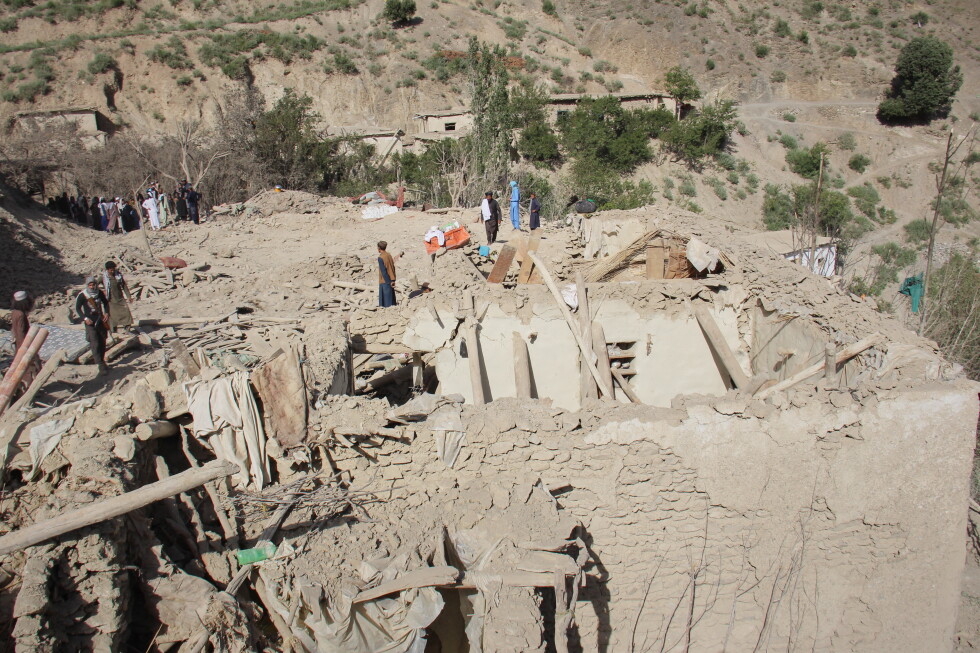
Fresh cross-border violence has shattered a rare month-long lull in hostilities between Pakistan and Afghanistan, after the United Nations Assistance Mission in Afghanistan (UNAMA) confirmed Thursday that 13 civilians, mostly women and children, were killed in Pakistani airstrikes carried out in eastern Afghanistan a day earlier. The UN’s official count matches the casualty figures released Wednesday by Afghan government authorities, whose initial claims Pakistan quickly dismissed as false propaganda.
According to UNAMA’s public post on social media platform X, the airstrikes conducted overnight between Tuesday and Wednesday left 13 civilians dead and another 10 injured, with the vast majority of casualties being children and women. The mission has renewed its urgent call for immediate steps to de-escalate tensions between the two neighboring states, calling for a permanent ceasefire, guaranteed protection for civilian populations, the reopening of long-closed border crossings to allow critical humanitarian aid to flow, and direct diplomatic dialogue to resolve long-standing bilateral disputes.
The shared border between Pakistan and Afghanistan has been fully closed for months, a closure that has crippled cross-border trade and passenger transportation, leaving thousands of travelers stranded on both sides of the frontier. The latest clash comes after a period of heightened confrontation dating back to February of this year, when Islamabad officially declared it was in an “open war” with Afghanistan’s Taliban-led government. That declaration followed a retaliatory Afghan attack on Pakistani positions in response to an earlier Pakistani airstrike inside Afghan territory. Since February, hundreds of people have been killed in repeated clashes along the border, and multiple rounds of international mediation have failed to broker a lasting ceasefire that can hold.
The root of the current bilateral dispute lies in Pakistan’s longstanding accusation that the Afghan government harbors militants responsible for high-casualty attacks inside Pakistan, most notably the Tehrik-e-Taliban Pakistan (TTP, also known as the Pakistani Taliban). The TTP is organizationally separate from but closely aligned to the Afghan Taliban, which seized control of Afghanistan in 2021 following the chaotic withdrawal of U.S.-led coalition forces from the country. Kabul has consistently denied Pakistan’s accusations that it provides safe haven to anti-Pakistan militants.
Pakistan has defended its latest round of airstrikes, confirming that it carried out the strikes along the border Wednesday specifically to target militant training camps and hideouts. Speaking at a weekly press briefing in Islamabad Thursday, Pakistani Foreign Ministry spokesperson Tahir Andrabi explained that the strikes were launched in response to a recent string of militant attacks inside Pakistani territory. “We carried out these strikes to target safe havens, masterminds and planners belonging to Fitna al-Khawarij,” Andrabi stated, using the official term the Pakistani government uses to refer to the TTP and other militant groups operating against the state. “We acted on credible intelligence, and there was selective targeting of their hideouts.”
Andrabi added that the safety and security of Pakistani citizens remains the government’s top national priority, and counterterrorism operations against militant hideouts will continue. “We continue to undertake military strikes with precision and accuracy, eliminating terrorist hideouts,” he said. When asked directly about UNAMA’s civilian casualty report, Andrabi declined to issue an immediate official comment, noting that Pakistani authorities would first need to review the full UN document. He did, however, question the methodology UNAMA used to document and confirm the casualty figures. “What is their methodology for measuring that? Our strikes were precise and targeted at the hideouts and camps of these terrorists,” he said.
Most of the fighting between the two states has been concentrated along the shared border, but Pakistan has previously launched airstrikes deeper inside Afghan territory, including one strike in March that hit a drug-treatment center in Kabul. Afghan officials claimed that strike killed more than 400 people, a death toll Pakistan has repeatedly disputed, maintaining the strike targeted an insurgent ammunition depot and did not intentionally target civilians.
Wednesday’s airstrikes came months after China brokered and hosted peace talks between delegations from Pakistan and Afghanistan. Following the talks, Beijing announced that both sides had agreed to avoid further escalation of tensions and work toward a negotiated solution to their disputes. Pakistani authorities say China and other neutral friendly countries continue to encourage both sides to negotiate a durable peace agreement, though progress has yet to materialize after the latest outbreak of violence.