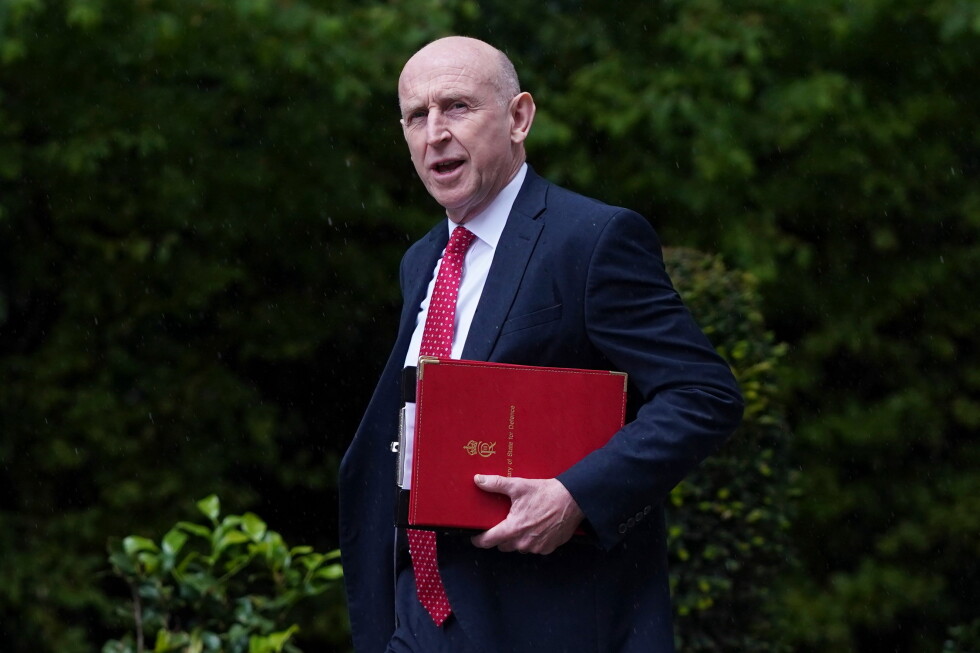
LONDON – In a sudden shake-up to Keir Starmer’s newly formed Labour government, UK Defense Secretary John Healey stepped down on Thursday, citing the administration’s failure to allocate sufficient military funding to counter mounting global security risks.
In his formal resignation letter addressed to Prime Minister Starmer, Healey criticized the government’s upcoming Defense Investment Plan, stating that the proposal falls “well short of what is required at this dangerous time” for the United Kingdom and its defense commitments around the world.
Discussions over the new defense strategy have been mired in internal conflict for weeks. Publication of the plan has already been pushed back multiple times, with multiple government sources confirming deep rifts between the Ministry of Defence and the Treasury over how much public funding should be directed to military upgrades and operations.
Prime Minister Starmer has already laid out a long-term timeline for increasing UK defense spending: a target of 2.5% of gross domestic product by 2027, and a rise to 3% of GDP by 2034. But senior defense figures and military leaders have repeatedly pushed back on this schedule, arguing that the gradual increase is too slow to address the rapidly shifting global threat landscape.
Healey echoed this criticism in his letter, writing: “You have been unable, and the Treasury has been unwilling, to commit the resources that the nation needs to defend the country at this time of rising threats.” He pointed to a sharp rise in global security demands, specifically naming ongoing tensions from the conflict in Ukraine, persistent aggressive posture from Russia, and escalating instability tied to the ongoing conflict in Iran as evidence of the growing strain on UK military capacity.
With no path to resolve the funding dispute, Healey concluded, “I am now left with no other option than to submit my resignation as your Defence Secretary.”
Healey has only held the post of defense chief since the Labour Party won general elections in July 2024, but in his short tenure he earned a reputation as a focused, capable minister widely respected across party lines. He made major contributions to Western security efforts in recent months: he played a central role in expanding international backing for Ukraine’s sovereignty, and led efforts to build a multinational security coalition to guarantee long-term stability for the country if a ceasefire is negotiated. He also spearheaded work to develop an international maritime security task force designed to protect commercial shipping traffic through the Strait of Hormuz, a critical global energy chokepine, amid ongoing instability in the Middle East.
Healey’s departure marks the latest significant challenge for Starmer, who already faces growing internal pressure from within his own party to step down, adding further political instability to a new government still finding its footing just months after taking office.