作者: admin

  • Three Indian sailors killed in US strike on oil tanker

    Three Indian sailors killed in US strike on oil tanker

    In a deadly escalation of maritime tensions tied to the ongoing US-Iran conflict, three Indian crew members have been confirmed dead following a United States military strike on an oil tanker in the Gulf of Oman, a senior Indian federal minister has announced. This marks the second attack in less than a week by US forces against commercial vessels with Indian crews operating in the strategic waterway.

    The targeted vessel, the MT Settebello, which sails under the flag of Palau, was struck on Wednesday. US Central Command (Centcom) has published footage purporting to show the precision strike against the tanker’s engine room. According to US military accounts, the attack was launched after the Settebello’s crew repeatedly ignored orders from American forces, who accused the vessel of breaking a US blockade by attempting to carry Iranian crude oil. Of the 24 Indian nationals serving on board, 21 crew members have been safely rescued, while the three missing sailors were later confirmed killed in the operation.

    India’s federal Shipping Minister Sarbananda Sonowal described the fatal incident as deeply unfortunate in a post on the social platform X, confirming that authorities are arranging to repatriate the three victims’ remains to India. In response to the strike, the Indian government has formally summoned the deputy chief of mission of the United States embassy in New Delhi to convey its official position. The Indian government has long maintained a public stance that all targeting of commercial civilian shipping and infrastructure in the Gulf region must end immediately.

    This attack comes just two days after another similar incident on Monday, when US forces struck a second Palau-flagged oil tanker, the Marivex, which also carried an all-Indian crew, in the Gulf of Oman. In that case, Omani military forces rescued all 24 crew members on board without reported casualties.

    The US blockade of Iranian ports was implemented after Iran effectively shut down the Strait of Hormuz, the critical global chokepoint through which roughly 20 percent of the world’s daily oil and natural gas supplies pass, amid the ongoing open conflict between the two nations. Since the blockade was launched on April 13, Centcom says US forces have disabled eight commercial vessels and redirected 134 others that attempted to violate the restrictions.

    Indian maritime union leaders have openly criticized the US operation. Manoj Yadav, general secretary of the Forward Seamen’s Union of India (FSUI), told local media he refuses to accept that US forces lacked clear information about the nationalities of the crews on the targeted vessels. Yadav noted that if vessels failed to comply with instructions, detaining the ships and their crews would have been a far more appropriate alternative to a lethal strike on the engine room. His union has already begun contacting the families of the deceased sailors to offer support and formal notification of their deaths.

    The deadly tanker strike comes as tensions between Washington and Tehran have reached new heights, with no sign of de-escalation on the horizon. The two nations have exchanged cross-border strikes for two straight days, severely undermining the fragile temporary ceasefire that was agreed upon back in April. On Wednesday, US President Donald Trump ramped up rhetoric against Iran, threatening to strike the country “hard” and accusing Tehran of dragging its feet on finalizing a peace agreement while playing the United States “for suckers.”

    The current full-scale conflict began on February 28, when joint strikes by the United States and Israel killed Iran’s supreme leader. Iran immediately responded with coordinated attacks against Israel and US-aligned Gulf states, leading to rapid escalation across the Middle East that drew Lebanon into open hostilities in March.
  • Pauline Hanson breaks down talking about jail time, DV in Perth speech

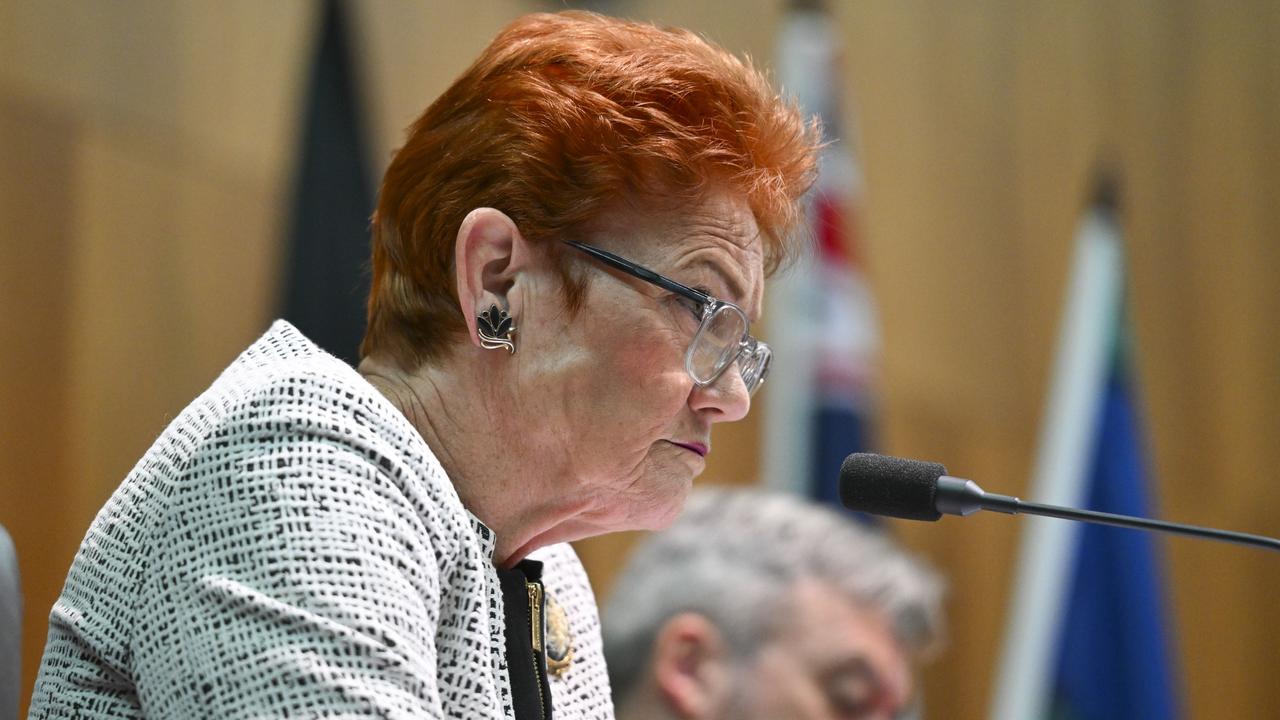
    Pauline Hanson breaks down talking about jail time, DV in Perth speech

    An emotional address at a Western Australian business community event has thrust One Nation leader Pauline Hanson back into the Australian political spotlight, as senior moderate Liberal Party figures publicly push for a formal electoral arrangement between the two conservative parties ahead of the next federal poll.

    The 71-year-old One Nation founder became visibly tearful during her Thursday speech to the Swan Chamber of Commerce in Perth’s eastern suburbs, opening up about two of the most traumatic chapters of her personal and political life: her 2003 conviction for election fraud that landed her 11 weeks behind bars, and allegations of domestic abuse during her second marriage.

    Hanson’s conviction was ultimately overturned on appeal, but in her address she doubled down on long-held claims that the legal case against her was a coordinated political witch hunt, organized by two of Australian politics’ most prominent conservative and Labor figures: former Liberal Prime Minister Tony Abbott and former Queensland Labor Premier Peter Beattie.

    She detailed how Beattie’s Queensland government changed state electoral laws retroactively ahead of her trial, expanding the maximum penalty from a six-month prison sentence or fine to seven years, a change that allowed the judge to sentence her to three years behind bars per conviction. Against that backdrop, Hanson claimed Abbott arranged a secret slush fund to bankroll the legal challenge against her, convincing 10 high-profile Australian donors to contribute $10,000 each to the effort. Though she could not name all donors, she confirmed at least one was based in Western Australia.

    The One Nation leader said the hardest part of her time in prison was the impact on her three children, who were left without parental support at the time—their fathers were absent, leaving Hanson as their only primary caregiver. “Through politics, they’ve had to wear so much,” Hanson told the crowd, wiping away tears. But she shared that her children have recently told her the ordeal taught them critical life skills: “it hasn’t been easy, but you’ve taught us resilience to be independent, to stand on our own two feet, and for that we thank you.” This is not the first time Hanson has opened up about the experience: earlier this year, she teared up during an interview with Nine Network host Karl Stefanovic, recalling that she never imagined she would end up in prison and called the experience devastating.

    After discussing her prison ordeal, Hanson also spoke publicly for the first time about past domestic violence during her second marriage, which ended in divorce in 1987. “I won’t go into detail … We split up in 1987 and from that time I’ve actually have been a single woman,” she said, adding that she has had a small number of long-term relationships but never remarried. “it’s not something for me.”

    Hanson also used the event to confirm that her daughter Lee, who ran unsuccessfully as a One Nation candidate in the 2025 federal election and currently works as a staffer for one of the party’s sitting senators, will run as the party’s Senate candidate at the next federal election. “I don’t believe in jobs for the boys, and either you can cut it or you can’t. Because what I’m trying to do, what I’m trying to achieve, you need the right people around you to drive it. And that’s why I think she’s going to be a great asset,” Hanson said, noting that she has no plans to bring her sons into her political operation.

    Hanson’s emotional appearance comes as senior Liberal Party figures ramp up pressure on opposition leader Angus Taylor to strike a formal preference-sharing and seat division deal with One Nation, as the right-wing populist party continues to climb in national opinion polls. Liberal frontbencher Tony Pasin became the most senior Liberal MP to publicly call for a deal this week, urging the opposition to negotiate a seat arrangement that would see the two parties avoid splitting conservative votes in marginal electorates. Taylor has not rejected the proposal outright, leaving the door open to a deal in recent public comments. Tony Abbott, who now serves as Liberal Party national president and was named by Hanson as the architect of her 2003 legal challenge, has already publicly backed a potential preference swap between the two parties.

  • Pope Leo heads to Canary Islands to highlight perilous journeys of migrants

    Pope Leo heads to Canary Islands to highlight perilous journeys of migrants

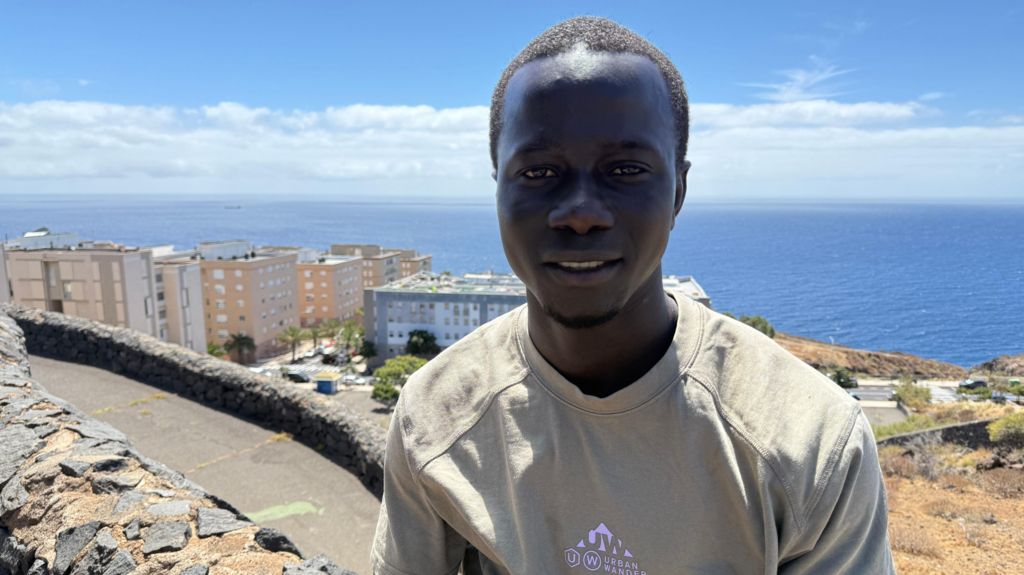
    At 19 years old, Bakary Jaiju made an unthinkable choice: leave behind his young wife and infant child in the Gambia, board an overcrowded wooden dinghy, and cross the deadly Atlantic Ocean to Europe in search of a future he could never build at home. For seven terrifying days at sea, the gravity of his gamble sank in with every passing hour. Food and fresh water dwindled to almost nothing, and sleep became a luxury no one dared afford—one wrong move, and a sleeper would tumble into the churning open water.

    “I decided to go, whether I survive or I die, because I want my family to be in a good condition,” Jaiju recalled from his new home in Tenerife, where he finally landed late last year after surviving the crossing. He counts himself among the extraordinarily lucky. In the months since his arrival, hundreds of other migrants have perished attempting the same treacherous journey, their stories ending before they ever reach Europe’s shores.

    This week, the perilous plight of these migrants and the harrowing survival stories of those who make it will take center stage, as Pope Leo XIV kicks off a visit to Spain’s Canary Islands starting Thursday. The Pope’s focus on migration stands in deliberate contrast to the rising rhetoric of a migration “crisis” and “ideological invasion” that has gained traction across much of Europe.

    Recent data from the United Nations High Commissioner for Refugees confirms that overall migrant sea arrivals to Spain have dropped sharply this year, a decline largely attributed to increased EU-funded interception operations off the coast of West Africa. Even so, thousands of desperate people continue to attempt the crossing, and hundreds continue to lose their lives to the Atlantic. During his trip to Gran Canaria and Tenerife, the Pope will push for expanded “safe and legal pathways” for migration, while calling for a deeply humane approach and a “respectful welcome” for those who have already risked everything to reach European borders. He will also honor those who never made it, dropping a wreath of flowers into the ocean off Gran Canaria to commemorate entire boatloads of migrants that vanished without a trace.

    For Jaiju, survival was only the first hurdle. The 160-person boat that carried him—including dozens of women and children—managed to evade the heightened naval patrols off the coasts of Mauritania and Senegal, only to run out of fuel hundreds of miles from shore. They were eventually spotted and rescued off the small Spanish island of El Hierro. After that, Jaiju spent three freezing, grueling months in a migrant reception camp on Tenerife, before he connected with a local integration project that helps him learn Spanish and navigate the process of securing legal residency.

    The project is the brainchild of Padre Pepe, an outgoing local parish priest who eschews a traditional clerical collar for jeans and checked shirts. He noticed a growing gap in support: local authorities only provided care for underage migrants until they turned 18, after which young people were left completely on their own. “But the streets will eat you up, young people are like carrion there,” Padre Pepe explained. Today, his Good Samaritan Foundation provides housing and vocational training for roughly 170 young migrant men, and the priest argues that local labor markets are more than capable of absorbing these workers. “The labour market could absorb all these people, there is huge demand,” he said. Questioning the increasingly hardline attitudes toward migration across the continent, he added: “It’s hard for me to understand why the human heart is so hard. If we do it well, integrate people well, there is nothing bad in it at all. Quite the contrary.”

    Jaiju’s path to legal status has been smoothed by a controversial one-time policy from Spain’s ruling Socialist government led by Prime Minister Pedro Sánchez. The administration is currently allowing hundreds of thousands of undocumented migrants who arrived before December 2025 to apply for residence and work permits to regularize their status. Padre Pepe’s team is working around the clock to help as many eligible migrants as possible submit their paperwork before the application deadline closes.

    The policy has drawn fierce condemnation from Spanish opposition groups. The conservative Popular Party has labeled the move “irresponsible” and out of step with EU immigration frameworks, while far-right party Vox has decried it as enabling an “invasion” that will overwhelm the country’s public health system, housing market, and security infrastructure. For the Socialist government, however, the move balances humanitarian principle with practical economic reality: like much of the rest of Europe, Spain faces an aging, shrinking native population and a growing gap in available workers.

    That demand is already visible on the ground in the Canary Islands. At the Domingo Alonso Group, a car dealership and service center in Las Palmas de Gran Canaria, managers struggled for months to fill open positions for bodywork painters and panel beaters, unable to recruit local workers. The company partnered with a local government scheme to hire young migrants after they age out of state care, and today the firm employs roughly 30 migrant workers. Initially, the move drew intense backlash online, with critics accusing migrants of “stealing” local jobs, said human resources manager Diana del Molino Rodriguez. “It was a really hard thing to do because immigration was not something seen as positive. Nobody was looking at migrants like persons,” she explained. Today, the program is a success: one of their workers, 19-year-old Tiene Lama from Ivory Coast, earns enough to send hundreds of euros home to his family each month. Dozens of local businesses, including major hotel chains that rely on the islands’ booming tourism industry, have now joined the scheme.

    As Pope Leo works to shift the narrative around migration toward greater compassion, a new EU migration pact is set to take effect this week that will further tighten Europe’s external border controls. The new framework is designed to make it easier to detain and deport migrants who arrive irregularly by sea. For desperate young people like Jaiju, who are already willing to risk death for a better future, policy experts say the new restrictions will do little to deter crossings. Human rights organizations warn the new rules will create new barriers for asylum seekers seeking to have their claims heard.

    The sharpest criticism of the new pact comes from local officials in the Canary Islands, where the policy will be implemented directly. “We have no-one to work in the hotels, drive our buses or work in construction; we don’t have masons or mechanics,” said Francis Candil, the Canary Islands’ deputy minister for welfare. “What we need is a real migration policy that means people from African countries don’t have to risk their lives but can come to Europe and have options for work. Instead, we have Europe trying to protect itself behind walls – and to expel people.”

  • Hong Kong customs swoop ahead of the World Cup, seizing $20M in fake goods

    Hong Kong customs swoop ahead of the World Cup, seizing $20M in fake goods

    Hours before the opening match of the 2026 joint FIFA World Cup hosted by the United States, Mexico, and Canada, Hong Kong customs officials have announced a major bust of counterfeit merchandise, seizing more than 230,000 fake items valued at roughly $20 million. The haul includes tens of thousands of counterfeit World Cup team jerseys, alongside high-end imitation luxury goods and consumer electronics.

    The operation, which ran from late May through early June 2026, targeted smuggling networks operating out of Hong Kong’s logistics hubs. At a press briefing held on June 11, 2026, senior customs inspector Wayne Chung detailed that around 30,000 counterfeit jerseys were recovered in the seizure. Many of these fakes were high-quality replicas of premium player-issue team jerseys, which retail for far higher prices than standard fan versions due to their advanced design and performance materials. Chung noted that the craftsmanship of many fakes is so refined that casual soccer fans struggle to tell them apart from authentic merchandise.

    Investigations indicate the entire shipment of counterfeit goods was bound for international markets, with close to 80% destined for North, Central and South America — the host region for this year’s World Cup. The tournament kicked off later the same day as the press conference, with Mexico facing South Africa in the opening match. Officials believe the counterfeit jerseys were produced to meet soaring tourist and fan demand for World Cup merchandise across the Americas ahead of the tournament.

    Beyond soccer apparel, the seizure also included thousands of counterfeit non-sports goods, including imitation luxury footwear, handbags, watches, and portable audio devices. At the briefing, customs officials displayed prominent examples of the fakes, including replica Louis Vuitton handbags and imitation Rolex watches. Authorities are still working to trace the full supply chain and origins of the counterfeit products.

    As part of the multi-part enforcement operation, six suspects have been arrested. One truck driver was taken into custody at a border checkpoint connecting Hong Kong to mainland China and Macau, while five additional suspects were apprehended for their alleged role in selling the counterfeit jerseys via online retail platforms. All six suspects have since been released on bail as the investigation continues.

    Under Hong Kong’s intellectual property laws, anyone convicted of importing, exporting, distributing, selling, or holding counterfeit goods for commercial sale can face a maximum sentence of five years imprisonment and a fine of approximately $64,000. Officials urged consumers to purchase World Cup merchandise only from authorized retailers to avoid supporting intellectual property theft, and reminded the public that counterfeit goods often violate safety and quality standards.

  • Thai court sentences two men to death over Bangkok shrine bombing

    Thai court sentences two men to death over Bangkok shrine bombing

    Ten years after Thailand’s deadliest terrorist attack shook the heart of Bangkok, a court has handed down death sentences to two ethnic Uyghur men from China convicted of planning and carrying out the 2015 Erawan Shrine bombing – but deep flaws in the investigation and drawn-out legal proceedings have cast persistent doubt over whether the verdict delivers true justice.

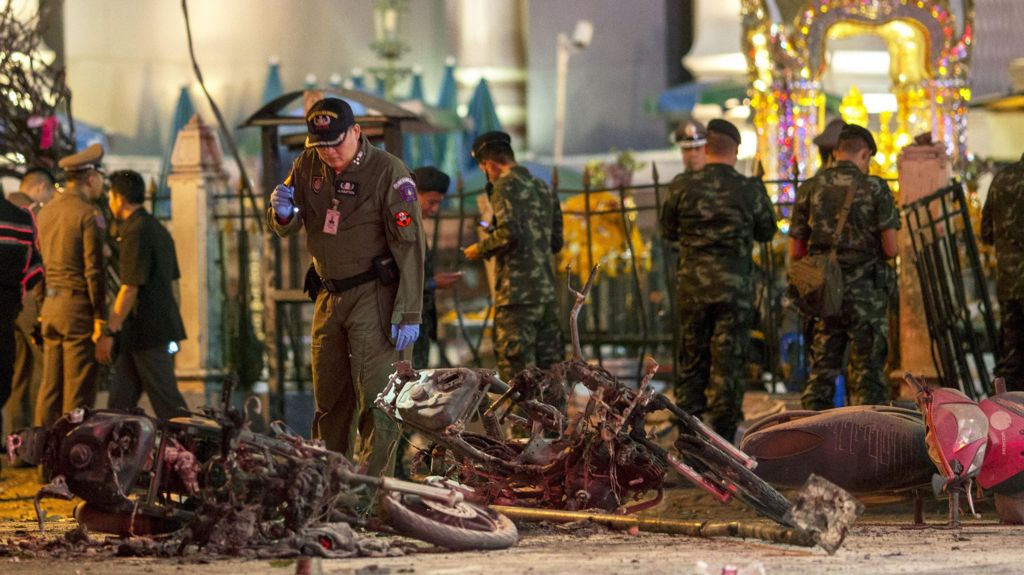
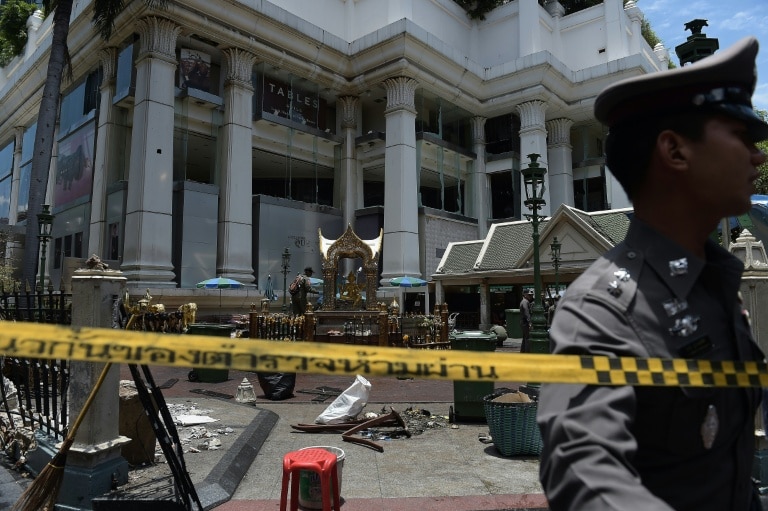
    On the evening of August 17, 2015, a powerful explosive device detonated next to the Erawan Shrine, a popular tourist landmark in central Bangkok that draws thousands of visitors annually. The blast killed 20 people and injured more than 120, tearing through crowds of worshippers and knocking nearby motorcyclists off their vehicles, igniting some of their bikes. A Reuters correspondent who arrived at the scene within minutes described a scene of utter chaos: sirens blaring, first responders scrambling to triage the wounded, and sheets covering the bodies of those killed in the attack. Witnessing a grieving injured man asked to wait for care while holding the hand of his dead wife left an indelible mark; for those familiar with Bangkok’s history of political unrest, this large-scale attack targeting civilians was unprecedented, leaving urgent questions about who was responsible and what motivated the attack.

    From the earliest stages of the investigation, red flags emerged. Fearing negative impacts on the country’s critical tourism industry, the Thai military government ordered the blast site to be cleared and repaired as quickly as possible, reopening the shrine just two days after the attack and cementing over the bomb crater before forensics teams could fully collect evidence. Most security cameras in the area were non-functional at the time of the bombing, and the only usable footage was grainy, showing a man with long hair and thick glasses leaving a backpack under a bench before fleeing. While police captured video of a second suspect disposing of an unexploded secondary bomb in a nearby canal, the primary suspect’s trail quickly went cold. Initially, officials even denied the attack was an act of terrorism, despite its scale and targeting of a high-profile tourist site.

    Just two weeks after the attack, Thai authorities arrested the two men now convicted: Bilal Mohammad, who was found hiding in a suburban Bangkok home where bomb-making chemicals were discovered, traveling on a forged Turkish passport under the name Adem Karadag; and Yusufu Mierali, who was apprehended in Cambodia and extradited to Thailand. Both men are Uyghurs, but Thai police initially acknowledged neither matched the description of the bomber seen in surveillance footage. Arrest warrants were issued for 13 additional suspects, most of whom had already fled Thailand, and the case was effectively declared closed after the arrests, even as most suspects remained at large. In a controversial move, police awarded the $80,000 reward for information leading to arrests to themselves, despite the ongoing open investigation into other co-conspirators.

    In the weeks before the bombing, Thailand had drawn international condemnation for forcibly repatriating 109 Uyghur men to China, a decision that sparked widespread protests from Uyghur rights activists around the world. Many independent analysts quickly connected the attack, which targeted a shrine popular with Chinese tourists, to the repatriation as a likely retaliatory act. But the ruling military junta rejected this narrative out of hand, first suggesting the attack was carried out by anti-government political opponents, then later shifting blame to human trafficking groups angered by a government crackdown on smuggling networks.

    The trial itself stretched on for more than a decade, marked by repeated delays that human rights groups say are unjustifiable. Both defendants were held in military custody and have long claimed they were tortured into giving forced confessions, which they withdrew immediately once the formal trial began. Bilal Mohammad has maintained he was simply waiting for a smuggler to facilitate his travel to Malaysia, en route to Turkey, a common route for Uyghur asylum seekers, and had no involvement in the bombing. Most delays were officially blamed on difficulties finding qualified Uyghur-speaking translators, after the defendants rejected translators provided by the Chinese government.

    International human rights organizations, including the International Commission of Jurists, have heavily criticized the trial process, pointing to widespread human rights violations and systemic failures in Thailand’s criminal justice system exposed by the case. The group argues that the multiple procedural flaws and unreasonable decade-long delay are so severe that the two men should have been released. Defense lawyers have confirmed they will immediately appeal the guilty verdict and death sentences, leaving the legal saga far from over a full decade after the attack that shook the nation.

  • Korea fines e-commerce giant $400m over data breach affecting millions

    Korea fines e-commerce giant $400m over data breach affecting millions

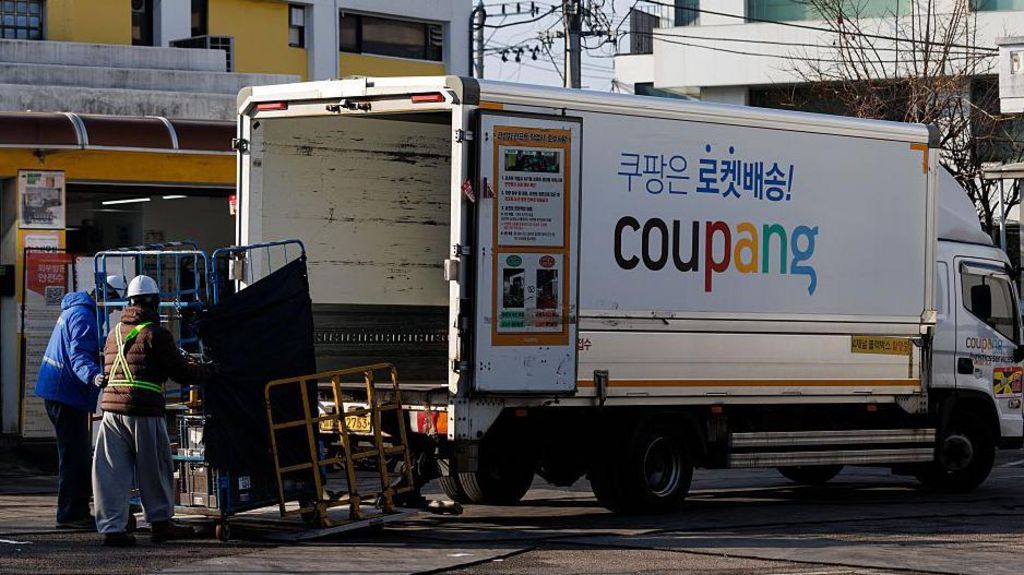
    South Korea’s top privacy regulator has slapped the country’s leading e-commerce platform Coupang with a historic fine exceeding $400 million, the largest penalty ever levied for a data breach in the nation, over a 2023 cyber incident that exposed sensitive personal information of more than 37 million users – a figure that equals over half of South Korea’s total population.

    The Personal Information Protection Commission (PIPC) announced Wednesday that it is imposing a 624.68 billion won fine on Coupang, finding the company violated two key national privacy regulations: failing to uphold required data safety obligations, and collecting personal user information without proper legal justification. A months-long investigation launched after the breach was first reported last November uncovered critical gaps in Coupang’s cybersecurity infrastructure, including inadequate management of authentication signing keys and poorly implemented access controls. These vulnerabilities created the opening that allowed unauthorized actors to access user data, the regulator confirmed.

    The exposed information included full names, contact details, delivery addresses, and complete order histories for affected customers. Widely regarded as South Korea’s equivalent to Amazon, Coupang is the dominant player in the country’s online retail sector. While the company is incorporated in the United States, it generates the vast majority of its revenue from the South Korean market.

    When news of the breach first broke in November 2023, Coupang initially reported that only around 4,500 customer accounts had been compromised, and promptly notified regulatory authorities of the incident. Follow-up internal investigations later revised that number dramatically, revealing that nearly 34 million South Korean-based user accounts were likely exposed. The company has acknowledged that the unauthorized access likely began as early as June 2023, originating from an overseas-based server. In the wake of the scandal, Coupang’s then-CEO Park Dae-jun stepped down from his position, issuing a public apology for the security failure. The company’s chief administrative officer Harold Rogers was subsequently named interim chief executive to lead the response.

    In a statement to the BBC following the PIPC’s announcement, Coupang expressed that it “deeply regrets the concern caused” by the incident and has committed to overhauling its cybersecurity frameworks to prevent future breaches. However, the company confirmed it intends to contest the regulator’s ruling, arguing that PIPC did not adequately incorporate Coupang’s own explanations and corrective measures into its final decision. “Upon receiving the official resolution from the PIPC, we expect that the facts will be clearly established through legal procedures,” a Coupang spokesperson said.

    This record penalty comes at a time when South Korea – a country globally recognized for its advanced digital infrastructure and strict data privacy standards – is grappling with a string of high-profile cybersecurity incidents. Just last year, the nation’s largest mobile operator SK Telecom was hit with a nearly $100 million fine over a separate data breach that compromised the information of more than 20 million subscribers, underscoring growing systemic risks to personal data across major South Korean digital services.

  • Thailand sentences Chinese Uyghurs to death in 2015 shrine bombing case

    Thailand sentences Chinese Uyghurs to death in 2015 shrine bombing case

    After nearly a decade of delayed proceedings and public scrutiny, a Thai court has handed down the long-awaited final verdict in the kingdom’s deadliest terrorist attack: two Chinese Uyghur men have been sentenced to death for carrying out the 2015 bombing at Bangkok’s iconic Erawan Shrine that left 20 people dead and more than 100 injured.

    The 2015 attack ripped through the popular tourist and worship site located in the heart of Bangkok’s central commercial district on an August afternoon. The explosive device, hidden inside a backpack left at the shrine, detonated as crowds of worshippers and sightseers gathered, leaving the area scattered with charred debris and wreckage from nearby damaged motorbikes. Multiple Chinese tourists were among those killed in the blast, making it one of the most high-profile violent incidents to strike Thailand’s key tourism sector in modern history.

    The guilty ruling delivered on Thursday convicts Yusufu Mieraili and Bilal Mohammed of premeditated murder and attempted murder for their role in planting the bomb. In a statement accompanying the verdict, a member of the four-judge panel explained the severity of the sentence, noting that “the defendants committed a single act that violated multiple laws. The court therefore imposed the harshest penalty available under the law, the death sentence.” The two men, who appeared in court in standard prison uniforms, were acquitted on separate charges connected to a second smaller bombing at a pier in Bangkok’s Charoen Nakhon district that occurred shortly after the shrine attack.

    Immediately after the verdict was read, Mieraili rejected the court’s finding, telling reporters “RIP Thailand’s justice system. I don’t accept any of this. I didn’t do anything wrong.” The defendants’ lead legal counsel, Choochat Kanpai, confirmed that his clients will immediately file an appeal against the ruling, citing gaps in the court’s consideration of key evidence and allegations of improper treatment of the defendants during the extended trial proceedings.

    The case has been marked by repeated delays and controversy since the attack took place 10 years ago. Within days of the bombing, Thai police issued warrants for 17 suspects, but only Mieraili and Mohammed were arrested in the immediate aftermath. The case went to trial in 2016, but hundreds of witness testimonies and repeated procedural disruptions pushed the final verdict back for years. Delays were caused by multiple factors, including widespread court shutdowns during the global COVID-19 pandemic, and a high-profile disruption when the court-appointed translator for the accused was arrested on drug charges. In 2017, a third suspect, Thai national Wanna Suansan, was apprehended upon her return to Bangkok and charged with terrorism-related counts connected to the blast, but she was acquitted of all charges earlier this year.

    The timing of the 2015 attack, which came just weeks after Thailand’s ruling military junta forcibly repatriated 109 Uyghurs to China, sparked long-running international speculation over the attack’s potential motives. At the time, Thailand was a key transit point for Uyghurs seeking to leave China, and the junta had been moving to strengthen diplomatic and economic ties with Beijing. Rights groups have long documented what they describe as widespread cultural and religious repression of Uyghurs, a Turkic Muslim minority group from China’s far western Xinjiang region. China has repeatedly denied allegations of mass human rights abuses in Xinjiang, which include claims of mass internment of over one million Uyghurs and other Muslim minorities.

    Most recently, in February 2025, Thailand drew sharp international condemnation from the United Nations and global human rights groups after it deported dozens more Uyghur detainees back to China, despite repeated warnings that the group would face systematic persecution on their return.

    Today, the Erawan Shrine remains one of the most visited attractions for Chinese tourists traveling to Bangkok, but an Agence France-Presse survey of visitors ahead of the verdict found that almost none of the tourists questioned were aware of the 2015 bombing or the decade-long trial that followed. One Chinese tourist who said he visits the shrine annually declined to comment on the attack when approached, only saying “It’s nice to come here to pray” before ending the conversation.

  • Pope visiting ‘dock of shame’ in Canary Islands where migrants slept in squalor

    Pope visiting ‘dock of shame’ in Canary Islands where migrants slept in squalor

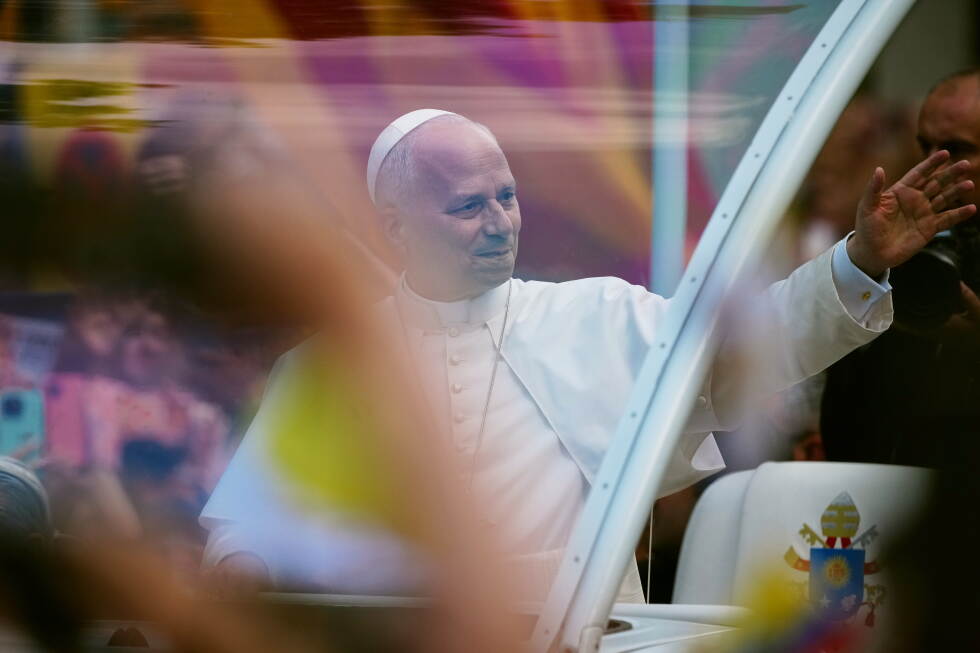
    BARCELONA, Spain — On the final leg of his week-long official visit to Spain, Pope Leo XIV traveled Thursday to the Canary Islands, a Spanish archipelago off the northwest coast of Africa, to honor a long-held wish of his predecessor Pope Francis and shine a global spotlight on the dangerous journey that hundreds of thousands of migrants undertake each year to reach European shores. Positioned far closer to West Africa than to mainland Spain’s Iberian Peninsula, the Canaries have emerged as one of the most pivotal entry points for irregular migration to the European Union, making it a natural epicenter for debates over migration policy across the continent.

    During his two-day visit, the pontiff scheduled a series of engagements: private meetings with migrants who have arrived in the archipelago in recent months, discussions with representatives of Catholic Church outreach groups and humanitarian organizations that provide life-saving aid and integration support for new arrivals, and a solemn commemoration at a site that has become a global symbol of the world’s failure to protect vulnerable migrants: Arguineguin Port, infamously dubbed the “dock of shame” after a 2020 crisis exposed inhumane conditions for displaced people.

    In 2020, a sudden spike in migrant crossings to the Canary Islands overwhelmed local authorities, forcing thousands of new arrivals to camp in open-air makeshift facilities on the port’s dock. For weeks, migrants had access only to basic blankets, with no functioning shower facilities, limited access to food and medical care, and no proper legal support for people seeking international asylum. Many were detained far longer than the 3-day maximum detention period permitted under Spanish law, triggering national outcry. Spain’s national ombudsman eventually ordered the camp closed and all migrants relocated, leaving a permanent stain on the country’s immigration policy reputation.

    Pope Francis, who centered much of his papacy on upholding the biblical call to “welcome the stranger” and made refugee rights a defining policy priority, had long planned to visit the Canary Islands to stand in solidarity with migrants after the 2020 crisis, but he never had the opportunity to make the trip before stepping down. Pope Leo, the first American pope, has carried forward this commitment, emerging as a vocal critic of hardline migration policies both in his home country, where he has pushed back against former President Donald Trump’s mass deportation crackdown, and across the globe.

    Earlier in his Spanish trip, Pope Leo made history by becoming the first pope ever to address the Spanish Parliament, where he delivered a rousing defense of migrant dignity that earned him a seven-minute standing ovation from lawmakers. “The moral greatness of a nation is manifested, above all, in its capacity to accompany, protect and love those lives that are most fragile,” he told the chamber, extending his framing of inherent human dignity to unborn children, the elderly, and people living with terminal illness. Beyond his call for welcome, the pope has pushed for coordinated global action to dismantle human smuggling networks, establish safe, legal migration pathways, and invest in economic development in migrants’ countries of origin to give people the choice to build stable lives at home rather than undertaking dangerous cross-border journeys.

    Spain’s current Socialist-led government has carved out a unique stance on migration relative to many other Western nations, bucking the hardline trend that has taken hold across much of Europe and the United States. Prime Minister Pedro Sánchez has openly defended liberal immigration policies on both humanitarian and economic grounds, pointing to Spain’s rapidly aging population and chronically low birth rate, which have left critical gaps in the national workforce that immigrant workers can fill. Earlier this year, the administration launched an ambitious regularization campaign that will grant legal status to hundreds of thousands of unauthorized migrants currently living and working in the country.

    Migrant arrivals to the Canary Islands hit a peak of nearly 47,000 people in 2024, but numbers have dropped dramatically in recent years, with just over 2,000 arrivals recorded in the first four months of 2026. Following his visit to the Canaries, Pope Leo will continue his tour of key migration epicenters next month, when he plans to spend U.S. Independence Day on the Italian island of Lampedusa — another major entry point for migrants crossing from North Africa. The visit will echo Pope Francis’ first official trip outside Rome back in 2013, when he traveled to Lampedusa to toss a wreath into the Mediterranean Sea in honor of thousands of migrants who died attempting the crossing, and coined his iconic phrase decrying the “globalization of indifference” that allows the world to turn a blind eye to migrant suffering.

    This coverage from the Associated Press is supported through a collaboration with The Conversation US, with funding provided by Lilly Endowment Inc. The AP retains sole editorial responsibility for all content.

  • Knicks fans go wild as New York team makes biggest comeback in NBA Finals history

    Knicks fans go wild as New York team makes biggest comeback in NBA Finals history

    On a feverish Wednesday night at Manhattan’s iconic Madison Square Garden, the New York Knicks etched their name into NBA history, pulling off the largest comeback in Finals history to secure a 107-106 one-point win over the San Antonio Spurs, with the game-winning basket dropping with just 1.2 seconds left on the clock.

    The matchup marked Game 4 of the best-of-seven championship series, and carried extra weight for New York fans: it was the first time the franchise had hosted a Finals game in 27 years, having last reached the league’s final stage back in 1999, when they fell to the very same Spurs side they faced this week.

    London-born forward OG Anunoby, who joined the Knicks roster in January 2024, delivered the iconic game-winning three-pointer that sent the sold-out crowd into hysterics. As fans flooded the stands with chants of “O-G! O-G!”, A-list spectators dotted the courtside, including pop superstar Taylor Swift – who sported a playful “Stevie Knicks” shirt that blended the team’s name with Fleetwood Mac legend Stevie Nicks – Academy Award-nominated actor Timothée Chalamet, iconic New York filmmaker Spike Lee, late-night host Jimmy Fallon, comedy star Ben Stiller, and pop trio Haim members Este and Alana Haim. Post-game, Swift was spotted jumping for joy while exiting the arena, even stopping for a playful twirl with a member of the Knicks City Dancers.

    New York Mayor Zohran Mamdani captured the collective shock and joy of the city in a viral all-caps post on X, writing simply: “SPEECHLESS.” Knicks head coach Mike Brown echoed that awe in post-game comments, calling Anunoby’s clutch shot “the most iconic shot in the history of New York basketball” adding, “It was just unbelievable.”

    The 2025-26 season has already represented a stunning reversal of fortune for a franchise that has spent decades mired in mediocrity after its 1999 Finals appearance. Long-suffering New Yorkers have poured into city streets to celebrate every playoff win, turning the five boroughs into a sea of orange and blue. City landmarks have embraced the moment: the Empire State Building has been lit up in the team’s signature colors every game night, and even the iconic marble lions outside the New York Public Library’s Fifth Avenue branch have gotten in on the Knicks fever.

    “It’s electric out there, you can feel the energy everywhere you go,” one local fan told the BBC earlier this week. Sol, a 31-year-old New York resident, added, “I can’t say I’ve ever seen anything like this before because in 1999 I was 4 years old. I’m just trying to soak it all in.” No Knicks fan has watched their team lift the Larry O’Brien Championship Trophy in their lifetime – the franchise’s last championship win came all the way back in 1973.

    With Wednesday’s win, the Knicks now hold a commanding 3-1 series lead, needing just one more victory to claim the historic title. Their first chance to close out the series will come this coming Saturday, when the team travels to San Antonio for Game 5. While the path to the trophy now runs through the Spurs’ home court, and San Antonio remains capable of pulling off a comeback of its own – the franchise could still claim the title if it wins three straight games – the night belonged to New York, in what will go down as one of the most memorable games in NBA history.

  • What to know about the stabbing that set off fiery riots in Northern Ireland

    What to know about the stabbing that set off fiery riots in Northern Ireland

    BELFAST, Northern Ireland – A brutal street stabbing committed by an asylum-seeking Sudanese man in Northern Ireland has ignited two consecutive nights of violent, arson-fueled rioting, stoked by preexisting anti-migrant rhetoric that has been spreading across parts of the United Kingdom and Europe. The 30-year-old suspect, Hadi Alodid, made his first court appearance at Belfast Magistrates’ Court on Wednesday, where he faced charges including attempted murder, a separate count of threatening to kill, and illegal possession of a bladed weapon.

    According to law enforcement testimony delivered during the hearing, Alodid carried out the attack with a common kitchen knife, leaving his primary victim, Stephen Ogilvie, permanently blinded in the left eye with deep lacerations across the head, face, and back. After the stabbing, while Alodid received medical treatment for a self-inflicted hand wound, he allegedly threatened to kill an attending radiologist. A detective testifying in court shared that Alodid told hospital staff, “I’ve killed someone, I don’t know if they are dead.” To date, investigators have not confirmed a clear motive for the attack, though they have explicitly ruled out terrorism as a driving factor. Alodid declined to secure legal representation through an Arabic interpreter, entered no plea during the Wednesday hearing, and was ordered to remain in custody pending further proceedings.

    The first wave of unrest broke out within hours of the attack on Tuesday, when groups of masked rioters took to Belfast’s streets. The mob set fire to multiple residential properties that they claimed housed migrant families, torched a city bus, and launched a barrage of rocks and other projectiles at responding police officers. Firefighters were forced to carry out dramatic rescue operations to pull trapped residents out of burning homes. By the end of the two days of violence, more than 20 local residents had been left homeless, including African migrant communities already settled in the area. Anselme Shima, a Congolese native who has lived in Belfast for nearly a decade, described the chaos as deeply traumatic. “I’ve lived on my street for almost 10 years, I have a good relationship with my neighbors, but last night was a horrific one,” Shima said. “We don’t know what to do. I’m scared. Seeing this, I’m wondering if I’m next.” Police deployed water cannons to disperse the rioters, who tore bricks and stone chunks from local garden walls and patios to hurl at officers.

    Senior political leaders from both blocs of Northern Ireland’s power-sharing regional government have unanimously condemned the outbreak of violence. First Minister Michelle O’Neill of the Irish nationalist party Sinn Féin labeled the unrest “thuggery,” echoing widespread cross-party rejection of the rioting.

    The current unrest in Belfast mirrors a pattern of anti-migrant violence that has followed recent high-profile stabbing cases across the U.K. over the past two years. Most notably, three young girls were killed in a 2024 stabbing attack at a dance class near Liverpool, which sparked widespread rioting across England and parts of Northern Ireland after false social media claims misidentified the underage suspect as a Muslim asylum seeker. Even after police confirmed the suspect was a British citizen born in Wales, raised by Rwandan Christian parents, violence remained centered on migrant and Muslim communities. The Belfast riots also come just one week after violent clashes between protesters and police in Southampton, which erupted following the sentencing of a man convicted of fatally stabbing university student Henry Nowak.

    In the Southampton case, the stabbing, carried out by Vickrum Digwa, exposed deep tensions over policing and immigration. Judge William Mousley found that Digwa, who used an illegal long dagger after initially carrying a traditional Sikh ceremonial knife, misled police by falsely claiming Nowak had attacked him first, resulting in a life prison sentence. Outrage among far-right groups grew after it was revealed that responding officers, called to the scene of a reported racist assault, misidentified Nowak as the perpetrator. Officers dismissed his dying pleas that he had been stabbed and could not breathe, handcuffing him as he lost consciousness. Nigel Farage, leader of the anti-immigration Reform UK party, seized on the case to promote the far-right talking point of “two-tier policing” – the unsubstantiated claim that British policing systems systematically favor ethnic minorities over white residents. While government officials and police leaders have repeatedly denied the existence of such bias, many independent analysts note that multiple major studies, including a 2022 report on London’s Metropolitan Police, the U.K.’s largest force, have confirmed the force is plagued by widespread institutional racism that disadvantages ethnic minority communities.

    Far-right and anti-immigration activists across social media have actively organized these post-stabbing protests, with prominent international figures amplifying their rhetoric to stoke division. High-profile far-right British activist Stephen Yaxley-Lennon, better known by his pseudonym Tommy Robinson, has been a key voice calling protesters to action. Tech billionaire Elon Musk, owner of the social platform X, has amplified the outrage over Nowak’s killing, posting more than 100 times about the case around the time of Digwa’s trial and offering to fund a private prosecution of the local police force. U.S. Vice President JD Vance also waded into the debate, posting on X that the killing was proof of “the mass invasion of migrants, many of whom despise the West and the people who love it.” U.K. Prime Minister Keir Starmer pushed back sharply against these foreign interventions, criticizing outside actors “trying to interfere in our democracy and seeking to stir up division on our streets.”

    The unrest in Belfast reflects a broader, years-long surge in anti-immigrant sentiment across the U.K. and much of Western Europe, fueled by ongoing political debates over asylum policy, the steady arrival of asylum seekers via small-boat crossings across the English Channel, and rising public pressure on housing and public services.

    Some British anti-immigration political figures have blamed the open border policy between the U.K.’s Northern Ireland and the Republic of Ireland for allowing Alodid to enter the region. Alodid reportedly traveled from Paris to Dublin before moving north into Northern Ireland, a path made possible by the free movement policy that has been a core pillar of the 1998 Good Friday Agreement, the peace deal that ended 30 years of sectarian conflict known as “The Troubles” that killed nearly 3,600 people. “There is absolutely no doubt in my mind that this man should not have been in this country,” Farage said Wednesday. “He entered the country illegally. And is it any surprise that people in Belfast and elsewhere are scared?”