Northern Ireland has been rocked by a second consecutive night of violent unrest, triggered by a recent stabbing in Belfast and stoked by far-right agitation targeting migrant communities. Senior UK government officials have labeled the violence unabashed “racist thuggery”, after 16 people were arrested and 12 police officers were injured during Wednesday’s clashes.
The unrest first erupted on Monday, following a knife attack that left local man Stephen Ogilvie seriously injured. A 30-year-old Sudanese national, Hadi Alodid, appeared before Belfast magistrates on Wednesday charged with attempted murder, and was remanded in custody ahead of a next hearing scheduled for July 8. Within an hour of the attack, footage of the incident was posted to the social platform X by far-right activist Stephen Yaxley-Lennon, also known as Tommy Robinson, and was subsequently amplified by X owner Elon Musk, turning a local criminal incident into a tinderbox for anti-immigration rage.
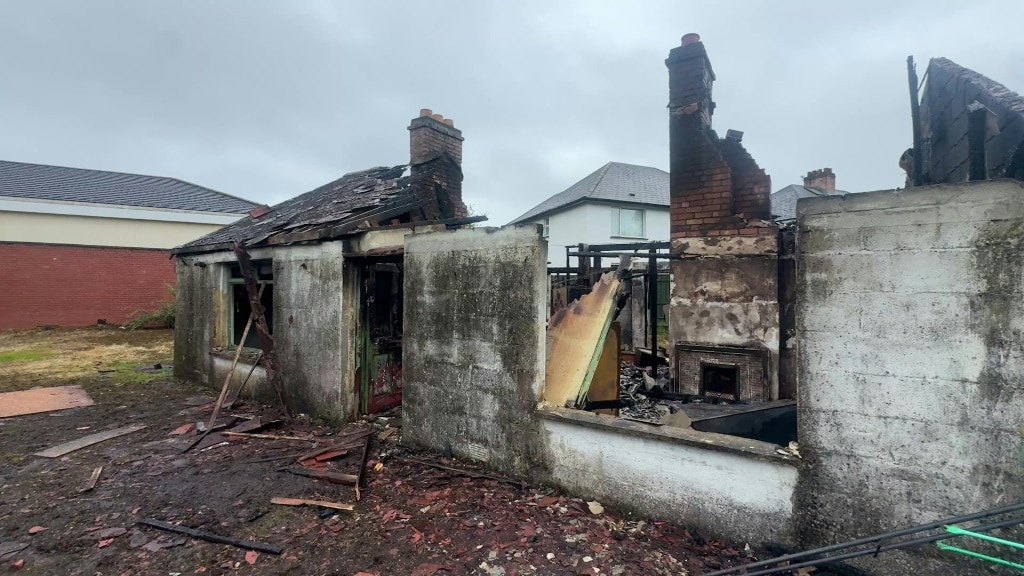
On Tuesday, the first major night of violence left the region reeling: masked rioters set vehicles and buildings ablaze, forced dozens of families from their homes, and forced Northern Ireland’s largest main mosque to close its doors for the first time in its 46-year history. Mosque chairman Mohammed Arshed noted that the community had never faced such severe, nearby unrest since opening in 1978.
Violence spilled into a second night on Wednesday, when AFP correspondents on the ground witnessed dozens of masked agitators clashing with riot police into the late hours. Rioters set a civilian car and a boarded-up property on fire, and hurled projectiles including petrol bombs and bricks at officers responding to the unrest. Police deployed water cannon and mounted charges to push the rioters back, after the group attempted to advance on a local hotel that was being used to house asylum seekers. Northern Ireland Secretary Hilary Benn confirmed that while the scale of Wednesday’s disorder was smaller than Tuesday’s widespread violence, the harm and fear inflicted on vulnerable communities cannot be understated.
“It was really important to convey the sense of fear that has been created, above all for those who were intimidated, burned out of their houses by masked thugs on the basis of the colour of their skin,” Benn told Sky News Thursday. Benn also added that authorities had received troubling reports of commuters being stopped and interrogated about their nationality while traveling to work. One such incident targeted a nurse en route to her shift at Belfast’s Ulster Hospital, who was chased and intimidated by rioters. Hospital officials praised the nurse for completing her shift despite the terrifying encounter, noting her bravery stood in stark contrast to the rioters’ actions.
UK Prime Minister Keir Starmer quickly condemned the violent scenes as “shocking and completely unacceptable”, while Ogilvie’s own family issued an appeal for calm, urging the public not to use their family’s “terrible tragedy” to divide communities and fuel hostility. Ogilvie, who lost an eye in the attack, remains in stable condition as he recieves medical care.
The unrest also spilled over to the Scottish city of Glasgow, and comes as anti-immigration sentiment simmers across the United Kingdom, stoked by far-right political groups. Most of Tuesday’s violence was concentrated in Protestant unionist areas of Northern Ireland, where some protesters expressed anti-immigration views shared by far-right groups across the country. One protester, who gave only his first name John, said that many working-class people felt they had been manipulated by political leaders, and shared widespread anxiety over rising migrant arrivals across Europe. Accounts linked to self-described “patriot” groups have flooded social media with the attack footage, urging supporters to join protests against mass migration.
Immigration has long been a polarizing hot-button issue in UK politics, and has helped drive the recent rise of the hard-right Reform UK party led by Nigel Farage. Violent anti-immigration protests have become increasingly frequent across the country in recent years. Tensions were already running high across the UK before the Belfast unrest: last week, skirmishes broke out in southern England after far-right groups criticized police handling of the murder of a white student by a British Sikh man.
Local residents in Belfast expressed deep dismay at the violence tearing through their tight-knit communities. A 28-year-old local resident who assisted in evacuating neighbors told AFP: “It’s just sad, this is a really close-knit community.” Another local, 50-year-old plumber Brendan who joined the protests, said no one supported the violence, noting that decades of sectarian conflict that ended with the 1998 Good Friday peace deal had already left the region weary of unrest. But he added that many shared anger over the stabbing, which had rallied disparate groups together.