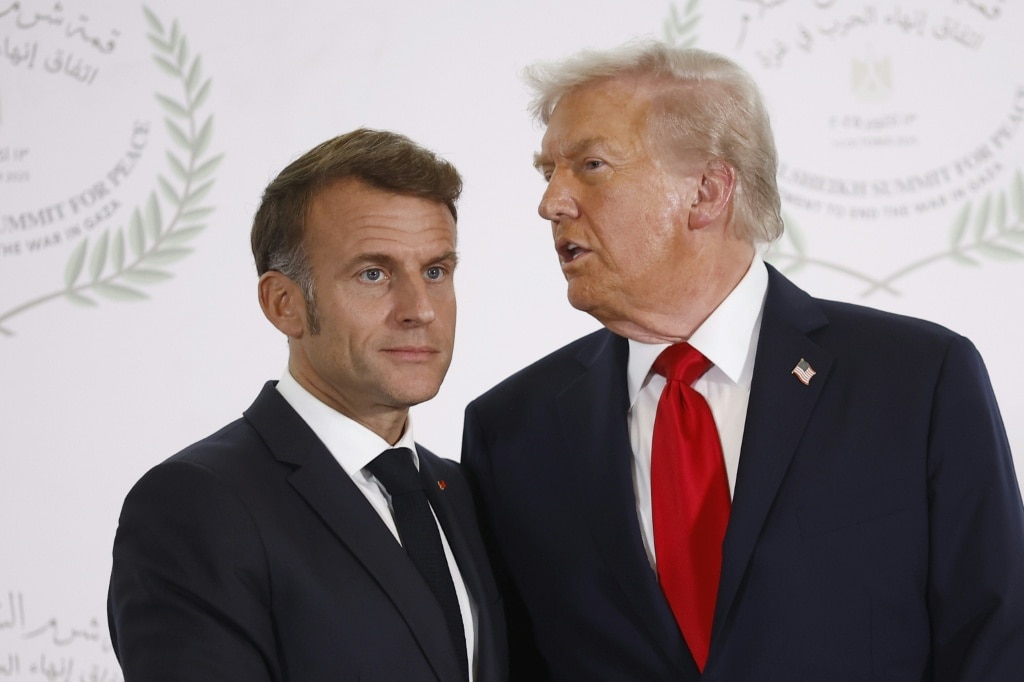
Against the backdrop of shifting global alliances and mounting transatlantic tensions, leaders from the Group of Seven (G7) major advanced economies are convening in the scenic French spa town of Evian-les-Bains on the shores of Lake Geneva this Monday, with a core mission: narrowing deep divides between European allies and U.S. President Donald Trump. Chaired by French President Emmanuel Macron, the three-day summit is already shaping up to be dominated by the U.S. leader’s outsized presence, as local businesses in nearby Geneva prepare for the gathering by boarding up storefronts amid a massive multinational security operation that has deployed thousands of police and military personnel across the region.
This summit marks one of the first large-scale international diplomatic gatherings since the U.S. and Israel launched their conflict against Iran in late February, a military campaign that has upended the entire Middle East and exacerbated long-simmering rifts between Washington and its European partners. Alongside prioritizing diplomatic efforts to end the Iran conflict and reopen the strategically critical Strait of Hormuz — a global shipping chokepoint whose closure has disrupted global energy and trade flows — leaders have a packed agenda rife with potentially contentious issues.
A key focal point will be forging a unified front on the war in Ukraine, which enters its fifth year following Russia’s full-scale invasion in 2022. Ukrainian President Volodymyr Zelenskyy will participate in the talks, a presence Macron emphasized was critical to rebuilding G7 consensus after persistent disagreements over Ukraine policy between Trump and other alliance members over the past year. “Zelensky’s participation is very important for us because we need to rebuild consensus within the G7, including the need for negotiations,” Macron stated Wednesday, publicly acknowledging existing splits.
Beyond Ukraine, other G7 members also plan to press Trump to accept concessions on global trade imbalances, pushing back against the U.S. leader’s well-documented protectionist trade policies. Another contentious topic will be new regulations for large technology platforms to protect minors online, an initiative that has already faced reluctance from U.S. negotiators. To inform this discussion, Sam Altman, CEO of AI giant OpenAI, and Arthur Mensch, head of leading European AI firm Mistral AI, will join a dedicated working lunch on digital child protection.
In a push to expand the G7’s global reach beyond its traditional seven core members — Canada, France, Germany, Italy, Japan, the United Kingdom and the United States — Macron has extended invitations to leaders from five major emerging economies: Brazil, Egypt, India, Kenya and South Korea. For regional consultations on the Iran conflict, the French president has also invited leaders from key Arab states including Egypt, Saudi Arabia, Qatar and the United Arab Emirates to a special standalone session on Tuesday.
As has become the norm for G7 gatherings, China will be absent from the main summit, even as Western nations grow increasingly concerned about Beijing’s market dominance and control over rare earth minerals — critical inputs for nearly all modern consumer electronics. In a gesture of outreach, however, Macron will host a virtual “World Convergence Summit for Growth” on Thursday, which will include participation from G7 members, China and other major emerging market economies.
Trump, who will arrive at the summit just days after celebrating his 80th birthday on June 14 — an event that included an MMA cage fight on the White House lawn — has a history of unpredictable behavior at G7 gatherings. French officials are keen to avoid a repeat of the 2018 Canada G7, where Trump departed the summit early, and have held out hope of persuading him to extend his stay in France for a separate bilateral meeting with Macron in Paris or another location.
For Macron, the summit comes as a critical late opportunity to leave a mark on the global stage, with less than 12 months remaining in his final presidential mandate. The gathering is a cornerstone of his long-held push to advance European strategic sovereignty at a time of shifting U.S. priorities. The talks will also serve as a precursor to the upcoming G20 summit, scheduled for December 2025, which will be hosted by Trump at his own Miami golf resort.
Ahead of the opening, new polling from the European Council on Foreign Relations (ECFR) highlighted the depth of transatlantic friction. The survey of citizens across more than a dozen European countries found that trust in the United States has plummeted, with only 11 percent of respondents viewing the Trump administration as a reliable ally. In the face of U.S. “criticism and aggressive behaviour”, ECFR senior policy fellow Pawel Zerka noted that European leaders now have a unique window “to go further and faster” in building collective independent European security frameworks.