作者: admin

  • ‘Racist thuggery’ condemned after second night of disorder in N.Ireland

    ‘Racist thuggery’ condemned after second night of disorder in N.Ireland

    Northern Ireland has been rocked by a second consecutive night of violent unrest, triggered by a recent stabbing in Belfast and stoked by far-right agitation targeting migrant communities. Senior UK government officials have labeled the violence unabashed “racist thuggery”, after 16 people were arrested and 12 police officers were injured during Wednesday’s clashes.

    The unrest first erupted on Monday, following a knife attack that left local man Stephen Ogilvie seriously injured. A 30-year-old Sudanese national, Hadi Alodid, appeared before Belfast magistrates on Wednesday charged with attempted murder, and was remanded in custody ahead of a next hearing scheduled for July 8. Within an hour of the attack, footage of the incident was posted to the social platform X by far-right activist Stephen Yaxley-Lennon, also known as Tommy Robinson, and was subsequently amplified by X owner Elon Musk, turning a local criminal incident into a tinderbox for anti-immigration rage.

    On Tuesday, the first major night of violence left the region reeling: masked rioters set vehicles and buildings ablaze, forced dozens of families from their homes, and forced Northern Ireland’s largest main mosque to close its doors for the first time in its 46-year history. Mosque chairman Mohammed Arshed noted that the community had never faced such severe, nearby unrest since opening in 1978.

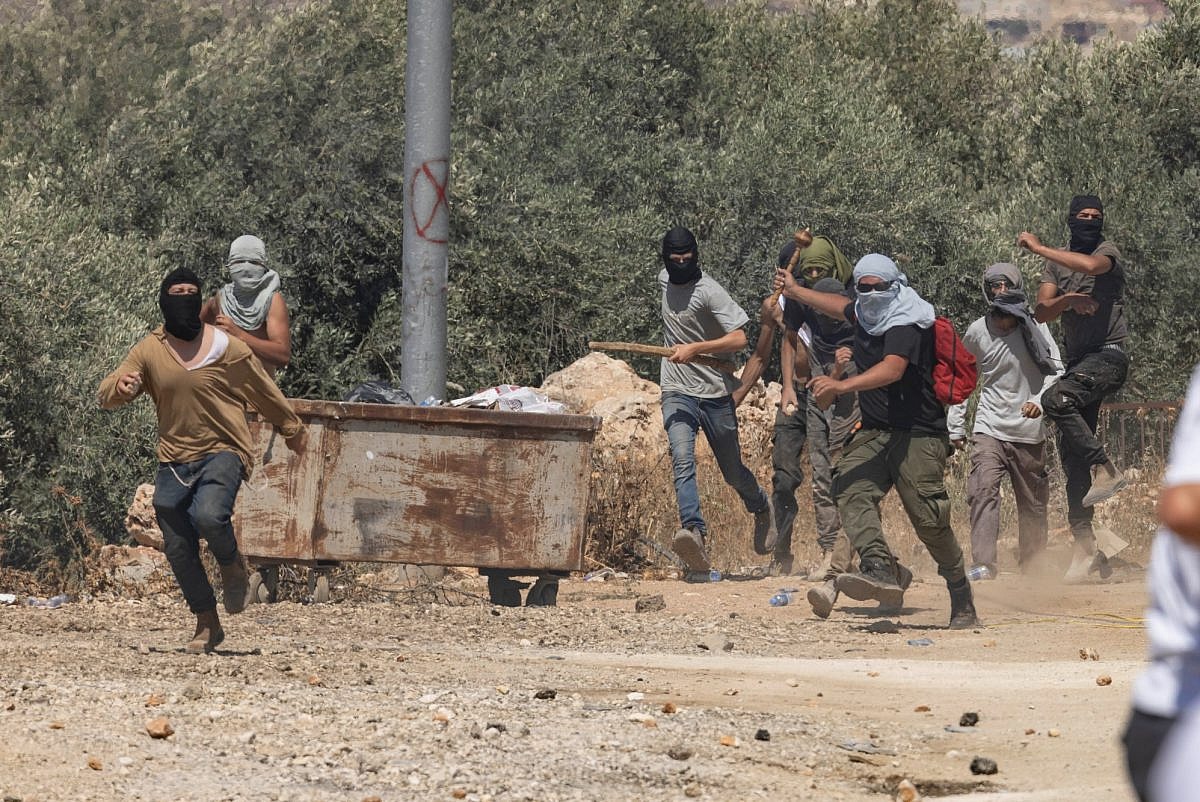
    Violence spilled into a second night on Wednesday, when AFP correspondents on the ground witnessed dozens of masked agitators clashing with riot police into the late hours. Rioters set a civilian car and a boarded-up property on fire, and hurled projectiles including petrol bombs and bricks at officers responding to the unrest. Police deployed water cannon and mounted charges to push the rioters back, after the group attempted to advance on a local hotel that was being used to house asylum seekers. Northern Ireland Secretary Hilary Benn confirmed that while the scale of Wednesday’s disorder was smaller than Tuesday’s widespread violence, the harm and fear inflicted on vulnerable communities cannot be understated.

    “It was really important to convey the sense of fear that has been created, above all for those who were intimidated, burned out of their houses by masked thugs on the basis of the colour of their skin,” Benn told Sky News Thursday. Benn also added that authorities had received troubling reports of commuters being stopped and interrogated about their nationality while traveling to work. One such incident targeted a nurse en route to her shift at Belfast’s Ulster Hospital, who was chased and intimidated by rioters. Hospital officials praised the nurse for completing her shift despite the terrifying encounter, noting her bravery stood in stark contrast to the rioters’ actions.

    UK Prime Minister Keir Starmer quickly condemned the violent scenes as “shocking and completely unacceptable”, while Ogilvie’s own family issued an appeal for calm, urging the public not to use their family’s “terrible tragedy” to divide communities and fuel hostility. Ogilvie, who lost an eye in the attack, remains in stable condition as he recieves medical care.

    The unrest also spilled over to the Scottish city of Glasgow, and comes as anti-immigration sentiment simmers across the United Kingdom, stoked by far-right political groups. Most of Tuesday’s violence was concentrated in Protestant unionist areas of Northern Ireland, where some protesters expressed anti-immigration views shared by far-right groups across the country. One protester, who gave only his first name John, said that many working-class people felt they had been manipulated by political leaders, and shared widespread anxiety over rising migrant arrivals across Europe. Accounts linked to self-described “patriot” groups have flooded social media with the attack footage, urging supporters to join protests against mass migration.

    Immigration has long been a polarizing hot-button issue in UK politics, and has helped drive the recent rise of the hard-right Reform UK party led by Nigel Farage. Violent anti-immigration protests have become increasingly frequent across the country in recent years. Tensions were already running high across the UK before the Belfast unrest: last week, skirmishes broke out in southern England after far-right groups criticized police handling of the murder of a white student by a British Sikh man.

    Local residents in Belfast expressed deep dismay at the violence tearing through their tight-knit communities. A 28-year-old local resident who assisted in evacuating neighbors told AFP: “It’s just sad, this is a really close-knit community.” Another local, 50-year-old plumber Brendan who joined the protests, said no one supported the violence, noting that decades of sectarian conflict that ended with the 1998 Good Friday peace deal had already left the region weary of unrest. But he added that many shared anger over the stabbing, which had rallied disparate groups together.

  • First group of Nigerians returns home after anti-immigration protests in South Africa

    First group of Nigerians returns home after anti-immigration protests in South Africa

    JOHANNESBURG and LAGOS — In a move that underscores deepening tensions over immigration and xenophobic violence across Southern Africa, the first planeload of Nigerian citizens touched down in Lagos on Thursday, the start of a government-ordered repatriation effort for people fleeing deadly anti-foreign unrest in South Africa.

    Nigeria’s Ministry of Foreign Affairs confirmed the incoming flight carried 262 returning passengers plus three government officials. Prior to the arrival, authorities had announced that more than 1,000 Nigerians residing in South Africa had already registered to take advantage of the voluntary repatriation program, which was launched after a wave of violent anti-immigration demonstrations swept across parts of South Africa starting in April.

    The repatriation effort has already sparked a public disagreement between the two African nations. South African officials assert that all the Nigerians processed for return were staying in the country without valid immigration documentation, a direct contradiction of Nigerian officials’ framing that the evacuees are escaping life-threatening xenophobic attacks. As of Thursday, Nigerian officials had not issued any formal response to the South African claim in response to inquiries from the Associated Press.

    The current unrest stems from long-simmering frictions between native South African workers and foreign migrants. Since April, recurring anti-immigration protests have escalated into targeted attacks on foreign-owned businesses and foreign residents, with demonstrators arguing that migrant workers are taking scarce job opportunities from local South African citizens. South African national authorities have publicly condemned the violence as explicitly xenophobic, though the attacks have continued to prompt panic among foreign communities across the country.

    Nigeria’s Foreign Minister Bianca Odumegwu-Ojukwu said the repatriation order came directly from the Nigerian presidency, authorizing the “evacuation of imperiled Nigerian citizens who consider their lives at risk by continued stay in South Africa.” In a public address to people preparing to return home, the minister emphasized that personal safety far outweighs material loss: “The price of your peace, and the safety of your children is worth any sacrifices you have to make, or any assets you have to leave behind when fleeing a conflict zone or hate-infused environment.”

    Nigeria is not the first African nation to organize large-scale repatriation from South Africa amid the current wave of unrest. Ghana previously evacuated roughly 1,000 of its own citizens from South Africa, and South African officials similarly noted that most of the returning Ghanaians were undocumented. Liberia has also raised urgent alarms over the safety of its citizens living in South Africa, with local media quoting President Joseph Boakai as saying the Liberian government is prepared to take all necessary steps, including arranging similar repatriation flights for any Liberians who wish to return.

    In a further development that complicates cross-border relations, South Africa’s Department of Home Affairs has announced that all Nigerians processed for repatriation will face a five-year ban on re-entering the country. To date, the department says 586 Nigerians have completed processing for repatriation after being found to lack valid immigration status, with the next group of returnees scheduled to depart for Nigeria on Monday.

    South African Home Affairs Minister Leon Schreiber explained that the Nigerian High Commission issued emergency travel documentation for the returnees, after which they were formally declared “undesirable persons” barred from re-entry for a half-decade. “Foreign nationals must ensure that their immigration status remains compliant with South African immigration laws at all times and to regularize their stay,” Schreiber said.

    Associated Press reporter Mogomotsi Magome contributed on-the-ground reporting from Johannesburg for this story.

  • G7 allies seek to bridge divide with Trump at France summit

    G7 allies seek to bridge divide with Trump at France summit

    Against the backdrop of shifting global alliances and mounting transatlantic tensions, leaders from the Group of Seven (G7) major advanced economies are convening in the scenic French spa town of Evian-les-Bains on the shores of Lake Geneva this Monday, with a core mission: narrowing deep divides between European allies and U.S. President Donald Trump. Chaired by French President Emmanuel Macron, the three-day summit is already shaping up to be dominated by the U.S. leader’s outsized presence, as local businesses in nearby Geneva prepare for the gathering by boarding up storefronts amid a massive multinational security operation that has deployed thousands of police and military personnel across the region.

    This summit marks one of the first large-scale international diplomatic gatherings since the U.S. and Israel launched their conflict against Iran in late February, a military campaign that has upended the entire Middle East and exacerbated long-simmering rifts between Washington and its European partners. Alongside prioritizing diplomatic efforts to end the Iran conflict and reopen the strategically critical Strait of Hormuz — a global shipping chokepoint whose closure has disrupted global energy and trade flows — leaders have a packed agenda rife with potentially contentious issues.

    A key focal point will be forging a unified front on the war in Ukraine, which enters its fifth year following Russia’s full-scale invasion in 2022. Ukrainian President Volodymyr Zelenskyy will participate in the talks, a presence Macron emphasized was critical to rebuilding G7 consensus after persistent disagreements over Ukraine policy between Trump and other alliance members over the past year. “Zelensky’s participation is very important for us because we need to rebuild consensus within the G7, including the need for negotiations,” Macron stated Wednesday, publicly acknowledging existing splits.

    Beyond Ukraine, other G7 members also plan to press Trump to accept concessions on global trade imbalances, pushing back against the U.S. leader’s well-documented protectionist trade policies. Another contentious topic will be new regulations for large technology platforms to protect minors online, an initiative that has already faced reluctance from U.S. negotiators. To inform this discussion, Sam Altman, CEO of AI giant OpenAI, and Arthur Mensch, head of leading European AI firm Mistral AI, will join a dedicated working lunch on digital child protection.

    In a push to expand the G7’s global reach beyond its traditional seven core members — Canada, France, Germany, Italy, Japan, the United Kingdom and the United States — Macron has extended invitations to leaders from five major emerging economies: Brazil, Egypt, India, Kenya and South Korea. For regional consultations on the Iran conflict, the French president has also invited leaders from key Arab states including Egypt, Saudi Arabia, Qatar and the United Arab Emirates to a special standalone session on Tuesday.

    As has become the norm for G7 gatherings, China will be absent from the main summit, even as Western nations grow increasingly concerned about Beijing’s market dominance and control over rare earth minerals — critical inputs for nearly all modern consumer electronics. In a gesture of outreach, however, Macron will host a virtual “World Convergence Summit for Growth” on Thursday, which will include participation from G7 members, China and other major emerging market economies.

    Trump, who will arrive at the summit just days after celebrating his 80th birthday on June 14 — an event that included an MMA cage fight on the White House lawn — has a history of unpredictable behavior at G7 gatherings. French officials are keen to avoid a repeat of the 2018 Canada G7, where Trump departed the summit early, and have held out hope of persuading him to extend his stay in France for a separate bilateral meeting with Macron in Paris or another location.

    For Macron, the summit comes as a critical late opportunity to leave a mark on the global stage, with less than 12 months remaining in his final presidential mandate. The gathering is a cornerstone of his long-held push to advance European strategic sovereignty at a time of shifting U.S. priorities. The talks will also serve as a precursor to the upcoming G20 summit, scheduled for December 2025, which will be hosted by Trump at his own Miami golf resort.

    Ahead of the opening, new polling from the European Council on Foreign Relations (ECFR) highlighted the depth of transatlantic friction. The survey of citizens across more than a dozen European countries found that trust in the United States has plummeted, with only 11 percent of respondents viewing the Trump administration as a reliable ally. In the face of U.S. “criticism and aggressive behaviour”, ECFR senior policy fellow Pawel Zerka noted that European leaders now have a unique window “to go further and faster” in building collective independent European security frameworks.

  • Vance says Israeli PM Netanyahu ‘has got some things wrong’

    Vance says Israeli PM Netanyahu ‘has got some things wrong’

    Growing strains in the long-standing alliance between the United States and Israel have bubbled into public view, with US Vice President JD Vance openly confirming that Israeli Prime Minister Benjamin Netanyahu has made missteps amid escalating conflict across the Middle East. Vance’s comments, released in advance of his full interview with CBS News, come amid a period of heightened friction between Washington and Jerusalem over Israel’s ongoing military campaign in Lebanon, which has unraveled fragile ceasefire efforts between the US and Iran.

    In the pre-broadcast remarks, Vance acknowledged that while Israel remains a critical close partner to the US, the two nations do not always share aligned interests. “Prime Minister Netanyahu aggressively asserts the interests of his country – sometimes that means we’re on the same page, sometimes it means we’re not,” Vance explained, adding that Netanyahu has “certainly gotten some things wrong” in handling the current conflict. When pressed for specific examples of these missteps, Vance declined to elaborate, noting that sensitive diplomatic conversations are often best kept private.

    Vance’s public comments mark the latest in a string of candid admissions that US-Israel relations are under unprecedented strain in the current phase of the Iran conflict. Just last week, US President Donald Trump privately referred to Netanyahu as “effing crazy” during a call with Axios reporters, revealing he was frustrated by the Israeli prime minister’s persistent military push in Lebanon. Trump, who has long positioned himself as one of Israel’s staunchest supporters in Washington, has grown increasingly irritated that Israel’s cross-border campaign against Hezbollah – the Iranian-backed armed group based in southern Lebanon – has derailed his efforts to broker a lasting peace deal with Tehran.

    The conflict escalated dramatically this week, as the US and Iran exchanged a second consecutive day of overnight strikes, breaking a fragile ceasefire that had held between the two nations since April. The renewed hostilities were directly triggered by Israel’s ongoing operation in Lebanon, which began shortly after the outbreak of the Iran war. Israel launched its offensive against Hezbollah after the group attacked northern Israel in retaliation for an Israeli strike that killed Iran’s supreme leader. To date, Lebanon’s health ministry reports at least 3,696 people have been killed in the Lebanese campaign, while Israeli officials confirm 30 soldiers and four civilians have died on Israel’s side of the border.

    Negotiations for a broader peace deal have hit major snags over the question of Lebanon. Tehran has demanded that any final agreement address the conflict in Lebanon, while Israel argues the Lebanese campaign was never part of the April ceasefire, threatening to walk away from talks before the latest round of strikes began. For Trump, a successful deal with Iran would deliver two key US policy goals: reopening the Strait of Hormuz, which has been blocked by Iran and sparked a global energy crisis, and rolling back Iran’s nuclear program – a long-stated priority for the Trump administration. Trump is eager to pull the US out of a protracted, costly regional conflict ahead of November’s midterm elections, where voter sentiment on the war is already shifting against continued engagement.

    Public opinion data shows the Iran war is growing increasingly unpopular among US voters, who are also holding dimmer views of Israel as the civilian death toll in Lebanon mounts. Netanyahu faces similar political pressures at home: he is contesting Israeli national elections this year, and needs to convince voters that his campaign against Iran and its regional proxies is delivering results. For his part, Netanyahu has sought to downplay the public rift with the Trump administration, framing disagreements as routine tactical differences between close allies. “Sometimes we have, as in the best of families, you have these tactical disagreements,” he told CNBC last week. “We always find a way to work them out, and we do so as great friends.”

    Despite Netanyahu’s efforts to smooth over tensions, Vance’s comments make clear the Trump administration is unapologetic about prioritizing US interests above Israel’s when the two diverge. “It’s the job of the Trump administration to focus on what was in America’s best interests, and where that diverges, we – unfortunately for the Israelis – have to choose the side of the American people,” Vance said.

  • Nigeria evacuates citizens from South Africa as anti-migrant sentiment rises

    Nigeria evacuates citizens from South Africa as anti-migrant sentiment rises

    A wave of mounting anti-migrant hostility across South Africa has pushed multiple African nations to organize emergency repatriations of their citizens, leaving thousands of migrant households living in constant fear of xenophobic attacks.

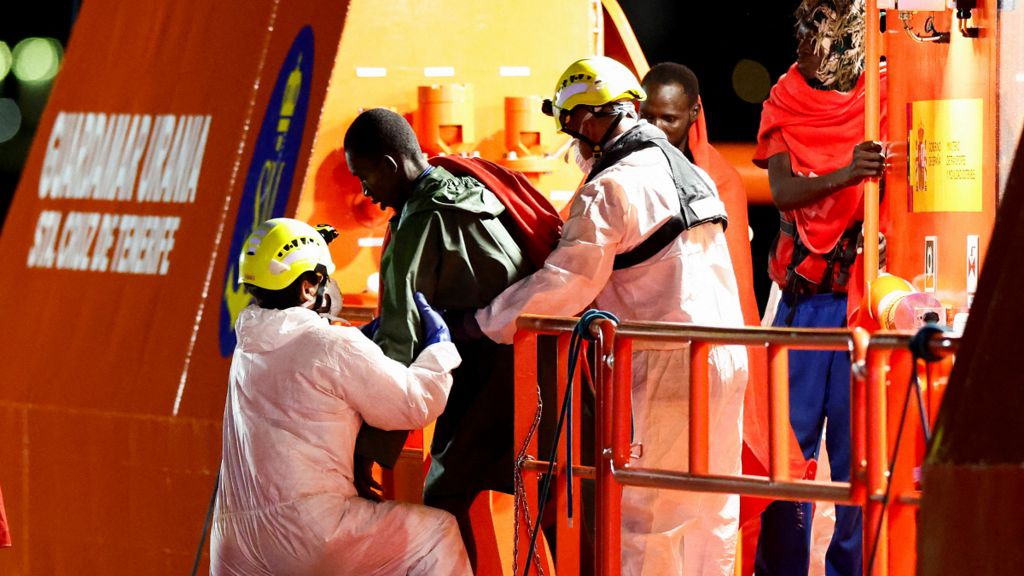
    Nigeria is the most recent country to launch this evacuation effort. The first charter flight carrying 268 Nigerian nationals departed Johannesburg’s OR Tambo International Airport early Thursday and touched down safely in Lagos, Nigeria’s commercial hub. This flight is the first of planned operations to bring home roughly 1,000 Nigerians who have registered with the Nigerian consulate in South Africa to request repatriation. Neighboring states including Ghana, Zimbabwe and Malawi have already completed similar evacuation flights ahead of a controversial 30 June deadline set by anti-migrant campaigners for all undocumented migrants to leave the country.

    The roots of the current crisis stretch back to 1994, when the end of apartheid-era white-minority rule opened South Africa’s borders to thousands of economic migrants from across the continent, who arrived seeking greater economic opportunity and a higher quality of life. But decades of stagnant growth have left South Africa grappling with an official unemployment rate that exceeds 32%, creating fertile ground for resentment toward foreign-born workers. In recent months, anti-migrant protests have swept through major urban centers, and targeted xenophobic assaults have left multiple migrants dead, forcing many to flee their homes and communities.

    One Nigerian repatriate, Justin, who had lived in South Africa for 26 years after moving there in 1998, described the constant fear that drove his decision to leave. “I’m leaving because of the conditions they’ve given us here. They say we must leave on or before 30th June. And because of the way they are killing people, killing our brothers, so I’m not safe,” he told reporters at Johannesburg’s main airport. Justin shared that he had already survived one attack, escaping a violent assault on a public taxi by fleeing without his phone or personal belongings. “They call us names and say you must leave this country. When we tried to beg them, they started insulting us,” he added.

    Authorities have yet to release an official death toll for recent xenophobic violence. South African police have confirmed that two Mozambican men were killed in the Western Cape province earlier this month, but have not publicly linked the killings to xenophobic motives. Mozambican officials, however, have pushed back on this account, asserting that the number of fatalities among their citizens is far higher, and that all deaths are directly tied to anti-migrant hostility.

    Anti-migrant protesters have centered their rhetoric on the claim that migrants are responsible for South Africa’s crippling unemployment and strained public services, from public schools to public hospitals. But Nigeria’s Consul General in South Africa, Ninikanwa Okey-Uche, rejected this narrative, arguing that migrants are being unfairly scapegoated for systemic government failures. “Migrants made up less than 10% of South Africa’s population, and could not be blamed for broken systems in education, health care, policing, unemployment,” she told the BBC. “They are not and cannot be the problem. So, migrants are basically being scapegoated.”

    Okey-Uche also noted that while all of the repatriated Nigerians were classified as undocumented by South African authorities, delays and backlogs in South Africa’s immigration application process have left many migrants without legal status through no fault of their own. She added that South African officials have failed to take meaningful action to crack down on organizers of xenophobic violence, even though many of these leaders are well known to law enforcement. “There are a lot of top South African politicians who have spoken up against what’s happening, saying it’s absolutely wrong. But down on the street, we need to see arrests. We know the people in charge, they’re not hiding. They’ve caused mayhem in people’s lives, but they’re walking free, some of them are running for election,” Okey-Uche said.

    The rising tensions come as South Africa prepares for nationwide local government elections in November, and many political analysts have observed that opportunistic politicians have elevated migration to a divisive wedge issue to mobilize voters. Last week, South African President Cyril Ramaphosa addressed the unrest in a national televised speech, announcing a new package of policy measures targeting undocumented migration. The new rules include criminal penalties for employers that hire undocumented workers, the creation of special dedicated courts to speed up deportation proceedings, and the development of a national biometric identity database intended to reduce identity theft. Even as he cracked down on unauthorized migration, Ramaphosa warned South Africans against vigilante violence, urging citizens not to take the law into their own hands by targeting people suspected of being in the country illegally.

    As the 30 June campaign deadline approaches, more African countries are expected to organize additional repatriation flights to extract their vulnerable citizens from the escalating violence, while the South African government faces growing international pressure to rein in xenophobic attacks and protect migrant communities within its borders.

  • Horror show: Broncos in crisis as premiers slump to sixth loss in a row and lose star halves on emotional night for Jai Arrow

    Horror show: Broncos in crisis as premiers slump to sixth loss in a row and lose star halves on emotional night for Jai Arrow

    On an emotionally charged Thursday night at Sydney’s Accor Stadium, the South Sydney Rabbitohs delivered a crushing 48-6 defeat to the defending premiers Brisbane Broncos, all but ending Brisbane’s hopes of repeating their 2025 grand final victory. The match was overshadowed by an outpouring of support for former NRL forward Jai Arrow, who was forced into early medical retirement after a devastating diagnosis of motor neurone disease.

    The entire rugby league community put rivalries aside to honor Arrow, who debuted for the Brisbane Broncos in 2016 before finishing his playing career with the Rabbitohs. Before kickoff, both teams formed a joint guard of honour as a tearful Arrow walked out onto the pitch alongside his partner and young child. The Rabbitohs wore special all-white “whiteout” jerseys with Arrow’s name printed on the back, while the Broncos added Jai’s name and his former club number to their playing kits. After the pre-match ceremony, Arrow rang the iconic Rabbitohs Legacy Bell, and players from both sides embraced him as the 80,000-strong crowd rose to give a warm standing ovation in support of Arrow and his family. All of the match-worn jerseys will be auctioned off after the game, with 100% of proceeds going directly to Arrow and his family to cover medical and living costs.

    Once the match got underway, it quickly turned into a nightmare for Brisbane. The Broncos, already on a five-match losing slide, produced one of their worst performances in recent memory, missing 23 tackles in the first half alone and going into the halftime break trailing 30-0. Things went from bad to worse when key playmakers Adam Reynolds and Ezra Mam both left the game with serious injuries. Captain Reynolds, who first tweaked his left hamstring early in the contest while making a break, struggled on through severe cramps before exiting the match with 20 minutes remaining. Mam, who sustained a shoulder injury while making a last-ditch try-saving tackle, followed Reynolds off the pitch shortly after. The pair’s injuries compound an already brutal run of form for the defending premiers, who have now dropped six consecutive matches.

    Veteran Rabbitohs five-eighth Cody Walker turned in a vintage performance to lead his side to a much-needed win, snapping South Sydney’s own three-game losing streak. Walker notched three first-half try assists, including a spectacular set-piece play just before halftime where he pulled in a floating chip kick from Ashton Ward and offloaded to Jamie Humphreys for an easy try under the posts. Star winger Alex Johnston continued his historic try-scoring form at Accor Stadium, crossing for four tries, while forward David Fifita produced a series of powerful barnstorming runs in the opening 40 minutes. Rabbitohs coach Wayne Bennett praised his side’s first-half intensity, particularly with star fullback Latrell Mitchell sidelined through injury, though he admitted he was disappointed with the team’s sloppy play in the second half.

    For the Broncos, the 48-6 defeat marks their worst loss of the 2026 NRL season and leaves their finals hopes all but extinguished. To squeeze into the top eight, the premiers will now need to win at least eight of their remaining 10 regular-season matches, a feat made even more challenging by a brutal upcoming draw and the loss of their two key playmakers to injury. If Brisbane fails to qualify for the finals, they will become the first defending premiers since the 2005 Wests Tigers to miss the post-season the year after winning the premiership. Even with a bye next week, Brisbane coach Michael Maguire and his squad will face intense scrutiny from fans and media across Queensland in the coming weeks, just eight months after the club lifted its first premiership trophy in decades.

  • ‘Mum was killing me’: England’s Rice on World Cup heat – and his sunburn

    ‘Mum was killing me’: England’s Rice on World Cup heat – and his sunburn

    As the 2026 FIFA World Cup co-hosted by the United States, Mexico and Canada draws near, England national team midfielder Declan Rice has made headlines for an unexpected pre-tournament mishap: a painful sunburn that left him bright red in official photos, drawing playful teasing from fans online and a stern telling-off from his own mother.\n\nThe Arsenal star, who arrived in North America alongside his teammates several days early to acclimatize to the region’s extreme summer heat, opened up about the viral incident in an interview with the BBC. Looking back at the pre-tournament photoshoot that showed his beetroot-red complexion and obvious watch strap tan line, Rice laughed off the moment, saying, “I think everyone’s seen them photos… I was bright red at that photoshoot, my mum was killing me.” When asked when he finally felt adjusted to the local climate, he joked the turning point was simple: “when the sunburn went”.\n\nExtreme heat has been a top talking point ahead of this World Cup, which kicks off officially on Thursday. The climate challenge is being driven in large part by El Niño, the recurring weather pattern that has already pushed summer temperatures across North America to unexpected highs. In Arlington, Texas, where England will kick off their World Cup campaign against Croatia on June 17, local temperatures hit 36 degrees Celsius this week, with forecasts calling for even more scorching conditions as the tournament unfolds.\n\nThe unstable weather tied to El Niño has also brought erratic conditions beyond just sustained heat. England’s final pre-tournament warm-up match against Costa Rica in Dallas on Wednesday was delayed by severe thunderstorms, a disruption that meteorologists warn could become common throughout the tournament: the intense summer heat generates massive, fast-forming storm systems that can throw match schedules off track.\n\nRice admitted that the sudden shift from England’s variable mild weather to North America’s consistent extreme heat took a major physical toll at first. “Honestly, the first day was tough, just getting used to that heat – when you come from England and it’s hot, cold, all different types of weather,” he explained. “Then you come here and, regardless of whether it’s hot or cold, it’s 30C and it really does hit you in the face when you’re running.”\n\nTo help players cope with the dangerous conditions, FIFA has implemented mandatory hydration breaks at the midpoint of each half of every World Cup match. For the England squad, heat acclimatization has been a core part of their preparation for months, including specialized training sessions in temperature-controlled heated tents in Spain and practice matches in the sweltering heat of Kansas, where the team will remain based throughout the tournament.\n\nEngland manager Thomas Tuchel has been open about the challenge, saying he expects his players to “suffer” in the grueling conditions as they chase the nation’s first World Cup title since their historic 1966 win. The heat challenge is not limited to U.S. host cities, either: co-hosts Mexico and Canada have also recorded temperatures above 30 degrees Celsius in recent days, meaning teams across all groups will have to adapt to the extreme climate to perform at their best.

  • World ski president Eliasch loses election by one vote and alleges IOC influence

    World ski president Eliasch loses election by one vote and alleges IOC influence

    BELGRADE, Serbia — In a stunning upset that has sent ripples through global winter sports, longtime International Ski and Snowboard Federation (FIS) president Johan Eliasch has been removed from his post by a razor-thin one-vote margin, capping a chaotic campaign that pitted the incumbent against a coalition of traditional skiing powerhouses and elite athletes.

    The Thursday election ended with Alexander Ospelt, a little-known lawyer from the Alpine principality of Liechtenstein, securing a 65-64 victory over Eliasch, a Swedish-British billionaire and owner of global sports equipment brand Head. Ospelt will now take the helm of FIS for a four-year term, after the vote went his way at the governing body’s general congress held in the Serbian capital.

    For Eliasch, the defeat comes with an additional high-profile consequence: he immediately loses his seat in the International Olympic Committee (IOC), one of the most exclusive and influential bodies in global sport. The 64-year-old, who served as FIS president for five years, had previously run for IOC presidency 15 months ago, a race ultimately won by Kirsty Coventry.

    In his immediate concession address, Eliasch made a bombshell allegation against the IOC, claiming the Olympic governing body had interfered to sway the election result. “The IOC tried to influence the outcome of today’s vote. Against this we must stay firm,” he told delegates, before urging FIS to defend its institutional independence and extending congratulations to his opponent.

    The writing was on the wall for Eliasch from the opening moments of the FIS congress, as delegates moved quickly to signal their dissatisfaction with his leadership. By an 88% majority, members voted to rearrange the official agenda and advance the presidential election to the first order of business, an unusual move that reflected widespread discontent. Later, another 60% vote approved a shift from electronic voting to paper ballots, a change widely interpreted as a vote of no confidence in Eliasch’s outgoing administration over transparency concerns.

    Unlike international soccer governing body FIFA’s one-member-one-vote system, FIS uses a weighted voting framework that grants larger, more established skiing nations two or three votes apiece. That structure worked against Eliasch, who had spent half a decade locked in bitter public disputes with the sport’s traditional heartland nations in Europe and North America over his autocratic management style and controversial decisions around spending FIS’s cash reserves.

    Even his home national federations of Sweden and Great Britain refused to back his re-election bid. To comply with FIS nomination rules, Eliasch ultimately secured a nomination and citizenship from Georgia to appear on the ballot. His campaign was opposed by a coalition of leading winter sports nations that secured the backing of many top professional skiers, including American skiing legend Mikaela Shiffrin, one of the most decorated athletes in the sport’s history.

    Under FIS bylaws, Ospelt will not officially take office until one full day after the election, allowing Eliasch to oversee the remaining congress business on his final day in the role. Framing the outcome as a positive result either way in pre-election comments, Eliasch struck a measured tone in his closing remarks. “It’s been a great privilege to serve you,” he said. “Either way I am very happy,” adding that a loss would let him “get my life back.”

    Ospelt, who has served as a member of the FIS Council under Eliasch’s leadership, struck a unifying tone in his first remarks as president-elect. “I will start my new job with great joy and humility,” he said. “I will be the president for all of you. Let’s be united.”

    Unlike his predecessor, Ospelt will not automatically gain IOC membership immediately after taking office. However, as the head of FIS — the governing body that oversees roughly half of all medal events at every Winter Olympic Games — he is widely expected to receive an invitation to join the IOC in due course.

  • A mass funeral is held for 22 Pakistani soldiers who died in a helicopter crash in Kashmir

    A mass funeral is held for 22 Pakistani soldiers who died in a helicopter crash in Kashmir

    On Thursday, Pakistani officials confirmed that rescuers have recovered the remains of all 22 service members who were on board a military helicopter that crashed in Pakistan-administered Kashmir one day earlier, bringing a tragic end to search operations and verifying that there were no survivors from the incident. Senior political and military leaders joined a mass funeral service for the fallen troops in the regional capital of Muzaffarabad, where the crash took place.

    Initial assessments from Pakistan’s military indicate that the crash was likely caused by a technical malfunction, though a full formal investigation is still ongoing to pinpoint the exact root cause of the accident. An Associated Press journalist on site at the funeral counted 22 coffins, each covered with the national flag of Pakistan, honoring the deceased personnel.

    Witnesses and local administrative officials confirmed that all remains were pulled from the heavily charred wreckage of the downed aircraft. Two unnamed security officials, who spoke on condition of anonymity as they lacked authorization to share details publicly, confirmed the ranks of the deceased include one colonel and two majors.

    The helicopter was en route to deploy personnel for security assignments ahead of a planned protest march on Muzaffarabad organized by the Joint Awami Action Committee, an alliance of regional groups that was recently banned by authorities. To date, however, officials have not found or announced any link between the planned protest action and the crash itself.

    Regional tensions have been elevated across Pakistan-administered Kashmir since earlier that weekend, when members of another outlawed extremist group carried out targeted attacks against police and security forces, leaving four law enforcement officers dead. In response to the rising unrest, Pakistan has deployed additional security detachments across the region to maintain public order.

    Military aviation accidents are not an uncommon occurrence in Pakistan, where rugged mountain terrain and challenging weather conditions often increase operational risks for military flights. In a separate incident just months prior in September 2024, an army helicopter conducting a routine training flight crashed in the mountainous northern region of the country, killing all five people on board — two pilots and three technical crew members.

  • Iran warns Mideast truce ‘practically meaningless’ after US strikes

    Iran warns Mideast truce ‘practically meaningless’ after US strikes

    A new cycle of tit-for-tat military strikes between the United States and Iran has collapsed months of fragile ceasefire efforts in the Middle East, pushing the region to the brink of a wider full-scale conflict and raising alarm over global energy security at the Strait of Hormuz.

    The current round of unrest traces back to a three-month conflict that erupted on February 28, when a joint strike operation by the U.S. and Israel targeted Iranian positions. A ceasefire agreement brokered in April paused large-scale hostilities, but attempts to negotiate a permanent peace deal have repeatedly stalled. Sporadic cross-fire has kept the truce on the edge of collapse for weeks, until the latest escalation that broke the fragile calm.

    The latest confrontation began Wednesday, when U.S. President Donald Trump—who had repeatedly claimed a peace deal with Iran was within reach—accused Tehran of “playing us for suckers” and warned it would face consequences. Hours later, U.S. Central Command (CENTCOM) confirmed it launched a second consecutive day of strikes early Thursday, deploying dozens of Tomahawk cruise missiles to hit Iranian surveillance, communications, and air defense facilities across the country. Iranian state media reported multiple explosions across southern Iran, with at least three civilians wounded in Tehran province.

    Tehran quickly responded with what its Islamic Revolutionary Guard Corps called a “punitive operation.” Iran targeted a U.S. military base in Jordan, while multiple Gulf states reported incoming hostile fire. Jordan’s military announced it shot down 20 Iranian missiles, and Kuwait’s air defense forces engaged and intercepted unidentified aerial targets. In Bahrain, which hosts a major U.S. naval base, falling debris from the attacks injured an 11-year-old girl and damaged multiple residential properties and vehicles, with Bahrain condemning the attack as “sinful Iranian aggression.”

    In the wake of the U.S. strikes, Iran’s foreign ministry issued a sharp rebuke, stating that the illegal U.S. attacks are not only a blatant violation of international law and Iranian sovereignty, but have also rendered the April truce “practically meaningless.” U.S. Defense Secretary Pete Hegseth doubled down on Washington’s hardline stance, telling reporters that if ordered by President Trump, “we’ll negotiate with bombs.” He also confirmed the strikes could extend into a third consecutive night, promising future attacks would be strong and unambiguous. Fox News reported Trump threatened that if Iran refuses to accept U.S. peace terms, “We’ll bomb the S out of them tomorrow night.” Iranian officials quickly denied Fox’s report that Iranian leadership had called Trump directly amid the bombing, calling the claim completely false.

    The escalation has also put global energy supplies at direct risk. Iran’s Revolutionary Guard aerospace force commander Majid Mousavi warned in a social media post that if the U.S. makes the Strait of Hormuz—one of the world’s most critical chokepoints for global oil and natural gas transport—unsafe, “We will make the region hell for you.” Iranian military officials claimed the waterway is now “completely closed” and all commercial vessel traffic would be targeted, and confirmed Iranian forces had already struck two civilian ships attempting to transit the strait. CENTCOM pushed back on the claim, stating late Thursday that commercial shipping continued to move through the strait normally.

    The escalation has already claimed civilian lives beyond Iran and the Gulf. On Thursday, India’s shipping minister confirmed that three Indian civilian sailors were killed Wednesday when the U.S. struck the commercial vessel MT Settebello off the coast of Oman. India’s foreign ministry summoned a senior U.S. diplomat in New Delhi to lodge a formal strong protest over the incident.

    Despite the sharp escalation, regional mediators have not abandoned diplomatic efforts. A Qatari delegation was actually in Tehran holding talks when the U.S. strikes began, with a diplomatic source confirming the discussions were held “in coordination with the United States.” The Qatari team only departed Tehran after talks that extended into the early hours of Thursday morning. Pakistan, which co-mediates talks alongside Qatar and hosted the first round of direct negotiations between the two sides, said it has not completely lost hope for a negotiated solution. Still, Pakistani foreign ministry spokesman Tahir Andrabi acknowledged that “It is hard to be an optimist in the new exchange of hostilities.”

    International powers have called for an immediate de-escalation. Saudi Arabia, which faced Iranian attacks earlier in the conflict, issued a statement Thursday calling for renewed negotiations under the mediation of Pakistan and Qatar. China, Iran’s largest crude oil customer, also urged an immediate end to all military operations. “We call on relevant parties to immediately cease military operations, respond to the mediation efforts of relevant countries, and achieve a comprehensive and lasting ceasefire,” a Chinese foreign ministry spokesperson said Thursday.