作者: admin

  • Nearly 118 million people were displaced by conflict and persecution last year, UN says

    Nearly 118 million people were displaced by conflict and persecution last year, UN says

    In its 2025 annual Global Trends Report released Thursday, the United Nations High Commissioner for Refugees (UNHCR) has delivered a mixed update on the global forced displacement crisis: for the first time in 10 years, the total number of people displaced by conflict, violence and persecution has declined — yet the overall figure remains at a devastatingly high level that demands urgent global action.

    By the end of 2025, the global count of forcibly displaced people stood at 117.8 million, encompassing refugees, asylum seekers, internally displaced persons (IDPs) and other groups requiring international protection. Tarek Abou Chabake, UNHCR’s chief statistician, outlined two key drivers behind the historic drop: a rise in the number of people returning to their regions of origin, and growing numbers of refugees gaining citizenship in their host countries. Even with this milestone decline, UNHCR leadership stressed that the scale of displacement is far too high to ignore, with ongoing conflicts continuing to uproot millions of vulnerable people globally.

    Breaking down the report’s key demographic and geographic data, children made up 39% of the world’s 41.6 million total refugee population in 2025. While Colombia, Germany and Turkey each hosted more than 2 million refugees, the vast majority of the global refugee population resides in low- and middle-income nations. Even with a 3% drop from 2024 levels, 5.4 million people crossed international borders in 2025 to seek safety from persecution and violence.

    A deeply concerning long-term trend highlighted in the report is the persistence of protracted displacement: seven out of every 10 refugees worldwide have lived in exile for five years or more, many trapped in overcrowded, under-resourced camps in low-income countries. “Humanitarian assistance has saved lives,” said UNHCR High Commissioner Barham Salih. “But it was never intended to sustain generations of people indefinitely.” To address this systemic issue, UNHCR has set a target to cut by half the number of refugees in protracted displacement who rely on humanitarian aid by 2035.

    IDPs make up the largest single segment of the displaced population, totaling 68.7 million globally in 2025. The ongoing conflict in Sudan drove the world’s largest single new wave of displacement, pushing 9.1 million people to flee their homes within the country. Colombia, Syria, Yemen and Afghanistan follow Sudan with some of the world’s largest IDP populations.

    Looking ahead to 2026, projections offer little reason for optimism. Following the outbreak of conflict in Iran in February 2026, 3.2 million Iranians had been internally displaced by March, and an additional 1 million people were displaced within Lebanon by mid-May. “This is truly unacceptable and we must make sure this doesn’t become a new normal,” Salih emphasized.

    The report also tracked returns of displaced people in 2025: 4.4 million refugees returned to their home countries, the second-highest annual number since UNHCR began record-keeping six decades ago. Ninety percent of these returns were concentrated in just three nations: Syria, Afghanistan and Sudan. An additional 10.3 million IDPs also returned to their regions of origin last year. But Salih issued a stark warning that many returns were not voluntary, with returnees facing a lack of basic infrastructure and livable conditions to rebuild their lives. “Voluntary returns to post-conflict Syria and returns under pressure to Afghanistan are not the same thing,” he noted.

    Statelessness remains another unresolved crisis, with 4.5 million people around the world currently lacking citizenship of any nation. Myanmar’s Rohingya community make up the largest single stateless group, with most stateless people residing in Bangladesh, Ivory Coast, Thailand and Myanmar. Just 46,000 stateless people gained citizenship in 2025, a tiny fraction of the total population in need of this legal status.

    Finally, the report highlighted steep cuts to global refugee resettlement: only 82,000 refugees were resettled to new host countries in 2025, down sharply from 188,000 in 2024. Salih noted that this number represents only a tiny fraction of the millions of refugees in need of resettlement, and urged national governments to expand legal pathways for refugee relocation. “Every dangerous sea crossing and every death in the desert represents a failure of the international community,” Salih said. “The human cost of the failure is measured not with statistics but with lives.”

  • Ryanair investigated over charging parents to sit with children

    Ryanair investigated over charging parents to sit with children

    The UK’s top competition regulator has opened a formal probe into budget airline giant Ryanair over its policy of charging parents additional fees to sit alongside their children during flights, triggering a fierce public pushback from the carrier that has labeled the inquiry politically motivated and groundless.

    The Competition and Markets Authority (CMA), the body responsible for enforcing UK consumer and competition rules, confirmed this month that it is examining whether Ryanair’s standard seat charges—an average of £8 per passenger per one-way trip—violate existing consumer protection legislation. Under Ryanair’s current terms of service, adult passengers traveling with children between the ages of 2 and 11 are required to reserve a paid “mandatory family seat” to sit with their minor travel companions, aligning with the airline’s own policy that requires guardians to be seated next to young children for the duration of a flight.

    A core focus of the CMA’s inquiry is whether Ryanair is wrongfully charging passengers to meet pre-existing safety and accessibility obligations laid out in global and UK aviation regulations. Regulators also noted that Ryanair stands out among major airlines operating out of UK airports as the only carrier that imposes these mandatory charges for family seating. Most other major airlines either automatically assign adjacent seats to families at no extra cost during the booking process or allow guardians to select seats next to children without charging additional fees.

    Ryanair has rejected all of the CMA’s preliminary implications, calling the investigation “bogus” and insisting that its family seating policy adheres fully to all applicable UK and aviation laws. The airline pushed back on the regulator’s description of its pricing structure, clarifying that adults only pay for one reserved seat when traveling with children, while up to four additional children on the same booking can reserve adjacent seats at no cost.

    Beyond defending its policy, Ryanair attacked the inquiry as a political distraction from the current Starmer government’s failure to eliminate Air Passenger Duty (APD), a tax that the airline argues drives up ticket prices for all travelers and suppresses growth across the UK’s aviation, tourism and broader national economy. The carrier said it is confident it will disprove the CMA’s claims over the course of the investigation.

    The CMA is also probing two additional potential consumer protection issues: whether the mandatory family seat fee is “drip-priced” — meaning it is only revealed to customers partway through the booking process, rather than disclosed upfront as part of the total advertised price. CMA Director of Consumer Protection Hayley Fletcher explained that these hidden extra charges can quickly erode the affordability of family summer holidays, a key concern as households across the UK continue to grapple with persistent cost of living pressures.

    “For the past year, we’ve told businesses to ensure their customers are shown the total price upfront – those who don’t face the very real possibility of action from the CMA,” Fletcher said, adding that the investigation is in its early stages and no final conclusion on whether Ryanair broke the law has been reached. If the CMA finds Ryanair violated consumer protection law, the regulator’s new enforcement powers allow it to levy fines of up to 10% of the airline’s global annual turnover.

    Leading UK consumer rights organization Which? has welcomed the CMA’s probe, noting that it has repeatedly raised alarms about Ryanair’s seating policies that separate families unless extra fees are paid, even for children as young as three years old. Rory Boland, Which? Travel Editor, called on Ryanair to proactively change its policy before the investigation concludes. “Ryanair doesn’t have to wait for the outcome of the CMA’s investigation, it could stop charging these unreasonable fees today and we would encourage them to do that,” Boland said.

    The investigation is part of a wider CMA initiative to reduce financial burdens on UK households by cracking down on unfair consumer pricing practices amid ongoing economic pressure.

  • French singer Patrick Bruel charged with rape, attempted rape and sexual assault

    French singer Patrick Bruel charged with rape, attempted rape and sexual assault

    PARIS — One of France’s most celebrated entertainment figures, 67-year-old singer and actor Patrick Bruel, has been charged with multiple counts of rape, attempted rape, sexual assault and sexual harassment spanning an 11-year period from 2008 to 2019, Nanterre’s public prosecutor’s office confirmed in an official announcement Thursday. The celebrity has repeatedly denied all allegations against him.

    The legal process moved forward this week after Bruel completed two days in police custody. On Wednesday, he was brought before four investigative judges at the Nanterre court, located in the western suburbs of Paris, to hear the formal charges. The ongoing formal investigation covers a specific set of documented accusations: a rape allegation from 2008 in Neuilly-sur-Seine, an attempted rape reported in 2010 in Brussels, and multiple counts of sexual assault and sexual harassment that allegedly took place in 2019 in the southern French city of Perpignan and Ajaccio on the island of Corsica.

    Prosecutors added that the judicial inquiry will also expand to examine additional claims of rape, attempted rape and sexual harassment that occurred between 2010 and 2019 across three other French cities and Nyon, Switzerland. Notably, several accusations that were previously closed without further action have been reopened and added to the current case file.

    Following the hearing, Bruel was released from custody but placed under strict conditional judicial supervision. The terms of his release include a ban on exiting French territory, a requirement to surrender his passport to authorities, a mandate to complete ongoing psychological assessment and treatment, and a €500,000 ($576,760) bail payment. He is also prohibited from making any contact with his accusers or their family members, and barred from entering massage parlors — the location where some of the alleged offenses are said to have occurred.

    In a statement released after the hearing, Bruel’s legal team confirmed that their client will fully cooperate with the ongoing investigation and remains compliant with all requests from judicial authorities.

    The case gained public momentum in recent weeks, after French investigative outlet Mediapart published a series of reports highlighting accusations from multiple women against Bruel that date back decades. Those reports prompted additional accusers to come forward and file new formal complaints with authorities. Prosecutors noted that even accusations from other women that fall outside the applicable statute of limitations have been added to the case file, to allow investigating judges to build a full, comprehensive picture of the claims. Complaints filed in other jurisdictions may also be consolidated into the Nanterre-based investigation at a later date.

    A towering figure in French popular culture, Bruel rose to massive fame across the French-speaking world in the late 1980s and 1990s. His unprecedented popularity earned the nickname “Bruelmania” from French media, a comparison to the global Beatlemania frenzy that surrounded the Beatles in the 1960s. Hit tracks from his 1989 second album became enduring staples of French popular music, exploring relatable universal themes of love, heartbreak, nostalgia and childhood that resonated with cross-generational audiences for decades. Alongside his music career, Bruel built a successful parallel acting career, appearing in dozens of French film and television productions over the course of decades. In response to the emerging allegations last month, Bruel canceled all scheduled public performances planned for this summer across France, Canada, Switzerland and Belgium, as well as his end-of-year tour dates in Canada.

  • Thai court sentences 2 Uyghur men to death over 2015 Bangkok bombing that killed 20

    Thai court sentences 2 Uyghur men to death over 2015 Bangkok bombing that killed 20

    Nearly nine years after a deadly bombing ripped through one of Bangkok’s most popular tourist sites, a Thai criminal court has handed down death sentences to two Chinese Uyghur men convicted over the attack that left 20 people dead and more than 120 injured. The August 17, 2015, blast targeted the Erawan Shrine, a spiritual and tourist landmark that draws large crowds of visitors from China annually. The two defendants, Yusufu Mieraili and Bilal Mohammad (also known as Adem Karadag), were taken into custody by Thai authorities just days after the explosion.

    Both men faced a sweeping array of criminal charges, including premeditated murder, attempted mass murder, and unlawful possession of explosive materials. Prosecutors told the court that evidence linking the pair to the attack includes surveillance video footage, fingerprint matches, and additional forensic evidence. The guilty verdict issued Thursday by a four-judge panel at Bangkok South Criminal Court relied on what the court called overwhelming incriminating evidence, noting that the defense failed to present credible substantive evidence to disprove the prosecution’s claims.

    Shortly after the ruling was delivered and judges exited the courtroom, Mieraili—who has learned conversational Thai while in detention—proclaimed his innocence in broken Thai, rejecting the court’s decision. “I mourn for Thailand,” he told reporters in the courtroom. “I did not receive justice … I ask Thai people to help me.” Court records show Mieraili, who also speaks English, was called on to translate trial proceedings into Uyghur for Mohammad, as only an English interpreter was provided for the proceeding. The years-long trial was repeatedly delayed due to longstanding challenges securing qualified Uyghur interpreters, a key point of criticism from rights advocates.

    Lead defense attorney Chuchart Kanpai confirmed immediately after the ruling that the legal team would file an appeal, arguing that multiple critical aspects of the case were not properly considered by the court. The procedural history of the case has been fraught: the two men initially confessed to the crimes during early interrogation following their arrest, but entered formal not guilty pleas when the trial opened in 2016. The proceeding was originally held in a Thai military court before being transferred to the civilian Bangkok South Criminal Court in 2019 amid broader judicial reforms in the country. The defendants have long alleged they were subjected to mistreatment and torture while in custody to force their confessions, but the ruling Thursday stated no credible evidence of coercion or torture was presented to the court, and investigators’ conduct did not meet the definition of forced confession.

    The case has drawn international scrutiny from human rights organizations, which have repeatedly criticized the lengthy procedural delays and unfair trial practices. In 2023, the Paris-based International Federation for Human Rights submitted an official petition to the United Nations highlighting alleged systemic violations of the defendants’ human rights and due process, including lack of legal justification for the initial arrests and discriminatory treatment based on the men’s ethnic identity.

    Thai law enforcement named a total of 17 suspects in connection with the 2015 bombing, but only three were ever apprehended. All criminal charges against a Thai national who was initially detained in the case were dismissed in early 2024 due to a complete lack of evidence linking her to the attack. According to the official narrative presented by Thai authorities, the attack was carried out by a transnational people smuggling gang seeking revenge for a major Thai law enforcement crackdown on human trafficking operations earlier that year. The crackdown was launched after authorities discovered abandoned migrant camps in the jungle along the Thailand-Malaysia border, holding Rohingya refugees fleeing persecution in Myanmar and economic migrants from Bangladesh. Police have alleged that Mohammad left the explosive-laden backpack at the shrine, and Mieraili detonated the device minutes later.

    However, independent analysts have put forward an alternative competing theory that frames the attack as the work of Uyghur separatists, retaliating for Thailand’s forced repatriation of dozens of Uyghur asylum seekers to China just one month before the bombing, in July 2015. Many Uyghur people, who face systemic repression and restrictive governance in China’s Xinjiang region, work with smuggling networks to flee the country and seek asylum in third countries. The Erawan Shrine’s widespread popularity among Chinese tourists has been cited as additional evidence supporting the theory that the bombing carried a political motive. It is worth noting that a separate 2025 deportation of 40 Uyghur asylum seekers from Thailand to China also drew widespread condemnation from the international community.

  • Australian stocks fall as Middle East crisis fears rattle the market

    Australian stocks fall as Middle East crisis fears rattle the market

    Escalating geopolitical tension in the Middle East, triggered by new United States military strikes on multiple Iranian targets, has roiled Australian financial markets, driving a sharp jump in global crude oil prices and pulling Australia’s benchmark stock index lower on Thursday as investors braced for potential further conflict.

    The Australian Securities Exchange’s benchmark S&P/ASX 200 closed down 20.10 points, or 0.23%, at 8633.20, while the broader All Ordinaries index dropped by an identical 0.23% to settle at 8836.70, shedding 20.3 points. Against this broad market downturn, only four of the exchange’s 11 major industry sectors finished the trading session in negative territory, with losses in technology and large banking stocks offsetting gains for energy and healthcare equities. The Australian dollar bucked the downward trend, edging 0.14% higher to trade at 70.03 U.S. cents by market close.

    Tech stocks led the declines across the market. Leading accounting software firm Xero fell 3.58% to close at AU$74.07, logistics technology firm WiseTech Global dropped an additional 2.79% to AU$36.99, and data center operator NextDC plunged 4.23% to AU$14.50. The country’s four largest banking giants also weighed heavily on the benchmark index: Commonwealth Bank of Australia slipped 2.38% to AU$156.42, Westpac fell 2.57% to AU$34.50, while both National Australia Bank and ANZ Group dropped 1.79% to AU$35.68 and AU$33.80 respectively.

    The price surge in crude oil came as a direct response to the new U.S. military strikes, compounded by Iranian reports that it had intercepted two commercial vessels attempting to transit the Strait of Hormuz, a critical chokepoint that carries roughly a fifth of the world’s daily oil supply. By the close of Australian trading on Thursday, Brent crude had risen to $US94.08, equal to around AU$134 per barrel.

    Tony Sycamore, a market analyst at IG Group, noted that oil market volatility has remained muted so far, for three key reasons. First, he highlighted that former U.S. President Donald Trump has a well-documented pattern of stepping back from full escalation at the last moment. Second, any large-scale direct U.S. attack on Iran carries significant risk of Iranian retaliation targeting vulnerable energy infrastructure along the Persian Gulf, which would send global oil prices skyrocketing. Finally, Sycamore pointed out that Trump recently highlighted ongoing U.S. military escort operations that have already moved more than 100 million barrels of non-Iranian oil safely out of the region, keeping critical supply flowing through the strategic waterway.

    Even with relatively contained volatility in oil futures, Australian energy producers posted clear gains on the back of higher crude prices. Top Australian liquefied natural gas exporter Woodside Energy climbed 1.55% to AU$31.52, upstream oil and gas producer Santos rose 2.02% to AU$8.07, and fuel retailer Ampol added 0.30% to close at AU$36.77.

    Healthcare stocks emerged as another bright spot in an otherwise soft trading session. Biotech giant CSL rallied 4.16% to AU$107.23, medical imaging firm Pro Medicus gained 0.75% to AU$162.79, and medical device manufacturer Fisher & Paykel Healthcare closed up 0.22% at AU$31.77.

    Beyond the two outperforming sectors, several individual stocks posted notable moves. Retail chain operator Super Retail Group gained 0.73% to AU$12.35 after its annual shareholder day unveiled a new five-year strategic growth plan, which includes adding 110 new store locations to expand its national footprint to 900 stores, with a focus on under-served regional areas and expanding the product range of its discount auto brand Super Cheap Auto.

    In contrast, Southern Cross Media Group saw its shares slump 4.24% to AU$0.56 after parent company Seven West Media announced plans to cut between 250 and 300 full-time positions across its assets, which include the Seven television network, The West Australian newspaper and Southern Cross Austereo. The restructuring is aimed at delivering annual cost savings of between AU$145 million and AU$150 million.

    Infrastructure developer Lendlease was one of the day’s top large-cap gainers, jumping 4.58% to AU$2.74 after the firm announced that Nick O’Neil will take over as chief executive officer, while also reaffirming its full-year earnings guidance of 28 to 34 cents per share across its investment, development and construction divisions.

  • Mahomes to become NFL’s first $500m player

    Mahomes to become NFL’s first $500m player

    In a landmark deal that reshapes the ceiling of professional athlete contracts in North American sports, star Kansas City Chiefs quarterback Patrick Mahomes is poised to make history as the first player in National Football League history to sign a contract with total guaranteed earnings exceeding half a billion dollars.

    The 30-year-old field general, who has already cemented his legacy by steering the Chiefs to five Super Bowl berths and three championship titles, has agreed to a two-year contract extension that pushes his total guaranteed compensation to $504.75 million. The new deal extends his tenure with the Kansas City franchise through the 2033 season, locking the generational talent into the organization for the rest of his professional playing career.

    Mahomes’ prior contract, a 10-year agreement signed in 2020, carried a base value of $450 million, with up to an extra $50 million available through performance-based incentives. Under the restructured extension, the average annual value of Mahomes’ contract will hit $64 million starting in 2027. That figure surpasses the previous NFL record for average annual pay, the $60 million per season deal Dallas Cowboys quarterback Dak Prescott signed in 2024 that made him the league’s highest-paid player at the time.

    For Mahomes, the extension cements his lifelong connection to the only NFL franchise he has ever played for. “I’m just so excited to be here for life and to be a part of Chiefs kingdom for even longer,” he said in a statement following the announcement. “We have so much more to do. Let’s go out and do it. Let’s go win some more.”

    The new deal comes nearly seven months after Mahomes suffered a season-ending anterior cruciate ligament tear in his left knee during the 2025 regular season. That injury cut the Chiefs’ campaign short and kept the team out of the NFL playoffs for the first time since 2014, ending a historic run of sustained success that Mahomes led.

    That run of dominance included Super Bowl victories in 2020, 2023, and 2024. The Chiefs came within one game of becoming the first NFL franchise to win three consecutive Super Bowl titles, falling to the Philadelphia Eagles in the 2025 championship game.

    Chiefs chief executive Clark Hunt framed the extension as a no-brainer for the organization, praising Mahomes both for his on-field dominance and off-field impact. “Over the past decade Patrick has become one of the most iconic, beloved sports figures of all-time,” Hunt said. “He has helped lead our franchise to five Super Bowl appearances and three championships, he has been instrumental in shaping the Chiefs brand and putting Kansas City on the world stage, and on top of it all he has been an outstanding role model in the community.”

    Hunt added, “Patrick is a generational talent and an elite human being, and I’m so excited he will continue to lead our team into the future.”

  • ‘Not on my bingo chart’ – Tharp smashes 110m hurdles record

    ‘Not on my bingo chart’ – Tharp smashes 110m hurdles record

    In a stunning upset that has sent shockwaves through the global track and field community, 20-year-old Ja’Kobe Tharp, a junior sprinter-hurdler at Auburn University, has broken the long-standing men’s 110m hurdles world record during the preliminary heats of the 2025 NCAA Outdoor Track and Field Championships held in Eugene, Oregon, on Wednesday.

    Tharp crossed the finish line with an official time of 12.75 seconds, beating the previous world record of 12.80 seconds set by fellow American athlete Aries Merritt back in September 2012 at the Brussels Diamond League. The new mark also improves the long-standing collegiate record of 12.98 seconds, which was set by reigning Olympic champion Grant Holloway back in 2019.

    This historic achievement marks the first time in half a century that an athlete has set a new senior world record at the NCAA Division I Outdoor Championships, a testament to the rising talent and competitive depth of collegiate track and field in the United States.

    Coming into the national meet, Tharp held a personal best time of 13.01 seconds. While he acknowledged he had prepared extensively and was confident he would lower his own best mark, he never anticipated cutting more than a quarter of a second off his previous top time to claim the world record.

    “I knew I was ready to drop something crazy,” Tharp told reporters after his historic run. “I knew what I was capable of, but I didn’t know about that. It wasn’t on my bingo chart for this meet, not at all. I’m speechless, seriously.”

    Tharp, who hails from Auburn, Alabama, will now advance to the 110m hurdles final, scheduled to take place this Friday. He is gunning for his second consecutive NCAA individual title, a feat no hurdler has achieved since Grant Holloway claimed back-to-back titles in 2019.

  • Three Indian sailors killed in US strike on oil tanker

    Three Indian sailors killed in US strike on oil tanker

    In a deadly escalation of maritime tensions tied to the ongoing US-Iran conflict, three Indian crew members have been confirmed dead following a United States military strike on an oil tanker in the Gulf of Oman, a senior Indian federal minister has announced. This marks the second attack in less than a week by US forces against commercial vessels with Indian crews operating in the strategic waterway.

    The targeted vessel, the MT Settebello, which sails under the flag of Palau, was struck on Wednesday. US Central Command (Centcom) has published footage purporting to show the precision strike against the tanker’s engine room. According to US military accounts, the attack was launched after the Settebello’s crew repeatedly ignored orders from American forces, who accused the vessel of breaking a US blockade by attempting to carry Iranian crude oil. Of the 24 Indian nationals serving on board, 21 crew members have been safely rescued, while the three missing sailors were later confirmed killed in the operation.

    India’s federal Shipping Minister Sarbananda Sonowal described the fatal incident as deeply unfortunate in a post on the social platform X, confirming that authorities are arranging to repatriate the three victims’ remains to India. In response to the strike, the Indian government has formally summoned the deputy chief of mission of the United States embassy in New Delhi to convey its official position. The Indian government has long maintained a public stance that all targeting of commercial civilian shipping and infrastructure in the Gulf region must end immediately.

    This attack comes just two days after another similar incident on Monday, when US forces struck a second Palau-flagged oil tanker, the Marivex, which also carried an all-Indian crew, in the Gulf of Oman. In that case, Omani military forces rescued all 24 crew members on board without reported casualties.

    The US blockade of Iranian ports was implemented after Iran effectively shut down the Strait of Hormuz, the critical global chokepoint through which roughly 20 percent of the world’s daily oil and natural gas supplies pass, amid the ongoing open conflict between the two nations. Since the blockade was launched on April 13, Centcom says US forces have disabled eight commercial vessels and redirected 134 others that attempted to violate the restrictions.

    Indian maritime union leaders have openly criticized the US operation. Manoj Yadav, general secretary of the Forward Seamen’s Union of India (FSUI), told local media he refuses to accept that US forces lacked clear information about the nationalities of the crews on the targeted vessels. Yadav noted that if vessels failed to comply with instructions, detaining the ships and their crews would have been a far more appropriate alternative to a lethal strike on the engine room. His union has already begun contacting the families of the deceased sailors to offer support and formal notification of their deaths.

    The deadly tanker strike comes as tensions between Washington and Tehran have reached new heights, with no sign of de-escalation on the horizon. The two nations have exchanged cross-border strikes for two straight days, severely undermining the fragile temporary ceasefire that was agreed upon back in April. On Wednesday, US President Donald Trump ramped up rhetoric against Iran, threatening to strike the country “hard” and accusing Tehran of dragging its feet on finalizing a peace agreement while playing the United States “for suckers.”

    The current full-scale conflict began on February 28, when joint strikes by the United States and Israel killed Iran’s supreme leader. Iran immediately responded with coordinated attacks against Israel and US-aligned Gulf states, leading to rapid escalation across the Middle East that drew Lebanon into open hostilities in March.

  • Pauline Hanson breaks down talking about jail time, DV in Perth speech

    Pauline Hanson breaks down talking about jail time, DV in Perth speech

    An emotional address at a Western Australian business community event has thrust One Nation leader Pauline Hanson back into the Australian political spotlight, as senior moderate Liberal Party figures publicly push for a formal electoral arrangement between the two conservative parties ahead of the next federal poll.

    The 71-year-old One Nation founder became visibly tearful during her Thursday speech to the Swan Chamber of Commerce in Perth’s eastern suburbs, opening up about two of the most traumatic chapters of her personal and political life: her 2003 conviction for election fraud that landed her 11 weeks behind bars, and allegations of domestic abuse during her second marriage.

    Hanson’s conviction was ultimately overturned on appeal, but in her address she doubled down on long-held claims that the legal case against her was a coordinated political witch hunt, organized by two of Australian politics’ most prominent conservative and Labor figures: former Liberal Prime Minister Tony Abbott and former Queensland Labor Premier Peter Beattie.

    She detailed how Beattie’s Queensland government changed state electoral laws retroactively ahead of her trial, expanding the maximum penalty from a six-month prison sentence or fine to seven years, a change that allowed the judge to sentence her to three years behind bars per conviction. Against that backdrop, Hanson claimed Abbott arranged a secret slush fund to bankroll the legal challenge against her, convincing 10 high-profile Australian donors to contribute $10,000 each to the effort. Though she could not name all donors, she confirmed at least one was based in Western Australia.

    The One Nation leader said the hardest part of her time in prison was the impact on her three children, who were left without parental support at the time—their fathers were absent, leaving Hanson as their only primary caregiver. “Through politics, they’ve had to wear so much,” Hanson told the crowd, wiping away tears. But she shared that her children have recently told her the ordeal taught them critical life skills: “it hasn’t been easy, but you’ve taught us resilience to be independent, to stand on our own two feet, and for that we thank you.” This is not the first time Hanson has opened up about the experience: earlier this year, she teared up during an interview with Nine Network host Karl Stefanovic, recalling that she never imagined she would end up in prison and called the experience devastating.

    After discussing her prison ordeal, Hanson also spoke publicly for the first time about past domestic violence during her second marriage, which ended in divorce in 1987. “I won’t go into detail … We split up in 1987 and from that time I’ve actually have been a single woman,” she said, adding that she has had a small number of long-term relationships but never remarried. “it’s not something for me.”

    Hanson also used the event to confirm that her daughter Lee, who ran unsuccessfully as a One Nation candidate in the 2025 federal election and currently works as a staffer for one of the party’s sitting senators, will run as the party’s Senate candidate at the next federal election. “I don’t believe in jobs for the boys, and either you can cut it or you can’t. Because what I’m trying to do, what I’m trying to achieve, you need the right people around you to drive it. And that’s why I think she’s going to be a great asset,” Hanson said, noting that she has no plans to bring her sons into her political operation.

    Hanson’s emotional appearance comes as senior Liberal Party figures ramp up pressure on opposition leader Angus Taylor to strike a formal preference-sharing and seat division deal with One Nation, as the right-wing populist party continues to climb in national opinion polls. Liberal frontbencher Tony Pasin became the most senior Liberal MP to publicly call for a deal this week, urging the opposition to negotiate a seat arrangement that would see the two parties avoid splitting conservative votes in marginal electorates. Taylor has not rejected the proposal outright, leaving the door open to a deal in recent public comments. Tony Abbott, who now serves as Liberal Party national president and was named by Hanson as the architect of her 2003 legal challenge, has already publicly backed a potential preference swap between the two parties.

  • Pope Leo heads to Canary Islands to highlight perilous journeys of migrants

    Pope Leo heads to Canary Islands to highlight perilous journeys of migrants

    At 19 years old, Bakary Jaiju made an unthinkable choice: leave behind his young wife and infant child in the Gambia, board an overcrowded wooden dinghy, and cross the deadly Atlantic Ocean to Europe in search of a future he could never build at home. For seven terrifying days at sea, the gravity of his gamble sank in with every passing hour. Food and fresh water dwindled to almost nothing, and sleep became a luxury no one dared afford—one wrong move, and a sleeper would tumble into the churning open water.

    “I decided to go, whether I survive or I die, because I want my family to be in a good condition,” Jaiju recalled from his new home in Tenerife, where he finally landed late last year after surviving the crossing. He counts himself among the extraordinarily lucky. In the months since his arrival, hundreds of other migrants have perished attempting the same treacherous journey, their stories ending before they ever reach Europe’s shores.

    This week, the perilous plight of these migrants and the harrowing survival stories of those who make it will take center stage, as Pope Leo XIV kicks off a visit to Spain’s Canary Islands starting Thursday. The Pope’s focus on migration stands in deliberate contrast to the rising rhetoric of a migration “crisis” and “ideological invasion” that has gained traction across much of Europe.

    Recent data from the United Nations High Commissioner for Refugees confirms that overall migrant sea arrivals to Spain have dropped sharply this year, a decline largely attributed to increased EU-funded interception operations off the coast of West Africa. Even so, thousands of desperate people continue to attempt the crossing, and hundreds continue to lose their lives to the Atlantic. During his trip to Gran Canaria and Tenerife, the Pope will push for expanded “safe and legal pathways” for migration, while calling for a deeply humane approach and a “respectful welcome” for those who have already risked everything to reach European borders. He will also honor those who never made it, dropping a wreath of flowers into the ocean off Gran Canaria to commemorate entire boatloads of migrants that vanished without a trace.

    For Jaiju, survival was only the first hurdle. The 160-person boat that carried him—including dozens of women and children—managed to evade the heightened naval patrols off the coasts of Mauritania and Senegal, only to run out of fuel hundreds of miles from shore. They were eventually spotted and rescued off the small Spanish island of El Hierro. After that, Jaiju spent three freezing, grueling months in a migrant reception camp on Tenerife, before he connected with a local integration project that helps him learn Spanish and navigate the process of securing legal residency.

    The project is the brainchild of Padre Pepe, an outgoing local parish priest who eschews a traditional clerical collar for jeans and checked shirts. He noticed a growing gap in support: local authorities only provided care for underage migrants until they turned 18, after which young people were left completely on their own. “But the streets will eat you up, young people are like carrion there,” Padre Pepe explained. Today, his Good Samaritan Foundation provides housing and vocational training for roughly 170 young migrant men, and the priest argues that local labor markets are more than capable of absorbing these workers. “The labour market could absorb all these people, there is huge demand,” he said. Questioning the increasingly hardline attitudes toward migration across the continent, he added: “It’s hard for me to understand why the human heart is so hard. If we do it well, integrate people well, there is nothing bad in it at all. Quite the contrary.”

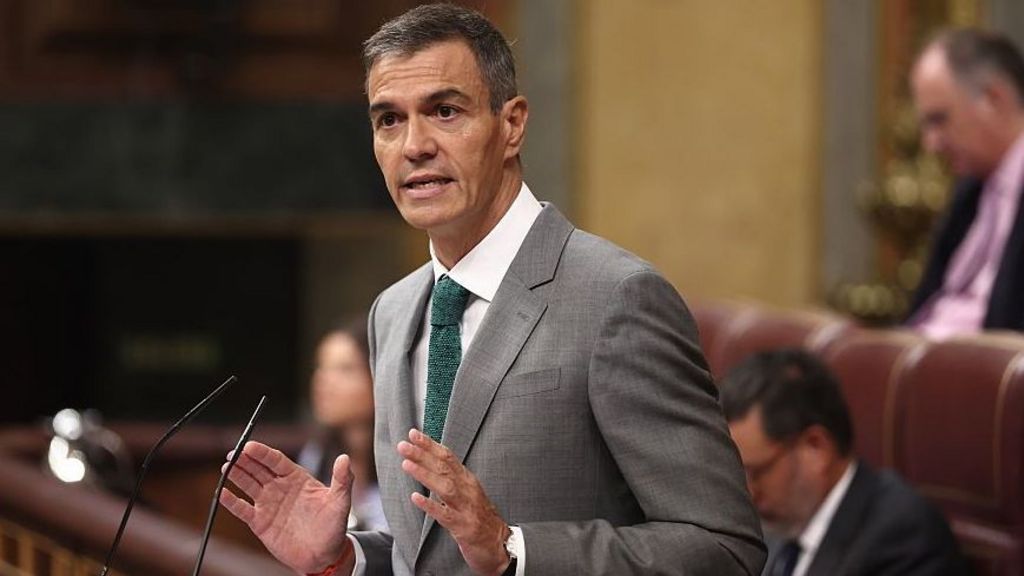
    Jaiju’s path to legal status has been smoothed by a controversial one-time policy from Spain’s ruling Socialist government led by Prime Minister Pedro Sánchez. The administration is currently allowing hundreds of thousands of undocumented migrants who arrived before December 2025 to apply for residence and work permits to regularize their status. Padre Pepe’s team is working around the clock to help as many eligible migrants as possible submit their paperwork before the application deadline closes.

    The policy has drawn fierce condemnation from Spanish opposition groups. The conservative Popular Party has labeled the move “irresponsible” and out of step with EU immigration frameworks, while far-right party Vox has decried it as enabling an “invasion” that will overwhelm the country’s public health system, housing market, and security infrastructure. For the Socialist government, however, the move balances humanitarian principle with practical economic reality: like much of the rest of Europe, Spain faces an aging, shrinking native population and a growing gap in available workers.

    That demand is already visible on the ground in the Canary Islands. At the Domingo Alonso Group, a car dealership and service center in Las Palmas de Gran Canaria, managers struggled for months to fill open positions for bodywork painters and panel beaters, unable to recruit local workers. The company partnered with a local government scheme to hire young migrants after they age out of state care, and today the firm employs roughly 30 migrant workers. Initially, the move drew intense backlash online, with critics accusing migrants of “stealing” local jobs, said human resources manager Diana del Molino Rodriguez. “It was a really hard thing to do because immigration was not something seen as positive. Nobody was looking at migrants like persons,” she explained. Today, the program is a success: one of their workers, 19-year-old Tiene Lama from Ivory Coast, earns enough to send hundreds of euros home to his family each month. Dozens of local businesses, including major hotel chains that rely on the islands’ booming tourism industry, have now joined the scheme.

    As Pope Leo works to shift the narrative around migration toward greater compassion, a new EU migration pact is set to take effect this week that will further tighten Europe’s external border controls. The new framework is designed to make it easier to detain and deport migrants who arrive irregularly by sea. For desperate young people like Jaiju, who are already willing to risk death for a better future, policy experts say the new restrictions will do little to deter crossings. Human rights organizations warn the new rules will create new barriers for asylum seekers seeking to have their claims heard.

    The sharpest criticism of the new pact comes from local officials in the Canary Islands, where the policy will be implemented directly. “We have no-one to work in the hotels, drive our buses or work in construction; we don’t have masons or mechanics,” said Francis Candil, the Canary Islands’ deputy minister for welfare. “What we need is a real migration policy that means people from African countries don’t have to risk their lives but can come to Europe and have options for work. Instead, we have Europe trying to protect itself behind walls – and to expel people.”