A new cycle of tit-for-tat military strikes between the United States and Iran has collapsed months of fragile ceasefire efforts in the Middle East, pushing the region to the brink of a wider full-scale conflict and raising alarm over global energy security at the Strait of Hormuz.
The current round of unrest traces back to a three-month conflict that erupted on February 28, when a joint strike operation by the U.S. and Israel targeted Iranian positions. A ceasefire agreement brokered in April paused large-scale hostilities, but attempts to negotiate a permanent peace deal have repeatedly stalled. Sporadic cross-fire has kept the truce on the edge of collapse for weeks, until the latest escalation that broke the fragile calm.
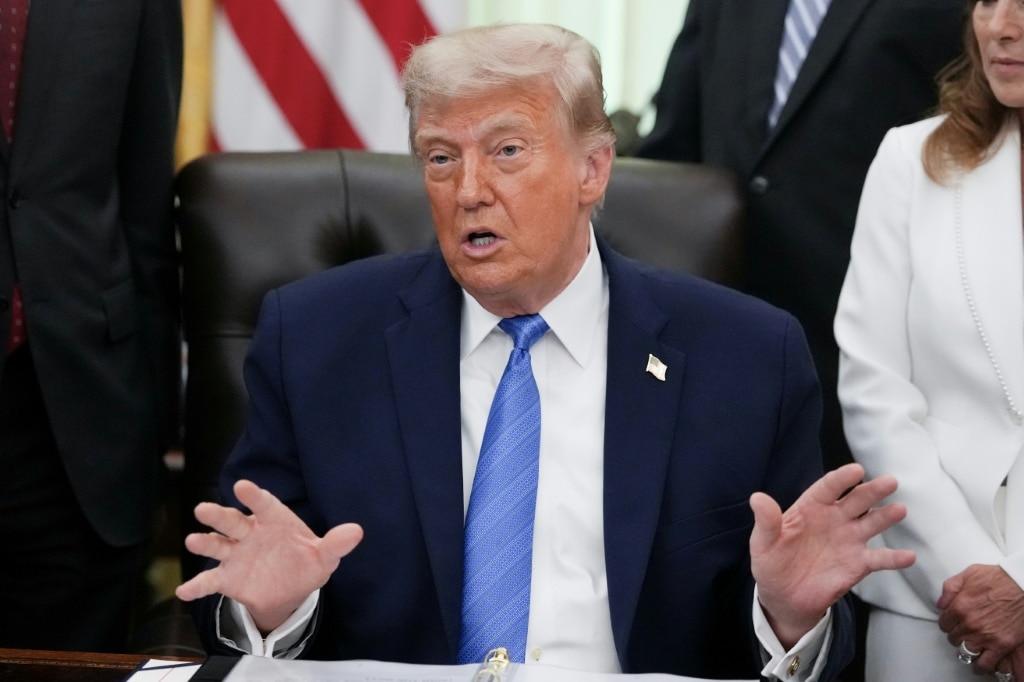
The latest confrontation began Wednesday, when U.S. President Donald Trump—who had repeatedly claimed a peace deal with Iran was within reach—accused Tehran of “playing us for suckers” and warned it would face consequences. Hours later, U.S. Central Command (CENTCOM) confirmed it launched a second consecutive day of strikes early Thursday, deploying dozens of Tomahawk cruise missiles to hit Iranian surveillance, communications, and air defense facilities across the country. Iranian state media reported multiple explosions across southern Iran, with at least three civilians wounded in Tehran province.
Tehran quickly responded with what its Islamic Revolutionary Guard Corps called a “punitive operation.” Iran targeted a U.S. military base in Jordan, while multiple Gulf states reported incoming hostile fire. Jordan’s military announced it shot down 20 Iranian missiles, and Kuwait’s air defense forces engaged and intercepted unidentified aerial targets. In Bahrain, which hosts a major U.S. naval base, falling debris from the attacks injured an 11-year-old girl and damaged multiple residential properties and vehicles, with Bahrain condemning the attack as “sinful Iranian aggression.”
In the wake of the U.S. strikes, Iran’s foreign ministry issued a sharp rebuke, stating that the illegal U.S. attacks are not only a blatant violation of international law and Iranian sovereignty, but have also rendered the April truce “practically meaningless.” U.S. Defense Secretary Pete Hegseth doubled down on Washington’s hardline stance, telling reporters that if ordered by President Trump, “we’ll negotiate with bombs.” He also confirmed the strikes could extend into a third consecutive night, promising future attacks would be strong and unambiguous. Fox News reported Trump threatened that if Iran refuses to accept U.S. peace terms, “We’ll bomb the S out of them tomorrow night.” Iranian officials quickly denied Fox’s report that Iranian leadership had called Trump directly amid the bombing, calling the claim completely false.
The escalation has also put global energy supplies at direct risk. Iran’s Revolutionary Guard aerospace force commander Majid Mousavi warned in a social media post that if the U.S. makes the Strait of Hormuz—one of the world’s most critical chokepoints for global oil and natural gas transport—unsafe, “We will make the region hell for you.” Iranian military officials claimed the waterway is now “completely closed” and all commercial vessel traffic would be targeted, and confirmed Iranian forces had already struck two civilian ships attempting to transit the strait. CENTCOM pushed back on the claim, stating late Thursday that commercial shipping continued to move through the strait normally.
The escalation has already claimed civilian lives beyond Iran and the Gulf. On Thursday, India’s shipping minister confirmed that three Indian civilian sailors were killed Wednesday when the U.S. struck the commercial vessel MT Settebello off the coast of Oman. India’s foreign ministry summoned a senior U.S. diplomat in New Delhi to lodge a formal strong protest over the incident.
Despite the sharp escalation, regional mediators have not abandoned diplomatic efforts. A Qatari delegation was actually in Tehran holding talks when the U.S. strikes began, with a diplomatic source confirming the discussions were held “in coordination with the United States.” The Qatari team only departed Tehran after talks that extended into the early hours of Thursday morning. Pakistan, which co-mediates talks alongside Qatar and hosted the first round of direct negotiations between the two sides, said it has not completely lost hope for a negotiated solution. Still, Pakistani foreign ministry spokesman Tahir Andrabi acknowledged that “It is hard to be an optimist in the new exchange of hostilities.”
International powers have called for an immediate de-escalation. Saudi Arabia, which faced Iranian attacks earlier in the conflict, issued a statement Thursday calling for renewed negotiations under the mediation of Pakistan and Qatar. China, Iran’s largest crude oil customer, also urged an immediate end to all military operations. “We call on relevant parties to immediately cease military operations, respond to the mediation efforts of relevant countries, and achieve a comprehensive and lasting ceasefire,” a Chinese foreign ministry spokesperson said Thursday.