作者: admin

  • US to remove Syria from terror blacklist, in new boost to Sharaa

    US to remove Syria from terror blacklist, in new boost to Sharaa

    In a landmark diplomatic shift that signals a new chapter for post-Assad Syria, the United States announced Wednesday it will remove the country from its decades-old list of state sponsors of terrorism, a major show of support for new Syrian leader Ahmed al-Sharaa. The long-awaited move, formally notified to Congress by Secretary of State Marco Rubio, will go into effect in 45 days, and congressional opposition to the delisting is widely viewed as an unlikely outcome.

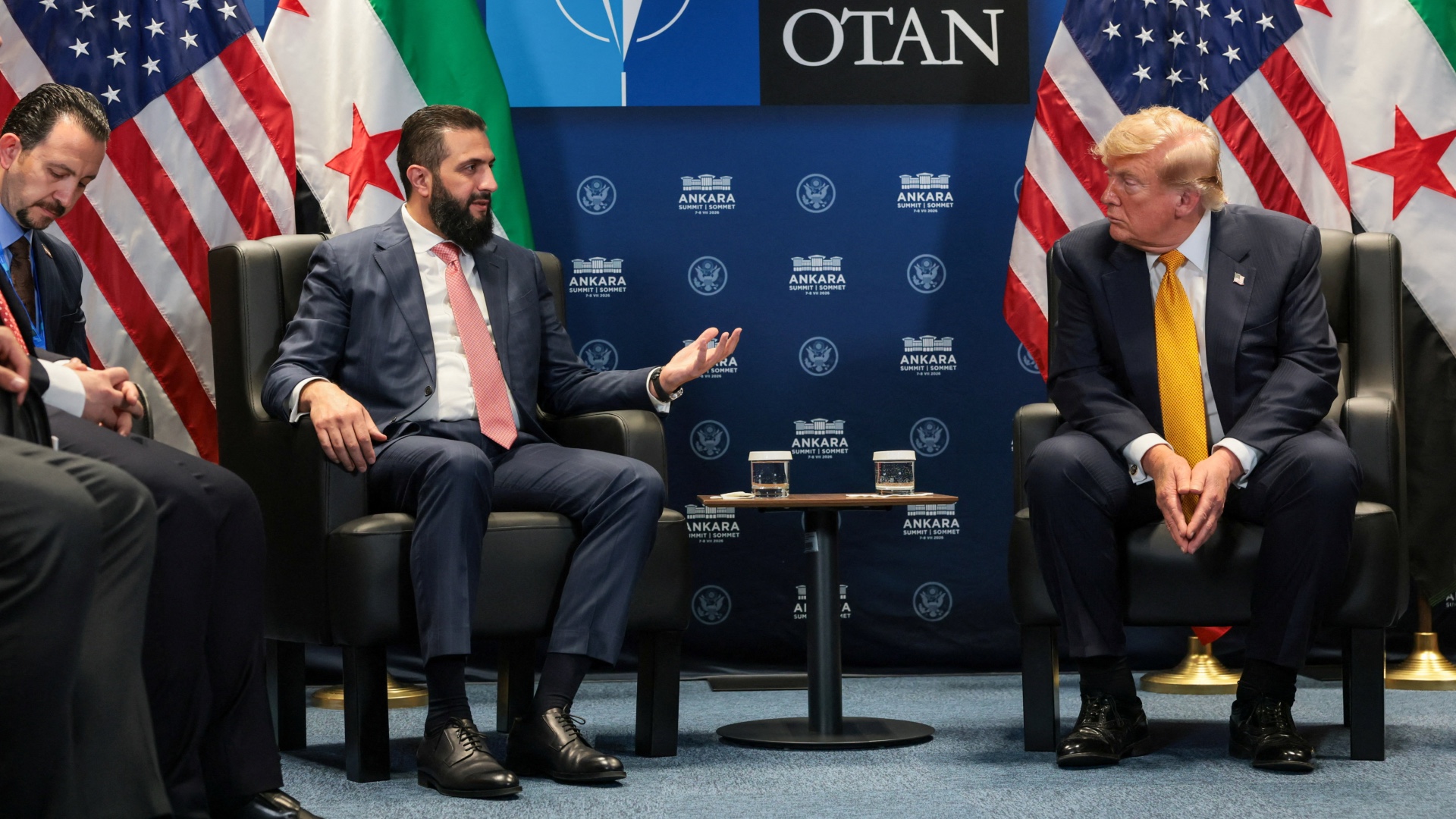
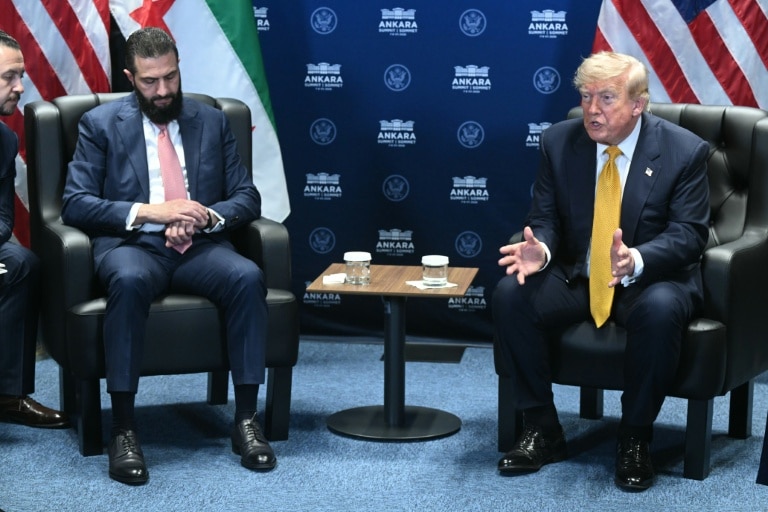
    The announcement coincided with a face-to-face meeting between U.S. President Donald Trump and Sharaa held on the sidelines of the NATO summit in Ankara, Turkey. Sharaa, a former jihadist who has rebranded himself as a unifying national leader following the 2024 collapse of the Assad regime that ruled Syria with authoritarian control for 50 years, traded his previous guerrilla attire for a formal suit for the high-profile diplomatic encounter.

    “This is yet another historic step by President Trump to give the Syrian people a chance at greatness,” Rubio said in an official statement. He emphasized that removing the terrorism designation, paired with broader sanctions relief, will unlock critical international trade and foreign investment that Syria desperately needs to rebuild its infrastructure and institutions after years of devastating civil conflict. “A stable, unified Syria at peace with itself and its neighbors benefits not only the region, but the entire world,” Rubio added.

    Trump echoed this positive assessment of Sharaa’s leadership during their meeting, saying, “He’s doing an unbelievable job in unifying Syria. What a job he’s doing. Syria was a mess with what happened with the previous government.”

    The delisting comes despite lingering misgivings from Israel, one of Syria’s long-standing regional adversaries that has carried out repeated airstrikes on Syrian territory in recent years. Trump has previously publicly pushed for Syria to reach a formal peace agreement with Israel, but moved forward with the delisting even without tangible progress on that front. Last month, Trump suggested that Sharaa’s Sunni-led government could lead a military campaign to weaken Lebanese Shia militant group Hezbollah, a proposal Sharaa quickly rejected, noting Syria has no intention of repeating the Assad regime’s decades-long military intervention in Lebanon.

    For months, the U.S.’s initial round of sanctions relief had little tangible impact on Syria’s economy because the state sponsor of terrorism designation remained in place. The label left U.S. and international businesses facing significant legal risks for any commercial activity in Syria, effectively blocking most foreign investment. Rubio confirmed that the decision to delist Syria followed “formal assurances” from Sharaa that the new government will not support any acts of international terrorism moving forward.

    With Syria’s removal, only three countries — Iran, North Korea, and Cuba — will remain on the U.S. terror blacklist. Cuba was controversially added to the list during Trump’s first presidential term amid rising pressure on the island’s communist government.

    The U.S. first designated Syria as a state sponsor of terrorism back in 1979, during the rule of Hafez al-Assad, the late father of ousted president Bashar al-Assad. For decades under the Assad dynasty, Syria hosted a number of Palestinian militant groups, and Damascus was accused of direct involvement in high-profile attacks, including a 1986 attempted bombing of an Israeli El Al airliner. In recent decades, the designation was primarily tied to the Assad regime’s close alliance with Iran and its long-standing support for Hezbollah. Today, Syria is in desperate need of international economic assistance to rebuild after years of brutal civil war that allowed the Islamic State extremist group to seize large swathes of territory and triggered one of the worst global refugee crises of the 21st century.

  • Iran ceasefire, now ‘over’, was always going to break

    Iran ceasefire, now ‘over’, was always going to break

    Just under four weeks after the United States and Iran signed a temporary ceasefire agreement, open hostilities have erupted once again across the Middle East, shattering the fragile truce that US President Donald Trump once heralded as a historic breakthrough. Signed at the Palace of Versailles in France on June 18, the deal that Trump claimed represented Iran’s “unconditional surrender” has now been declared “over” by the US leader himself.

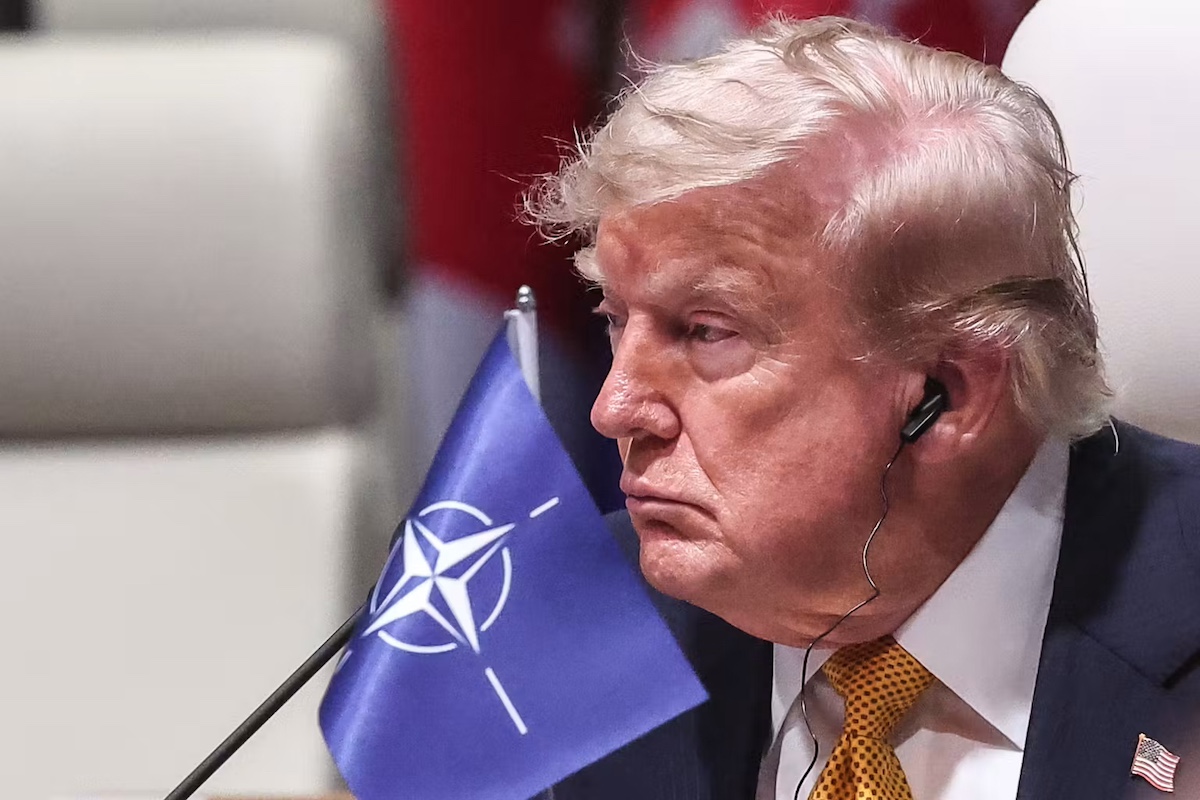
    Long before the latest escalation, this framework was never a genuine, lasting peace agreement. It functioned only as a temporary pause to hostilities – a “deferred crisis” with a built-in trigger that was always destined to detonate. That moment has now arrived. On July 8, speaking on the sidelines of the NATO summit in Ankara, Turkey, Trump dismissed any future negotiations with Tehran as “a waste of time”, capping a rapid downward spiral of tensions that will look grimly familiar to anyone who has followed the decades-long US-Iran conflict.

    The chain of escalation that ended the truce began on July 7, when Iran launched attacks on three commercial vessels transiting the Strait of Hormuz, a critical chokepoint for 20% of the world’s daily oil supply. In response, the US carried out what an unnamed senior American official described as “punishment” strikes, targeting more than 80 Iranian military sites across the region. Washington also reimposed full sanctions on Iranian oil exports – stripping away the single most important concession Tehran had secured in the original ceasefire deal.

    Iran immediately retaliated, launching missile and drone strikes against US military installations stationed in Bahrain and Kuwait. Global oil prices surged in the wake of the attacks, reviving the exact economic pressure that had pushed Trump to the negotiating table in June: rising gasoline prices for American consumers, a politically sensitive issue ahead of upcoming US midterm elections.

    This rapid collapse of the ceasefire should come as no surprise to analysts. The Versailles agreement never addressed the core structural contradictions that sparked the original conflict; instead, it institutionalized those tensions, inadvertently creating the exact conditions that make full-scale escalation far more likely.

    The fatal flaw in the original deal was visible from its signing. The memorandum of understanding (MoU) centered on a simple quid pro quo: Iran would reopen the Strait of Hormuz to commercial traffic in exchange for the lifting of crippling oil sanctions, the only major economic lifeline keeping the Iranian economy afloat. But the agreement completely failed to resolve one of the most divisive flashpoints in the region: the ongoing conflict between Israel and Iranian-backed Hezbollah in Lebanon.

    Tehran had made clear from the start that one of its core non-negotiable objectives was halting further Israeli strikes against Hezbollah, a key proxy asset that Iran relies on to project power across the Middle East. For Israel, however, permanently suspending its right to self-defense against cross-border threats was never an acceptable term for a deal it was not even invited to negotiate. Israeli Prime Minister Benjamin Netanyahu was reportedly “fuming” over the terms of the MoU, which was drafted and signed without any input from Jerusalem.

    This omission has set into motion the vicious cycle of escalation now playing out across the region: continued Israeli military operations against Hezbollah positions in Lebanon prompt Iran to flex its control over the Strait of Hormuz, which in turn forces the US to launch strikes on Iranian assets to preserve its credibility – even as Washington pressures Israel to stand down. With each new exchange of fire, leaders in Tehran, Jerusalem, and Washington grow more convinced that restraint is no longer a viable strategy.

    Political theorists have long noted that leaders abandon restraint not only when threats grow, but when holding back no longer feels like an active, meaningful choice. Restraint only endures when it appears to be working, when it points toward a more stable future, and when it feels like a voluntary decision rather than a concession forced by external pressure. When those conditions collapse, restraint begins to look like political paralysis, and escalation becomes the only path leaders see to reassert control.

    For Trump, all three of those conditions have now collapsed entirely. Iran has resumed attacks on commercial shipping despite the terms of the ceasefire, oil prices are climbing just months before critical midterm elections, and every new Iranian strike makes clear that Tehran, not Washington, is setting the pace of the conflict. This dynamic is fundamentally unsustainable for the US administration.

    For Netanyahu, by contrast, the collapse of the ceasefire is not a failure – it is confirmation of his long-held skepticism of the deal. Israel never accepted the core premise of the MoU, and its security establishment has consistently argued that the conflict with Iran was only paused, not ended. Any framework that granted impunity to Iranian-backed forces in Lebanon was always doomed to be unsustainable from Jerusalem’s perspective. Just days after the June deal was signed, Netanyahu stated publicly that Israel’s “struggle is not over”, and that the Israeli military would “remain in these security zones for as long as necessary to defend our country”.

    Looking ahead, two primary scenarios are now possible, and both hinge on the future of the Strait of Hormuz to determine the outcome. In the first scenario, the US continues large-scale bombardment of Iranian military assets, while attempting to keep the strait open by force. This is an extraordinarily challenging mission. Iran does not need to defeat the entire US Navy to close the waterway; it only needs to make transit risky enough that global maritime insurers refuse to cover commercial vessels passing through the strait. While sustained US airstrikes can degrade Iran’s ability to launch attacks, they cannot eliminate it entirely. This has raised open questions about whether the US could eventually be forced to deploy ground troops to the region – a step that would almost certainly face fierce pushback from the US Congress.

    In the second scenario, Trump limits the scale of US strikes and uses the show of force as leverage to push for a renegotiated ceasefire. But this path also faces steep, perhaps insurmountable obstacles. Without being able to guarantee unimpeded navigation through the strait, it is difficult to see how Trump can negotiate a better deal than the one he just abandoned – especially against a Tehran regime that has already absorbed heavy US punishment and emerged more emboldened and belligerent than before.

    Either way, the available off-ramps for the US are narrowing rapidly. Until Iran’s ability to leverage control over the Strait of Hormuz is eliminated, the current cycle of escalation makes a prolonged, large-scale regional conflict far more likely. This analysis comes from Ben Soodavar, a lecturer in the Department of War Studies at King’s College London, and was originally published via *The Conversation* under a Creative Commons license.

  • Democrat Graham Platner suspends campaign for key US Senate race in Maine

    Democrat Graham Platner suspends campaign for key US Senate race in Maine

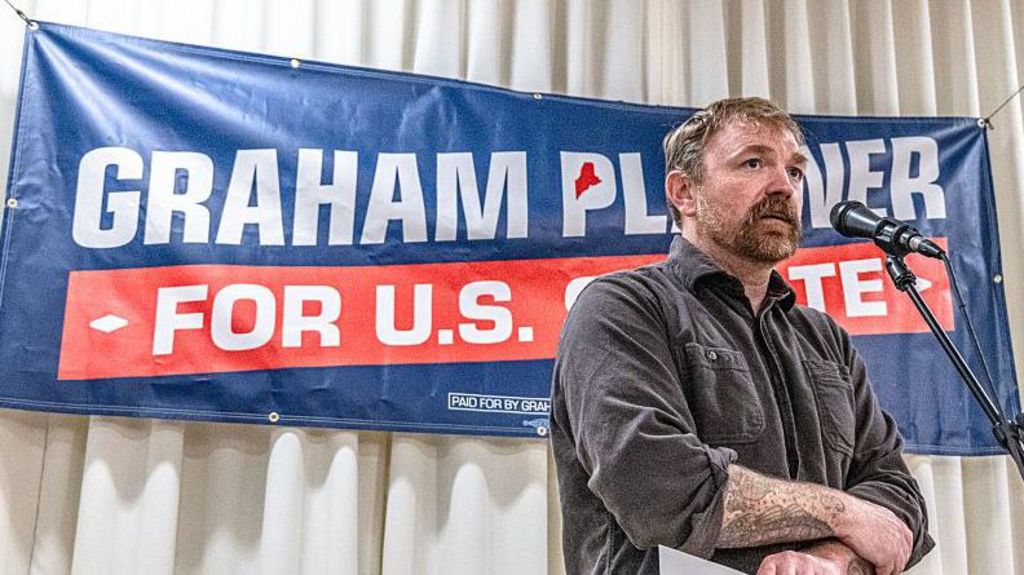
    A sudden political upheaval has shaken the critical race for a U.S. Senate seat in Maine, as Democratic hopeful Graham Platner announced the suspension of his campaign amid cascading scandals topped by a sexual assault allegation that collapsed his support within party ranks.

    Platner, an oyster farmer and military veteran whose anti-establishment populist campaign had quickly turned him into the Democratic Party’s front-runner, shared his decision in an 11-minute video posted to the social platform X. He pushed back hard against the assault claim, calling it entirely fabricated, and emphasized that his choice to step aside was not an admission of any wrongdoing. Instead, he blamed unified pressure from national and state Democratic leaders, who had threatened to cut off all financial and organizational campaign support if he remained in the race against incumbent Republican Susan Collins.

    “This has been an incredibly difficult decision, one that my wife and I have wrestled with over the course of several days,” Platner said in the address. “Over the past couple days I have faced some very serious allegations, and I just want to make it clear, this is all false. The things that have been claimed did not happen. It’s not real.”

    Per Maine state election law, Platner needed to formally withdraw by July 13 to allow state Democrats to place a replacement candidate’s name on the general election ballot this November. He confirmed he will file official withdrawal paperwork only after confirming the process to select his successor will follow “transparent and democratic” protocols.

    Platner’s rapid rise in Maine Democratic politics was unprecedented just months ago. Running on a progressive platform that included pushing for universal healthcare and expanded affordable housing, he tapped into widespread voter frustration with the party’s established leadership, propelling him past initial rivals including Maine Governor Janet Mills, who ultimately suspended her own nomination bid. His campaign received high-profile endorsements from leading progressive voices Senators Bernie Sanders and Elizabeth Warren, building momentum that appeared to put the competitive seat within Democratic reach.

    That momentum unraveled rapidly over the past week, however, after a new sexual assault allegation became public. By Monday, Warren had joined a growing chorus of top Democrats calling for Platner to exit the race, and three of his most prominent congressional backers — Representatives Ro Khanna and Senators Ruben Gallego and Martin Heinrich — pulled their endorsements entirely. Both the Democratic Senatorial Campaign Committee, which invests millions of dollars in party nominees across the country, and the Maine Democratic Party cut all ties and ended their support.

    The Maine race is widely viewed as one of the most critical pickup opportunities for Democrats as they pursue an uphill bid to flip majority control of the U.S. Senate in this year’s midterm congressional elections. No Republican presidential candidate has carried Maine since 1988, leading Democratic strategists to conclude a well-supported Democratic nominee could defeat Collins, a longtime moderate Republican incumbent.

    This isn’t the first string of scandals to hit Platner’s campaign. Prior controversies began emerging last October, when U.S. media reported he had a tattoo bearing a resemblance to a Nazi-era symbol, which he said he obtained during a drinking trip with fellow Marines in Croatia in 2007 and had since covered up. Later, old posts from the social platform Reddit were unearthed showing Platner arguing that sexual assault victims should “take some responsibility for themselves” by avoiding extreme intoxication, a comment for which he later apologized and asked voters for forgiveness.

    In June, The New York Times reported that Platner had exchanged sexually explicit messages with multiple women outside his marriage, a report he acknowledged was accurate, noting his wife had previously warned his campaign team about the risk of the story becoming public. The Times followed that report with additional accounts from three former girlfriends, who accused Platner of patterns of erratic, angry behavior.

    Jenny Racicot, the 41-year-old woman who made the latest sexual assault allegation, spoke first to Politico and later CNN, confirming she was one of the former girlfriends quoted in the Times report but chose to go public with the assault claim after previously declining to be named for the story to avoid being publicly labeled as a rape victim.

    Platner is the second high-profile Democratic candidate to suspend a campaign this year following sexual misconduct allegations. In April, Congressman Eric Swalwell dropped out of the race for California governor and resigned his seat in the U.S. House after multiple women brought forward claims of inappropriate behavior, which Swalwell has repeatedly denied.

  • Luke Beveridge says AFL’s Will Lewis staging fine sets ‘new precedent’

    Luke Beveridge says AFL’s Will Lewis staging fine sets ‘new precedent’

    A fresh controversy has erupted in Australian Rules Football after Western Bulldogs head coach Luke Beveridge launched a scathing rebuke of the AFL’s decision to uphold a staging fine against forward Will Lewis, accusing the league of dismissing clear medical evidence to set a troubling new precedent for future disciplinary cases.

    The penalty stems from an incident during last Friday’s match at the Sydney Cricket Ground, where the Bulldogs fell to the Sydney Swans. Lewis was issued a AU$1000 fine for alleged intentional staging during the game’s fourth quarter. In a bid to overturn the charge, the Western Bulldogs club submitted official medical documentation proving Lewis had been struck hard in the solar plexus during the play, a blow that left him temporarily unable to breathe and forced him to remain on the ground.

    Despite the submission, the AFL declined to reverse the fine. Beveridge told reporters this outcome now establishes a new, unwelcome standard that all Australian Football League clubs will have to navigate going forward. “In this one, he’s actually copped one in the solar plexus, it’s knocked the wind out of him,” Beveridge explained. “He’s hit the deck and then he’s obviously been charged with staging … what the AFL are saying to us is if you get hit, regardless if you do or don’t, if you stay down you can still be charged with staging.”
    Beveridge emphasized that the medical submission clearly confirmed Lewis could not have gotten back to his feet immediately due to his injury, yet the league brushed this evidence aside. “The AFL has obviously thumbed their nose at it and said, ‘We just think you’ve staged’,” he said. “It’s changed now to what staging is, it’s totally contingent on how long you stay down, not whether or not you actually got hit because he got hit.”
    The coach also came to Lewis’ defense, pushing back against any implication that the forward intentionally faked an injury to gain an advantage. “I feel for him because I don’t want him to be tarred with a brush that he’s put on an act because he hasn’t,” Beveridge said. “It just means now that if doctors from the football clubs, if they put forward submissions that a player is in discomfort, has been hit, the AFL will now ignore that and base it on what they see.”
    Beyond the disciplinary controversy, Beveridge also confirmed that key Bulldogs ruckman Tim English is in fitness doubt ahead of this weekend’s highly anticipated match against the West Coast Eagles. English played through discomfort in last week’s loss to the Swans, and his availability for the upcoming clash remains uncertain. He will need to get through a full training session without issue and pull up well by Friday to be confirmed as a starter.
    Beveridge noted that English has struggled for consistent form this season, a slump he attributes in part to disrupted game time from a recent concussion that has also dented the big man’s confidence. The coach, however, remains optimistic that consistent selection will help English return to his dominant best. “A bit like our midfield group this year, we’ve had some inconsistency through them working together, individuals at times and Tim’s in that,” he said. “But he’s obviously had some disruptions with the concussion, so a part of it might be a confidence thing. I’ve got every thought in my head that he’s going to be able to move towards being influential again – whether that is this week or not remains to be seen.”

  • Belgium gets serious for World Cup quarterfinal with Spain after gleefully routing US

    Belgium gets serious for World Cup quarterfinal with Spain after gleefully routing US

    CARSON, Calif. — The jubilant post-match dances, playful taunts and triumphant social media posts have been set aside. After securing a dominant 4-1 knockout stage win over host nation the United States on Monday in Seattle, Belgium’s Red Devils have shifted fully into preparation mode as they aim to extend their deep World Cup run on American soil.

    The squad held closed training sessions in the Los Angeles area Wednesday, still carrying momentum from two consecutive knockout stage wins that have defied early expectations. They opened their knockout run with a dramatic comeback victory over Senegal, followed by a thorough dismantling of the Americans, and now face their highest-stakes test yet: a quarterfinal showdown Friday against undefeated, tournament favorite Spain, who have yet to concede a single goal throughout the competition.

    For Belgian goalkeeper Thibaut Courtois, this unpredictable, rollercoaster World Cup campaign has forged a new mental grit and collective belief within the squad that he believes can carry them past Spain.

    “We came into the game against the U.S. knowing it would be an enormous battle,” Courtois told reporters at LA Galaxy’s suburban training stadium. “They were the home side, playing in front of a sold-out crowd fully behind them, so to put in a strong performance both defensively and offensively, sticking to our game plan, that gave the whole group a huge confidence boost.”

    Belgium entered the U.S. match fueled by widespread indignation, after FIFA controversially lifted a one-game red card suspension for star American forward Folarin Balogun, a decision that came after former U.S. President Donald Trump called FIFA President Gianni Infantino to demand a review of the suspension. The Red Devils turned that frustration into on-pitch dominance, outclassing the American side and celebrating their win exuberantly both on the pitch and in the locker room after the final whistle.

    The most viral moment of the celebration came when multiple Belgian players performed a simplified dance long associated with Trump, a routine that has been adopted by athletes across global sports in recent months — including American star Christian Pulisic.

    When asked about the timing and meaning of the dance following Trump’s intervention in the Balogun suspension, Belgian left back Diego Moreira offered a low-key explanation through an interpreter. “There are so many different ways to celebrate a goal or a win,” Moreira said. “You can try different dances, and that’s just what we did. We were simply celebrating a big win after the game.”

    Courtois, who was undergoing mandatory doping control immediately after the match and was not present for the locker room celebration, declined to comment on the dance.

    After arriving in the Los Angeles area for their quarterfinal match at SoFi Stadium, the Red Devils confirmed the celebratory chapter is fully closed, and all focus is now on Spain. The squad did, however, retain a bit of friction with their hosts on Wednesday: they received FIFA approval to relocate their training base after concluding their originally assigned fields at Loyola Marymount University in Los Angeles failed to meet the team’s basic preparation standards, per an official statement from the Royal Belgian Football Association.

    Heading into Friday’s match, Belgium enters as the clear underdog against a dominant Spanish side. That underdog status suits the Red Devils just fine, as their best performances of the tournament have come when the odds were stacked against them — most notably their stunning 3-2 comeback win over Senegal, where they fought back from a 2-0 first-half deficit to claim victory.

    When asked about matching up against the Spanish powerhouse, Courtois immediately drew a parallel to Belgium’s iconic 2-1 upset victory over Brazil at the 2018 Russia World Cup. That win sent the Red Devils to their first World Cup semifinal in 32 years, and proved they can topple tournament favorites when it counts.

    “Back in 2018, Brazil were heavy favorites against us, widely regarded as having more individual talent across their squad,” Courtois said. “But right now, I think this group is incredibly strong collectively, and we never stop fighting. The Senegal match showed exactly that: we keep believing until the final whistle, and that’s one of our biggest strengths at a tournament like this. At the World Cup, winning is the only thing that matters. Playing well is a nice bonus, but the priority is picking up a win and staying in the competition — and that’s exactly what we’ve done so far.”

  • International court tells BBC of breakthrough in Sudan war crimes probe

    International court tells BBC of breakthrough in Sudan war crimes probe

    Two decades after the International Criminal Court (ICC) first opened investigations into widespread atrocities in Sudan’s Darfur region, the court’s top deputy has announced a major investigative breakthrough: concrete evidence tying senior leaders of Sudan’s Rapid Support Forces (RSF) to war crimes and crimes against humanity committed during the group’s violent 2024 seizure of key Darfur cities.

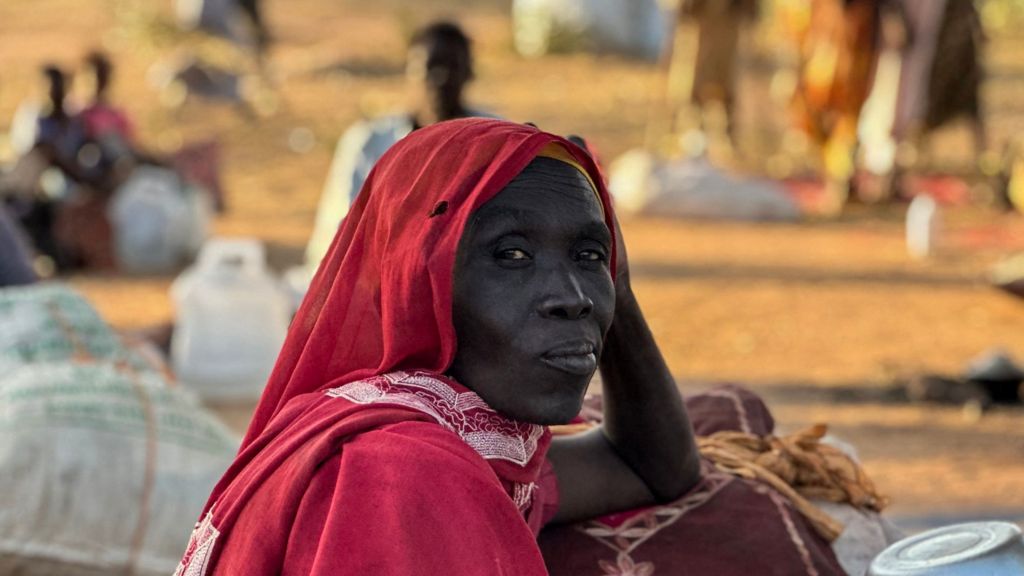
    Deputy ICC Chief Prosecutor Nazhat Shameem Khan shared the update in an interview with the BBC, following a recent visit to refugee camps in eastern Chad that host hundreds of thousands of people displaced by Sudan’s 27-month-long internal conflict. During her trip, Khan collected firsthand testimonies from survivors who fled the siege and takeover of el-Fasher, the capital of North Darfur, one of the deadliest chapters of the ongoing war between the RSF and Sudan’s regular armed forces.

    According to United Nations estimates, more than 6,000 civilians were killed during the RSF’s October 2024 offensive to capture el-Fasher, forcing tens of thousands of residents to flee their homes to neighboring Chad and other safe regions. UN investigators have previously stated that the violence in el-Fasher bears the clear “hallmarks of genocide,” with consistent allegations that the Arab-majority RSF has deliberately targeted non-Arab ethnic communities in Darfur — a pattern of violence that mirrors atrocities committed in the region in the early 2000s. A separate, equally brutal massacre of civilians is also alleged to have been carried out by RSF fighters in the West Darfur capital of el-Geneina.

    Khan confirmed that the court’s years-long investigation into these new atrocities has crossed a key threshold. “We have now found concrete evidence that links what is happening on the ground through linkage evidence to specific persons in leadership mode,” she told reporters, adding that “it may take time for justice to develop, to be brought to the court, but we will get there.” She also confirmed that the evidence gathered so far links RSF leaders not only to war crimes, but to crimes against humanity as well. While the court has not announced a timeline for when formal charges will be filed, Khan emphasized that investigative progress has been substantial. “We cannot say how quickly or how long it’s going to take,” she said. “But we can say that progress has been significant and that we have achieved a breakthrough.”

    The RSF has repeatedly pushed back against the allegations. The group has denied that it carried out widespread ethnically motivated killings across Darfur, claiming that the scale of atrocities has been greatly exaggerated by international observers. RSF representatives have acknowledged that isolated violations may have occurred during the el-Fasher campaign, and say that an internal probe into alleged abuses ordered by RSF leader Gen Mohamed Hamdan Dagalo shortly after the city’s capture remains ongoing.

    Khan noted that the patterns of violence observed in the latest outbreak of fighting in Darfur match exactly the patterns the ICC documented during its investigations into atrocities committed in the region in the 2000s, when the court first received a referral for the Darfur case from the UN Security Council. The current investigation draws on multiple streams of corroborating evidence, including survivor witness accounts, video and photographic documentation of atrocities, and forensic evidence.

    This is not the ICC’s first interaction with senior figures linked to Darfur atrocities. Over the course of 20 years of investigations, the court has secured seven arrest warrants and opened six separate cases against alleged perpetrators. The most high-profile defendant is former Sudanese President Omar al-Bashir, who was ousted from power in a 2019 coup and remains in Sudanese custody, evading transfer to The Hague decades after the ICC issued his arrest warrant. Four other suspects also remain at large with active arrest warrants. In 2024, the court convicted Ali Muhammad Ali Abd-Al-Rahman, a senior former leader of the Janjaweed militia, on 27 counts of war crimes and crimes against humanity committed between 2003 and 2004, sentencing him to 20 years in prison. The Janjaweed, a pro-government militia that targeted non-Arab civilians in 2000s Darfur, is the direct predecessor organization to the modern RSF, which was built from former Janjaweed factions.

    Sudan’s ongoing civil conflict, which erupted in April 2023, grew out of a power struggle between the Sudanese Army, led by Gen Abdel Fattah al-Burhan, and the RSF, led by Dagalo. The conflict has displaced millions of people across the country and killed tens of thousands, with Darfur emerging as one of the worst-affected regions. The Hague-based ICC, the world’s only permanent international court with a mandate to prosecute genocide, war crimes, and crimes against humanity, has maintained its investigation into Darfur atrocities through the latest conflict, as it continues to pursue accountability for crimes committed across more than two decades of violence in the region.

  • It was ‘love at first sight’ with their adopted baby. Then they were told he may have been trafficked

    It was ‘love at first sight’ with their adopted baby. Then they were told he may have been trafficked

    For Singaporean couple David and Ally — who asked the BBC to use pseudonyms to protect their case — the journey to parenthood ended in joy, only to be upended years later by a sprawling cross-border human trafficking investigation that now threatens to tear their family apart.

    After years of struggling with infertility and multiple devastating miscarriages, the couple turned to international adoption when domestic adoption waiting lists left them waiting years for a child. Like roughly two-thirds of adoptive families in Singapore, they looked to neighboring Indonesia, working with a local agency that specialized in placing Indonesian infants with Singaporean parents. Within weeks, they connected with an infant named Marcus over a video call, and David says he felt an immediate connection: “It was love at first sight.”

    The couple paid tens of thousands of dollars in fees, which they were told covered legal costs, agency services, infant care expenses, and a nominal token payment to Marcus’s biological parents. A few months later, Marcus arrived in Singapore, and his adoption was quickly approved by Singaporean authorities. The couple’s next step was applying for citizenship, a process they expected to go smoothly after all required checks had been completed. Instead, immigration officials suspended their application and informed them Marcus was likely one of at least 20 infants trafficked illegally from Indonesia to Singapore for adoption.

    The revelation came after Indonesian authorities broke up a major trafficking ring centered in West Java, where 19 people — most of them women — are currently on trial for their alleged roles in the scheme. Prosecutors accuse the ring, led by Indonesian woman Lie Siu Luan, of sourcing at least 20 infants from vulnerable biological parents, forging fake adoption and birth documents, and smuggling the babies to Singapore for thousands of dollars per child. Court documents reveal Lie admitted supplying infants to Singaporean contacts for at least S$17,000 (US$13,000) each, and coordinated a network of brokers who recruited expecting parents on social media, nannies to care for infants before transfer, and document forgers to create fake legal paperwork. In one documented case, a broker posed as a prospective adopter to trick an unemployed, bankrupt father into giving up his newborn son for a cash payment.

    Indonesian law defines the purchase and cross-border transfer of a child for exploitation as human trafficking, and the ring stands accused of bypassing the country’s strict formal transnational adoption processes entirely. Prosecutors are seeking prison sentences of between five and 10 years for all 19 defendants.

    The BBC’s independent investigation confirmed Marcus is indeed listed as one of the trafficked infants in Indonesian court documents, and the fake adoption paperwork lists one of the defendants on trial as his biological mother. The Singaporean adoption agency that connected David and Ally to Marcus is the same agency identified by Interpol’s Indonesian branch as linked to the ring, and remains a registered active business in Singapore; the BBC has not received a response to multiple requests for comment from the agency’s owner.

    The case has sparked urgent questions about how Singapore — a country renowned for its strict regulatory controls and rigorous border screening — failed to detect the illegal trafficking ring and formally approved multiple adoptions arranged by the syndicate. Singapore’s Ministry of Home Affairs has declined to comment on ongoing investigations into the agency and alleged Singaporean co-conspirators, citing active Indonesian court proceedings, and confirmed that the Ministry of Home Affairs and Ministry of Social and Family Development (MSF) are cooperating with Indonesian authorities to support the investigation.

    Lawmakers have raised repeated questions about the case in Singapore’s parliament, noting that the adoptions were approved on the recommendation of government officials, and that the adoptive parents are innocent parties who followed all legal requirements to the letter. However, the MSF has pushed back, arguing that adoption agencies bear primary responsibility for verifying the legitimacy of child origins and conducting rigorous background checks, and that adoptive parents also share a duty of due diligence.

    David and Ally reject this argument, saying they had no reason to suspect any wrongdoing as first-time adoptive parents who relied on government-approved vetting processes. “The officials are the experts on this, to see whether this is legitimate. They deal with so many adoptions, day in day out. Not us,” Ally told the BBC. The MSF has declined to answer questions about how it conducts vetting for foreign adoptions, but has confirmed it is providing support to affected families, processing of citizenship applications has been delayed, and it will launch a full review of Singapore’s international adoption procedures.

    The case also lays bare a growing child trafficking crisis across Indonesia, where official data shows the number of trafficked young children nearly tripled between 2021 and 2024, rising from 27 reported cases to 70. Child rights activists stress this is almost certainly an undercount, as many cases go unreported. The West Java ring is just one of at least seven large baby trafficking syndicates dismantled by Indonesian authorities in recent years; another syndicate based in Yogyakarta was found to have handled at least 66 infants.

    Traffickers exploit systemic gaps and deep-rooted social challenges in Indonesia to operate, activists say. Many biological parents who give up their infants do so out of extreme poverty, while others are coerced by traffickers. Cultural stigma around children born out of wedlock, limited access to social safety nets, and a lack of formal, safe facilities for parents to surrender unwanted children — such as the “baby boxes” common in many other countries — have created a vacuum that unregulated black market trafficking fills. Traffickers often frame their operations as a form of altruism helping struggling families, and many defendants, including Lie, claim they did not know their actions were illegal.

    “It’s not just a matter of finding out who’s selling the babies and then punishing them,” explained Eko Kriswanto, a West Java-based child rights activist. “The main problem is that children end up being treated as commodities. So what must be explored is the cause.” While Indonesia has strong legal protections for children against trafficking, inconsistent enforcement remains a major barrier, he added. Ai Rahmayanti, head of the independent Indonesian Commission for Child Protection, noted that the absence of formal safe surrender services has allowed traffickers to operate openly on social media, offering expecting parents cash and free medical care in exchange for their infants.

    As the West Java trial progresses, the most pressing unanswered question remains: what will become of the 12 children already believed to be in Singapore, including Marcus, all of whom have now spent most of their lives with their adoptive Singaporean families? Indonesian officials and activists have argued as a matter of principle that the children should be returned to their biological families in Indonesia, with one police official calling the issue a matter of “Indonesia’s national pride.” But child development experts warn that removing children from the only stable home they have ever known would cause severe, long-term harm.

    “The stress of multiple disruptions early in a child’s life could negatively affect brain development, emotional regulation, learning and attachment security,” explained Jeremy Heng, a senior clinical psychologist with the Singapore Children’s Society, adding that uprooting the children would increase their risk of lifelong trauma and mental health challenges. Indonesian foreign ministry spokesperson Yvonne Mewengkang told the BBC the country would prioritize “child protection based on the principle of the best interests of the child,” but neither Indonesian nor Singaporean authorities have publicly confirmed what final decision will be made about the children’s futures.

    For David and Ally, the months of waiting have been agonizing, with constant anxiety hanging over their family. “There’s always the thought that Marcus might be taken away,” David said. The couple have vowed to exhaust every legal option to keep Marcus, and if he is ordered to return to Indonesia, David says he will pursue a full, legal adoption from there. “I will not give up on him,” he said. “Any parent would fight till the end.”
  • Wealthy AI workers send San Francisco house prices soaring

    Wealthy AI workers send San Francisco house prices soaring

    In the tree-lined, upscale residential neighborhood of Duboce Triangle in San Francisco, a luxuriously renovated three-bedroom apartment carved from the top half of a historic Edwardian detached home has captured the attention of prospective homebuyers – not just for its nearly $3 million asking price, but for an unconventional payment term that encapsulates the city’s 2026 economic moment: the seller is open to accepting equity in leading AI firms OpenAI or Anthropic instead of full cash payment.

    A young OpenAI engineer, who relocated to San Francisco two years ago for his role at the AI giant and currently rents, left the viewing already planning to inquire with company leadership about the logistics of transferring his company stock to close the deal. “The price feels inflated, but I still want to buy it,” he explained after touring the property with his partner. This anecdote is far from an isolated case in today’s San Francisco, the global epicenter of the ongoing artificial intelligence revolution that has sent the city’s real estate market soaring to unprecedented heights.

    By March 2026, San Francisco reclaimed its decades-long title as the most expensive housing market in the United States, outstripping San Jose – the traditional heart of Silicon Valley located 50 miles to the south. Data from real estate analytics firm Redfin confirms that the city’s median home price rose 19% year-over-year in March, followed by consecutive monthly gains of 14.5% in April and 14.1% in May. As of May 2026, the city’s median sale price hit a record $1.76 million – a staggering contrast to the U.S. national median of just under $400,000, where national home prices grew by a modest 1.4% in March and 2% in both April and May.

    “Prices are just astronomical right now,” notes Daryl Fairweather, Redfin’s chief economist. “AI workers are sitting on massive new liquidity and they’re jumping straight into the housing market.” Industry analysts and economists broadly agree that the flood of new AI-generated wealth is the primary driver of the market’s red-hot growth, a conclusion backed by both market data and on-the-ground reports from local real estate agents. Fairweather points out that luxury zip codes across the Bay Area, including Duboce Triangle, have seen explosive price growth since OpenAI launched ChatGPT in late 2022 – a trend completely absent in U.S. metro areas with limited exposure to the AI industry. This boom has completely reversed the downtown San Francisco experienced during the COVID-19 pandemic, when population declined and home prices softened for the first time in years.

    The scale of new wealth flowing to AI employees in the city is extraordinary even by Silicon Valley’s high standards. Beyond generous six- and seven-figure base salaries and signing bonuses, top employees at leading AI firms have been permitted to cash out portions of their vested stock options via limited secondary share sales. Recent reports confirm that more than 600 current and former OpenAI employees sold a combined $6.6 billion in shares last October alone, working out to an average of $11 million per seller. At Anthropic, the creator of the leading AI chatbot Claude, employees were similarly allowed to sell $6 billion in aggregate stock earlier this year. With both firms targeting full initial public offerings in the next 12 to 18 months, which will create thousands more employee millionaires, many market observers see no immediate end to the upward price trajectory.

    “Buyers going into bidding wars today already see these prices as future bargains,” says Rachel Swann, the listing agent for the Duboce Triangle three-bedroom. The property ultimately closed for $3.2 million – $200,000 above the original asking price – though details about whether AI stock was included in the transaction remain confidential.

    While most analysts agree the boom is being driven by AI wealth, some experts note that countervailing forces could cool the market over the longer term. Enrico Moretti, an economics professor at the University of California, Berkeley and a San Francisco resident, points out that even with the current boom, the city’s total population and employment levels are still below pre-pandemic peaks. Large-scale layoffs at established big tech firms like Meta have also cut into demand from some segments of the market. Moretti adds that as the AI industry matures from its fast-paced innovation phase to a more stable established industry, wage growth for new specialized workers is likely to slow, and the vast majority of wealth from the coming IPOs will flow to global institutional investors rather than local employees.

    Even so, local agents with decades of experience describe the current market as unlike anything they have ever seen. Matthew Goulden, a San Francisco realtor with more than 20 years of industry experience, says he first noticed a sharp uptick in AI-linked buyers starting in late 2025. The growth is not limited to luxury properties, he explains: it extends across every segment of the market, from entry-level one-bedroom condos to single-family suburban-style homes, and it is being felt in nearly every neighborhood across the city. Bidding wars are now the norm, with final sale prices regularly coming in millions of dollars above asking. Homes are selling faster than ever, and the share of all-cash offers – a rarity for most middle-class buyers – has surged, particularly at the upper end of the market.

    Fellow veteran agent Danielle Lazier adds that long-standing structural constraints have amplified the impact of AI’s new wealth. San Francisco has struggled with chronic housing supply shortages for decades: the city’s geographic size is limited, a large share of residents are renters, and strict zoning laws have slowed new residential construction for years, even as the city’s new pro-development mayor has pushed to streamline permitting. “With fixed supply and this sudden flood of new AI money, the impact on prices is going to be outsized,” she explains.

    For San Francisco residents, the AI boom has created a stark divide between those who benefit from the industry’s growth and those who are being priced out of the city they call home. Two local families with school-aged children, both speaking on condition of anonymity to protect their privacy, illustrate this gap. One family, a long-term renter in a popular family-friendly neighborhood, was able to purchase a home in the same neighborhood with an all-cash offer after one parent – an OpenAI employee – sold shares last October. The couple says they feel “conflicted and self-conscious” about relying on AI wealth to secure their home, noting “we’re not flashy people, we just took the opportunity we got.”

    The second family, with no ties to the AI or broader tech industry, was forced to leave San Francisco entirely to find an affordable home. They moved to a suburban town north of the city, where they bought a larger home with a pool and more land on a mortgage. While the family has adjusted to their new life, the mother says the shift has been difficult: her husband still commutes more than an hour each way to his senior government job in San Francisco, and they frequently wonder what life would have been like if they could have stayed. “We wouldn’t have left if we could afford to stay,” she says. “It’s frustrating to see all this new AI money pushing everyone else out.”

    For many, that tension defines the new San Francisco: a city at the forefront of a global technological revolution that is generating unprecedented wealth, but one that is increasingly out of reach for all but the most affluent workers tied to the booming AI industry.

  • Trump ‘immediately’ asking US Supreme Court to reconsider birthright citizenship case

    Trump ‘immediately’ asking US Supreme Court to reconsider birthright citizenship case

    A week after the U.S. Supreme Court delivered a major rebuke of his restrictive immigration policy by upholding the longstanding principle of birthright citizenship, former President Donald Trump has announced he will move forward immediately with a formal request for the high court to rehear the contentious case. The Supreme Court’s recent ruling rejected Trump’s executive order that aimed to roll back the 150-year-old citizenship guarantee established by the 14th Amendment.

    Under Supreme Court procedural rules, a party that loses a decision is permitted to submit a request for rehearing within 25 days of the ruling being issued. For such a request to be approved, a majority of the court’s nine sitting justices must vote in favor of granting a second hearing. While this procedural avenue is technically available, legal experts note that rehearings of already decided cases are extraordinarily rare in the court’s modern practice: the last time the high court agreed to revisit a concluded ruling was roughly six decades ago.

    Taking to social media on Wednesday to lay out his next move, Trump issued a stark and uncompromising criticism of the court’s decision. “This miscarriage of justice will destroy America if they don’t change their absolutely insane decision,” he wrote in his post.

    The 30 June ruling, which upheld birthright citizenship by a 6-3 vote, represented a significant setback to Trump’s longstanding immigration agenda, but it was widely celebrated by civil rights and immigrant advocacy organizations across the country. Writing for the majority, Chief Justice John Roberts clarified that the 14th Amendment’s text guarantees citizenship at birth to all children born on U.S. soil, even those born to parents who are in the country unlawfully or only on a temporary, non-immigrant basis.

    Trump had argued in his executive order that the children of undocumented immigrants and temporary visa holders did not meet the 14th Amendment’s requirement of being “subject to the jurisdiction thereof” of the United States, and were therefore not eligible for birthright citizenship. Five justices, including Chief Justice Roberts, concluded that Trump’s executive order directly violated the 14th Amendment’s protections. Justice Brett Kavanaugh issued a separate concurring opinion, stating that he also found the order unlawful, but grounded his conclusion in violations of federal statute rather than the Constitution.

    In the immediate aftermath of the ruling, Trump already pledged to continue his campaign to end birthright citizenship through an alternative legislative route, which would require approval by both chambers of the U.S. Congress to move forward. Birthright citizenship has been a cornerstone of U.S. nationality law since 1868, when the 14th Amendment was ratified following the Civil War, and its legality has been repeatedly affirmed by Supreme Court rulings in the decades since.

  • Trump lavishes praise on ‘fantastic’ and ‘highly respected’ Sharaa

    Trump lavishes praise on ‘fantastic’ and ‘highly respected’ Sharaa

    On the sidelines of the NATO summit held in Ankara, Turkey, Wednesday marked a historic milestone in U.S.-Syria relations: former U.S. President Donald Trump offered unusually glowing public praise to Syrian President Ahmed al-Sharaa, branding him a fantastic and highly respected global leader following their closed-door meeting.

    This high-profile encounter represents another major breakthrough for al-Sharaa, whose rapid political ascent on the international stage has unfolded at breakneck speed over the past 18 months. Just over a year ago, he was first introduced to Trump during a gathering in Riyadh, Saudi Arabia. By November of that same year, he had stepped into the Oval Office to exchange diplomatic gifts with the U.S. president — a moment no Syrian leader, particularly one once labeled a terrorist by Washington, had achieved in decades.

    Turkey has been the primary architect of al-Sharaa’s rise to power since December 2024, with Ankara pursuing a clear geopolitical goal: establishing a friendly Syrian government in its neighboring country that falls firmly within Turkey’s regional sphere of influence. Trump’s quick diplomatic embrace of al-Sharaa has already emerged as one of the most consequential and eye-catching foreign policy shifts of his current term.

    Speaking directly to reporters while seated beside al-Sharaa, Trump doubled down on his positive assessment of the Syrian leader. “He’s done a really fantastic job as president. He’s unified the country in a very short period of time, I’d say like a year and a half, about a year and a half, and right from the beginning it was a real mess, very disjointed place, and he’s brought it together,” Trump said. He added, “He’s a strong person. He’s a great leader. He’s respected by everybody, including me, and we’re proud to have him.”

    Notably, Trump’s warm remarks toward al-Sharaa stand in sharp contrast to his consistently harsh rhetoric toward many of America’s long-standing traditional allies, most of whom are core members of the NATO alliance hosting this very summit. Trump has repeatedly scolded the leaders of major European powers including the United Kingdom, France, Germany, and Spain, accusing them of weak leadership on defense policy and immigration. He has also launched public attacks on Denmark over the country’s claim of sovereignty over Greenland, and is currently engaged in a very public, escalating feud with Italian Prime Minister Giorgia Meloni. Since March, he has further ramped up critical rhetoric targeting any nations that have refused to join his hardline campaign against Iran.

    Just 14 months ago, al-Sharaa — who once had a $10 million U.S. bounty placed on his head over his former extremist ties — saw Trump announce the historic lifting of crippling economic sanctions on Syria. That landmark policy shift was largely orchestrated by Saudi Arabia, with Gulf states now committing the bulk of funding needed to rebuild Syria’s war-ravaged infrastructure and institutions.

    For al-Sharaa, the top remaining diplomatic priority is securing two key wins: removing Syria from the U.S. State Sponsors of Terrorism (SST) blacklist and opening the door to broad international investment in the country. When asked about this goal Wednesday, Trump turned to U.S. Secretary of State Marco Rubio before signaling his clear support for the move, saying “I think we should. Yeah. We’re proud of the job he’s doing. Syria has become very stable.”

    The meeting also touched on Trump’s controversial proposal from last month that suggested Syria could take the lead on disarming the Iran-aligned militant group Hezbollah in neighboring Lebanon. Asked about the plan Wednesday, Trump told reporters, “They could help. We’ll find out. I think we’re making a lot of progress.”

    While al-Sharaa had previously publicly stated that the proposal was not a feasible option, his foreign minister Asaad al-Shaibani made a high-profile visit to Lebanon last week to meet with Nabih Berri, parliament speaker and leader of the Amal Movement — Hezbollah’s closest political ally. A senior Lebanese official who participated in talks during al-Shaibani’s visit told Middle East Eye that the trip was coordinated with Lebanese authorities to send a deliberate, calming message about Syria’s regional intentions. The official noted, “The visit was very much needed to reassure Lebanon and ease concerns about the possibility of a military intervention pushed by the United States.”