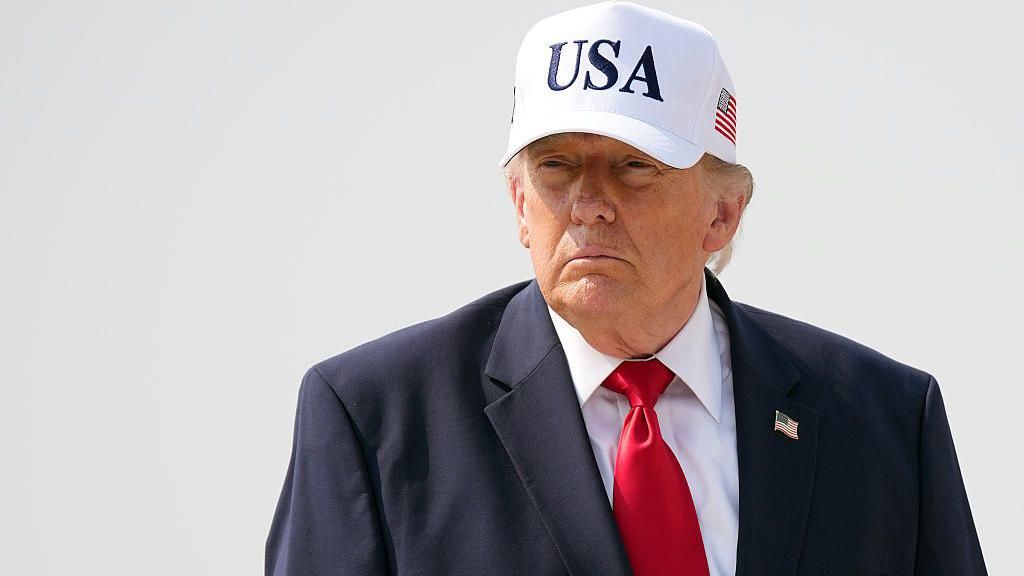
A week after the U.S. Supreme Court delivered a major rebuke of his restrictive immigration policy by upholding the longstanding principle of birthright citizenship, former President Donald Trump has announced he will move forward immediately with a formal request for the high court to rehear the contentious case. The Supreme Court’s recent ruling rejected Trump’s executive order that aimed to roll back the 150-year-old citizenship guarantee established by the 14th Amendment.
Under Supreme Court procedural rules, a party that loses a decision is permitted to submit a request for rehearing within 25 days of the ruling being issued. For such a request to be approved, a majority of the court’s nine sitting justices must vote in favor of granting a second hearing. While this procedural avenue is technically available, legal experts note that rehearings of already decided cases are extraordinarily rare in the court’s modern practice: the last time the high court agreed to revisit a concluded ruling was roughly six decades ago.
Taking to social media on Wednesday to lay out his next move, Trump issued a stark and uncompromising criticism of the court’s decision. “This miscarriage of justice will destroy America if they don’t change their absolutely insane decision,” he wrote in his post.
The 30 June ruling, which upheld birthright citizenship by a 6-3 vote, represented a significant setback to Trump’s longstanding immigration agenda, but it was widely celebrated by civil rights and immigrant advocacy organizations across the country. Writing for the majority, Chief Justice John Roberts clarified that the 14th Amendment’s text guarantees citizenship at birth to all children born on U.S. soil, even those born to parents who are in the country unlawfully or only on a temporary, non-immigrant basis.
Trump had argued in his executive order that the children of undocumented immigrants and temporary visa holders did not meet the 14th Amendment’s requirement of being “subject to the jurisdiction thereof” of the United States, and were therefore not eligible for birthright citizenship. Five justices, including Chief Justice Roberts, concluded that Trump’s executive order directly violated the 14th Amendment’s protections. Justice Brett Kavanaugh issued a separate concurring opinion, stating that he also found the order unlawful, but grounded his conclusion in violations of federal statute rather than the Constitution.
In the immediate aftermath of the ruling, Trump already pledged to continue his campaign to end birthright citizenship through an alternative legislative route, which would require approval by both chambers of the U.S. Congress to move forward. Birthright citizenship has been a cornerstone of U.S. nationality law since 1868, when the 14th Amendment was ratified following the Civil War, and its legality has been repeatedly affirmed by Supreme Court rulings in the decades since.