Two decades after the International Criminal Court (ICC) first opened investigations into widespread atrocities in Sudan’s Darfur region, the court’s top deputy has announced a major investigative breakthrough: concrete evidence tying senior leaders of Sudan’s Rapid Support Forces (RSF) to war crimes and crimes against humanity committed during the group’s violent 2024 seizure of key Darfur cities.
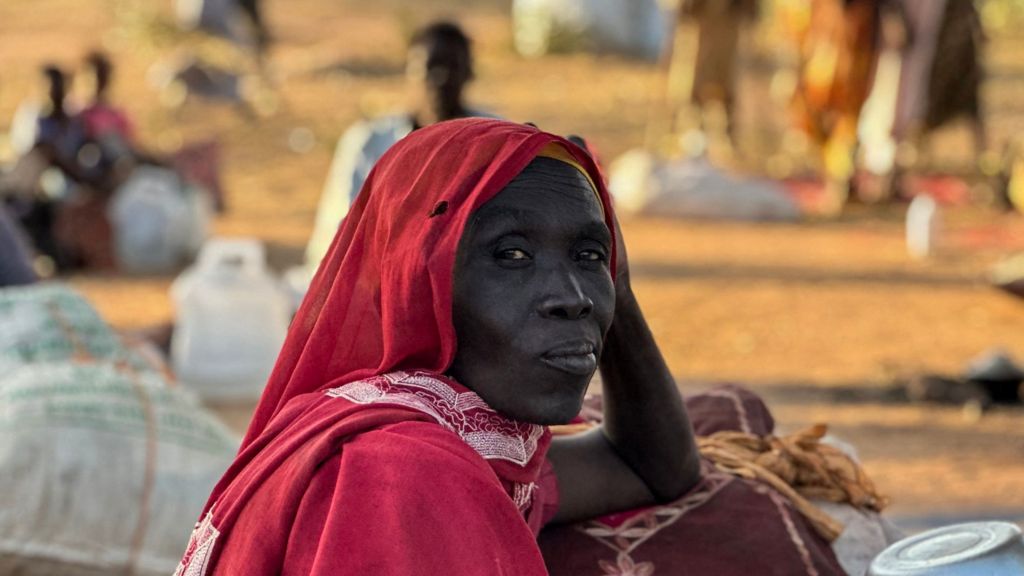
Deputy ICC Chief Prosecutor Nazhat Shameem Khan shared the update in an interview with the BBC, following a recent visit to refugee camps in eastern Chad that host hundreds of thousands of people displaced by Sudan’s 27-month-long internal conflict. During her trip, Khan collected firsthand testimonies from survivors who fled the siege and takeover of el-Fasher, the capital of North Darfur, one of the deadliest chapters of the ongoing war between the RSF and Sudan’s regular armed forces.
According to United Nations estimates, more than 6,000 civilians were killed during the RSF’s October 2024 offensive to capture el-Fasher, forcing tens of thousands of residents to flee their homes to neighboring Chad and other safe regions. UN investigators have previously stated that the violence in el-Fasher bears the clear “hallmarks of genocide,” with consistent allegations that the Arab-majority RSF has deliberately targeted non-Arab ethnic communities in Darfur — a pattern of violence that mirrors atrocities committed in the region in the early 2000s. A separate, equally brutal massacre of civilians is also alleged to have been carried out by RSF fighters in the West Darfur capital of el-Geneina.
Khan confirmed that the court’s years-long investigation into these new atrocities has crossed a key threshold. “We have now found concrete evidence that links what is happening on the ground through linkage evidence to specific persons in leadership mode,” she told reporters, adding that “it may take time for justice to develop, to be brought to the court, but we will get there.” She also confirmed that the evidence gathered so far links RSF leaders not only to war crimes, but to crimes against humanity as well. While the court has not announced a timeline for when formal charges will be filed, Khan emphasized that investigative progress has been substantial. “We cannot say how quickly or how long it’s going to take,” she said. “But we can say that progress has been significant and that we have achieved a breakthrough.”
The RSF has repeatedly pushed back against the allegations. The group has denied that it carried out widespread ethnically motivated killings across Darfur, claiming that the scale of atrocities has been greatly exaggerated by international observers. RSF representatives have acknowledged that isolated violations may have occurred during the el-Fasher campaign, and say that an internal probe into alleged abuses ordered by RSF leader Gen Mohamed Hamdan Dagalo shortly after the city’s capture remains ongoing.
Khan noted that the patterns of violence observed in the latest outbreak of fighting in Darfur match exactly the patterns the ICC documented during its investigations into atrocities committed in the region in the 2000s, when the court first received a referral for the Darfur case from the UN Security Council. The current investigation draws on multiple streams of corroborating evidence, including survivor witness accounts, video and photographic documentation of atrocities, and forensic evidence.
This is not the ICC’s first interaction with senior figures linked to Darfur atrocities. Over the course of 20 years of investigations, the court has secured seven arrest warrants and opened six separate cases against alleged perpetrators. The most high-profile defendant is former Sudanese President Omar al-Bashir, who was ousted from power in a 2019 coup and remains in Sudanese custody, evading transfer to The Hague decades after the ICC issued his arrest warrant. Four other suspects also remain at large with active arrest warrants. In 2024, the court convicted Ali Muhammad Ali Abd-Al-Rahman, a senior former leader of the Janjaweed militia, on 27 counts of war crimes and crimes against humanity committed between 2003 and 2004, sentencing him to 20 years in prison. The Janjaweed, a pro-government militia that targeted non-Arab civilians in 2000s Darfur, is the direct predecessor organization to the modern RSF, which was built from former Janjaweed factions.
Sudan’s ongoing civil conflict, which erupted in April 2023, grew out of a power struggle between the Sudanese Army, led by Gen Abdel Fattah al-Burhan, and the RSF, led by Dagalo. The conflict has displaced millions of people across the country and killed tens of thousands, with Darfur emerging as one of the worst-affected regions. The Hague-based ICC, the world’s only permanent international court with a mandate to prosecute genocide, war crimes, and crimes against humanity, has maintained its investigation into Darfur atrocities through the latest conflict, as it continues to pursue accountability for crimes committed across more than two decades of violence in the region.