作者: admin

  • Housing affordability fix looms as Treasurer hints at capital gains tax reform

    Housing affordability fix looms as Treasurer hints at capital gains tax reform

    As Australia’s federal government prepares to hand down its May 12 budget, Treasurer Jim Chalmers has fuelled widespread speculation about sweeping changes to national housing tax policy, while pushing back against common assumptions that the reforms would deliver a massive windfall to government coffers.

    Speaking in a recent podcast interview with Commonwealth Bank chief economist Luke Yeaman, Chalmers addressed the growing national housing affordability crisis, which has disproportionately locked younger generations out of first home ownership. He acknowledged the clear long-term shift in Australia’s property market, where investor activity has grown steadily at the expense of owner-occupiers, pointing to early 2000s changes to capital gains tax as a key contributing factor to this shift.

    “Anyone who looks objectively at the way that home ownership rates have declined over time … between homeowners and owner‑occupiers versus investors, can see there’s been a long-term trend,” Chalmers told the podcast. “Even if you just go back to around the turn of the century, those changes that were made to capital gains, you can see that that’s had an impact in the composition of the housing market.”

    Despite confirming the government is actively exploring reforms to negative gearing and the existing capital gains discount, Chalmers stopped short of confirming any final changes would be included in the upcoming budget, saying only that he would outline the government’s full plans on budget night. He did, however, push back heavily on widespread market speculation that any changes to these tax policies would generate significant new revenue for the government that could immediately be redirected to broad-based tax cuts for Australian workers.

    “One of the things that I think is not well understood in the speculation is that even if we went down the path that has been speculated about in those areas that you’ve asked me about, people shouldn’t expect there to be this huge amount of new revenue show up over the course of the next few years in the Budget,” Chalmers said. “But people assume that all of a sudden, a huge amount of revenue will show up that you can automatically and immediately give away, and most people who think deeply about those tax changes … would understand that there wouldn’t be a heap of revenue.”

    For weeks ahead of the budget, Chalmers and senior Labor cabinet ministers have framed potential housing tax changes as a matter of intergenerational equity. Critics of the current system argue the existing capital gains discount and negative gearing rules disproportionately benefit wealthy asset holders, while Australian working people bear the majority of the national tax burden. Chalmers said he welcomes the national debate over rebalancing the tax system to create greater fairness between income from labor and income from assets.

    This focus on fairer tax distribution builds on the government’s earlier changes to the controversial Stage 3 tax cuts, which were redesigned to deliver greater relief to low- and middle-income earners when they take effect from July 1, 2024. The revised plan also gradually reduces the 16 per cent tax rate to 15 per cent by July 1, 2026, and 14 per cent by July 1, 2027, while adding a new $1000 instant tax deduction for eligible earners.

    Market analysts and insiders widely predict the government will replace the existing 50 per cent flat capital gains discount with an indexation-based model. Under the current system, any investor holding an asset for more than 12 months qualifies for a 50 per cent discount on their taxable capital gain, a policy originally designed to benefit property investors. For example, an investor who buys a property for $500,000 and sells it two years later for $700,000 would only pay tax on $100,000 of the $200,000 profit under current rules. Under the proposed indexation model, the cost base of the asset would be adjusted for inflation rather than applying a flat 50 per cent discount.

    Chalmers also revealed the budget is still being adjusted in the final weeks ahead of its release, an unusual step driven by ongoing economic volatility stemming from the Middle East crisis. The conflict has already driven a sharp spike in global fuel prices, which added a 9.2 per cent lift to Australian consumer transport costs, with monthly automotive fuel prices surging 32.8 per cent. Around one-fifth of the world’s total oil and gas supply passes through the Strait of Hormuz, and ongoing tensions and blockages in the region have sent global energy prices soaring.

    “Ordinarily budgets are sketched out in summer, locked down in autumn,” Chalmers explained. “This one is being recalibrated even in autumn, and that’s different to normal. But there are some common elements.” He added he has prepared multiple versions of his upcoming budget speech to account for shifting global conditions.

  • Activists say Israel has intercepted their Gaza aid flotilla near Crete, detaining crews

    Activists say Israel has intercepted their Gaza aid flotilla near Crete, detaining crews

    In an operation that has reignited global debate over Israel’s 18-year blockade of the Gaza Strip, Israeli security forces intercepted dozens of activist vessels from the Global Sumud Flotilla, a humanitarian mission aiming to deliver aid to the blockaded Palestinian enclave, overnight between Wednesday and Thursday. The interception took place roughly 1,000 kilometers (over 600 miles) from Gaza, in international waters near the southern Greek island of Crete, with all crew members on the stopped vessels detained.

    The Global Sumud Flotilla first launched earlier this month from Barcelona, Spain. Organizers originally announced that more than 70 vessels and 1,000 participants from dozens of countries would join the mission, with additional ships joining the convoy as it traveled east across the Mediterranean Sea. By mid-morning Thursday, ship tracking data published on the activist group’s website confirmed that 22 vessels had been intercepted, while 36 other craft remained en route. Israel’s Foreign Ministry announced in a post on the social platform X that it would transfer the roughly 175 detained activists from more than 20 intercepted boats to Israeli territory.

    This interception comes less than 12 months after Israeli authorities foiled a previous attempt by the same activist coalition to reach Gaza. In an official statement responding to the operation, the group called Israel’s action a dangerous and unprecedented escalation, labeling the detainment of civilian activists hundreds of kilometers off Gaza’s coast as an abduction carried out in full view of the international community.

    The background to this confrontation stretches back to 2007, when Israel and Egypt imposed a graduated blockade on Gaza after Hamas seized control of the territory from rival Palestinian factions. Israeli officials justify the blockade as a critical security measure to prevent Hamas from smuggling weapons into the enclave, but human rights critics argue that the restriction amounts to collective punishment of Gaza’s 2 million civilian residents.

    International pushback against the interception was swift. Turkey’s Ministry of Foreign Affairs condemned the seizure of the flotilla as an act of piracy in an official statement Thursday, noting that Israel had violated core humanitarian principles and international law by targeting a mission focused on drawing global attention to the humanitarian catastrophe facing Gaza’s civilian population. The ministry added that Turkish Foreign Minister Hakan Fidan had held a phone call about the raid with his Spanish counterpart, Jose Manuel Albares Bueno, to coordinate diplomatic responses.

    Local activists in Greece have also called out Athens for its lack of response to the interception, noting that the operation unfolded within the maritime search and rescue responsibility zone assigned to Greece, yet the Greek coast guard took no action. Demonstrators planned a protest rally for Thursday afternoon outside the Greek Ministry of Foreign Affairs in central Athens to voice their anger.

    The interception comes amid a fragile six-month ceasefire that has paused the most intense phase of the Israel-Hamas war that began in October 2023. The conflict erupted when Hamas-led militants launched a cross-border incursion into southern Israel that killed roughly 1,200 people, most of them civilians. Retaliatory Israeli military operations in Gaza have killed more than 72,300 Palestinians since the war began, according to Gaza’s Hamas-run Health Ministry, whose casualty tracking is widely regarded as reliable by United Nations agencies and independent analysts. Even with the ceasefire in place, the ministry reports that more than 790 Palestinians have been killed by Israeli attacks across the enclave.

    Even after months of paused active fighting, most of Gaza remains in ruins, with 2 million residents facing acute shortages of food, clean water, and essential medicine. Only a limited volume of humanitarian aid is allowed to enter Gaza through a single border crossing controlled by Israeli authorities. Flotilla organizers emphasized that their mission aims to refocus global public attention on the ongoing humanitarian crisis in Gaza, particularly as international media and diplomatic focus has recently shifted to escalating tensions between Israel and Iran.

    The 2024 interception mirrors a similar confrontation last year, when the Global Sumud Flotilla attempted to breach the blockade. Last year’s mission included high-profile participants such as Swedish climate activist Greta Thunberg, and all participating vessels were ultimately intercepted, seized, or turned away even after one craft crossed the 12-nautical-mile boundary marking Gaza’s territorial waters. After the 2023 operation, detained activists claimed that Israeli authorities physically abused them during detention, claims that Israeli officials have repeatedly denied. All participants were eventually arrested, detained, and deported after last year’s attempt.

  • Cambodian court upholds opposition leader’s treason conviction

    Cambodian court upholds opposition leader’s treason conviction

    In a ruling that has reignited international scrutiny of Cambodia’s political landscape, the Phnom Penh Appeals Court confirmed Thursday a longstanding treason conviction and 27-year prison sentence for prominent opposition figure Kem Sokha, a decision that comes six years after his arrest triggered a sweeping nationwide crackdown on government critics.

    In addition to upholding the original sentence, which the 72-year-old leader has been serving under house arrest, the court added a new restriction: a five-year ban on international travel that will take effect once he completes his prison term.

    Kem Sokha’s legal saga stretches back to 2017, when his arrest cleared the way for the government to target all organized political opposition. At the time, his Cambodia National Rescue Party (CNRP) stood as the only major viable challenger to the long-ruling Cambodian People’s Party (CPP). Within months of the arrest, the country’s Supreme Court ordered the CNRP dissolved, barring the party from competing in the 2018 general election. The CPP, led by then-prime minister Hun Sen, subsequently won every seat in the National Assembly, consolidating its absolute control over national governance. Hun Sen handed power to his son, Hun Manet, in 2023, but the new administration has not moved to open up the country’s political system or roll back restrictions on opposition activity.

    Kem Sokha was ultimately convicted of treason in 2023 following years of extended pretrial detention. The charges against him center on allegations that he conspired with the United States to overthrow the Cambodian government, with the prosecution’s core evidence consisting of a leaked video of him speaking about receiving political guidance from U.S.-based pro-democracy organizations.

    During his most recent appearance before the appeals court earlier this month, Kem Sokha issued a firm denial of all accusations. He stated he never had collaborated with any foreign power at the expense of Cambodian citizens or national sovereignty, emphasizing that all his political work had been rooted in principles of nonviolence and national unity.

    Following Thursday’s ruling, Kem Sokha’s defense attorney Pheng Heng told reporters he was disappointed by the court’s decision. The legal team will now deliberate whether to take the case to Cambodia’s Supreme Court in a final appeal, and Pheng Heng called on the ruling government to prioritize national reconciliation as a path forward for the country.

    The ruling has already drawn formal concern from Western diplomatic missions based in Phnom Penh. The British Embassy released an official statement calling for Kem Sokha’s immediate release and the restoration of his full political rights, noting that such a move would support the strengthening of democratic institutions in Cambodia.

    For years, international observers have repeatedly accused the Cambodian government of weaponizing the country’s judicial system to target political opponents and dissenting voices. Government officials have consistently pushed back against these claims, asserting that the state upholds the rule of law within a framework of electoral democracy. Despite this assertion, all major opposition groups have faced systematic legal action: parties perceived as electoral threats have been dissolved by courts, their leaders imprisoned or subjected to ongoing harassment.

  • Singapore court fines women for pro-Palestinian walk

    Singapore court fines women for pro-Palestinian walk

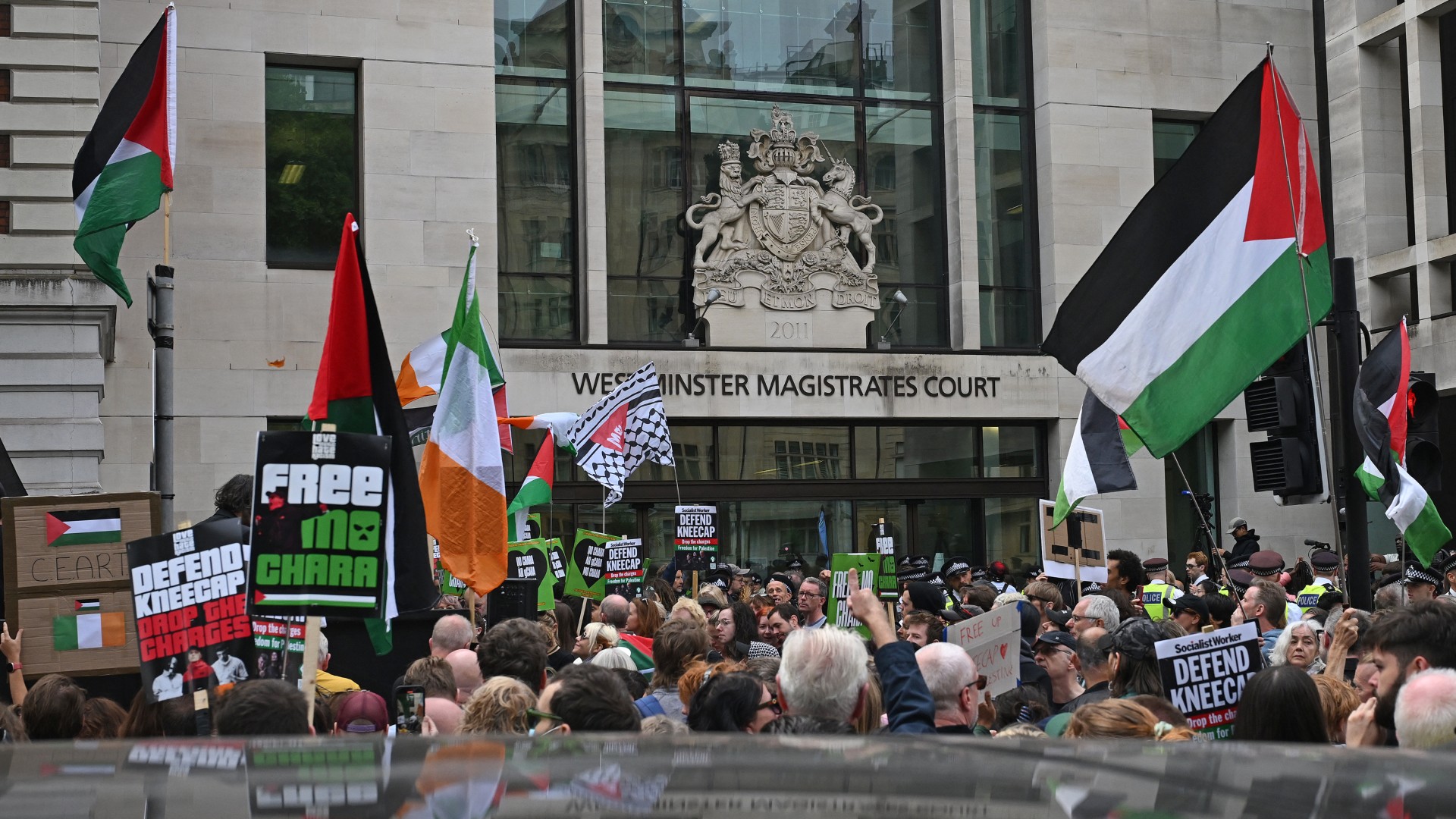
    In a high-profile legal reversal that spotlights longstanding tensions between protest regulation and freedom of expression in Singapore, the city-state’s High Court has overturned a previous acquittal and imposed fines of S$3,000 (equivalent to roughly US$2,300 or £1,700) on three women activists who organized a public march in support of Palestinian people. The case traces back to February 2024, when activists Mossammad Sobikun Nahar, Siti Amirah Mohamed Asrori, and Kokila Annamalai led a group of approximately 70 participants on a walk from a nearby shopping mall to Singapore’s Istana presidential compound, located adjacent to the mall. The march was organized to deliver a petition letter to the prime minister calling for the Singaporean government to sever diplomatic and economic ties with Israel, amid the ongoing military conflict in Gaza.

    Photographs from the event show demonstrators holding umbrellas emblazoned with watermelons, a symbol that has become a globally recognized motif for pro-Palestinian advocacy. Singapore maintains extremely strict regulations on public assemblies, and all public demonstrations require government approval. In the wake of the outbreak of the Israel-Gaza war, authorities have enacted a blanket ban on all public gatherings related to the conflict, making any unapproved pro-Palestinian protest a criminal offense.

    The three organizers were formally charged in June 2024 for violating regulations by organizing an unpermitted procession in a restricted zone near the Istana. During their initial trial held in late 2024, the defense team argued that the women had merely walked along public roadways, and had no prior knowledge that the stretch of route passing the presidential compound fell within a prohibited area for unapproved gatherings. The trial judge ultimately ruled to acquit all three defendants in October 2024, concluding that evidence presented in court proved the women had made good-faith efforts to comply with Singapore’s laws, and were “trying their level best not to run afoul of the law.” Following the acquittal, Annamalai told the BBC that the ruling had given “a new sense of energy and hope” to Singaporean civil rights activists.

    Prosecutors challenged the acquittal in an appeal to Singapore’s High Court, which issued its final ruling Thursday. The High Court judge rejected the original acquittal, stating that the three activists bore responsibility for failing to conduct more thorough inquiries to confirm whether their planned procession would be legally permitted under local regulations. After the ruling was issued, Annamalai reaffirmed the activists’ commitment to their cause in comments to the BBC, noting “There is a long fight ahead towards democratisation in Singapore, and acts of civil disobedience have an important part to play. We should have every right to walk to the Prime Minister’s Office at the Istana to deliver letters from ordinary Singaporeans.”

    The Singaporean government has long defended its strict demonstration regulations as a necessary policy to preserve public peace, social stability, and intercommunal harmony across the country’s multi-ethnic population. However, civil society and human rights critics argue that these sweeping regulations effectively stifle freedom of expression and discourage grassroots civil activism, particularly on contentious geopolitical issues such as the Israel-Gaza conflict.

  • ASX hit by supermarket slump and oil price fears in eighth day of losses

    ASX hit by supermarket slump and oil price fears in eighth day of losses

    The Australian Securities Exchange has booked its longest continuous losing streak in eight years, as skyrocketing global crude prices stoke fears of wider inflationary pressures that will erode household grocery budgets and cut into corporate profit margins. On Thursday, the benchmark ASX 200 declined 21.20 points, or 0.24%, to close at 8665.80, while the broader All Ordinaries index dropped 28.10 points, or 0.32%, to settle at 8887.60. This eighth consecutive day of declines marks the local bourse’s worst performance since 2018, with the Australian dollar also sliding 0.19% to trade at 71.14 U.S. cents by market close.

    Against the overall downward trend, eight out of 11 tracked market sectors finished the trading session in positive territory, with the broad market decline pulled down primarily by heavy losses in consumer staples and materials. The steepest drop in the consumer staples segment came from national supermarket giant Woolworths Group, whose shares plummeted 7.78% to $34.39. While the retailer reported a 4.5% year-over-year rise in sales to $18.1 billion, CEO Amanda Bardwell warned that spiking fuel costs driven by the global oil price surge are creating cascading pressure across the entire supply chain. Woolworths confirmed that multiple suppliers have already begun moving to pass higher energy-driven operational costs onto retailers, a shift that will eventually flow through to higher prices for consumers at checkout. Rival leading supermarket chain Coles followed suit, with shares falling 3.62% to $22.11, while other consumer-focused firms including A2 Milk and Endeavour Group also recorded moderate losses.

    Industry analysts say the current market downturn stems from a dual pressure of sky-high crude prices and growing expectations of another incoming interest rate hike from the Reserve Bank of Australia. Josh Gilbert, lead analyst at multi-asset trading platform eToro, explained that the current market shift is a direct reflection of how energy price shocks ripple through the entire economy. “When 20 per cent of the world’s oil supply is at risk, it doesn’t just impact energy prices, it flows through to everything from petrol at the pump to grocery bills, and Woolworths’ profit warning today is exactly that story playing out in real time,” Gilbert noted. As of Thursday, financial markets were pricing in a 77% probability that the RBA will raise interest rates at its next policy meeting, leaving Australian households caught between rising living costs and higher borrowing costs that squeeze disposable income.

    The global oil price surge that triggered the latest market jitters comes amid escalating geopolitical risk that has threatened key global shipping chokepoints. Brent Crude futures jumped to a fresh four-year high this week, briefly touching $US126 per barrel after U.S. officials warned they are bracing for an extended disruption to shipping through the Strait of Hormuz, a critical route that carries roughly a fifth of global oil supplies.

    The elevated oil prices pulled down share values for Australia’s big three iron ore miners: BHP fell 2.24% to $53.72, Rio Tinto declined 1.99% to $167.40, and Fortescue Metals dropped 2.82% to $19.61. Spot iron ore prices held steady at $US107.20 per tonne through the session. Gains in the energy sector partially offset these market declines, with top Australian oil and gas producers posting solid growth: Woodside Energy rose 1.51% to $33.55, Santos gained 2.96% to $8, and fuel retailer Ampol closed up 1.71% at $35.17.

    A handful of positive corporate announcements also delivered isolated gains in other segments. ASX Limited itself saw shares jump 5.10% to $60.80 after announcing Darren Yip as its new interim chief executive. Mineral Resources also climbed 2.96% to $63.71 after the mining firm upgraded its full-year production guidance for its Onslow iron ore project, as well as its Wodgina and Mount Marion lithium operations.

  • Police search Gold Coast property belonging to Dr Vahid Reza Adib, the partner of former premier Annastacia Palaszczuk

    Police search Gold Coast property belonging to Dr Vahid Reza Adib, the partner of former premier Annastacia Palaszczuk

    Queensland law enforcement officials have launched a search of a Gold Coast residential property registered to Dr. Vahid Reza Adib, the long-term partner of former Queensland state premier Annastacia Palaszczuk. Authorities confirmed Thursday that a dedicated crime scene was set up at the Burleigh Heads apartment as a core component of an active, ongoing investigation.

    A spokesperson for the Queensland Police Service shared early details of the operation, confirming that plainclothes detectives and specialized response teams arrived at the Goodwin Terrace address shortly after 11 a.m. local time. The spokesperson added that no additional details about the nature of the investigation could be released to the public at this stage of the process.

    According to initial reports from 7News, forensic investigators also participated in the search, carrying out a detailed inspection of the property before removing a number of undisclosed items for further analysis. As of the latest update, no criminal charges have been filed against any party connected to the property, and investigators have publicly stated that Palaszczuk herself is not considered a person of interest nor believed to have any connection to the conduct under investigation.

    Notably, the search took place just hours before Palaszczuk was scheduled to appear at a public book launch event at the Robina Library on the Gold Coast, part of a statewide promotional tour for her recently released memoir *The Politics of Being Me*. Roughly 200 attendees were in attendance for the event, and multiple guests were overheard discussing the day’s police raid, local outlet the Courier Mail reported. Eyewitness accounts confirm Palaszczuk displayed no visible signs of distress or disruption during her scheduled remarks and public appearance.

    Palaszczuk, who led Queensland as premier from 2015 to 2023, first went public with her relationship with Dr. Adib in 2021, while she still held office. The pair first met at the Stradbroke Day races, and reconnected through a shared network of mutual friends shortly after that initial encounter. They made their first public appearance together at the Caloundra Cup on the Sunshine Coast later that same year.

    In a past interview with the Courier Mail, Palaszczuk spoke positively of her partner, describing him as a warm, caring, and highly intelligent person with a sharp sense of humor. “We are just enjoying getting to know each other,” she said at the time. “We make time when we can to see each other. It’s not easy, but when we do see each other we like to go out to dinner and go on long walks, and what has been nice for me is that he also makes me take a break from work every now and again.”

    Dr. Adib is a prominent weight-loss surgeon based in Brisbane, who founded the Brisbane Obesity Clinic in 2004. Over his decades-long career, he has carried out tens of thousands of bariatric and weight loss procedures. He launched his surgical career at the Royal Brisbane Hospital in 1994, and completed advanced medical training in both Australia and leading European medical institutions.

  • ‘Piracy’: Israel raids Gaza-bound aid flotilla off Greek coast

    ‘Piracy’: Israel raids Gaza-bound aid flotilla off Greek coast

    In an operation that has ignited international condemnation over its scope and location, Israeli naval commandos carried out a raid late Wednesday on a fleet of Gaza-bound humanitarian aid vessels, intercepting the craft hundreds of nautical miles from the blockaded Palestinian enclave in international waters off the Greek island of Crete.

    The mission, organized by the Global Sumud Flotilla — a coalition of humanitarian and activist groups that describes this year’s expedition as the largest coordinated civilian maritime effort to break Israel’s 16-year siege of Gaza — confirms that at least 15 small vessels were boarded and seized during the operation. The organization says all people on board are currently held by Israeli forces, with communication cut off to multiple boats, and has described the detainees as “abducted.”

    Israeli officials have pushed back on this framing, confirming via the Foreign Ministry that approximately 175 activists from more than 20 intercepted vessels are now in Israeli custody. According to the Global Sumud Flotilla’s official account, after Israeli forces boarded the vessels, they systematically disabled critical on-board systems before withdrawing, leaving dozens of activists stranded on dead-in-the-water craft directly in the path of an oncoming major storm. The group detailed that raiding forces destroyed vessel engines and navigation equipment, jammed all communications to prevent coordinated distress calls or requests for emergency assistance, and abandoned the civilians in dangerous open ocean conditions.

    Witness accounts from activists on the flotilla note that the confrontation began shortly before the raid, when unmarked military speedboats approached the civilian vessels, identified themselves as Israeli units, and trained laser targeting devices and semi-automatic firearms on the people on board, ordering all activists to get on their hands and knees while communications equipment was disabled.

    In a formal statement released after the raid, Global Sumud Flotilla organizers denounced the operation as an act of open piracy committed far beyond any recognized Israeli territorial boundary. “This is the unlawful seizure of human beings on the open sea near Crete, an assertion that Israel can operate with total impunity, far beyond its own borders, with no consequences,” the statement read. “No state has the right to claim, police, or occupy international waters. Yet, that is exactly what Israel has done, extending its regime of control outward, occupying the Mediterranean Sea off the coast of Europe.”

    The expedition set sail from southern Europe earlier this month, with an estimated 58 vessels carrying roughly 1,000 international activists and hundreds of tons of desperately needed humanitarian aid bound for Gaza. The goal of the mission is to challenge the Israeli blockade that has turned the 365-square-kilometer enclave into what the United Nations has called the world’s largest open-air prison, and deliver life-saving aid that has been blocked from entering via land crossings.

    Israeli officials have celebrated the raid as a successful enforcement of its blockade policy. Danny Danon, Israel’s ambassador to the United Nations, posted on social media platform X praising the operation: “Another provocative flotilla was stopped before reaching our area. Our brave IDF soldiers are acting with professionalism and determination dealing with a group of delusional attention-seeking agitators.” In an audio communication to the flotilla documented by activists, an Israeli soldier claimed the blockade of Gaza qualifies as a “lawful maritime security blockade” and that any attempt to breach it constitutes a violation of international law.

    This raid marks the farthest distance from Gaza’s shore that Israeli forces have ever intercepted a Gaza-bound aid flotilla, with the operation taking place roughly 600 nautical miles from the enclave’s coast. Previous interceptions of similar activist missions have been carried out much closer to Gaza’s territorial waters. The operation comes amid a catastrophic ongoing humanitarian crisis in Gaza that has followed Israel’s 2023 military campaign, which has killed at least 72,500 Palestinians, left an additional 8,000 people missing and presumed dead under rubble, and has destroyed most of the enclave’s housing, hospitals, and educational infrastructure. Famine has already been declared in multiple northern Gaza governorates by global food security agencies, and even after a temporary ceasefire agreement, Israel has maintained sweeping restrictions on aid entry that have left the crisis largely unresolved.

  • French teen charged in Singapore over a vending machine straw-licking video

    French teen charged in Singapore over a vending machine straw-licking video

    A high-stakes public nuisance case centered on a reckless social media prank has drawn widespread attention in Singapore, where strict rules governing public hygiene and behavior are put to the test. The 18-year-old French national, Didier Gaspard Owen Maximilien, who is currently enrolled in a French business program based in the city-state, stands accused of two offenses – mischief and public nuisance – stemming from a March 12 incident at a local shopping mall.

    According to local leading English-language daily *The Straits Times*, the teenager posted a widely shared video to social media showing him licking a straw taken from an orange juice vending machine before placing the contaminated straw back into the dispenser for other customers. The clip spread rapidly across online platforms once it was made public, triggering widespread public outcry over its unsanitary and irresponsible nature. Maximilien was formally charged on April 24, and has not yet entered a plea in the case.

    In a recent court development, the judge granted the defendant permission to leave Singapore for a mandatory graduation school trip to Manila, with his travel scheduled from May 2 to May 25. He is required to return to the city-state to attend his next court hearing scheduled for May 29. Legal representatives for the teen declined to provide any comment on the details of the case when reached by reporters.

    Under Singaporean law, the mischief charge carries a maximum penalty of up to two years of imprisonment, a fine, or both. The lesser public nuisance charge can result in up to three months in jail, a fine, or both. Following the incident, IJooz, the company that operates the juice vending machine, took immediate action: it filed an official police report, fully sanitized the entire dispenser unit, and replaced all 500 straws held in the machine to eliminate any potential public health risk. In response to the incident, the company has also announced plans to upgrade all of its vending machines with new safety measures, including individually wrapped straws and locked storage compartments that only unlock once a customer completes their purchase.

    The incident highlights the strict approach Singapore takes to maintaining public order and cleanliness, a long-standing policy in the small, densely populated city-state. Singapore has long enforced tough regulations on public behavior, ranging from partial restrictions on the sale of chewing gum to harsh fines and penalties for littering, graffiti, and vandalism, all designed to preserve the country’s high standards of public hygiene and public space upkeep.

  • China to ban drone sales in Beijing citing security concerns

    China to ban drone sales in Beijing citing security concerns

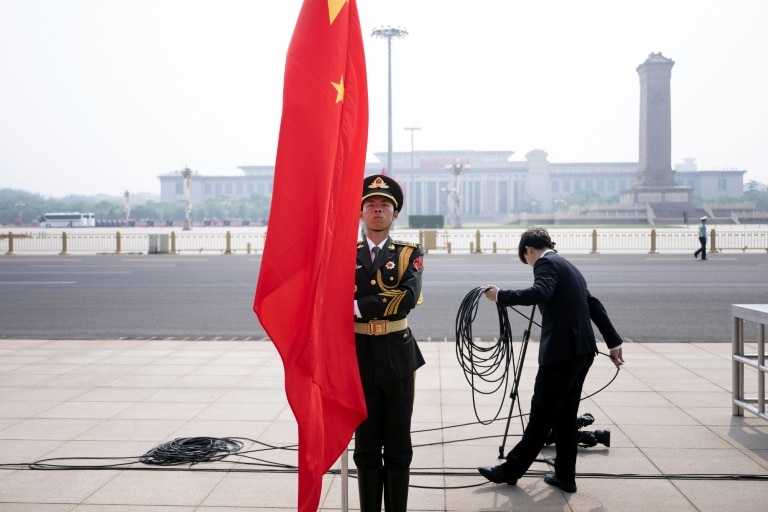
    Starting this Friday, May 1, sweeping new drone regulations will go into effect across Beijing, introducing some of the strictest controls on unmanned aerial vehicles (UAVs) in the world, even as China positions the broader low-altitude economy as a key national strategic growth sector.

    Under the newly implemented rules, the sale, rental, and unauthorised transport of drones and their core components into Beijing will be fully prohibited. All private and commercial drone owners operating within the capital are required to register their devices with local law enforcement before taking any outdoor flight. Additional requirements mandate that all outdoor drone operations across Beijing secure prior official approval, and operators must complete a government-designed online training course and pass an assessment on UAV regulatory policies to qualify for flight permits.

    Cross-city movement of drones also faces new scrutiny: any drone brought into or out of Beijing must go through formal registration, and owners sending drones outside the capital for repair are required to collect the device in person after servicing, rather than accepting courier delivery. A narrow set of exceptions applies to officially approved public utility operations, including counter-terrorism missions and disaster relief response, where drone ownership and operation remain permitted following government authorisation.

    This latest round of restrictions builds on years of incremental tightening of UAV rules across China, a trend driven by consistent official concerns over public safety and low-altitude airspace security. Beijing first designated its entire airspace a controlled no-drone zone last year, requiring advance air traffic management approval for all drone flights, and the local People’s Congress approved the updated regulatory framework in March 2026.

    “Our goal is to strike the best balance between safeguarding public and airspace safety and supporting sustainable technological and economic progress,” explained Xiong Jinghua, a senior official with the Beijing Municipal People’s Congress, when the regulations were approved.

    The new policy comes at a paradoxical moment for China’s drone sector: Chinese manufacturers, led by global industry leader DJI, currently dominate the worldwide consumer and commercial drone market, and the country’s growing low-altitude economy – which encompasses both commercial drones and emerging flying taxi technology – has been marked as a national strategic priority, with official projections valuing the sector at more than 2 trillion yuan ($290 billion) by 2035. Across many urban and rural regions of China, drones have already entered widespread daily use, supporting applications from commercial food delivery and agricultural crop monitoring to high-rise building exterior cleaning.

    Even with this rapid growth, China has emerged as one of the most tightly regulated markets for drone operation globally. With the new rules set to take effect, reports from Beijing indicate that authorized retail outlets for DJI, the country’s largest drone manufacturer, have already begun removing all consumer drones and related components from store shelves ahead of the sales ban.

    Official data puts the total number of registered drones across China at more than 3 million, and industry analysts note that the sweeping new restrictions in the capital are expected to reshape the country’s massive domestic drone market, forcing operators and manufacturers to adapt to the new layered regulatory regime.

  • Experts warn of rising lead risks in Africa’s solar energy boom

    Experts warn of rising lead risks in Africa’s solar energy boom

    In the tight-knit residential settlement of Owino Uhuru on Kenya’s Mombasa coast, the doors of a local lead-acid battery recycling plant closed more than a decade ago. But for thousands of residents who call this neighborhood home, the toxic legacy of that facility has never faded — a warning sign of the hidden public health risks emerging as Africa’s clean energy transition drives an unprecedented surge in battery demand across the continent.

    Forty-year-old Faith Muthama, a mother of four, is one of hundreds of residents still living with chronic health damage linked to the site’s contamination. Decades after the plant first began operations, she still cannot complete routine household work without gasping for breath. A 2012 blood test confirmed what her body had already been signaling: dangerous, elevated levels of lead were circulating in her bloodstream. “Life has never been the same,” Muthama says.

    The contamination that poisons this community traces back to 2007, when Kenya Metal Refineries EPZ — a local subsidiary of an Indian firm headquartered in Mumbai — opened the recycling plant in the middle of the residential area. For seven years, the facility processed spent lead-acid batteries to extract refined lead for export to India. Residents say toxic waste from operations leached untreated into the neighborhood’s soil and groundwater, sparking a public health disaster that has been linked to more than 20 deaths to date. Even after the Kenyan government shut the plant down in 2014, the embedded lead in local ecosystems continues to sicken generations of residents.

    Medical research confirms lead exposure carries irreversible, life-altering health harms: permanent neurological damage, stunted cognitive development in children, and chronic organ damage that cuts life expectancy. Vulnerable groups including children, the elderly and pregnant people face the highest risk, as growing bodies absorb lead far more readily than adults.

    In 2025, affected residents won a rare legal victory for environmental justice: Kenya’s Supreme Court upheld a class-action lawsuit against the smelting company, ordering roughly $12 million in damages to be distributed to nearly 3,000 impacted community members. But months after the landmark ruling, activists and residents say the Kenyan state has failed to move forward with timely disbursement of the awarded funds, leaving sick residents without financial support to cover ongoing medical care.

    Seventy-year-old Alfred Ogulo, a village elder, has already spent all of his life savings on treatment for lead-related illness. Tests once showed critically high lead levels in his blood, leaving him with permanent nerve damage that leaves him unable to walk without a cane. He lives with persistent chest pain and a chronic cough, a leftover from breathing toxic fumes when the plant was active. “I am just waiting for help as I have exhausted all my resources treating myself,” Ogulo says.

    The crisis in Owino Uhuru is far from an isolated case. Public health experts warn that similar lead contamination risks are emerging across the entire African continent, driven by the rapid expansion of renewable energy access that relies heavily on lead-acid battery storage. A February 2025 report from the Centre for Global Development, an independent think tank with offices in Washington and London, finds that the boom in off-grid solar systems — widely seen as a critical solution to closing Africa’s decades-long energy access gap — has caused a sharp spike in demand for affordable lead-acid batteries, and by extension, for battery recycling services.

    Lead-acid batteries remain the dominant power storage option across low-income African markets because they cost a fraction of the price of newer alternatives such as lithium-ion batteries. But safe, environmentally sound recycling of these batteries requires expensive specialized infrastructure that most African countries lack. As a result, the majority of lead-acid battery recycling in the region falls to informal, unregulated operators who use low-cost, rudimentary methods that release massive amounts of lead particles into the surrounding air, soil and water.

    “Off-grid solar could account for a substantial share of batteries entering the recycling stream in Africa,” explained Lee Crawford, a senior research fellow at the Centre for Global Development and one of the lead contributors to the report. “That’s on top of existing demand from vehicles like cars and motorbikes.”

    Crawford notes that the high cost of safe recycling creates powerful economic incentives for operators to cut corners on environmental and public health protections. While banning lead-acid batteries entirely would address the risk, Crawford says such a ban is unfeasible given the current affordability gap with alternative technologies. The only viable path forward, he argues, is investing in scaling up safe, regulated recycling infrastructure across the continent.

    The scale of the threat is staggering. Studies conducted across Africa and South Asia estimate that between one-third and half of all children living in these regions have elevated blood lead levels, making lead poisoning one of the most widespread underreported environmental health risks in the world. Weak regulatory enforcement across many African nations amplifies the problem: while most countries have environmental rules on paper that would limit toxic exposure from lead operations, inconsistent implementation and lack of funding for inspections allow unregulated recycling to continue unchecked.

    “This is a silent threat,” Crawford said. “It’s often invisible, but it affects health, cognitive development and economic productivity for entire communities.”

    The problem of accountability extends far beyond small informal recycling workshops, experts add. Even larger, formal recycling facilities often lack proper pollution control measures, while globalized supply chains for recycled lead make it easy for responsible parties to avoid accountability for contamination. “There needs to be accountability across the entire supply chain,” Crawford emphasized.

    A small number of African countries have begun to implement policy solutions to address the gap. South Africa, for example, has introduced a formal producer responsibility framework that requires battery manufacturers to fund and manage end-of-life recycling for their products, creating a structured, regulated system for processing spent batteries. But across much of the continent, especially in countries that import most of their batteries rather than producing them domestically, assigning clear responsibility for safe recycling remains a major policy challenge.

    International development donors have increasingly shifted funding toward lithium-ion battery technologies, which do not carry the same lead-related public health risks. But industry analysts project that lead-acid batteries will remain in widespread use across Africa for decades to come, particularly in low-cost off-grid solar systems that bring energy access to remote communities.

    For the residents of Owino Uhuru, the crisis remains an immediate, daily reality. Phyllis Omido, who leads the Mombasa-based Centre for Justice Governance and Environmental Action and helped residents bring their class-action lawsuit, says the Kenyan government has failed to uphold the Supreme Court’s ruling, leaving vulnerable residents without the relief they were awarded.

    “It is sad that the state has ignored prioritizing the compensation payment as ordered by the court,” Omido said. “These monies would have alleviated the current suffering these vulnerable residents are going through.”

    Sixty-year-old Mejumaa Hassan Nyanje, who has lived in Owino Uhuru through the entire crisis, says residents feel abandoned by national leaders and the company that caused the contamination. “Is it fair that we are the ones still chasing justice while the company walks away?” Nyanje said, fighting back tears. “Will we all die before justice is served? It feels like we’ve been abandoned, like our lives and our health don’t matter.”

    This climate and environmental reporting from The Associated Press receives financial support from multiple private foundations. AP maintains full editorial control over all content.