Just under four weeks after the United States and Iran signed a temporary ceasefire agreement, open hostilities have erupted once again across the Middle East, shattering the fragile truce that US President Donald Trump once heralded as a historic breakthrough. Signed at the Palace of Versailles in France on June 18, the deal that Trump claimed represented Iran’s “unconditional surrender” has now been declared “over” by the US leader himself.
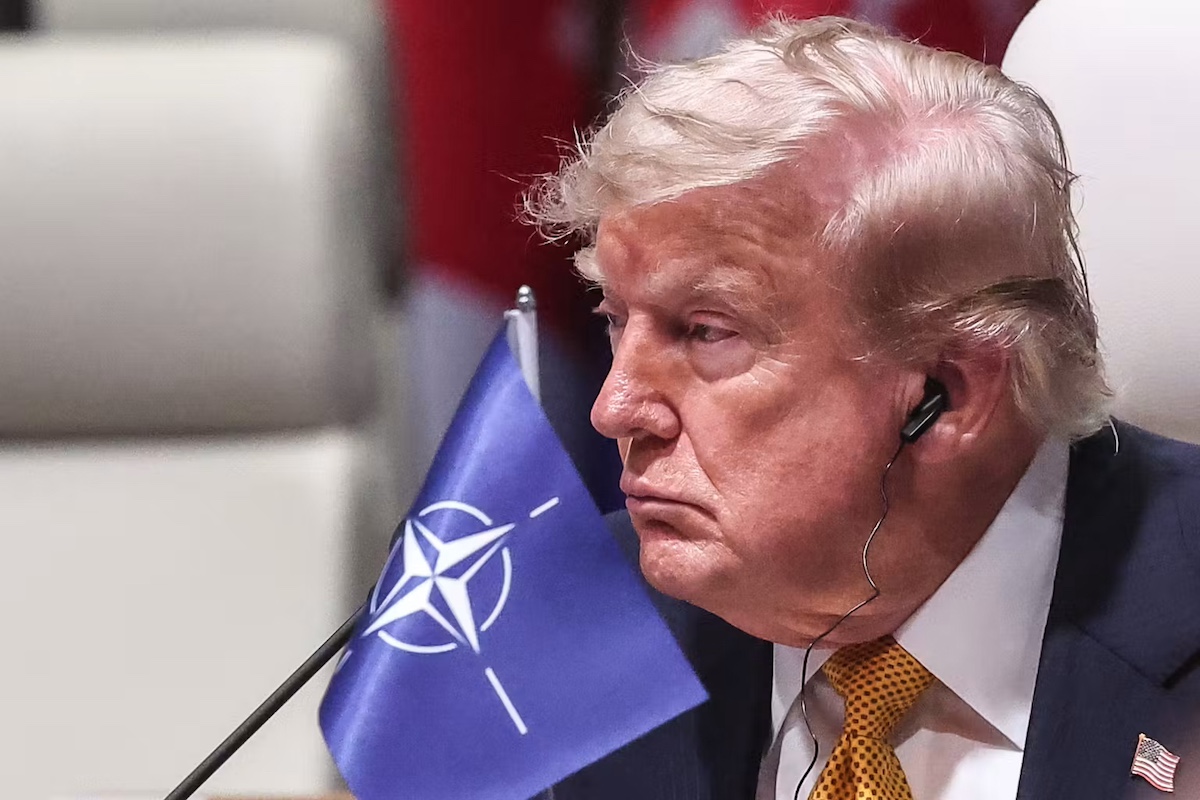
Long before the latest escalation, this framework was never a genuine, lasting peace agreement. It functioned only as a temporary pause to hostilities – a “deferred crisis” with a built-in trigger that was always destined to detonate. That moment has now arrived. On July 8, speaking on the sidelines of the NATO summit in Ankara, Turkey, Trump dismissed any future negotiations with Tehran as “a waste of time”, capping a rapid downward spiral of tensions that will look grimly familiar to anyone who has followed the decades-long US-Iran conflict.
The chain of escalation that ended the truce began on July 7, when Iran launched attacks on three commercial vessels transiting the Strait of Hormuz, a critical chokepoint for 20% of the world’s daily oil supply. In response, the US carried out what an unnamed senior American official described as “punishment” strikes, targeting more than 80 Iranian military sites across the region. Washington also reimposed full sanctions on Iranian oil exports – stripping away the single most important concession Tehran had secured in the original ceasefire deal.
Iran immediately retaliated, launching missile and drone strikes against US military installations stationed in Bahrain and Kuwait. Global oil prices surged in the wake of the attacks, reviving the exact economic pressure that had pushed Trump to the negotiating table in June: rising gasoline prices for American consumers, a politically sensitive issue ahead of upcoming US midterm elections.
This rapid collapse of the ceasefire should come as no surprise to analysts. The Versailles agreement never addressed the core structural contradictions that sparked the original conflict; instead, it institutionalized those tensions, inadvertently creating the exact conditions that make full-scale escalation far more likely.
The fatal flaw in the original deal was visible from its signing. The memorandum of understanding (MoU) centered on a simple quid pro quo: Iran would reopen the Strait of Hormuz to commercial traffic in exchange for the lifting of crippling oil sanctions, the only major economic lifeline keeping the Iranian economy afloat. But the agreement completely failed to resolve one of the most divisive flashpoints in the region: the ongoing conflict between Israel and Iranian-backed Hezbollah in Lebanon.
Tehran had made clear from the start that one of its core non-negotiable objectives was halting further Israeli strikes against Hezbollah, a key proxy asset that Iran relies on to project power across the Middle East. For Israel, however, permanently suspending its right to self-defense against cross-border threats was never an acceptable term for a deal it was not even invited to negotiate. Israeli Prime Minister Benjamin Netanyahu was reportedly “fuming” over the terms of the MoU, which was drafted and signed without any input from Jerusalem.
This omission has set into motion the vicious cycle of escalation now playing out across the region: continued Israeli military operations against Hezbollah positions in Lebanon prompt Iran to flex its control over the Strait of Hormuz, which in turn forces the US to launch strikes on Iranian assets to preserve its credibility – even as Washington pressures Israel to stand down. With each new exchange of fire, leaders in Tehran, Jerusalem, and Washington grow more convinced that restraint is no longer a viable strategy.
Political theorists have long noted that leaders abandon restraint not only when threats grow, but when holding back no longer feels like an active, meaningful choice. Restraint only endures when it appears to be working, when it points toward a more stable future, and when it feels like a voluntary decision rather than a concession forced by external pressure. When those conditions collapse, restraint begins to look like political paralysis, and escalation becomes the only path leaders see to reassert control.
For Trump, all three of those conditions have now collapsed entirely. Iran has resumed attacks on commercial shipping despite the terms of the ceasefire, oil prices are climbing just months before critical midterm elections, and every new Iranian strike makes clear that Tehran, not Washington, is setting the pace of the conflict. This dynamic is fundamentally unsustainable for the US administration.
For Netanyahu, by contrast, the collapse of the ceasefire is not a failure – it is confirmation of his long-held skepticism of the deal. Israel never accepted the core premise of the MoU, and its security establishment has consistently argued that the conflict with Iran was only paused, not ended. Any framework that granted impunity to Iranian-backed forces in Lebanon was always doomed to be unsustainable from Jerusalem’s perspective. Just days after the June deal was signed, Netanyahu stated publicly that Israel’s “struggle is not over”, and that the Israeli military would “remain in these security zones for as long as necessary to defend our country”.
Looking ahead, two primary scenarios are now possible, and both hinge on the future of the Strait of Hormuz to determine the outcome. In the first scenario, the US continues large-scale bombardment of Iranian military assets, while attempting to keep the strait open by force. This is an extraordinarily challenging mission. Iran does not need to defeat the entire US Navy to close the waterway; it only needs to make transit risky enough that global maritime insurers refuse to cover commercial vessels passing through the strait. While sustained US airstrikes can degrade Iran’s ability to launch attacks, they cannot eliminate it entirely. This has raised open questions about whether the US could eventually be forced to deploy ground troops to the region – a step that would almost certainly face fierce pushback from the US Congress.
In the second scenario, Trump limits the scale of US strikes and uses the show of force as leverage to push for a renegotiated ceasefire. But this path also faces steep, perhaps insurmountable obstacles. Without being able to guarantee unimpeded navigation through the strait, it is difficult to see how Trump can negotiate a better deal than the one he just abandoned – especially against a Tehran regime that has already absorbed heavy US punishment and emerged more emboldened and belligerent than before.
Either way, the available off-ramps for the US are narrowing rapidly. Until Iran’s ability to leverage control over the Strait of Hormuz is eliminated, the current cycle of escalation makes a prolonged, large-scale regional conflict far more likely. This analysis comes from Ben Soodavar, a lecturer in the Department of War Studies at King’s College London, and was originally published via *The Conversation* under a Creative Commons license.