作者: admin

  • Richard E. Grant, Cillian Murphy, Kylie Minogue and more mourn the death of Sam Neill

    Richard E. Grant, Cillian Murphy, Kylie Minogue and more mourn the death of Sam Neill

    The global entertainment community is in mourning this week after the passing of iconic New Zealand actor Sam Neill, who died Monday following a public battle with a rare form of non-Hodgkin lymphoma. Neill was 78 years old, leaving behind a decades-long acting career that shaped global cinema and cemented New Zealand’s growing reputation as a world-class hub for film production.

    Neill earned international household recognition for his career-defining turn as Dr. Alan Grant, the sharp-witted paleontologist at the heart of Steven Spielberg’s 1993 blockbuster Jurassic Park. The role cast him alongside co-stars Laura Dern, Jeff Goldblum and Richard Attenborough, as his character was drawn to a remote Costa Rican theme park where scientists had successfully cloned prehistoric dinosaurs. The franchise would go on to become one of the highest-grossing in film history, and Neill reprised his beloved role in later installments of the series.

    Beyond his blockbuster success, Neill built an award-nominated career spanning television and documentary work. He earned a Primetime Emmy nomination for his lead performance in the 1998 miniseries *Merlin*, and a second Emmy nod for his work as narrator on the 2017 documentary *Wild New Zealand*. He also collected three Golden Globe nominations across his career, for *Merlin*, *One Against the Wind*, and *Reilly: Ace of Spies*, showcasing his range as a performer across genres and formats.

    Tributes have poured in from across the entertainment industry and New Zealand’s political sphere, celebrating Neill’s talent, kindness, and lasting impact. Fellow actor Richard E. Grant, who collaborated with Neill on the 2018 film *Palm Beach*, wrote on Instagram: “Knew Sam Neill for 3 decades and finally worked with him on ‘PALM BEACH’ in 2018. An officer and a Gentleman in the truest sense. Guided and helped me through a very difficult time in my Life … Sail on, kind Sir.”

    Peaky Blinders star Cillian Murphy shared in a statement: “Like everyone who knew and worked with Sam, I admired him and adored him in equal measure. He was one of the kindest, funniest and gentlest people, and one of the finest actors … RIP.” Colin Trevorrow, who directed Neill in Jurassic World Dominion, remembered the actor’s steadying presence on set, writing on Instagram: “Sam Neill was a deeply soulful and beautiful man. He was a friend and collaborator at a challenging time, and his strength gave us all strength. I’ll remember him for his tranquility, his love of wine, and for the calm assuredness he brought to his characters. It’s not every lifetime you get to befriend a legend. Forever grateful.”

    New Zealand Prime Minister Christopher Luxon highlighted Neill’s foundational role in building his home country’s film industry. In a post on X, Luxon said: “Sir Sam Neill was one of the greats. He started out when there was barely a film industry in this country to speak of. For more than fifty years he took New Zealand stories to the world and his talents helped make our film industry into what it is today — one of our greatest cultural exports.”

    Fellow actors also shared personal memories of Neill, celebrating his warmth and on-screen talent. Actor Sharon Morgan credited Neill with bringing immense joy to the industry, recommending his performance in *Dean Spanley* as a testament to his skill. New Zealand-born actor Joel Tobeck recalled Neill’s encouraging presence and their shared love of rugby, calling him “a true gentleman.” Actress Rachel Griffiths referenced Neill’s own winemaking venture, writing that she would toast his memory with two bottles of wine from his vineyard. Global pop icon Kylie Minogue shared a simple tribute, writing “Vale Sam” — a term common in Australia and New Zealand meaning farewell. Australian actress Toni Collette summed up the widespread grief, writing: “I love you, dear Sam. You hero. You legend. You sweetheart. Our great friend. You are already missed so very much. Continue in peace wherever you are.”
  • Yemen government says attacked Sanaa airport, reviving dormant conflict

    Yemen government says attacked Sanaa airport, reviving dormant conflict

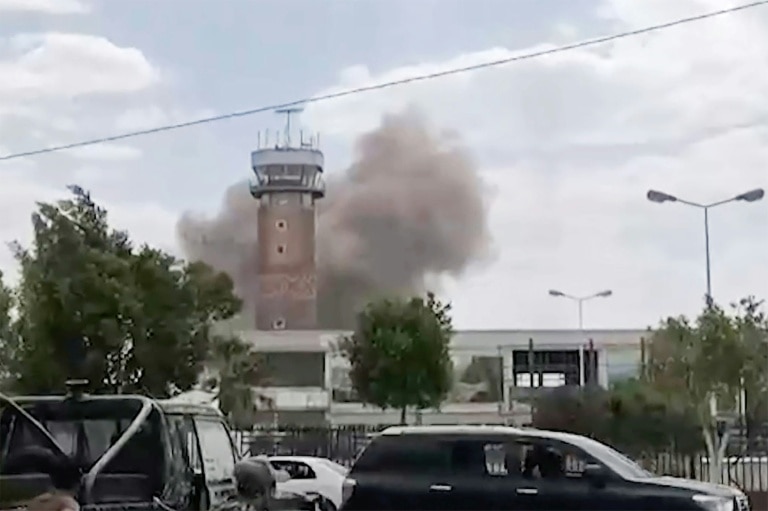
    Decades of simmering conflict in Yemen reignited dramatically on Monday, after the internationally recognized Yemeni government confirmed it carried out an airstrike targeting runways at Sanaa International Airport, the most intense escalation of hostilities between government forces and Houthi rebels in more than two years.

    The government justified the strike by stating it aimed to block an Iranian aircraft from landing in the Houthi-held capital. The action came after diplomatic efforts failed to persuade a Houthi delegation returning from Tehran—where they had attended the funeral of former Iranian supreme leader Ayatollah Ali Khamenei—to switch to a Yemenia national airline flight instead. Yemeni Defense Ministry officials clarified that the airstrike specifically targeted airport infrastructure in response to what it called a Houthi violation of Yemeni territorial sovereignty by allowing the Iranian plane to enter without prior coalition clearance.

    Under longstanding restrictions imposed since 2011, all aircraft entering Yemeni airspace require advance approval from the Saudi-led coalition that backs the Yemeni government, a rule the coalition says it enforces at the official government’s request. By arranging a direct flight from Tehran to Sanaa without securing that clearance, Houthi forces openly challenged the existing arrangement, prompting the military response. Immediately after the strike, the Yemeni government ordered all of the country’s airports to close indefinitely effective Monday.

    Houthi officials have placed full blame for the attack on Saudi Arabia, the Yemeni government’s primary military backer, and warned of imminent retaliation. “This aggression will not go unanswered or unpunished,” said Houthi military spokesperson Yahya Saree, adding that the strike formally “ends the de-escalation phase” that has held since 2022. The Houthi foreign ministry went further, declaring the attack marked “the end of the phase of de-escalation and the ceasefire and declares the start of war.” Houthi state broadcaster al-Masirah reported that the Iranian plane had already landed safely before the strike, carrying returning Yemeni medical patients and the Houthi delegation. Tensions had already been building through October, with Houthi officials accusing Saudi Arabia of an earlier strike on an Iranian plane traveling to Sanaa earlier this month, a provocation that already drew threats of retaliation against Saudi civilian and military infrastructure at the time.

    Rashad al-Alimi, head of Yemen’s Presidential Leadership Council, sought to temper expectations of a rapid expansion of fighting, saying he had “ordered that the scope of the confrontation not be expanded in a manner that would achieve Iran’s objective of dragging Yemen and its people into wars.”

    The strike comes at a moment of already elevated regional friction, as the United States and Iran have exchanged a series of tit-for-tat attacks across the Gulf that have stoked fears of broader regional conflict. The UN, which brokered the 2022 truce that paused large-scale fighting between Yemeni government and Houthi forces, has moved quickly to urge de-escalation. UN Special Envoy for Yemen Hans Grundberg confirmed his office has reached out to military leadership on both sides, saying “We are urging them to de-escalate and refrain from any actions that would risk a new cycle of violence in Yemen.”

    Analysts warn the latest escalation puts the fragile two-year truce at severe risk of total collapse. “If this cycle of action and retaliation continues, it could effectively mark the collapse of the April 2022 ceasefire framework and signal a return to a much more intense phase of the conflict,” said Mohammed al-Basha, a Yemen-based risk analyst with the U.S.-based Basha Report. Al-Basha noted that “The coming days will likely show whether both sides are prepared to move back toward sustained military escalation and ground war,” adding that the next steps involving the Iranian plane that prompted the strike will likely shape the trajectory of hostilities going forward.

    The Yemeni civil war, which began when Houthi forces seized Sanaa and much of northern Yemen in 2014, has killed more than hundreds of thousands of Yemenis through direct fighting, hunger and preventable disease, creating what the UN calls the world’s worst humanitarian crisis. Before Monday’s strike, large-scale fighting had remained largely frozen across frontlines for more than two years, creating a fragile calm that allowed limited humanitarian access and incremental confidence-building talks between rival factions.

  • Why US won’t win with force alone in the Strait of Hormuz

    Why US won’t win with force alone in the Strait of Hormuz

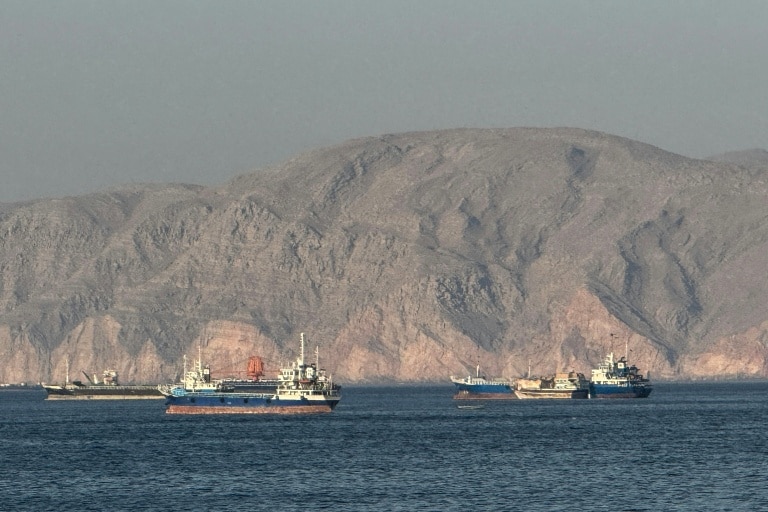
    A fresh cycle of tit-for-tat escalation has gripped the Persian Gulf after Iran targeted commercial vessels transiting through Omani sovereign territorial waters, deepening a standoff that threatens regional economic stability and global energy trade. The sequence of retaliation began when the United States responded to the attacks by scrapping all waivers that allowed global buyers to import Iranian crude oil. This diplomatic move was followed by two consecutive nights of US punitive airstrikes against military and infrastructure targets across southern Iran. In quick reply, Iran launched a wave of ballistic missile and drone strikes targeting US military installations stationed in Bahrain and Kuwait.

    While neither Iran nor the sitting US Trump administration has shown any willingness to escalate into a full-scale regional war, the new unwritten rules of limited, low-intensity violence that have emerged from the recent ceasefire are untenable for Gulf Arab states. These nations rely on open, secure shipping lanes to resume normal commercial activity and protect their core economic interests, which depend entirely on unimpeded energy exports.

    Current US strategy in the standoff has been widely assessed as ineffective. Washington’s approach relies exclusively on coercive pressure to force the Islamic Revolutionary Guard Corps (IRGC) to abandon its de facto control over the Strait of Hormuz, but punitive airstrikes alone cannot compel the IRGC to surrender what it views as a critical strategic asset gained through decades of regional influence-building. Under a temporary memorandum of understanding crafted to manage the current crisis, Iran has been given a 60-day window to guarantee unhindered freedom of navigation through all regional waterways. But Tehran has made clear it will only accept terms set by its own leadership, a dynamic that risks granting Iran disproportionate leverage over how Gulf states conduct global trade.

    The root of the latest escalation traces back to Oman’s efforts to open a new southern shipping corridor along its own sovereign coastline. This corridor was designed to act as an alternative shipping route that would weaken Iran’s stranglehold over the Strait of Hormuz, the chokepoint through which roughly 20% of global oil supplies pass daily. The IRGC responded with targeted attacks on vessels using the new corridor, drawing a clear red line to signal that it will not accept any challenge to its regional authority. Even a single successful demonstration that commercial shipping can reliably bypass the Strait of Hormuz through the Omani corridor would erode the regional dominance the IRGC has worked to establish.

    For the IRGC, control over the Strait of Hormuz has become as much a matter of national prestige and authority as it is an economic tool. Some analysts have proposed a simple arrangement where Iran charges a shipping toll for passage through the strait, but this solution overlooks key political and economic realities. Any legitimate toll tied to actual navigation services would only generate hundreds of millions of dollars annually, far less than the billions Iran could gain through a broader political settlement. The only path to large-scale economic benefit for Iran comes through comprehensive concessions: lifted international sanctions, the release of billions of dollars in frozen overseas assets, and renewed access to global investment markets.

    This dynamic exposes a deep internal rift within Iran’s ruling regime. Pragmatic factions within the government recognize that Iran’s greatest long-term prize is a full return to global energy markets, a goal that endless confrontation will only put further out of reach. For the IRGC, however, which leads Iran’s maritime activities in the strait, a quick toll scheme offers immediate, off-budget revenue that the corps can control directly, while negotiations over sanctions relief could drag on for years without delivering immediate gains.

    This is why regional Gulf states must step forward to broker a diplomatic bargain that aligns Iran’s incentives with open navigation, the analysis argues. The solution does not lie in further military escalation from either side. Instead, Gulf states must craft a credible framework that guarantees Iran immediate rewards for restraint today in exchange for long-term sanctions relief and economic benefits tomorrow. This would allow Tehran’s moderate leadership to make the case to hardline factions that patience and diplomacy deliver greater gains than continued aggression.

    Critics often argue two opposing positions: that Iran will simply accept economic concessions while continuing to disrupt shipping, or that Iran will never agree to any binding deal that compromises its control over the strait. Both positions miss the mark. The first incorrectly assumes that revenue is Iran’s primary motivation, when prestige and authority currently outrank financial gains for the IRGC. The second ignores the position of Iranian pragmatists, who acknowledge that prolonged international sanctions represent a long-term dead end for Iran’s economy. The reality is that Iran currently benefits from keeping the situation ambiguous, as ambiguity costs Tehran nothing. The task for Gulf negotiators is to make continued ambiguity far more costly than a negotiated settlement.

    For Gulf states, any permanent change to the status of the Strait of Hormuz is unacceptable, and prolonged limbo is just as unaffordable as full-scale war. For the United States, a negotiated settlement would also offer a face-saving exit from a bombing campaign that has failed to achieve its core strategic goals.

    The core conclusion of the analysis, authored by Andreas Krieg, Associate Professor in the Defence Studies Department at King’s College London, is that Gulf states must take the lead on resolving the crisis, rather than relying on Western military intervention. Washington has long been the primary external security guarantor for Gulf states, but it has grown increasingly unreliable in the face of determined Iranian resistance. The Trump administration’s impulsive, unplanned approach to statecraft has already become a liability, dragging Gulf nations into cycles of escalation that have left Kuwait and Bahrain particularly vulnerable to retaliatory attacks as hosts for US military infrastructure.

    Krieg argues that Gulf states should immediately build a durable, regional coalition anchored by Qatar’s extensive diplomatic networks and Oman’s on-the-ground position as a steward of the new southern corridor. This diplomatic effort should be paired with joint Gulf maritime security capabilities to escort commercial vessels and clear the waterways of drones and naval mines. At the strategic level, this coalition should work toward a Saudi-led joint security framework between Gulf states and Iran, centered on a formal non-aggression pact and established deconfliction channels to prevent accidental escalation.

    The most effective incentive Gulf states can offer to pull Iran away from its self-defeating course of confrontation is a credible path to meaningful economic compensation tied to verifiable guarantees of open navigation. A regional security framework that recognizes Iran’s legitimate regional interests, paired with the promise of long-term economic gains, will achieve far more than the ongoing US campaign of distant airstrikes, which have done little to break Iran’s high tolerance for pain, Krieg concludes.

  • Russian anti-war politician Boris Nadezhdin detained by police

    Russian anti-war politician Boris Nadezhdin detained by police

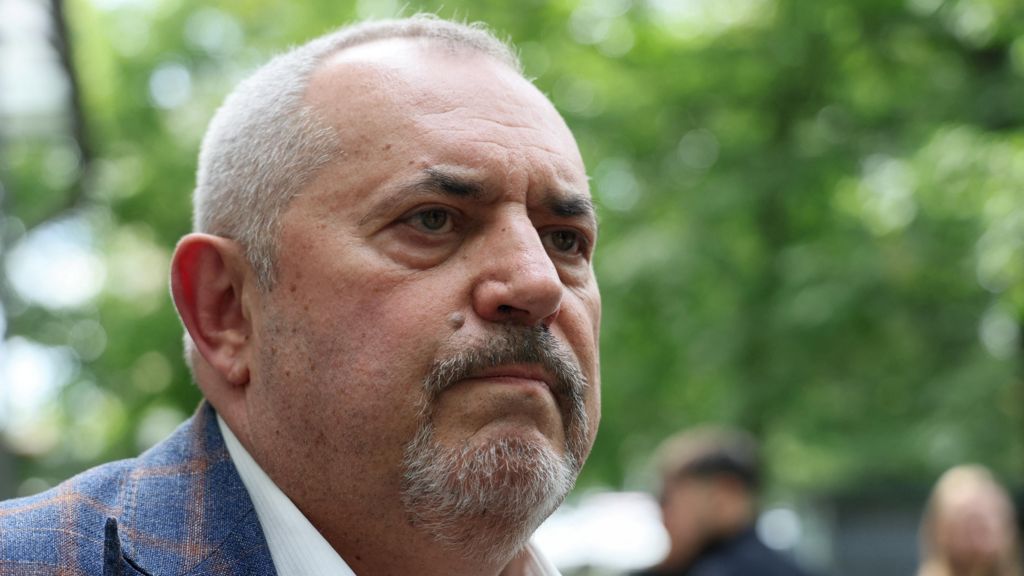
    Prominent Russian anti-war opposition politician Boris Nadezhdin, who made an unsuccessful attempt to challenge incumbent Vladimir Putin in the 2024 national presidential election, has been taken into police custody, updates from his official social media channels confirm.

    Nadezhdin was removed from his residential property and transported to a local police precinct in a town located west of Moscow on Monday morning. This arrest comes just several weeks after he formally declared his candidacy for September’s upcoming State Duma parliamentary elections. His press secretary confirmed the detention to BBC Russian in a brief statement, noting that authorities have not publicly disclosed a formal motive for holding Nadezhdin as of initial reporting.

    The arrest follows a series of escalating regulatory actions against the politician. Just one week prior, Russia’s Ministry of Justice added Nadezhdin to the country’s controversial “foreign agent” registry. In the official designation, the ministry accused him of spreading disinformation about the Russian federal government and inciting public participation in unsanctioned public demonstrations. The foreign agent label already effectively barred him from appearing on the ballot for the September parliamentary vote, a restriction that preceded his Monday arrest.

    Despite the mounting pressure, Nadezhdin pushed back against the regulatory actions in a public comment prior to his arrest. “What is there to say? I will continue to live and fight,” he stated. “This is unlikely to change anything in my political biography. I will continue to run for the State Duma and collect signatures.”

    Nadezhdin first entered the global spotlight earlier this year, when he launched a 2024 presidential campaign centered on an explicit anti-war platform calling for an immediate end to the ongoing armed conflict in Ukraine. In an interview with the BBC ahead of the election, he claimed broad public support from “dozens of millions of people” who rejected what he described as “Russia’s current track of authoritarianism and militarism.” If elected, he outlined, his first priority in office would be “to stop the conflict with Ukraine, and then to restore normal relations between Russia and the Western community.”

    Nadezhdin’s relatively restrained criticism of Putin personally led some political analysts to speculate that the Kremlin might permit him to remain in the race to lend the 2024 election a veneer of competitive, democratic legitimacy. Those speculations proved unfounded, however: the Russian Central Election Commission blocked his candidacy just weeks before polls opened, ruling that more than 15 percent of the voter signatures he submitted to qualify for the ballot contained invalid or fraudulent entries.

    Nadezhdin challenged the ruling in court, but was unable to overturn the decision. He was not alone among critics of the Kremlin: all other credible opposition figures were also blocked from standing in the 2024 presidential vote.

    Putin ultimately claimed a landslide victory in the March 18, 2024 election, securing a fifth presidential term. A 2020 constitutional amendment reset Putin’s eligibility term limits, clearing the way for him to hold office until 2036, when he would be 83 years old. The next presidential election is formally scheduled for 2030.

    In an interview earlier this year, as the Kremlin expanded internet restrictions affecting millions of Russian citizens and the country’s ongoing economic pressures deepened, Nadezhdin argued that public opinion was shifting. “People are beginning to understand that there is a direct connection between their everyday problems, like healthcare, food prices, problems with internet, and the politics of Vladimir Putin,” he told the BBC.

    Today, the Kremlin maintains near-total control over Russia’s domestic political sphere, and no independent candidates have been permitted to mount a serious challenge to Putin’s governing authority. All major opposition figures who could offer voters a clear alternative to the current administration are either incarcerated, living in forced exile abroad, or have been killed.

  • Dozens at an Ebola treatment center in northeast Congo strike over unpaid salaries and bonuses

    Dozens at an Ebola treatment center in northeast Congo strike over unpaid salaries and bonuses

    In the northeastern Democratic Republic of the Congo, a critical Ebola response effort has been thrown into chaos by industrial action, as dozens of frontline workers walked off the job Monday to demand months of unpaid salaries and performance bonuses. The walkout, which has closed the Rwampara General Hospital’s Ebola treatment center in Ituri Province, includes every tier of outbreak response staff: epidemiologists tracking virus spread, contact tracers investigating new cases, ambulance drivers, and gravediggers tasked with safe burials, all of whom confirm Congolese government authorities have failed to disburse their pay.

    Protesting staff not only shut down the treatment facility but also blocked the main access road leading to the site, amplifying their demands. Discontent has been building for days, with a small group of workers launching an initial strike last week, claiming wages have been withheld since the outbreak was officially declared in mid-May.

    Bahati Claude, a frontline health worker assigned to the Rwampara health zone, shared his team’s frustration in an interview with the Associated Press. “We cannot understand how we have gone two full months without pay,” he said, adding that the striking staff remain committed to their public health mission: “We do not want to abandon our posts.”

    The current Ebola outbreak in the DRC, caused by the rare Bundibugyo virus strain, carries uniquely high risks: no licensed vaccine or targeted antiviral treatment exists for this variant. Congolese authorities only declared the outbreak on May 15, after the virus had spread undetected through local communities for several weeks, World Health Organization officials confirmed. As of the latest official update, the outbreak has recorded 1,926 confirmed cases and 702 deaths across the country. Last week, the Africa Centres for Disease Control and Prevention labeled this outbreak the fastest-growing Ebola event ever documented on the African continent.

    During an official visit to Ituri last week, Congolese Health Minister Roger Kamba acknowledged the payment delays, blaming inaccurate payrolls that have included names of people not working on the outbreak response. “We must guarantee that these funds reach the people who are actually doing the work,” Kamba said. “We have encountered several hurdles, particularly constant revisions to staff lists, which have left legitimate workers out of pay cycles and sparking these complaints. We have the resources to resolve this issue.”

    Parallel to the strike, international updates on the outbreak emerged Monday: WHO Director-General Tedros Adhanom Ghebreyesus announced via social media platform X that a second U.S. citizen, a humanitarian worker based in eastern Congo who contracted Ebola, has been evacuated to Germany for specialized care. The first American infected during this outbreak was a physician working in the DRC in the early weeks of virus spread.

  • UK unveils plan to ban Iran Revolutionary Guards: ministry

    UK unveils plan to ban Iran Revolutionary Guards: ministry

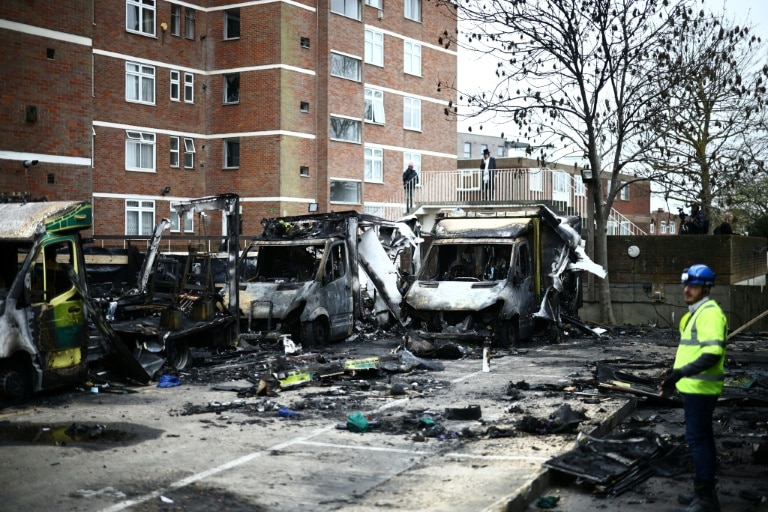
    In a major shift to the United Kingdom’s national security strategy following a wave of violent antisemitic attacks on British soil, the UK government has introduced groundbreaking emergency legislation that would formally ban Iran’s Islamic Revolutionary Guard Corps (IRGC) as a designated terrorist threat, alongside multiple other groups tied to hostile foreign states. The new law, which is scheduled to be laid before parliament this week, marks one of the most significant escalations in UK-Iran relations in recent years, crafted in direct response to a string of targeted assaults on Jewish communities across London earlier this year.\n\nUnder the proposed framework, anyone convicted of providing material support, funding, or assistance to the banned organizations will face a maximum prison sentence of 14 years, a steep penalty intended to deter hostile activity on UK territory. Beyond the IRGC, the ban will also extend to proxy networks and affiliate volunteers of Russia’s GRU military intelligence agency, as well as the Islamic Movement of Companions of the Right (IMCR) — an Iran-aligned group that has publicly claimed responsibility for multiple arson attacks on Jewish infrastructure in the capital, including the burning of four ambulances operated by the Jewish charity Hatzola in the Golders Green neighborhood of north London.\n\nA key innovation of the new legislation is the expansion of executive authority, granting the UK government so-called “proscription-like” powers to designate foreign state proxy groups that are deemed to pose a direct risk to national security. Critically, the new rules will remove the legal requirement for prosecutors to prove a direct connection between a suspect and a hostile foreign government in cases involving already designated groups, streamlining the legal process to speed up prosecutions of hostile actors.\n\nThe UK Home Office emphasized in an official statement that the legislative overhaul will substantially strengthen the government’s capacity to counter a broad spectrum of state-aligned threats, including espionage, foreign interference in British democratic processes, sabotage, and coordinated physical attacks against targets on UK soil. \n\nHome Office minister Angela Eagle outlined the rationale for the ban in a written ministerial statement, confirming that UK security agencies have documented multiple instances of IRGC-linked activity on British territory that involved direct threats to human life and organized intimidation of civilian communities. The government fast-tracked the drafting and introduction of the bill in response to the “abhorrent antisemitic attacks” that shook north London earlier this year, which included multiple arson strikes against synagogues, community emergency vehicles, and other Jewish community sites.\n\nLast month, a coalition of 22 countries including the UK, the United States, and multiple European nations issued a joint public statement blaming the IRGC and its foreign operations unit, the Quds Force, for coordinated plots targeting Iranian dissidents, independent journalists, and Jewish communities across the Western world. \n\nHome Secretary Shabana Mahmood framed the new legislation as a decisive response to transnational hostile activity on UK territory, saying “Iran and Russia are using proxies and thugs to do their dirty work on our shores. I have rapidly designated three groups so those working for them will be tracked down and put behind bars.” Prime Minister Keir Starmer echoed this stance, emphasizing that the new law sends a clear message that hostile foreign states will not be allowed to operate with impunity on UK territory.’

  • Irish police to engage with Jordan in murder investigation

    Irish police to engage with Jordan in murder investigation

    A murder investigation in Ireland has entered a critical international phase, after a 40-something woman was found dead at her home in a quiet residential area of Killarney, and the primary person of interest fled the country before law enforcement could question him.

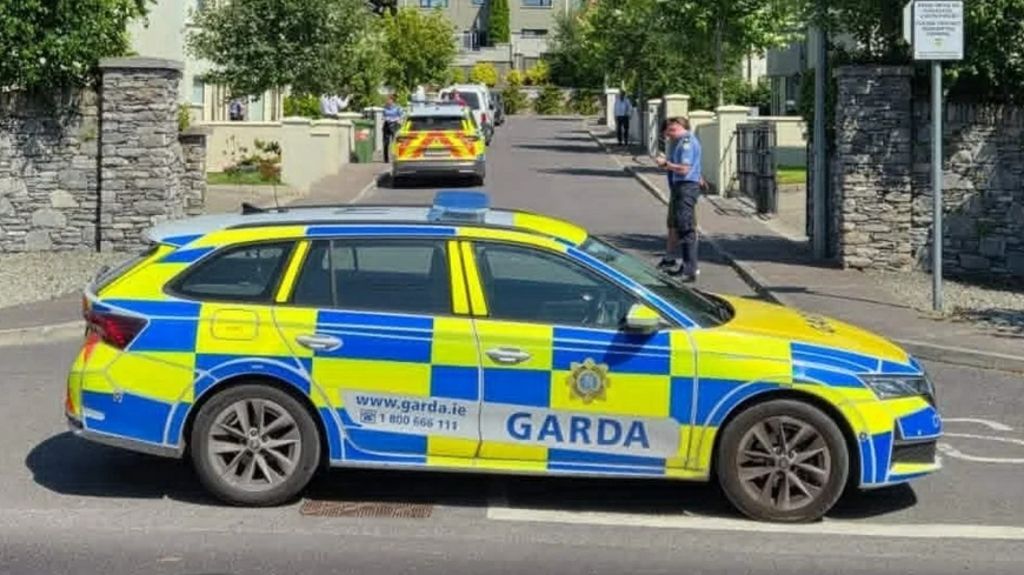
    Last Tuesday, Gardaí – the national police force of the Republic of Ireland – were dispatched to the Homeland housing estate in County Kerry following reports of an incident. At the scene, they pronounced 40-something Jamey Carney dead. Originally from New York, Carney had relocated to the Killarney neighborhood roughly five years prior, where she lived with her daughter. Local communities have been rocked by the violent death of the transplants, who had built a new life in the rural Irish town.

    By Thursday, Gardaí confirmed that the man they wished to speak to in connection with Carney’s killing had already left Irish jurisdiction. Official reports from Irish public broadcaster RTÉ indicate the suspect traveled by bus from Killarney to Dublin, where he caught an international flight bound for Jordan – his country of origin – and is understood to be currently residing there. The suspect is known to Carney, though police have not released his public identity at this stage of the investigation.

    In a statement to RTÉ, Irish Justice Minister Jim O’Callaghan confirmed that Gardaí are preparing to coordinate directly with Jordanian law enforcement to advance the investigation. Both Interpol and Europol have already been notified of the case and the manhunt, joining an international network of law enforcement that is supporting Ireland’s inquiry.

    “ No matter where you are, the gardaí will seek to pursue you,” O’Callaghan said, stressing the force’s commitment to seeing the investigation through. The minister also extended formal condolences to Carney’s family and friends, acknowledging the pain of their loss amid an ongoing manhunt.

    A key complicating factor in the case is the absence of an extradition treaty between Ireland and Jordan. O’Callaghan openly acknowledged the challenges this creates, noting that he would not downplay the difficulties of bringing a suspect to justice from a country with no formal extradition agreement. “It obviously is difficult. I’m not going to try and make it sound easy. If he’s in a country where we don’t have an extradition agreement, it may be difficult to get him,” he said.

    Even so, the minister emphasized that Irish police have robust existing relationships with law enforcement agencies across the globe. After speaking directly with the Garda Commissioner, O’Callaghan confirmed that investigators are following a clear, defined line of inquiry and will exhaust every possible avenue to ensure that if charges are brought, the suspect is brought to trial in Ireland. “I know that they will be pursuing every line of inquiry to ensure that a person, if that person is charged with an offence, can be brought to justice here,” he said.

  • Argentina to wear ‘lucky’ blue away kit against England

    Argentina to wear ‘lucky’ blue away kit against England

    As the 2026 FIFA World Cup enters its final stretch, one of the tournament’s most storied international rivalries will take center stage on Wednesday, when defending champions Argentina face off against England in a hotly anticipated semi-final showdown at Atlanta’s Mercedes-Benz Stadium. Kickoff is scheduled for 20:00 BST, with the match broadcast live to UK audiences via the BBC.

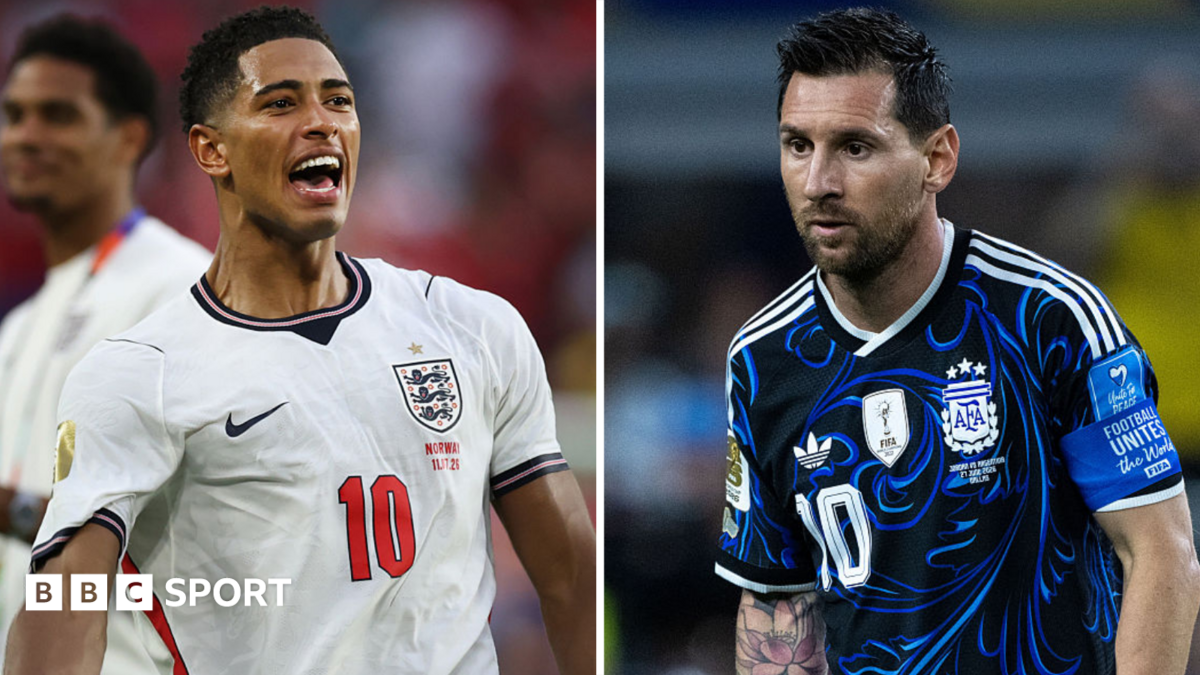
    Ahead of the game, Argentina’s kit choice has already sparked widespread discussion: the reigning world champions confirmed they will take the pitch in their navy blue away strip, while England will stick to their iconic all-white home kit. This darker alternate kit has only made one appearance for Argentina throughout this year’s tournament, when they secured a 3-1 group stage victory over Jordan.

    While FIFA rules offer an official explanation for the switch, the decision has fueled speculation among Argentine media that the choice is rooted in long-held sporting superstition. This same navy blue kit was worn by Argentina for two of their most famous historic World Cup victories against England: the 1986 quarter-final clash and the 1998 last-16 knockout match.

    In the 1986 Mexico City quarter-final, Diego Maradona’s legendary two goals – including the infamous handball that became known as the ‘Hand of God’ – carried Argentina to a 2-1 win that remains one of the most talked-about matches in World Cup history. Twelve years later at the France 1998 tournament, Argentina again wore the navy blue kit when they knocked England out of the tournament in a dramatic penalty shootout, a match marred by the sending off of England star David Beckham following an altercation with Argentina’s Diego Simeone.

    The only time the kit combination was reversed came at the 2002 Korea-Japan World Cup, when England donned their red away strip and Argentina wore their traditional light blue and white striped home kit. On that occasion, Beckham scored the match-winning penalty to secure a 1-0 group stage win for England, earning redemption for his 1998 sending off and writing another chapter into the decades-long rivalry.

    FIFA’s official kit regulations state that governing body prefers teams to wear their first-choice home kits where possible, but will mandate changes if there is a risk of uniform color clash. The organization also requires a clear dark-light contrast between the two teams’ kits to accommodate viewers with color vision deficiency, commonly known as color blindness.

    Both teams earned their spots in the 2026 semi-finals after hard-fought extra-time knockout wins. England booked their place in the final four with a 2-1 comeback victory over Norway on Saturday, while Argentina secured a dramatic 3-1 win over 10-man Switzerland 24 hours later to set up this latest chapter in their historic rivalry with England. Heading into the match, Argentina’s captain Lionel Messi has already notched eight tournament goals, while England’s rising star Jude Bellingham has tallied six goals as one of the tournament’s breakout performers.

  • US-Iran strikes: latest developments

    US-Iran strikes: latest developments

    A fragile de-escalation agreement between the United States and Iran has been thrown into jeopardy as cross-border military strikes stretched into a second day on Monday, triggering massive volatility in global energy markets and raising fears of a full-blown conflict in the strategically critical Strait of Hormuz.

    The standoff, centered on control of the world’s most important oil chokepoint, has already produced casualties and prompted retaliatory strikes across multiple regional states, with both sides trading blame for the sudden collapse of months of quiet diplomatic progress.

    According to Iranian state news agencies Fars and Tasnim, Monday’s US airstrikes in Khuzestan province – a major oil-producing region in southwestern Iran bordering Kuwait and Iraq – left two people dead and three others injured. Additional reports from Mehr News Agency confirmed widespread reports of explosions near the key port city of Bandar Abbas and the nearby island of Qeshm, a major hub for Iran’s Revolutionary Guard Corps (IRGC) naval forces.

    Iran quickly retaliated against what it called unprovoked US aggression, with state television confirming that IRGC navy units fired warning shots at two commercial vessels transiting the Strait of Hormuz, which Tehran accused of violating its maritime regulations. The incident is the latest in a series of confrontations over access to the waterway, through which roughly 20 percent of the world’s daily oil shipments pass.

    The sudden resurgence of open hostilities sent shockwaves through global commodity markets on Monday. International benchmark Brent North Sea crude jumped as much as 5 percent in intraday trading, before settling around 3.5 percent higher at roughly $78 per barrel. U.S. domestic benchmark West Texas Intermediate also recorded a sharp, unexpected spike, amplifying concerns about energy inflation for consumers worldwide.

    Beyond strikes within Iran’s borders, the IRGC claimed responsibility for a series of missile and drone strikes targeting sites across four neighboring Gulf states: Bahrain, Jordan, Kuwait, and Oman. The force announced it had destroyed radar installations in Oman and struck U.S. military facilities on the southern outskirts of Bahrain’s capital Manama. Air raid sirens activated across Bahrain, while Kuwait’s military announced it had intercepted “hostile aerial objects” entering its airspace. Jordan’s defense forces also confirmed they shot down four Iranian missiles, and Bahrain’s military accused Iran of deliberately targeting civilian infrastructure in the attack.

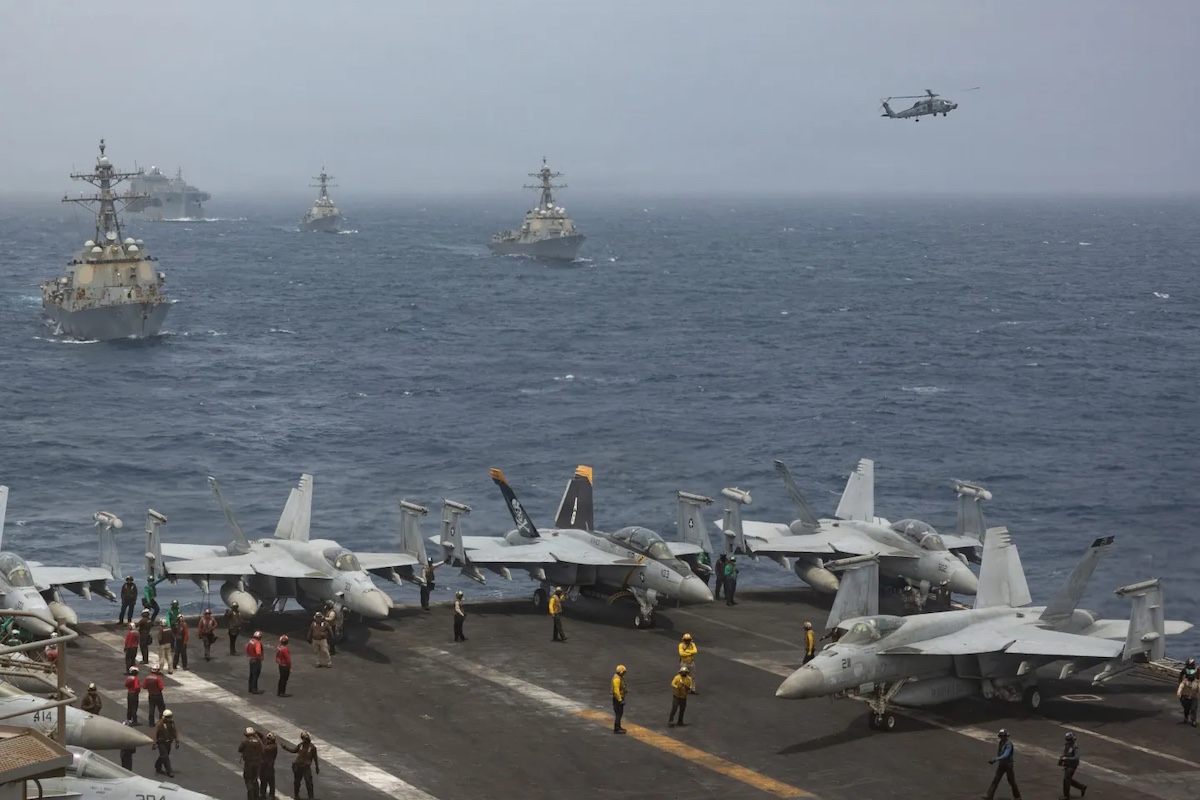
    For its part, the U.S. Central Command (CENTCOM) confirmed via a post on X that it had completed its latest round of strikes against Iranian targets, saying the operations were designed to disrupt Iran’s ability to threaten commercial shipping in the Strait of Hormuz. “CENTCOM forces struck Iranian military air-defense systems, coastal radar sites, missile and drone capabilities, and small boats,” the statement read.

    Iranian officials confirmed Monday that they have already begun diplomatic outreach to mediators from Qatar, Pakistan, and Oman to de-escalate the crisis. But Tehran issued a stark warning that the latest U.S. attacks have erased months of diplomatic progress, and that it will withdraw from a previously signed memorandum of understanding with Washington if the U.S. fails to honor its existing commitments. “The U.S. regime has also caused the return of insecurity in the Strait of Hormuz and disruption of international commercial shipping by openly interfering in the process of Iran implementing the necessary arrangements in the Strait of Hormuz,” a foreign ministry statement read.

    Speaking to CNN on Sunday, U.S. President Donald Trump claimed that a broad new agreement between the two countries was within reach as recently as Saturday. “They were giving up everything, and then all of a sudden two hours after that they hit a ship with a drone. These people, there is something wrong with them,” Trump said, adding that U.S. strikes had hit Iran “very hard.”

    As of Monday evening, neither side has signaled a willingness to step back from hostilities, leaving regional allies and global energy markets bracing for further escalation in a conflict that threatens to reshape security and economic stability across the Middle East.

  • France’s Macron says Europe will defend freedom at all costs

    France’s Macron says Europe will defend freedom at all costs

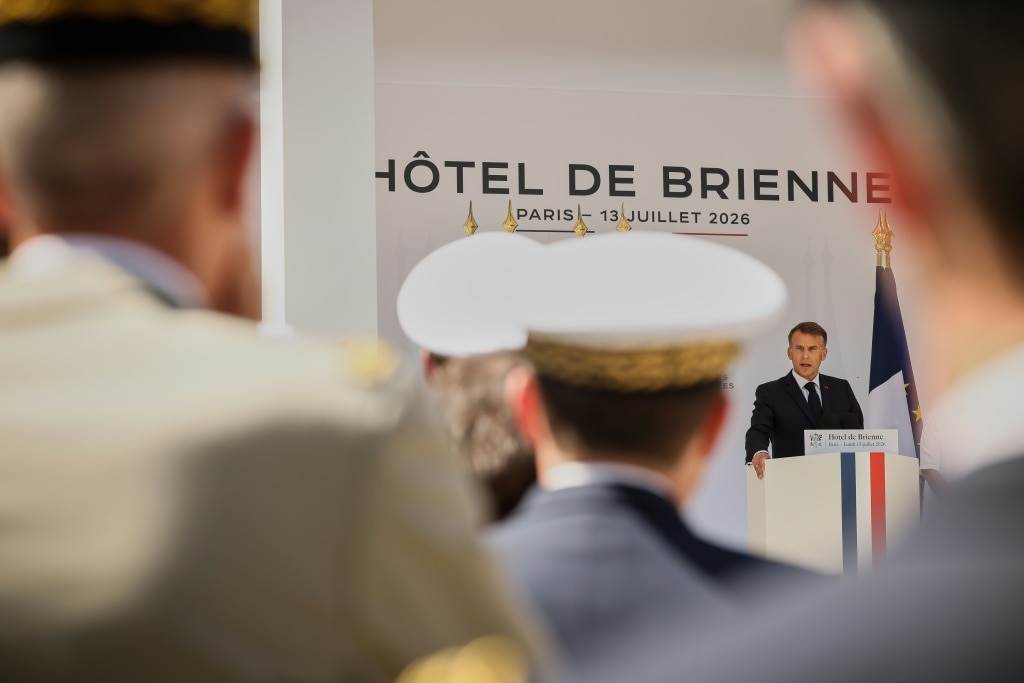
    Ahead of a high-stakes gathering of Ukraine’s international backers in Paris, French President Emmanuel Macron has delivered a stark, unflinching message: Europe is prepared to defend itself and its core values of freedom and the rule of law, even if that means paying the ultimate price in blood. The Monday summit of the Coalition of the Willing, co-founded by France and the United Kingdom in the wake of Russia’s full-scale invasion of Ukraine, brings together at least 25 heads of state, including Ukrainian President Volodymyr Zelensky, just one day before France’s annual Bastille Day national holiday.

    In his pre-parade address to French armed forces, Macron framed the current moment as a defining turning point for the continent. “Europe is in the process of becoming a power” ready to stand its ground, he told service members, adding that “peace is our goal. Yes, we cherish freedom and the rule of law. And yes, we stand ready to fight to defend them. Always, and at the cost of blood if necessary.” Following the summit, Zelensky and other visiting leaders will remain in Paris to take part in the traditional Bastille Day parade along the Champs-Élysées, an event the Élysée Palace says will be framed to highlight unwavering international solidarity with Kyiv.

    Beyond his warning to adversaries, Macron also used the speech to push for deeper integration of European defense industrial partnerships, a call that comes just one month after France and Germany agreed to scrap their joint sixth-generation fighter jet program, a high-profile collaboration that fell apart over conflicting design and strategic priorities.

    Not surprisingly, the summit has drawn sharp condemnation from the Kremlin. Russian authorities have dismissed the gathering as nothing more than a meeting of parties that have no interest in ending the conflict. “This is a coalition of warmongers,” Kremlin spokesperson Dmitry Peskov told reporters on Monday.

    French officials struck an optimistic tone ahead of the talks, framing the moment as a landmark of both transatlantic unity and shifting momentum on the battlefield in Ukraine. One senior Macron adviser emphasized that the summit would cement the coalition’s commitment to Kyiv, making clear that “Ukraine’s supporters remain firmly committed to standing alongside the Ukrainian people, that there is absolutely no sign of fatigue, and that Russia cannot count on any such fatigue setting in.”

    The summit also comes as the United States signals a shift toward greater backing for Ukraine. US President Donald Trump, who has previously sought to maintain open diplomatic channels with Russian President Vladimir Putin while issuing periodic criticism of both Moscow and Kyiv, pledged expanded support for Kyiv during the June G7 summit hosted by France, ahead of this week’s NATO summit in Turkey. Last week, US lawmakers also advanced bipartisan legislation that targets third countries purchasing Russian energy, clearing a path for far more robust economic pressure on Moscow.

    During Monday’s talks, coalition leaders are set to prioritize expanded cooperation on air and missile defense with Ukraine, including plans to allow licensed production of Western-designed air defense systems inside Ukrainian territory. In a key development, Paris officials confirmed that the Multinational Force for Ukraine – a peacetime security force designed to be deployed once active hostilities end – will be officially declared ready for operation at the summit, with joint military exercises scheduled to begin in the coming months.

    First launched in February 2025, the coalition has held more than 15 working meetings. During a January gathering attended by US envoys, members adopted the Paris Declaration, which outlines binding security guarantees to protect Ukraine from future Russian aggression and establishes a framework for monitoring any eventual ceasefire agreement. While the United States is not a formal member of the coalition and has repeatedly ruled out deploying American ground troops to Ukraine, it will take part in ceasefire monitoring activities. France, the United Kingdom and Spain have already confirmed they are prepared to deploy troops to the post-conflict force, a move that has drawn fierce warnings from Moscow, which says any foreign troops on Ukrainian soil would become “legitimate military targets.”

    Despite the diplomatic momentum toward a ceasefire, prospects for an immediate end to fighting remain remote. Heavy clashes continue across the front line, and in recent weeks Ukraine’s air defense networks have been pushed to breaking point by a sustained barrage of Russian ballistic missile strikes. This month, Washington granted Kyiv permission to produce US-designed Patriot air defense systems, which are capable of intercepting ballistic missiles, but defense analysts warn it could take many months before the first domestically built systems roll off production lines and enter service. The Russian invasion, now in its fifth year, continues to put massive pressure on Ukraine’s military and civilian infrastructure, and Zelensky has repeated his urgent call in recent days for Western allies to accelerate and expand the delivery of military aid.