A fragile de-escalation agreement between the United States and Iran has been thrown into jeopardy as cross-border military strikes stretched into a second day on Monday, triggering massive volatility in global energy markets and raising fears of a full-blown conflict in the strategically critical Strait of Hormuz.
The standoff, centered on control of the world’s most important oil chokepoint, has already produced casualties and prompted retaliatory strikes across multiple regional states, with both sides trading blame for the sudden collapse of months of quiet diplomatic progress.
According to Iranian state news agencies Fars and Tasnim, Monday’s US airstrikes in Khuzestan province – a major oil-producing region in southwestern Iran bordering Kuwait and Iraq – left two people dead and three others injured. Additional reports from Mehr News Agency confirmed widespread reports of explosions near the key port city of Bandar Abbas and the nearby island of Qeshm, a major hub for Iran’s Revolutionary Guard Corps (IRGC) naval forces.
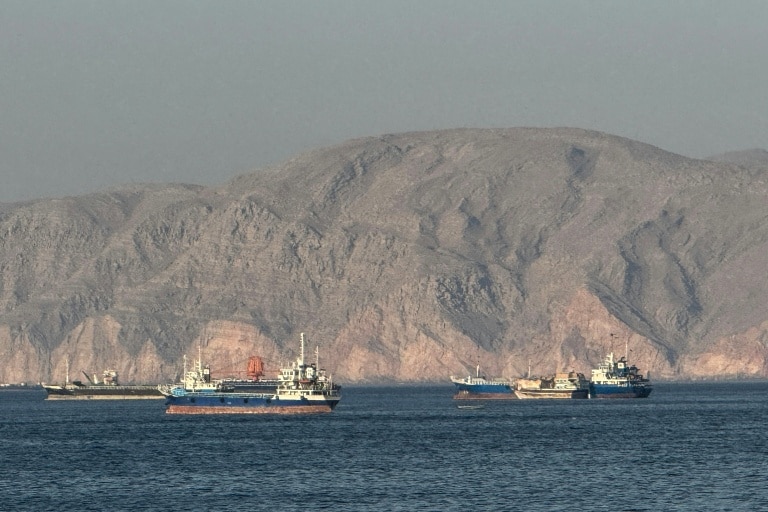
Iran quickly retaliated against what it called unprovoked US aggression, with state television confirming that IRGC navy units fired warning shots at two commercial vessels transiting the Strait of Hormuz, which Tehran accused of violating its maritime regulations. The incident is the latest in a series of confrontations over access to the waterway, through which roughly 20 percent of the world’s daily oil shipments pass.
The sudden resurgence of open hostilities sent shockwaves through global commodity markets on Monday. International benchmark Brent North Sea crude jumped as much as 5 percent in intraday trading, before settling around 3.5 percent higher at roughly $78 per barrel. U.S. domestic benchmark West Texas Intermediate also recorded a sharp, unexpected spike, amplifying concerns about energy inflation for consumers worldwide.
Beyond strikes within Iran’s borders, the IRGC claimed responsibility for a series of missile and drone strikes targeting sites across four neighboring Gulf states: Bahrain, Jordan, Kuwait, and Oman. The force announced it had destroyed radar installations in Oman and struck U.S. military facilities on the southern outskirts of Bahrain’s capital Manama. Air raid sirens activated across Bahrain, while Kuwait’s military announced it had intercepted “hostile aerial objects” entering its airspace. Jordan’s defense forces also confirmed they shot down four Iranian missiles, and Bahrain’s military accused Iran of deliberately targeting civilian infrastructure in the attack.
For its part, the U.S. Central Command (CENTCOM) confirmed via a post on X that it had completed its latest round of strikes against Iranian targets, saying the operations were designed to disrupt Iran’s ability to threaten commercial shipping in the Strait of Hormuz. “CENTCOM forces struck Iranian military air-defense systems, coastal radar sites, missile and drone capabilities, and small boats,” the statement read.
Iranian officials confirmed Monday that they have already begun diplomatic outreach to mediators from Qatar, Pakistan, and Oman to de-escalate the crisis. But Tehran issued a stark warning that the latest U.S. attacks have erased months of diplomatic progress, and that it will withdraw from a previously signed memorandum of understanding with Washington if the U.S. fails to honor its existing commitments. “The U.S. regime has also caused the return of insecurity in the Strait of Hormuz and disruption of international commercial shipping by openly interfering in the process of Iran implementing the necessary arrangements in the Strait of Hormuz,” a foreign ministry statement read.
Speaking to CNN on Sunday, U.S. President Donald Trump claimed that a broad new agreement between the two countries was within reach as recently as Saturday. “They were giving up everything, and then all of a sudden two hours after that they hit a ship with a drone. These people, there is something wrong with them,” Trump said, adding that U.S. strikes had hit Iran “very hard.”
As of Monday evening, neither side has signaled a willingness to step back from hostilities, leaving regional allies and global energy markets bracing for further escalation in a conflict that threatens to reshape security and economic stability across the Middle East.