作者: admin

  • Blow to South African corruption case as key suspect pulls out of plea deal

    Blow to South African corruption case as key suspect pulls out of plea deal

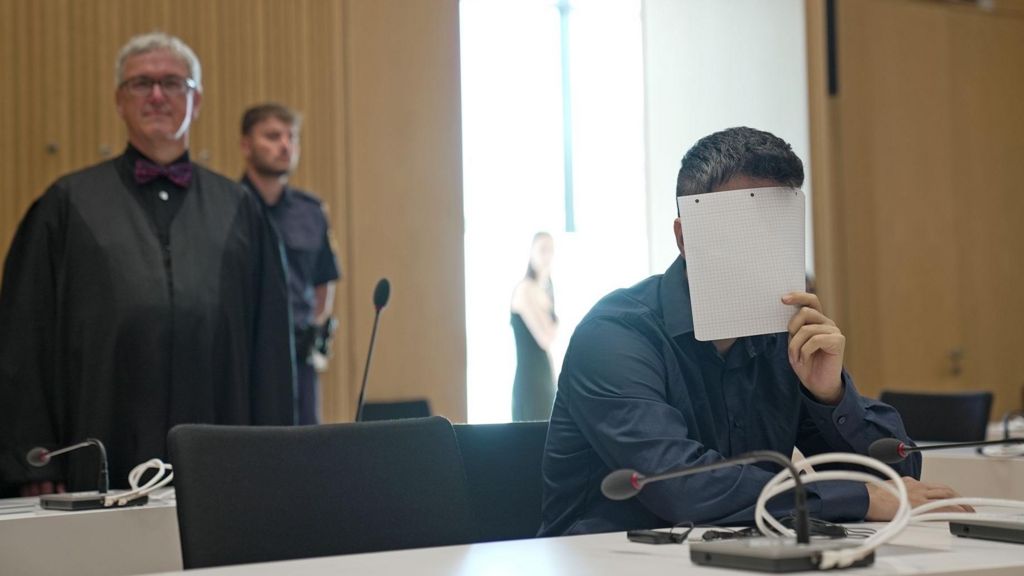
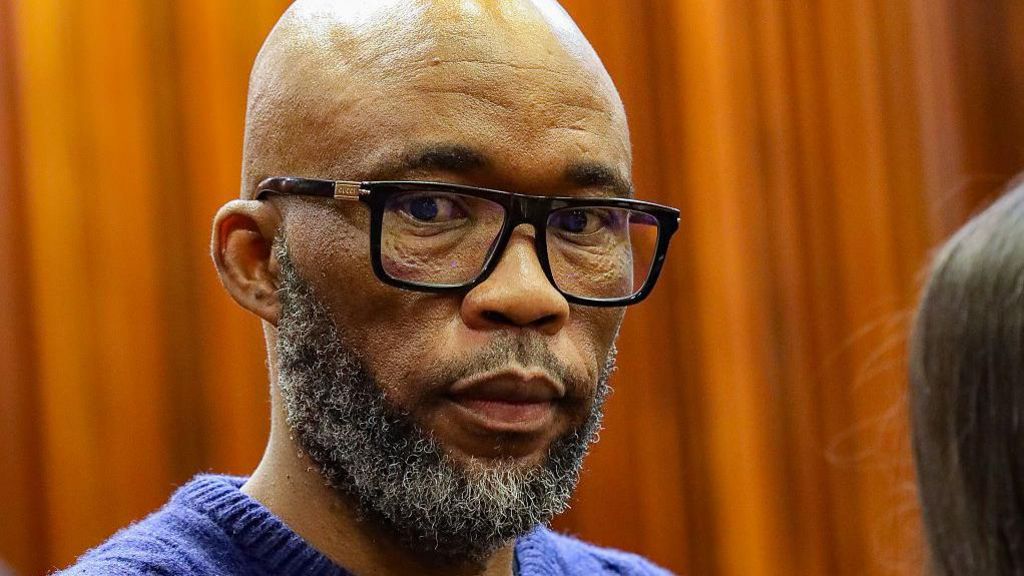
    South Africa’s high-profile national police corruption investigation has suffered a major setback after influential business figure Vusimusi “Cat” Matlala pulled out of a controversial plea agreement that would have seen him testify against top law enforcement officials. The unexpected reversal comes after a local magistrate rejected the pre-negotiated eight-year prison term included in the deal, calling the proposed sentence a serious miscarriage of justice and recommending a harsher 12-year custodial sentence instead.

    Matlala, a wealthy tycoon who heads the healthcare firm Medicare24, was first arrested in connection with a multi-million-rand tender corruption scheme dating back to 2024. Prosecutors alleged he paid substantial bribes to senior police officials to secure a 360-million rand (approximately $22 million) state contract for his company. Last month, as part of the negotiated arrangement with the National Prosecuting Authority (NPA), Matlala entered guilty pleas to three separate charges: corruption, fraud, and money laundering. In exchange for the reduced sentence (down from the statutory minimum 15-year term), he had agreed to cooperate fully as a state witness and provide incriminating testimony in upcoming trials for 12 co-accused suspects, including national police chief General Fannie Masemola, who has repeatedly denied all allegations of wrongdoing.

    Within days of the magistrate’s revised sentencing recommendation, Matlala’s legal team formally notified the Johannesburg Specialised Commercial Crime Court of their client’s decision to withdraw from the entire plea agreement. NPA spokesperson Kaizer Kganyago confirmed to reporters on Monday that the withdrawal means prosecutors will no longer be permitted to use the detailed incriminating affidavit Matlala submitted as part of the deal, which reportedly implicated multiple high-ranking police officers. Despite the significant setback, Kganyago emphasized that the state remains confident in its case, asserting that prosecutors still hold a “strong and winnable” legal position against the remaining defendants.

    The original plea deal drew sharp public criticism long before the magistrate’s ruling, even from within the current governing coalition. The Democratic Alliance (DA), the coalition’s junior partner, publicly condemned the arrangement as a “betrayal of accountability,” arguing that the reduced sentence failed to deliver adequate justice for systemic corruption.

    Moving forward, the corruption case will reconvene in court on September 11, and Matlala will be formally reinstated as the lead suspect in the prosecution’s case. The drama around the plea deal withdrawal adds another layer of tension to an already high-stakes national investigation into police infiltration by organized criminal networks.

    Beyond the tender corruption charges, Matlala faces a separate, unrelated murder charge he has repeatedly denied, and has been named by a witness before the ongoing Madlanga Commission inquiry as a member of a drug-trafficking cartel that has successfully embedded operatives within South Africa’s police service. Matlala has never publicly commented on the cartel allegation, but during testimony at a parallel parliamentary corruption inquiry last year, he denied having any personal connections to senior police leadership or national politicians. He is scheduled to appear in person before the Madlanga Commission for questioning this coming Wednesday.

    The Madlanga Commission, launched in September 2024 following allegations by Lieutenant-General Nhlanhla Mkhwanazi that organized crime groups had infiltrated multiple branches of South Africa’s government, has captured national public attention for its steady stream of explosive revelations about collusion between criminal underworld leaders and top law enforcement officials.

  • UK police rearrest the suspect in Ann Widdecombe killing on terrorism suspicion

    UK police rearrest the suspect in Ann Widdecombe killing on terrorism suspicion

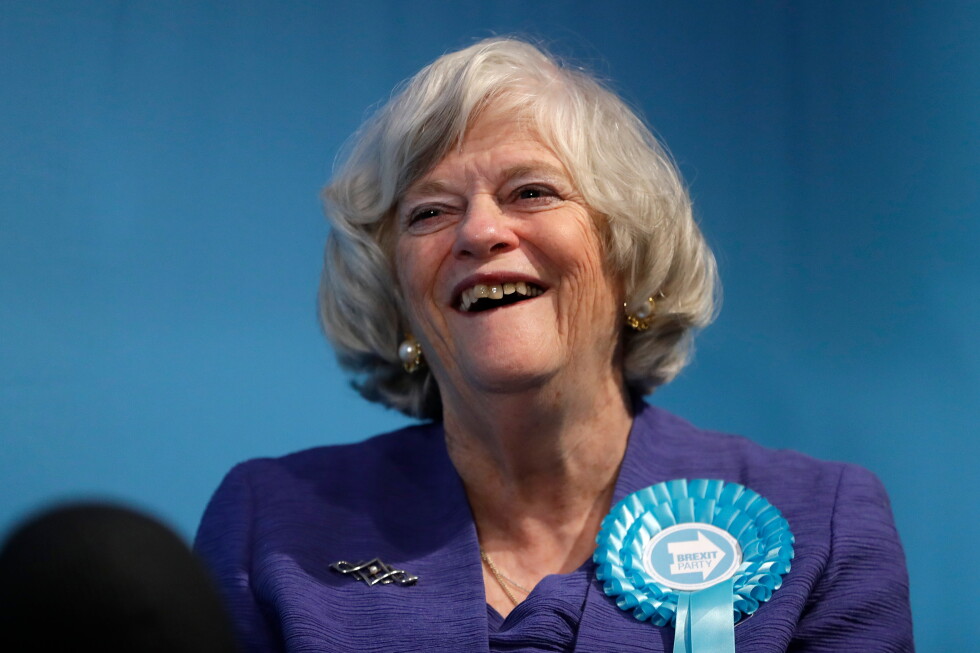
    LONDON – British law enforcement announced Monday that the fatal killing of veteran former British politician Ann Widdecombe is now being formally investigated as an act of terrorism, marking a sharp shift from the initial assessment of the case. Counter Terrorism Policing South East confirmed that a 28-year-old man, already detained on suspicion of murder, has been re-arrested on new charges suspicion of committing, preparing, or inciting terrorist activity.

    The case took an unexpected turn after Devon and Cornwall Police’s initial conclusion last week that the killing was not linked to terrorism and showed no indicators of political motivation. Laurence Taylor, head of National Counter Terrorism Policing, explained that the reclassification came following the discovery of undisclosed new information and material evidence that warranted counter-terrorism officials taking over lead investigative responsibility. “We are pursuing multiple lines of inquiry to establish the full motivation for this attack,” Taylor stated in an official press briefing.

    Widdecombe, 78, was discovered dead last week at her remote rural residence in a small village in southwest England, located on the edge of Dartmoor National Park. Police have not publicly released a formal cause of death, only confirming that the former lawmaker suffered “serious injuries” before her death. The attack is believed to have occurred around 12:30 p.m. last Wednesday; authorities were alerted to potential danger when Widdecombe failed to arrive for a pre-scheduled live television interview later that afternoon.

    The suspect, who remains unnamed as he has not yet been formally charged with any crime, was apprehended this past Saturday in South Yorkshire, a county in northern England more than 320 kilometers from the site of Widdecombe’s death.

    Over a decades-long career in British public life, Widdecombe established herself as one of the Conservative Party’s most high-profile socially conservative voices, known for her unapologetic stances opposing abortion and advocating for restrictions on LGBTQ+ rights expansion. She served as a Member of Parliament in the House of Commons from 1987 to 2010, and held the cabinet position of Prisons Minister under Conservative Prime Minister John Major’s government in the 1990s.

    After leaving national parliamentary office, Widdecombe gained new mainstream popularity through appearances on two hit British reality television programs, *Strictly Come Dancing* and *Celebrity Big Brother*. She later returned to electoral politics, joining the pro-Brexit Brexit Party and serving a short term as a Member of the European Parliament before the UK completed its withdrawal from the bloc in 2020. Most recently, she joined the right-wing anti-immigration party Reform UK, where she remained a frequent media commentator and public spokesperson for the party up until her death.

    Widdecombe’s killing sent immediate shockwaves across the British political establishment, where colleagues and opponents alike have remembered the contrast between her fierce, combative political rhetoric and her reported personal warmth, kindness, and sharp sense of humor in private settings.

  • India crushes England by 270 runs to win historic first women’s test at Lord’s

    India crushes England by 270 runs to win historic first women’s test at Lord’s

    The iconic Lord’s Cricket Ground, long known as the global “home of cricket”, made history on Monday when it hosted its first ever women’s Test match, and it was India that walked away with a dominant 270-run victory over host nation England.

    Entering the fourth and final day of the one-off Test, England held a 130-6 score on the batting board, facing an enormous target of 457 runs to claim a win. That mark already stood as more than double the highest successful fourth-innings chase in the entire history of women’s Test cricket, leaving the home side with an uphill battle from the first ball of the day.

    It took India barely 90 minutes to seal the historic win, with spin bowler Sneh Rana delivering the two most pivotal blows of the final morning. Rana first removed England’s highest run-scorer Amy Jones, who had notched 54 runs before being sent back to the pavilion. Shortly after, all-rounder Deepti Sharma claimed two quick wickets to whittle down England’s tail end, leaving only lower-order batters Sophie Ecclestone and number 11 Lauren Filer at the crease.

    In a display of stubborn resistance, Ecclestone notched her first ever Test half-century during a last-ditch partnership with Filer, but Rana ended the stand by bowling Ecclestone exactly at the 50-run mark. England was bowled out for 186 all out, handing India the lopsided 270-run win.

    Beyond the final result, the landmark match produced a string of personal firsts for players at the historic ground. India’s fast bowler Kranti Gaud made Lord’s lore when she became the first woman ever to have her name added to the venue’s famous honours boards, earning the distinction for a five-wicket haul in England’s first innings. Yastika Bhatia later joined Gaud in the history books, scoring 113 runs to notch the first women’s Test century at Lord’s. For England, Ecclestone also hit a personal milestone, claiming a five-wicket haul of her own during India’s second innings as the visitors worked to build their match-winning advantage.

    The match marked the final international appearance for England’s Tammy Beaumont and former captain Heather Knight, who announced their retirement from national team duty ahead of the Test.

    For India, the historic victory comes as a much-needed confidence boost following the team’s early exit from the 2024 Women’s T20 World Cup, where they failed to advance to the semifinal round. For England, the defeat marks the second high-profile disappointment at Lord’s in just over a month, coming after the side fell to Australia in the T20 World Cup final hosted at the ground earlier this month.

  • Former Spanish leader is criticized for comments about France’s World Cup team

    Former Spanish leader is criticized for comments about France’s World Cup team

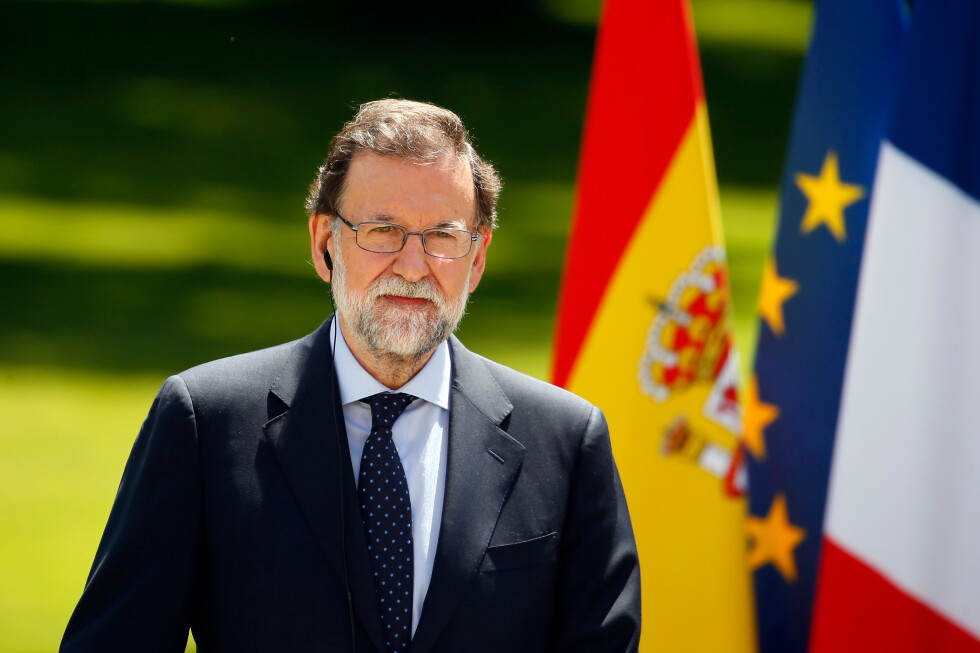
    Ahead of the highly anticipated 2025 FIFA World Cup semifinal clash between France and Spain in Dallas, a controversial comment from former Spanish prime minister Mariano Rajoy has sparked global outrage, with leaders from both nations labeling the remark as overtly racist.

    Rajoy, a longstanding senior figure in Spain’s center-right Popular Party who held the office of prime minister from 2011 to 2018, published the incendiary claim in a opinion column for Spanish news outlet El Debate on July 10. In the piece, he acknowledged France’s impressive run at the tournament—where the side had won every match heading into the semifinal and sits atop the official FIFA world rankings, boasting one of the deepest and most talented rosters in the competition. Despite this praise, Rajoy added the provocative line: “That said, one thing they don’t have is any French players.”

    The comment quickly drew sharp rebuke from across the political and sporting spectrum, starting with top French officials. On Monday, French Foreign Minister Jean-Noël Barrot told BFM TV, a leading French broadcaster, that the nation does not have a single defining skin color, and any statement claiming otherwise is rooted in stupidity, racism, or both. A day before Barrot’s remarks, Philippe Diallo, president of the French Football Federation, took to social platform X to condemn Rajoy’s words, writing that the comments carry an intolerable whiff of racism. Diallo added that the incident also exposes the troubling societal environment that allows such discriminatory views to surface publicly, noting that French national team players do not need a former head of government to validate their nationality.

    Spain’s current ruling Socialist Party government also moved quickly to distance itself from Rajoy’s words, with top Spanish leaders issuing clear condemnations. Current Prime Minister Pedro Sánchez addressed the controversy on X, without directly naming his predecessor, arguing that there are still those who judge national belonging based on surname, place of birth, or skin color, while others recognize belonging through a person’s commitment to their country and willingness to contribute to its success—whether that contribution comes through playing professional football, caring for aging community members, or building new businesses. Sánchez concluded his post with a message of sportsmanship ahead of the match: “France, we’ll see you in the semifinals. May the best one win and may racism lose.”

    Spanish Foreign Minister José Manuel Albares doubled down on the government’s criticism on Monday, calling on Popular Party leader Alberto Núñez Feijóo to publicly and clearly disavow Rajoy’s comment.

    This is not the first instance of racist targeting against the French national squad during this World Cup tournament. Earlier in July, French captain and star forward Kylian Mbappé publicly condemned a Paraguayan senator for discriminatory remarks made after France’s round of 16 victory over Paraguay. After Mbappé scored a match-winning penalty to secure France’s win on July 4, Celeste Amarilla, a senator from Paraguay’s Liberal Radical Party, posted a series of mocking posts on X targeting Mbappé’s origins, upbringing, education, and physical appearance.

  • Sudan’s paramilitary RSF chief sentenced to death over war crimes

    Sudan’s paramilitary RSF chief sentenced to death over war crimes

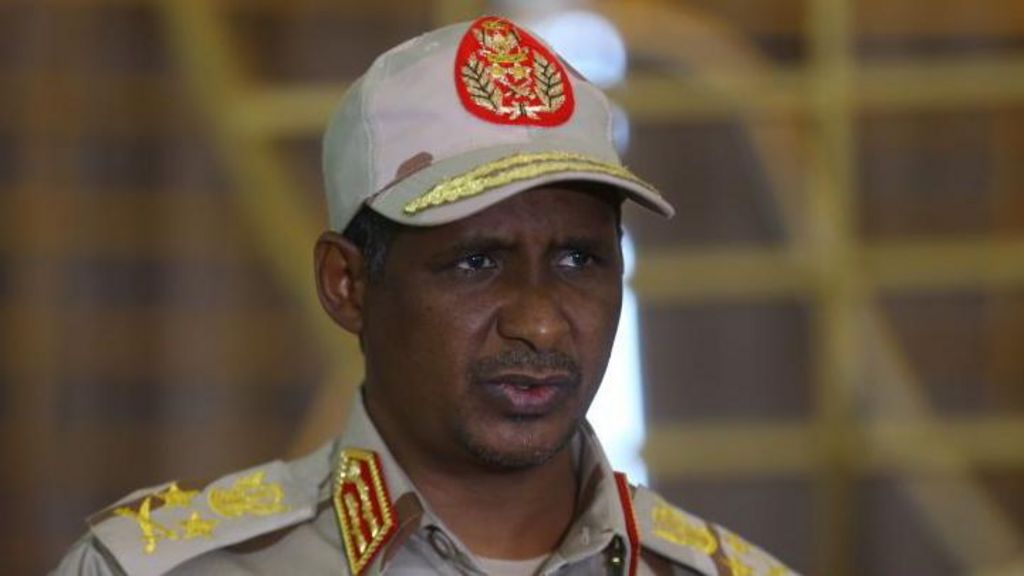
    More than two years after Sudan’s brutal civil war erupted between the country’s two most powerful military factions, a Sudanese court operating out of army-controlled Port Sudan has issued a landmark ruling: paramilitary Rapid Support Forces (RSF) leader Mohamed Hamdan Dagalo — widely known as Hemedti — has been sentenced to death in absentia on charges of war crimes, crimes against humanity, and genocide tied to systemic atrocities in West Darfur.

    Fifteen other high-ranking RSF commanders received identical death sentences in the ruling, including Hemedti’s brother and deputy Abdelrahim Hamdan Dagalo, a second brother Al-Qoni Hamdan Dagalo, and Abdul Rahman Juma Barkallah, the RSF’s top military commander for West Darfur. The court’s conviction centers on atrocities allegedly carried out in el-Geneina, the capital of West Darfur, most notably the 2023 assassination of West Darfur state governor Khamis Abbakar.

    Judges also found all 16 defendants guilty of coordinating broad attacks on civilian populations, large-scale destruction of communities, widespread looting of private and public property, and deliberate targeting of civilian infrastructure including schools, houses of worship, and residential neighborhoods. Beyond the sentences, Special Judge Mohamed Al-Amin ordered the full confiscation of all RSF assets across territory controlled by the Sudanese Army, and formally directed national authorities to request Interpol Red Notices to facilitate the arrest and extradition of all convicted leaders.

    As of this ruling, Hemedti’s current location has not been disclosed to the public, and the RSF has not issued any official response to the verdict. The group has repeatedly rejected all claims of war crimes since the conflict began in April 2023.

    This conviction marks the first time the RSF’s top leadership has been found criminally liable by a domestic Sudanese court since the civil war began, though the practical impact of the ruling remains highly uncertain. The RSF continues to hold de facto control over large swathes of western Sudan, and its top leadership remains outside the reach of the Sudanese Army and the Port Sudan-based government.

    The charges brought against the RSF echo longstanding findings from international investigators and human rights groups. UN investigators and independent watchdog organizations have long accused the RSF and its allied Arab militias of carrying out systematic ethnically targeted violence against the Masalit community, a majority non-Arab group native to Darfur. Earlier in July 2026, the International Criminal Court’s deputy chief prosecutor confirmed the body holds “concrete evidence” directly tying RSF leadership to perpetrated war crimes in the region.

    A May 2024 report from Human Rights Watch documented that the RSF’s military campaign in and around el-Geneina between April and November 2023 killed thousands of civilians and forced hundreds of thousands more to flee their homes. The organization concluded that the patterns of abuse documented amounted to war crimes and crimes against humanity carried out as part of a deliberate ethnic cleansing campaign targeting the Masalit and other non-Arab communities across Darfur.

    Notably, human rights monitors have confirmed that both factions in Sudan’s conflict have been responsible for widespread human rights abuses and violations of international war law. In a 2025 finding, United Nations investigators concluded that both the Sudanese Army led by Gen Abdel Fattah al-Burhan and the RSF have deliberately targeted civilian populations and critical civilian infrastructure, including medical facilities, in large-scale coordinated attacks.

    Sudan’s current civil war erupted in April 2023, triggered by a violent power struggle between army leader al-Burhan and Hemedti, who once shared control of a transitional military government following the 2019 ousting of longtime dictator Omar al-Bashir. The conflict has since become one of the world’s worst humanitarian catastrophes: official estimates place the death toll at more than 150,000, with 12 million people displaced from their homes. International aid organizations warn that 28 million Sudanese currently face acute food insecurity, with millions on the brink of famine.

  • The SpaceX IPO made history. One month on has it lost momentum?

    The SpaceX IPO made history. One month on has it lost momentum?

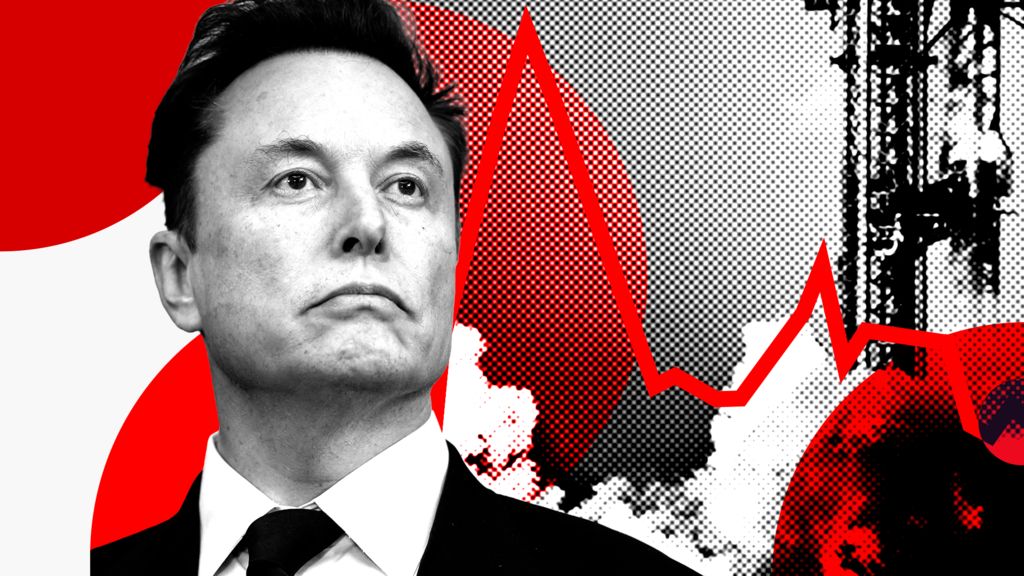
    One month after SpaceX made its historic debut on public stock markets, investors who once celebrated the listing have shifted to growing concern over the company’s volatile share performance.

    When Elon Musk-led SpaceX opened trading to individual investors on June 12, the IPO sparked an immediate buying frenzy. Priced at $135 per share in the company’s official offering, the stock jumped to $150 within minutes of the first session, peaked at $176 intraday, and closed at $160.95. This listing cemented SpaceX as the largest initial public offering in global history, and momentum only accelerated in the following week: shares hit an intraday high of $225, pushing the company’s total market capitalization above both Amazon and Microsoft.

    Industry analysts note that much of this initial hype was tied to artificial intelligence, rather than SpaceX’s core aerospace business. “With Elon Musk, any company he touches gets people excited,” explained Keith Snyder, an analyst at investment research firm CFRA. “But this was also the first time people felt like they were able to invest in something that was being marketed as an AI play.”

    Willy Lee, an investor at Neosteller, a firm that enables individual investment in private pre-IPO companies, echoed this assessment, saying “Everyone saw SpaceX as an AI story.” That narrative gained traction after SpaceX acquired Musk’s standalone AI startup xAI earlier this year, rebranded the firm as SpaceXAI (known for its controversial chatbot Grok), and began offering data center leasing services to external tech companies.

    But as the hype faded, investors began refocusing on the reality of SpaceX’s core revenue streams: manufacturing and launching rockets, and operating its Starlink satellite internet network. The first major pullback came when Starlink announced price cuts for its services in Memphis, Tennessee, amid local pushback against a planned massive SpaceX data center project; the stock dropped 8% on that single trading day.

    Since that initial drop, shares have fallen steadily, even against a broader backdrop of volatility across the technology sector. For example, when SpaceX was added to the Nasdaq 100 index on July 7, the overall index fell 1.7% – but SpaceX dropped 4.4% over the session. A prior addition to the FTSE Russell index had only delivered a minor, temporary boost to share prices.

    By the end of its first full month as a public company, SpaceX shares traded around $145 per share. That marks an 18% drop from the first day’s closing price and a 35% fall from the stock’s all-time peak so far. Early retail investors who bought shares in the first five days of trading are now facing significant paper losses. “If you bought around the first tick you’re definitely underwater,” Snyder said, adding that the stock’s initial run began to look a lot like a meme stock, echoing the 2021 GameStop rally and more recent Wendy’s price surge driven by coordinated retail investor excitement online rather than underlying business fundamentals.

    Snyder projects the stock could fall even further, to around $115 per share, aligned with the company’s current operating performance, which would value SpaceX at roughly $1.5 trillion.

    Samuel Kerr, head of equity capital markets analysis at Mergermarket, noted that the extreme price swings have impacted different investor groups very differently. “If you’re an IPO investor, you’re ok,” Kerr said, referring to institutional investors who bought shares at the original $135 offering price and early insiders who held pre-IPO equity. “If you bought in the first few days, you’re not very happy right now.”

    Despite the market turbulence, Musk has remained unwaveringly optimistic about SpaceX’s long-term business prospects. The IPO’s valuation surge made him the world’s first trillionaire, and he has publicly predicted that SpaceX will hit $1 trillion in annual revenue by 2030.

    Musk has also leveraged the stock’s volatility for strategic corporate moves. When shares spiked on June 16, SpaceX announced an all-stock $60 billion acquisition of Cursor, a startup that builds AI tools for code writing. Given the size of the share price gain at that moment, Kerr noted, Musk essentially acquired the company for free. “It showed a level of market sophistication that almost no other issuer has,” Kerr said of the deal.

    Not all financial analysts are bearish on the stock. Morgan Stanley, the lead underwriter for SpaceX’s IPO, initiated coverage of the stock last week with a $300 per share target price – 33% higher than the stock’s current all-time peak, suggesting the current dip is only a temporary setback.

    Public filings from SpaceX’s IPO process show the company currently operates at a net loss, and generated $18 billion in total revenue last year. Musk’s $1 trillion annual revenue projection for 2030 is 55 times that 2025 figure, leaving analysts to question how the company will hit that aggressive target.

    All eyes are now turning to SpaceX’s first public earnings report, expected to drop in early August, though no official date has been announced. The report will coincide with the end of SpaceX’s IPO lock-up period, which has prohibited employees from selling equity granted as compensation. When the lock-up expires, thousands of new shares will enter the open market, a shift that could add further volatility to the stock price.

    “If SpaceX can do all the things it says it will do, yes, investors are sitting on the most valuable company ever,” Kerr said. “But it’s got a lot of work to do to get there.”

  • Spanish PM urges better prevention after deadly wildfire

    Spanish PM urges better prevention after deadly wildfire

    A catastrophic wildfire that tore through southern Spain’s Almeria province has claimed at least 13 lives, left dozens missing, and turned idyllic Mediterranean rural communities into smoldering ghost towns, prompting Spanish Prime Minister Pedro Sanchez to call for urgent systemic reforms to strengthen wildfire prevention amid accelerating climate change-driven extreme weather.

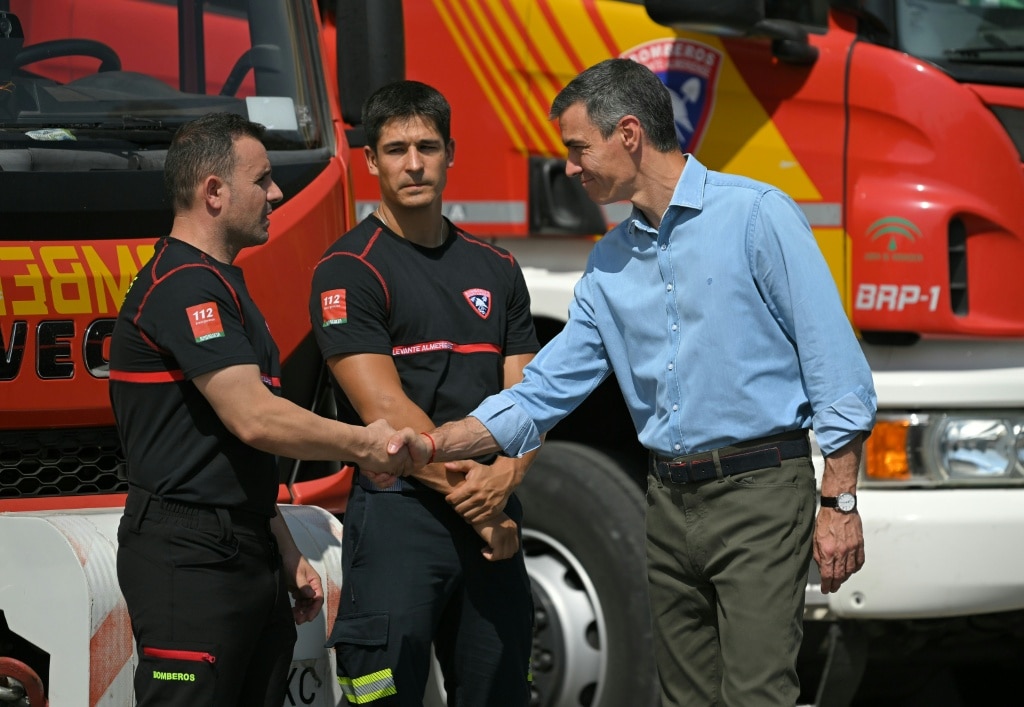
    The inferno, which ignited last Thursday, has scorched roughly 7,000 hectares of forest and dry scrubland, ravaging an area popular with international retirees and second-home owners along Spain’s sun-soaked Mediterranean coast. On Monday, Sanchez traveled to the affected municipality of Turre to meet with first responders still working to fully extinguish the blaze and assess the scope of the destruction.

    In remarks following his site visit, Sanchez stressed that Spain’s current response-focused approach to wildfires is no longer sufficient as rising global temperatures amplify disaster risk. “We must not only react when these fires happen, we must prevent,” he said, noting that climate change has made civil protection emergencies far more frequent than historical averages. The prime minister outlined key steps for improvement, including bolstering protected buffer zones around residential communities and expanding fire safety training for young people to build a culture of preparedness across the country.

    Juanma Moreno, president of the Andalusia regional government that oversees Almeria, echoed Sanchez’s call, adding that broad public engagement is also critical to reducing wildfire risk and fatalities. “We also need the public as a whole to adopt that awareness and self-protection, which is fundamental,” Moreno said. He noted that engaged members of the public can cut response times dramatically by reporting early smoke sightings, potential arson activity, and complying quickly with official evacuation warnings.

    At the peak of its spread last week, the blaze advanced at a staggering rate of 100 meters per minute, trapping many residents who attempted to flee by car or on foot. Local authorities have suggested some victims delayed their evacuation and did not heed official evacuation orders in time, contributing to the death toll. As of Monday, the exact number of missing people remained unconfirmed, as forensic teams continue work to identify recovered remains. Ten formal missing person reports have been filed so far, and authorities from the United Kingdom, Belgium, and France are supporting the identification effort by providing genetic profiles from relatives of missing foreign residents.

    Milder weather conditions, including calmer winds and cooler temperatures over the weekend, allowed more than 400 firefighters to make significant progress containing the blaze. Investigators currently suspect the fire started after an overloaded power line broke, igniting vegetation that had been completely parched by a weeks-long heatwave that pushed regional temperatures above 40 degrees Celsius.

    Climate scientists have long warned that human-caused greenhouse gas emissions from fossil fuel combustion are increasing the frequency and severity of extreme weather events, including prolonged heatwaves that create the tinder-dry conditions that enable destructive wildfires. Moreno framed the Almeria disaster as a clear sign of the accelerating climate crisis. “Here climate change is having a very big impact, and we are in a state of climate chaos with situations that are practically unheard of, exceptional and increasingly explosive,” he said.

    Sanchez echoed that warning, urging nationwide preparedness for the months ahead. “We are looking at a complex, complicated summer that will require us to be vigilant and alert in order to respond as quickly as possible,” he said.

    The Almeria fire comes on the heels of a record-breaking 2023 wildfire season in Spain, when blazes burned nearly 400,000 hectares of land — the highest annual total recorded by the European Forest Fire Information System in the country’s history. Experts warn that without major cuts to greenhouse gas emissions and significant investments in wildfire prevention and community preparedness, such deadly events will become the new normal across southern Europe.

  • German court convicts Iraqi couple of enslaving Yazidi girls

    German court convicts Iraqi couple of enslaving Yazidi girls

    In a landmark ruling that marks a milestone for international justice for atrocities committed by the Islamic State (IS) against the Yazidi minority, Germany’s Munich Higher Regional Court has convicted an Iraqi couple of genocide, war crimes, crimes against humanity, and membership in the IS extremist group, over their role in enslaving two underage Yazidi girls in northern Iraq more than a decade ago.

    The male defendant, identified only as Twana H.S. under German privacy regulations, was sentenced to life imprisonment on Monday following a months-long trial. His co-defendant and former wife, Asia R.A., who was a minor at the time of the crimes, received a nine-and-a-half year juvenile sentence. The pair were taken into custody in the southern German state of Bavaria in 2024 after years of investigation into their alleged ties to IS and participation in the group’s systematic persecution of the Yazidi community.

    The background of this case stretches back to 2014, when IS fighters seized large swathes of territory across northern Iraq and eastern Syria, launching a coordinated campaign to eliminate the Yazidi people, a Kurdish-speaking religious minority with ancient roots in the region. According to historical accounts and international investigations, thousands of Yazidi men were executed in mass killings, while tens of thousands of women and children were abducted, trafficked as sex slaves, and forced into hard labor by IS militants. German law formally recognizes this coordinated campaign as an act of genocide, a designation echoed by the United Nations and dozens of national governments.

    Court documents and prosecution accounts lay out a detailed timeline of the couple’s radicalization and alleged crimes. Twana H.S. first arrived in Germany as an asylum seeker in the early 2000s, building a life in Munich where he worked as a hairdresser and fathered a child. German outlet Der Spiegel reports that while his initial asylum application was rejected, he was granted permission to remain in the country as the parent of a German citizen. After becoming radicalized at a local mosque in Munich, he returned to Iraq in 2015, where he married Asia R.A. under Islamic law and the pair joined IS, remaining active members of the group from October 2015 through December 2017.

    Prosecutors told the court that in autumn 2015, at Asia R.A.’s request, Twana H.S. purchased a five-year-old Yazidi girl from a slave bazaar in the IS-held city of Mosul. Less than two years later, in early October 2017, the couple bought a second, 12-year-old Yazidi girl to add to their household. The pair forced both children to perform unpaid household labor and childcare work, barred them from practicing their Yazidi faith, and subjected them to repeated physical abuse. Prosecutors detailed specific accounts of violence: the children were beaten on multiple occasions, sometimes with heavy solid objects, and Asia R.A. once scalded the younger girl’s hand with boiling water as punishment. Most severely, Twana H.S. was found guilty of repeatedly raping both child victims, while his wife helped facilitate the abuse by preparing the girls and the room for the assaults.

    During the trial, the court heard harrowing firsthand testimony from the older of the two survivors, who detailed years of beatings, forced labor, and sexual violence, according to local outlet BR News. Tragically, the younger victim remains missing to this day.

    The trial was held in Germany under the legal principle of universal jurisdiction, a framework that allows national courts to prosecute individuals for severe international crimes including genocide and war crimes, regardless of where the offenses were committed. This principle has allowed Germany to hold dozens of IS members and associates accountable for atrocities carried out in Iraq and Syria over the past decade.

    In court, Asia R.A., who has since separated from Twana H.S., offered a formal apology for her actions. In her final statement to the court, she simply said, “I’m sorry.” Twana H.S., by contrast, declined to make any statement or enter a plea during the proceedings.

  • UK says an Iran-backed group was behind attacks on Jewish community, bans Revolutionary Guard

    UK says an Iran-backed group was behind attacks on Jewish community, bans Revolutionary Guard

    LONDON – In a significant move to counter foreign state-sponsored hostile activity on British soil, the United Kingdom government announced Monday that a wave of coordinated arson and vandalism targeting Jewish community sites across the country has been linked to an Iran-backed proxy organization. In response, authorities have moved to formally ban both the proxy group and Iran’s influential paramilitary Revolutionary Guard, labeling them unacceptable threats to national security.

    The group being outlawed is the Islamic Movement of the Companions of the Right (IMCR), also referred to as Harakat Ashab al-Yamin al-Islamia. Alongside the ban on this proxy network, the UK is also formally proscribing Iran’s Revolutionary Guard, a decision that will bring harsh legal consequences for anyone acting on the groups’ behalf once parliamentary approval is finalized. Under the new legislation, which government officials confirm is on track to pass by the end of this week, individuals convicted of coordinating sabotage for the banned organizations could face up to life imprisonment.

    Security Minister Angela Eagle confirmed in an official statement that the IMCR has publicly claimed responsibility for seven separate attacks across the UK. In online postings, the group took credit for a string of recent arson incidents targeting Jewish sites in London, including synagogues and ambulances operated by a Jewish charity. The group also claimed an attack on a Persian-language media outlet that is openly critical of Iran’s ruling government. No casualties were reported in any of the fire attacks.

    Eagle emphasized that the IMCR is not an independent network, noting: “Sitting behind IMCR were members of Iran’s Islamic Revolutionary Guard Corps Qods Force, who almost certainly directed IMCR attacks across Europe.” The Qods Force, named for Jerusalem, serves as the Revolutionary Guard’s specialized overseas expeditionary branch tasked with conducting foreign operations and supporting proxy groups globally.

    First emerging on digital platforms earlier this year, the IMCR has also claimed responsibility for similar attacks targeting synagogues in Belgium and the Netherlands, expanding the scope of its disruptive activity across Western Europe. Law enforcement and intelligence analysts across the continent have documented a steady rise in Iran-backed proxy attacks in Europe in recent years, with most incidents targeting two primary groups: Jewish communities and exiled Persian-language media outlets that oppose Iran’s Islamic government. These proxy networks typically operate by recruiting existing criminal gang members to carry out sabotage and violent attacks, creating a layer of separation between the Iranian state and the illegal activity.

    Monday’s announcement also included a separate proscription: the UK has designated the GRU Volunteer Corps, a group controlled by Russia’s military intelligence agency, as a national security threat. According to authorities, the group carries out foreign intelligence gathering and covert hostile operations on behalf of the GRU, expanding the scope of the UK’s crackdown on foreign state-sponsored activity from both Iran and Russia.

    UK officials stressed that the new proscriptions will streamline law enforcement and intelligence agency efforts to crack down on what they have called “thugs for hire” – any individual or network that provides support to foreign proscribed proxy groups. Prime Minister Keir Starmer underscored the gravity of the government’s action in a statement, saying: “We have already taken tough action against the Iranian regime and those linked to it, and against Russian operatives and networks targeting our country. These new powers will make it easier to prosecute and lock up anyone carrying out their dirty work here in Britain.”

    The bans mark the first major use of a new UK counter-hostile activity law that entered into force just last week. The legislation grants the national government expanded authority to proscribe and dismantle proxy organizations that carry out illegal operations on behalf of hostile foreign states. The announcement comes less than two weeks after two Romanian men were handed prison sentences for the stabbing of a journalist working for a Persian-language television outlet, with the presiding judge explicitly ruling the attack was ordered and coordinated on behalf of the Iranian state.

    As of Monday evening, Iran has not issued any immediate public response to the UK’s proscription announcements. The European Union already took similar action earlier this year, listing the entire Revolutionary Guard as a terrorist organization in response to Tehran’s violent crackdown on domestic anti-government protests.

  • Christopher Nolan returns with “The Odyssey” blockbuster

    Christopher Nolan returns with “The Odyssey” blockbuster

    Decades after Homer’s foundational Greek epic first cemented its place in Western literary history, legendary filmmaker Christopher Nolan has brought the centuries-old story of Odysseus to the big screen as one of the most anticipated blockbusters of 2025, pairing a record-breaking production budget with A-list Hollywood talent and cutting-edge film technology.