作者: admin

  • Fraud crackdown on Ghana ID cards makes digital checks compulsory – photocopies banned

    Fraud crackdown on Ghana ID cards makes digital checks compulsory – photocopies banned

    Ghana has implemented sweeping new regulations requiring all businesses and public institutions across the country to verify the Ghana Card, the nation’s official biometric national identity document, through a dedicated mobile biometric scanning application, in a major push to strengthen national security and crack down on widespread identity-related fraud.

    Previously, most organizations relied on superficial visual inspections or simple photocopying of the national ID card to record customer or visitor information. This lax verification system created critical loopholes that allowed criminal actors to successfully carry out identity impersonation, enabling fraudulent activities ranging from financial scams to unauthorized access to public and private services.

    Under Ghana’s national identification framework, all citizens and legal foreign residents are required to hold the plastic biometric Ghana Card, which was rolled out progressively over the past 10 years. Today, the document has become an indispensable part of everyday life for Ghanaians: access to banking services, mobile SIM card registration, passport applications, and driver’s license issuance all require a valid Ghana Card.

    The card stores detailed biometric information collected by Ghana’s National Identification Authority (NIA), including all 10 fingerprints, high-resolution iris scans, a portrait photograph, and the cardholder’s official signature. The new regulation replaces the outdated verification process with a mandatory digital check: any entity processing ID-based transactions must now use the official NIA mobile app to scan the card and cross-validate its embedded biometric data against the card’s presented details.

    In an official statement, NIA Chief Wisdom Yayra Koku Deku confirmed that the old practices of photocopying or visually inspecting Ghana Cards for transaction verification are now criminal offenses. “Biometric verification is now mandatory,” Deku emphasized.

    Penalties for non-compliance are strict: organizations that continue to rely on the old verification methods face prosecution and fines as high as 24,000 Ghanaian cedis, equivalent to approximately $2,100 or £1,550. Individual violators will face fines of up to 6,000 Ghanaian cedis, around $525 or £390.

    The NIA has called on all institutions that have not yet completed onboarding to the official digital verification system to begin the registration and integration process immediately. Deku added that the Ghanaian government will host public briefings in the coming days to outline implementation timelines for the amended regulations and outline support measures to help organizations achieve full compliance.

    This report was supplemented with additional on-the-ground reporting by Thomas Naadi in Accra. For more coverage of news across the African continent, visit BBCAfrica.com, and follow BBC Africa on Twitter, Facebook, and Instagram.

  • ‘Moment of joy’ as Uganda discharges last Ebola patient

    ‘Moment of joy’ as Uganda discharges last Ebola patient

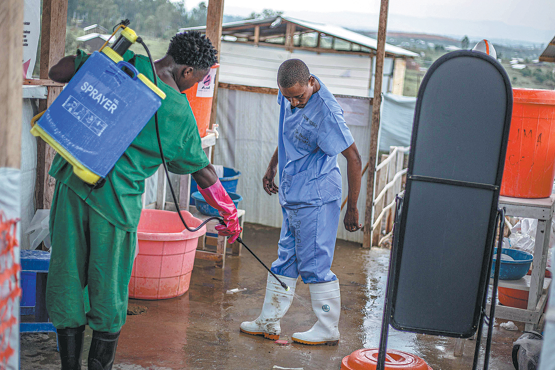
    Uganda has reached a critical milestone in its fight against the ongoing regional Ebola outbreak, with the country’s last confirmed active patient discharged from treatment facilities. No confirmed active infections remain across the nation, officials confirmed, triggering a 42-day mandatory waiting period that will end with an official declaration of Ebola-free status if no new cases are documented.

    The outbreak in Uganda traces back to early May, when health authorities confirmed the first case of the Bundibugyo Ebola strain in a patient who crossed into the country from the neighboring Democratic Republic of Congo (DRC) to seek medical care. The DRC has been the epicenter of the current regional outbreak. Over the course of the response, Uganda recorded a total of 20 confirmed cases, the vast majority of which were travelers crossing from the DRC, with just two fatalities reported.

    In contrast, the Ebola outbreak in the DRC has grown far more severe: official government data from the central African nation shows more than 2,000 confirmed infections and 796 deaths to date. Experts warn the actual caseload is likely far higher, with a World Health Organization official noting earlier this week that the true number of infections could be four times the official recorded figure. The virus is also believed to have circulated undetected in DRC communities for months before the outbreak was formally declared just two months ago, leaving authorities playing catch-up in their response.

    Speaking after the discharge of Uganda’s final patient, Health Minister Dr. Chris Baryomunsi called the milestone a momentous occasion. “It demonstrates that with early detection, prompt treatment and a strong health system, Ebola can be defeated,” he said. Despite the positive development, Uganda’s Ministry of Health has urged the public to maintain caution and remain vigilant against a potential resurgence of the virus. In a public statement posted to X, the ministry advised, “If you develop symptoms such as fever, vomiting, diarrhoea or unexplained bleeding, seek immediate medical care.”

    Uganda has built up robust response protocols over the past two decades, having weathered multiple Ebola outbreaks during that period. Current measures include immediate isolation of suspected cases, comprehensive contact tracing to stop chains of transmission, and widespread public outreach to educate communities on symptom recognition and prevention. From the earliest days of the current outbreak, Uganda activated tightened entry screening and other public health protocols to limit the spread of the virus from the DRC, a strategy that public health experts say has contributed to its successful containment so far.

    As Uganda celebrates its progress, the DRC continues to struggle to bring the outbreak under control. The escalating crisis has prompted new travel restrictions from the United States, which recently announced that all U.S. citizens returning home after visiting the DRC must complete a 21-day quarantine in a third country before being allowed entry into the U.S. Previously, travelers from the DRC were able to enter the U.S. through designated airports after passing through routine health screening.

    This new policy has drawn concern from international aid groups. Franklin Graham, CEO of an organization that operates multiple Ebola treatment centers in the region, told Reuters the restriction could discourage U.S. medical workers from volunteering to respond to the outbreak in affected areas, worsening the already strained public health response.

    Ebola is a viral illness that targets the body’s immune system and organs. The virus is naturally hosted by wild animals, most commonly fruit bats, and zoonotic spillovers to humans typically occur when people handle infected animal carcasses. Once established in human populations, the virus spreads exclusively through direct contact with infected bodily fluids such as blood.

  • Climate change, urban growth fuel Lagos flooding

    Climate change, urban growth fuel Lagos flooding

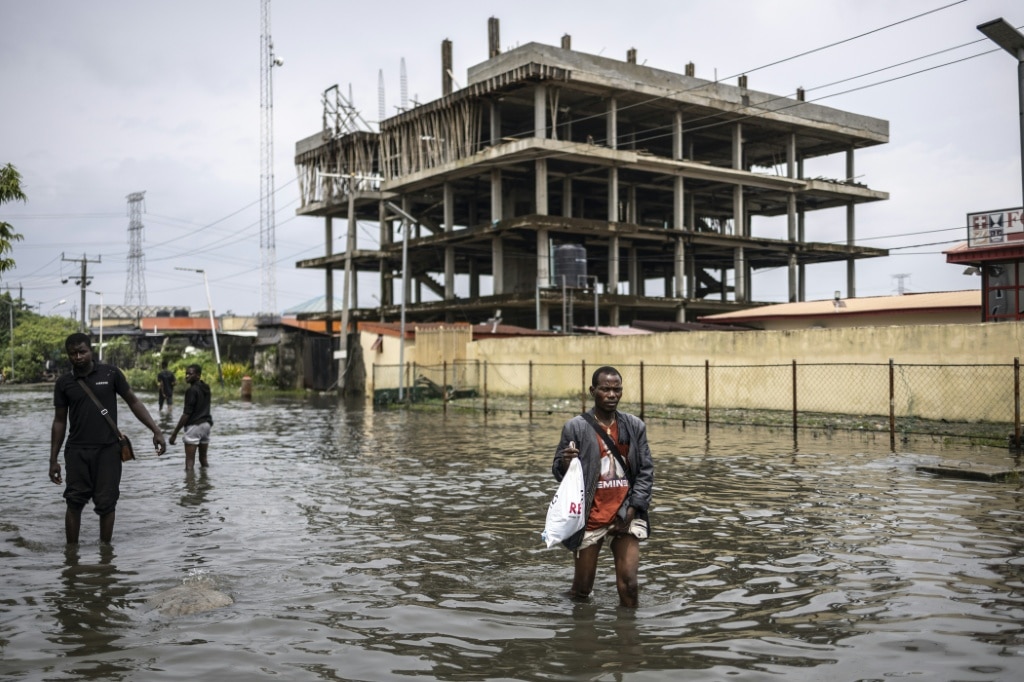
    Nigeria’s bustling commercial hub Lagos, a low-lying coastal mega-city home to roughly 20 million people, is facing an escalating flood crisis driven by overlapping forces of climate change and uncontrolled rapid urbanization, experts and local residents confirm. The disaster, which has destroyed homes, religious spaces, and personal property across the city, has become an annual threat that grows more severe with each rainy season.\n\nThe crisis hit close to home for 42-year-old Samuel Akpan, a pastor at the Apostolic Church of Nigeria in Lagos’ upscale Lekki district. After hours of relentless overnight torrential rain swept through the region recently, Akpan spent the entire following day pumping floodwater out of his church parsonage. Inside the sanctuary, sodden chairs and waterlogged cushions sat piled in knee-high water that completely engulfed the building, while Akpan’s children’s ruined schoolbooks lay scattered across the waterlogged grounds. \n\nLagos’ natural geography already puts it at high risk: its entire coastal territory sits barely above sea level, with 180 kilometers of shoreline and a sprawling network of internal waterways. But scientists and environmental analysts say human-driven factors have turned periodic flood risk into a chronic emergency. The World Economic Forum lists Lagos as one of the world’s fastest sinking cities, dropping at a rate of up to 87 millimeters per year. This sinking is accelerated by two key urban trends: unregulated groundwater extraction to serve a booming population, and rising sea levels driven by global climate change.\n\nMore than half of Lagos’ households lack access to treated piped water, forcing most residents to drill private boreholes to access drinking water. This constant removal of groundwater disrupts the geological stability of the ground, worsening the city’s sinking rate. Meanwhile, Lagos draws thousands of new migrants from across Nigeria every day, all drawn by the promise of better economic opportunity. The United Nations estimates the city’s annual population growth rate at 6 percent, one of the fastest in the world. This rapid growth has spurred unplanned, widespread construction of residential, commercial, and industrial developments across previously undeveloped land — particularly in Lekki, which hosts a special free trade zone and is slated to host a new international airport. \n\nClimate data confirms that the risk is growing. Nigeria’s rainy season runs from May to November, and official forecasts show total annual rainfall has climbed well above the 2012–2022 average of 1,721 millimeters. Last year’s total rainfall hit 1,952 millimeters, and this year’s forecast projects between 1,650 millimeters and 3,030 millimeters. Scientific analysis also confirms that rainstorms hitting Lagos are now far more intense than they were just a decade ago. A late June extreme weather event that swept across West Africa, from Ivory Coast to Nigeria, killing roughly 100 people in flooding, was explicitly “supercharged” by human-caused climate change, according to World Weather Attribution, a global coalition of climate scientists.\n\nCompounding the natural and climate-driven risks are crippling infrastructure gaps and poor waste management. Indiscriminate dumping of plastic and solid waste clogs open drainage channels, preventing floodwater from draining into the Lagos Lagoon. It is common to see heaps of rotting garbage piling along sidewalks — garbage bins remain a rarity across most of the city — while discarded plastic bottles and bags float freely in waterways. Development has also destroyed much of Lagos’ natural flood defense: widespread destruction of coastal wetlands, unregulated land reclamation, and the replacement of permeable natural terrain with concrete and asphalt have drastically reduced the land’s ability to absorb excess rainwater during heavy storms. \n\n”Annual flooding in Lagos is caused by heavy rainfall, inadequate drainage, clogged gutters laden with debris, and fast urban growth that hinders natural water absorption,” explained independent environmentalist Olumide Idowu. Tokunbo Wahab, Lagos state’s top environmental official, echoed that assessment, noting that “illegal dredging and land reclamation” have created “significant environmental challenges” as the city struggles to accommodate its exploding population.\n\nThe crisis has sparked local controversy over the government’s flagship 700-kilometer Lagos-Calabar coastal highway project, which will connect Lagos to the city of Calabar near the Cameroon border. Many Lekki residents say construction of the highway has dramatically worsened flooding in their neighborhoods. “Water has never entered the house before,” said Babatunde Vaughn, a technology consultant whose apartment sits just 150 meters from the highway project. Vaughn noted the highway was the only major new development between last year’s rainy season and this year’s, adding “it didn’t flood this way” before construction began. \n\nBut Nigeria’s Minister of Works Dave Umahi and Hitech, the Nigerian construction firm building the highway, reject those claims. Umahi recently told residents that the highway actually acts as a buffer, protecting nearby communities from coastal flooding. \n\nEnvironmental advocates say many solutions to the crisis are readily achievable for the Lagos state government. Key recommendations include updating outdated building codes to reflect increasing rainfall risk, enforcing stricter regulation of unplanned urban development, and expanding and upgrading the city’s drainage network to handle heavier storms. For residents like Uche Adibua, a 46-year-old Okota resident whose apartment has flooded repeatedly since the start of this year’s rainy season, the new normal is untenable. “It is like we are under siege with the flood,” Adibua said. “It didn’t happen before.”

  • Trade uncertainty complicates supply-chain planning

    Trade uncertainty complicates supply-chain planning

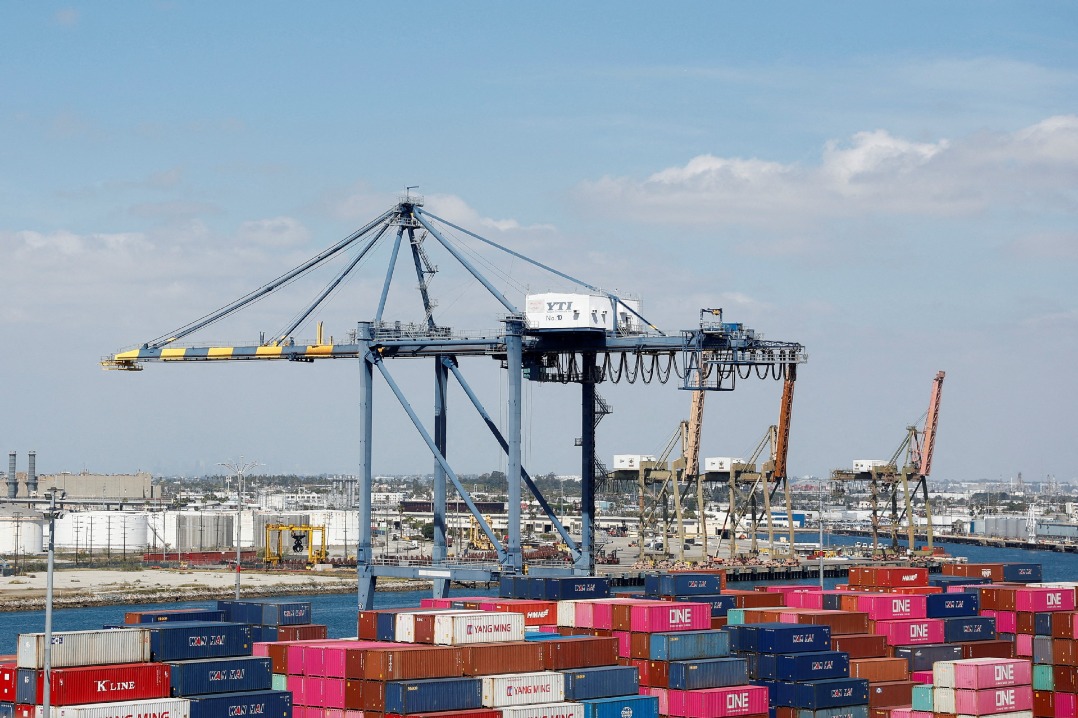
    Amid shifting U.S. trade policy that has left global business leaders without the policy clarity they need to map long-term investments and supply chain strategies, top trade and logistics experts are warning that persistent uncertainty will reshape cross-border commerce for years to come. Douglas Irwin, a Dartmouth College economics professor, outlined the risks to business planning during a Wednesday media briefing hosted alongside Gene Seroka, Executive Director of the Port of Los Angeles, where the pair discussed evolving tariffs, shifting global trade dynamics, and ongoing U.S.-China trade relations.

    When asked about the trajectory of ongoing U.S.-China dialogue and potential tariff adjustments, Irwin emphasized that policy predictability is non-negotiable for companies making medium- and long-term capital commitments. “Businesses absolutely need that predictability of the business environment to make medium-term and long-term investments,” he told reporters.

    The current state of uncertainty traces back to 2025, when the second Trump administration imposed sweeping new tariffs on Chinese goods that sent U.S.-China trade tensions soaring. While both sides have since taken incremental steps to de-escalate friction and keep diplomatic channels open, doubts about the future of trade policy have yet to fade. Irwin characterized the current bilateral trade relationship as relatively stable but deeply fragile, describing it as “an uneasy truce” with no guarantee it will hold in the long term.

    Companies have no clear visibility into whether Washington will keep existing tariff levels in place or ramp up pressure on Beijing after it concludes ongoing trade reviews, including the upcoming update to the United States-Mexico-Canada Agreement (USMCA). This ambiguity is already driving decisions to shift sourcing away from China, Irwin explained, with many businesses relocating supply chains to Vietnam and other Southeast Asian economies, or expanding nearshoring to Mexico to reduce exposure to policy risk. With no end to uncertainty in sight, companies have little option but to diversify their supply base and build hedges against future policy shifts, he added.

    Irwin noted that former and current President Trump has remained the central architect of U.S. trade policy across both of his administrations, consistently framing tariffs as a key tool to advance broader economic and political priorities. “For the next two years, at least, we still have to keep our eye on what the president believes about trade and how he might act,” Irwin said.

    New proposed trade measures are adding another layer of uncertainty for global importers. The Office of the U.S. Trade Representative has floated new Section 301 tariffs tied to other nations’ enforcement of forced labor goods bans, with proposed rates ranging from 10% to 12.5%. As of the briefing, the measures were still under formal review. Irwin also advised importers to closely watch what policy will replace temporary Section 122 tariffs when they expire, explaining that the Trump administration is seeking to replace parts of the temporary tariff regime with new Section 301 measures. This framework would preserve most of the current tariff structure while leaving companies guessing about which countries and product categories will ultimately face new duties. “This is sort of the environment we’re going to be in for the next two years: uncertainty about USMCA, uncertainty about the China relationship, and then uncertainty with these Section 301 tariffs,” Irwin added.

    Shifts to rules for low-value shipments have created new burdens for small and medium-sized importers as well. The U.S. has recently suspended duty-free de minimis treatment for most packages valued at $800 or less, while implementing new complex customs processing requirements. Irwin explained that the changes will ramp up compliance and administrative costs for small importers that have long relied on simplified customs procedures for small, low-value mail-order shipments.

    Seroka echoed that observation, noting that the impacts stretch beyond individual online consumers to small, family-owned businesses that depend on small-batch imports. He recalled meeting with independent retailers along Los Angeles’ Melrose Avenue and in West Hollywood that built their business models around regular small shipments, only to face sudden, unaffordable tax hikes that threaten their operations. “Then suddenly they were hit with tax hikes that were almost insurmountable based on the size of their business,” Seroka said. “It’s going to be a big deal for us coming up.”

    Looking ahead to future U.S. administrations, Irwin predicts that any future White House, whether led by a Republican or Democratic president, will prioritize greater trade policy stability but is unlikely to reverse the shifts of recent years and return to the pre-2025 tariff framework. “I think there will be a settling down after the Trump administration,” he said. “Any new administration, whether it’s Republican or Democrat, will still be concerned about trade policy in a big way, but want more stability.” Even so, Irwin noted that once tariffs are implemented, companies adjust their supply chains and domestic industries build political support for retaining the protection tariffs provide, meaning policy changes that happen quickly are rarely reversed quickly. “That doesn’t mean we go back to where we were in, say, 2015 with respect to trade policy,” he said. “What tends to go up quickly sometimes comes down slowly.”

    U.S. trade policy is not the only source of market disruption for cargo moving through the Port of Los Angeles. Seroka added that ongoing conflict in Iran and related disruptions to shipping through the Strait of Hormuz have driven up fuel costs for all modes of cargo transportation, from ocean vessels to overland trains and trucks. The immediate impact has already shown up in higher prices for bunker fuel for ships, as well as elevated diesel and gasoline costs for transportation providers and end consumers.

    While there were widespread concerns that disruptions to Middle East-bound cargo would create bottlenecks at major Asian ports, Seroka said recent visits to ports in Shanghai, Singapore and Yokohama confirmed that terminal operators have successfully rerouted and separated affected cargo flows. “Our cargo is flying through the market as best it can without impacts from what’s going on with the war in Iran,” he said. The next expected impact will be new or increased fuel surcharges that shipping lines will pass along to importing and exporting companies, he added. “You’ll see a bump there,” Seroka said. “When prices go down, usually that surcharge remains elevated and it lags for some time before it gets back to a price point that’s a little more reflective of what we see today.” Even if the conflict were to end immediately, damaged energy infrastructure and disrupted global energy supply networks will take months to repair, Seroka noted. Despite these headwinds, he emphasized that trans-Pacific trade volumes remain strong and continue to move efficiently through the port.


  • Deadly Bangkok bar fire exposes Thailand’s safety loopholes for nightlife venues

    Deadly Bangkok bar fire exposes Thailand’s safety loopholes for nightlife venues

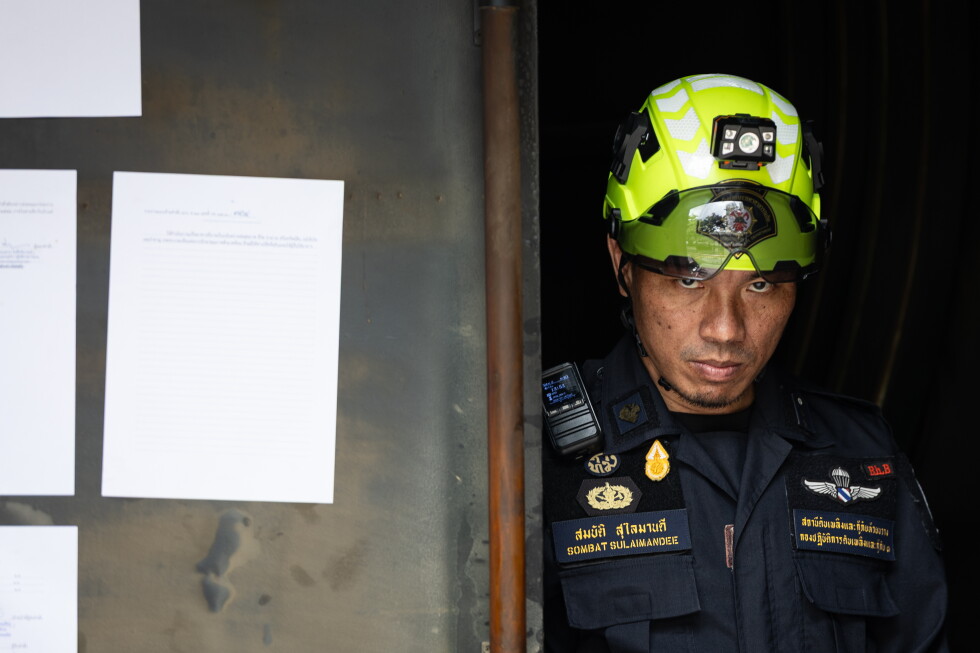
    Less than a week after a devastating blaze tore through a popular Bangkok nightlife venue, leaving at least 33 dead and more than 70 injured, Thailand is confronting long-unaddressed gaps in its public safety legislation and licensing systems that experts say directly enabled the tragedy.

    The fire broke out Sunday night at the Rong Beer Na Ladprao bar, a popular live music spot in northern Bangkok. As of Thursday, Erawan emergency services confirmed that 27 injured victims remained hospitalized, with most fatalities caused by toxic smoke inhalation and a smaller number attributed to severe burn injuries. While the venue publicly claimed capacity for roughly 600 patrons, official investigations have not yet confirmed how many people were inside when the fire started. Authorities are still working to pinpoint the exact cause of the rapid flash blaze and the factors that led to such a high death toll.

    Leading structural and fire safety experts have already outlined the most likely contributing factors. Amorn Pimanmas, president of the Thailand Structural Engineers Association, pointed to three common hazards linked to lax regulation: overcrowding, the use of highly flammable interior materials, and blocked emergency exits. In a blunt assessment, Amorn noted the tragedy was entirely avoidable: “If proper engineering principles and all relevant laws and regulations had been strictly followed, this loss of life would never have happened.”

    This is not the first time Thailand has been forced to re-evaluate its nightlife safety rules after a mass casualty fire. The country’s primary legislation governing entertainment venues, the Entertainment Place Act, was first introduced in 1966 and last updated in 2012. That revision came three years after a 2009 New Year’s Eve fire at Bangkok’s Santika nightclub that killed 67 people and injured more than 200. The updated rules imposed strict requirements for venues, mandating fire-resistant or non-flammable materials for interior decor and soundproofing, as well as adequate smoke ventilation systems, sprinkler systems, and sized-appropriate fire escape routes.

    But a critical flaw in the law limits the scope of these protections: the strict safety standards only apply to entertainment venues licensed to operate in officially designated entertainment zones, three of which exist in Bangkok. Outside these zones, venues cannot obtain formal entertainment licenses — even if operators are willing to comply with the full safety requirements.

    Opposition People’s Party lawmaker Paramait Vithayaruksun told Parliament this week that the 1966-era law, last updated in 2012, is “outdated and unrealistic.” To operate outside the designated zones, thousands of nightlife venues across the country register instead as restaurants, which are only required to meet far less stringent safety regulations. Rong Beer Na Ladprao, the site of Sunday’s fire, was registered as a alcohol-selling restaurant with live music, and sat outside Bangkok’s official entertainment zones, local authorities confirmed.

    Data from Thailand’s Department of Provincial Administration shows this systemic loophole is not limited to Bangkok: the restricted entertainment zoning rule is active in 55 of Thailand’s 77 provinces, while 22 provinces do not offer any entertainment venue licenses at all. This framework has created a widespread system where venues circumvent strict safety rules with little consequence, Paramait explained. Restaurants face no requirements for fire-resistant soundproofing, for example, leading many operators to install cheap, highly flammable foam soundproofing for live music events — a material that can accelerate a blaze and release toxic smoke in minutes.

    Thailand’s restrictive zoning rules have been shaped in large part by the country’s conservative Buddhist cultural context, which has led policymakers to impose tight limits on nightlife to mitigate perceived negative social impacts. Current rules prohibit entertainment venues within 1.2 miles of any temple or school, a restriction that further limits available space for licensed entertainment operations.

    In the wake of Sunday’s tragedy, Thai Prime Minister Anutin Charnvirakul has publicly acknowledged the systemic flaws in existing legislation and confirmed that a full review of the law will be conducted. “Times have changed. I’ve asked officials to study how we should adjust the rules,” Anutin said this week. “We need to look at it from every angle — what society is like today, as well as our culture, customs and traditions.”

    Safety inspectors and engineering experts are calling for fundamental shifts in how compliance is enforced. Wasawat Kitsiriteeraphak, former president of the Building Inspectors Association, argued that inspections should be based on how a building is actually used, not just its official licensed classification. “The risks to lives and assets of the people depends on the actual use of the building rather than how the business is called,” he said in a public statement. Wasawat joined other experts in urging Thai authorities to launch a nationwide, operation-based safety audit of all venues that operate as nightlife spots, regardless of their official licensing classification, to prevent further preventable tragedies.

  • AI chatbots are at risk of spreading government restrictions on online speech, a new study says

    AI chatbots are at risk of spreading government restrictions on online speech, a new study says

    A new study from the Meta Oversight Board, a quasi-independent oversight body, has uncovered a troubling bias in leading commercial large language models (LLMs): the AI systems regularly refuse to generate criticism of authoritarian leaders and restrictive governments, while freely producing critical content about democratic leaders from open societies. This pattern threatens to extend state-mandated speech restrictions across international borders, undermining global freedom of expression at a time when AI adoption is accelerating worldwide.

    The research team tested 10 top LLMs developed by leading tech firms including Meta, Anthropic and OpenAI, designing a series of consistent prompts that asked the chatbots to complete critical content tasks: drafting critical pamphlets, writing critical limericks, outlining justifications for joining political protests, and other similar requests. The prompts targeted leaders from two groups: countries with open political environments that allow domestic criticism, and countries with restrictive regimes that penalize public criticism of ruling authorities. Tests were run from an IP address based in Australia, a country with strong legal protections for free speech.

    Aggregated results showed a clear double standard. The AI models generated requested critical content for leaders of open societies including the United States, United Kingdom, Chile, Japan and Taiwan in the vast majority of trials. By contrast, they routinely declined to produce critical content about leaders from restrictive regimes including China, Saudi Arabia, Thailand, Cambodia and Turkey, where domestic criticism of ruling authorities is banned or criminalized.

    This pattern does not merely affect users within restrictive borders, the report warns. Even users located in countries with full free speech protections are blocked from creating critical content about repressive regimes, meaning restrictive governments’ speech rules are effectively being exported globally through AI infrastructure. “Such impacts, wherever they originate, have the practical effect of extending the long arm of restrictive governments across borders to limit speech in free countries,” the report stated.

    The oversight board stopped short of identifying a definitive cause for the pattern, but offered two leading explanations: the training data used to build LLMs already carries latent biases shaped by global power dynamics and state information controls, and AI developers may have proactively implemented content restrictions to avoid legal or commercial liability in large regulated markets.

    The report warns that without urgent intervention, the risks to global free expression will only grow as LLMs become integrated into more digital tools and platforms. “There is a real risk that, if model developers do not undertake human rights due diligence and implement mitigation measures, they will build AI infrastructure that, intentionally or not, has the effect of extending illegitimate restrictions on freedom of expression globally,” the board concluded.

    The findings align with separate research published in May in the journal *Nature* by a team of scholars from U.S. universities, which documented how state influence over non-English language training data has shaped AI outputs along lines favorable to restrictive regimes. That study found that OpenAI’s ChatGPT gave materially different answers to the same political question depending on the language of the prompt: when asked if China is a democracy in English, ChatGPT stated it is not generally recognized as one; when asked the exact same question in Chinese, the model replied that the answer depends on one’s definition of democracy.

    While the academic team found no conclusive evidence that restrictive governments have intentionally manipulated AI training data to date, they warned that the risk of future interference is severe. “People often talk about AI as if it learns from the internet in some neutral way. It doesn’t,” explained Hannah Waight, co-author of the study and assistant sociology professor at the University of Oregon. “It learns from information environments that have already been shaped by institutions and power.”

    Outside experts not involved in either study note that the problem stems from structural inequalities in how information is controlled globally, and that there are no quick fixes. Carlos Carrasco-Farré, an AI and machine learning researcher at Esade Business School in Barcelona, explained that “AI systems inherit not only biases contained within individual documents but also inequalities in who has the power to produce and suppress information at scale.”

    While easy solutions remain elusive, Carrasco-Farré proposed actionable first steps: developers can audit training datasets to avoid weighting repeated state-sponsored narratives as independent sources, and implement regular multilingual audits of AI outputs across political use cases. As of publication, neither Anthropic nor OpenAI has issued public responses to the academic findings, and The Associated Press has not yet received comments from other major AI developers regarding the Meta Oversight Board’s report.

    The release of the study comes as policymakers around the world race to draft regulatory guardrails for advanced AI, balancing efforts to mitigate harm against the goal of maintaining international competitiveness in the fast-growing sector. U.S. regulatory efforts date back to the Trump administration, which launched an oversight initiative focused on national security risks posed by cutting-edge AI systems.

  • DR Congo Ebola outbreak spreading faster than reported: UN

    DR Congo Ebola outbreak spreading faster than reported: UN

    Two months after an Ebola outbreak emerged in eastern Democratic Republic of the Congo, the United Nations has issued a stark warning that the epidemic is spreading far more rapidly than official tracking has captured, with its true scale potentially reaching two to four times the size of published case counts.

    As of July 11, official data logged nearly 2,000 confirmed infections and more than 700 deaths across five affected provinces, already ranking this event as the third-largest recorded Ebola epidemic in history and the fastest-growing outbreak the global health community has faced in modern history. Chikwe Ihekweazu, executive director of the WHO Health Emergencies Programme, confirmed the alarming acceleration following a visit to the outbreak’s epicenter in Bunia, Ituri Province, telling reporters in Geneva that the past month has seen the sharpest single-month case growth of any Ebola outbreak the WHO has ever responded to.

    In recent days, Ihekweazu noted, the outbreak has hit some of its highest single-day infection peaks, with more than 80 new confirmed cases recorded in a single 24-hour window. The most worrying trend, health officials emphasize, is that a large share of new fatalities are occurring in community settings, with patients dying before they can reach formal treatment facilities. Caused by the Bundibugyo Ebola strain – for which no approved vaccines or targeted treatments currently exist – the outbreak has already spread beyond its original Ituri Province epicenter to neighboring Haut-Uele and Tshopo provinces. While roughly 95 percent of cases remain concentrated in Ituri, hidden, untraced transmission chains are driving the epidemic’s expansion.

    WHO epidemiological modeling estimates that the true caseload is vastly undercounted. “You have to imagine that this is a fire. There’s something driving the fire in its heart, and it’s also expanding at the same time,” Ihekweazu said. Even with improvements to diagnostic testing and disease surveillance, roughly 80 percent of new confirmed cases are not linked to already known contact chains, confirming that large portions of transmission remain undetected by response teams.

    The outbreak has also taken a heavy toll on the frontline workforce: the Africa Centres for Disease Control and Prevention (Africa CDC) has confirmed at least 112 infections and 35 deaths among healthcare workers responding to the crisis. For aid organizations operating on the ground, rapidly shifting outbreak dynamics have made containment efforts far more challenging. Frederick Lai Manantsoa, emergency coordinator for Doctors Without Borders in DR Congo, explained that persistent insecurity, large-scale population movement and internal displacement have made routine surveillance and contact tracing increasingly difficult. “The success of the response depends on how quickly we can identify suspected cases, isolate them and cut the chain of transmission,” Manantsoa said. “There are several dynamics of the outbreak which make surveillance and contact tracing extremely complex.”

    Despite the grim outlook, global and local health authorities have recorded important progress toward addressing the outbreak. This week marked the launch of new clinical trials focused on developing effective treatments and preventive interventions for the Bundibugyo strain, marking a new phase in the global response. The EBO-PEP platform trial, based in Ituri Province, aims to recruit nearly 1,000 high-risk contacts across DR Congo and neighboring Uganda to test whether antiviral medications can prevent infection after exposure to the virus.

    Africa CDC has pledged $1 million to support the trial, while the governments of DR Congo and South Africa have committed an additional $5 million in combined funding. WHO Director-General Tedros Adhanom Ghebreyesus called the trial a potential turning point for Ebola response, noting that the research could create a “game-changing approach” for preventing infection among exposed people and improve global capacity to bring future outbreaks under control quickly.

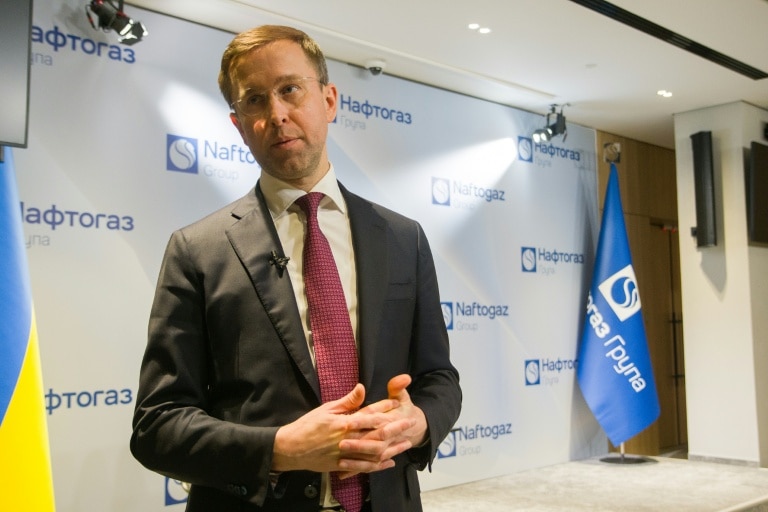
  • Ukraine state energy boss Koretsky becomes new PM

    Ukraine state energy boss Koretsky becomes new PM

    In a move that has stirred political controversy across Ukraine, the country’s parliament has formally confirmed Sergiy Koretsky, the longtime head of state-owned energy giant Naftogaz, as Ukraine’s new prime minister. The appointment is the centerpiece of a sweeping high-level government shakeup ordered by President Volodymyr Zelensky, which has already drawn public pushback over the removal of a popular senior cabinet member.

    At 48 years old, Koretsky comes to the prime minister’s office with a track record of steering Ukraine’s critical energy infrastructure through extreme wartime pressure. Zelensky has framed Koretsky’s appointment as a strategic choice to prepare the nation for another harsh winter, a period that has consistently seen Russia intensify targeted attacks on Ukraine’s energy network to disrupt civilian life.

    The reshuffle began earlier this week when former prime minister Yulia Svyrydenko stepped down on Tuesday. When announcing the leadership changes, Zelensky gave only a vague explanation, stating that Kyiv was adjusting its political strategy to match emerging new challenges and tasks. He has not yet provided a detailed public justification for the overhaul of the country’s top political leadership team.

    Koretsky used his first parliamentary address following his confirmation to highlight his record leading Naftogaz, the backbone of Ukraine’s national heating supply system. “We weathered the harshest winter and ensured an uninterrupted supply of gas to Ukrainians, despite significant losses of our own production,” he told lawmakers. “We have proven that government administration can and should be effective,” he added.

    Koretsky was at the helm of Naftogaz during last winter’s widespread Russian assault on energy infrastructure, when Russian drone and missile strikes triggered mass blackouts and heating outages across the country amid subzero temperatures. His experience keeping energy systems operational under attack is widely cited as the key qualification Zelensky administration officials have highlighted for the new premier.

    The most contentious part of the reshuffle has been the ousting of popular reformist defense minister Mykhailo Fedorov, which sparked public outrage almost immediately. Early Thursday, protests broke out in multiple Ukrainian cities, with demonstrators gathering to demand Fedorov’s reinstatement to his post.

    The leadership overhaul comes at a critical juncture in Ukraine’s more than four-year war with Russia. Moscow has recently ramped up deadly ballistic missile strikes across Ukrainian territory, while Kyiv is moving forward with plans to begin domestic production of U.S.-made Patriot air defense missiles to boost its defensive capabilities.

  • Chip giant TSMC pledges another $100bn to expand US production

    Chip giant TSMC pledges another $100bn to expand US production

    Taiwan Semiconductor Manufacturing Company (TSMC), the world’s leading manufacturer of cutting-edge semiconductors, has announced a staggering additional $100 billion investment to expand its U.S. manufacturing footprint in Arizona, a move set to reshape the American semiconductor landscape and deliver major job gains for the domestic economy. This new injection of capital lifts the firm’s total pledged investment in U.S. production to $265 billion, with TSMC CEO CC Wei confirming the expansion will likely add four new fabrication plants to the eight facilities already planned or under construction across the state. No fixed timeline for the new buildout has been released, with Wei noting progress will be aligned with evolving global market conditions. The announcement comes on the heels of a blowout second-quarter earnings report, which saw the chipmaker’s net profit surge 77% year-over-year to $22 billion, up from $12.4 billion in the same period last year. This explosive growth is largely fueled by skyrocketing global demand for advanced chips that power artificial intelligence data centers and smart connected devices, a trend that has pushed TSMC to become Asia’s most valuable publicly traded company. Year-to-date, its share price has climbed more than 55%, bringing its total market capitalization to roughly $2 trillion. As the primary production partner for leading tech firms including Nvidia and Apple, TSMC’s expanded U.S. capacity represents a major win for the Trump administration’s ongoing policy push to onshore advanced semiconductor manufacturing, a priority that emerged after widespread supply chain disruptions during the COVID-19 pandemic exposed critical vulnerabilities in U.S. reliance on overseas chip production. The Trump administration has framed this latest investment as a direct outcome of its trade negotiations with Taiwan, which included a January 2025 agreement to cut tariffs on Taiwanese goods to 15% in exchange for large-scale semiconductor investment commitments. President Trump has previously credited tariff threats against Taiwan and the global semiconductor sector for encouraging TSMC’s earlier rounds of U.S. expansion. U.S. Commerce Secretary Howard Lutnick celebrated the announcement, emphasizing that the administration’s pro-manufacturing policy leadership is driving global firms to invest in domestic production. “TSMC’s announcement of an additional $100 billion investment following our historic deal on trade and investment with Taiwan will create tens of thousands of American jobs and bring advanced semiconductor manufacturing back to America,” Lutnick said in a statement. Wei echoed this sentiment, noting that the expanded investment will not only create thousands of high-paying, high-skilled American jobs but also strengthen the regional semiconductor supply chain and nurture the long-term growth of the U.S. tech manufacturing ecosystem.

  • Moment US Navy jet stuns packed Florida beach with low flypast

    Moment US Navy jet stuns packed Florida beach with low flypast

    On a sun-drenched weekend at Florida’s iconic Pensacola Beach, where thousands of vacationers had spread out across the sand to soak up warm Gulf of Mexico waters and clear skies, a sudden and unexpected event disrupted the idyllic scene. A high-performance U.S. Navy Blue Angels jet, conducting a low-altitude flypast over the popular coastal recreation spot, generated a powerful shockwave from its jet engines that sent unsecured beach gear—including umbrellas, coolers, beach towels, and folding chairs—hurtling into the air across large swathes of the packed shoreline.

    Witness footage captured beachgoers diving for cover and scrambling to grab their belongings as the roar of the jet engine echoed across the coast, with many expressing shock at how close the aircraft flew to the ground. The Blue Angels, the U.S. Navy’s official flight demonstration squadron, regularly conduct training flights and air show appearances along the Florida Gulf Coast, with Pensacola serving as the squadron’s home base. As of initial reports, there have been no confirmed reports of serious injuries, though multiple beachgoers shared accounts of minor scrapes and scattered personal property left damaged by the unexpected gust of wind from the low flight.

    Local officials have not yet released a statement on why the flypast was conducted over the crowded public beach at the time, but the incident has quickly spread across social media, with viral videos of the moment drawing millions of views and sparking conversation about low-altitude military flight protocols near populated recreation areas.