作者: admin

  • Protesters rally in Kyiv as Zelenskyy moves to oust Ukraine’s defense minister

    Protesters rally in Kyiv as Zelenskyy moves to oust Ukraine’s defense minister

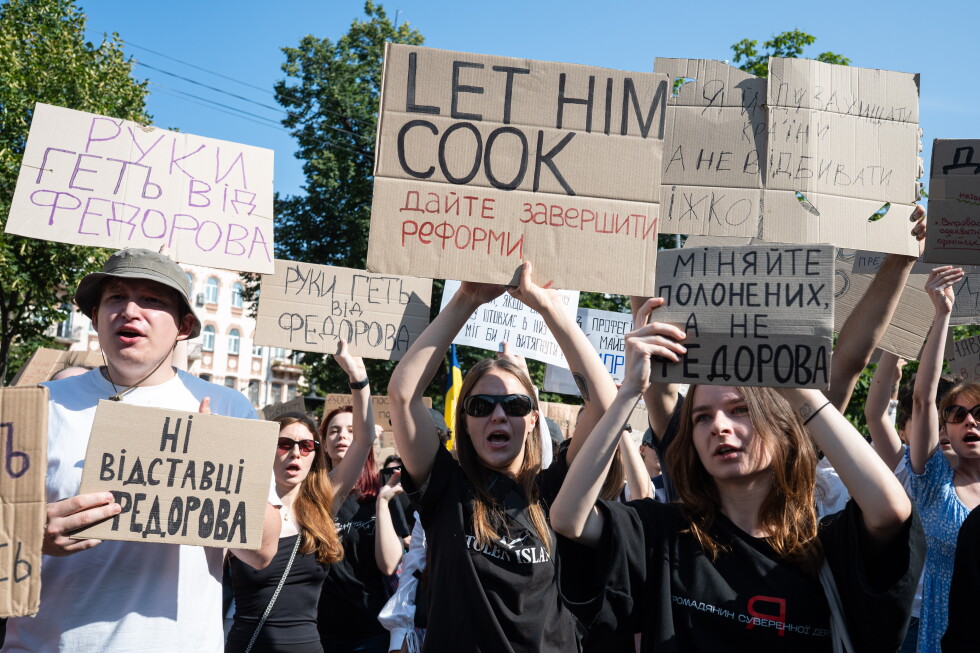
    KYIV, Ukraine – As Ukraine’s prolonged defense against Russia’s full-scale invasion nears its four-and-a-half year mark, a sweeping government reshuffle initiated by President Volodymyr Zelenskyy has sparked public unrest and emerged as an unexpected test of the president’s political authority. On Thursday, hundreds of demonstrators assembled in central Kyiv, the same day Ukraine’s parliament, the Verkhovna Rada, gathered to vote on a new prime minister as part of the restructuring.

    At the center of the controversy is the impending departure of 35-year-old Defense Minister Mykhailo Fedorov, a reformist leader widely credited with leveraging his technological expertise to drive measurable improvements in Ukraine’s military performance against Russia’s larger, better-resourced armed forces over recent months. Fedorov has only held the defense minister post since January this year, just six months before his anticipated exit.

    Zelenskyy has not publicly shared any official explanation for Fedorov’s removal. Unconfirmed reporting from Ukrainian media has pointed to escalating friction between Fedorov and Gen. Oleksandr Syrskyi, Ukraine’s 60-year-old armed forces commander. Syrskyi, a veteran military leader who organized Kyiv’s successful initial defense shortly after Russia’s 2022 invasion and later led a game-changing 2022 counteroffensive that reclaimed large swathes of the Kharkiv region, has been a polarizing figure among segments of the Ukrainian public.

    Protesters, most of whom were young Ukrainians, gathered in downtown Kyiv chanting Fedorov’s name in a show of public support, while directing sharp criticism toward Syrskyi. Demonstrators called for Syrskyi’s resignation and chanted slogans demanding a NATO-aligned, modern military for Ukraine. The protest spread beyond the capital, with demonstrations also organized in the central Ukrainian city of Dnipro and the southern Black Sea port of Odesa.

    Bohdan Huryak, a Kyiv resident who attended the downtown protest, told the Associated Press he was deeply shocked and angered by the decision to remove Fedorov. “I’m not deeply invested in the internal political debates, but this is a person who shows results on the battlefield, we see results, we feel the fighting spirit and confidence in victory rising,” Huryak said. “And then, six months later, he is removed from office? Come on.”

    This is not the first time public protests have forced a course correction from Zelenskyy since the 2022 full-scale invasion. In July 2023, large-scale street demonstrations broke out over a controversial draft law that would have restricted the independence of Ukraine’s anti-corruption watchdog bodies. At the time, the public outcry marked the first major threat to Zelenskyy’s leadership stability, prompting the president to quickly reverse the policy.

    Long before taking over the defense portfolio, Fedorov built a reputation as a progressive modernizer leading Ukraine’s digital transformation agenda. He gained widespread public popularity for spearheading the rapid development and deployment of innovative drone technology that has become a critical asset on the front lines, as well as rolling out widely praised e-government platforms that streamlined public services.

    After taking the defense minister post, Fedorov launched ambitious plans for sweeping military reform. In his opening remarks, he publicly disclosed the scale of long-standing challenges within the military, acknowledging roughly 200,000 troop desertions and an estimated 2 million cases of draft dodging that had weakened Ukraine’s fighting capacity.

    In a series of social media posts confirming his dismissal late Wednesday, following days of unconfirmed media speculation about his exit, Fedorov laid out his key achievements during his short tenure. He wrote that he made the risky decision to reallocate budget funds originally earmarked for military salaries toward expanding mid-range strike capabilities, long-range fiber-optic drones, advanced reconnaissance systems and other critical battlefield technologies.

    Fedorov also highlighted progress on expanding domestic and international drone procurement, finalizing contracts for additional Patriot air defense systems, completing Ukraine’s first successful domestically developed ballistic missile tests, and overhauling the country’s opaque and inefficient military procurement system.

    Even as he celebrated his progress, Fedorov admitted he had been unable to complete all of his planned reforms. He wrote that he failed to finish the full organizational restructuring of the Defense Ministry to align with NATO standards, shift all military procurement to open competitive bidding processes, and embed a widespread culture of accountability across the department. He added that while he had removed dozens of obstructive officials from their posts during his tenure, “it was necessary to dismiss even more people who were hindering the changes.”

    As part of the broader government reshuffle, Zelenskyy has nominated Serhii Koretskyi, the current chief executive of Ukraine’s state-owned energy giant Naftogaz, to take over as prime minister, parliament speaker Ruslan Stefanchuk confirmed in a Wednesday social media post. Zelenskyy argued Wednesday that Koretskyi is the best fit for the role because the government’s top priority ahead of the coming season is preparing Ukraine for another difficult winter of potential Russian energy infrastructure attacks, citing Koretskyi’s decades of experience in the energy sector.

    Ukrainian lawmakers began debating the full slate of cabinet changes this week, ahead of parliament’s scheduled summer recess set to begin Saturday. The outcome of the reshuffle and the public response to Fedorov’s dismissal will serve as a key indicator of Zelenskyy’s political standing as Ukraine enters a new phase of its war with Russia.

    Dan Bashakov and Dmytro Zhyhinas contributed reporting to this article.

  • Jackie O accused of using bullying claim as tactic to escape multimillion-dollar deal

    Jackie O accused of using bullying claim as tactic to escape multimillion-dollar deal

    A high-stakes legal dispute unfolding in Australia’s radio industry has taken a sharp new turn, with parent company ARN alleging that star host Jackie O Henderson’s workplace bullying complaints against her long-time co-host Kyle Sandilands were filed in bad faith, as a strategic maneuver to exit her existing contract and secure a preferred programming timeslot. The explosive allegations are laid out in formal court documents submitted to Australia’s Federal Court by ARN, through its subsidiary CBC (Commonwealth Broadcasting Corporation), which first published the details on Thursday.

    Henderson, one half of the once-popular KIIS FM breakfast duo with Sandilands, has already filed a legal claim alleging she was unlawfully terminated from her multimillion-dollar role at the station, centered on her accusations that Sandilands engaged in repeated workplace bullying that violated her employment rights. But ARN’s formal defense directly contradicts this narrative, arguing that the bullying allegations are not rooted in genuine workplace harm, but in a premeditated push to renegotiate Henderson’s contract.

    “Ms Henderson and Henderson Media reserved their right to make a report to SafeWork NSW was not done in good faith and for a proper purpose,” ARN stated in the publicly released court filings. The company added that the entire bullying complaint process was designed to pressure CBC into abandoning the terms of Henderson’s existing binding contract, and granting her an alternative programming daypart that the network was under no legal obligation to provide.

    ARN further noted that under Australian workplace regulations, Henderson could have filed her bullying allegation while continuing to fulfill her contractual obligations to work alongside Sandilands during the investigation process. The company argues this path was never pursued because Henderson had already decided she wanted to move to a different timeslot and new show, a claim backed by a citation of an affidavit from Henderson’s own manager, Gemma O’Neill.

    The public rift between the long-time co-hosts first erupted in February, when an on-air exchange between Sandilands and Henderson turned hostile. During that segment, Sandilands publicly attacked Henderson, calling her “off with the fairies” and criticizing what he called her unfocused work performance stemming from a “fixation” with astrology. “You’re off with the fairies, you’re unfocused, you don’t give a s***,” Sandilands said on air at the time.

    In June, ARN finalized a separate settlement with Sandilands, details of which were made public in an official filing to the Australian Securities Exchange (ASX). Under the terms of the agreement, Sandilands will receive a total payout of $12.09 million over the next three years, and the network will also enter a revenue-sharing partnership with the host that includes $1.5 million in allocated advertising airtime for Sandilands’ projects over the three-year term.

  • Eleven people die in fire at Algerian foster care home

    Eleven people die in fire at Algerian foster care home

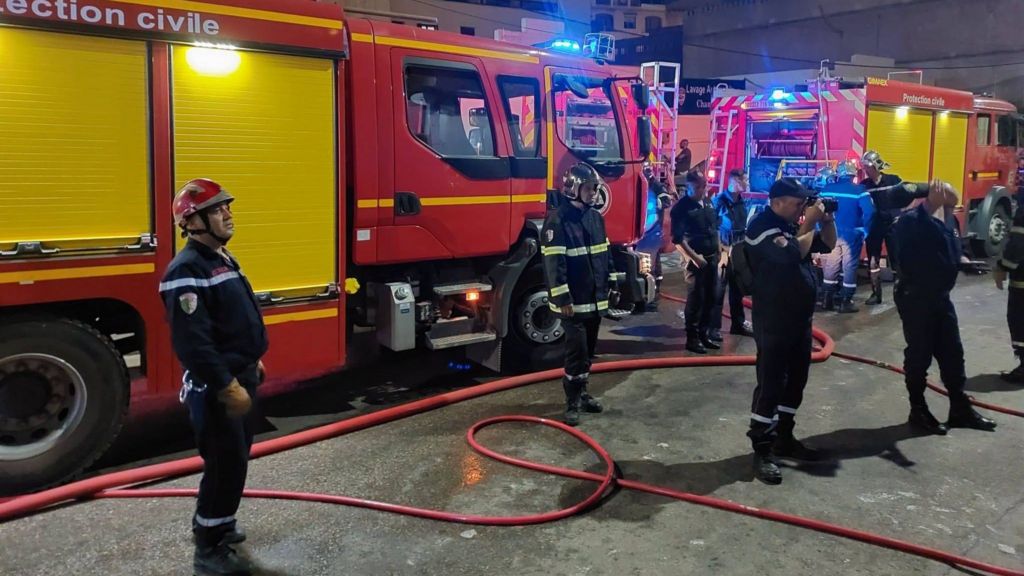
    A devastating fire that broke out at a foster care facility in central Algiers, the capital city of Algeria, has claimed 11 lives and left 19 others hurt, according to the country’s General Directorate for Civil Protection. As of 6:50 a.m. local time on Thursday morning – which translates to 5:50 a.m. GMT – emergency response teams and firefighters were still on site working to fully extinguish the blaze and secure the area.

    In an official statement released Thursday, the civil protection department confirmed that five people with special needs were successfully evacuated from the burning structure and moved to a secure location, where they are now receiving care. At the time of this report, local authorities have not released further details about the age ranges of the deceased or injured, nor have they shared preliminary information about the possible cause of the fire.

    This is an active, developing breaking news story. Additional updates will be published as more official information becomes available to the public. For more coverage of news across the African continent, audiences can visit BBCAfrica.com, and follow BBC Africa’s social media channels on Twitter at @BBCAfrica, Facebook at BBC Africa, and Instagram at bbcafrica.

  • UK urges FIFA to investigate Argentina over Falklands banner at World Cup

    UK urges FIFA to investigate Argentina over Falklands banner at World Cup

    LONDON – In the wake of Argentina’s dramatic 2-1 victory over England in a 2024 FIFA World Cup semifinal held in Atlanta, a fresh diplomatic and sporting controversy has erupted over a display of political messaging during Argentine players’ post-match celebrations, prompting the British government to call for a formal investigation from global soccer’s governing body FIFA.

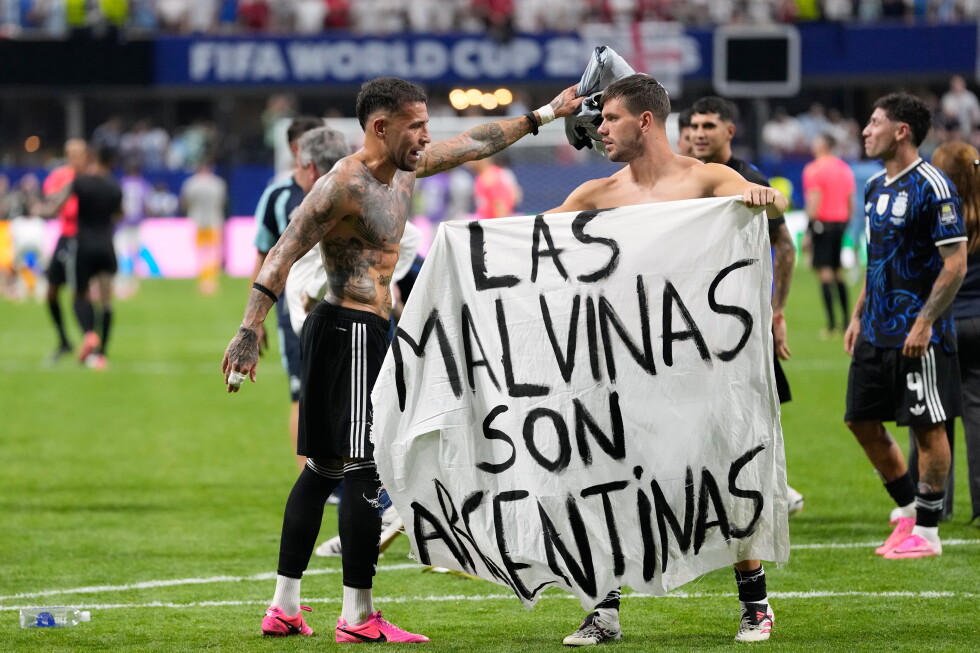
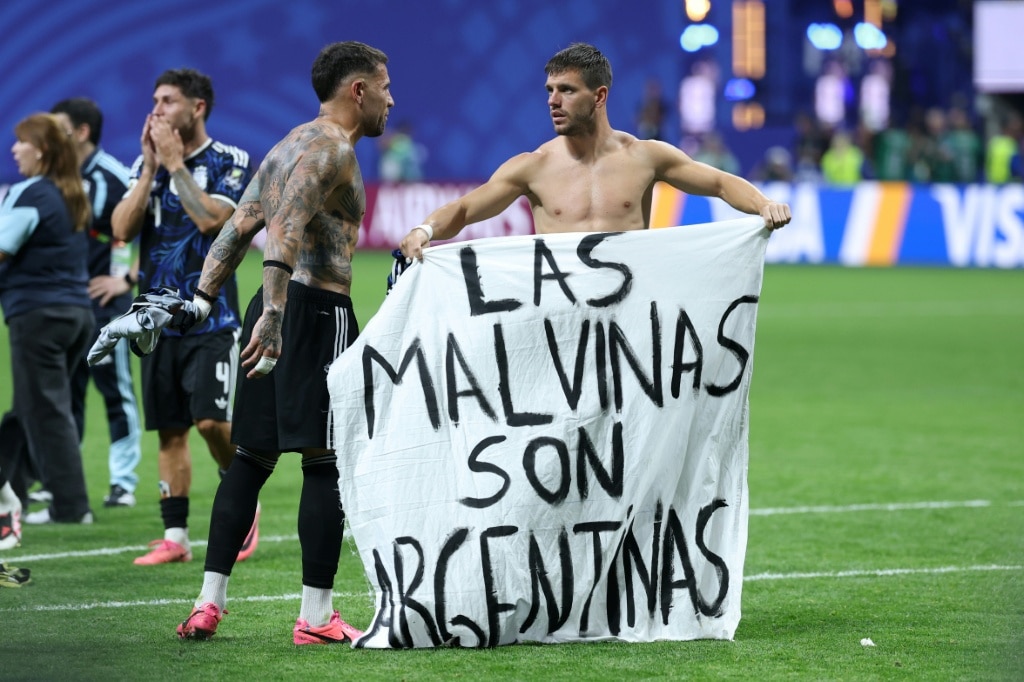
    During jubilant celebrations following Wednesday’s final whistle, members of the Argentine national squad unfurled a banner passed to them from fans in the spectator stands that read “Las Malvinas son Argentinas” – a phrase translating to “The Malvinas are Argentine.” Argentina has long claimed sovereignty over the South Atlantic archipelago, which it calls Islas Malvinas; the territory is administered as a British Overseas Territory under the name Falkland Islands.

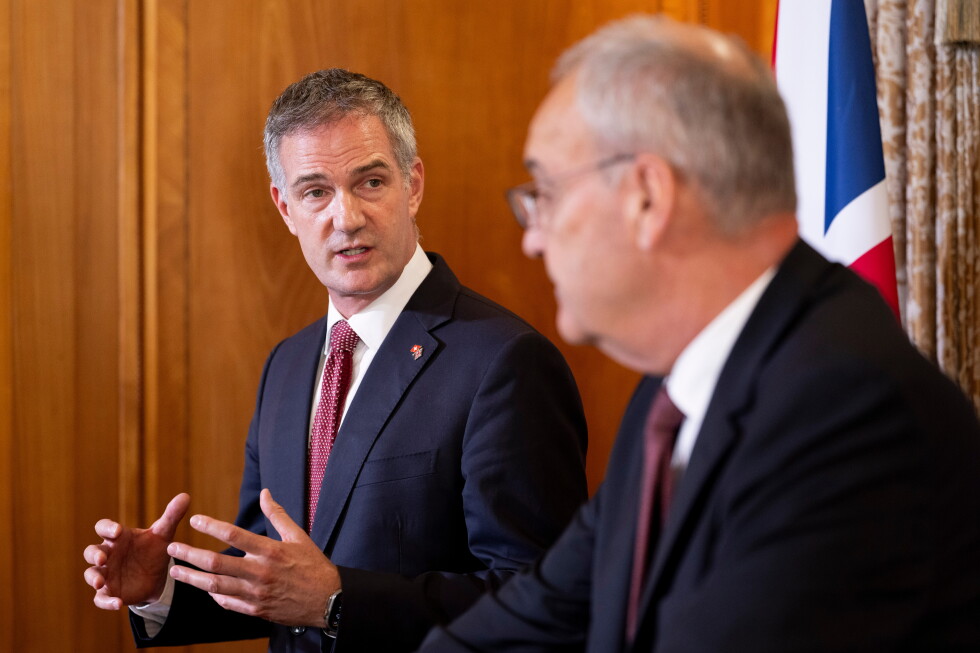
    The act puts the Argentine team at risk of formal disciplinary action from FIFA, as the organization enforces strict regulations that prohibit any form of political expression or messaging on the field of play during official international tournaments. U.K. Business Secretary Peter Kyle publicly condemned the players’ actions in comments to the BBC, labeling the banner display “entirely inappropriate.”

    Kyle emphasized that a core foundational principle of global international soccer competitions, including the World Cup, is the separation of political discourse from athletic competition. “That is now a matter for FIFA,” Kyle stated. “I expect FIFA to do its investigation thoroughly.”

    Long-simmering political tensions over the Falkland Islands have long amplified the already fierce sporting rivalry between the English and Argentine men’s national soccer teams. The remote archipelago is home to roughly 3,500 permanent residents, sitting approximately 8,000 miles (13,000 kilometers) off the coast of the United Kingdom and just 300 miles (480 kilometers) off the Argentine mainland.

    The dispute over territorial sovereignty stretches back nearly two centuries. Argentina asserts that British forces illegally seized the islands from its control in 1833, after Argentine authorities moved to assert sovereignty over the territory. For its part, the United Kingdom maintains its territorial claim dates back to 1765, and that British forces reaffirmed control in 1833 by expelling Argentine personnel that had occupied the islands.

    The conflict boiled over into open war in 1982, when Argentine military forces invaded the archipelago. The resulting 10-week conflict ended in a British victory, but left a heavy human toll: 649 Argentine troops, 255 British service members, and three civilian islanders died in the fighting. The sovereignty dispute remains unresolved to this day, with the people of the Falkland Islands overwhelmingly affirming their desire to remain a British territory in multiple public referendums.

  • Italy court to deliver verdict in deadly bridge collapse

    Italy court to deliver verdict in deadly bridge collapse

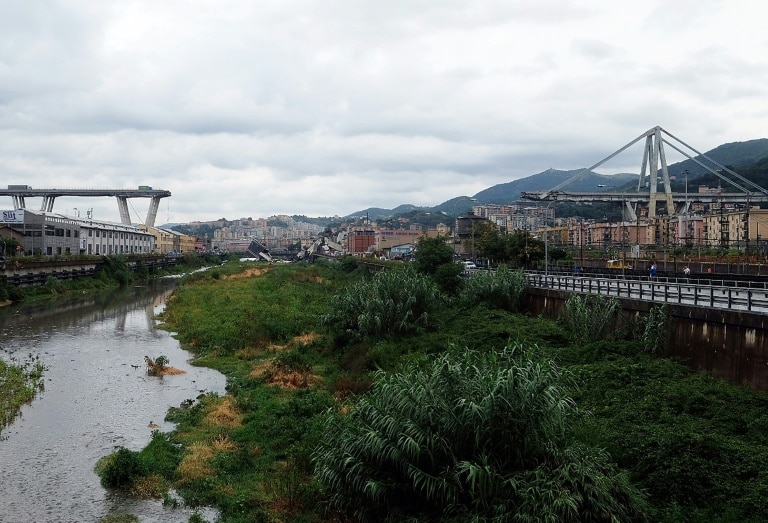
    Nearly eight years after one of Italy’s deadliest infrastructure disasters claimed 43 lives, an Italian court is scheduled to issue its long-awaited verdict on Thursday for the collapse of Genoa’s Morandi Bridge. The landmark structure, a critical link on the highway connecting France and Italy, crumbled during torrential rain on August 14, 2018, sending dozens of vehicles and their occupants plummeting into the void below. On the eve of the verdict announcement, crowds of victims’ relatives and reporters from dozens of international and domestic media outlets gathered outside the Genoa court building to await the outcome of the four-year legal process.

    Fifty-seven defendants have stood trial throughout the proceedings, facing charges that range from manslaughter and endangerment of public transport safety to falsification of official government documents. Prosecutors have collectively requested more than 400 years of combined prison sentences for all accused parties.

    For many family members, the verdict carries more symbolic than personal weight. Egle Possetti, who leads a support committee for victims’ relatives, lost her sister, nephew, niece, and brother-in-law when the bridge’s ninth pillar gave way. Speaking to reporters from AFP as she entered the court Thursday, Possetti acknowledged that a conviction would not reverse the tragedy or bring her loved ones back. “But clearly the most important thing for the victims is that the truth finally comes out,” she said. She also voiced the frustration shared by many grieving families, noting that through years of trial hearings, “not a single person has said, ‘I bear some responsibility.’ That has been hard.” The court is expected to release its ruling after 12:00 GMT.

    Investigative findings from magistrates paint a damning picture of systemic neglect. Official documents confirm that between the bridge’s inauguration in 1967 and its collapse 51 years later, no minimal structural reinforcement or critical maintenance work was ever completed on the stays of pillar nine. While limited upgrades were carried out on the adjacent 10th and 11th pillars, planned reinforcement work on pillar nine was repeatedly delayed. Lead prosecutor Walter Cotugno famously described the decaying infrastructure as “a ticking time bomb” long before the disaster occurred.

    The majority of defendants are senior executives and lead technicians from Autostrade per l’Italia (ASPI), the company that manages nearly half of Italy’s entire motorway network, and Spea, the private engineering firm contracted to oversee the bridge’s ongoing maintenance. High-profile accused include Giovanni Castellucci, ASPI’s general manager at the time of the collapse, and Antonino Galata, Spea’s former chief executive, alongside multiple senior officials from Italy’s infrastructure ministry. Castellucci faces up to 18 years in prison if convicted, as prosecutors hold him directly responsible for repeatedly postponing critical reinforcement work on pillar nine. Notably, Castellucci is already serving a prison sentence for his role in a separate 2013 highway accident that left 40 people dead when a bus crashed through viaduct barriers.

    Defense attorneys for the accused have centered their case on an alternative narrative, arguing that the collapse was caused by an unidentifiable, hidden construction defect—specifically, internal corrosion of the bridge’s support cables—rather than intentional or negligent lack of maintenance.

    While their former top executives remain on trial, both ASPI and Spea reached an out-of-court settlement with prosecutors prior to the verdict. The agreement requires the firms to pay 29 million euros ($30 million) in compensation to the Italian state. At the time of the 2018 disaster, ASPI was owned by the Atlantia group, which was controlled by Italy’s wealthy Benetton family. Widespread public outrage over the disaster and evidence of systemic neglect forced the Benetton family to sell its entire stake in the company to the Italian state in the aftermath of the tragedy.

  • UK nationalizes Chinese-owned British Steel to protect nation’s steelmaking capacity

    UK nationalizes Chinese-owned British Steel to protect nation’s steelmaking capacity

    LONDON – In a major intervention to safeguard the nation’s critical manufacturing infrastructure, the United Kingdom has taken full public ownership of British Steel, stepping in after the company’s Chinese parent firm moved forward with plans to shutter its core blast furnace operations. The Department for Business and Trade confirmed the nationalization in an official statement released Thursday, framing the decision as a critical measure to protect thousands of local jobs and uphold the UK’s long-term national economic and strategic interests.

    By bringing British Steel into public hands, the government aims to guarantee a steady domestic supply of steel for large-scale public construction projects and the UK’s defense sector, two areas that rely heavily on domestic manufacturing capacity. “British Steel now belongs to the British people, and our focus is firmly on the future: stabilizing the business, supporting the communities that depend on it, and building a sustainable, competitive, decarbonized steel sector for decades to come,” Business Secretary Peter Kyle said in the official announcement.

    An independent assessment process will now get underway to evaluate whether any financial compensation will be awarded to Jingye Group, the Chinese conglomerate that purchased British Steel in 2020. The nationalization comes more than a year after the UK government first took temporary operational control of the company, when Jingye announced it was considering permanent closure of the Scunthorpe plant’s blast furnaces, located in northern England.

    Those blast furnaces hold unique strategic importance: they are the last remaining facilities in the UK that produce virgin steel directly from raw iron ore, a process that forms the foundation of the country’s domestic steel supply chain. Steel production at the Scunthorpe site has a deep historical roots stretching back more than 130 years, tracing its origins to the UK’s Industrial Revolution, when British innovators pioneered breakthrough steelmaking technologies that transformed global manufacturing. Today, the site directly employs roughly 2,700 workers.

    In comments following the nationalization announcement, Jingye Group said it has invested more than £1.2 billion ($1.6 billion) into British Steel since acquiring the company in 2020, funds it says were used to keep operations running amid persistent production instability that threatened the plant’s viability.

  • Fujitsu and leading Japanese robotics companies to use Nvidia technology in ‘physical AI’

    Fujitsu and leading Japanese robotics companies to use Nvidia technology in ‘physical AI’

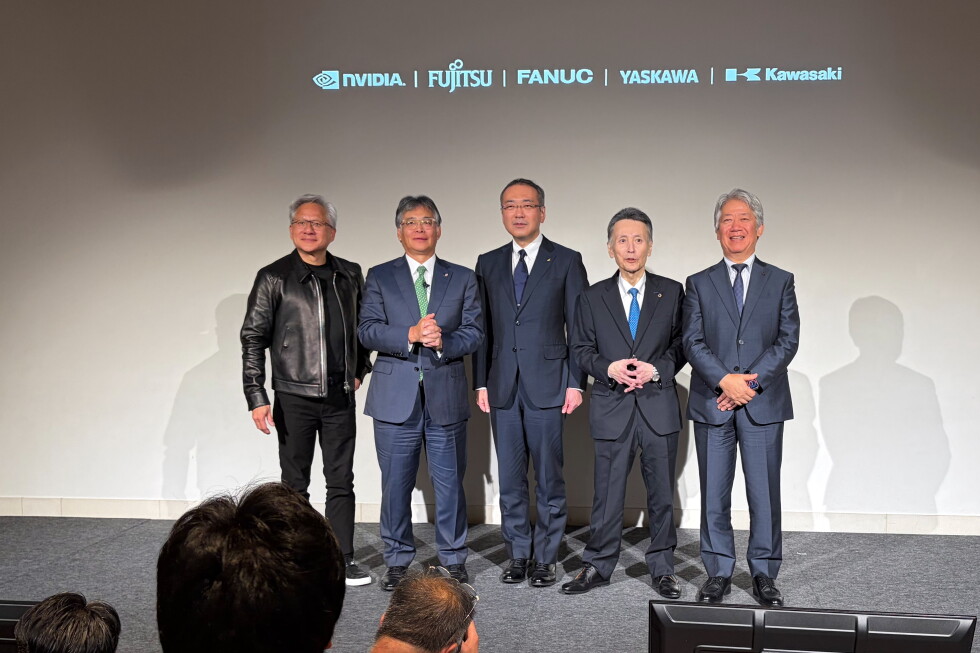
    In a landmark announcement made in Tokyo Thursday, Japanese tech and communications giant Fujitsu has partnered with U.S. semiconductor and AI leader Nvidia to launch a groundbreaking physical AI robotics initiative, bringing together Japan’s top industrial robotics manufacturers to combine the nation’s legendary manufacturing precision with cutting-edge artificial intelligence technology.

    Defined as a new category of intelligent automation, physical AI powers next-generation robots capable of independent, real-time decision-making, rather than being limited to rigid pre-programmed instructions. This technology enables these smart machines to work seamlessly and safely alongside human workers across a wide range of settings, from factory floors and residential homes to medical and care facilities.

    The partnership was formally introduced by Jensen Huang, CEO of Nvidia, and Takahito Tokita, CEO of Fujitsu, alongside chief executives from Japan’s three biggest industrial robot makers: Fanuc Corp., Yaskawa Electric Corp. and Kawasaki Heavy Industries. The new collaboration builds on a existing strategic partnership Nvidia and Fujitsu established last year, deepening their shared commitment to advancing AI-powered robotics in Japan.

    Executives at the announcement framed the initiative as a targeted solution to one of Japan’s most pressing socioeconomic challenges: an acute and growing national labor shortage, driven by the country’s status as one of the fastest-aging developed nations in the world. Beyond manufacturing roles, the leaders noted that physical AI-powered robots could fill critical gaps in elder care, supporting the growing population of older adults living alone across the country.

    Huang emphasized that physical AI is uniquely positioned to leverage Japan’s global reputation for manufacturing excellence. Autonomous moving robots carry inherent safety risks, he explained, requiring the extreme precision and quality control that Japan has long perfected. “Japan’s excellence is a philosophy, a way of life. ‘Made in Japan’ means the highest quality, the highest precision. Japan sets the standard for the state-of-the-art in modern manufacturing,” Huang said, noting that Japan’s iconic “kaizen” (continuous improvement) manufacturing philosophy aligns perfectly with the iterative development needed for safe, reliable physical AI.

    While the participating companies have not announced a specific timeline for when these physical AI robots will become widely available in everyday settings, they confirmed that the first phase of the collaboration will launch later this year. No decision has been made to establish a formal joint venture at this stage, though executives left open the possibility of that structure for future phases of the project.

    The initiative comes as Japan works to close a perceived gap in global AI development, trailing front-runners including the United States and China. The current Japanese administration under Prime Minister Sanae Takaichi has prioritized tech catch-up, recently unveiling a national strategy to mobilize more than 370 trillion yen ($2.3 trillion) in combined public and private investment for key technology sectors by 2040 — physical AI, semiconductors and data centers are all core priorities outlined in the plan.

    Nvidia, the Silicon Valley-based leader in AI computing hardware and open-source AI infrastructure, has rapidly expanded its strategic partnerships across Japan in recent years. Beyond the new robotics collaboration, the firm already has working ties with major Japanese institutions including leading domestic banks, automotive giant Toyota Motor Corp., video game developer Sega, and national research institute Riken.

  • US unveils new 25% tariff on certain imports from Brazil

    US unveils new 25% tariff on certain imports from Brazil

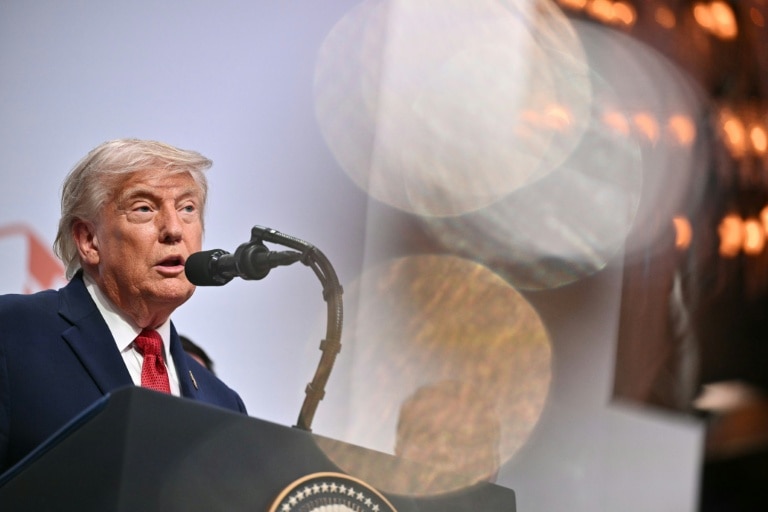
    In a move that escalates transatlantic trade tensions between the world’s two largest agricultural economies, the Trump administration formally announced a 25 percent tariff on a broad swathe of Brazilian imports this Wednesday, capping off a 12-month investigation into what Washington calls unfair Brazilian trade practices. The new levy is scheduled to enter into force on July 22, forming a core part of the administration’s push to reestablish its trade tariff agenda after a major legal setback earlier this year. In February, the U.S. Supreme Court struck down a wide range of Trump’s globally imposed tariffs, leaving the White House eager to reassert its trade authority.

    Senior U.S. trade officials confirmed that a number of key products have been granted exemptions from the new tariff, including Brazilian beef, coffee, select aircraft components, and goods that the U.S. does not manufacture domestically. The tariff action was authorized under Section 301 of the U.S. Trade Act, a statute that allows the executive branch to impose trade penalties on countries deemed to engage in unfair trade practices. Administration officials have already launched multiple other Section 301 investigations this year targeting a range of trading partners, including probes over alleged failures to combat forced labor in global supply chains.

    U.S. Trade Representative Jamieson Greer laid out the Biden administration’s — correction, Trump administration’s — case for the tariffs in an official statement, arguing that Brazil’s “unreasonable acts, policies, and practices” have harmed American commerce by unfairly advantaging domestic Brazilian producers and artificially limiting American access to Brazil, which ranks among the world’s largest export markets. Beyond general trade barriers, senior administration officials specifically called out Brazilian policies on digital trade, and flagged what Washington calls unfair competition stemming from Brazil’s state-owned instant payment system PIX. Officials also claimed Brazil grants preferential trade treatment to other major partners including Mexico and India at the expense of U.S. exporters. Greer emphasized that Washington remains open to negotiated solutions to resolve the long-standing trade issues identified in the year-long probe.
    U.S. Secretary of State Marco Rubio went further in his public criticism of Brazil’s left-wing government, saying on social media platform X that the administration of President Luiz Inacio Lula da Silva “has not negotiated with the US in good faith.” Rubio added that “Lula has put his own ego ahead of making a deal for the welfare of the Brazilian people, and these tariffs are the price for that.” A senior anonymous U.S. official rejected widespread claims that the Section 301 investigation and resulting tariff are being used for political purposes, noting that the door for diplomatic resolution remains open even after the announcement. While the administration says it does not anticipate retaliatory action from Brazil, it has explicitly warned that any reciprocal measures would be met with additional U.S. countertariffs.

    Brazil swiftly pushed back against the U.S. announcement on Thursday, with Lula’s office issuing a sharp statement rejecting the tariffs and promising reciprocal countermeasures in response. “There is no justification for unilateral measures against our country,” the statement read. Brazilian officials have repeatedly dismissed all U.S. allegations of unfair trade practices as unfounded and absurd, rejecting the core findings of the year-long American investigation.
    The tariff announcement also intersects with Brazil’s upcoming presidential election scheduled for October, where Lula, the incumbent left-wing leader, is locked in a tight race with right-wing challenger Flavio Bolsonaro, eldest son of former Brazilian president Jair Bolsonaro. Earlier this month, Flavio Bolsonaro spoke at a public hearing hosted by the U.S. Trade Representative’s office in Washington, where he urged American officials not to impose the new tariffs. Bolsonaro argued that the duties would politically benefit his rival Lula ahead of the election. This is not the first time trade tensions have flared between the two countries during this Trump administration term: last year, the White House imposed steep tariffs on Brazilian goods in response to the coup trial against Jair Bolsonaro, who is currently serving a 27-year prison sentence for his role in the 2022 Brazilian Capitol attacks. Most of those earlier tariffs were rolled back after bilateral negotiations between the two governments.

  • Messi magic sends Argentina into World Cup final as England fall short

    Messi magic sends Argentina into World Cup final as England fall short

    In a breathtaking World Cup semi-final showdown that delivered drama from the first whistle to the final stoppage time, 39-year-old Lionel Messi produced another iconic performance to steer Argentina to a dramatic 2-1 comeback victory over England, booking the South American champions a spot in Sunday’s World Cup final against European titleholders Spain.

    Played out against a backdrop of long-running historical tension between the two nations over the sovereignty of the Falkland Islands, Wednesday’s clash in Atlanta was always set to be more than just a football match. Messi acknowledged the weight of the moment after the final whistle, calling the fixture “quite a special one, especially playing against England with all the historical context.” When the full-time whistle blew, several Argentine players marked the win by displaying a banner reading “Las Malvinas son argentinas” — “The Falklands are Argentine” — a move that openly defies FIFA regulations banning political symbols from match venues.

    The match unfolded in a way that will haunt English football for years to come. Anthony Gordon put the Three Lions ahead in the 55th minute, putting England 60 minutes away from their first World Cup final appearance in six decades. But rather than pushing to extend their lead, England manager Thomas Tuchel made the controversial decision to shift to a defensive setup, substituting attacking players for defenders in a bid to protect the one-goal advantage. He substituted goalscorer Gordon for defender Ezri Konsa in the 72nd minute, a choice that immediately shifted the momentum of the game entirely in Argentina’s favor.

    Tuchel defended his call post-match, arguing that the tactical switch was a necessary response to growing gaps in England’s defense. “In the moment, no regrets. The team gave everything and we were very, very close,” he said. “Straight after our goal, without any substitutions, we conceded way too many crosses and way too many chances so we tried to help.” But leading football outlets were critical of the call. The UK’s *The Times* noted that Tuchel’s changes were only intended to hold Argentina at bay, not put the game to bed — a strategy that could never work against a side of Argentina’s quality. *The Guardian* added that the defensive shift invited Argentina to seize control of the front foot, writing that “Tuchel played with fire. Argentina dominated the closing stages. It was their attack versus England’s defence.”

    Messi capitalized on the opened space, pulling the strings for his side as they pinned England deep in their own half for the final 30 minutes. The equalizer came just after Tuchel’s reshuffle, when Messi slipped a precise pass to Enzo Fernandez outside the penalty box, who drilled a stunning shot into the net past the England keeper. With England reeling and Argentina throwing everything forward, the winning goal came in stoppage time: Messi sent a deft, pinpoint cross into the box that substitute Lautaro Martinez headed home, completing the comeback.

    England’s stars including Jude Bellingham and Harry Kane stood stunned on the pitch as Argentina celebrated. The defeat extends England’s decades-long drought of major tournament finals, marking the fourth time in the last five major tournaments that the Three Lions have reached at least the semi-final stage without claiming a spot in the final.

    For Argentina, the win keeps their historic bid for back-to-back World Cup titles alive. Should they win on Sunday, they will become the first national men’s side to claim consecutive World Cup crowns since Brazil in 1962. They will face a Spanish side that pulled off a stunning 2-0 semi-final upset over defending champions France on Tuesday, shutting down star forward Kylian Mbappe to book their place in the final. The title decider will be hosted in New Jersey this weekend.

    Messi, who is already the tournament’s joint-leading scorer with eight goals to go with four assists, has proven once again that at an age when most elite footballers have long retired, he remains the undisputed heart of the Argentine side. This is far from the first comeback the 39-year-old has dragged his side through at this tournament: in the round of 16, Argentina fought back from a two-goal deficit to beat Egypt, with Messi leading that charge as well.

    Argentine manager Lionel Scaloni praised his squad’s resilience after the semi-final win, saying “The other day I said this group never stops surprising me. And I’ll tell you the truth, we’re going to try to win, we’re going to leave everything out there. It’s incredible. We are unique, truly, and it’s not arrogance, it’s from the heart.” Tens of thousands of Argentine fans have traveled to support the side throughout this World Cup, packing the streets of Atlanta in the lead-up to Wednesday’s semi-final to cheer on their team ahead of the biggest match of the tournament so far.

  • International Cricket Council revamps formats for men’s World Cups

    International Cricket Council revamps formats for men’s World Cups

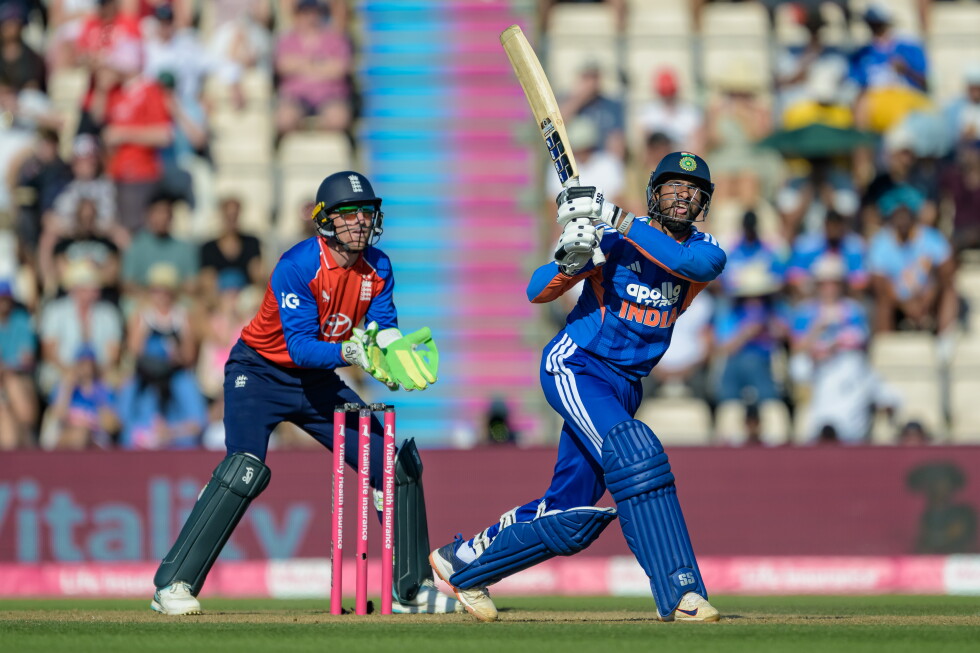
    Following weekend board meetings, cricket’s global governing body, the International Cricket Council (ICC), has announced sweeping structural changes to two of men’s cricket’s most prestigious international tournaments, introducing a new preliminary round to the 2027 50-over World Cup and redesigning the playoff pathway for the 2028 Twenty20 World Cup.

    In an official statement, the ICC framed the adjustments as a deliberate push to deliver more high-stakes competitive matches, raise overall playing standards, solidify the competitive hierarchy of top-tier international cricket, and create a more engaging experience for both participating players and global audiences.

    The traditional 50-over ODI World Cup, held on a four-year cycle, most recently wrapped up in 2023 in India, where Australia claimed its sixth title by defeating the host nation in a tightly contested 10-team final. The 2027 edition will break recent precedent with an expanded 14-team field, co-hosted across three southern African nations: South Africa, Zimbabwe, and Namibia.

    Under the new format rolled out by the ICC, the 2027 tournament will kick off with a new opening phase dubbed the “Super Series”. The three teams that secure the 12th, 13th, and 14th qualifying positions will compete in this preliminary round, with only one winner advancing to the main 12-team group stage, joining the 11 highest-ranked automatic qualifiers.

    The main group stage will split 12 teams into two groups of six. After round-robin play, the top three teams from each group, plus the highest-performing fourth-place team across both groups, will progress to the newly created Super 7 stage. This phase will use a single round-robin structure where every team faces each of the other six competitors once. The top four teams on the Super 7 standings will advance to the knockout semifinals, with the bracket pairing the first-ranked side against fourth, and second against third.

    “This structure has been designed to strengthen the competitive narrative across every stage of the event,” the ICC noted in its breakdown of the new format.

    For the 2028 T20 World Cup, co-hosted by Australia and New Zealand, the ICC has reworked the tournament’s group and playoff structure from previous editions. The 20-team tournament will retain its total size, but rearrange the initial group stage layout: instead of four groups of five, teams will be split into five groups of four for the opening round, with the top finisher from each group advancing to the next round.

    The second phase, renamed the Super 10, will split the 10 advancing teams into two groups of five for round-robin play. Unlike previous T20 World Cup formats where the top two from each second-phase group advanced directly to the semifinals, the 2028 edition introduces a new eliminator round to fill out the final four. The winner of each Super 10 group will earn an automatic semifinal spot. The second-place team from each group will then face the third-place team from the opposite Super 10 group in knockout eliminators, with the two winners claiming the remaining two semifinal positions.

    Twelve teams have already secured their place in the 2028 tournament based on results from the 2024 T20 World Cup and ICC Men’s T20 team rankings: Afghanistan, Australia, Bangladesh, England, India, Ireland, New Zealand, Pakistan, South Africa, Sri Lanka, West Indies, and Zimbabwe. Eight remaining spots will be awarded via a 16-team global qualifier tournament, with the U.S., Canada, Italy, Namibia, Nepal, Netherlands, Oman, and the United Arab Emirates already guaranteed automatic entry into that qualifier, while Scotland has earned direct placement into the European regional final.