作者: admin

  • Poland charges man allegedly paid by Russia to inflame Polish-Ukrainian tensions

    Poland charges man allegedly paid by Russia to inflame Polish-Ukrainian tensions

    In a major development that highlights ongoing Russian hybrid interference in Central European relations, Polish law enforcement officials have filed serious charges of sabotage and diversionary activity against an 18-year-old Ukrainian national, alleging the man acted on direct orders from Russian intelligence. Authorities claim the suspect was paid through cryptocurrency to carry out a coordinated campaign of vandalism targeting World War II-era memorials honoring Polish citizens killed in wartime massacres carried out by Ukrainian nationalist forces, all as part of a broader plot to stoke deep division between Warsaw and Kyiv.

    Poland has been one of the most vocal and unwavering backers of Ukraine since Russia launched its full-scale invasion in February 2022, providing critical military aid, shelter for millions of Ukrainian refugees, and consistent diplomatic support for Kyiv’s bid to join NATO and the European Union. Even with this robust alliance, long-simmering historical tensions over World War II-era violence have recently boiled over, creating a opening that Russian intelligence has long sought to exploit to fracture the bilateral relationship. Anti-Ukrainian sentiment has slowly but steadily grown across parts of Polish society in recent months, a shift that Warsaw has repeatedly tied to deliberate Russian influence operations.

    The recent dispute between the two nations reached its lowest point in late June, when Polish president Karol Nawrocki revoked the highest Polish state honor previously awarded to Ukrainian president Volodymyr Zelenskyy. The move came in response to Zelenskyy’s decision to name a Ukrainian military unit after the Ukrainian Insurgent Army (UPA), a mid-20th century paramilitary force that fought for Ukrainian independence against both Nazi Germany and the Soviet Union. While the UPA holds a complex place in Ukrainian nationalist history, it is widely accused by Polish historians and officials of perpetrating the mass killing of an estimated tens of thousands of Polish civilians between 1943 and 1944, primarily in the occupied regions of Volhynia and Eastern Galicia.

    According to official details released by Poland’s Internal Security Agency (ABW), the charged suspect committed 47 separate criminal offenses between November 2024 and August 2025. Beyond the vandalism of memorial sites, prosecutors accuse the young man of plotting a high-stakes drone sabotage attack that targeted the motorcade of the Polish president during the country’s annual August 15 military parade held in central Warsaw. The suspect was taken into police custody by ABW agents before the parade could begin, preventing any attempt to carry out the attack. Investigators confirmed the suspect was recruited remotely through online channels, with all payments for his activities made in untraceable cryptocurrency.

    In a public statement announcing the charges, the ABW emphasized that the case lays bare the systematic operating model of Russian intelligence services, which work to advance Moscow’s geopolitical goals by fueling historical and social conflict between neighboring states. This recent disruption of a Russian sabotage plot comes as Poland and the Baltic states have issued repeated warnings in recent months that Moscow is preparing a range of limited military and hybrid provocations targeting NATO’s eastern flank. This is not the first Russian-linked scheme uncovered in Poland this year: back in late June, the ABW announced it had dismantled another Russia-financed network designed to co-opt members of the large Ukrainian refugee community in Poland to organize anti-government protests and deepen social unrest across the country.


  • Hong Kong official says booksellers should ensure titles won’t harm national security after arrests

    Hong Kong official says booksellers should ensure titles won’t harm national security after arrests

    In the latest high-profile police operation focused on independent booksellers in Hong Kong, five individuals connected to two local bookstores were taken into custody on Wednesday, marking the third mass arrest targeting independent book retailers in the city within just four months. The next day, Hong Kong’s Secretary for Security Chris Tang defended the enforcement action during a press briefing at the city’s legislative building, pushing back against growing public criticism over vague boundaries for permissible content and threats to long-held free expression rights in the special administrative region.

    Tang emphasized that the requirements of Hong Kong’s national security legislation are clear and unambiguous, drawing a parallel to common consumer protection rules to frame the responsibility of book vendors. “If you are a bookseller, you have the responsibility to make sure the books you sell won’t endanger national security. It’s equal to, for example, when you are selling food, you need to ensure the food won’t cause a stomach ache and is not either poison or illegal,” Tang told reporters.

    When pressed on whether authorities would release a public, standardized list of banned publications to give vendors clear guidance, the top security official rejected the proposal, arguing that a pre-approved list would undermine enforcement efforts against materials intended to undermine national sovereignty. “We will not let criminals off the hook like this,” Tang added.

    Wednesday’s operation targeted two distinct independent book outlets: Have A Nice Stay, a relatively new shop founded by a collective of former local journalists, and Greenfield Book Store, a long-standing independent retailer that has operated in Hong Kong for years. Police confirmed in an official statement that the five arrestees face allegations of displaying and distributing seditious materials that are designed to stir up widespread resentment and hatred toward the Hong Kong government, the city’s judiciary, and local law enforcement institutions.

    In what serves as a striking precursor to the raid, Have A Nice Stay had already publicly announced plans to permanently cease operations on August 30. In a social media post shared ahead of the police action, the bookstore cited two core reasons for its closure: persistent financial struggles, and the uncertainty created by an unclear “red line” defining acceptable content. The shop’s management noted that it lacks the resources and institutional capacity to vet every title it carries for compliance with national security standards, leaving it unable to operate without constant risk of penalty.

    This week’s arrest operation is the third crackdown on independent booksellers since March, when police detained the owner and multiple staff members of Book Punch, another independent Hong Kong bookstore, also on suspicion of selling seditious publications. Among the titles that reportedly drew law enforcement attention in that case was a biography of Jimmy Lai, the former pro-democracy media tycoon who was ultimately sentenced to 20 years in prison following a high-profile national security trial. A second round of arrests followed in June, when police took two booksellers into custody on charges of selling seditious publications and receiving illegal funding from foreign political organizations.

    Critics of the ongoing enforcement actions argue that the broad, flexible definition of seditious content and the refusal to issue a clear public list of prohibited titles creates a chilling effect on free expression in Hong Kong, forcing independent book retailers to self-censor broadly to avoid legal consequences, and eroding the city’s tradition of open access to diverse political and social commentary.

  • Aer Lingus proposes cutting 500 jobs under savings plan

    Aer Lingus proposes cutting 500 jobs under savings plan

    Irish flag carrier Aer Lingus has launched a sweeping cost-reduction initiative that includes proposed cuts to 500 full-time positions and a major reshuffle of its transatlantic and European route network, after reporting a steeper-than-expected €103 million loss in the first quarter of 2026.

    The airline, which currently employs roughly 6,000 workers across Ireland, confirmed that the headcount reductions will be spread across three core operational areas: 290 roles at its Dublin Airport headquarters, 140 cabin crew positions, and 70 pilot jobs are currently marked for elimination.

    Alongside workforce adjustments, Aer Lingus will implement a 6% overall cut to flight capacity by axing low-performing routes that have failed to meet financial targets. A phased rollout of network changes will begin in late September 2026 and continue through summer 2027, with four full long-haul transatlantic routes permanently ending service: Denver, Minneapolis, Las Vegas, and Split. Three additional European routes – Frankfurt, Hamburg, and Malta – will be scaled back to seasonal summer-only operations, as will the transatlantic route to Seattle.

    As a result of the capacity reduction, six aircraft will be taken out of regular operation for peak summer 2027: two wide-body A330 jets and four narrow-body A320 aircraft. The carrier has assured customers already holding bookings for canceled routes that it will reach out directly to offer either alternative flight re-accommodation or full refunds for unused tickets.

    Aer Lingus leadership has framed the restructuring as a necessary response to mounting industry headwinds, including a persistently challenging global macroeconomic environment, rising jet fuel prices, and intensifying competition on high-traffic transatlantic routes between Europe and North America. The ultimate goal of the cost-cutting plan is to boost the airline’s operating margin to a target range of 12% to 15%, a threshold the company says is required to attract new capital for long-term growth and expansion.

    “The transformation we are undertaking today is designed to set Aer Lingus up for sustainable success for decades to come,” said Chief Executive Lynne Embleton in a prepared statement. Embleton added that the adjustments will position the carrier to deliver on its core ambition: becoming the preferred airline for travel between Europe and North America, while continuing to deliver significant economic benefits to Ireland as a whole.

    A company spokesperson emphasized that the upcoming stakeholder consultation process will prioritize minimizing mandatory redundancies where possible, with a focus on identifying voluntary solutions and aligning operational needs to secure future investment in the business. “The more cost efficient and productive we are as an organization, the more we will be able to deliver on our long-term network and growth ambition,” the spokesperson added.

  • Protests in Ukraine’s cities against Zelensky’s removal of defence minister

    Protests in Ukraine’s cities against Zelensky’s removal of defence minister

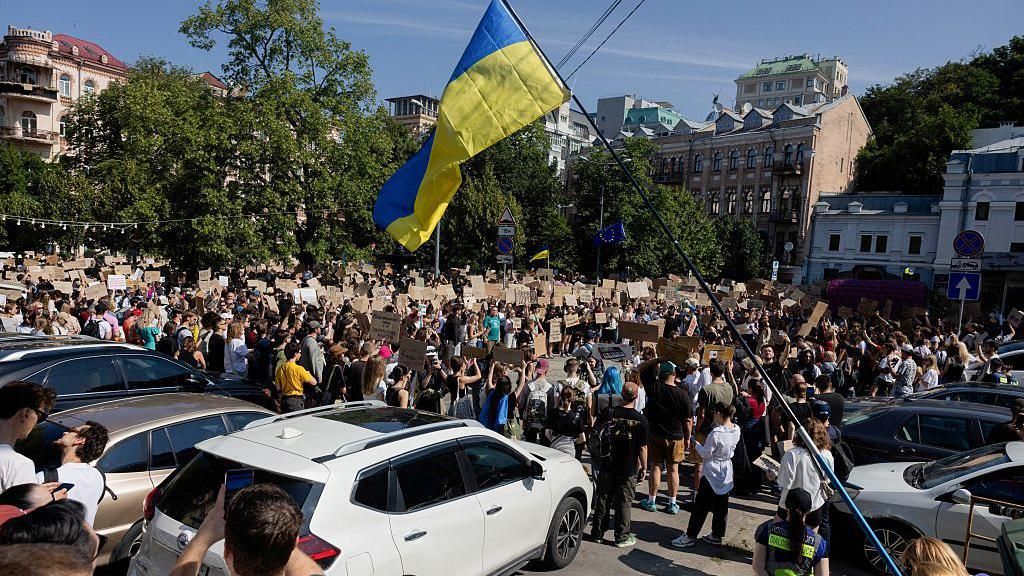
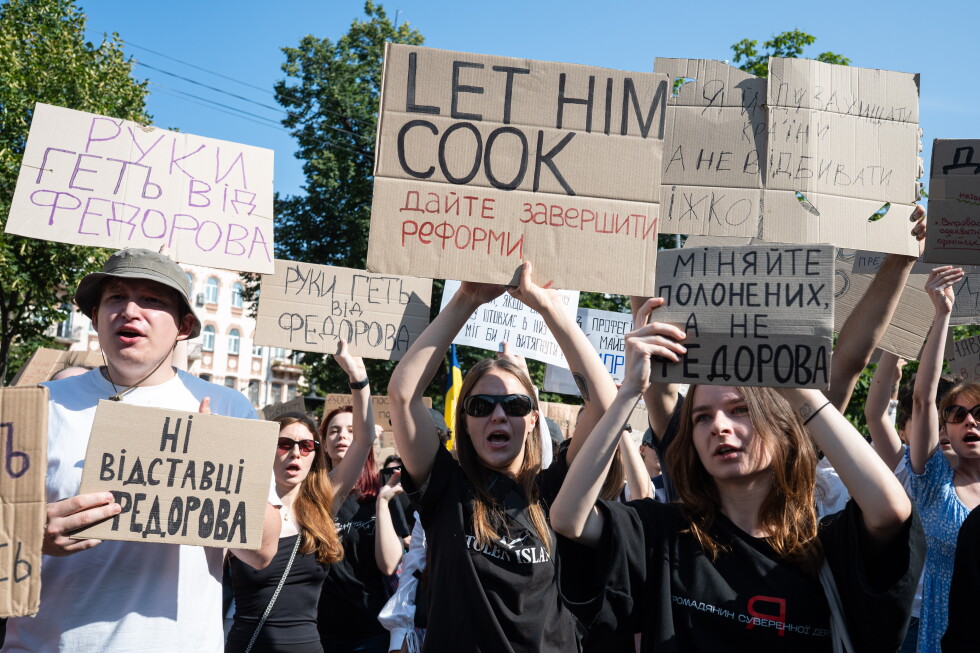
    On a Thursday morning, thousands of mostly young demonstrators packed central Kyiv’s Ivan Franko Square, voicing fierce public pushback against Ukrainian President Volodymyr Zelensky’s unexpected dismissal of the widely popular Defense Minister Mykhailo Fedorov. The demonstrations, which have spread to multiple major Ukrainian cities, mark one of the most significant public displays of dissent against Zelensky’s administration since Russia’s full-scale invasion in 2022.

    Protesters held hand-painted signs reading “Hands off Fedorov” and “Stop sabotaging victory,” while chanting calls of “Shame” toward the presidential office. Some demonstrators carried blunt messages, including one that read “What are you doing, idiot?” held by two young protesters, with a second sign noting the demonstration was “for all of those who couldn’t be here” — a reference to troops deployed on the front lines who cannot participate in public protests.

    Fedorov, 35, only stepped into the defense minister role in January 2026, but in his six months in office he earned broad acclaim from military personnel, civilian commentators, and segments of Ukrainian civil society for his aggressive anti-corruption reforms, data-driven approach to frontline operations, and focus on modernizing Ukraine’s military through high-tech innovation. A former digital transformation minister, Fedorov had long been a key figure in Ukraine’s war effort: in the opening weeks of Russia’s 2022 full-scale invasion, he organized the volunteer “IT Army of Ukraine,” a network of global hackers that launched coordinated cyberattacks against Russian government and military targets. He later led the groundbreaking “Army of Drones” fundraising initiative that sourced thousands of unmanned aerial vehicles for Ukrainian forces, and pioneered a gamified incentive system that awarded units credits for destroying Russian military assets.

    After taking the defense ministry post, Fedorov doubled down on his modernization agenda, pushing to cut through layers of entrenched bureaucracy and root out lingering Soviet-era institutional mindsets that many Ukrainians blame for slowing military progress. His tenure included a high-profile request to SpaceX founder Elon Musk to restrict Russian access to Starlink satellite services, a move that severely disrupted Russian frontline drone operations and advances. Just last month, Fedorov led Ukrainian defense efforts in a series of devastating mid-range drone strikes on Russian-occupied Crimea, publicly vowing to fully cut the peninsula off from Russian control.

    To date, Zelensky has offered no public explanation for his decision to remove Fedorov, a silence that has amplified public and elite frustration with the sacking. Lawmakers were scheduled to hold a confirmation vote later Thursday on Zelensky’s nominee to replace Fedorov: Ihor Klymenko, the current head of Ukraine’s interior ministry.

    Multiple unconfirmed theories have emerged to explain the dismissal. Some Ukrainian political and military observers point to growing tensions between Fedorov, a young reformer focused on asymmetric high-tech warfare, and Ukraine’s more traditionally minded Commander-in-Chief Oleksandr Syrskyi. Others suggest the move stems from criticism that Fedorov moved too slowly to implement sweeping overhauls of Ukraine’s military mobilization system, a deeply contentious issue in the country amid ongoing heavy frontline casualties.

    The sacking has already drawn sharp condemnation across Ukrainian society, particularly among active-duty military personnel. “This is the worst mistake Zelensky has made during his entire presidency,” an active-duty Ukrainian soldier named Oleksandr told the BBC. Oleksandr, who enlisted earlier this year specifically because he trusted Fedorov’s leadership and vision, added: “I don’t know anyone who supports the decision to replace him. Not within the army, not in society.”

    Maria Lavrynets, 31, a protester in central Kyiv, framed the demonstration as a defense of Ukraine’s war progress and frontline troops. “I have lots of friends in the military. Lots of them died. I don’t want this to go on,” she said. “We see [Fedorov’s] results. We see the motivation of the soldiers, we should stand for them.”

    Senior military figures have also joined the backlash. Pavlo Yelizarov, a respected commander of one of Ukraine’s most effective drone units, resigned from his post as deputy commander of the Ukrainian Air Force in protest. He called Fedorov’s sacking “a great evil for the country’s defence capability.”

    Prominent blogger Serhii Sternenko, who was brought into the defense ministry as an advisor by Fedorov, hailed his former boss as “the best minister of defence in our entire history.” In a public statement, Sternenko bemoaned the “bureaucratic obstacles and artificial delays” that had blocked Fedorov from implementing deeper institutional reforms, implying that old-guard opposition had led to his ouster.

    In a brief Facebook post published hours after his dismissal, Fedorov did not criticize Zelensky or the presidential administration, instead highlighting his tenure’s achievements and reaffirming his commitment to the war effort. “I will continue… to defeat the enemy through asymmetry, speed of innovation, and organisational strength,” he wrote.

  • ASIC warns of sophisticated pump-and-dump scams targeting elderly Australians

    ASIC warns of sophisticated pump-and-dump scams targeting elderly Australians

    Australia’s corporate investment regulator, the Australian Securities and Investments Commission (ASIC), has issued an urgent public warning over a sharp rise in increasingly sophisticated pump-and-dump investment scams that have stolen millions of dollars from vulnerable Australian citizens, with elderly Australians bearing the brunt of the harm.

    These coordinated scams operate by leveraging deceptive tactics that many investors struggle to identify: scammers impersonate well-known financial institutions, forge endorsements from high-profile respected finance industry figures, and lure victims into private messaging groups on platforms such as WhatsApp. Once recruited, victims are pressured to purchase shares of low-value, lightly traded public companies to artificially inflate the stock price. After the price reaches a targeted peak, scammers sell off all of their own holdings for a profit, which triggers an immediate collapse in the share price and leaves victim investors holding worthless assets worth only a fraction of their original investment. What makes these scams particularly convincing, ASIC officials note, is that victims actually purchase legitimate shares through registered retail brokers, leading many to mistakenly trust the scheme is authentic.

    One recent, well-documented example illustrates how destructive these scams can be: a targeted stock’s price surged rapidly to nearly $US11 before crashing back to just $US1 in a matter of days, erasing nearly all of the victims’ investment overnight. Scammers have repeatedly used counterfeit endorsements and stolen identities of prominent finance experts; in one high-profile case, scammers created a fake social media post carrying the Commonwealth Bank logo, featuring a man impersonating former CommSec economist Tom Piotrowski to push fraudulent stock recommendations.

    Testimonies collected by ASIC from scam victims lay bare the catastrophic personal and financial toll of these schemes. One 74-year-old retired victim, who was lured into the scam via the fake Piotrowski post, explained how the scammers built trust by sharing a few small, initially profitable stock tips before pressuring her to invest increasing amounts of her retirement savings. The scam included forged branding from both ASIC and the Australian Financial Complaints Authority (AFCA), leading her to trust the offering was legitimate. “It had the logo, it had ASIC’s name on it, and it had AFCA’s name on it. Now if you see that, how can it be wrong?” she said, noting that after the share price collapsed overnight, she was left unable to return to work and surviving on a small aged pension. Another anonymous victim described being so traumatized by the loss that he did not leave his apartment for a full month. Reports from victims document life-altering harm including ruined retirement savings, home foreclosures, and even relationship breakdowns leading to divorce.

    ASIC data confirms that these pump-and-dump scams are growing at an alarming rate, with scammers continuously refining their tactics to appear more legitimate. “These scams are becoming increasingly sophisticated, and scammers are exploiting the trust Australians place in recognised experts, financial institutions and investment brands by faking their platforms and endorsements,” ASIC chair Sarah Court explained in the regulator’s warning. Court emphasized that legitimate investment opportunities never come from unsolicited messages from strangers on social media or messaging apps, and urged all Australians to treat any unsolicited stock tip shared through platforms such as WhatsApp or Telegram as a scam. The regulator has called on the public to remain extremely cautious of any investment opportunity promoted through social media or private messaging groups, particularly those that use well-known public identities to build credibility.

  • World Rugby bans Italy coach Gonzalo Quesada for 2 matches over referee comments

    World Rugby bans Italy coach Gonzalo Quesada for 2 matches over referee comments

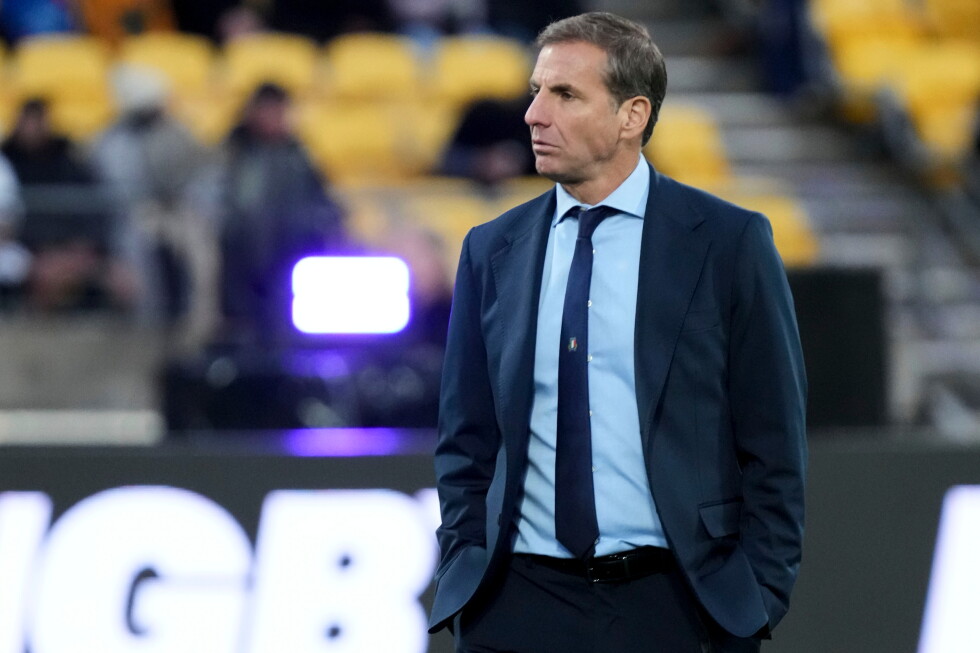
    World Rugby has handed Italy men’s national rugby union head coach Gonzalo Quesada a two-match suspension, marking one of the first high-profile sanctions under the governing body’s sweeping new policy aimed at cracking down on abuse toward match officials. The suspension, announced by World Rugby on Thursday, was triggered automatically by critical comments Quesada made in broadcast interviews following Italy’s 47-17 defeat to the All Blacks (New Zealand) in last Saturday’s Nations Championship fixture held in Wellington.

    The controversial turning point of the match came roughly 30 minutes before full-time, when Italian lock Niccolò Cannone was first issued a yellow sin-bin card by referee Luc Ramos for a head-butting incident. The foul was later upgraded to a permanent red card following a video review by the match’s officiating team, forcing Italy to play the remainder of the test with 14 players. Cannone has already received his own separate four-match suspension for the incident.

    Under the terms of Quesada’s ban, the coach is barred from all match-day activities and prohibited from entering the stadium for Italy’s next two scheduled Nations Championship matches. He will miss this Saturday’s test against Australia in Perth and a home fixture against South Africa scheduled for November 7 in Turin. Quesada retains the right to file an appeal against the automatic sanction.

    In his public post-match comments aired after the loss, Quesada acknowledged that New Zealand earned its lopsided win, noting “the All Blacks absolutely deserved the win; they played an extraordinary game.” Even so, he argued that officiating mistakes contributed significantly to the final scoreline, saying “I think the refereeing team was partly to blame for the score. They made a lot of mistakes today.” He also pushed back against the red card decision for Cannone, calling the call overly harsh. “I think the decision against Niccolò was harsh. It obviously forced the team to play with 10 men for a very long time. Every minute against the All Blacks lasts more than 60 seconds; playing with 10 men against them is really tough.”

    World Rugby’s new automatic sanction process for official abuse, rolled out across all international rugby competitions earlier this month, was first approved during the governing body’s annual Shape of the Game forum held in London last February. The policy is explicitly designed to target critical public comments about officials, which World Rugby says have become a foundational driver of a sharp rise in unacceptable harassment and direct threats toward match officials at all levels of the sport. The framework’s automatic suspension rule is intended to deter harmful rhetoric before it translates to offline harm for the sport’s referees and officiating teams.

  • Bellingham slapped Argentina substitute after England exit

    Bellingham slapped Argentina substitute after England exit

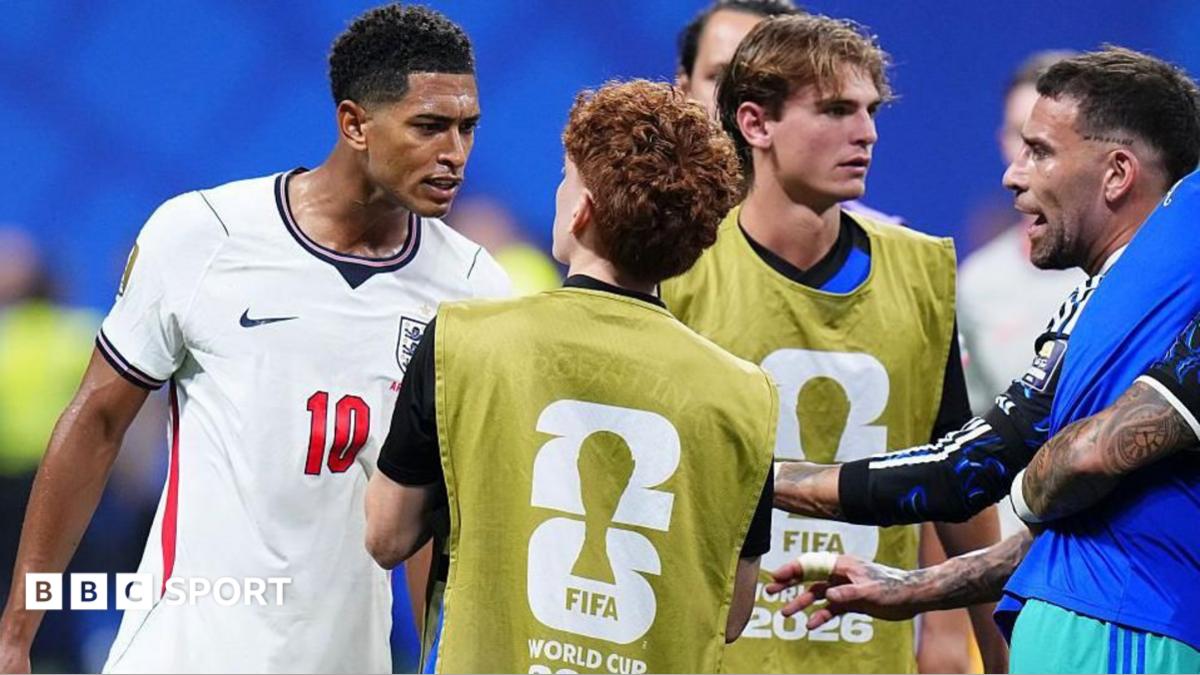
    England’s 2026 FIFA World Cup campaign suffered a heartbreaking 2-1 semi-final defeat to Argentina on Wednesday, and the final whistle brought more than just disappointment for the Three Lions — it sparked an on-pitch altercation that has put star midfielder Jude Bellingham at risk of disciplinary action. The dramatic clash, which unfolded in Atlanta immediately after full-time, has become one of the most talked-about talking points from a tense, feisty encounter that saw Argentina advance to the World Cup final.

    The sequence of events began long before the final whistle, however. After Argentina playmaker Enzo Fernandez scored an 85th-minute equalizer to cancel out England’s early second-half lead, unplayed Argentina substitute Valentin Barco ran onto the pitch to celebrate directly in front of the England squad. Barco, a 21-year-old full-back who currently plies his trade at French club Strasbourg and is heavily linked with a summer transfer to Chelsea, had only featured once previously in the tournament, coming on as a late substitute in Argentina’s group stage victory over Jordan. Former England goalkeeper Paul Robinson, who was commentating on the match for BBC Radio 5 Live, slammed Barco’s celebration as “probably the worst example of sportsmanship we’ve seen at this World Cup”.

    When full-time finally came after Lautaro Martinez headed a stoppage-time winner for Argentina to end England’s title hopes, Barco was on the pitch hugging his teammates in the area close to Bellingham. That was when the 23-year-old England star, who finished the tournament with six goals to his name, approached Barco and struck the back of his head, triggering a small melee that drew in players from both national sides before Bellingham departed the scene.

    The semi-final was a tense, physical affair from its opening minutes. American referee Ismail Elfath struggled to control the tempers flaring on both sides, with the first half alone producing 19 fouls. Early in the fourth minute, Bellingham already had a verbal confrontation with Argentina captain Lionel Messi after a foul on England midfielder Elliot Anderson. Bellingham later downplayed that exchange, telling reporters post-match: “We were really just discussing a foul, actually. It wasn’t anything bad. I’m sure everyone will do their thing and make it a big deal, but it was nothing.”

    Now, attention has turned to whether FIFA’s disciplinary committee will take formal action against Bellingham for violent conduct. If found guilty, the Real Madrid star would face a suspension for England’s upcoming bronze medal match against France, scheduled to kick off at 22:00 BST this Saturday in Miami. However, football rules and early analysis suggest a lesser outcome is more likely. According to the laws of the game, a deliberate strike to an opponent’s head does not qualify as a red-card offense if the force used is deemed negligible. Most analysts expect FIFA to classify Bellingham’s action as petulant behavior rather than violent conduct, which could reduce or eliminate any potential suspension.

    The result of the semi-final ended England’s dream of lifting the 2026 World Cup trophy, with Argentina progressing to face their third final in modern World Cup history, a run that has drawn widespread praise from fans and pundits alike, with many crediting Messi’s leadership for the side’s deep run in the tournament. The loss for England has also sparked debate over whether manager Thomas Tuchel’s defensive tactics contributed to the side’s late collapse, with critics labeling the team’s second-half performance “passive” after holding the lead.

  • Donald Trump is running out of options in Iran

    Donald Trump is running out of options in Iran

    Eight weeks after a temporary ceasefire between the United States and Iran took hold, large-scale armed conflict has erupted once again in the Middle East. On July 8, former U.S. President Donald Trump announced that the June truce was formally terminated, and immediately ordered the U.S. military to launch a wave of intensive airstrikes targeting Iranian positions, alongside the full reimposition of a crippling economic blockade on the Islamic Republic.

    In addition to military strikes, the Trump administration has revived a series of hardline threats first issued earlier in the ongoing conflict. Among these menacing warnings are suggestions of deliberate strikes on Iranian civilian infrastructure and a potential military seizure of Kharg Island, the critical hub that hosts the vast majority of Iran’s oil export and processing infrastructure.

    The conflict, initially launched in partnership with Israeli Prime Minister Benjamin Netanyahu with the stated goals of curbing Iran’s nuclear program and potentially toppling the country’s ruling regime, has seen its strategic center of gravity shift dramatically over time. Today, hopes inside the White House for a negotiated agreement to resolve Iran’s nuclear activities have all but faded. Instead, Trump has framed his latest escalation as a pressure campaign to force Tehran to abandon its claimed control over the Strait of Hormuz, a critical chokepoint through which roughly a fifth of global oil supplies transit daily. The U.S. aims to restore the pre-war status quo of unimpeded free passage through the waterway, a move Trump claims would stabilize jittery global energy markets.

    But analysts warn this rebooted strategy faces the same fatal flaws that derailed U.S. efforts from the start of the conflict: none of the pressure tactics Trump is now employing delivered acceptable outcomes for Washington in the past, and there is little evidence they will succeed this time around. Trump’s reliance on the same failed playbook lays bare just how narrow the administration’s viable options have become to resolve the crisis it created.

    Today, the Strait of Hormuz has displaced nuclear concerns as the central flashpoint of the conflict. Iran’s top negotiator Mohammad Bagher Ghalibaf has asserted that future transit through the strait must operate under “Iranian arrangements,” meaning commercial vessels would only be allowed passage on terms set by Tehran. This demand is categorically rejected by Washington, which remains committed to restoring open, unregulated passage.

    To understand why Washington has failed to achieve this goal after months of conflict, it is necessary to examine the limitations of the three main levers of U.S. power: military, diplomatic, and economic. Militaey analysts note that no single power can ever exercise full, uncontested control over the 21-mile-wide strait, which is surrounded by Iranian territory and a contested space where multiple global powers project military force. For Iran, however, full territorial control is not required to advance its strategic goals. Tehran only needs to maintain a credible enough threat to commercial shipping to deter insurers and vessel operators from transiting the waterway.

    Iran retains a large, well-concealed stockpile of anti-ship missiles, attack drones, and fast attack craft well-suited for harassing commercial and military vessels, a supply the Central Intelligence Agency confirms remains abundant despite months of U.S. strikes. Eliminating these capabilities entirely would require the U.S. to seize and occupy large swathes of Iranian coastal territory, a mission that would almost certainly result in heavy U.S. casualties with no guarantee of long-term success.

    A move to seize Kharg Island, while feasible in an initial invasion, would also carry enormous long-term risk. Any U.S. occupation force stationed on the island would remain highly vulnerable to retaliatory Iranian missile and commando attacks, and a prolonged occupation would almost certainly produce steady American casualties, making it impossible to hold the island as a lasting negotiating leverage.

    While deliberate strikes on civilian Iranian targets would violate international law and carry significant ethical costs, Trump appears to be gambling that this pressure will force Tehran back to negotiations. But the far more likely outcome is a wave of devastating Iranian retaliation targeting energy infrastructure and civilian sites across the Persian Gulf, which would only deepen regional instability and drive global energy prices even higher.

    The well-documented risks and high probability of failure of these military options pushed the Trump administration to explore diplomatic solutions over the past several months, but those efforts have also come up empty. Diplomatic outcomes almost always reflect the balance of power on the battlefield, and with Washington lacking a viable military option to roll back Iran’s influence over the strait, Tehran has no incentive to concede its core strategic demand. Mohsen Rezaee, an adviser to Iranian Supreme Leader Mojtaba Khamenei, recently described Iran’s strategic influence over the strait as “more important than dozens of nuclear bombs,” a comment that underscores the centrality of the waterway to Iran’s national security calculations. Control of the strait gives Tehran irreplaceable leverage over Washington, and it will not abandon that advantage without significant concessions that the Trump administration has so far refused to offer.

    On the economic front, a prolonged full blockade of Iran’s ports represents the most effective tool the U.S. has to inflict pain on the Iranian government. Months of economic pressure have already fueled widespread domestic discontent: high inflation and widespread supply shortages sparked a wave of mass unrest across Iran in early 2026, which the Iranian regime put down with brutal force. The Trump administration is betting that further economic strain will erode public support for the regime enough to force concessions.

    But the economic blockade inflicts pain on both sides. As long as the blockade remains in place, Iran will continue to disrupt oil and gas transit through the strait, pushing up global energy prices and creating significant domestic political headwinds for Trump ahead of upcoming elections. The blockade also imposes massive sustained costs on the U.S. military, requiring a permanent large deployment to the Gulf that strains American military resources already stretched thin by competing commitments in Europe and the Indo-Pacific. It cannot be maintained indefinitely. When the blockade is eventually lifted and U.S. forces draw down, Iran’s geographic proximity to the strait means it will immediately be able to resume disrupting shipping, erasing any gains the blockade achieved.

    In the end, Trump’s escalatory moves have left the United States backed into an inescapable corner. For all of America’s overwhelming conventional military power, there are hard limits to what military force can achieve in this conflict. In a war of his own making, Trump is now running headlong into those limits, with no clear path out.

  • Protesters rally in Kyiv as Zelenskyy moves to oust Ukraine’s defense minister

    Protesters rally in Kyiv as Zelenskyy moves to oust Ukraine’s defense minister

    KYIV, Ukraine – As Ukraine’s prolonged defense against Russia’s full-scale invasion nears its four-and-a-half year mark, a sweeping government reshuffle initiated by President Volodymyr Zelenskyy has sparked public unrest and emerged as an unexpected test of the president’s political authority. On Thursday, hundreds of demonstrators assembled in central Kyiv, the same day Ukraine’s parliament, the Verkhovna Rada, gathered to vote on a new prime minister as part of the restructuring.

    At the center of the controversy is the impending departure of 35-year-old Defense Minister Mykhailo Fedorov, a reformist leader widely credited with leveraging his technological expertise to drive measurable improvements in Ukraine’s military performance against Russia’s larger, better-resourced armed forces over recent months. Fedorov has only held the defense minister post since January this year, just six months before his anticipated exit.

    Zelenskyy has not publicly shared any official explanation for Fedorov’s removal. Unconfirmed reporting from Ukrainian media has pointed to escalating friction between Fedorov and Gen. Oleksandr Syrskyi, Ukraine’s 60-year-old armed forces commander. Syrskyi, a veteran military leader who organized Kyiv’s successful initial defense shortly after Russia’s 2022 invasion and later led a game-changing 2022 counteroffensive that reclaimed large swathes of the Kharkiv region, has been a polarizing figure among segments of the Ukrainian public.

    Protesters, most of whom were young Ukrainians, gathered in downtown Kyiv chanting Fedorov’s name in a show of public support, while directing sharp criticism toward Syrskyi. Demonstrators called for Syrskyi’s resignation and chanted slogans demanding a NATO-aligned, modern military for Ukraine. The protest spread beyond the capital, with demonstrations also organized in the central Ukrainian city of Dnipro and the southern Black Sea port of Odesa.

    Bohdan Huryak, a Kyiv resident who attended the downtown protest, told the Associated Press he was deeply shocked and angered by the decision to remove Fedorov. “I’m not deeply invested in the internal political debates, but this is a person who shows results on the battlefield, we see results, we feel the fighting spirit and confidence in victory rising,” Huryak said. “And then, six months later, he is removed from office? Come on.”

    This is not the first time public protests have forced a course correction from Zelenskyy since the 2022 full-scale invasion. In July 2023, large-scale street demonstrations broke out over a controversial draft law that would have restricted the independence of Ukraine’s anti-corruption watchdog bodies. At the time, the public outcry marked the first major threat to Zelenskyy’s leadership stability, prompting the president to quickly reverse the policy.

    Long before taking over the defense portfolio, Fedorov built a reputation as a progressive modernizer leading Ukraine’s digital transformation agenda. He gained widespread public popularity for spearheading the rapid development and deployment of innovative drone technology that has become a critical asset on the front lines, as well as rolling out widely praised e-government platforms that streamlined public services.

    After taking the defense minister post, Fedorov launched ambitious plans for sweeping military reform. In his opening remarks, he publicly disclosed the scale of long-standing challenges within the military, acknowledging roughly 200,000 troop desertions and an estimated 2 million cases of draft dodging that had weakened Ukraine’s fighting capacity.

    In a series of social media posts confirming his dismissal late Wednesday, following days of unconfirmed media speculation about his exit, Fedorov laid out his key achievements during his short tenure. He wrote that he made the risky decision to reallocate budget funds originally earmarked for military salaries toward expanding mid-range strike capabilities, long-range fiber-optic drones, advanced reconnaissance systems and other critical battlefield technologies.

    Fedorov also highlighted progress on expanding domestic and international drone procurement, finalizing contracts for additional Patriot air defense systems, completing Ukraine’s first successful domestically developed ballistic missile tests, and overhauling the country’s opaque and inefficient military procurement system.

    Even as he celebrated his progress, Fedorov admitted he had been unable to complete all of his planned reforms. He wrote that he failed to finish the full organizational restructuring of the Defense Ministry to align with NATO standards, shift all military procurement to open competitive bidding processes, and embed a widespread culture of accountability across the department. He added that while he had removed dozens of obstructive officials from their posts during his tenure, “it was necessary to dismiss even more people who were hindering the changes.”

    As part of the broader government reshuffle, Zelenskyy has nominated Serhii Koretskyi, the current chief executive of Ukraine’s state-owned energy giant Naftogaz, to take over as prime minister, parliament speaker Ruslan Stefanchuk confirmed in a Wednesday social media post. Zelenskyy argued Wednesday that Koretskyi is the best fit for the role because the government’s top priority ahead of the coming season is preparing Ukraine for another difficult winter of potential Russian energy infrastructure attacks, citing Koretskyi’s decades of experience in the energy sector.

    Ukrainian lawmakers began debating the full slate of cabinet changes this week, ahead of parliament’s scheduled summer recess set to begin Saturday. The outcome of the reshuffle and the public response to Fedorov’s dismissal will serve as a key indicator of Zelenskyy’s political standing as Ukraine enters a new phase of its war with Russia.

    Dan Bashakov and Dmytro Zhyhinas contributed reporting to this article.

  • Jackie O accused of using bullying claim as tactic to escape multimillion-dollar deal

    Jackie O accused of using bullying claim as tactic to escape multimillion-dollar deal

    A high-stakes legal dispute unfolding in Australia’s radio industry has taken a sharp new turn, with parent company ARN alleging that star host Jackie O Henderson’s workplace bullying complaints against her long-time co-host Kyle Sandilands were filed in bad faith, as a strategic maneuver to exit her existing contract and secure a preferred programming timeslot. The explosive allegations are laid out in formal court documents submitted to Australia’s Federal Court by ARN, through its subsidiary CBC (Commonwealth Broadcasting Corporation), which first published the details on Thursday.

    Henderson, one half of the once-popular KIIS FM breakfast duo with Sandilands, has already filed a legal claim alleging she was unlawfully terminated from her multimillion-dollar role at the station, centered on her accusations that Sandilands engaged in repeated workplace bullying that violated her employment rights. But ARN’s formal defense directly contradicts this narrative, arguing that the bullying allegations are not rooted in genuine workplace harm, but in a premeditated push to renegotiate Henderson’s contract.

    “Ms Henderson and Henderson Media reserved their right to make a report to SafeWork NSW was not done in good faith and for a proper purpose,” ARN stated in the publicly released court filings. The company added that the entire bullying complaint process was designed to pressure CBC into abandoning the terms of Henderson’s existing binding contract, and granting her an alternative programming daypart that the network was under no legal obligation to provide.

    ARN further noted that under Australian workplace regulations, Henderson could have filed her bullying allegation while continuing to fulfill her contractual obligations to work alongside Sandilands during the investigation process. The company argues this path was never pursued because Henderson had already decided she wanted to move to a different timeslot and new show, a claim backed by a citation of an affidavit from Henderson’s own manager, Gemma O’Neill.

    The public rift between the long-time co-hosts first erupted in February, when an on-air exchange between Sandilands and Henderson turned hostile. During that segment, Sandilands publicly attacked Henderson, calling her “off with the fairies” and criticizing what he called her unfocused work performance stemming from a “fixation” with astrology. “You’re off with the fairies, you’re unfocused, you don’t give a s***,” Sandilands said on air at the time.

    In June, ARN finalized a separate settlement with Sandilands, details of which were made public in an official filing to the Australian Securities Exchange (ASX). Under the terms of the agreement, Sandilands will receive a total payout of $12.09 million over the next three years, and the network will also enter a revenue-sharing partnership with the host that includes $1.5 million in allocated advertising airtime for Sandilands’ projects over the three-year term.