作者: admin

  • Teenager accused of carrying out sabotage actions in Poland for Russia

    Teenager accused of carrying out sabotage actions in Poland for Russia

    In a high-stakes case that lays bare Russian efforts to exploit long-running historical fault lines between neighboring Poland and Ukraine, Polish prosecutors have formally charged an 18-year-old Ukrainian national with carrying out coordinated sabotage operations on behalf of Russian intelligence. The suspect, identified only as Illia K in line with Polish privacy regulations, is accused of committing 47 separate criminal offenses between November 2024 and his arrest in August 2025.

    According to Poland’s Internal Security Agency (ABW), the core objective of the sabotage campaign was to stoke ethnic friction and undermine mutual trust between the two Eastern European countries, which have maintained a critical alliance in the face of Russia’s full-scale invasion of Ukraine. The targeted acts included the deliberate desecration of memorials honoring Polish victims of the World War II-era Volhynia massacre, a 1943–1944 campaign carried out by the Ukrainian Insurgent Army (UPA) that killed an estimated 100,000 ethnic Poles in territory that is now part of western Ukraine.

    Prosecutors noted that while Illia K was motivated by financial gain rather than ideological alignment with Russia, all of his actions were executed to advance the interests of a foreign intelligence service. Beyond vandalizing historical monuments, the teen was also charged with plotting to fly a drone over Polish President Karol Nawrocki’s motorcade during the annual Polish Armed Forces Day parade held in Warsaw on August 15, 2024. He was taken into custody just three days before the scheduled event, authorities confirmed.

    The ABW added that the suspect allegedly recruited other co-conspirators to participate in the sabotage operations, paying them through cryptocurrencies registered in Russia and China. Tasked by an unidentified handler via an encrypted messaging platform, Illia K was required to send photographic proof of completed acts back to his controller. In addition to Volhynia massacre memorials in the towns of Domostawa and Wrocław, the teen also vandalized the Monument to the Jewish Heroes of the Warsaw Ghetto in Poland’s capital, placing pro-UPA glorifying inscriptions and symbols at multiple sites.

    The legacy of the Volhynia massacre has strained Polish-Ukrainian relations for decades, with deep divisions over the historical legacy of the UPA. Tensions over the issue flared again in May 2024, when Ukrainian President Volodymyr Zelenskyy issued a decree naming a Ukrainian military unit after the “Heroes of the UPA”. In response, President Nawrocky stripped Zelenskyy of Poland’s highest state honor, the Order of the White Eagle — a step that had only been taken once before in three centuries of the honor’s existence.

    Wojciech Konończuk, director of Warsaw’s Office for Eastern Studies, explained that the divergent national memories of the UPA create a permanent rift that can be easily exploited by outside actors. “For Ukrainians they are heroes because they fought the Soviets,” Konończuk noted in a recent interview. “Many years after the Second World War, the UPA were fighting the Soviet occupation, so Ukrainians only want to remember that part of the history of the formation after 1945. So they don’t know, or don’t want to know what were the UPA activities before 1945.”

    “For Poles, the UPA were a criminal structure which was responsible for the mass killing of the Polish population,” he added. “At the same time the level of knowledge in Poland of the history of UPA after the Second World War — basically they were fighters against the Soviets — is usually non-existing knowledge in Polish society.”

    The case comes amid a documented surge in Russian espionage and disinformation activity targeting Poland. The ABW reported in May that it had launched 48 active espionage investigations in the previous year, more than double the number recorded in 2024. Russian intelligence services have centered their efforts on discrediting Poland on the global stage and weaponizing pre-existing historical and ethnic divisions, most notably the long-standing tensions between Poland and Ukraine, the agency confirmed. If convicted, Illia K faces a maximum sentence of life imprisonment.
  • Italian officials handed jail terms for Genoa bridge disaster that killed 43

    Italian officials handed jail terms for Genoa bridge disaster that killed 43

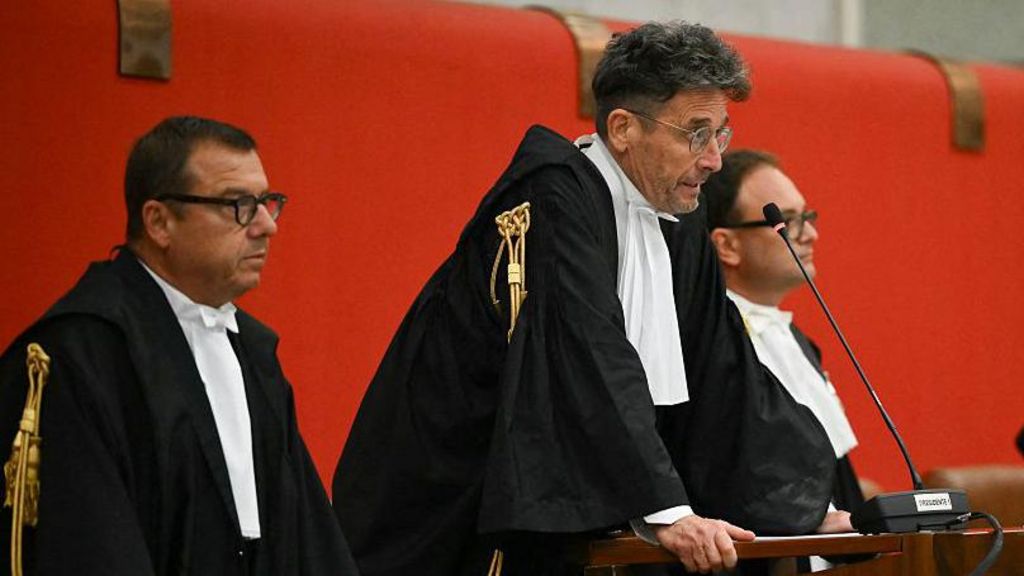
    Eight years after a catastrophic infrastructure disaster claimed 43 lives in the Italian port city of Genoa, a court has handed down a landmark guilty verdict to the country’s former top motorway executive. On Wednesday, Judge Paolo Lepri read the 12-year prison sentence for Giovanni Castellucci, ex-CEO of Italy’s state-controlled motorway operator Autostrade per l’Italia, to a packed Genoa court.

    The tragedy unfolded in August 2018, when a 200-meter section of the aging Morandi Bridge collapsed suddenly during a severe rainstorm, at the peak of Italy’s summer travel holiday season. Falling concrete and steel sent dozens of moving cars and heavy freight trucks plunging more than 40 meters to the ground below, killing 43 people and leaving dozens more families grieving. The disaster sparked widespread public outrage over systemic negligence in infrastructure maintenance and regulatory oversight across Italy.

    Castellucci was one of 59 defendants facing charges of manslaughter and negligent damage stemming from the collapse. Prosecutors had initially pushed for a far longer prison sentence for the former executive, who is already currently serving a six-year sentence for his role in a separate 2013 fatal road accident. Another senior Autostrade official, Michele Donferri Mitelli, received an 11-year prison sentence as part of the same verdict.

    Reactions from victims’ family members have been largely measured but accepting of the court’s decision. Emmanuel Diaz, who lost his brother Henry in the collapse, told Italian broadcasters he felt “very satisfied” with the outcome. Egle Possetti, who lost her sister and her sister’s entire immediate family in the disaster, described the 12-year term for Castellucci as “acceptable”, adding that the verdict brought a small measure of closure after years of waiting for accountability.

    This is an ongoing developing story, with additional details from the trial expected to be released in the coming days. Readers can access real-time updates via the BBC News mobile application, or by following the official @BBCBreaking account on X for the latest alerts.

  • No radiation leak after ‘contamination’ events at Africa’s only nuclear plant, regulator says

    No radiation leak after ‘contamination’ events at Africa’s only nuclear plant, regulator says

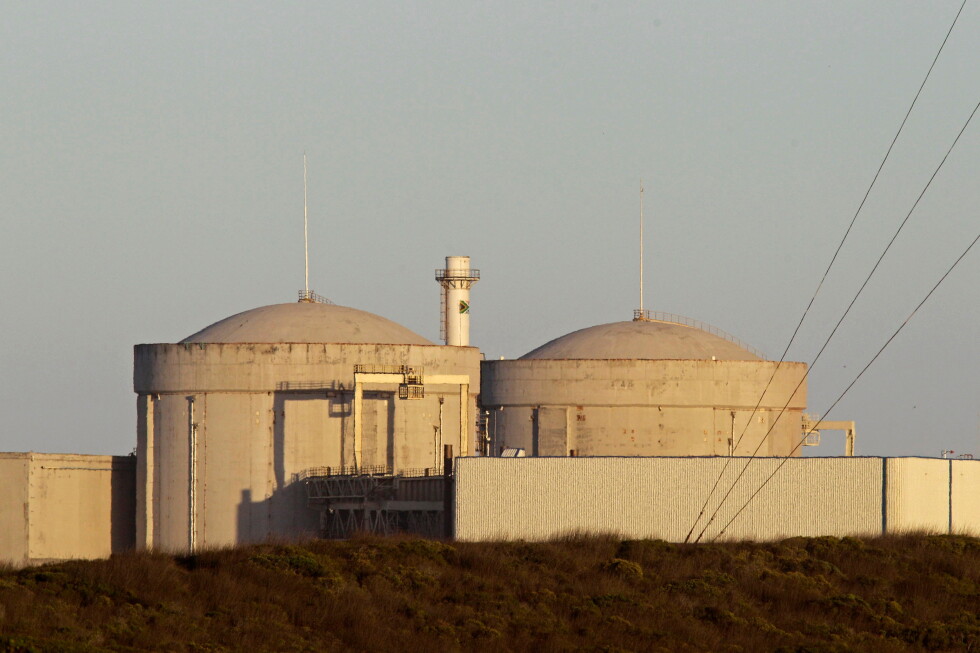
    CAPE TOWN, South Africa – Africa’s only operational commercial nuclear power plant, the Koeberg Power Station located off South Africa’s west coast, has been the site of three separate airborne radioactive contamination events in early July, but national regulators have confirmed there is zero risk to the general public and no release of radioactive material into the surrounding environment.

    The National Nuclear Regulator (NNR) released a public statement Thursday detailing the nature of the incidents, which took place on June 30, July 2, and July 7 respectively. All three events stemmed from temporary power outages that knocked out ventilation systems during scheduled maintenance work at the facility, leading to elevated levels of airborne radioactive contamination confined within the plant’s controlled boundaries.

    According to the NNR, all contamination was successfully contained within the power station’s secured structures, with no off-site radiological impact detected. Workers who may have encountered elevated radiation levels during the incidents underwent immediate mandatory screenings, and results showed recorded contamination levels were lower than the radiation exposure a patient receives during a routine dental X-ray, well below international safety thresholds.

    Regulators added that the events do not meet international criteria for classification as a nuclear or radiological incident or emergency, though ongoing supplementary inspections are underway to confirm plant safety and identify root causes for the ventilation failures.

    Located approximately 40 kilometers north of Cape Town, South Africa’s second-largest urban center, Koeberg Power Station first entered service in the 1980s. Operated by South Africa’s state-owned national power utility Eskom, the plant’s two reactors contribute roughly 5% of the country’s total electricity generation. Late last year, the facility secured official 20-year life extensions, approving continued operation through the 2040s.

    The three incidents come as South Africa pursues plans to expand its commercial nuclear energy capacity, a move driven by the country’s long-running unreliable coal-reliant energy grid that has struggled to meet the needs of its growing population. For years, South Africa’s energy supply has been dominated by coal-fired power generation, a source that contributes heavily to carbon emissions and has been plagued by persistent maintenance failures and rolling blackouts.

    South Africa is not alone in shifting toward nuclear power to meet rising energy demands and cut carbon emissions. Despite ongoing safety concerns voiced by anti-nuclear activists, who reference historic disasters including the 1986 Chernobyl explosion and the 2011 Fukushima meltdown, a growing number of nations are expanding nuclear development. Across the African continent, multiple countries are advancing their own first commercial nuclear projects: Egypt, for example, is currently constructing its first nuclear power plant featuring four large Russian-built reactors, which the World Nuclear Association projects will come online around 2030 and supply roughly 10% of Egypt’s total electricity needs.

  • Volunteer firefighter suspected of starting devastating France forest fire

    Volunteer firefighter suspected of starting devastating France forest fire

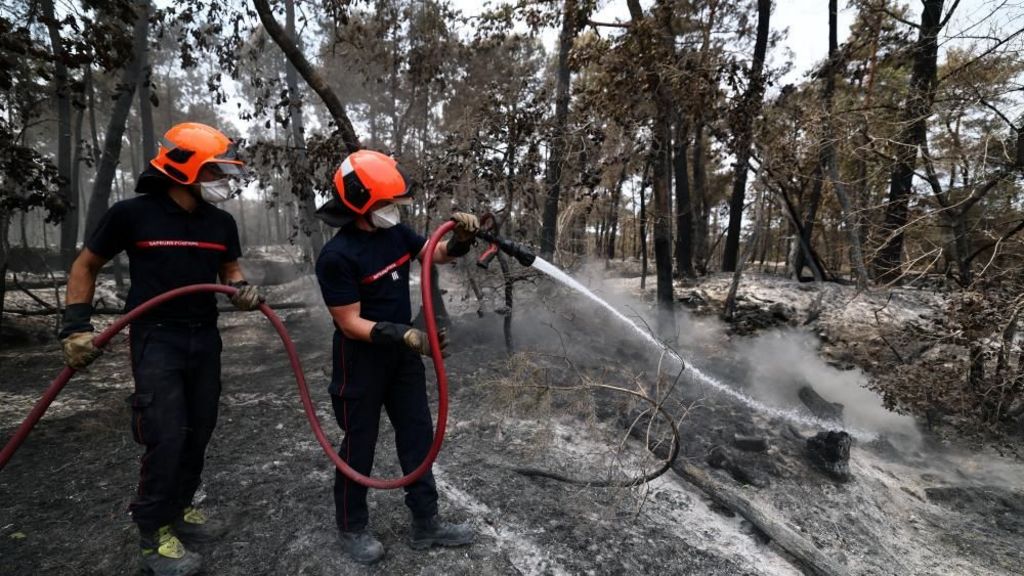
    A devastating wildfire that tore through the Fontainebleau forest, a historic natural landmark just south of Paris, has left 10% of the protected woodland destroyed, displaced roughly 1,000 local residents, and triggered criminal investigations into suspected arson, French officials have confirmed.

    More than 2,000 hectares of forest, equivalent to roughly 5,000 acres of vegetation and old-growth habitat, have been consumed by the blaze that ignited last Sunday. While firefighters have managed to fully contain the spread of the fire, extinguishing operations are still ongoing to eliminate lingering hotspots that could reignite amid the region’s record high temperatures. The inferno also forced partial closures of France’s busiest north-south motorway, disrupting cross-country travel for days.

    Two 18-year-old men, including a volunteer firefighter, have been placed under formal investigation, a key procedural step in the French legal system that precedes potential criminal charges and trial. Lead prosecutor Diane Ngomsik told reporters that the volunteer firefighter initially confessed to starting a small fire using a lighter and petrol before later retracting his statement. The investigation remains active as authorities work to confirm the exact cause of the blaze.

    Visiting the fire-ravaged site on Thursday, French President Emmanuel Macron pledged zero tolerance for anyone found responsible for intentional arson. He also noted that the country is facing its worst wildfire crisis since the end of World War II, with nearly 11,000 separate blazes recorded across France since the start of 2026. Macron praised the work of first responders and noted a rare positive outcome of the disaster: no fatalities have been reported to date.

    The Fontainebleau forest holds extraordinary cultural and ecological significance: it surrounds the Palace and Park of Fontainebleau, a UNESCO World Heritage Site first inscribed in 1981 that draws millions of domestic and international tourists every year.

    The crisis is not isolated to France. Across the European continent, a growing pattern of extreme heatwaves amplified by human-caused climate change has created tinder-dry conditions that have spawned a record-breaking wildfire season. The European Copernicus Climate Change Service confirms Europe is warming twice as fast as the global average, a trend that has intensified summer heatwaves, strained regional water supplies, and increased the frequency and severity of catastrophic wildfires.

    Neighboring countries have already faced far deadlier blazes this summer: at least 13 people have been killed by wildfires burning across Spain, while in the United Kingdom, firefighters have been locked in a days-long battle to contain a large-scale wildfire that has spread across 3.5 kilometers of dry terrain in Scotland’s Cairngorms National Park.

  • 1 person dead and 23 missing after passenger boat sinks in Indonesia, authorities say

    1 person dead and 23 missing after passenger boat sinks in Indonesia, authorities say

    A deadly maritime accident has left one person dead and 23 others unaccounted for after a passenger boat sank while en route to an Indonesian island, local officials confirmed Thursday in a statement to reporters. The incident unfolded Wednesday morning, when the KM Nurul Salsa departed the port of Jampea Island carrying 70 passengers and crew members, along with a cargo of copra, cattle, and motorcycles. By Wednesday afternoon, emergency management authorities received an urgent distress report stating the vessel had suffered total engine failure and was going down roughly 43 nautical miles, or 79 kilometers, from its intended destination: the port of the Selayar Islands in South Sulawesi Province. As of Thursday, search and rescue teams have pulled 46 survivors from the water, but efforts to locate the remaining 23 missing people have been severely hampered by treacherous meteorological conditions, according to Muhammad Arif Anwar, leader of the Makassar Search and Rescue Office. “The primary challenge we face right now is the weather,” Anwar explained in an interview. “At the search site, waves are reaching 2 to 2.5 meters in height, and wind speeds remain high. That is the main obstacle holding back our operations.” The multi-agency search mission brings together personnel from the Indonesian National Armed Forces, the National Police, local commercial fishermen, and community residents, all working around the clock to locate the missing passengers. Maritime accidents are an all-too-common occurrence across Indonesia, a sprawling archipelago made up of more than 17,000 individual islands that relies heavily on small passenger vessels as a primary mode of inter-island transportation. Longstanding issues including lax regulatory oversight of vessel safety standards and repeated overcrowding have created a pattern of frequent deadly accidents in the region’s waters. This report included contributions from Associated Press correspondent Edna Tarigan based in Jakarta, Indonesia.

  • More than 800 Canadian wildfires burning as air quality alerts extend to US

    More than 800 Canadian wildfires burning as air quality alerts extend to US

    A historic outbreak of extreme wildfire activity across Canada has sent thick plumes of toxic smoke south into the United States, triggering widespread air quality emergencies across more than a dozen states and disrupting daily life for millions of people. As of Thursday, data from the Canadian Interagency Forest Fire Centre confirms 857 active blazes are burning across the country, with 23 new ignitions recorded in just 24 hours. The Canadian Wildland Fire Information System reports that the overwhelming majority of these fires remain completely out of control, leaving firefighting crews stretched thin across vast swathes of forested land.

    The worst cluster of blazes is concentrated in northwestern Ontario, where raging flames have already disrupted regional transportation and forced emergency responses. On Wednesday, dramatic footage captured a freight train operated by Canadian National Rail completely surrounded by fast-spreading wildfire near the small northern town of Armstrong, prompting an urgent rescue call for the crew on board. In a follow-up statement, the railway confirmed all workers were evacuated safely, but rail operations through the affected region have been paused indefinitely to avoid further risk to staff.

    Smoke from these Ontario blazes has drifted hundreds of miles south, creating dangerous air conditions that stretch from the Upper Midwest through the Great Lakes and into the Northeast U.S. The U.S. National Oceanic and Atmospheric Administration (NOAA) issued updated air quality alerts Thursday covering thousands of square miles across this entire corridor. The U.S. Air Quality Index has classified conditions in large parts of Michigan, Minnesota, and the Minneapolis-St. Paul metropolitan area as “hazardous,” the most severe rating on the scale. Official guidance urges all residents in these zones to limit outdoor activity and keep windows closed, with sensitive groups including children, the elderly, and people with respiratory conditions advised to remain indoors entirely.

    Independent air quality monitoring group IQAir currently ranks Detroit, Michigan as the city with the worst air pollution on Earth, with Minneapolis and Toronto claiming the second and third spots respectively. In New York City, cameras captured hazy, orange-tinged skies on Wednesday as lower concentrations of smoke settled into the upper atmosphere. The smoke has also altered natural light conditions, bringing vivid red sunrises and darker orange sunsets to cities across the Northeast and Great Lakes.

    Meteorologists forecast that northwesterly wind patterns will continue pushing smoke south into U.S. states through the end of the week and into the weekend, raising concerns that poor air quality could reach New Jersey, the host location of Sunday’s World Cup final. While widespread thunderstorms are forecast for Ontario over the next several days, NOAA analysts note that the projected rainfall is unlikely to be heavy enough to fully extinguish the deep-rooted wildfires. A projected shift in wind direction by early Monday is expected to steer smoke plumes east toward Quebec, which should bring gradual improvement to air quality across the affected U.S. regions.

  • EU forces Google to share search data and open Android to rival AI companies

    EU forces Google to share search data and open Android to rival AI companies

    BRUSSELS – In a landmark move that solidifies the European Union’s position as a global trailblazer in regulating big tech, EU regulators unveiled two binding new regulatory requirements for Google and its parent company Alphabet on Thursday, designed to force the tech giant to open up its dominant search and Android ecosystem to competing artificial intelligence developers.

    This action marks the latest in a years-long EU campaign to rein in the outsized market power of large technology platforms that control key segments of the global digital economy. Regulators frame the new rules as a critical measure to nurture innovation and expand consumer choice by guaranteeing fair access to Google’s core infrastructure for smaller AI and search rivals.

    “Through these new measures, we expect to see viable alternative options emerge to compete with Google Search and Google’s own AI offerings, including the Gemini large language model,” stated Henna Virkkunen, Executive Vice President of the European Commission responsible for technology policy. “Ultimately, this will mean European users gain access to a far broader range of service choices.”

    Over the past half-decade, the 27-nation bloc has built out an increasingly robust regulatory framework for big tech that has set a global benchmark for oversight of U.S. and Chinese-owned platform “gatekeepers.” Past regulatory actions from Brussels have forced Apple to implement cross-platform interoperability rules allowing third-party apps and devices to connect seamlessly to Apple products, and required Meta to remove well-documented addictive design features such as infinite scrolling on its social platforms.

    In its investigation that preceded the new rules, the European Commission confirmed that third-party AI tools have been blocked from delivering the same fully functional user experience on Android devices that Google’s own Gemini AI enjoys. Under the new requirements, Google will be mandated to permit alternative AI agents to access core device functionality, including voice activation across the Android operating system and the ability to run continuous background tasks such as completing restaurant reservations and coordinating appointments via third-party mobile applications. By January 2027, Google will also be required to share anonymized aggregate search data with approved competitors, a change regulators say is necessary to correct a massive market imbalance: Google currently controls a volume of search user data that no existing rival can accumulate independently.

    Not surprisingly, Google has pushed back sharply against the new requirements. Kent Walker, President of Global Affairs for both Google and Alphabet, argued the rules could have unintended negative consequences that undermine protections Google has built into its ecosystem to safeguard user privacy. Walker noted that the current framework requires rigorous vetting of third-party AI tools before they can access sensitive user search data, a requirement the new rules will eliminate.

    “Private search activity carried out by European citizens will be exposed to unvetted third-party companies, without sufficient anonymization safeguards and without the explicit knowledge or consent of users,” Walker said in an official statement responding to the ruling. “This will erode the privacy protections European citizens rely on, put corporate trade secrets at risk, and even create new potential threats to European national security.”

    This latest regulatory action comes amid longstanding pushback from U.S. political and industry leaders against the EU’s aggressive big tech regulatory agenda. Former U.S. President Donald Trump was an outspoken critic of EU tech rules during his time in office, arguing that the bloc’s regulations unfairly disadvantage U.S.-based technology firms.

  • Why the US economy stays strong despite Trump’s shockwaves

    Why the US economy stays strong despite Trump’s shockwaves

    Against widespread expert predictions that the U.S. would cede its economic growth lead following the 2025 implementation of sweeping global tariffs and the 2026 outbreak of conflict with Iran, new GDP data confirms the American economy has maintained a substantial performance gap over the European Union. Five-year average annual national income growth hits 3.3% in the U.S., compared to just 2.6% for the EU. Most recently, year-on-year first quarter 2026 GDP growth reached 2.6% in the U.S., while the EU recorded only 0.7% expansion.

    Economists have identified a handful of core structural and policy factors that explain this ongoing U.S. economic resilience, starting with far more expansionary fiscal policy. While most European governments run modest budget deficits, the U.S. consistently maintains much wider gaps between government spending and tax revenue. In 2025, the average EU deficit stood at 3.1% of GDP, while the U.S. deficit hit 5.8% of GDP – delivering a far stronger demand stimulus to the economy. By injecting more income into households through public payrolls and into suppliers through government procurement, U.S. fiscal policy has lifted aggregate demand, supported output growth and kept unemployment lower than European levels.

    A second, equally critical driver is the U.S.’s far larger investment in innovation and emerging technology. As early as 2021, the EU spent 270 billion euros less than the U.S. on research and development, with most European innovation spending concentrated in long-established legacy sectors such as traditional automaking rather than next-generation technologies. Since 2025, U.S. investment has been heavily focused on artificial intelligence, allowing the country to solidify its dominance over global digital platforms and cutting-edge tech. The widespread adoption of AI across U.S. industries has widened the U.S. lead in labor productivity growth: since 2019, U.S. output per hour in professional services has jumped more than 18%, compared to just 5% across the EU.

    These economy-wide productivity gains have translated into modest but consistent growth in U.S. inflation-adjusted real wages, sustaining steady consumer demand while also driving strong corporate profit growth that has pushed U.S. stock markets to repeated record highs. By contrast, average EU real wages have barely expanded over the past two decades, and European corporate profits remain muted.

    This U.S. tech leadership does face headwinds, however: the Trump administration’s strict immigration clampdown, which includes restrictions on skilled scientists and international students, has shaved an estimated 0.8 percentage points off annual U.S. GDP growth compared to pre-2025 net immigration trends. Still, the U.S. retains a key structural advantage for tech growth: looser regulatory frameworks for emerging innovation, compared to the EU’s stricter oversight and China’s state-directed innovation model. Even though the EU produces a similar number of early-stage tech startups as the U.S., most European scaleups relocate to the U.S. to access capital and a more permissive business environment as they expand.

    A third major advantage for U.S. industry is substantially lower energy costs than in Europe. The U.S. produces far more fossil fuels than the EU and applies lower tax rates to energy, while also rapidly scaling cheap renewable energy capacity despite the current administration’s public skepticism of solar and wind power. While this reliance on fossil fuels creates long-term climate-related economic vulnerability, it has delivered an immediate cost advantage that has supported U.S. manufacturing regeneration and allowed American firms to capture a large share of global demand for data-intensive services such as e-commerce and generative AI.

    The final, often-overlooked driver of U.S. economic outperformance is what former French finance minister Valéry Giscard d’Estaing famously called the U.S.’s “exorbitant privilege” as the issuer of the world’s primary reserve currency. Like most large growing economies, the U.S. runs a substantial current account deficit, as it consumes more goods and services than it produces domestically, requiring continuous borrowing from global creditors to cover the gap. For most economies, this persistent deficit would trigger currency devaluation, higher inflation, or a forced period of slower growth to rebalance the country’s international position. But because the U.S. dollar dominates global commodity trade and is seen as a safe haven asset even during global shocks – including conflicts triggered by U.S. foreign policy – global investors consistently move capital into U.S. assets to finance the deficit, keeping borrowing costs low and growth supported.

    To date, efforts to challenge the dollar’s dominance have made little headway. The EU’s plans to unify its fragmented financial markets to strengthen the euro’s global role have progressed slowly and were set back significantly by the UK’s 2016 Brexit withdrawal, which stripped the bloc of its largest global financial center. Meanwhile, alternative reserve currency initiatives from China, Russia and major oil-exporting nations have failed to gain widespread traction. Even so, the dollar’s exorbitant privilege carries downsides for the U.S.: strong capital inflows that appreciate the dollar make U.S. exports less competitive globally, and the Federal Reserve must account for global spillovers when adjusting interest rates, complicating domestic inflation control. Paradoxically, however, the large spending power of U.S. consumers and businesses, sustained by this global financing system, often leaves the U.S. acting as a global engine of growth for other regions during periods of slowdown.

    Despite the consistent strong economic growth that has defied post-2025 predictions, the performance gap has not translated into political gains for the Trump administration. Just as the steady 2021-2024 expansion failed to boost the political standing of Trump’s predecessor Joe Biden, the continuing growth trend has left Trump with a record-low approval rating of just 36%. This disconnect stems from the uneven nature of U.S. growth: driven by large fiscal deficits and rising corporate profits, the expansion has only delivered marginal wage gains for most American households, who still struggle with persistent high prices and growing affordability pressures for everyday living costs.

  • Protests erupt across Ukraine against defence minister’s ouster

    Protests erupt across Ukraine against defence minister’s ouster

    Four years into Russia’s full-scale invasion of Ukraine, a sudden political shakeup by President Volodymyr Zelensky has sparked rare public unrest across the war-torn nation, as thousands took to the streets this Thursday to denounce the ousting of popular reformist Defence Minister Mykhailo Fedorov.

    Fedorov, who was appointed to the defence portfolio just six months prior, had quickly built a reputation as an agent of change for Ukraine’s beleaguered military. Tasked with rooting out long-standing graft and modernizing armed forces strained by years of combat, crippling manpower shortages, and widespread fatigue, he led sweeping overhauls of military digitization, implemented open, transparent procurement processes, and accelerated the development and deployment of long-range drone capabilities that have recently become one of Ukraine’s most effective asymmetric tools against Russian forces. Under his leadership, the Ukrainian government also raised frontline soldiers’ salaries and introduced landmark plans for phased demobilization, a long-sought reform for troops who have been deployed for years.

    But his aggressive push to upend entrenched systems put him on a collision course with top military leadership, culminating in his removal as part of a broader cabinet reshuffle announced by Zelensky this week. In a fiery post-ouster press conference in Kyiv, Fedorov delivered a blistering public rebuke to Ukraine’s newly appointed Commander-in-Chief Oleksandr Syrsky, accusing the top general of sowing national division and issuing a formal ultimatum to Zelensky demanding his firing.

    “Instead of focusing on how to defeat Russia through asymmetric tactics — that is the commander-in-chief’s core job — he has focused on splitting this country,” Fedorov told reporters, standing in front of a display of images of military drones. “In this configuration, I personally don’t know how to win the war.”

    By late Thursday, thousands of Fedorov’s supporters had gathered in public spaces across major Ukrainian cities to protest the decision. In central Kyiv, AFP correspondents counted more than 1,000 demonstrators, who sang the Ukrainian national anthem, waved national and European Union flags, and chanted calls for Fedorov’s reinstatement and slogans decrying the decision as shameful.

    “I believe that his dismissal is a slap in the face of the Ukrainian people,” 30-year-old Kyiv business owner Vlada Roman told AFP at the rally. “Zelensky is afraid of effective people. I hope after today’s rally, he will change his mind.”

    Unrest was also reported in other major population centers including Lviv, Odesa, and Dnipro, a rare development in wartime Ukraine, where broad national unity in the face of invasion has mostly quelled public dissent against Zelensky’s leadership. In recent months, however, growing public frustration over high-profile corruption scandals, mismanagement of military mobilization and conscription, and the prolonged stalemate of the war has sparked intermittent waves of public outcry.

    The political aftershocks of Fedorov’s ouster quickly spread, with Ukraine’s deputy air force commander Pavlo Yelizarov announcing his resignation in protest of the decision. Political analysts have framed the reshuffle as a clear win for Syrsky and entrenched military interests, noting that Zelensky opted to side with the uniformed leadership over an outsider minister pushing for systemic change.

    “He fell out with various generals and with different established drone suppliers. In other words, he really did start implementing many useful reforms that threatened certain vested interests,” said political analyst Anatoliy Oktysiuk. He added that Zelensky’s decision to remove Fedorov has “undermined himself politically” at a critical moment in the conflict.

    Supporters of Fedorov have described his removal as political retribution for his anti-corruption and modernization efforts. The shakeup also comes at a particularly sensitive moment for Ukraine’s war effort: after months of Russian territorial advances, Kyiv’s forces have recently managed to halt Russia’s momentum, and have launched consistent long-range drone strikes targeting Russian energy infrastructure and military positions, putting Ukraine in one of its strongest operational positions in months. Fedorov’s removal has cast uncertainty over the future of the military reforms that have supported these recent gains.

    International observers and Ukrainian stakeholders have also raised questions about how the change will be received by Ukraine’s key Western backers, who have long pushed for greater anti-corruption and military modernization reforms in Kyiv. On Thursday, the European Union Ambassador to Ukraine publicly praised Fedorov, crediting him with securing a “victory in cognitive warfare” for Ukraine.

    Current Interior Minister Igor Klymenko is widely regarded as the most likely candidate to replace Fedorov, though it remains unclear whether he will secure enough votes in Ukraine’s parliament to confirm the appointment. In a separate move Thursday, Ukraine’s parliament also confirmed Sergiy Koretsky, the former head of state energy firm Naftogaz, as the country’s new prime minister as part of the broader cabinet reshuffle.

  • Fraud crackdown on Ghana ID cards makes digital checks compulsory – photocopies banned

    Fraud crackdown on Ghana ID cards makes digital checks compulsory – photocopies banned

    Ghana has implemented sweeping new regulations requiring all businesses and public institutions across the country to verify the Ghana Card, the nation’s official biometric national identity document, through a dedicated mobile biometric scanning application, in a major push to strengthen national security and crack down on widespread identity-related fraud.

    Previously, most organizations relied on superficial visual inspections or simple photocopying of the national ID card to record customer or visitor information. This lax verification system created critical loopholes that allowed criminal actors to successfully carry out identity impersonation, enabling fraudulent activities ranging from financial scams to unauthorized access to public and private services.

    Under Ghana’s national identification framework, all citizens and legal foreign residents are required to hold the plastic biometric Ghana Card, which was rolled out progressively over the past 10 years. Today, the document has become an indispensable part of everyday life for Ghanaians: access to banking services, mobile SIM card registration, passport applications, and driver’s license issuance all require a valid Ghana Card.

    The card stores detailed biometric information collected by Ghana’s National Identification Authority (NIA), including all 10 fingerprints, high-resolution iris scans, a portrait photograph, and the cardholder’s official signature. The new regulation replaces the outdated verification process with a mandatory digital check: any entity processing ID-based transactions must now use the official NIA mobile app to scan the card and cross-validate its embedded biometric data against the card’s presented details.

    In an official statement, NIA Chief Wisdom Yayra Koku Deku confirmed that the old practices of photocopying or visually inspecting Ghana Cards for transaction verification are now criminal offenses. “Biometric verification is now mandatory,” Deku emphasized.

    Penalties for non-compliance are strict: organizations that continue to rely on the old verification methods face prosecution and fines as high as 24,000 Ghanaian cedis, equivalent to approximately $2,100 or £1,550. Individual violators will face fines of up to 6,000 Ghanaian cedis, around $525 or £390.

    The NIA has called on all institutions that have not yet completed onboarding to the official digital verification system to begin the registration and integration process immediately. Deku added that the Ghanaian government will host public briefings in the coming days to outline implementation timelines for the amended regulations and outline support measures to help organizations achieve full compliance.

    This report was supplemented with additional on-the-ground reporting by Thomas Naadi in Accra. For more coverage of news across the African continent, visit BBCAfrica.com, and follow BBC Africa on Twitter, Facebook, and Instagram.