作者: admin

  • Thailand: Who is Thaksin Shinawatra?

    Thailand: Who is Thaksin Shinawatra?

    For nearly 30 years, no single figure has shaped Thai politics more profoundly than Thaksin Shinawatra – a former police officer turned business magnate turned prime minister, whose legacy remains one of the most divisive and influential forces in modern Southeast Asian politics, even decades after he first left office.

    Thaksin’s path to power began in 1949, when he was born in the northern Thai city of Chiang Mai. He launched his professional career as a police officer, earning a government scholarship in 1973 to pursue a master’s degree in criminal justice in the United States. Upon returning to Thailand, he pivoted to the private sector, building a billion-dollar telecommunications empire by the end of the 1980s. In 1998, he launched his own political vehicle, the Thai Rak Thai (Thais Love Thais) Party, a movement that rapidly upended Thailand’s decades-old political order.

    In the 2001 general election, Thaksin stormed to electoral victory in a landslide, defeating the long-dominant traditional establishment of the Democrat Party. His populist platform resonated deeply across class lines: low-income and rural voters flocked to his promises of low-cost universal healthcare and widespread debt relief, paired with his unapologetic criticism of the entrenched Bangkok elite and nationalist policy agenda. Meanwhile, big business embraced his CEO-style governance and pro-growth “Thaksinomics” policies, which pulled Thailand out of the economic stagnation left by the 1997 Asian Financial Crisis and sparked a new national economic boom. Thaksin also earned widespread praise for his swift, coordinated response to the 2004 Indian Ocean tsunami, which devastated large swathes of southwestern Thailand.

    But his tenure was not without sharp controversy. He faced widespread public and international criticism for the 2003 war on drugs, which left more than 2,500 people dead in extrajudicial killings, as well as a scandal over his government’s decision to cover up an outbreak of avian flu. Thailand’s anti-corruption commission found he had failed to disclose his full personal wealth (though he was ultimately acquitted on that charge), and he faced heavy backlash over his government’s handling of rising separatist violence in the country’s Muslim-majority southern region. Backed by his loyal base of rural supporters, who adopted the color red and became known as the “red shirts” movement, Thaksin weathered every political storm: he made history as Thailand’s first elected prime minister to complete a full four-year term, and won a landslide re-election in 2005.

    Even as he built unparalleled popular support, Thaksin emerged as a deeply polarizing figure, drawing fierce opposition from Thailand’s conservative establishment: the Bangkok elite, the royal military, and pro-monarchy activists, who adopted the color yellow and became known as the “yellow shirts” movement. It was a business deal that ultimately triggered his ouster: in early 2006, Thaksin’s family sold its stake in Shin Corp, the country’s largest telecommunications group, netting $1.9 billion. The deal sparked mass public anger, with critics arguing the family had illegally avoided tax obligations and transferred control of a critical national asset to foreign investors based in Singapore.

    Amid months of massive street protests, Thaksin called a snap general election in April 2006 to force a popular verdict on his leadership. Main opposition parties boycotted the vote, and a large share of ballots were cast as informal “no votes.” Thaksin initially announced he would step down, only to return to office just a month later. By September 2006, with months of political gridlock and unrest paralyzing the country, the Royal Thai Army seized power in a military coup while Thaksin was traveling abroad.

    What followed has been 18 years of political upheaval, with Thaksin pulling the strings of Thai politics from exile and through a dynastic line of proxy leaders. After briefly returning to Thailand following a 2007 election won by his allies, courts empowered by the new military-backed constitution opened a wave of corruption cases against Thaksin and his family. Convicted of corruption, Thaksin fled Thailand once again, beginning 15 years of self-imposed exile centered primarily in Dubai. Even from abroad, he retained control of his political movement: Thai Rak Thai was dissolved in 2007, its successor the People’s Power Party was dissolved in 2008, but the third iteration – Pheu Thai Party – survived. In 2011, Thaksin’s sister Yingluck Shinawatra led Pheu Thai to a landslide victory, becoming Thailand’s first female prime minister, before she too was ousted by a court disqualification and a second military coup. In the 2019 election, Pheu Thai won more seats than any rival party, but was blocked from forming government by conservative parties allied with the military.

    It was not until the 2023 election that the Shinawatra political dynasty saw a shift in fortunes. In a major upset, the progressive Move Forward Party won the most seats in the lower house of parliament, forcing Thailand’s long-standing anti-Thaksin conservatives to strike a grand bargain with Pheu Thai to exclude Move Forward from power. As part of the deal, Thaksin returned to Thailand in 2023 after 15 years in exile, and was greeted by hundreds of cheering supporters upon landing in Bangkok.

    He was immediately taken to the Supreme Court to begin serving an eight-year prison sentence for his decades-old corruption convictions, which Thaksin has always maintained were politically motivated. Within 24 hours, however, he was transferred to a luxury private ward at Police General Hospital after reporting heart complications. Following a formal plea for royal clemency, the King of Thailand commuted his sentence to just one year. Thaksin remained in the hospital for six months before receiving parole and returning to his private Bangkok residence.

    That peace did not last. In September 2025, the Supreme Court ruled that Thaksin’s extended hospital stay had been unlawful, finding the former prime minister “knew or could perceive that he was not in a critical or emergency condition.” He was immediately taken to prison to serve out the remainder of his one-year sentence. In a separate high-profile case that same month, a court acquitted Thaksin of charges of lese-majeste – insulting the monarchy – which carry decades-long prison sentences in Thailand.

    The same month that Thaksin was sent back to prison, his daughter Paetongtarn Shinawatra, who had become prime minister in 2024 after the coalition’s original leader was removed by the constitutional court, was also disqualified and removed from office over a leaked controversial phone call with Cambodian Prime Minister Hun Sen. A breakaway faction from the Pheu Thai-led coalition subsequently installed a new prime minister from outside the Shinawatra circle.

    Despite the string of major political and legal setbacks, both Thaksin and his family have vowed to continue their political fight. In a public statement released to social media shortly after the Supreme Court ordered his return to prison, the 76-year-old former prime minister wrote: “even though I lose my physical freedom, I will still have freedom of thought for the benefit of my country and its people. I will maintain my physical and mental strength to spend the rest of my life serving the monarchy, Thailand and the Thai people.”

    For three decades, Thaksin Shinawatra has dominated Thai politics, surviving coups, convictions, and exiles – and even behind bars, he remains one of the most powerful forces shaping the country’s future.

  • Thailand’s Thaksin released from prison after serving 8 months for abuse of power

    Thailand’s Thaksin released from prison after serving 8 months for abuse of power

    BANGKOK — Decades of polarizing Thai political drama took a new turn on Monday, as former Prime Minister Thaksin Shinawatra walked free from Bangkok’s Klong Prem Central Prison, eight months into a one-year corruption-related sentence. Hundreds of cheering supporters and political allies gathered outside the prison walls to welcome the 76-year-old populist billionaire, who has reshaped Thailand’s political landscape over the past 25 years.

    Thaksin’s family, including his daughter Paetongtarn Shinawatra — the former prime minister and one of Thaksin’s three children — arrived hours early to wait for his release. When Thaksin emerged from the prison gate dressed in a white polo shirt and blue trousers, he was immediately embraced by his relatives. Smiling broadly, he walked through the crowd of supporters, who chanted “we love Thaksin” and presented him with red roses, a long-standing symbol of his political movement. He left the prison compound without addressing waiting reporters.

    Roughly an hour after his release, Thaksin arrived at his private residence in western Bangkok. In live footage streamed by local outlet Thairath News, he rolled down his car window to greet a small group of well-wishers gathered outside his gate. When pressed by reporters shouting questions about his time in custody, he joked, “I was in hibernation, I can’t remember anything now.”

    Thaksin’s political career traces a dramatic arc that fundamentally split Thai society. A successful telecommunications tycoon, he launched his own political party in 1998, won election in 2001, and made history as the first elected prime minister to complete a full four-year term. His signature policies — including a universal national healthcare program and infrastructure investments connecting remote rural regions — earned him fierce loyalty among working-class and poor communities across northern and northeastern Thailand. But his outsized popularity and blunt governing style created deep, enduring rifts with Thailand’s established power blocs: urban elites, royalist factions, and the military. These tensions boiled over in 2006, when a military coup ousted Thaksin while he was traveling abroad. He spent 15 years in self-imposed exile, arguing that the judicial cases filed against him were political persecution carried out by his opponents.

    The 2006 coup set off nearly 20 years of intermittent political upheaval and deadly clashes between pro- and anti-Thaksin factions, even as successive iterations of his political machine repeatedly won general elections. Thaksin only returned to Thailand in 2023, as his latest political party, Pheu Thai, negotiated to form a new ruling government. He was immediately taken into custody to face the long-standing abuse of power convictions that had been handed down in absentia, which included charges of using his office to benefit his personal business empire and improperly approving a state lottery project that caused public financial losses.

    Originally sentenced to eight years in prison, Thaksin saw his term commuted to one year by King Maha Vajiralongkorn. For months, he was allowed to serve his sentence in a private suite at Bangkok’s Police Hospital on medical grounds, sparking widespread public anger over claims of unfair preferential treatment. In September 2025, the Supreme Court ordered him to transfer to the general prison population to serve out the remainder of his term.

    Last month, a Justice Ministry review panel approved Thaksin’s parole application alongside more than 900 other eligible inmates, justifying the decision by citing his good behavior behind bars, his advanced age, and the low risk he would reoffend. Following his release, Thaksin will serve a four-month probation period, during which he is required to live at his registered Bangkok address, wear an electronic monitoring ankle bracelet, and check in regularly with probation authorities.

    Thaksin’s release comes at a turbulent moment for his political bloc. Paetongtarn, his daughter, became Thailand’s youngest prime minister in 2024, but was removed from office by the Constitutional Court in August 2025 after an leaked recording of a controversial phone call with former Cambodian Prime Minister Hun Sen was made public. In the most recent 2025 general election, Pheu Thai placed third overall, weakening the party’s position in coalition negotiations.

  • Middle East conflicts a danger for whales off S.Africa: study

    Middle East conflicts a danger for whales off S.Africa: study

    Geopolitical tensions and ongoing conflicts across the Middle East have triggered an unexpected and growing threat to vulnerable whale populations off South Africa’s southern coast, according to new scientific research presented to the International Whaling Commission (IWC) this month. The crisis has forced global shipping companies to reroute massive volumes of vessel traffic away from the historically popular Red Sea and Suez Canal corridors, pushing more ships straight through critical whale habitats along the Cape of Good Hope and dramatically increasing the likelihood of deadly collisions between large vessels and marine mammals.

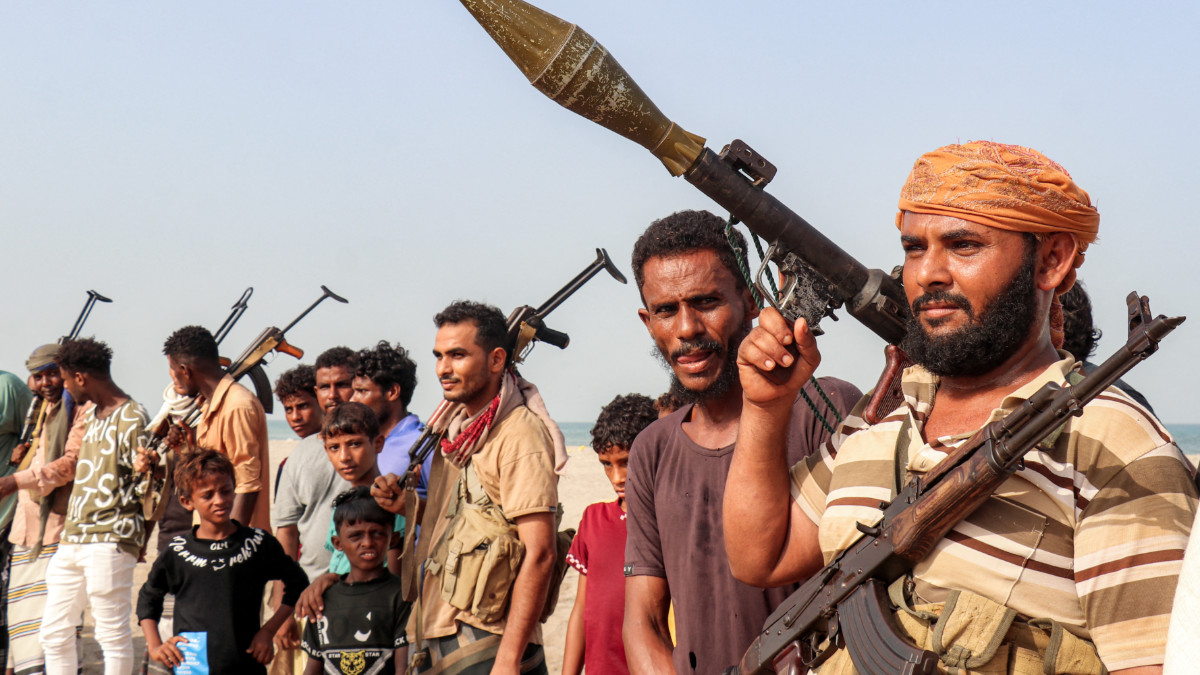
    The disruption to global shipping lanes began in November 2023, when Houthi rebels seized the British-owned cargo vessel Galaxy Leader off the coast of Yemen. Subsequent attacks on commercial shipping transiting the Red Sea, paired with escalating regional tensions between Israel, the United States and Iran that have threatened transit access through the Strait of Hormuz, have pushed an ever-growing share of global maritime trade to take the longer southern route around South Africa. Data from the International Monetary Fund’s PortWatch monitoring platform underscores the scale of this shift: between March 1 and April 24 of 2024, an average of 89 commercial vessels sailed around southern Africa daily, more than double the average of 44 recorded over the same period in 2023.

    South Africa’s southwestern coastline already supports some of the most ecologically significant whale populations on the planet, while also serving as a key transit route for international trade. This creates extensive spatial overlap between heavy maritime traffic and whale feeding, breeding, and migration grounds, a dynamic that drastically amplifies collision risk, explained lead researcher Els Vermeulen, who heads the University of Pretoria’s whale research unit.

    Vermeulen told reporters that growing awareness of this risk has been amplified by unsolicited social media content from crew members on passing cargo ships. Many posts showcase large groups of whales swimming alongside vessels, framing the sighting as a thrilling novelty, but for researchers, the content tells a far more alarming story. “My heart stopped when I saw those posts — you know that with that much traffic moving through dense whale habitats, they are striking a number of whales already,” Vermeulen said. She added that whales often do not recognize or react to approaching large vessels, as they are frequently preoccupied with feeding or other critical survival activities.

    Most concerning, researchers note, is that the volume of high-speed commercial traffic — the category of vessel that poses the greatest risk of lethal collision — has increased fourfold along the route in less than six months. This rapid, unplanned shift has left whale populations no time to adapt their behavior to the new threat, explained Chris Johnson, global lead for the World Wildlife Fund’s Whale and Dolphin Conservation initiative. Different whale species respond to ship noise in unexpected ways that do not help them avoid collisions: for example, blue whales off the coast of Los Angeles simply dive deeper below the surface when they hear approaching vessels, rather than leaving the area, putting them directly in the path of oncoming shipping traffic.

    Compounding the risk, long-term ecological shifts driven by climate change have already pushed more whales into these newly busy shipping corridors. Ken Findlay, a blue economy consultant and contributing author to the report, noted that large superpods of humpback whales have begun feeding seasonally off South Africa’s increasingly busy west coast since 2011, a behavioral shift that has already elevated baseline collision risk before the current shipping surge.

    Deadly ship strikes are already recognized as one of the leading causes of human-caused whale mortality worldwide, and collisions are drastically underreported globally, according to a 2024 study published in the journal *Science*. Despite this risk, few meaningful protection measures are currently in place for whale populations that have only been slowly recovering since the 1986 global ban on commercial whaling.

    The research presented to the IWC outlines accessible, low-impact solutions to mitigate the growing risk. Modest adjustments to shipping lanes that shift traffic further offshore, away from core whale habitats, could reduce collision exposure for vulnerable whale species by between 20 and 50 percent, the report finds. Critically, this adjustment would add only 20 nautical miles to journeys that often exceed 10,000 nautical miles in total length, making the impact on shipping timelines and costs negligible. MSC, the world’s largest shipping company headquartered in Switzerland, has already successfully implemented similar lane adjustments off the coasts of Greece and Sri Lanka to protect whale populations in those regions.

    Additional mitigation strategies are also under exploration, including real-time alert systems that notify vessel captains of the presence of whale superpods via dedicated mobile applications or radio broadcasts, and the deployment of AI-powered cameras on commercial vessels to improve early detection of whales in shipping lanes. Estelle van der Merwe, head of the South African environmental NGO Ocean Action Network, noted that all feasible measures need to be on the table to address the rapidly emerging threat.

    South Africa’s Department of Environment, Forestry and Fisheries confirmed in a statement to AFP that it is committed to evaluating all available mitigation options. “Once the scientific studies and assessments have been completed, the maritime authorities will be on the front line, alongside the DFFE, to chart the way forward,” the department said.

  • Thailand’s divisive ex-PM is out of jail, but is the Thaksin era over?

    Thailand’s divisive ex-PM is out of jail, but is the Thaksin era over?

    At 76 years old, after two decades of self-imposed exile and eight months behind bars, former Thai prime minister Thaksin Shinawatra has walked out of a Bangkok prison, tagged with an electronic ankle monitoring bracelet to serve the remainder of his one-year sentence for corruption and abuse of power convictions tied to his 2001-2006 tenure in office. His release dominated national headlines this week, and despite repeated assurances from Thaksin’s long-dominant Pheu Thai Party that the former leader will step away from frontline politics, widespread media and public speculation continues to swirl over what influence he may still wield over Thailand’s fractious political sphere.

    Thaksin’s outsized impact on Thai politics over the past quarter-century is impossible to overstate. A charismatic, self-made billionaire who won a landslide election in 2001, he rapidly reshaped the country’s policy landscape, building a deeply loyal base of working-class and rural supporters while drawing fierce opposition from Thailand’s established conservative and royalist institutions. Even after a 2006 military coup ousted him from power, political parties aligned with Thaksin continued to win every subsequent national election – a streak that triggered repeated interventions from the courts, mass violent street protests, and a second military coup in 2014.

    For years after 2014, Thaksin operated his political movement from exile abroad, until a high-profile 2023 “grand bargain” with his long-time conservative opponents allowed him to return to Thailand to resume informal leadership of his party after it returned to government. Despite public claims that he intended to retire to spend time with family, political observers have long noted Thaksin has repeatedly shown an unwillingness to cede control of the movement he built.

    This release, however, comes at a moment of profound change for Thai politics that could mark the definitive end of Thaksin’s decades-long dominance. Just months after his 2023 homecoming, Thailand’s Supreme Court ruled that Thaksin’s six-month stay in a police hospital shortly after his return was a deliberate ploy to avoid serving his prison sentence, and ordered him jailed last September. The ruling came only two weeks after Thailand’s Constitutional Court dismissed Thaksin’s daughter Paetongtarn Shinawatra from the prime ministership, over a leaked private phone call with Cambodian Prime Minister Hun Sen regarding bilateral border dispute negotiations.

    During Thaksin’s time in prison, Pheu Thai suffered its worst ever electoral performance in the country’s February general election. The party fell to third place, outperformed by both the reformist People’s Party and the conservative Bhumjaithai Party, which capitalized on a surge in nationalist sentiment following a border conflict with Cambodia. Reduced to a junior coalition partner in the new administration, Pheu Thai now holds far less political sway than it did for most of the past two decades.

    Political analyst Ken Lohatepanont notes that Thaksin is re-entering public life in a Thailand unrecognizable from the political order he once dominated. “Thaksin emerges from prison to a new political environment,” he explained. “Pheu Thai has been sidelined as just a mid-sized party. You can never count Thaksin out, but the challenge that he and his Party face is of a different magnitude to those he has faced in the past. Pheu Thai will have to decide whether a public comeback for Thaksin will boost the party, or whether the party might be better served by placing the spotlight on their newer generation leaders.”

    Debate remains ongoing over why the 2023 grand bargain between Thaksin and Thailand’s royalist conservative establishment collapsed so rapidly. Some observers question whether conservative factions always intended to use judicial rulings to dismantle the Pheu Thai government, pointing to the earlier court dismissal of Pheu Thai’s first prime ministerial pick on a minor technicality. Others argue that the collapse was triggered by Thaksin’s own refusal to stay on the political sidelines, and his insistence on advancing his own policy and business agenda that clashed with conservative interests.

    Regardless of the cause, decades of conflict have left irreconcilable mistrust between Thaksin and Thailand’s conservative power brokers. Even if Thaksin still seeks a return to prominent public office, institutional barriers will almost certainly block any such path. For 25 years, Thai politics was defined by the battle over Thaksin’s legacy and influence. Political analysts broadly agree that the Thaksin era is now all but certainly over.

  • CSL shares plummet 20 per cent as new boss reveals $5bn hit to profits

    CSL shares plummet 20 per cent as new boss reveals $5bn hit to profits

    Australian healthcare multinational CSL has endured another severe market setback, with its share price plummeting 20.29% at market open to hit a 10-year low Monday, after the biotech giant disclosed a fresh $5 billion non-cash impairment write-down as part of a 90-day strategic review. The sharp drop pushed CSL’s share price below the $100 threshold for the first time since 2014, a dramatic fall from the company’s peak valuation of roughly $340 per share recorded at the height of the COVID-19 pandemic, when CSL saw explosive revenue growth driven by global vaccine rollouts.

    Of the $5 billion total impairment, $1.5 billion was already accounted for in CSL’s first-half financial results, with the remaining charge reflecting underperformance across key international market segments. The company confirmed an additional $300 million write-down tied to its U.S.-based immunoglobulin business, while its albumin operations in China will take a $200 million hit from ongoing market headwinds. Weaker-than-projected revenue across these overseas segments weighed heavily on investor sentiment, leading to the historic single-day sell-off.

    Despite the markdown, CSL reaffirmed its full-year financial projections, forecasting total annual revenue of roughly $21 billion Australian dollars and net profit of $3.1 billion Australian dollars, a modest downward revision from earlier estimates of $3.3 billion Australian dollars. The downgrade was announced by interim chief executive Gordon Naylor, who stepped into the top role just three months ago after former CEO Paul McKenzie’s abrupt departure earlier this year.

    Naylor sought to reassure stakeholders Monday, noting that while the company’s long-term growth initiatives are progressing, their financial benefits will take longer to materialize than initial forecasts projected. As a result, CSL has revised downward its financial guidance through the 2026 fiscal year. The Monday announcement marks the second major market shock for CSL in just four months: back in August, the company lost $21 billion in market capitalization in a single trading session after unveiling a sweeping corporate restructuring plan. That restructuring includes cutting 3,000 global roles — an upfront cost of $770 million that is projected to generate annual savings of $500 million to $550 million over three years — as well as plans to spin off its influenza vaccine division Seqirus into an independent ASX-listed company by 2026. CSL will also merge the commercial and medical operations of its core blood plasma and iron deficiency treatment businesses into a single unified unit to streamline operations.

    As a major exporter of plasma-derived life-saving therapies to the United States, CSL also addressed growing concerns over new U.S. tariffs on pharmaceutical products in its announcement. The company confirmed it does not expect any material impact from the tariffs, as the life-saving therapies it produces are set to be exempt from the new trade measures.

  • Poland’s wanted ex-minister confirms he fled to US from Hungary

    Poland’s wanted ex-minister confirms he fled to US from Hungary

    In a confirmation that has sparked immediate diplomatic friction between Poland, Hungary and the United States, Poland’s fugitive former justice minister Zbigniew Ziobro, who is facing multiple serious criminal charges in his home country, has confirmed he has left Hungary for the U.S. following Hungary’s recent change in government.

    In an interview Sunday with Polish right-wing media outlet Republika, Ziobro openly acknowledged his new location, saying, “I am in the United States. I arrived yesterday, and this is my third time traveling around the country.” The confirmation came after multiple Polish media outlets first reported his presence in the U.S. over the weekend, with liberal broadcaster TVN24 even publishing a photograph of the former minister taken by a fellow traveler at Newark Liberty International Airport.

    Ziobro, a towering figure in Poland’s conservative politics who led the ultra-conservative Sovereign Poland party and served as justice minister and attorney general from 2015 to 2023 as a key coalition partner to the nationalist Law and Justice (PiS) party, has been a wanted man in Poland since the fall of the PiS government. He is best known as the architect of the controversial judicial reforms that triggered years of tense standoffs between Warsaw and the European Union over the rule of law.

    Last year, Ziobro fled Poland for neighboring Hungary, where he was granted asylum by the right-wing government of Viktor Orban, a longstanding ideological ally. The charges he faces in Poland include abuse of power, leading an organized criminal enterprise, and diverting public funds earmarked for crime victims to purchase Israeli-made Pegasus spyware, which was allegedly used to illegally surveil political opponents. If convicted on all counts, he could face up to 25 years in prison. He has repeatedly denied all allegations, framing the prosecution as a political witch hunt targeting conservative opposition by Poland’s current centrist government.

    Ziobro’s sudden exit from Hungary comes just weeks after Orban’s Fidesz party lost parliamentary elections, ending the former prime minister’s 12-year grip on power. Hungary’s new prime minister, Peter Magyar, who was formally sworn into office on Saturday, has made a clear break from Orban’s policy of shielding Ziobro. Shortly after his election victory in April, Magyar declared that “Hungary will no longer be a dumping ground for internationally wanted criminals,” explicitly naming Ziobro and his former deputy Marcin Romanowski — who is accused of embezzling nearly €40 million ($47 million) — as examples of figures who would no longer receive safe haven.

    A key unanswered question remains: how was Ziobro able to travel to the U.S. when Polish authorities had already revoked all of his official travel documents, including his Polish passport and diplomatic passport. Polish local news outlet Onet has reported that Ziobro obtained a U.S. journalist visa tied to his new role at Republika. Shortly after the reports emerged, Republika confirmed it had hired the former minister to serve as its U.S.-based political commentator.

    Poland’s current justice minister Waldemar Zurek has already made clear that Warsaw will not drop its pursuit of Ziobro. In a post on social media platform X, Zurek announced that Poland “will reach out to the USA and Hungary with questions regarding the legal basis that enabled Zbigniew Ziobro to… enter the United States despite lacking valid documents.” He added, “We will not cease our efforts to ensure that he and Mr. Marcin Romanowski are held accountable before the Polish justice system.” Speaking to Polsat broadcaster earlier, Zurek confirmed that once Ziobro’s location is officially verified, Poland will submit a formal extradition request to the U.S. government.

    For his part, Ziobro has said he is prepared to fight any extradition attempt in U.S. courts. “I am ready to appear before any court, and an American independent court is certainly an independent court,” he told Republika. “If they want to initiate extradition proceedings, by all means,” he added, noting that extradition cases in U.S. courts are “a demanding procedure.”

  • PSG all but secure Ligue 1 title with two games to spare

    PSG all but secure Ligue 1 title with two games to spare

    With just two matches remaining in the 2024-25 Ligue 1 campaign, Paris Saint-Germain has moved to the brink of claiming an unprecedented fifth straight domestic championship, following a tense 1-0 victory over Brest on Sunday. The result leaves Luis Enrique’s side six points clear of second-placed Lens, with an overwhelming 15-goal advantage in goal difference that all but guarantees the title regardless of next week’s result.

    Fresh off a hard-fought Champions League semi-final victory over Bayern Munich just four days prior, PSG made nine changes to their starting lineup to rest key first-team stars, including young French international Desire Doue. The 19-year-old was brought off the bench in the second half, and made an immediate impact, curling home the match-winning strike from the edge of the 18-yard box in the 83rd minute to secure all three points.

    PSG will formally claim their 12th Ligue 1 crown in 14 seasons if they avoid defeat away to Lens this coming Wednesday. Even in the highly unlikely scenario that the Parisians drop points in both remaining fixtures and Lens win out, Lens would need to erase the 15-goal gap in goal difference – a statistical near-impossibility for Pierre Sage’s side.

    Off the pitch, PSG is already looking ahead to a Champions League final against Inter Milan later this month, having edged past Bayern 6-5 on aggregate to secure their spot in the season-ending showpiece.

    For their part, Lens had already secured a guaranteed place in next season’s Champions League group stage with a 1-0 win over Nantes on Friday, and will round out their season ahead of a French Cup final against Nice on May 22.

    The race for the final Champions League spots intensified over the penultimate matchweek, with northern rivals Lille climbing into third place after a 1-0 away win over Monaco on Sunday. An own goal from Monaco captain Denis Zakaria in the second half handed all three points to Lille, who extended their unbeaten run in Ligue 1 to 13 matches. The result pushed Lille above Lyon, who fell to a 2-1 away defeat to Toulouse. After Corentin Tolisso put Lyon ahead following an early equaliser from Dayann Methalie, Warren Kamanzi netted what proved to be the match-winner for the hosts, who held on despite having Aron Donnum sent off late in the game.

    Under Ligue 1’s qualification rules, the top three sides qualify directly for the Champions League league phase, while the fourth-place side must navigate two rounds of two-legged qualifying ties to reach the group stage. Fifth-placed Rennes kept their hopes of a top-three finish alive with a 2-1 come-from-behind win over Paris FC. Division top scorer Esteban Lepaul netted his 20th goal of the season to cancel out an opening strike from Willem Geubbels, before Breel Embolo scored the winner for the home side. Rennes currently sit two points behind third-placed Lille and one point behind fourth-placed Lyon, putting them firmly in contention for a Champions League spot, and are on track to qualify for the Europa League if they hold their current position.

    Sixth-placed Marseille, three points behind Rennes, kept their own European hopes alive with a 1-0 away win over Le Havre, with Mason Greenwood scoring his 16th league goal of the campaign from the penalty spot. After Greenwood’s opener, Le Havre missed a chance to equalise when Sofiane Boufal’s penalty was saved. Marseille will face Rennes away on the final matchday next Sunday, with a win lifting them to fifth, a draw leaving them sixth, and a defeat potentially dropping them as low as seventh behind current seventh-placed Monaco. Sixth place currently earns a spot in the UEFA Conference League, but would upgrade to a Europa League place if Lens lifts the French Cup next week, with seventh inheriting the Conference League spot in that scenario.

    At the bottom of the table, the relegation battle delivered a late twist, as Auxerre climbed out of the relegation play-off spot with a 2-1 come-from-behind win over Nice. Sofiane Diop opened the scoring for Nice, but Sekou Mara equalised for the hosts before Lassine Sinayoko got the winner, leaving Nice below Auxerre on goal difference in the drop play-off spot. Auxerre’s win shook up the bottom of the table, with Metz and Nantes already confirmed as relegated, and Lorient rounding out the matchweek with a 4-0 away win over already-relegated Metz.

    In Ligue 2, Troyes have already been confirmed as champions and will promoted to the top flight next season, while Le Mans is on the cusp of joining them. However, their final match of the season away to Bastia was suspended late in the second half with Le Mans leading 2-0, after crowd trouble broke out in the stands. If the current scoreline is upheld, Le Mans will claim the second automatic promotion spot, and Saint-Etienne will face the relegation play-off against the 18th-placed Ligue 1 side for a spot in the top flight next season.

  • Renovated Istanbul Greek Orthodox school to be inaugurated, but not reopened: patriarchate

    Renovated Istanbul Greek Orthodox school to be inaugurated, but not reopened: patriarchate

    Decades after forcing the closure of one of Eastern Orthodox Christianity’s most important theological institutions, Turkey has overseen a complete renovation of the Halki seminary — but the path to reopening the school remains blocked by regulatory red tape, officials from the Ecumenical Patriarchate confirmed Sunday.

    Nestled on Heybeliada, one of Istanbul’s scenic Princes’ Islands, the Halki seminary has occupied a central place in Orthodox religious life since its founding in 1844. For more than a century, it served as the primary training ground for Orthodox clergy across the globe, counting current Ecumenical Patriarch Bartholomew I, the spiritual leader of the world’s 260 million Orthodox Christians, among its most prominent graduates. It sits on grounds that house a Byzantine-era monastery, adding centuries more religious and historical weight to the site.

    That legacy was interrupted in 1971, when the Turkish government shuttered the seminary under a new state law restricting private higher education institutions. For 53 years, Bartholomew has led a sustained international campaign to pressure Ankara to reverse the decision, drawing support from major global powers including the United States and the European Union. During a high-profile 2019 meeting at the White House with then-U.S. President Donald Trump, the patriarch raised the long-stalled issue, and Trump publicly pledged to support efforts to break the diplomatic deadlock. The EU has repeatedly criticized Turkey over its failure to guarantee full religious freedom for non-Muslim minority communities, with the Halki seminary case a frequent point of contention in bilateral talks.

    In remarks to Orthodox donors in Athens earlier this week, Bartholomew, 86, sparked widespread optimism when he announced that extensive multi-year renovation works on the seminary’s entire building complex would wrap up in September, and that the renovated structure would be inaugurated that same month. “We are also optimistic regarding the reopening of the Holy Theological School of Halki,” he told the gathering, leading many global observers to interpret the comments as a signal that the school would welcome students again after half a century.

    However, Nikos Papachristou, a spokesman for the Istanbul-based Ecumenical Patriarchate, clarified the situation to AFP on Sunday, distinguishing between the inauguration of the renovated building and the long-sought goal of resuming educational operations. “What he said in Athens is that we are expecting that the renovation will be finished by September, so at the end of September, he will be able to inaugurate the renovated building,” Papachristou explained. The patriarch’s ongoing optimism, the spokesman added, centers on the hope that Turkish authorities will grant the operating license required for reopening in time for the inauguration, turning the celebratory event into a dual milestone for the global Orthodox community. As of yet, no such license has been approved, meaning there are no concrete plans to welcome students back to the hilltop campus.

    For the global Orthodox community, the seminary carries outsized symbolic meaning: the faith’s historical center was Constantinople — the precursor to modern-day Istanbul — before the Ottoman conquest of the city in 1453, making any progress on reopening the school a matter of deep cultural and religious significance for Orthodox Christians worldwide.

  • Argentine plazas buzz with World Cup sticker trading fever

    Argentine plazas buzz with World Cup sticker trading fever

    MONTEVIDEO, Uruguay – As countdown clocks tick down to the opening kickoff of the FIFA World Cup, just four weeks away, a beloved quadrennial off-pitch tradition is bringing thousands of soccer fans flooding into public plazas across Argentina: the decades-old ritual of collecting and swapping stickers to complete Panini’s official World Cup sticker album.

    For more than 50 years, Panini sticker albums have been an irreplaceable, cherished cornerstone of the global World Cup experience. Neighborhoods, schools, workplaces, and town squares transform into informal trading hubs, where fans lay out duplicate stickers and negotiate to track down the rare, coveted entries missing from their collections. In South America, where the hobby carries special cultural weight, the tradition has expanded beyond in-person meetups to digital spaces, with hundreds of WhatsApp groups, dedicated mobile apps, and fan-run websites popping up to connect collectors and facilitate swaps.

    This past weekend, crowds packed central Buenos Aires to trade their stacks of multicolored stickers, each emblazoned with the portrait of one of the world’s top soccer stars. Some collectors spread their duplicates across folding tables, dealing cards just like a poker dealer at a casino, while children carefully carry their half-filled albums, waiting to paste their newly acquired stickers in precisely the right spot.

    Juan Valora, an Argentine collector who was trading stickers alongside his girlfriend, highlighted the unique social magic of the physical hobby. “This connects you with the world. Everyone does it,” he explained. “If this was only a virtual activity, you wouldn’t get that face-to-face interaction looking through the stickers and making trades. You’d lose a lot of that human connection that makes it special.”

    For this year’s expanded World Cup – the first to feature 48 participating nations, up from the previous 32 – Panini has released its largest sticker collection to date. Each pack contains seven stickers, retailing for roughly $1.50 in both Argentina and Uruguay. This era of Panini’s iconic stickerbooks will draw to a close after the 2030 World Cup, when global sports retail giant Fanatics takes over as FIFA’s exclusive licensed sticker and collectibles partner. Vintage, completed Panini World Cup albums already command thousands of dollars on the secondary collectibles market, a testament to their enduring cultural value.

    To skip the hassle of trading for rare stickers, many modern collectors now opt to buy pre-packaged bulk boxes of stickers, rather than hunt for individual missing entries. A full box can hold up to 104 packs, priced at $180 with flexible installment payment options, and often includes the album itself. Even the most sought-after rare stickers – featuring global superstars such as Lionel Messi, Cristiano Ronaldo, and Kylian Mbappé – can be purchased directly this way, cutting out the need for trades entirely.

    Matías Inglesi, a software developer whose 9-year-old son Lucas is an avid collector, said the bulk-buying approach actually saves money in the long run. “It’s a way to avoid spending extra extra money chasing down that last missing sticker to finally complete the album,” explained Inglesi, who estimates his family spends around $20 a week on the hobby.

    For many young fans, filling the entire sticker album is a more prized goal than watching their home national team lift the World Cup trophy, and many parents pitch in to help their children reach that milestone. Child psychologist Agustina Zerbinatti noted that the hobby offers more than just entertainment: it delivers tangible developmental benefits for children. Beyond being a fun, engaging challenge, collecting and pasting stickers helps kids build fine motor skills, she explained, while teaching them core academic concepts from geography – including learning about each participating nation and its languages – to basic math skills like number sequencing, cardinality, and ordinality.

  • How social media turned Indian film star Vijay into a political force

    How social media turned Indian film star Vijay into a political force

    In one of the most shocking political upsets in modern Indian electoral history, Tamil actor-turned-politician Chandrasekhar Joseph Vijay — universally known by his fan nickname Thalapathy (Commander) Vijay — has led his newly formed political party Tamilaga Vettri Kazhagam (TVK) to become the single-largest faction in Tamil Nadu’s 234-seat state assembly, defying every pre-election prediction and upending the southern state’s decades-old political order.

    The stunning outcome was foreshadowed by one underdog race that encapsulated TVK’s entire electoral surprise. When 42-year-old meat shop owner Madhar Badhurudeen, a first-time TVK candidate, filed to run in the Madurai Central constituency — a Hindu-majority seat anchored by the iconic Meenakshi Amman temple — no political observer gave him a shot at victory. A Muslim candidate from a non-political, working-class background, Badhurudeen ran a low-key grassroots campaign with no high-profile celebrity rallies, no visits from party leader Vijay himself, and none of the glitzy, high-decibel campaign events that defined his rivals’ bids.

    His opponents were political heavyweights: the Dravida Munnetra Kazhagam (DMK) fielded sitting state minister and senior party leader Palanivel Thiaga Rajan, while the All India Anna Dravida Munnetra Kazhagam (AIADMK) — the two entrenched regional parties that have dominated Tamil Nadu politics for decades — tapped well-known actor-filmmaker Sundar C. Both opponents held massive, star-studded processions and drew thousands to public rallies, leaving Badhurudeen’s quiet door-to-door outreach invisible to most traditional political analysts. Yet when results were announced last week, Badhurudeen defeated both rivals by a comfortable margin of more than 19,000 votes.

    “My only strength was our leader Vijay and the party’s electoral symbol, the whistle,” Badhurudeen told reporters after his win. “I campaigned on our leader’s pledge of a corruption-free government, and that was enough.”

    Badhurudeen’s upset was far from an isolated anomaly. Across the state, 108 TVK candidates — the vast majority of them political newcomers — won their seats, leaving the party just 10 seats short of a full majority. After days of post-election negotiations to secure a governing mandate, Vijay was sworn in as Tamil Nadu’s chief minister on Sunday, closing out a political journey that began just two years ago when he launched TVK after decades as one of Tamil cinema’s biggest box office draws.

    The question on every political observer’s mind after the upset is simple: how did a first-time political party, led by a celebrity who campaigned in person for less than three weeks total, pull off such a decisive victory against two well-established political machines?

    Vijay’s campaign faced major disruptions long before election day: he paused all campaigning for more than two months after a fatal crowd crush at one of his September 2024 rallies killed dozens of attendees, and dozens more scheduled public events were canceled over what the party cited as logistical constraints and time shortages. The answer, experts say, lies not in traditional ground campaigning, but in a revolutionary digital strategy that rewrote the rules of Indian electoral politics.

    “This was almost certainly the first election in India won almost entirely through social media,” explained Anup Chandrasekharan, a Bangalore-based independent media strategist. “Vijay’s supporters didn’t just use digital platforms — they ushered in a full digital revolution in Indian campaigning.”

    Unlike traditional Indian election campaigns, which rely on massive ground rallies, door-to-door canvassing, printed banners and endless offline outreach, TVK turned a pre-existing network of 85,000 Vijay fan clubs — built over the actor’s 30-year film career — into a coordinated, 24/7 online campaign army. When Vijay launched his party in 2024, this massive grassroots fan network seamlessly transitioned into an organized political operation focused on digital outreach.

    Vijay himself broke with traditional political norms: he gave no national media interviews, held no press conferences, and delivered far shorter public speeches than rival party leaders. Instead, he communicated directly with supporters through social platforms, and every public appearance was quickly repackaged into bite-sized, shareable content by the party’s well-funded IT wing and thousands of volunteer supporters. Clips of his speeches, edited selfie videos, and campaign messaging were cut into Instagram Reels and YouTube Shorts, then shared across hundreds of thousands of WhatsApp groups and social feeds, reaching millions of voters without a single expensive ground rally.

    One edited selfie video of Vijay from a Madurai party conference amassed nearly 90 million views in just 24 hours, a level of organic reach no traditional campaign ad could match. For years, Vijay built his film brand portraying a crusader against corruption, injustice and inequality, championing the rights of underprivileged and marginalized communities — a narrative that translated seamlessly to his political campaign, resonating with voters hungry for change after decades of rule by the two established Dravidian parties.

    The strategy proved particularly effective with young Gen Z voters and women, who turned out in large numbers to back TVK and its anti-corruption platform. Unlike many new political entrants in India, TVK’s victory came without widespread allegations of voter intimidation or financial graft, a rare feat in a political landscape long dominated by money, caste and religious identity politics.

    Still, experts caution that the digital-first model that delivered electoral success will not be enough to govern effectively. “This model worked because Vijay is a new entrant with no political baggage,” Chandrasekharan noted. “Now that he is in power, he has to deliver results, and he needs to strengthen his on-the-ground party structure — you can’t govern solely from the digital world.”

    Critics have also raised questions about Vijay’s lack of formal administrative and political experience as he takes on the role of chief minister. But TVK leaders reject those concerns, pointing to the 1967 election that first brought the DMK to power in Tamil Nadu, when the party was also a new, untested political force.

    “What kind of experience did DMK have when they took power in 1967?” Badhurudeen said. “Our goal is to deliver a clean, transparent administration, and our leader is exactly the person to do that.”

    There is no question that Vijay has made history: he took on two of India’s most entrenched regional political machines and single-handedly upended the state’s political order, thanks to a revolutionary digital campaign strategy that will likely reshape how Indian elections are fought in years to come. But as post-inauguration celebrations wind down, the reality of governing is setting in. For Thalapathy Vijay and his army of digital campaigners, the real test of their political project is only just beginning.