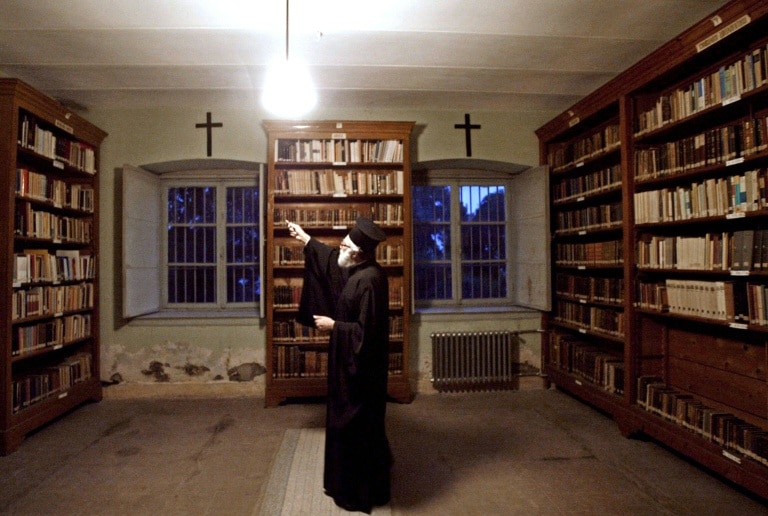
Decades after forcing the closure of one of Eastern Orthodox Christianity’s most important theological institutions, Turkey has overseen a complete renovation of the Halki seminary — but the path to reopening the school remains blocked by regulatory red tape, officials from the Ecumenical Patriarchate confirmed Sunday.
Nestled on Heybeliada, one of Istanbul’s scenic Princes’ Islands, the Halki seminary has occupied a central place in Orthodox religious life since its founding in 1844. For more than a century, it served as the primary training ground for Orthodox clergy across the globe, counting current Ecumenical Patriarch Bartholomew I, the spiritual leader of the world’s 260 million Orthodox Christians, among its most prominent graduates. It sits on grounds that house a Byzantine-era monastery, adding centuries more religious and historical weight to the site.
That legacy was interrupted in 1971, when the Turkish government shuttered the seminary under a new state law restricting private higher education institutions. For 53 years, Bartholomew has led a sustained international campaign to pressure Ankara to reverse the decision, drawing support from major global powers including the United States and the European Union. During a high-profile 2019 meeting at the White House with then-U.S. President Donald Trump, the patriarch raised the long-stalled issue, and Trump publicly pledged to support efforts to break the diplomatic deadlock. The EU has repeatedly criticized Turkey over its failure to guarantee full religious freedom for non-Muslim minority communities, with the Halki seminary case a frequent point of contention in bilateral talks.
In remarks to Orthodox donors in Athens earlier this week, Bartholomew, 86, sparked widespread optimism when he announced that extensive multi-year renovation works on the seminary’s entire building complex would wrap up in September, and that the renovated structure would be inaugurated that same month. “We are also optimistic regarding the reopening of the Holy Theological School of Halki,” he told the gathering, leading many global observers to interpret the comments as a signal that the school would welcome students again after half a century.
However, Nikos Papachristou, a spokesman for the Istanbul-based Ecumenical Patriarchate, clarified the situation to AFP on Sunday, distinguishing between the inauguration of the renovated building and the long-sought goal of resuming educational operations. “What he said in Athens is that we are expecting that the renovation will be finished by September, so at the end of September, he will be able to inaugurate the renovated building,” Papachristou explained. The patriarch’s ongoing optimism, the spokesman added, centers on the hope that Turkish authorities will grant the operating license required for reopening in time for the inauguration, turning the celebratory event into a dual milestone for the global Orthodox community. As of yet, no such license has been approved, meaning there are no concrete plans to welcome students back to the hilltop campus.
For the global Orthodox community, the seminary carries outsized symbolic meaning: the faith’s historical center was Constantinople — the precursor to modern-day Istanbul — before the Ottoman conquest of the city in 1453, making any progress on reopening the school a matter of deep cultural and religious significance for Orthodox Christians worldwide.