作者: admin

  • ISIS-linked mother and daughter Kawsar Ahmad and Zeinab Ahmad reveal new bail effort on slavery charges

    ISIS-linked mother and daughter Kawsar Ahmad and Zeinab Ahmad reveal new bail effort on slavery charges

    In a surprising development in an Australian human trafficking and slavery case, a mother-daughter pair facing multiple slavery and crimes against humanity charges have withdrawn their immediate push for bail, just days after their arrest on arrival back in Australia from a Syrian refugee camp.

    Fifty-four-year-old Kawsar Ahmad and her 31-year-old daughter Zeinab Ahmad appeared before Melbourne Magistrates Court on Monday afternoon, four days after federal officers took them into custody at Melbourne Airport last Thursday. The two Australian citizens are among 13 people – four women and nine children – repatriated to Australia from the Al Roj camp in northern Syria, where they had been held by Kurdish forces since March 2019. The camp holds relatives of people alleged to be affiliated with the ISIS terror group.

    Court documents detail that the pair traveled to Syria originally in 2014. Prosecutors allege that in June 2017, Kawsar Ahmad aided in the purchase of a 20-something-year-old Yazidi woman for $10,000 USD. Between that purchase and November 2018, both women allegedly held the victim in their home in Syria’s Deir ez-Zor province, exercising full ownership over her in conditions that meet legal definitions of slavery.

    Kawsar Ahmad, who also goes by the name Kawsar Abbas, faces four separate counts covering enslavement, holding a person as a slave, exploiting a slave, and participating in slave trading – all classified as crimes against humanity under Australian law. Zeinab Ahmad, alternatively listed as Zeinab Ahmed, faces two counts of enslavement and exploitation of a slave. Arrest warrants for the two women were first issued back on February 17 this year, after authorities confirmed they planned to return to Australia after years detained overseas.

    The charges outline that the alleged conduct was carried out knowingly as part of a systematic, widespread attack targeting the civilian population in the war-torn region. Prior to Monday’s hearing, court observers had confirmed the pair’s legal team was preparing immediate bail applications to secure their release ahead of trial. But in a sudden shift, Chief Magistrate Lisa Hannan told the court the defendants had withdrawn their immediate applications, instead requesting that bail hearings be scheduled at a later date next month.

    After a short adjournment, Hannan set Zeinab Ahmad’s bail hearing for June 5, and Kawsar Ahmad’s for June 16. The two defendants were supported in court by Kawsar Ahmad’s brother, Abraham Abbas, who attended in a show of family support. The repatriation of the group from Syria already sparked unrest last week, when supporters of the returning group clashed with journalists covering the arrival at Melbourne Airport.

    Under Australian law, the media is prohibited from publicly naming the Yazidi woman who is the alleged primary victim in the case. Hannan has also issued an interim suppression order blocking the identification of a second woman who will serve as a witness for the prosecution in the trial. Prosecutors confirmed on Monday that they would file an application to have this second witness designated a “special witness” under Australia’s criminal procedure rules, which would extend the lifetime ban on any publication that could reveal her identity. The witness is alleged to have also been a victim of slavery-related offenses separate from the charges against Ahmad and her daughter, but will give testimony covering her interactions with the two accused. A preliminary hearing on the special witness designation is scheduled to take place in the same court on Tuesday.

  • Contractor accused of attack at Adelaide Hills school

    Contractor accused of attack at Adelaide Hills school

    A contract worker employed at a South Australian school has been formally charged with aggravated indecent assault against a student following an alleged incident in late April, and is scheduled to appear before a local court early next month. The accused, a 30-year-old man from Adelaide’s eastern suburbs, was taken into custody on the same day that law enforcement responded to reports of the assault, according to official statements from South Australia Police.

    The reported attack unfolded on Monday, April 27, at a school located in the Adelaide Hills region. Authorities have not released the name or exact location of the campus involved in the case to protect the privacy of the victim and the broader school community. After completing initial investigative work, police took the suspect into custody and formally charged him with the aggravated offense. He has since been released on bail, with his first court appearance set for July 2 at the Mount Barker Magistrates Court.

    South Australia Police is now calling on members of the public who may hold additional information connected to the incident to come forward to assist with the ongoing investigation. Anyone with relevant details can reach out to Crime Stoppers South Australia through the organization’s official website at www.crimestopperssa.com.au, or by placing a free call to 1800 333 000, and should reference case number 111502 when submitting information.

  • Ukrainians seeking cultural escape from war’s brutality find comfort and resilience at Kyiv art fair

    Ukrainians seeking cultural escape from war’s brutality find comfort and resilience at Kyiv art fair

    Against the persistent backdrop of air-raid sirens and the constant threat of missile strikes, Ukraine’s capital Kyiv has played host to a landmark contemporary art fair that carries a profound, quiet mission: to help a war-battered nation process the unthinkable new normal that full-scale conflict has imposed on daily life. Organized by the long-running cultural platform Art Kyiv, the exhibition, titled *This is Normal*, opened at the city’s Lavra Gallery this cycle, marking only the second time the event has been held since Russia’s full-scale invasion began in 2022, following an inaugural launch last October.

    Anna Avetova, director of Art Kyiv, explains that the decision to hold the fair amid active conflict was not an oversight, but a deliberate ideological choice. “Holding the event during wartime means not waiting for a better moment, but working with reality as it is,” Avetova says. Unlike many cultural initiatives in Ukraine that center overt narratives of war, *This is Normal* makes a purposeful choice: no exhibition booth is dedicated exclusively to conflict. The war permeates every conversation and every unspoken moment in the gallery, Avetova notes, but curators intentionally rejected the urge to force the topic to the forefront. Instead, the fair positions art as a unifying thread that binds everyday life to cultural memory, rather than a separate compartment separated from the national crisis. “In this context, art does not stand apart from life — it helps make sense of the present, preserve cultural continuity, and lay the groundwork for the future,” Avetova adds. “Art is one of the things that keeps us human. It sustains us and warms our soul when things are very hard.”

    Hundreds of works fill the gallery space, spanning an extraordinary range of mediums and styles: from abstract ceramic sculpture and textured mixed-media installations to expressive abstract canvases, surreal portraits, and atmospheric landscape paintings. All works on display are primarily available for purchase, part of a secondary yet critical goal of the fair: to revitalize Ukraine’s stagnant domestic art market. The sector already ground to a near-halt during the COVID-19 pandemic, and the full-scale invasion delivered a far more devastating blow, shuttering galleries, displacing artists, and drying up collector demand. Today, as the market begins to stir back to slow life, the fair stands as proof that Ukrainian creators are ready not only to create for reflection, but to participate in the global and domestic art economy once more.

    The fair has drawn together dozens of Ukraine’s most prominent galleries, leading artists, local collectors, and leading cultural institutions, all gathering in a space where air-raid sirens occasionally cut through artist talks and gallery walks. For many participating creators, the opportunity to exhibit in Kyiv right now carries personal as well as national meaning.

    Ceramic artist Tala Vovk is showing her work at a major Kyiv fair for the first time. She makes a point of attending every cultural event she can in the capital, explaining that these gatherings offer a vital chance to step away from the constant stress of war and detach from the pervasive grief surrounding the conflict. “Art is a place where the everyday doesn’t exist,” Vovk says. She argues that sustaining cultural activity through wartime is not a trivial distraction, but an investment in Ukraine’s long-term future. Nourishing the country’s cultural foundation now, she explains, gives it space to take root and grow stronger once the war ends, and that strength will sustain the nation through every challenge ahead.

    For artist Yuriy Vatkin, whose work is featured at the fair, art has already served as a lifeline through the darkest days of the invasion. When the full-scale war began, Vatkin found himself trapped under Russian occupation in the corridor between Kharkiv, Ukraine’s second-largest city, and the Russian border. Even after an attack damaged his studio, painting remained a tool to survive and protect his mental health, according to his representative Denys Dmytriev. True to the fair’s ethos, Vatkin’s displayed works avoid explicit war imagery. Instead, they lean into his signature style: thick, layered brushstrokes, fragmented forms, and vivid, unexpected color palettes that evoke a quiet sense of motion and instability that resonates with the current moment.

    Visitors echo the artists’ belief that continuing cultural life amid war is a radical act of resilience. Anna Domashchenko, a first-time attendee, says she was drawn to Vatkin’s rich, saturated hues, which stir intense, vital emotions that feel missing from daily life under war. She attends as many art events as possible in Kyiv, and says she often hears questions about whether such events are appropriate amid ongoing death and destruction. For her, the answer is clear. “Sometimes you wonder whether it’s appropriate… but these are exactly the things that inspire you and remind you that life is full of color, and all of those colors should be present at any time,” Domashchenko says. “Even in times as hard as these.”

  • Turkish Airlines jet catches fire while landing at Nepal’s main airport; all passengers safe

    Turkish Airlines jet catches fire while landing at Nepal’s main airport; all passengers safe

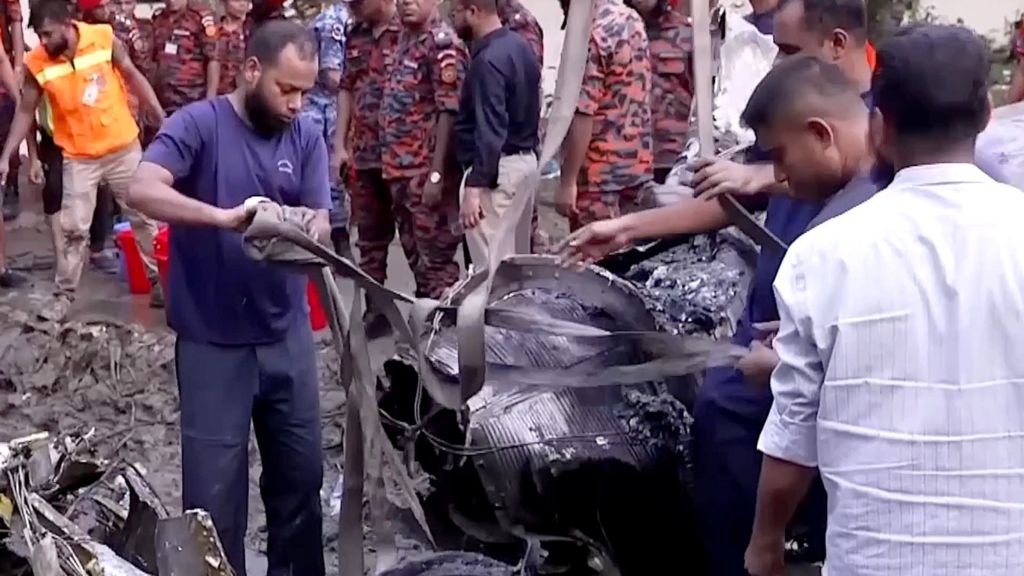
    On a Monday morning in Kathmandu, Nepal, an unexpected emergency disrupted operations at the country’s busiest air hub: a Turkish Airlines passenger jet erupted in flames while touching down at Tribhuvan International Airport. Though the incident caused significant disruption to regional air travel, no casualties or injuries have been confirmed by local aviation authorities.

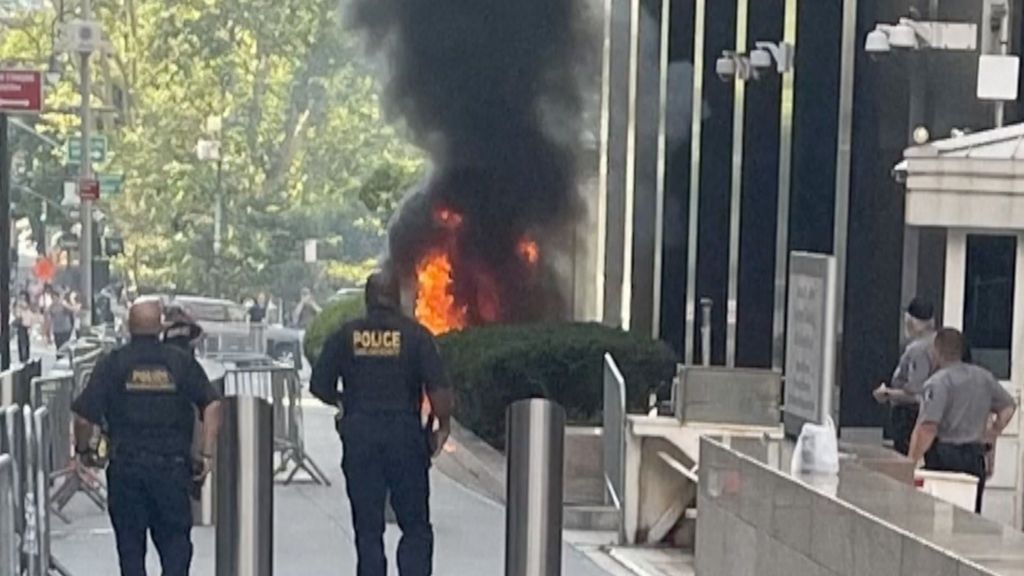
    According to airport officials, the Istanbul-originating flight landed with visible fire and thick smoke billowing from the aircraft’s right landing gear. Emergency response teams were activated immediately after the incident, and first responders successfully brought the blaze under control in a timely manner. All 277 passengers on board the Airbus A330 were safely evacuated from the aircraft without harm.

    The single active runway at Tribhuvan — Nepal’s only international gateway — was closed shortly after the emergency to allow for official investigations and clearance work. With the runway out of service, multiple incoming commercial flights bound for Kathmandu were forced to hold over alternative airspace or divert to alternate airports, leaving hundreds of passengers affected by delays across the region.

    This incident adds to Nepal’s long-running history of aviation challenges, rooted in its unique geographic and meteorological conditions. The country’s mountainous landscape creates unpredictable flying conditions, and civil aviation records show Nepal experiences a higher-than-average rate of aircraft accidents and incidents compared to global averages.

    Notably, this is not the first time a Turkish Airlines aircraft has faced an emergency during landing at Kathmandu airport. Back in 2015, another jet from the carrier skidded off a rain-slicked runway amid heavy dense fog, forcing a multi-day shutdown of the airport. Miraculously, that incident also resulted in zero reported injuries. After the aircraft was recovered from the runway, it was towed out of the airport and eventually converted into a public aviation museum.

  • Man accused of Bunnings dog attack in ‘irritating’ court no-show

    Man accused of Bunnings dog attack in ‘irritating’ court no-show

    A new development has unfolded in a widely shared animal cruelty case out of South Australia, where an arrest warrant is now active for a man accused of kicking a tethered dog in a suburban Bunnings Warehouse carpark, after he failed to appear for a scheduled court hearing.

    The incident first made headlines across Australia on March 1, when a security camera clip captured a man striking a four-year-old Staffordshire bull terrier twice outside the Parafield Bunnings location, north of Adelaide. The video spread rapidly across social media, sparking widespread public anger over the treatment of the defenseless animal, which was tied to a ute parked in the lot at the time.

    Authorities identified 48-year-old Nathan Bradwell of Smithfield as the suspect, and he was formally charged with ill-treatment of an animal in violation of South Australia’s Animal Welfare Act. Bradwell made his first court appearance on April 14, where he told reporters he was seeking legal counsel and planned to argue he acted in self-defense, claiming he was trying to move the dog away from his vehicle. He kept his face hidden under a jacket while speaking to the press outside the courtroom following that initial hearing.

    Bradwell was scheduled to make his second appearance in the case at the Elizabeth Magistrates Court on Monday, but he never arrived. After noting Bradwell’s absence, Magistrate David White authorized the issuance of an arrest warrant to compel the suspect to attend a future hearing. Court officials confirmed that if Bradwell is convicted on the current charge, he could face a maximum custodial sentence of two years behind bars. The entire hearing lasted just over one minute.

    Attending the hearing in Bradwell’s place were the dog’s current owners, Hayden Palkovics and Tyler Wright, along with the animal’s previous owner, who is a friend of the couple. In comments to reporters after the hearing, Wright expressed deep frustration and disappointment over Bradwell’s no-show, an action she said has left the pair unsettled.

    “It is frustrating, annoying and irritating. I find it laughable that he did not show up,” Wright said, adding that the absence left the couple “really sad” that the case has been dragged out further. On a more positive note, she confirmed the dog that was attacked has fully recovered and is back to her normal, friendly temperament.

    The case will be called back to court at a future date once Bradwell is taken into custody on the active arrest warrant.

  • Under-threat UK PM Starmer to attempt reset after disastrous polls

    Under-threat UK PM Starmer to attempt reset after disastrous polls

    British Prime Minister Keir Starmer is facing the most serious threat to his leadership since taking office less than two years ago, after a catastrophic showing in last week’s local and regional elections that has left his Labour Party reeling and open rebellion brewing among its ranks. On Monday, the 63-year-old prime minister is set to attempt a desperately needed political reset, addressing a public that has grown increasingly frustrated with incremental policy progress, with plans to announce a bolder policy agenda focused on three core areas: boosting sluggish national economic growth, forging closer ties with the European Union, and accelerating progress on energy policy.

    The scale of Labour’s electoral defeat last week has sent shockwaves through the party. For the first time in the 27-year history of Cardiff’s devolved parliament, Labour lost control of the Welsh government, a historic upset that signaled deep voter dissatisfaction with the party’s performance. Across England, Labour shed nearly 1,500 local council seats, while the right-wing, anti-immigration Reform UK party led by Brexit figurehead Nigel Farage exploded from fewer than 100 seats to more than 1,400, a surge that has reshaped the UK’s political landscape. In Scotland, SNP leader John Swinney seized on the results to call for a new independence referendum, framing the move as a safeguard against a potential future Reform UK national government.

    The poor performance comes just 20 months after Starmer led Labour to a landslide general election victory, ending 14 consecutive years of Conservative rule and raising widespread hopes for a new era of governance. Since taking office, however, Starmer’s tenure has been marked by a string of policy missteps and growing public discontent. Most recently, he has been engulfed in controversy over the short-lived appointment of Peter Mandelson as UK ambassador to Washington, who was quickly sacked after new revelations emerged about his past ties to convicted sex offender Jeffrey Epstein. Beyond the scandal, Starmer has failed to deliver on promises of faster economic growth, leaving British households still grappling with the ongoing fallout from a years-long cost-of-living crisis that has eroded disposable incomes and pushed up housing and energy costs. He has, however, earned cross-partisan praise for his firm stance against former U.S. President Donald Trump’s policy on Iran, a rare bright spot in an otherwise fraught term so far.

    In the aftermath of the election drubbing, multiple Labour MPs have publicly called for Starmer to step down, breaking ranks to challenge his grip on the party leadership. Former junior minister Catherine West has issued an ultimatum: if no sitting cabinet member launches a challenge by Monday, she will initiate the process to trigger a leadership contest herself, a move that would open the door for other dissident MPs to join the challenge. Former Starmer loyalist Josh Simons became one of the most high-profile defectors from the prime minister’s camp, saying that Starmer has “lost the country” and must resign. Veteran Labour MP Clive Betts added to the pressure, arguing that the party must find a “proper and constructive” path to install a new leader in the coming months.

    Under Labour Party rules, any challenger must secure the public support of 81 sitting Labour MPs – 20 percent of the party’s parliamentary caucus – to trigger a formal leadership contest. For weeks before the election, British media was rife with speculation that top party figures including former deputy prime minister Angela Rayner and Health Secretary Wes Streeting would launch challenges if the results went poorly. Neither has yet announced a bid, and both lack the unified support within the party needed to hit the nomination threshold. Rayner stopped short of calling for Starmer’s resignation on Sunday, but issued a sharp rebuke of his current approach, writing on social media platform X that “this may be our last chance… the current strategy isn’t working and it needs to change.”

    Other popular potential contenders, such as Greater Manchester Mayor Andy Burnham, are ineligible to launch a bid because they do not hold a parliamentary seat. That has sparked speculation that the party’s anti-Starmer camp could rally behind a so-called unity candidate, such as Defence Secretary John Healey or Armed Forces Minister Al Carns. The absence of a clear, consensus challenger means Starmer still has a path to hold onto power, and the prime minister himself has repeatedly rejected calls to step aside. When asked by the *Sunday Mirror* whether he intended to lead Labour into the next general election (expected by 2029 at the latest) and serve a full five-year term, Starmer answered plainly: “Yes, I will.” He reaffirmed his long-stated commitment to delivering a “decade of national renewal” and said he intended to see that project through.

    The potential of a leadership challenge carries major risks for Labour, as it would almost certainly spark a damaging period of internal infighting, with MPs from the party’s left and right wings jockeying to advance their preferred candidates or shore up support for the incumbent. Many in the party are also wary of triggering a leadership change so soon after the chaotic 2022 Conservative leadership crisis, which saw the party go through three prime ministers in just four months, a period of instability that remains fresh in the minds of voters and MPs alike. For now, the country waits to see whether Starmer’s planned reset can defuse the rebellion within his own party and win back disillusioned voters ahead of the next national election.

  • Star Aussie bowling trio to sit out of Pakistan and Bangladesh limited overs tour

    Star Aussie bowling trio to sit out of Pakistan and Bangladesh limited overs tour

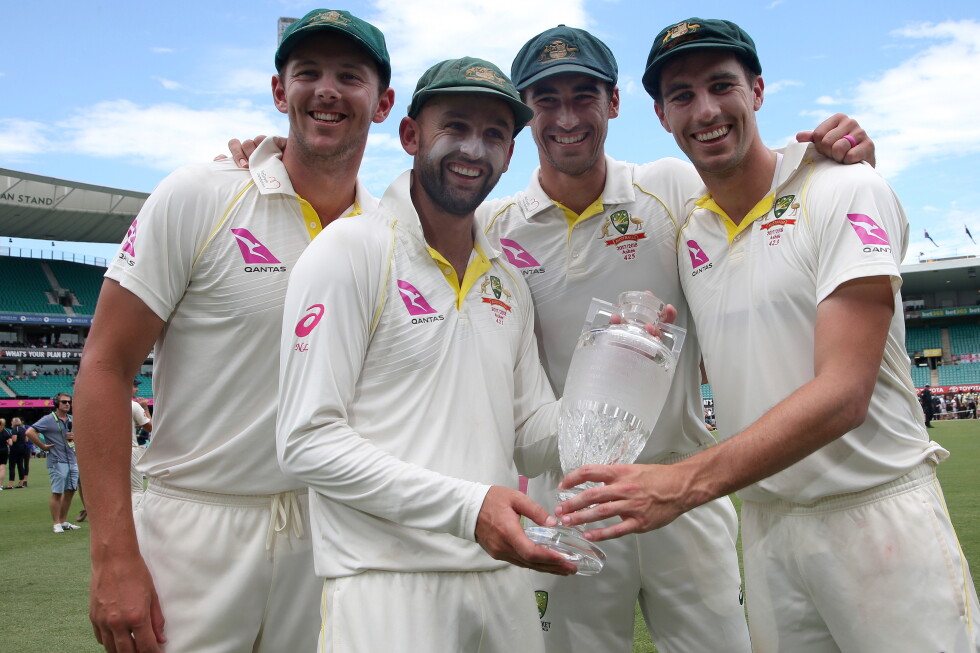
    SYDNEY – Cricket Australia has announced a reshuffled limited-overs squad for its back-to-back tours of Pakistan and Bangladesh later this month, making the call to rest three of its star fast bowlers: Pat Cummins, Mitchell Starc, and Josh Hazlewood. The high-profile trio will sit out the entire three-match ODI series against Pakistan, which kicks off in Rawalpindi on May 30, opening the door for a wave of emerging young talent to earn their first senior international call-ups. Uncapped all-rounder Liam Scott and Ollie Peake, former captain of Australia’s Under-19 World Cup side, are the two first-time senior selections for the Pakistan tour, while promising young batter Joel Davies has earned a spot in Australia’s T20 squad for the Bangladesh series set for June.

    Several players with ongoing Indian Premier League commitments – Travis Head, Cooper Connolly, Ben Dwarshuis, and Xavier Bartlett – will link up with the national squad after finishing their franchise commitments in the T20 league. Notably, veteran star all-rounder Glenn Maxwell has been left out of the squads for both tours entirely. All-rounder Mitchell Marsh will lead the Australian side across both tours, as the program forms a key early part of the team’s preparation for the 2025 ICC Men’s Cricket World Cup, scheduled to be co-hosted by South Africa, Namibia, and Zimbabwe in October next year.

    In comments announcing the squad, national selection chairman George Bailey emphasized that these back-to-back subcontinental tours represent a critical development opportunity for Australia’s next generation of cricket talent. “It’s always exciting to see new players get an opportunity to play international cricket and be a part of the national team,” Bailey said. “The blend of experienced players coupled with new or returning players will provide a nice mix for these subcontinent tours. Continuing to provide opportunities for players to develop across a broad range of conditions and experiences is important and will continue to be a focus over the next 18 months to two years.”

    The decision to rest Cummins, Starc and Hazlewood is a strategic one: the three frontline bowlers will use the break to build up fitness and prepare for Australia’s upcoming World Test Championship campaign, which resumes in August with a two-match home test series against Bangladesh.

    Following the Pakistan ODI series, which will continue with matches in Lahore on June 2 and 4, Australia will travel to Bangladesh for three ODIs in Dhaka on June 9, 11 and 14, followed by three T20 Internationals in Chattogram on June 17, 19 and 21.

  • Is risk-averse Hollywood running scared of Cannes critics?

    Is risk-averse Hollywood running scared of Cannes critics?

    For more than a decade, the Cannes Film Festival’s iconic red carpet has been a launching pad for Hollywood’s biggest franchises, from *Star Wars* and *Indiana Jones* to *Top Gun*. But as the 2026 edition of the world’s most famous cinema gathering prepares to kick off this Tuesday, a striking absence has sparked widespread industry debate: not a single major Hollywood blockbuster is featured on the official lineup, leaving top studio executives unaccounted for and industry observers questioning what has driven American moviemaking’s most high-profile players to ghost the event.

    For decades, Cannes has built its programming around a delicate balance: boundary-pushing, often challenging independent art house cinema forms the core of its competitive lineup, while big-budget Hollywood blockbusters and their A-list leading stars bring global media attention, mass audience interest, and glamour to the Croisette. Megastars from Tom Cruise to Harrison Ford have turned out to walk the same red carpets as revered auteur directors and little-known indie casts, all in a collective effort to prop up the global film industry that has long navigated financial and structural uncertainty.

    When festival director Thierry Fremaux—who has centered American cinema as a priority since taking the helm 25 years ago—unveiled the 2026 lineup in April, he was forced to directly address the gap left by major studios. He noted that independent American filmmaking, not tied to the big Los Angeles studio system, still has a strong presence at this year’s event: two U.S. independent features will compete for the Palme d’Or, including James Gray’s *Paper Tiger* starring Adam Driver and Scarlett Johansson, and Ira Sachs’ *The Man I Love* featuring Rami Malek. Even so, all of Hollywood’s biggest power players—Universal, Disney, Warner Bros., Sony, Paramount, and even streaming giants Netflix and Amazon—have opted to skip the 2026 festival entirely.

    This blockbuster drought is not unique to Cannes this year. February’s Berlin International Film Festival faced the same gap, with no major American tentpole films on its schedule. Berlin director Tricia Tuttle has framed the absence not as a side effect of political estrangement between the U.S. and Europe under the Trump administration, but rather as a product of shrinking risk tolerance and mounting commercial pressures across the film industry.

    “There’s a nervousness in a very difficult marketplace: nervousness about reviews coming out long before release and about controlling the way films of that scale are launched because there’s so much at stake,” Tuttle explained in a January interview with *The Hollywood Reporter*. She pointed directly to the 2024 Venice Film Festival premiere of *Joker: Folie a Deux* as a turning point: the film received scathing critical reviews ahead of its theatrical release, and ultimately flopped at the global box office. “We’ve seen more reticence since,” Tuttle added.

    In an earlier era of more consistent box office profits and steady studio output, a single commercial flop could be absorbed without major upheaval. Today, however, with studios hyper-focused on cutting unnecessary costs and protecting multi-hundred-million-dollar investments, a bad early critical reception is seen as an unacceptable risk that can sink a film before it even reaches wide release.

    Los Angeles-based film critic and long-time Cannes attendee J. Sperling Reich echoed that analysis, noting that major studios are producing fewer films that fit the festival’s timeline, and increasingly prefer to control their own promotional rollouts rather than cede that control to a festival schedule. “They’re essentially flying in talent, trying to figure out a publicity narrative… two, three, sometimes four months early (before launch), and then they expose that film to the world’s toughest critics,” Reich told AFP. “If it doesn’t fly in Cannes, it’s going to be tough to recover from that.”

    Recent high-profile blockbusters, including the Michael Jackson biopic *Michael* and *The Devil Wears Prada 2*, have already forgone festival premieres in favor of tightly controlled, influencer-driven promotional events tailored to social media. While Reich noted that major anticipated films like Christopher Nolan’s upcoming ancient Greek action epic *Odyssey* and Steven Spielberg’s sci-fi thriller *Disclosure Day* would once have been considered shoo-ins for a Cannes premiere, those projects do not need the exposure the festival provides. “But the reality is those films don’t need Cannes,” he said.

    Not all industry analysts believe the 2026 absence signals a permanent break between Hollywood and the Cannes Film Festival. Observers point out that just six months after the *Joker: Folie a Deux* flop, the 2025 Venice Film Festival still hosted a packed slate of big-budget American films, suggesting the trend is not permanent.

    Eric Marti, head of box office analytics firm Comscore’s French division, noted that Hollywood has always taken a pragmatic, transactional approach to participating in Cannes. “It’s a tremendous showcase, as it’s one of the most watched events, but they also have a very well-oiled promotional machine. If the Cannes dates and their launches line up, the two come together,” he explained.

    Marti added that Hollywood is not entirely absent from this year’s festival: organizers have added a special 25th-anniversary screening of the Universal-owned *Fast and Furious* franchise, with original stars Vin Diesel, Michelle Rodriguez, and Jordana Brewster all set to attend the event. For many in the industry, the 2026 blockbuster gap is just a temporary pause, not a permanent split: Hollywood may be sitting out this year, but it is widely expected to return to the Croisette in 2027.

  • Antony Catalano: Accused media boss excused from court appearance due to ‘potentially detrimental’ impact of media reporting

    Antony Catalano: Accused media boss excused from court appearance due to ‘potentially detrimental’ impact of media reporting

    Prominent Australian media executive Antony Catalano, the former chairman of Australian Community Media (ACM), has been permitted to skip in-person court appearances for his ongoing criminal case, after his legal team argued that intense public and media scrutiny would pose severe risks to his mental well-being. The 59-year-old industry leader faces three serious charges: common assault, threats to kill, and false imprisonment, all stemming from an alleged domestic incident involving his wife Stefanie Catalano at the couple’s St Kilda apartment on March 13.

    Authorities’ accounts of the incident allege Catalano confronted his partner in an acutely drug-impaired state during the early hours of that morning. The victim was reportedly able to escape the residential complex, and was found by a passing motorist while in a state of extreme emotional distress. Catalano was taken into police custody later the same day, with reports indicating he was wearing underwear torn during the confrontation.

    In line with his bail requirements, Catalano had initially been ordered to appear in person at the Melbourne Magistrates Court for the preliminary hearing held on Monday. However, his defense barrister Tony Hargreaves made an urgent application to allow his client to appear via video link from his legal team’s office, arguing that a crowd of waiting journalists gathered in the court building would worsen his client’s already fragile mental health.

    Hargreaves told the court that following his client’s arrest and charging, Catalano admitted himself to a rehabilitation facility to address his health, and only recently completed a 28-day inpatient treatment program. He added that the intense media interest in the case had already penetrated the facility, with photographers obtaining images of Catalano during his stay, and that his client was still in the early stages of recovery post-discharge. “Forcing him to walk through the pack of media waiting downstairs would be potentially detrimental to his mental health,” Hargreaves argued.

    The application went unopposed by Senior Constable Matthew Morris, the prosecuting officer representing police. Magistrate Nahrain Warda granted the request, excusing Catalano from in-person attendance not just for this preliminary hearing, but also for all future scheduled court appearances in the case.

    During Monday’s hearing, Catalano appeared via video link dressed in a dark formal suit, sitting with his arms crossed and was not required to make any statements to the court. Hargreaves told the court that his client has already expressed deep remorse for the events that took place, but the criminal proceedings remain in their early stages, and the defense team is awaiting two key medical reports to move forward with the case. One report is from Catalano’s treating physician, and the second from a consulting psychiatrist. Hargreaves noted that the first provider will not be able to complete their report until late June, while the second will not finish theirs until mid-July, prompting a request for an adjournment.

    Catalano’s bail conditions were extended ahead of the next hearing, scheduled for June 2. In a public statement issued the day after his arrest, Catalano publicly acknowledged his responsibility, saying he was “deeply ashamed and humiliated” by the alleged incident, and announced he would step down from all his professional leadership roles. “I know that my actions have caused hurt and concern for others, including the woman involved, my family, friends, colleagues and the many people connected to the businesses I have been privileged to lead,” he said in the statement, adding that he would not make any further public comments while the matter moves through the court system per his legal team’s advice.

  • The first 48-team World Cup — more opportunities, less jeopardy?

    The first 48-team World Cup — more opportunities, less jeopardy?

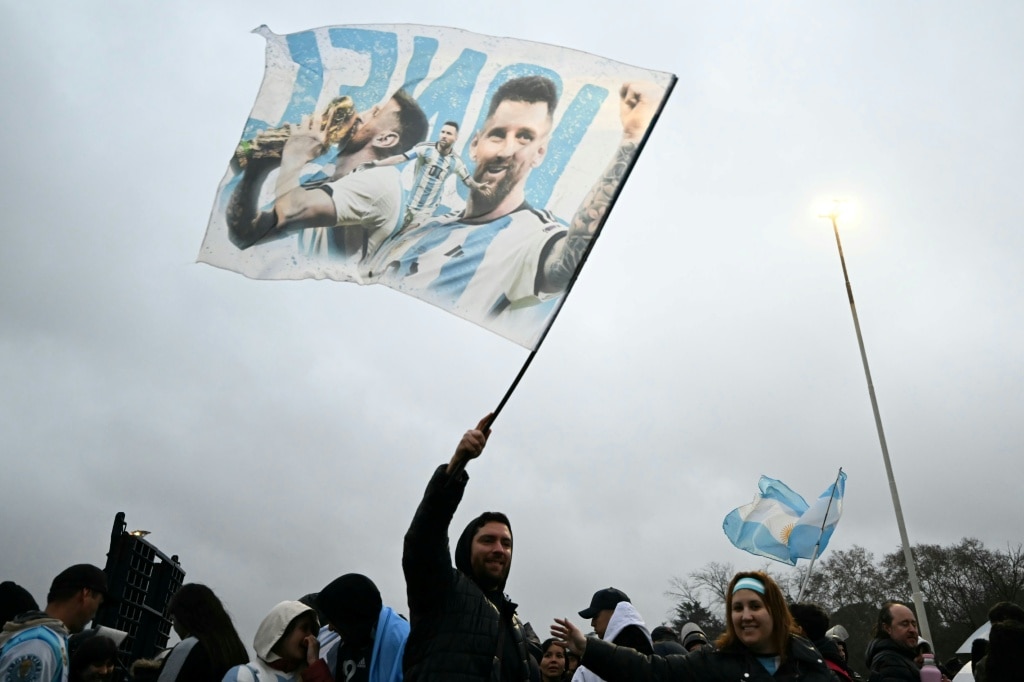
    When the 2026 FIFA World Cup kicks off across North America, it will mark the most transformative change to football’s biggest showcase in four decades: the first-ever 48-team tournament. The expansion, a flagship campaign promise delivered by FIFA president Gianni Infantino just a decade after he took the helm of global football’s governing body, has reignited a fierce debate over whether broadening access to the finals will dilute the high-stakes drama that has made the World Cup a global cultural touchstone.

    Infantino has framed the shift as far more than a simple format tweak, arguing the World Cup must evolve beyond an elite athletic competition to become a truly inclusive global social event. For decades, the World Cup fell far short of its ‘global’ branding, dominated by European and South American nations from its early 16-team format through its 1982 expansion to 24 sides. Historical data underscores this imbalance: between the first World Cup and 1982, the entire African continent sent just four teams total to the finals. Even as late as the 1990 tournament in Italy, 14 of the 24 competing nations came from Europe, while Africa, Asia and the CONCACAF region each received only two slots.

    The 1998 expansion to 32 teams moved the needle toward greater fairness in slot allocation, but gaps remained: at the 2022 Qatar World Cup, Europe still claimed 13 spots while Africa earned just five. The new 48-team format addresses this without stripping established powerhouses of their existing access, reallocating slots to create a far more balanced distribution: Europe retains 16 places, Africa earns 10, Asia claims 9, South America and CONCACAF get six each, with an additional spot reserved for Oceania’s New Zealand.

    FIFA’s chief of global football development, legendary manager Arsene Wenger, has defended the expansion as an inevitable and logical step for the sport’s growth. “It’s a natural evolution. We want to make football global all over the world,” Wenger stated last December, noting 48 teams still accounts for less than 25% of FIFA’s 211 member nations, keeping the qualifying bar appropriately high.

    For underdog and smaller nations, the format shift is a historic breakthrough. Tiny Caribbean island nation Curacao, with a total population of just 160,000, is on track to make its World Cup debut in 2026, joined by other first-time qualifiers including Cape Verde, Jordan and Uzbekistan. Curacao head coach Fred Rutten says his side is already relishing the chance to pull off upset wins against global giants. The new format also gives lower-ranked sides a far better shot at advancing past the group stage into the knockout round: the top two teams from each of 12 groups advance, plus the eight best third-place finishers, meaning just one win in the group stage can often secure progression.

    But critics warn the expanded format comes at a major cost to the tension and jeopardy that has produced some of the World Cup’s most iconic moments. Where top-tier nations once faced immediate elimination after an early bad result – think 2022 when eventual champion Argentina faced elimination after an opening defeat to Saudi Arabia, or Germany’s stunning group-stage exits in both 2018 and 2022 – elite sides now have far more room to recover from a slow start. The historic drama of watching a global powerhouse crash out early in the tournament is likely to become a thing of the past, opponents argue.

    The expanded tournament also brings logistical and physical challenges for players. Where the 32-team format featured 48 group-stage games to eliminate 16 teams, the 48-team format requires 72 group-stage matches to cut the field to the same 16 knockout-round participants. To win the tournament, teams will now need to play eight matches, one more than the previous format, all scheduled for a hot North American summer that will put extra physical strain on top players already stretched by crowded club calendar schedules.

    Noted football author Jonathan Wilson, who wrote *The Power and the Glory: A New History of the World Cup*, says the 32-team format was perfectly balanced. “I see the argument about increasing representation but I think a 32-team finals was perfect,” Wilson explained. “The biggest problem with this is not really the quality, it’s the dilution of spectacle in the first round with eight third-placed teams to go through. The group stage may end up trying peoples’ patience.” He added that the extra knockout round could incentivize more defensive, cautious play, further dulling the tournament’s early excitement.

    Even elite managers acknowledge the new strategic priority for big teams has shifted: where once they needed to avoid any early slip-up, now the focus is simply on grinding out enough results to advance. “You just focus on the group, this is what you do, and make sure you are in the right head space,” England manager Thomas Tuchel said of the new approach. As the 2026 tournament approaches, the football world remains split: while smaller nations celebrate unprecedented access, fans and analysts wait to see whether the expanded format will grow the global love of the game – or erode the high-stakes magic that made the World Cup unmissable.