作者: admin

  • Colombia’s Petro calls on supporters to defend economic reforms in his last presidential speech

    Colombia’s Petro calls on supporters to defend economic reforms in his last presidential speech

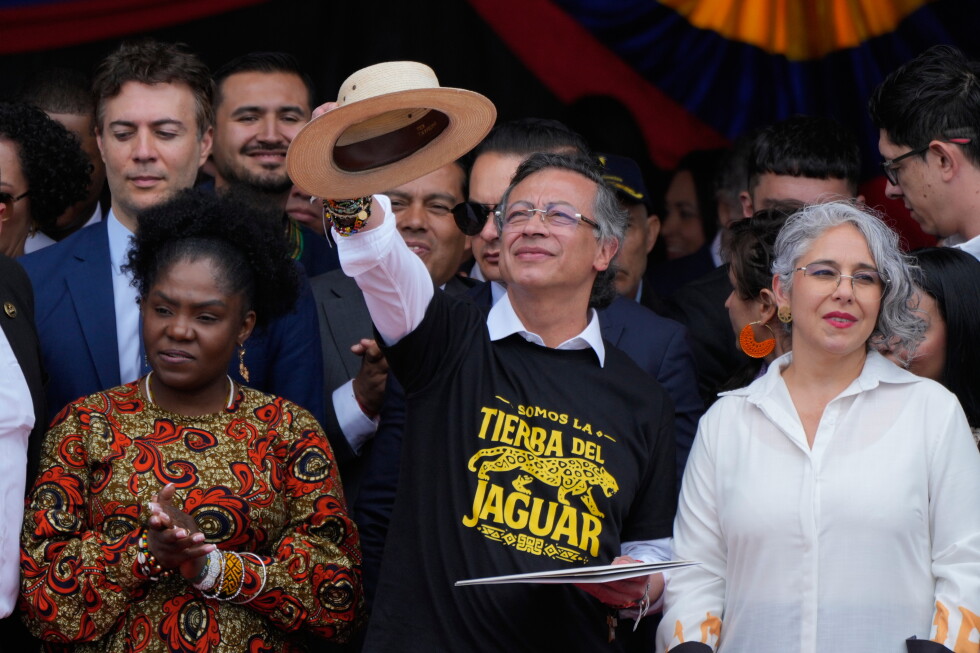
    BOGOTÁ, Colombia – On Colombia’s 2026 Independence Day, outgoing left-wing President Gustavo Petro delivered his final public address as head of state, using the moment to stoke political tensions across the nation by leveling explosive claims of foreign interference in the country’s recent presidential election and calling on his supporters to mobilize en masse to block policy changes from the incoming conservative government. The speech, delivered July 20 amid nationwide military parades that included a public appearance by president-elect Abelardo de la Espriella, deepens a political crisis that has simmered since the narrow June 21 election result.

    De la Espriella, a dual U.S.-Colombian citizen and conservative criminal defense lawyer who entered politics only in 2025, secured a narrow victory over Petro’s ally Iván Cepeda by a margin of just 250,000 votes. The president-elect, who will be sworn into office on August 7, has laid out an aggressive policy agenda that directly reverses many of Petro administration’s core priorities: he has proposed cutting public sector spending by as much as 40%, rewriting existing labor laws to allow companies to hire workers on hourly contracts, cutting business taxes, canceling ongoing peace talks with rebel groups, and constructing large-scale mega prisons modeled after El Salvador’s controversial CECOT facility. During the election campaign, de la Espriella was publicly endorsed by former U.S. President Donald Trump, a move that has fueled opposition claims of external meddling in Colombia’s domestic politics.

    In his lengthy Independence Day speech, Petro doubled down on unsubstantiated claims that the election was riddled with fraud. He alleged that both the United States and Israel helped manipulate the final vote tally, claiming Israel supplied voting software that allowed for rigged results. Colombian electoral authorities have repeatedly dismissed these fraud allegations and have formally certified de la Espriella’s victory. The outgoing president also called on his millions of supporters to organize mass strikes and peaceful street protests if the incoming administration moves to rewrite Colombia’s current labor laws, which were passed under Petro to boost overtime pay and limit the use of precarious short-term employment contracts for workers.

    “We must exercise our opposition in the streets, and resist peacefully … but in an overwhelming manner,” Petro told the crowd. He also added that Trump’s open endorsement of de la Espriella alone constitutes sufficient grounds to annul the presidential election results.

    Political friction has grown steadily in Colombia in the weeks since the election. While Cepeda initially accepted the vote outcome, he has since reversed course and stated he will not recognize de la Espriella as a legitimate president unless the president-elect renounces his U.S. citizenship. De la Espriella, who previously ran a Florida-based law firm that represented high-profile clients including former Colombian paramilitary leaders and businessmen charged with money laundering, has claimed he faces imminent threats from rebel groups. He said Monday that factions including the National Liberation Army and remaining FARC holdouts are offering bounties of up to $1 million to contracted killers to assassinate him. In response, the president-elect has announced he will move his August 7 inauguration ceremony to a military base as a security precaution, a decision that also signals his strong alignment with Colombia’s armed forces.

    Despite his conservative mandate, political analysts note de la Espriella faces significant obstacles to implementing his policy agenda. Sergio Guzmán, a Bogotá-based political risk analyst, pointed out that the president-elect’s coalition does not hold a controlling majority in Congress, meaning he will be forced to negotiate cross-party concessions to advance budget cuts, prison construction, and other core proposals.

    For his part, Petro signaled in Monday’s speech that he does not plan to retreat from public life after leaving office. The outgoing president hinted he will take on leadership of his left-wing political coalition, the Historical Pact, to maintain influence as the face of the opposition to de la Espriella’s administration. Guzmán noted that Petro’s core goal in the coming months is to cement his legacy and prove he remains a dominant force in Colombian politics, ensuring that the social and economic reforms of his administration do not get sidelined by the new government.
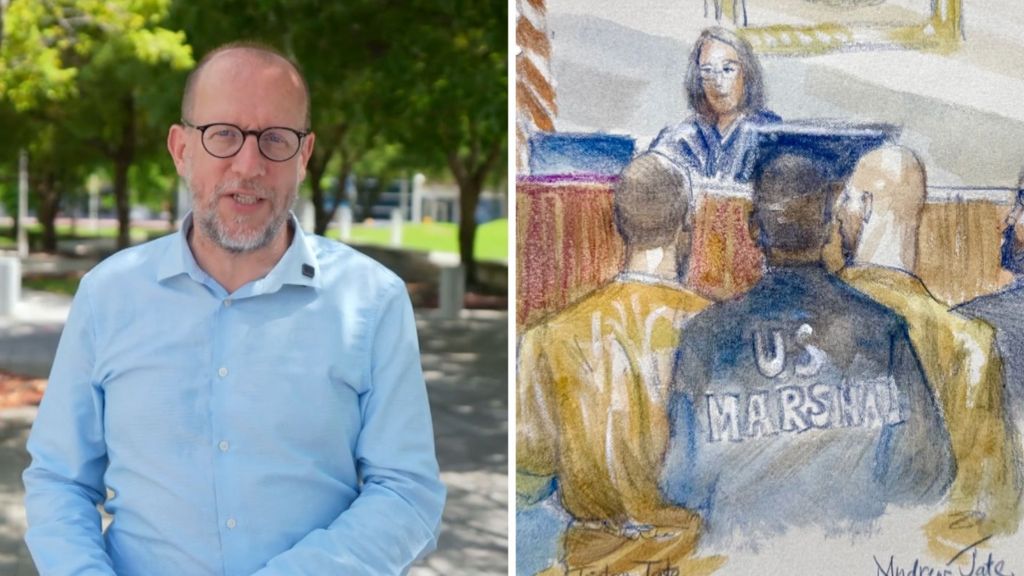
  • Watch: BBC reports from inside Tate brothers court appearance

    Watch: BBC reports from inside Tate brothers court appearance

    In a high-profile court proceeding that has drawn international media attention, controversial British-American social media personalities Andrew and Tristan Tate appeared before a Miami court this week, after British authorities issued a new set of criminal charges against the pair. BBC correspondent Tom Bateman has reported live from the scene in Miami, delivering on-the-ground insight into the closed-door proceedings and public reaction surrounding the arrest.

    The fresh charges brought by UK law enforcement cover serious criminal allegations including rape and organized sex trafficking, marking a significant escalation in the long-running legal investigation into the Tate brothers. The pair, who have amassed a massive global online following through their provocative commentary on social and cultural issues, were taken into custody by US law enforcement in Miami ahead of potential extradition proceedings to the United Kingdom.

    Bateman’s reporting from inside the courtroom has provided the public with an unprecedented first-hand look at the initial procedural steps of the case, shedding light on how legal teams on both sides are navigating the complex cross-jurisdictional legal process. The development has reignited global debate surrounding the brothers, who have previously faced separate legal allegations in Romania related to human trafficking and sexual assault, which they have repeatedly denied. As the extradition process moves forward, legal observers note the case could take months to resolve, with both sides preparing for extensive procedural battles over jurisdiction and evidence.

  • Trump imposes 50% tariff on Canadian imports

    Trump imposes 50% tariff on Canadian imports

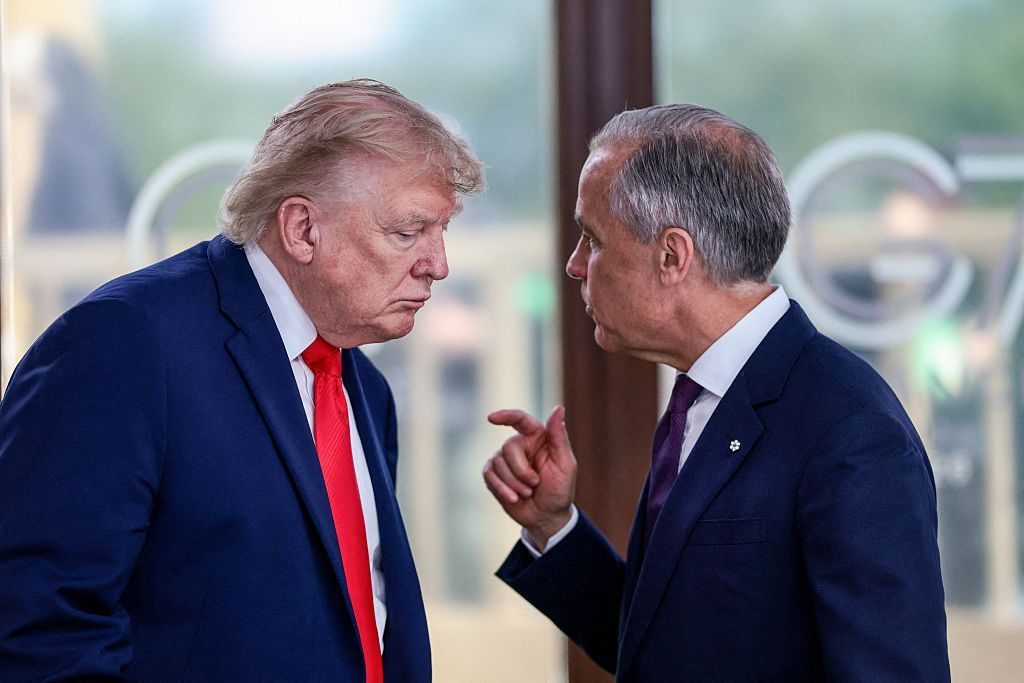
    In a sharp escalation of trade frictions between the United States and Canada, US President Donald Trump has signed an executive order imposing a sweeping 50% tariff on a broad array of Canadian imports, framing the move as retaliation for what he calls longstanding unequal treatment of American automotive, dairy and alcohol products.

    The new duties are scheduled to take effect on August 19, marking one of the most significant expansions of trade barriers between the two North American neighbors in modern history. White House officials have defended the tariffs as a critical measure to shield domestic American businesses from unfair trading practices.

    The list of targeted goods runs the gamut from everyday consumer products including Canadian wine and hockey sticks to large-scale industrial materials such as commercial cement. Notably, several of Canada’s highest-value key exports have been excluded from the new tariffs: energy products, potash, critical minerals and Canadian seafood will all enter the US duty-free for the time being.

    Monday’s announcement does not come out of nowhere. It builds on a growing stack of trade restrictions that have accumulated between the two countries over recent years. The US currently imposes active tariffs ranging from 15% to 50% on Canadian steel, aluminum and copper, a 35% duty on Canadian softwood lumber, and a 25% tax on non-North American automotive parts used in vehicle manufacturing. In response, Canada has imposed matching 25% counter-tariffs on a selection of US steel, aluminum and vehicle imports.

    Observers had speculated that the new tariffs could be tied to Trump’s earlier threats to impose duties over smoke from Canadian wildfires drifting into northern US cities, but the text of the three executive proclamations makes no mention of the wildfire issue. Instead, the orders focus exclusively on three longstanding trade irritants that Canadian negotiators have been aware of for months: automotive market access, dairy supply management, and the provincial boycott of American alcohol. The omission of wildfire from the official order signals that the core breakdown is in ongoing bilateral trade negotiations, not environmental disputes.

    On the automotive front, Trump argues that Canada levies discriminatory taxes on US passenger vehicles and parts that do not qualify for zero-tariff access under the United States-Mexico-Canada Agreement (USMCA), the current trilateral trade bloc governing North American trade. He calls the tax unreasonable, noting that Canada does not impose equivalent levies on automotive imports from other countries, creating an uneven playing field for American manufacturers. This is not a new grievance: Trump has repeatedly identified automotive trade as a core area of competing interest between the two countries, and Commerce Secretary Howard Lutnick has previously stated publicly that he believes Canadian trade interests should take a backseat to US priorities. This position has sparked friction, given that North American automotive production is one of the most integrated cross-border supply chains in the world, with components and vehicles moving freely across borders multiple times during the manufacturing process.

    Dairy has been an even longerstanding point of contention. Canada’s longstanding domestic dairy supply management system, which sets quantitative quotas on foreign dairy imports and charges tariffs exceeding 300% for any imports that exceed those quotas, has drawn criticism from US agricultural producers and policymakers for decades.

    The third irritant, the boycott of US alcohol by most Canadian provincial liquor boards, was launched last year in response to earlier US tariffs. Canadian provincial leaders have repeatedly stated that the boycott will remain in place until the US removes its existing tariffs on key Canadian industrial sectors including metals and automotive manufacturing.

    Canadian trade negotiators had been working for months to reach a compromise deal that would roll back at least some of the existing US tariffs on Canadian goods. Monday’s announcement of broad new 50% duties makes clear that those talks have stalled, and trade relations between the two allies are moving toward further escalation rather than resolution.

  • Russian warship carried out firing exercise off Plymouth coast

    Russian warship carried out firing exercise off Plymouth coast

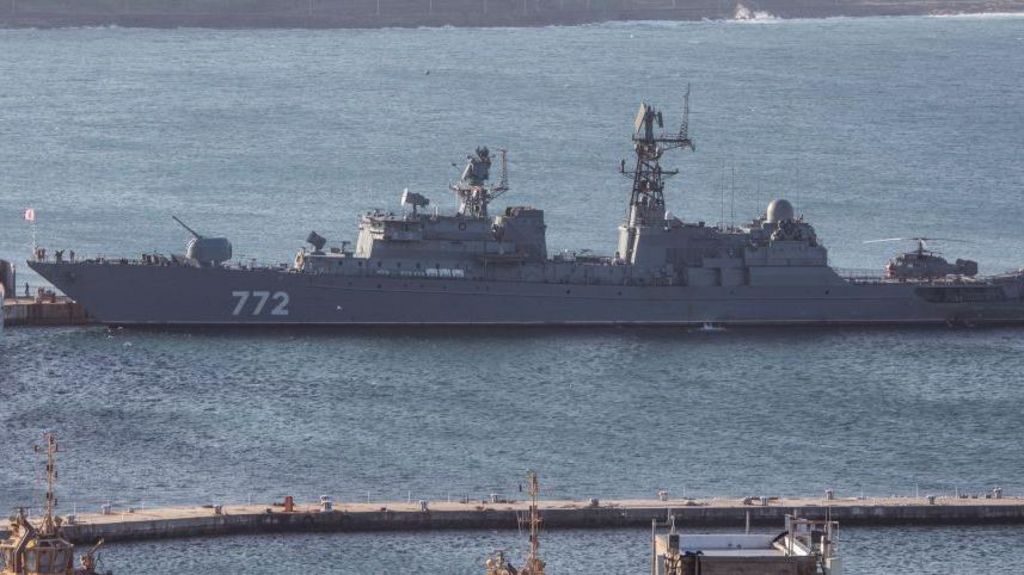
    On Monday, a Russian guided-missile frigate carried out a 30-minute live-fire artillery exercise in international waters just 40 nautical miles south of the British coastal city of Plymouth, with a British Royal Navy patrol vessel shadowing and monitoring its movements the entire time. A UK Ministry of Defence spokesperson confirmed that Royal Navy assets have remained on station to closely track every movement of the Russian warship, identified as the Neustrashimy.

    Multiple defense sources familiar with the incident told the BBC that the Russian vessel’s activity drew coordinated surveillance from both British and French military assets. A French military patrol aircraft made direct radio contact with the Neustrashimy to request clarification of the frigate’s operational intentions ahead of the exercise. Notably, Russian commanders themselves pre-notified the Royal Navy offshore patrol vessel HMS Tyne of their plan to conduct gunnery drills before opening fire, and formally requested the British vessel reposition to a safer distance, a request that HMS Tyne complied with immediately.

    This latest encounter comes amid a documented spike in Russian naval activity near British territorial waters over the past several months, and analysts note it will put the issue of Russian maritime assertiveness front and center for the UK’s incoming prime minister Andy Burnham. UK defense officials have declined to speculate on whether the timing of the exercise, which coincided with the start of Burnham’s premiership, was intentional.

    The incident follows a series of high-profile interactions between Russian naval assets and UK forces in the English Channel in recent months. Just one month prior, Royal Marine Commandos carried out a landmark six-hour boarding operation on a Russian “shadow fleet” oil tanker in the channel, the first such operation ever conducted by UK armed forces. In June, a British civilian couple sailing their yacht in international waters encountered another Russian frigate, the Admiral Grigorovich, roughly 23 miles off the Isle of Wight. The frigate fired warning shots after Russia’s defense ministry claimed the yacht made a dangerous approach, but the couple rejected that account, insisting they were never on a collision course with the warship.

    While these high-visibility encounters have stoked tensions, it remains standard practice for Russian warships to transit through the international waters of the English Channel, which are legally separated from the territorial waters of both the UK and France.

  • Ebola quarantine center for Americans is up and working in Kenya despite a court ban, activists say

    Ebola quarantine center for Americans is up and working in Kenya despite a court ban, activists say

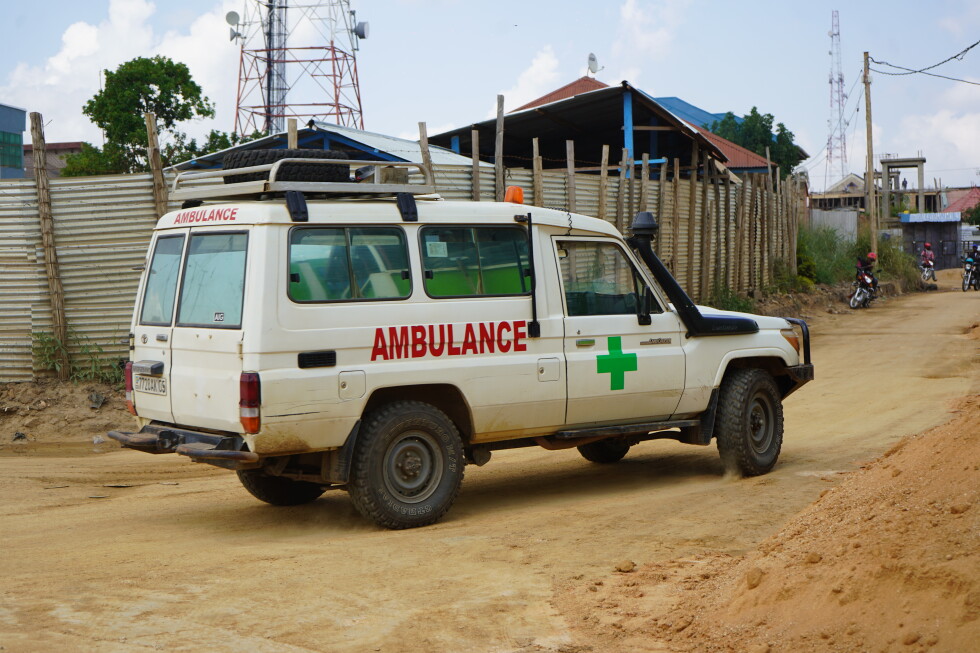
    NAIROBI, Kenya — Tensions have escalated in East Africa after Kenyan civil society groups accused national authorities of deliberately flouting a court order to activate an American-supported Ebola quarantine facility, following confirmed reports that U.S. personnel evacuated from the Democratic Republic of the Congo are already isolated in the country. The controversy comes amid an ongoing deadly Ebola outbreak in eastern DRC that has already claimed more than 900 lives, reigniting fierce debate over public health risk and rule of law in Kenya. The two-month-old outbreak in DRC has recorded 2,344 confirmed infections to date, with a death toll climbing to at least 930, according to official data. To manage risk for U.S. citizens responding to the crisis, Washington backed a plan to quarantine evacuated American workers in Kenya, a stable U.S. ally hundreds of miles east of DRC with no confirmed Ebola cases of its own to date. U.S. humanitarian organization Samaritan’s Purse, which runs two Ebola treatment centers in the DRC towns of Bunia and Nyankunde, confirmed over the weekend that seven of its American staff, deployed to the outbreak front lines, are currently serving a 21-day quarantine period in large military tents in Kenya. The group emphasized none of the personnel have developed any Ebola symptoms so far. While the organization declined to disclose the exact location of the quarantine site, local Kenyan media has identified Laikipia Air Base, a military installation located roughly 115 miles north of the capital Nairobi, near the town of Nanyuki, as the intended site for the U.S.-backed facility. Local residents in Nanyuki have already held multiple demonstrations against the planned quarantine center, and two civilians have lost their lives in clashes that broke out when protests turned violent. As of Monday, neither Kenya’s Ministry of Health nor the U.S. State Department had responded to repeated requests for comment on the reports of quarantined Americans. Officials at Laikipia Air Base also could not be reached for a statement. The U.S. government has committed $13.5 million to support Kenya’s national Ebola preparedness programming, and Kenyan President William Ruto has publicly defended the planned quarantine facility as a core component of the bilateral public health partnership between the two nations. Ruto added that U.S. funding will also support the construction of 24 additional regional Ebola preparedness centers across Kenya. But the project hit a legal block last month, when Kenya’s high court issued a formal order barring the facility from being opened or operationalized. Kenyan Health Minister Aden Duale subsequently issued a formal order suspending all construction work on the site. The court order stemmed from a legal petition filed by two Kenyan civic groups — the Law Society of Kenya and constitutional advocacy organization Katiba Institute. The petitioners argued that hosting a quarantine for at-risk Americans evacuated from the DRC outbreak posed an unacceptable threat to Kenya, noting that the country’s already overstretched public health system could be completely overwhelmed if a local outbreak were to occur. Following the emergence of reports that Americans are already being quarantined in violation of the court order, leaders of the civic groups are demanding accountability. Nora Mbagathi, chief executive of the Katiba Institute, told the Associated Press that the activist community is deeply alarmed by the new reports. “Should any Kenyan government official be involved in this ongoing operation, they have completely betrayed the public trust and must be held personally accountable,” Mbagathi said. In its own official statement to the AP on Monday, the Law Society of Kenya called any deliberate violation of the court order a clear act of “impunity and lawlessness.” In his statement on the quarantine, Samaritan’s Purse President and CEO Franklin Graham confirmed additional details of the operation: the quarantined staff are housed in large military tents within a secured fenced gravel compound, sleep on military cots, and receive all meals from the U.S. military. Graham has not responded to repeated questions asking why the quarantine is active in Kenya despite the formal court order halting the project.

  • Khalil al-Hayya: Who is the political veteran chosen to steer Hamas forward

    Khalil al-Hayya: Who is the political veteran chosen to steer Hamas forward

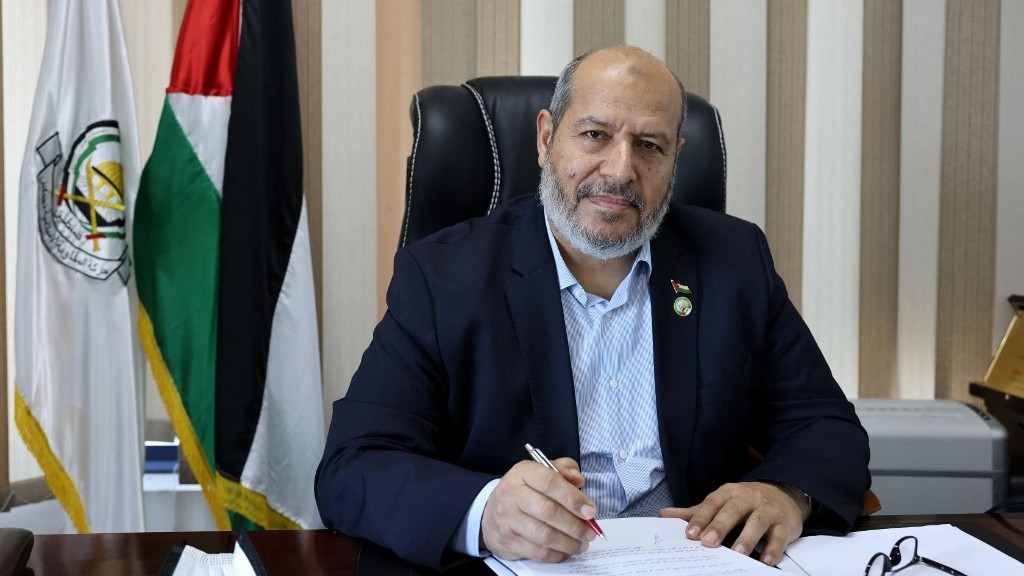
    After a tightly contested internal leadership vote, the Palestinian militant and political movement Hamas has chosen veteran negotiator Khalil al-Hayya to lead its political bureau, placing a seasoned diplomatic figure at the helm of the organization at a moment of unprecedented crisis for Gaza and escalating regional conflict.

    The election result was formally announced this Monday, following a runoff vote that capped a months-long leadership selection process. According to Walid Al Omari, Al Jazeera Arabic’s Palestine bureau chief, Hayya secured a narrow victory, earning 35 votes to beat out former Hamas political bureau chief and ex-external leader Khaled Meshaal, who collected 34 votes. The leadership contest was first launched in May, when the first round of voting failed to produce a clear winner, extending the process for months.

    Hayya, who currently resides in Qatar, succeeds Yahya Sinwar, who took over the top role temporarily after Israel assassinated former Hamas chief Ismail Haniyeh in Tehran in July 2024. Sinwar was himself killed by Israeli forces during combat operations in Rafah just three months after assuming the position. In the intervening period, Hamas has been governed by a five-member interim council chaired by Mohammed Darwish, head of the movement’s Shura Council, which oversaw day-to-day political operations and mediated ceasefire negotiations with Israel.

    Hayya’s election restores a singular, permanent leadership structure for Hamas, and stands as a testament to the movement’s resilience amid Israel’s sustained campaign to eliminate its top leadership through targeted assassinations. In September 2025, Israel attempted to assassinate Hayya alongside the entire Palestinian negotiating delegation based in Qatar, in what was widely seen as an effort to derail ongoing ceasefire talks. The brazen attack drew widespread global condemnation, with many international observers labeling it a blatant act of “gangster behaviour”.

    Over the more than two years of Israel’s military campaign in Gaza, Hayya has emerged as one of Hamas’s most prominent and recognizable public faces. He has led the movement’s negotiating delegation through all major rounds of talks focused on ceasefire agreements, hostage-prisoner exchanges, and the long-term political future of the Gaza Strip. This high-stakes role has placed him at the center of regional diplomatic efforts brokered by Qatar, Egypt, Turkey and other key Middle Eastern powers.

    Born in Gaza City on November 5, 1960, Hayya grew up in the occupied Palestinian territories after Israel seized control of Gaza in the 1967 Six-Day War. He pursued a background in Islamic scholarship, earning a doctorate in Hadith sciences after graduating from the Faculty of Islamic Theology at Gaza’s Islamic University — an institution that has since been destroyed by Israeli bombardment. His political journey began in 1980, when he met Hamas founder Sheikh Ahmed Yassin, and over the subsequent four decades, he steadily rose through the movement’s ranks. He has previously served on Hamas’s political bureau, acted as deputy leader for the movement’s Gaza branch, and led the organization’s outreach efforts to Arab and Muslim nations. In 2006, Palestinian voters elected Hayya to the Palestinian Legislative Council, where he went on to lead Hamas’s parliamentary bloc following the historic first national elections.

    Throughout his decades of political engagement, Hayya has repeatedly faced targeting by Israeli forces: he was detained multiple times, including a prolonged prison sentence in 1991, and has survived numerous assassination attempts. The personal cost of his leadership has been steep, with Israel killing four of his sons and multiple other members of his extended family over the years. Osama, Osama’s wife, and three of their grandchildren were killed in an Israeli bombing of their home during the 2014 Gaza war. Hamza, a member of Hamas’s armed wing, died in an Israeli missile strike east of Gaza City. Hammam was killed in the September 2025 Israeli airstrike on Hamas negotiators in Doha that targeted Hayya himself. Most recently, Azzam was killed in an Israeli attack in Gaza in May 2026, an attack that also killed one other person and wounded nine. Hayya’s only surviving son, Ezzedine, was injured in an Israeli strike on Gaza City’s Tuffah neighborhood in April 2025, and one of Hayya’s grandchildren was killed in an Israeli attack on a Gaza City school that same month. A 2007 assassination attempt on Hayya killed seven of his extended family members, including two brothers, four nephews, and a cousin.

    Hayya takes control of Hamas at a defining crossroads for the movement, the people of Gaza, and the broader Palestinian national struggle. Today, Gaza lies in ruins, with over 60 percent of the enclave under Israeli military occupation, and Israeli forces carry out almost daily attacks despite a ceasefire agreement that Hamas accepted and Israel has repeatedly violated. The Israeli government has openly stated its goal to ethnically cleanse the besieged population of Gaza and expand its military operations across the occupied West Bank. For now, Palestinians across the territories and the global diaspora are watching closely to see what direction Hayya will steer the movement, and what his leadership will mean for their decades-long struggle for self-determination.

  • New strikes as Trump warns Iran will pay for US troop deaths

    New strikes as Trump warns Iran will pay for US troop deaths

    Tensions between the United States and Iran have surged to new heights this week, with fresh military strikes, stark war rhetoric, and threats of wider regional disruption pushing the decades-long rivalry into one of its most dangerous phases in recent history. The eruption of open conflict follows the collapse of a ceasefire and framework peace deal that held through April and June, leaving regional stakeholders and global energy markets bracing for severe spillover effects.

    The latest escalation was triggered by the deaths of three additional American soldiers, bringing the total confirmed US fatalities in the ongoing conflict to 17. The US Pentagon confirmed Monday that nearly 100 US service members have been wounded since July 7, most suffering minor concussions from drone and missile attacks. In a forceful public warning posted to his Truth Social platform, former US President Donald Trump held Iran directly accountable and pledged harsh retaliation.

    “Every time Iran kills an American Soldier they will pay for that killing many times over!” Trump stated, adding that the directive had been formally communicated to Secretary of War Pete Hegseth, Chairman of the Joint Chiefs of Staff Daniel Caine, and all senior military leaders. Shortly after Trump’s warning, US Central Command announced a new round of targeted strikes against Iranian military assets, designed to reduce Tehran’s capacity to launch attacks on commercial shipping transiting the Strait of Hormuz.

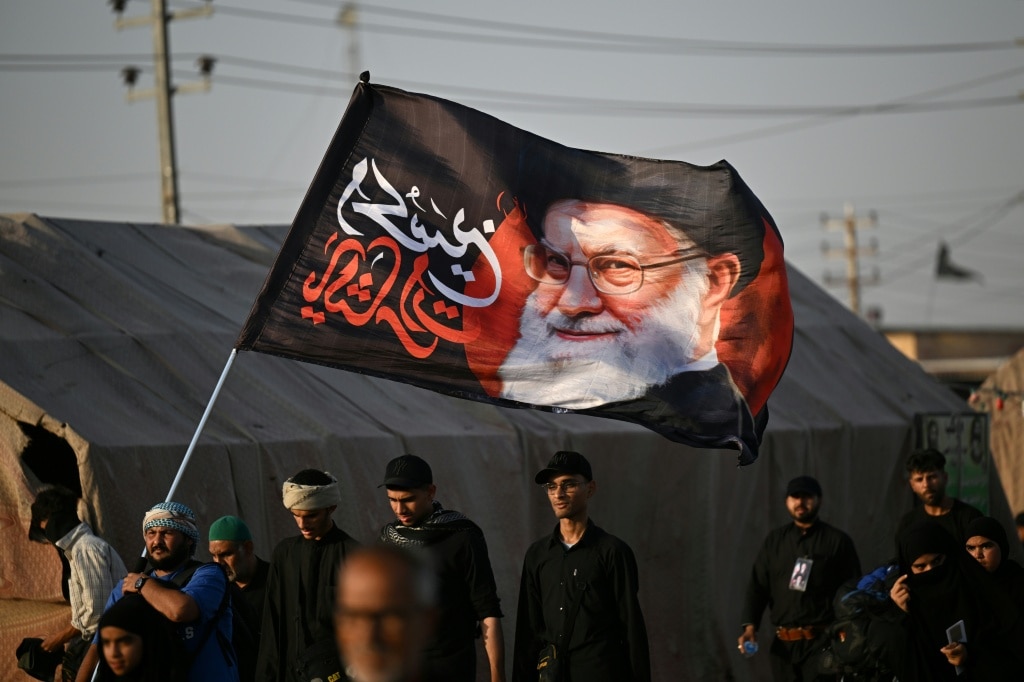
    As US military action ramped up, top Iranian officials framed the confrontation as an unprecedented full-scale conflict. Iranian President Masoud Pezeshkian confirmed Monday that the conflict with Washington has entered a new, more intense phase, declaring: “The reality is that today the Islamic Republic of Iran is engaged in a full-scale war.”

    Iran has expanded its regional military operations this week, launching drone and missile strikes against sites it claims are linked to US military interests across Bahrain, Jordan, and Syria, according to the Iranian Revolutionary Guards. Jordan’s military reported its air defense systems successfully intercepted and downed three Iranian missiles targeting the kingdom, with no reported injuries or infrastructure damage. Both Kuwait and Bahrain also confirmed they had come under Iranian attack on Monday.

    The conflict has already disrupted critical global energy infrastructure: Tehran reimposed its blockade of the Strait of Hormuz, the chokepoint through which roughly one-fifth of the world’s oil supplies moved in peacetime, after the ceasefire collapsed. The US responded by reimposing its own naval blockade on Iranian ports. The standoff sent global oil prices jumping to a one-month high on Monday as traders assessed the risk to energy supplies.

    A new threat of wider disruption has emerged from Yemen, where Tehran-aligned Houthi rebels have announced plans to blockade Saudi Arabian ports. The move would cut off Saudi Arabia’s alternative export route that has allowed it to continue shipping millions of barrels of crude per day through its Red Sea port of Yanbu, bypassing the closed Strait of Hormuz. A full Houthi blockade of Saudi ports would send major shockwaves through global energy markets, which have already spent months bracing for a return of Houthi attacks on Red Sea shipping that were a hallmark of the group’s operations during the Gaza war.

    Saudi Arabia, which traded direct fire with the Houthis for the first time in years last week, threatening a 2022 truce agreement, has strongly condemned the blockade threat. Riyadh described the Houthis as a “terrorist militia” and reaffirmed its commitment to supporting what it calls the legitimate Yemeni government and the Yemeni people. The Houthis, who have fought a decade-long war against Saudi-led intervention, have not yet detailed how they plan to enforce the proposed blockade.

    Maritime security authorities have reported multiple attacks on commercial vessels in the Strait of Hormuz this week. The UK Maritime Trade Operations (UKMTO) confirmed that sailors abandoned one vessel after it was set ablaze in an attack. The Iranian Revolutionary Guards earlier claimed two oil tankers attempting to transit the strait had exploded and been disabled. UKMTO also reported a second attack on a vessel near the strait off the United Arab Emirates coast, noting all crew members escaped unharmed.

    Despite the rapid escalation of military hostilities, diplomatic channels remain partially open. Iranian foreign ministry spokesman Esmaeil Baqaei confirmed that indirect diplomatic exchanges between Iran and the US are continuing via regional mediators. “Ideas have been conveyed to us by certain mediators,” Baqaei said. A source from Pakistan’s interior ministry confirmed to AFP that Iranian Interior Minister Eskandar Momeni was scheduled to travel to Islamabad Monday, though the purpose of the visit was not formally confirmed.

  • US launches fresh strikes on Iran, as Trump warns of retaliation for deaths of soldiers

    US launches fresh strikes on Iran, as Trump warns of retaliation for deaths of soldiers

    Escalating tensions between the United States and Iran have plunged the Middle East into fresh chaos, with the U.S. military confirming it has launched a new round of strikes targeting Iranian assets, aimed at what Washington says is further reduction of Iran’s ability to target commercial shipping in the strategically critical Strait of Hormuz. This latest wave of attacks marks the 10th straight night of military action against Iran, coming directly after former U.S. President Donald Trump pledged harsh retaliation for the recent deaths of American service members, promising Iran would face consequences “many times over” for the killings.

    Trump had previously stated that Iranian targets had already suffered heavy damage in overnight strikes carried out to honor three fallen U.S. soldiers — two killed in Jordan and one in Iraq. Those earlier attacks focused on Iranian military installations and communications infrastructure, according to U.S. officials.

    In a sharp response to the ongoing U.S. assault, Iranian President Masoud Pezeshkian announced that Iran is now engaged in a “full-scale war” with the United States. Iranian forces have in turn launched counterattacks against sites in Bahrain, Jordan, and Syria, expanding the scope of the conflict beyond Iran’s borders. Despite the collapse of an earlier ceasefire agreement, Tehran confirmed that diplomatic backchannels remain open, with both sides continuing to exchange messages through third-party intermediaries.

    The spillover of conflict has already sparked security crises across neighboring countries. Late Monday, Jordan’s military announced it had successfully shot down three incoming Iranian missiles, triggering air raid sirens across the kingdom as populations braced for incoming fire. Earlier the same day, Kuwait’s armed forces confirmed they had intercepted a fleet of Iranian drones launched toward its territory. Officials in Bahrain reported that Iranian drones had targeted the country’s air navigation systems, but added that commercial air traffic continued to operate without disruption following the attack.

    Following the previous night’s U.S. strikes, Iran’s semi-official Tasnim News Agency reported that multiple Iranian cities had been hit, including major population and infrastructure hubs such as Tabriz, Chabahar, Konarak, Bandar Mahshahr, and Bandar Imam Khomeini. Iranian state media also released reports of two oil tankers exploding while transiting the Strait of Hormuz, one of the world’s busiest and most economically vital oil chokepoints. The Islamic Revolutionary Guard Corps (IRGC), Iran’s elite military force, claimed the vessels exploded after attempting to cross what it labeled an “unsafe and hazardous southern route” through the strait, bringing operations to a halt. U.S. Central Command (Centcom) has publicly disputed Iran’s account of the tanker incident, though it has not yet released its own independent details of what occurred.

  • Exclusive: President of ICC oversight body confirms no finding of retaliation by Khan

    Exclusive: President of ICC oversight body confirms no finding of retaliation by Khan

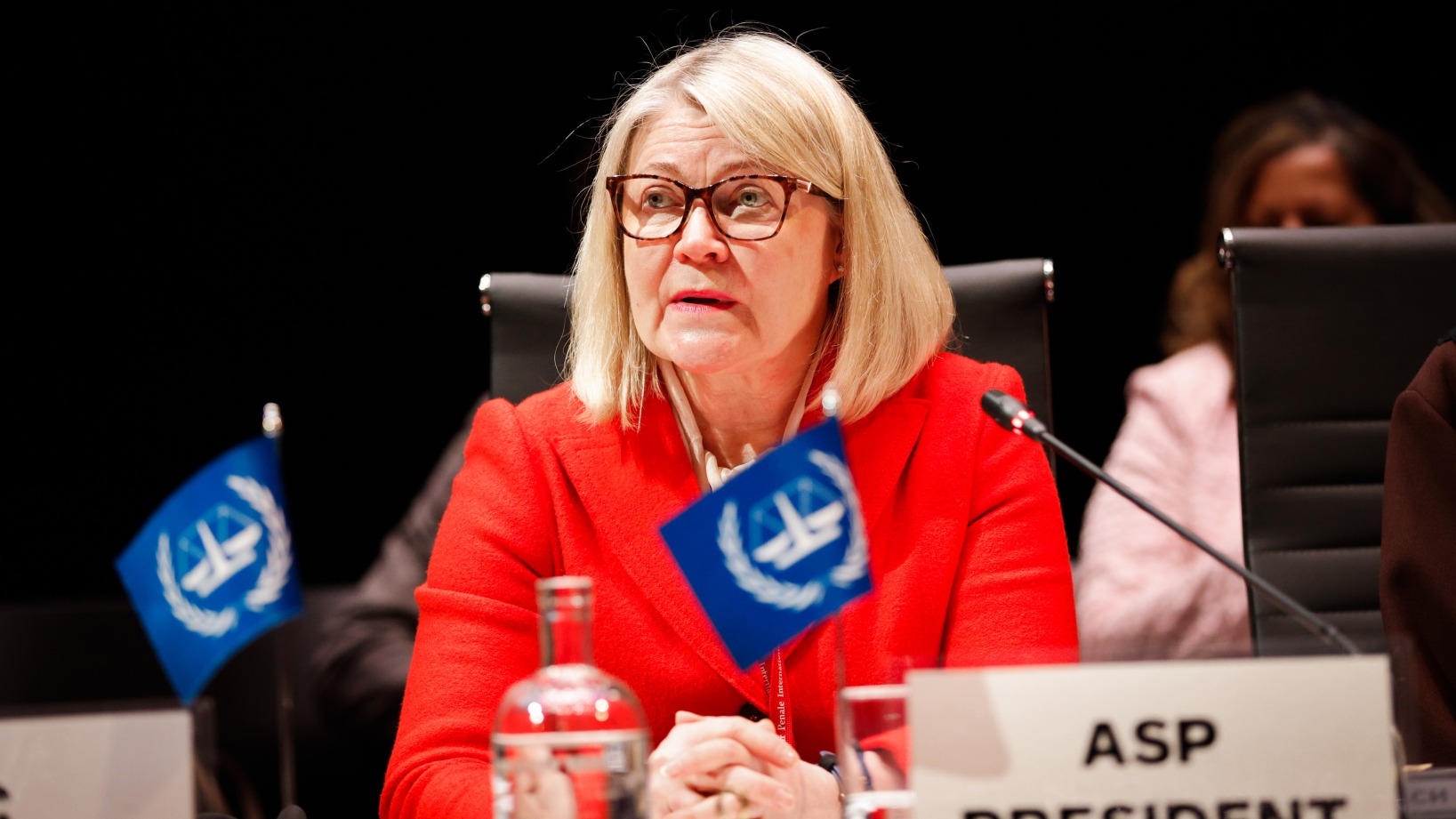
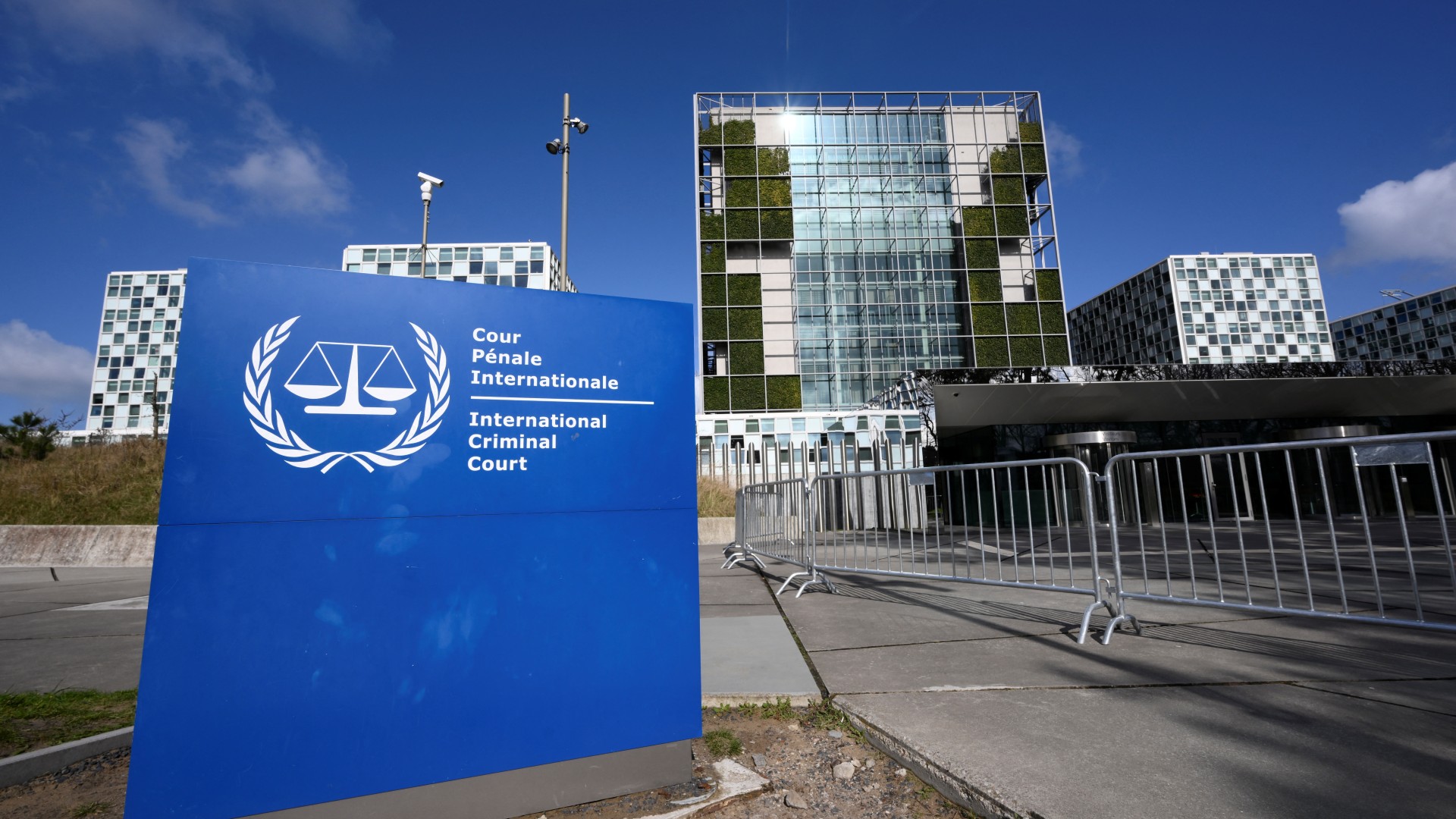
    A key clarification has emerged in the unfolding disciplinary case against International Criminal Court (ICC) Chief Prosecutor Karim Khan, with the head of the court’s governing Assembly of States Parties (ASP) confirming last week that no retaliation allegations against Khan have been formally upheld by the ASP’s executive bureau.

    In a 17 July letter, Finnish diplomat and ASP President Paivi Kaukoranta made clear that the 21-member executive bureau failed to secure the supermajority vote required to validate any finding of retaliation misconduct. The claims were originally brought forward by two members of Khan’s own office during a UN-led independent probe launched in November 2024, when Kaukoranta made the decision to outsource the full investigation into multiple allegations against Khan to the United Nations Office of Internal Oversight Services (OIOS).

    Alongside three separate retaliation claims, the investigation also included an allegation of sexual misconduct brought by a female staff member, which had already been opened and closed twice previously after the complainant refused to cooperate with internal ICC proceedings. Both the complainant and Khan ultimately cooperated with the OIOS probe, with Khan repeatedly denying all allegations of wrongdoing from the outset.

    Over 12 months, UN investigators collected and assessed evidence to present to a specially appointed panel of judges, which was tasked with evaluating the claims against the strict legal standard of proof beyond a reasonable doubt. The OIOS submitted its 150-page final report, accompanied by more than 5,000 pages of supporting evidence, to the judge panel in December 2025. Investigators ultimately dismissed one retaliation claim outright, concluding that the actions in question were a legitimate response to documented work performance concerns, not retaliation.

    The panel of judges spent nearly three months reviewing the UN investigation’s findings before issuing a unanimous conclusion in March 2026: the evidence presented in the probe did not meet the threshold to confirm any misconduct or breach of duty under ICC rules. However, just weeks after the panel cleared Khan, a simple majority of bureau members backed a controversial motion to disregard the judges’ independent findings, opening the door to claims that the process had been politicized.

    Two months later, after granting Khan and the complainants a final opportunity to submit additional testimony, the bureau voted to suspend Khan formally and referred the full case to the full ASP plenary for a final vote. Redacted versions of the OIOS report, the judge panel’s findings, and all related submissions have been distributed to the 125 ASP member states, ahead of a high-stakes plenary vote at UN Headquarters in New York this Friday that will decide Khan’s future as chief prosecutor.

    The bureau’s 8 June 2026 confidential decision did find that evidence proved beyond reasonable doubt Khan had engaged in a sexual relationship with the complainant, arguing the power dynamic between the office head and a subordinate made the relationship inherently inappropriate. Notably, however, the bureau explicitly declined to uphold any findings on the retaliation claims, a detail Kaukoranta’s recent letter confirms aligns with earlier reporting from Middle East Eye (MEE).

    Following the bureau’s decision, some member states pushed to reopen the retaliation claim question and called for a formal clear statement from the ASP leadership, prompting Kaukoranta’s official clarification this week. In her letter, she explained the bureau’s inability to reach a conclusion on the claims from the two whistleblowers, identified only as W06 and W10, stemmed from deep division among members that left the body short of the required two-thirds majority for substantive findings.

    “As the Prosecutor benefits from the presumption of innocence, the legal effect of the Bureau’s statement is that no misconduct in relation to the allegations of W06 and W10 has been established against the Prosecutor,” Kaukoranta wrote. She added that the bureau had chosen not to refer the retaliation claims to the full ASP plenary, and the matter is now officially closed, with the two complainants already notified of the decision on the bureau’s behalf.

    The Friday vote comes amid widespread criticism of the bureau’s handling of the investigation, with prominent global figures already speaking out against the process. Last Saturday, former European Union foreign policy chief Josep Borrell publicly accused the ASP of preparing a politically motivated vote to oust Khan, rather than honoring the independent judicial findings that cleared him of most wrongdoing.

    Borrell argued that the efforts to remove Khan form part of a broader coordinated offensive against the ICC, pointing to existing U.S. sanctions and threats targeting Khan and other court officials that were imposed after the prosecutor announced plans to seek arrest warrants for Israeli and Hamas leaders over alleged war crimes in Gaza in May 2024.

  • Former UN oversight chief says ICC prosecutor Karim Khan is ‘victim of massive stitch-up’

    Former UN oversight chief says ICC prosecutor Karim Khan is ‘victim of massive stitch-up’

    A high-stakes controversy has erupted at the International Criminal Court (ICC) after a veteran former United Nations investigations chief publicly condemned the ICC’s governing bureau for suspending Prosecutor Karim Khan over misconduct claims, calling the action a coordinated, unfair “stitch-up” that undermines fundamental principles of justice. \n\nBen Swanson, who previously served as UN Assistant Secretary-General and deputy head of the UN Office of Internal Oversight Services (OIOS) — and previously led OIOS’ Investigations Division — has submitted four successive expert opinions to the 21-member bureau of the ICC’s Assembly of States Parties (ASP) over the past year. All four opinions, commissioned by Khan’s legal defense team, criticize the procedural irregularities that have marred the misconduct probe and the bureau’s subsequent handling of the case. \n\nSwanson’s most recent submission, dated June 28 and obtained by Middle East Eye via independent sources, directly challenges the bureau’s June 8 decision to suspend Khan, which came after a majority of bureau members ruled he had committed \”serious misconduct.\” Critically, this ruling directly contradicts the unanimous finding of a three-judge independent panel appointed by the bureau itself, which concluded in March that the evidence collected by the UN-led investigation did not prove misconduct or breach of duty under ICC rules. \n\nAfter reviewing both the judges’ panel report and the bureau’s final decision, Swanson wrote, \”I am of the opinion that the Prosecutor is the victim of a massive ‘stitch-up’ and given what has happened since the release of the Panel’s Report I doubt whether justice will be done or seen to be done.\” \n\nSwanson accuses the bureau of adopting a \”dystopian method\” of justice and pursuing an \”activist agenda\” to remove Khan from office. After the independent judicial process the bureau established failed to deliver the outcome it sought, he argues, the bureau usurped both judicial and fact-finding roles to reach its desired conclusion. \”It is clear that an activist agenda is being pursued to remove the Prosecutor from his post, at all costs, by the weaponisation of such scant evidence that may exist, by ignoring the wealth of countervailing evidence available to the Bureau and by failing to take account of the wisdom of three international Judges,\” he added. \n\nThe 125-member ASP, which consists of diplomatic representatives from ICC member states, is set to vote on Khan’s future at UN Headquarters in New York this Friday, bringing the months-long dispute to a decisive head. \n\nThe misconduct process was launched in November 2024, when ASP President Paivi Kaukoranta authorized the probe and outsourced investigative work to OIOS, after the complainant who brought allegations against Khan refused to cooperate with the ICC’s internal investigative body. The probe centered on four allegations: a claim of \”unwelcome conduct of a sexual nature\” and abuse of authority from a female staff member in Khan’s office, plus three separate allegations of retaliation against other office employees. Khan has repeatedly denied all claims of misconduct or breach of duty. \n\nThe bureau’s ruling did not find Khan responsible for any of the three retaliation claims. Instead, the confidential decision obtained by MEE states the bureau found \”the evidence establishes beyond reasonable doubt\” that Khan had a sexual relationship with the complainant, and argued that \”in the context of that power imbalance a sexual relationship could never be appropriate.\” The bureau concluded this conduct amounted to improper use of ICC authority against the complainant. \n\nThis finding marks a significant shift from the original allegations: Khan denies any sexual relationship occurred, while the complainant’s original claim centered on non-consensual sexual conduct. In her first public interview on the case with CNN last week, the complainant reaffirmed her non-consensual conduct allegation. Swanson argues the bureau’s reframing of the claim creates a new allegation that was never part of the original investigation, and was never proven. \”What is charged reads as if the Prosecutor and [the complainant] have indulged in an inappropriate, consensual, workplace romance. That was not what was alleged and in any case has not been proven either,\” he wrote. \n\nAnother core point of criticism from Swanson is the bureau’s decision to conduct its own independent credibility assessment of witnesses and evidence, after both OIOS and the three-judge panel declined to confirm the credibility of the complainant and her evidence. Swanson notes that after the panel issued its report, the bureau had four legitimate procedural options: close the case, request OIOS conduct additional investigation to address open questions, restart the probe from scratch, or launch a formal adjudicated process that would allow for cross-examination of witnesses to properly establish credibility. \n\nKhan’s legal team formally requested an adjudicated process in a letter to the ASP president dated July 30, 2025, but the bureau rejected all such requests, including a demand for an adjudicative hearing before the judicial panel. Swanson argues that by disregarding the panel’s unanimous finding and conducting its own unilateral credibility assessment to reach a finding of serious misconduct, the bureau violated basic procedural fairness. \n\n\”The Bureau in determining credibility did not act with the same legal restraint as the Panel, declaring themselves unrestricted, and by using semantic gymnastics promptly used the same material as was available to the Judges, with the addition of more submissions from the Prosecutor and [the complainant], although they discounted the latter’s, to enable them to make credibility assessments,\” Swanson wrote. He added that the bureau also failed to assess the credibility of evidence itself, a step he says is just as or more important than assessing the credibility of the witness presenting it, and that the bureau applied a blatantly biased standard: it framed the complainant and all her testimony as credible, while dismissing every statement, evidence and testimony from Khan and other witnesses that contradicted her account. \n\nSwanson concluded that the bureau’s finding is \”unsafe and should not be relied upon as a proper basis for disciplinary action,\” and urged ICC member states to give \”decisive weight\” to the three-judge panel’s unanimous conclusion when they vote on July 24. \n\nSwanson is not alone in raising concerns about the legality and integrity of the bureau’s process. Earlier this month, MEE reported that Sir James Eadie KC, the United Kingdom’s First Treasury Counsel, had submitted a private legal opinion to the ASP president last November warning that granting the bureau authority to make a final finding of misconduct was illegal under ICC rules. Eadie argued that any proper process must be judicial in nature, requiring an oral hearing before a panel of judges to test allegations and confirm facts beyond reasonable doubt. \n\n\”It is entirely inappropriate for the determinative function to be undertaken by executive or political bodies,\” Eadie wrote. He added that the approach proposed by the ASP president — which treated OIOS’ investigative findings as fact without an adjudicated process, and only allowed the prosecutor to participate in a limited hearing before the bureau — threatens the core independence and institutional integrity of the ICC.