作者: admin

  • EU agrees long-stalled sanctions on Israeli settlers

    EU agrees long-stalled sanctions on Israeli settlers

    After months of political deadlock, European Union foreign ministers reached a landmark agreement Monday to impose new targeted sanctions on Israeli settlers responsible for growing violence against Palestinian communities in the occupied West Bank. The breakthrough came only after a recent change in government in Hungary, which had blocked the measure for months under nationalist former prime minister Viktor Orbán, a staunch ally of Israel.

    High Representative of the European Union for Foreign Affairs and Security Policy Kaja Kallas, the bloc’s top diplomat, framed the vote as a long-overdue step to confront escalating unrest. “It was high time we move from deadlock to delivery,” Kallas stated following the announcement of the green light for sanctions. “Extremisms and violence carry consequences.”

    French Foreign Minister Jean-Noël Barrot added clarity to the scope of the measures, noting the EU is targeting leading Israeli organizations and their leaders found responsible for supporting the violent, extremist expansion of settlements in the West Bank. “These most serious and intolerable acts must cease without delay,” Barrot wrote on social media.

    EU officials confirmed that seven individual settlers and settler-linked organizations will be added to the bloc’s sanctions blacklist. In a parallel move, the bloc also agreed to impose new sanctions on representatives of the Palestinian militant group Hamas.

    The approval drew immediate sharp condemnation from Israeli leadership, who have lashed out at the measure as unfair and morally flawed. In an official post on X, Israeli Prime Minister Benjamin Netanyahu’s office argued that the EU had exposed “its moral bankruptcy by drawing a false symmetry between Israeli citizens and Hamas terrorists”, adding that Israel and the United States were “doing Europe’s dirty work” by combating extremist jihadist forces across the Middle East.

    Israel’s far-right National Security Minister Itamar Ben-Gvir went further, labeling the European Union “antisemitic” and claiming the bloc was “trying to tie the hands of those who defend themselves”. Israeli Foreign Minister Gideon Saar echoed the criticism, writing on X that the sanctions were “arbitrary and political”, imposed on Israeli citizens and entities “because of their political views and without any basis”.

    Escalating violence in the Israeli-occupied West Bank has been a growing point of international concern since the outbreak of the Gaza war in October 2023, with near-daily clashes between Israeli forces, settlers and Palestinian residents occurring across the territory. Palestinian officials and United Nations investigators have recorded a sharp surge in deadly attacks carried out by Israeli settlers against Palestinian communities since February 2025.

    While the EU has broken its deadlock on settler sanctions, deep divisions remain among member states on pursuing more sweeping punitive measures against Israel, such as restrictions on trade with settlements. Foreign ministers gathered in Brussels discussed growing calls for an EU-wide ban on goods produced in Israeli West Bank settlements, but no final agreement was reached on the proposal.

    Italian Foreign Minister Antonio Tajani explained that the European Commission will now draft a formal proposal for the ban, after which member states will assess whether the measure can gather enough support to pass. “This is an issue that has been discussed, but no decision has been taken, pending the proposals that will come,” Tajani said.

    Under international law, all Israeli settlements built in the West Bank are considered illegal. Excluding East Jerusalem, more than 500,000 Israeli settlers currently reside in these settlements alongside roughly three million Palestinians living in the occupied territory. A recent United Nations report found that settlement expansion in 2025 reached its highest annual level since the UN began tracking expansion data in 2017.

  • A South Korean startup captures workers’ techniques to develop AI brains for robots

    A South Korean startup captures workers’ techniques to develop AI brains for robots

    In a sprawling banquet hall at Seoul’s five-star Lotte Hotel, veteran banquet worker David Park goes through a routine he has mastered over nine years: folding a crisp linen napkin, polishing cutlery, and arranging table settings. What makes this routine different from his thousands of previous shifts is the array of body cameras strapped to his head, chest, and hands — every subtle movement, every fine adjustment of his fingers is being recorded and stored in a growing database. This data will not go to waste; it will one day teach a robot to perform the same exact tasks.

    Park is one of roughly 10 skilled Lotte Hotel food and beverage staff contributing their expertise to RLWRLD, a South Korean artificial intelligence startup building a comprehensive library of human manual skills to power the next generation of AI-driven robots. The young company is not only working with hospitality giants like Lotte: it also collects motion data from logistics employees at South Korea’s CJ Group, tracking how workers grip, lift, and move goods in busy warehouses, and from staff at Japanese convenience chain Lawson, mapping the precise movements staff use to arrange in-store food displays.

    The end goal of RLWRLD’s work is to build a universal AI software layer that can be integrated into robots deployed across a wide range of workplaces, from manufacturing floors to commercial service sites, with an eventual expansion into domestic home environments. For the startup’s engineers, the top priority is replicating the manual dexterity of human hands — a core capability they believe will unlock the full potential of humanoid robots, the technology they expect to define the future of physical AI.

    RLWRLD sits at the forefront of a growing wave of South Korean high-tech firms and manufacturers racing to capture a share of the unproven but intensely competitive global physical AI market. Unlike traditional factory robots built to perform a single repetitive task, physical AI describes autonomous machines that combine AI processing and sensor technology to perceive, make decisions, and adapt to unpredictable real-world environments. While experts still debate whether these machines will live up to the hype of transforming global industries, physical AI sits at the center of South Korea’s national ambition to turn its existing strengths in semiconductor manufacturing and industrial production into a leadership position in the global AI economy.

    South Korea’s bet on physical AI comes after the country concluded it could not easily compete with U.S. firms in generative chatbot technology, where American companies hold a huge advantage thanks to dominance in English-language digital data and language research. By contrast, physical AI relies on vast datasets of human manual skill — a resource South Korea has in abundance thanks to its deep base of skilled manufacturing and service workers. The national government doubled down on this strategy just last month, launching a $33 million initiative to digitize the tacit, instinctive expertise of veteran master technicians into a training database for manufacturing robots, a move designed to boost productivity and counter the challenges of the country’s aging and shrinking workforce.

    Major South Kong conglomerates have already laid out clear timelines for rolling out AI-powered robots. RLWRLD, which just unveiled its first general-purpose robotics foundation model last week, projects that industrial AI robots will reach large-scale deployment by roughly 2028. Hyundai Motor, for example, plans to roll out humanoids built by its subsidiary Boston Dynamics to its global production facilities starting with its new Georgia plant in 2028. Samsung Electronics, the country’s chip and electronics giant, aims to transition all of its manufacturing sites to AI-driven operations with humanoids and specialized robots across production lines by 2030.

    “South Korea has a highly developed manufacturing sector and the focus is squarely on humanoids tailored specifically for those industries,” explained Billy Choi, a professor at Korea University’s Center for Human-Inspired AI Research.

    Despite the widespread optimism from government and industry leaders, South Korea’s push into AI-powered robotics has sparked significant pushback from national labor groups. Unions warn that widespread robot adoption could displace human workers and erode the skilled workforce that has long been the backbone of South Korea’s economic competitiveness — the very asset the country is relying on to train its AI robot systems. In January, after Hyundai’s union raised alarms that robots could trigger a widespread “employment shock,” South Korean President Lee Jae Myung struck back, framing AI as an unstoppable “massive cart” that requires workers to adapt to changes arriving “faster than expected.”

    “Mastery of skills is ultimately a human achievement — even if AI can replicate existing abilities, the continuous development of craft will remain fundamentally human,” said Kim Seok, policy director at the Korean Confederation of Trade Unions. He warned that mass robot deployment would risk “severing the pipeline” for new skilled labor, and called on policymakers and employers to collaborate with workers to address job security concerns and win buy-in for the AI transition.

    While humanoid robots developed by U.S. and Chinese firms have already demonstrated impressive physical capabilities — from backflips to long-distance running — RLWRLD business strategy lead Hyemin Cho argues that mastery of fine, delicate manual tasks with human-like hands is what will unlock widespread adoption of humanoids across industrial and domestic settings.

    “Capturing motion data in real-world settings is extremely important and the quality of that data matters greatly,” Cho noted.

    After the company collects raw footage of skilled workers performing tasks, RLWRLD engineers repeat the same movements while outfitted with cameras, VR headsets, and motion-tracking gloves to capture additional granular data. This combined dataset is then used to train test robots, which are often guided by RLWRLD “pilots” operating wearable control devices. The process captures minute details that are critical for dexterous movement, including joint angles and the exact amount of force a human applies when handling an object, according to RLWRLD robotics team member Song Hyun-ji.

    One of the startup’s test labs is tucked into a cluttered 34th-floor suite inside the Lotte Hotel itself, tangles of wires and computing equipment covering worn carpet, with infrared laser tracking poles standing in the corners. Under an original crystal chandelier, the only remaining trace of the room’s former luxury use, a wheeled test robot with black, human-shaped metal hands moves back and forth with a low mechanical whir. During a recent demonstration, the robot slowly lifted and repositioned cups in a mock minibar setup, though it did knock over one small dish. More recent test footage shows a far more advanced prototype: a full humanoid carefully opening a box, placing a computer mouse inside, closing the lid, and setting the finished box on a conveyor belt.

    Most industrial robots, including Boston Dynamics’ well-known Atlas humanoid, use task-specific gripper hands with two or three fingers. RLWRLD is among a small cohort of companies developing AI systems for five-fingered hands designed to closely mimic human touch. While five-fingered designs may not be necessary for all factory tasks, they will be critical for robots operating in home environments where close interaction with humans and everyday human objects is required, professor Choi explained.

    Hospitality workers like Park turn out to be ideal sources of training data for robots learning precise, nuanced manual tasks, and the skills captured in this data can also be transferred to industrial robot use, Cho said. Even today, humanoids still struggle with speed: a full humanoid would need several hours to clean a hotel guest room that a human worker completes in roughly 40 minutes. Even so, Lotte Hotel expects robots will be ready to handle cleaning and other back-of-house banquet tasks by 2029. The hotel chain also plans to launch a robot rental service for other hospitality and service businesses, with a potential future expansion into residential home use.

    Park, who has contributed his own skills to training the robots, says he does not fear being replaced entirely. “If you look at the entire process of preparing for an event in back-of-house areas, we think humanoids might be able to take over about 30% to 40% of that workload,” he explained. “It will be difficult for them to replace the remaining 50%, 60% and 70%, which involves actual human-to-human interaction.”

    With heavy competition from global players including Tesla and a flood of Chinese firms pouring billions of dollars into humanoid development, South Korea is betting its deep pool of skilled human expertise will give it an edge in turning the promise of physical AI into a commercial and industrial reality.

  • China should stop hoarding food and fertiliser, says former World Bank chief

    China should stop hoarding food and fertiliser, says former World Bank chief

    In an exclusive interview with the BBC’s World Business Report, held just one day before the scheduled Trump-Xi summit in Beijing, former World Bank President David Malpass has laid out a series of bold demands for China, arguing that easing the spiraling global food and fertilizer supply crisis sparked by the ongoing Iran conflict requires Beijing to halt its accumulation of emergency stockpiles.

    Malpass, who previously held the post of U.S. Treasury Under Secretary for International Affairs during the Trump administration between 2017 and 2019, and led the World Bank from 2019 to 2023, pointed out that China currently holds the world’s largest reserves of both food staples and key fertilizer inputs. “They can stop building their stockpiles,” Malpass stated, pushing for China to release excess supplies to the tight global market.

    The call for action comes at a critical juncture for global agricultural production, as countries across the world rush to lock in fertilizer supplies ahead of the upcoming spring planting season. The ongoing conflict has disrupted critical shipping routes, with the closure of the Strait of Hormuz — a major chokepoint for global fertilizer and energy trade — causing severe shipping delays and skyrocketing prices. China, for its part, implemented a full ban on fertilizer exports back in March, framing the policy as a necessary measure to safeguard its own domestic supply security.

    Beyond the supply crisis, Malpass also challenged China’s long-standing self-identification as a developing country in multilateral forums such as the World Trade Organization and the World Bank. He argued that this designation is no longer credible given China’s status as the world’s second-largest national economy. “They present themselves as a developing country when they’re the second biggest economy in the world and in many ways rich,” Malpass said. “And yet they still have the pretence of being a developing country in the WTO and in the World Bank, and they could suspend that,” he added. The BBC has reached out to the Chinese Embassy in Washington D.C. to request a response to Malpass’s comments, and no statement has been released as of the report.

    Turning to the fragile Iran ceasefire, which former U.S. President Trump recently described as being on “massive life support,” Malpass urged the global community to align with the United States to push for a permanent diplomatic resolution to the conflict. He emphasized that the international community cannot tolerate a scenario where a rogue state gains access to plutonium or maintains control over critical global shipping chokepoints. “You can’t have a rogue state with plutonium, and you can’t block the Strait of Hormuz,” he said.

    Malpass also expressed hope that Beijing would use its diplomatic influence to help break the deadlock over the Strait of Hormuz, noting that unimpeded maritime trade aligns directly with China’s own economic interests. “China benefits from open waterways worldwide,” he explained. “They run the shipping lines, own the containers, and make huge profit from trade with the rest of the world. So, they would be a big loser if Iran in some way had control of the Strait of Hormuz.”

    Ahead of the release of U.S. April inflation data, Malpass also shared his outlook for American consumers, predicting that broad price increases will continue across most product categories. “I expect some up, yes, prices will go up on many products,” he said. Even so, he noted that recently released robust U.S. employment data signals that the overall American economy remains far more resilient than many analysts have predicted.

  • After backlash, Mexico cancels plan to cut school year for World Cup

    After backlash, Mexico cancels plan to cut school year for World Cup

    Just days after a controversial proposal to slash nearly six weeks off the 2026 academic year sparked national outcry, Mexican authorities have reversed the policy, walking back a plan tied to the upcoming co-hosted 2026 FIFA World Cup that drew fierce pushback from parents, policy experts and regional governments.

    A government insider confirmed the cancellation to Agence France-Presse on Monday, marking a rapid policy reversal that unfolded over less than a week. The proposal first emerged Friday, when Education Secretary Mario Delgado announced the school year would wrap up on June 5 — a full 40 days ahead of the scheduled July 15 end date. Delgado framed the move as a dual adjustment for both the World Cup and an ongoing severe heat wave impacting much of the country.

    But the announcement triggered immediate backlash from across the political and social spectrum. Two major host states outright rejected the plan before the federal reversal. In Jalisco, where Guadalajara will host four World Cup matches, regional officials only agreed to suspend classes for the four days of matches, sticking to the original academic calendar for all other dates. Nuevo Leon, home to match host Monterrey (also set to host four games), similarly confirmed it would ignore the federal proposal and keep its original school schedule intact.

    Parents across the country raised alarms over lost learning time, while independent education think tank Mexico Evalua published a critical warning that the cut would exacerbate existing learning gaps for the nation’s 23.4 million primary and secondary students. The organization noted the reduction would cut already limited effective learning time even further, setting a generation of students behind academically.

    By Monday, President Claudia Sheinbaum signaled the policy was headed for reversal, announcing that education and senior government officials would launch a new round of consultations to collect parent feedback and re-evaluate all available options. Sheinbaum reaffirmed that the academic year would proceed to its scheduled end on July 15, with the standard six-week summer vacation running from that date through August 31, when the next school year is set to begin.

    Sheinbaum had previously noted that any adjusted schedule moving forward would be built around consensus, telling reporters, “The goal is for it to be a consensus decision. Now we need to listen.” She added that officials were open to minor adjustments that would allow some students to start the next year early while keeping the existing schedule for others, but no major cuts to instructional time would move forward without broad buy-in.

    In addition to the academic calendar reversal, the President also moved to reassure the public that all necessary security measures will be in place for the tournament, and that all ongoing public infrastructure upgrades tied to the event remain on track. Key projects include renovations to the iconic Azteca Stadium in Mexico City and expansions to Mexico City International Airport, both of which Sheinbaum confirmed will be completed before the tournament kicks off.

    The 2026 FIFA World Cup is a historic joint tournament hosted by Mexico, the United States and Canada, with the opening match scheduled for June 11 in Mexico City, where the Mexican men’s national team will face South Africa in the tournament’s first game.

  • Trump and Xi dialed down the trade war, but challenges lurk at their China summit

    Trump and Xi dialed down the trade war, but challenges lurk at their China summit

    As U.S. President Donald Trump prepares to depart Washington for a high-stakes summit with Chinese leader Xi Jinping in Beijing on Tuesday — the first of potentially four scheduled meetings between the two leaders this year — he has struck an upbeat tone about bilateral economic ties, framing the world’s two largest economies as reaping growing mutual benefits from trade while downplaying escalating frictions over rare earth minerals, tit-for-tat tariffs, and cutting-edge technologies like artificial intelligence.

    “We’re doing a lot of business with China and making a lot of money,” Trump told reporters last week. “We’re making a lot of money — it’s different than it used to be.”

    The summit’s core agenda centers on preserving stability in the bilateral economic relationship, with analysts and administration officials signaling that only incremental policy announcements are expected. The temporary trade truce reached by the two leaders during an October meeting in South Korea last year is widely projected to be extended, and China is reportedly preparing to unveil new purchase commitments for key U.S. exports including soybeans, beef, and commercial aircraft from Boeing. U.S. officials have also publicly floated the creation of a new bilateral Board of Trade to sustain ongoing dialogue on economic issues.

    Brett Fetterly, managing principal at global consultancy The Asia Group who specializes in China policy, notes that many within the Trump administration view stable, continued engagement as a more critical outcome than a sweeping immediate policy deal. “The outcome that matters more than any set of deliverables is stability and space for continued engagement, both to build domestic resilience and to facilitate future deal-making,” Fetterly explained.

    Yet even as diplomatic preparations frame the summit as a step toward smoother relations, deep-seated competition continues to shape the bilateral relationship, with multiple flashpoints ranging from lingering tariff disputes to the AI arms race and the ongoing Iran war capable of upending fragile progress. Official trade data also undermines Trump’s optimistic framing of growing U.S. gains from trade with China: U.S. Census Bureau figures show China purchased nearly $50 billion less in American goods last year than it did in 2022, a drop driven in part by Beijing’s pause of soybean purchases during a 2024 flare-up of trade tensions. The Trump administration has made expanding Chinese imports of U.S. goods a core priority to support American farmers and manufacturers and narrow the 2024 bilateral trade deficit, which hit $202 billion.

    Wider trade shifts have also reshaped economic ties in recent years: for the first time, the United States now imports more goods from Taiwan than from mainland China, a shift largely driven by surging demand for AI-related semiconductors and server hardware from the self-governing island that Beijing claims as its own. Analysis by Chad Bown, senior fellow at the Peterson Institute for International Economics and co-author of *How to Win a Trade War*, shows China’s share of total U.S. goods imports has plummeted from 22% at the start of Trump’s first term in 2017 to just 7.5% in the first three months of this year, as both sides have rerouted trade through third-party economies and U.S. firms have shifted electronics supply chains to Vietnam and India.

    The proposed new bilateral Board of Trade lies at the center of U.S. negotiating priorities for the summit. U.S. Trade Representative Jamieson Greer told Chinese Vice Premier He Lifeng during an April 30 call that the body would focus on facilitating trade in non-sensitive goods — such as agricultural products, but excluding advanced semiconductors and other technology deemed critical to national security — and streamline dispute resolution to help boost U.S. exports to China. The initiative also offers the Trump administration a politically and legally viable alternative to large-scale tariff hikes, after the U.S. Supreme Court ruled that Trump lacked the authority to unilaterally impose the sweeping 145% tariff increases on Chinese goods he enacted last year, and a federal court recently deemed the replacement temporary tariffs illegal last week.

    Administration officials confirmed that both sides will need to secure domestic approval to launch the board, which would oversee tens of billions of dollars in annual trade. The U.S. is also pushing for a parallel bilateral investment forum to facilitate cross-border financing of commercial operations. A 17-member delegation of major U.S. corporate CEOs, including Tesla’s Elon Musk, Apple’s Tim Cook, and Boeing’s Kelly Ortberg, will accompany Trump on the trip, the White House confirmed.

    Despite the push for dialogue, fundamental misalignment of priorities between Washington and Beijing threatens to limit progress at the summit. Trump has framed the bilateral trade imbalance as the core issue to resolve, betting that the U.S. can retain its technological lead in artificial intelligence. By contrast, Xi’s administration frames a rapidly shifting global landscape shaped by climate change and the Iran war as an opportunity to expand global market share for Chinese clean energy technologies including solar panels and electric vehicles.

    “Washington and Beijing are competing at different levels and different domains, with different theories of victory,” explained Michael Sobolik, senior fellow for U.S.-China relations at the conservative Hudson Institute. “President Trump leveraged tariffs not as a weapon against China but as leverage to secure a trade deal. Xi Jinping is angling to win a cold war with the United States.”

    The ongoing U.S.-Israel conflict in Iran has also created a new inflection point in global energy that deepens structural divides, according to Ali Wyne, senior research and advocacy adviser on U.S.-China relations at the International Crisis Group. The Trump administration is betting on continued global reliance on fossil fuels, while China frames recent energy price spikes triggered by Strait of Hormuz shipment disruptions as validation of its long-term strategy to lead the global green energy transition. “The structural frictions between the United States and China, they are growing in number and severity,” Wyne noted.

    Beneath the upbeat diplomatic rhetoric ahead of the summit, a host of unresolved flashpoints continue to threaten bilateral stability. These include China’s near-total global dominance of rare earth mining and processing — critical inputs for consumer electronics and clean energy technology — which the Trump administration is working to break through years of new investment and alternative supply chain partnerships. The U.S. also continues to push sweeping restrictions on Chinese access to cutting-edge AI semiconductors produced by U.S. firms including Nvidia and AMD. Other sticking points include China’s growing global dominance as an auto exporter, with Chinese vehicle exports rising 21% last year and Chinese EV manufacturers undercutting global competitors on price. The administration is also pursuing new tariffs on Chinese goods under a 1974 Trade Act national security provision, after earlier tariffs were struck down by the courts, targeting excess industrial capacity and alleged forced labor practices. Most recently, U.S. sanctions on a Chinese oil refinery and dozens of Chinese tankers and shipping firms for transporting Iranian crude have sparked a public backlash from Beijing, which has demanded international actors ignore the penalties, and the two countries are also locked in a dispute over Panama Canal management.

  • US in closely guarded talks to open new bases in Greenland

    US in closely guarded talks to open new bases in Greenland

    Months after a sharp diplomatic crisis triggered by former President Donald Trump’s controversial threat to take control of Greenland by force, high-level talks between the United States and Denmark are moving forward to expand Washington’s military footprint on the Arctic island, according to multiple sources familiar with the closed-door discussions.

    Earlier this year, U.S. Vice President JD Vance visited Pituffik Space Base, the only active U.S. military facility currently operating on Greenland’s territory, a semi-autonomous region under Danish sovereignty. In January, Trump reignited debate over U.S. policy in the Arctic by stating that the U.S. needed to “own” Greenland to block growing influence from Russia and China, adding that the acquisition could happen through the “easy way or the hard way”—language widely interpreted as a threat of forcible seizure.

    The White House has confirmed that the current administration is engaged in top-tier talks with Danish and Greenlandic authorities, but has declined to disclose specific details of the negotiations. A senior White House official told the BBC that the administration remains optimistic the discussions are moving toward a mutually acceptable outcome. Denmark’s foreign ministry also acknowledged the ongoing diplomatic process, noting that “there is an ongoing diplomatic track with the United States” and declining to share further details at this stage.

    Multiple U.S. officials involved in the talks have proposed a framework that would designate three planned new bases in southern Greenland as formally U.S. sovereign territory, one insider with direct knowledge of the negotiations confirmed. The proposed outposts would be positioned along the GIUK Gap—an critical strategic stretch of the North Atlantic between Greenland, Iceland, and the United Kingdom—and their core mission would be conducting enhanced surveillance of maritime activity by Russia and China in the region.

    Sources emphasize that no final agreement has been reached, and the total number of new bases could shift before any deal is finalized. One of the proposed sites is already penciled in for Narsarsuaq, the location of a decommissioned U.S. military base that currently hosts a small civilian airport. Security analysts note that all planned new facilities are likely to be built on existing infrastructure, including pre-existing airfields and ports, cutting construction costs significantly compared to breaking ground on entirely new sites.

    Contrary to Trump’s earlier public threats, U.S. negotiators have not raised the prospect of seizing full control of Greenland during discussions, a move that both Denmark and NATO have publicly rejected outright. Despite the initial diplomatic uproar, both sides have made consistent progress on negotiations over recent months, with talks being held by a small, low-profile working group of officials based in Washington. The quiet negotiation process has continued largely out of public view even as the administration has focused heavily on the ongoing war in Iran.

    Initial broad confirmation of the push for new bases came from U.S. Northern Command chief General Gregory Guillot during congressional testimony in March, but sources with direct access to the talks have shared new details showing a consistent schedule of high-level meetings that have delivered tangible progress in recent months. Leading the sensitive diplomatic effort is Michael Needham, a senior U.S. State Department official tapped to craft a deal that meets Trump’s demands while also respecting Denmark’s non-negotiable red lines on protecting its territorial sovereignty.

    “Needham is running point” on all Greenland-related negotiations, a senior diplomat with knowledge of the process confirmed. Behind the scenes, the administration has approached the talks in a “very professional” manner, the source added. Since mid-January, negotiating teams have met at least five times. Needham typically attends with one or two additional officials from the State Department or National Security Council, while the Danish side is led by Jesper Møller Sørensen, Denmark’s ambassador to the U.S., and Jacob Isbosethsen, Greenland’s top diplomatic representative in Washington.

    Notably, Jeff Landry, Republican Governor of Louisiana and Trump’s appointed special envoy for Greenland, has not participated in any negotiating sessions and remains largely sidelined from the diplomatic process, three separate sources confirmed. A close ally of Landry, speaking on condition of anonymity, noted that Landry was cast as a public advocate for the idea of U.S. expansion, framing the effort as a show of American strength to take control of Greenland as a strategic security asset, but “has never been to any of the actual talks.” Landry’s office did not respond to requests for comment on his absence from negotiations.

    The U.S. currently only maintains one active military facility in Greenland, a sharp drawdown from the 17 operational bases the U.S. ran here at the height of the Cold War. Pituffik Space Base, located in remote northwestern Greenland, supports NORAD’s missile monitoring mission but lacks the infrastructure and positioning to conduct large-scale maritime surveillance in the GIUK Gap, the core strategic priority driving the push for new southern bases.

    Some current and former U.S. officials, as well as independent Arctic security experts, have criticized the Trump administration’s approach, arguing that Washington could have advanced its strategic goals in Greenland without issuing aggressive threats against a fellow NATO ally. “Why threaten an ally with a military operation or invasion when what you want is something that could be negotiated quite easily?” one former senior U.S. defense official asked.

    Other retired defense leaders have backed the expansion effort and the ongoing cooperation between Washington and Copenhagen. Retired General Glen VanHerck, who led U.S. Northern Command and NORAD from 2020 to 2024, told the BBC that “Wherever the US and our allies leave a vacuum, that vacuum is often filled by China and Russia.”

    Negotiators are currently working to craft a compromise that falls within the framework of a long-standing bilateral security agreement between the U.S. and Denmark first signed in 1951. That existing pact grants the U.S. broad latitude to expand its military operations in Greenland, requiring only formal Danish approval for any new infrastructure. Arctic security experts note that Denmark has historically supported U.S. military activity on the island and has never rejected a U.S. request to expand its presence.

    Representatives of the Greenlandic government in Washington and the U.S. State Department both declined to comment on the record about the ongoing talks. Trump first raised interest in expanded U.S. access to Greenland during his first presidential term, and his renewed public push earlier this year exposed open tensions between the administration and other NATO alliance members amid the initial diplomatic crisis.

  • How worried should we be about hantavirus?

    How worried should we be about hantavirus?

    A hantavirus outbreak aboard the expedition cruise ship MV Hondius has triggered a mass international evacuation of passengers and crew, with global health authorities moving quickly to contain the spread of the virus while reassuring the public that the risk of widespread community transmission remains extremely low.

    Three passengers who traveled on the vessel have died, two of whom have been confirmed to have been infected with the Andes strain of hantavirus. To date, nine total cases have been linked to the outbreak, seven of which have been confirmed via laboratory testing. The origin of the outbreak is still under active investigation. Hantavirus is most commonly transmitted to humans from rodents, through inhalation of air contaminated with viral particles from rodent urine, feces, or saliva. Since the cruise sailed through remote, wildlife-rich regions, public health experts say an infected passenger could have picked up the virus either during an onshore excursion or before boarding the ship.

    Unlike highly contagious respiratory viruses such as COVID-19 or influenza, the Andes hantavirus does not spread easily through casual contact. While limited human-to-human transmission is possible through prolonged, close physical contact, World Health Organization (WHO) technical lead Dr. Maria Van Kerkhove emphasized in a Thursday update that this outbreak does not signal the start of a new global pandemic. “This is not Covid, this is not influenza, it spreads very, very differently,” she stated, adding that the overall risk of global infection remains low. UK health officials have echoed this assessment, confirming the virus cannot spread through routine social interactions in public spaces such as shops, offices, or schools.

    Experts note that the cramped, shared living quarters common to even large cruise ships create conditions that could enable limited transmission between passengers in close contact, such as cabin mates. The first recorded death linked to the outbreak was a passenger who died on board the vessel on April 11; his wife, a Dutch national who disembarked when the ship stopped at St. Helena on April 24, later died, and officials are still working to confirm the cause of the first passenger’s death.

    All passengers and crew have now been evacuated and repatriated to their home countries for medical monitoring and isolation. Some passengers departed on earlier connecting flights, and global contact tracing efforts are underway to track every potential exposed individual as a precaution. UK Health Security Agency (UKHSA) chief scientific officer Prof. Robin May described the massive contact tracing operation as “quite a mammoth effort,” noting the work would continue for an extended period.

    Due to the virus’s incubation period, which can range from two weeks to more than a month, exposed passengers face a recommended isolation period of more than 40 days. Multiple countries have implemented formal quarantine protocols for repatriated citizens: 14 Spanish nationals are undergoing mandatory quarantine at a military hospital in Madrid, 20 British passengers arrived in the UK on a chartered flight Sunday and will spend 72 hours in quarantine at Arrowe Park Hospital before completing an additional 42 days of self-isolation at home. Prof. May confirmed all British evacuees are currently healthy and showing no symptoms, and added that the isolation period may be adjusted in the coming days as new scientific data emerges.

    As of the latest updates, new symptomatic and confirmed cases continue to be identified among evacuated passengers. One French passenger developed symptoms during repatriation and is currently isolating in Paris, where her health is reported to be deteriorating; 22 of her close contacts have already been traced. Two British citizens with confirmed cases are receiving treatment in the Netherlands and South Africa, respectively. Spanish health authorities announced Monday that one quarantined passenger in Madrid has received a preliminary positive test result. Two U.S. passengers also reported potential exposure: one has developed mild symptoms, while the other received a weak positive test result for the Andes strain. Both were transported in specialized biocontainment units on their repatriation flight out of an abundance of caution, U.S. health officials confirmed.

    Common symptoms of Andes hantavirus mirror early influenza, including fever, fatigue, and muscle aches, and can progress to shortness of breath, abdominal pain, nausea, vomiting, and diarrhea. While diagnostic testing is available, there is no specific antiviral treatment for hantavirus infection; clinical care focuses on managing symptoms, though early supportive hospital care has been shown to improve survival rates.

    Global health authorities have repeatedly stressed that the risk of infection for members of the general public with no direct connection to the MV Hondius outbreak remains extremely low, and there is currently no cause for widespread public alarm.

  • How the Trump-Xi summit could set superpower relations for many years to come

    How the Trump-Xi summit could set superpower relations for many years to come

    In the days leading up to US President Donald Trump’s first visit to Beijing since 2017, tightened security arrangements around Tiananmen Square have fueled widespread social media speculation of a large-scale organized welcome event, marking the buildup to what is widely regarded as one of the most consequential global leadership summits in recent years. What was once a quiet preparation process is now shaping up to be a defining meeting that could chart the course of US-China relations for the coming decade, with agendas spanning Middle East mediation, cross-strait tensions, trade disputes and cutting-edge technological competition.

    For months prior to the visit, the Trump administration had sidelined US-China relations to prioritize other pressing matters: the ongoing conflict with Iran, military operations in the Western Hemisphere, and pressing domestic political and economic concerns. But this week, all attention has shifted to Beijing, where every discussion between Trump and Chinese President Xi Jinping carries global stakes.

    One of the most pressing topics on the agenda is China’s emerging role as a mediator in the three-month-long US-Israel-Iran conflict. Working alongside Pakistan, Beijing put forward a five-point peace plan in March aimed at securing an immediate ceasefire and reopening the strategically critical Strait of Hormuz, with Chinese diplomats privately pushing Iranian officials to engage in diplomatic negotiations.

    Beijing has strong personal incentives to end the conflict quickly. Already grappling with slowing domestic growth and rising unemployment, China’s export-reliant economy has felt acute pain from the war-driven surge in global oil prices: higher fuel costs have pushed up production costs for petrochemical-dependent sectors from textiles to plastics by as much as 20% for some domestic manufacturers. While China’s own substantial oil reserves and leading position in renewable energy and electric vehicles have buffered it from the worst of the fuel crisis, the conflict still drags on an already sluggish economy.

    That said, Beijing is not offering mediation for free. US officials are well aware of China’s influence in Tehran, demonstrated by last week’s high-profile visit of Iranian Foreign Minister Abbas Araghchi to Beijing. US Secretary of State Marco Rubio has openly called on China to pressure Iran, saying: “what you are doing in the Strait is causing you to be globally isolated. You’re the bad guy in this.” Washington has also lobbied Beijing to support a new UN Security Council resolution condemning Iran’s attacks on commercial shipping transiting the Strait, after Russia vetoed an earlier draft.

    Ali Wyne, Senior Research and Advocacy Advisor for US-China relations at the International Crisis Group, notes that the US has already acknowledged Beijing’s indispensable role in any long-term diplomatic resolution of the conflict: “I think if we’re going to bring Iran back to the negotiating table in an enduring way, I think that the United States recognises that China is going to play some role.” For his part, Trump has adopted a soft stance on China’s ties to Tehran, downplaying concerns even after Washington sanctioned a Chinese refinery for transporting Iranian oil. “It is what it is, right? We do things, too, against them,” he told reporters recently.

    Cross-strait tensions over Taiwan will be another unavoidable core topic of the summit. Last December, the Trump administration’s $11 billion arms sales deal to Taipei drew fierce backlash from Beijing, but Trump himself has sent contradictory signals on US security commitments to the island, which China claims as an inalienable part of its territory. The US president has publicly downplayed US willingness to defend Taiwan, saying that Taiwan does not adequately compensate the US for security guarantees and even imposed a 15% tariff on Taiwanese goods last year, accusing Taipei of stealing US semiconductor manufacturing.

    Rubio has confirmed that Taiwan will be on the meeting agenda, but stressed that Washington’s goal is to avoid new tensions between the two superpowers. “We don’t need any destabilising events to occur with regards to Taiwan or anywhere in the Indo-Pacific, and I think that’s to the mutual benefit of both the United States and the Chinese,” he said. For China, Taiwan is a non-negotiable red line: Foreign Minister Wang Yi recently urged the US to make the “right choice” in a call with Rubio, while Beijing has ramped up daily military patrols around the island.

    Some analysts speculate that Beijing may push for a revision of the long-standing 1982 US policy wording on Taiwan, seeking to upgrade Washington’s current position of “not supporting Taiwan independence” to a clearer statement of “opposing Taiwan independence.” But John Delury, a senior fellow from the Centre on US-China Relations at the Asia Society, is skeptical of any major breakthrough: “Even if Trump says something kind of left field that looks like some capitulation on Taiwan, because he’s not so careful with his use of language, the Chinese know better than to put much stock in that, because he can reverse it with a Truth Social post a week later.”

    Trade, the historic flashpoint of US-China tensions, is also back on the agenda after months of escalating friction. Throughout 2025, the world’s two largest economies teetered on the edge of a full-blown new trade war that would have shaken the global economy: Trump repeatedly adjusted tariffs on Chinese goods, at one point pushing rates above 100%, while Beijing retaliated by cutting rare earth exports to the US and suspending purchases of American agricultural goods, hitting Trump’s key support base of rural farming states.

    Tensions have cooled significantly since Trump and Xi met on the sidelines of a conference in South Korea last October, and a recent US Supreme Court ruling limiting the president’s unilateral authority to impose tariffs has also curbed Trump’s more impulsive trade instincts. Still, major disagreements remain: Trump will push for increased Chinese purchases of US agricultural products, while Beijing will demand that Washington scrap a newly launched trade probe into alleged unfair Chinese business practices that would allow Trump to reimpose sweeping high tariffs.

    Michael O’Hanlan, Phil Knight Chair in Defense and Strategy at the Brookings Institution, notes that this will be a tough negotiation for Washington: “It could be tough for the US to give up investigations of all unfair Chinese trade practices given how widespread and distorting the latter still are.” According to Reuters, Trump will be accompanied by CEOs from top American firms including Nvidia, Apple, Exxon and Boeing, highlighting the deep business stakes of the visit. While China is less dependent on US trade than it was during Trump’s first term, Beijing still prioritizes global economic stability as it pursues domestic growth, making a smooth meeting a key priority for Xi.

    Ryan Hass, Director of the John L Thornton China Centre at the Brookings Institution, summed up the fragile dynamic ahead of the summit: “So long as the visit proceeds smoothly and Trump concludes he was treated respectfully, then the uneasy calm in the bilateral relationship will endure. If, on the other hand, Trump leaves feeling disrespected or trifled with, then he could have a change of heart.”

    Beyond geopolitics and trade, the rising competition over cutting-edge technology – particularly artificial intelligence and semiconductors – will be a central theme of the talks. China is currently investing heavily in AI and humanoid robotics, core components of what Xi calls “new productive forces” that Beijing hopes will drive its next phase of economic growth. But many US policymakers accuse China of pursuing policies to co-opt or steal American technology to advance its domestic industries, leading Washington to impose sweeping restrictions on exports of the most advanced microchips to China, despite pushback from US chip manufacturers.

    While the recent resolution of the TikTok ownership dispute represented a rare positive breakthrough in a tech relationship long plagued by accusation and mistrust, frictions have reemerged in the fast-growing AI sector. The White House has accused Chinese AI firms of large-scale theft of American AI models, while Beijing has reportedly blocked US firm Meta’s acquisition of Singapore-based Chinese-founded AI startup Manus. Yingyi Ma, a researcher at the John L Thornton China Centre, notes: “An opening chapter of an AI cold war is emerging. The deeper contest is not over who copies whose model, but over the talent capable of building the next generation of frontier AI.”

    China has recently showcased its advanced robotic capabilities with humanoid bots performing martial arts and outrunning human runners in Beijing marathons, but analysts point out that while Chinese firms excel at building the mechanical bodies of these systems, they still rely on US-made high-end chips to power the advanced artificial intelligence that operates them. For Beijing, this creates a natural opening for a potential trade: access to China’s dominant position in rare earth minerals – which processes 90% of global supply, critical to everything from smartphones to wind turbines to jet engines – in exchange for relaxed US restrictions on high-end chip exports.

    Despite the wide range of high-stakes issues on the agenda, Trump’s Beijing visit will be a condensed two-day whirlwind tour of meetings and official events, including formal talks, a state banquet and a visit to the historic Temple of Heaven. While substantive final agreements may not be reached in such a short time frame, analysts broadly agree that even this brief face-to-face meeting between the leaders of the world’s two largest powers will set the long-term trajectory for bilateral relations and global politics for years to come.

  • Israel has tried to drag US into war on Iran for decades, says former Qatari PM

    Israel has tried to drag US into war on Iran for decades, says former Qatari PM

    In a high-stakes interview on Al Jazeera’s flagship current affairs program *Al Muqabala*, one of Qatar’s most influential veteran statesmen has laid out a stark assessment of Middle East geopolitics, framing the ongoing conflict with Iran as the culmination of 30 years of Israeli efforts to redraw the region’s map by force.

    Sheikh Hamad bin Jassim Al Thani, who previously served as both Qatari prime minister and foreign minister, outlined how Israeli hardliners led by Prime Minister Benjamin Netanyahu have worked since the 1990s Bill Clinton administration to pressure Washington into launching a full-scale war against Iran over its nuclear program. For decades, successive U.S. governments — including even the first administration of Donald Trump — resisted calls for an all-out conflict, but Sheikh Hamad says Netanyahu ultimately succeeded in persuading the current U.S. administration to back the campaign by selling a false narrative of quick victory.

    “He convinced the U.S. administration that the war would be short and swift, and that the Iranian regime would fall within weeks,” he said, drawing a parallel to flawed U.S. assumptions around regime change in Venezuela. The former diplomat added that Washington’s greatest strategic strength has always lain in its ability to avoid unnecessary military intervention, not in its willingness to deploy force, noting that Netanyahu stands as the primary beneficiary of the conflict, using it to advance his long-held goal of expanding Israeli territory to form a “Greater Israel”.

    Since the U.S.-Israeli campaign launched on February 28, Iran has retaliated with strikes targeting Gulf nations including Qatar, as well as U.S. military bases, critical energy infrastructure, and civilian sites across the region. Sheikh Hamad explicitly condemned Iran’s attacks on civilian, industrial and energy facilities, while acknowledging that Gulf states have repeatedly voiced opposition to the current conflict. Despite widespread outrage over the strikes, he argued that geographic proximity makes long-term coexistence with Iran unavoidable, requiring sustained dialogue between Gulf governments and Tehran.

    Most notably, Sheikh Hamad argued that internal disunity among Gulf nations poses a greater threat to regional stability than Iran, Israel, or foreign military presences in the region. To counter this risk, he called for the urgent establishment of a unified “Gulf NATO”, a cohesive security bloc anchored by Saudi Arabia that brings together strategically aligned Gulf states.

    He explained that while the U.S. security umbrella has provided regional deterrence for decades, Washington’s growing strategic pivot to the Indo-Pacific and its focus on countering China means Gulf nations can no longer rely indefinitely on American protection. Instead, he argued the bloc should pursue deep strategic partnerships with key regional powers including Turkey, Pakistan, and Egypt.

    Turning to the ongoing crisis in Gaza, Sheikh Hamad condemned what he called Israel’s genocidal war in the enclave, revealing that intelligence indicates Israel is deliberately plotting to depopulate Gaza by encouraging Palestinian residents to leave. He stressed that any negotiations on the disarmament of Hamas must be tied to a clear political roadmap leading to the creation of an independent Palestinian state. He also praised Saudi Arabia’s decision to reject normalization of relations with Israel until such a plan is in place, noting that this principled stand has upended Netanyahu’s long-term strategic calculations.

  • Birmingham jury fails to convict pro-Palestine activist accused of supporting Hamas

    Birmingham jury fails to convict pro-Palestine activist accused of supporting Hamas

    A high-profile terrorism case against a British-Palestinian activist has ended in a hung jury, forcing the court to schedule a full retrial scheduled for late 2027.

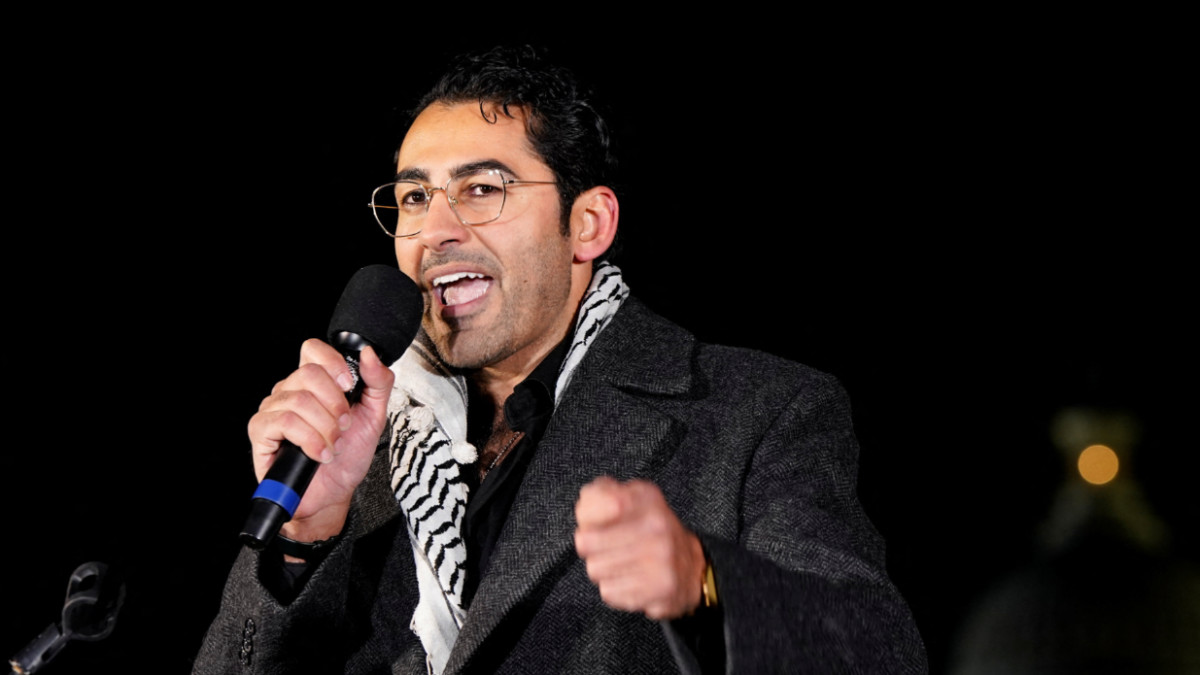
    Majid Freeman, 38, also known by the alias Majid Novsarka and based in Leicester, stood trial for two weeks at Birmingham Crown Court, answering to charges tied to social media posts he published on X and Instagram between 2023 and 2024. Prosecutors accused Freeman of two key offenses: intentionally encouraging terrorist activity and publicly backing Hamas, the Palestinian militant group classified as a proscribed terrorist organization by the UK government. Freeman has repeatedly denied all allegations throughout legal proceedings.

    After more than 13 and a half hours of closed deliberations, the jury notified the judge that they could not reach a required majority verdict on any of the charges brought against the activist. This deadlock automatically triggers the scheduling of a new trial, which is set to open in September 2027 and run for four weeks.

    Speaking to reporters outside the courthouse following the jury’s announcement, Freeman said he welcomed the retrial, framing it as a new chance to bring evidence of Israeli military actions in Gaza before a British civilian jury. He criticized the prosecution’s case, noting that the Crown had spent significant public resources to pursue charges rooted in social media content including emojis, Islamic prayers (duas), and public posts. “After almost a week of deliberation, the jury could not agree that I was guilty. They could not agree,” Freeman emphasized.

    The prosecution, led by senior barrister Tom Williams KC, argued during the trial that Freeman leveraged his social media platforms to promote and incite violent acts. Prosecutors pointed to specific content on Freeman’s accounts, including a 2024 reposted video from independent outlet Middle East Eye that showed an Israeli soldier shooting an elderly Palestinian woman in Gaza. They also claimed Freeman used visual symbols, including a red triangle, that prosecutors allege are associated with Hamas, and that his posts consistently amplified the group’s messaging. Prosecutors branded Freeman an “effective propagandist” who used short-form videos and casual messaging to humanize Hamas and build long-term public support for the organization in the UK.

    In his testimony to the court, Freeman clarified his position, drawing a distinction between backing Hamas as a political organization and supporting the right of armed resistance to occupation. “I do not support Hamas as a group,” Freeman told the jury. “I believe that not just Hamas, but every group has the right to defend themselves against Israeli aggression. That includes using force.”

    Freeman’s defense team, led by Hossein Zahir KC, pushed back aggressively against the prosecution’s claims. The defense argued that Freeman does not support Hamas as an organization, and instead advocates broadly for what he terms Palestinian resistance. Zahir urged jurors to contextualize Freeman’s social media posts against the backdrop of the ongoing Israel-Gaza war, which the defense described as a genocide against Palestinian civilians. The defense noted that Freeman’s use of the hashtag #GazaResists reflected his focus on the broader Palestinian cause rather than endorsement of any specific proscribed group. “Social media is fast-moving and often harsh, but his intention was to raise awareness, not to incite violence,” the defense told the court.

    This is not the first high-profile legal case Freeman has faced in recent years. Earlier in 2024, an English court acquitted Freeman on charges connected to 2022 intercommunal riots between Hindu and Muslim youth in Leicester. In that case, police had alleged Freeman pushed an officer, used abusive language toward law enforcement, and incited violent confrontation during the unrest.

    This case, which centers on the boundaries of free speech for activists criticizing Israeli policy in Gaza, has underscored the growing legal tensions in the UK between counter-terrorism prosecutions and the right to advocate for Palestinian causes amid the ongoing war.