作者: admin

  • Trump ally Kari Lake tapped to be US ambassador to Jamaica

    Trump ally Kari Lake tapped to be US ambassador to Jamaica

    In a series of White House personnel announcements made Monday, former President Donald Trump has tapped his close political ally Kari Lake to serve as the next United States Ambassador to Jamaica, while also nominating Cameron Hamilton to take the helm of the U.S. Federal Emergency Management Agency (FEMA).

    Lake, a former local television journalist who built her political profile around embracing Trump’s unsubstantiated 2020 election fraud claims, most recently led the Trump administration’s push to restructure the federally funded international broadcaster Voice of America (VOA), part of the U.S. Agency for Global Media (USAGM). If the U.S. Senate confirms her nomination, the appointment will bring an end to her tenure as the top official overseeing USAGM, the agency that supervises VOA’s global operations.

    During her time at USAGM, Lake acted under a presidential executive order to initiate layoffs for hundreds of employees at the 83-year-old international broadcaster. Trump has long positioned himself as a outspoken critic of VOA, repeatedly claiming the outlet holds a systemic left-wing ideological bias. Founded in 1942, VOA currently distributes news content across the globe in nearly 50 different languages.

    Shortly after the White House made the nomination public, Lake issued a statement of gratitude on social media, emphasizing her existing familiarity with the Caribbean nation. “Jamaica is a country I know very well, full of incredible people,” she wrote, adding that if confirmed, she looks forward to advancing three core priorities: deepening the bilateral partnership between the United States and Jamaica, advancing U.S. national interests in the region, and expanding the longstanding people-to-people friendship between the two nations.

    Lake’s path to the nomination is rooted in her rise in Republican politics following a 22-year career as a anchor at a Phoenix-based Fox News affiliate. She left journalism in 2021 to launch a Republican bid for Arizona governor, a race she ultimately lost. During that campaign, she gained Trump’s backing by aggressively repeating his false claims that the 2020 presidential election was marred by widespread fraud. After her own gubernatorial defeat, she similarly refused to accept the results, filing multiple unsuccessful lawsuits to overturn the outcome and making fraud claims that led to a high-profile defamation lawsuit against her. She later mounted an unsuccessful campaign for an Arizona U.S. Senate seat before being tapped to lead VOA shortly after Trump returned to office in 2024.

    Alongside Lake’s nomination, Trump also announced his pick of Cameron Hamilton to lead FEMA, an agency that has faced significant internal turmoil in recent months. Hamilton’s return to the top FEMA post comes roughly one year after the Trump administration removed him from the same role, after he pushed back against discussions of potentially closing the agency and defended its core function. Currently, FEMA is still recovering from the fallout of a 75-day partial shutdown of the Department of Homeland Security, which concluded on April 30, and has already seen a large-scale exodus of departing employees in recent months.

  • Epstein files on display at New York pop-up exhibit, all 3.5 million pages

    Epstein files on display at New York pop-up exhibit, all 3.5 million pages

    A U.S.-based transparency and pro-democracy nonprofit has launched a provocative temporary pop-up exhibition in Manhattan’s Tribeca neighborhood, centered entirely on a complete physical printout of every Jeffrey Epstein-related document released by the U.S. Department of Justice. Organized by the Washington D.C. Institute of Primary Facts, the exhibition, officially named “The Donald J. Trump and Jeffrey Epstein Memorial Reading Room,” houses roughly 3.5 million pages of court and investigative files, bound into 3,437 individually numbered volumes arranged floor-to-ceiling on custom shelves. The display comes as a direct outcome of the 2024 Epstein Files Transparency Act, which mandated the public release of all government-held records connected to the disgraced financier and convicted sex offender.

    On the institute’s official website, the organization frames the physical installation as a confrontation against opaque government record-keeping, stating plainly: “The truth is hard to deny when it’s printed and bound for you to see.” While registration is open to any member of the public wishing to visit the space, access to the bound volumes remains heavily restricted. A processing error by the Department of Justice left the names of multiple Epstein victims unredacted in the released files, barring general public access per privacy regulations. Only accredited journalists and legal professionals working on related cases are granted permission to review the documents on-site.

    A secondary focal point of the pop-up is a dedicated exhibit exploring the decades-long public relationship between former President Donald Trump and Epstein, who died by suicide in a federal prison in 2019 while awaiting trial on federal child sex trafficking charges. Court records and public accounts confirm the pair moved in overlapping social circles for years before a reported falling out over a 2004 real estate transaction, after which Trump publicly distanced himself from Epstein. Since the full release of the Epstein files began, Trump’s repeated appearances in the records have sparked widespread speculation, though the former president has consistently denied any improper conduct connected to Epstein or his activities.

    Project co-creator David Garrett explained the installation’s core mission in an interview with Agence France-Presse, noting the group’s focus on in-person public education to highlight perceived systemic corruption and threats to U.S. democratic norms. Garrett argued that the Trump administration’s handling of the Epstein file release has been marked by unnecessary delays and intentional obfuscation, with many critics accusing senior justice department officials of covering up the full extent of Trump’s ties to Epstein. “We’re a pro-democracy organization, with the goal of educating the public using these kinds of sort of pop-up museums and other in-real-life experiences to help people understand the corruption in the United States, the dangers to democracy,” Garrett said. He added that the group aims to spur sustained public pressure to force full accountability for the handling of the Epstein case and related records: “there needs to be real public outcry” over the government’s conduct, he said, “and what we attempted to do here was to create, or help to create public outcry to have real accountability.”

    The temporary exhibition will remain open to the public at its Tribeca location through May 21.

  • Teen sprint sensation Gout Gout to lead Australia’s world juniors squad in Eugene

    Teen sprint sensation Gout Gout to lead Australia’s world juniors squad in Eugene

    Eighteen-year-old Australian sprint prodigy Gout Gout has captured global track and field attention after posting an under-20 200-meter time that outpaces the best mark Usain Bolt ever ran as a teenager. Now, he is set to chase an official new world record at the upcoming World Athletics Under-20 Championships, scheduled to take place August 5-9 in Eugene, Oregon, after being named Monday to Australia’s 75-strong national squad for the event.

    “I’m really excited to get out there at World Athletics Under 20s,” Gout shared in an official statement accompanying the squad announcement. “It’s a great stadium and place to run fast, and I feel confident I’ll be ready to step up and make Australia proud.”

    Gout will line up in two events at the championships: the individual 200 meters, where he already holds the ratified world under-20 record, and the men’s 4×400-meter relay for Australia. The teen sensation first made headlines last month at the Australian Junior Track & Field Championships, where he narrowly missed breaking the 10-second barrier in the 100 meters — a goal he had targeted heading into the competition. Gout noted after the race that his primary objective at the national event was simply to secure his spot on the world juniors roster, even if his 100-meter result fell just short of expectations. “Obviously, I didn’t have the best start, but I came out for the W (win) pretty much,” Gout said at the time. “I was waving to my family, fans and a couple of friends … the more of a show, the more people who are going to come and watch.”

    The Australian junior meet came just one week after Gout made history by clocking a 19.67-second 200 meters at the Australian Open Championships in Sydney on April 12. That result shaved 0.02 seconds off the previous ratified world under-20 record of 19.69, set by American sprinter Erriyon Knighton in Eugene back in 2022. While World Athletics lists an unratified 19.49-second run by Knighton from the same year as the fastest ever 200 meters by an under-20 athlete, Gout’s 19.67 marks the first official sub-20-second 200 meters of his career, coming after a wind-assisted 19.84 run in the 2023 season. In 2024, Gout also set the Australian junior record with a 20.06-second 200 meters, making him the fastest 16-year-old in history over the distance.

    Most notably, Gout’s Sydney run is faster than Bolt’s all-time best 200-meter time as a teenager. The eight-time Olympic gold medalist ran a 19.93-second 200 meters in 2004 at age 17 to set the then-world junior record, and never improved on that mark before turning 20.

    To prioritize his preparation for the world junior championships and stay on track with his long-term goal of making his Olympic debut at the 2028 Los Angeles Games, Gout has opted to skip the 2026 Commonwealth Games, which will run July 23 to August 2 in Glasgow. If his rapid upward trajectory in the sport continues, many expect Gout could emerge as the face of the 2032 Brisbane Olympic Games, an event hosted in his home state of Queensland. Born and raised in Queensland to parents who immigrated from South Sudan, Gout’s rise has already made him one of the most watched young athletes in global track and field.

  • Cannes Film Festival defends male-dominated competition

    Cannes Film Festival defends male-dominated competition

    As the 79th Cannes Film Festival prepares to kick off its 12-day run on Tuesday, the event’s top leadership is facing sharp criticism over the continued gender imbalance in its flagship Palme d’Or competition, forcing a public defense of the festival’s selection process. This year’s controversy carries a sharp layer of irony: the festival’s official 2025 poster spotlights the iconic 1991 feminist road classic *Thelma & Louise*, a film celebrated as a landmark of female-centered storytelling.

    Of the 22 feature films competing for the festival’s most prestigious honor, the Palme d’Or, only five are helmed by female directors. That marks a drop from 2024, when seven of 22 competing films came from women filmmakers. Feminist industry advocacy group 50/50, which has pushed for gender parity across global film, has slammed festival organizers for what it calls “feminism washing”: leveraging the legacy of *Thelma & Louise* and its stars Geena Davis and Susan Sarandon, two enduring symbols of female empowerment, for promotional clout while failing to deliver on meaningful gender representation in the official selection.

    Cannes’ long-serving general delegate Thierry Fremaux pushed back against those accusations during a press conference Monday, rejecting any claim that the poster choice was a cynical performative gesture. “There is absolutely no point at which we’re choosing Geena Davis or Susan Sarandon or Ridley Scott’s film for the poster in order to supposedly give ourselves a feminist image,” Fremaux told reporters. He also noted that the 2018 parity charter 50/50 signed with the festival never mandated immediate equal representation in competition, and argued that mandatory gender quotas for selection have no place at the event. Fremaux emphasized that both the festival’s governing body and its competition juries already maintain full gender parity, and added that when selection committees are split between two equally strong films from a male and female director, the female-directed project gets priority.

    Organizers highlight that across all official selection categories outside of the main competition, women directors account for 34 percent of all feature film filmmakers this year, a figure that climbs to 38 percent when short film entries are included. Fremaux framed the current numbers as evidence of slow but steady progress, arguing that greater representation will come as more women break into the upper tiers of professional filmmaking. “Today we’re seeing more and more women directors in upcoming cinema, so they are gradually making their way into the competition,” Fremaux, who has led the festival for more than two decades, explained. “The figures show that things are moving forward, that it’s slow, that it’s not enough. We need a more feminine cinema so that, as in literature and in music, the issue of seeing the world from a female perspective, a woman’s sensibility, is more present in the world of film.”

    Critics remain unconvinced, however. Leading French newspaper Le Monde published a scathing analysis of Cannes’ gender record Monday, running the headline “Women on the poster, but still on the sidelines.” The criticism underscores a long-running gap in the festival’s 79-year history: only three women have ever won the Palme d’Or for best film, the most recent being French director Justine Triet for *Anatomy of a Fall* in 2023. The 2025 festival will run through May 23, with the Palme d’Or winner set to be announced on the closing night.

  • World losing 100 million barrels a week of oil with Hormuz closed, Saudi Aramco chief says

    World losing 100 million barrels a week of oil with Hormuz closed, Saudi Aramco chief says

    The ongoing conflict between the US, Israel and Iran has triggered an unprecedented crisis in global energy markets, with 100 million barrels of oil disappearing from weekly supplies for every week the Strait of Hormuz remains closed, the chief executive of Saudi Arabia’s state-owned oil giant Saudi Aramco revealed Monday.

    Addressing analysts during an earnings call, Saudi Aramco CEO Amin Nasser described the supply disruption that emerged in the first quarter of the year as the most severe energy shock the global economy has ever encountered. With shipments through the strategic chokepoint blocked, Nasser explained that global markets have been forced to rely on demand rationing to manage the limited available supply.

    “Demand rationing will remain in place for as long as supply disruptions through the Strait of Hormuz continue,” Nasser stated. “If regular trade and shipping through the waterway resume, we expect to see a very strong rebound in global oil demand growth.”

    The burden of this rationing is not being shared equally across the globe, energy analysts note. Major Asian economies, which rely almost entirely on Gulf oil exports to meet their energy needs, have already implemented formal consumption restrictions. By contrast, while Western nations led by the United States have seen energy prices rise sharply, they have not introduced similar demand-cutting measures.

    Oil markets swung sharply upward on Monday, with prices jumping more than 3% after former US President Donald Trump warned that a fragile ceasefire with Iran was “on life support”, as traders priced in a high probability of a resumption of open conflict that would extend the Hormuz blockage.

    Nasser joined a growing chorus of energy industry leaders and analysts in pointing out a growing disconnect between oil prices quoted in futures markets and the actual cost of physical crude in the real economy. As of May 11, Brent crude futures for July delivery were trading around $105 per barrel, but end buyers are paying far higher rates for immediate delivery. Last month, HSBC CEO Georges Elhedery reported that spot oil prices in Sri Lanka had surged as high as $286 per barrel, while other industry analysts peg average spot prices for Asian buyers at roughly $150 per barrel.

    To cushion the supply shortfall, Nasser said markets have drawn heavily on stored inventories both on land and in floating storage at sea — the only available buffer to offset the blockage. However, he warned that these global stockpiles have already been “materially depleted”, leaving little room for further draws.

    Early in the conflict, the International Energy Agency coordinated a coordinated release of 400 million barrels of strategic reserves from its member nations, while China — the world’s second-largest oil consumer after the US — quietly cut its crude imports by 25% from pre-war levels. These two moves helped prevent an even more dramatic price spike in the short term, but Nasser warned against overconfidence in the current market stability, arguing that aggregate global inventory figures do not accurately reflect the extreme tightness in the physical spot market.

    Market watchers, including major oil traders, independent analysts and leading US banks, have issued a stark warning that the global energy market will reach a critical tipping point in June if the Strait of Hormuz remains closed. JPMorgan’s latest analysis last week projected that if the chokepoint does not reopen by mid-to-late summer, global operational oil inventories will hit a minimum functional floor, triggering even more severe demand rationing that will fall disproportionately on countries outside the United States.

    Against this backdrop of global market chaos, Saudi Aramco delivered stronger-than-expected first-quarter financial results, reporting a 26% jump in adjusted net income that beat consensus analyst forecasts. While the kingdom is only exporting 60 to 70 percent of its pre-war crude volume, far higher per-barrel prices have offset the volume drop and lifted profitability.

    Unlike neighboring Gulf producers including Kuwait, Bahrain and Iraq — all of which are almost completely dependent on the Strait of Hormuz for their oil exports — Saudi Arabia has a workaround: its 5 million barrels per day East-West Pipeline, which moves crude from Gulf fields to the Red Sea port of Yanbu for export. Nasser described the pipeline as a “critical lifeline” for the kingdom, confirming it is currently operating at full capacity, and that the company is working to expand its throughput in the coming months. Saudi Arabia also ships 900,000 barrels per day of refined petroleum products out via Red Sea ports.

  • What to know about Trump-Xi summit with trade, Taiwan and Iran on the agenda

    What to know about Trump-Xi summit with trade, Taiwan and Iran on the agenda

    WASHINGTON — Ahead of the much-anticipated bilateral summit between Chinese President Xi Jinping and U.S. President Donald Trump, officials from both major powers have emphasized that bilateral relations have held broadly steady in recent months, with both sides prioritizing the preservation of that stability going into the meeting. Yet even as consensus around stability holds, the world’s most consequential bilateral relationship faces a sprawling roster of intractable disputes with no clear path to quick resolution, leaving analysts skeptical that major breakthroughs will emerge from the talks. From tech competition to the long-simmering Taiwan issue, and now the Iran conflict, every topic on the agenda carries high global stakes.

    Henrietta Levin, a senior fellow at the Center for Strategic and International Studies’ Freeman Chair in China Studies, noted that both sides share a core agreement on the value of U.S.-China stability. Beyond that foundational consensus, however, the future of the relationship grows far more complex, she said, making limited progress the most likely outcome of the leaders’ meeting.

    ### Trade: A Fragile Truce Holds, But Core Issues Remain Unresolved
    The U.S.-China trade conflict first erupted during Trump’s first term, and escalated sharply last April when the U.S. president announced 34% tariffs on all Chinese goods in a move he labeled “Liberation Day.” China responded quickly with reciprocal tariffs and targeted countermeasures, including new restrictions on its rare earth exports. The tit-for-tat escalation pushed bilateral tariffs as high as 145% before both sides acknowledged the unsustainable economic damage and agreed to a trade truce, pausing most punitive economic measures.

    The two leaders first extended the truce for an additional year during an October meeting in South Korea, with China committing to increased soybean purchases from American agricultural producers and the U.S. cutting existing tariffs by more than half. Zhao Minghao, an international relations professor at Shanghai’s Fudan University, explained that China’s approach has centered on pushing back against U.S. tariffs while working to preserve overall bilateral stability.

    While some observers expect the two sides to announce a new comprehensive trade agreement during the summit, Zhao cautioned that such a deal would not mark a permanent end to the trade conflict, and would include conditional terms. Last year’s truce failed to resolve any core structural disputes, nor did it return bilateral economic relations to their pre-trade war status. China has since implemented new export permit requirements for rare earths, a regulation that allows Beijing to tighten shipments at any time.

    Wendy Cutler, vice president of the Asia Society and a former U.S. trade negotiator, noted that this summit lacks the intensive pre-meeting bilateral engagement that characterized past high-level talks. In April, Beijing introduced a new regulatory framework to counter foreign sanctions targeting Chinese companies, which instructs affected domestic firms to ignore extraterritorial U.S. restrictions — a directive already applied to a Chinese petroleum refinery processing Iranian crude in defiance of American sanctions. Cutler described the current trade arrangement as a “fragile truce,” noting that even if the truce is extended, both sides have continued to take targeted actions against one another’s economic interests. The White House has also confirmed that leaders will discuss a proposal for a new bilateral “Board of Trade” to maintain ongoing economic dialogue between the two powers.

    ### Advanced Semiconductors: Export Restrictions Push China Toward Self-Reliance
    U.S. restrictions on exports of advanced computer chips and related manufacturing technology to China were first introduced during Trump’s first term, and the issue remains a major point of friction ahead of the summit. Leading American chip designer Nvidia has lobbied the Trump administration to relax export curbs, with founder Jensen Huang arguing that continued access to American chips would leave Chinese artificial intelligence firms dependent on U.S. technology.

    However, growing export restrictions have only accelerated Beijing’s push to develop a domestic, self-sufficient semiconductor industry. In written comments, Zhao noted that China’s position has shifted subtly in recent years: Beijing now prioritizes advancing its domestic chip sector over continued reliance on American advanced semiconductor imports.

    ### Taiwan: Beijing Labels the Issue the ‘Biggest Risk’ to Bilateral Ties
    Two weeks before the summit, Chinese Foreign Minister Wang Yi told U.S. Secretary of State Marco Rubio that while overall bilateral relations remain stable, the Taiwan question remains the single biggest threat to U.S.-China ties. Beijing reaffirmed ahead of the meeting that Taiwan would be a top priority for discussions.

    The Taiwan issue has lingered since the 1949 Chinese civil war, which split the two sides. Beijing claims the self-ruled democratic island as part of its sovereign territory, and tensions have risen steadily since the election of Tsai Ing-wen from the independence-leaning Democratic Progressive Party (DPP) in 2016. Beijing cut off official communication with Tsai’s administration and has stepped up military pressure, conducting nearly daily naval and air patrols near the island in recent years. Current Taiwanese President Lai Ching-te, also a member of the DPP, has faced repeated criticism from Beijing, which has depicted him as a separatist in state propaganda accompanying large-scale military exercises around the island.

    The U.S. is legally required to provide Taiwan with defensive military hardware, but maintains a longstanding policy of “strategic ambiguity” over whether it would intervene militarily if China attempts to take the island by force. Recent comments from Trump confirming he discussed arms sales to Taiwan with Xi have renewed uncertainty over U.S. policy toward the island. Zhao suggested a limited pragmatic compromise could be on the table: a framework of reciprocal restraint, under which the U.S. would reduce arms sales to Taiwan in exchange for China cutting back military drills targeting the island. Few analysts expect a permanent resolution to the issue to emerge from the summit.

    ### The Iran Conflict: U.S. Pushes for Chinese Influence, Beijing Remains Cautious
    As the international community awaits a ceasefire in the Iran conflict that has disrupted global energy markets, the issue is set to be added to the summit agenda. Beijing has positioned itself as an unofficial mediator in the conflict thanks to its close political and economic ties to Tehran, but has so far avoided deep direct involvement. China has publicly criticized the U.S. and Israel over the ongoing war.

    Levin argued that Beijing has little incentive to resolve a regional crisis that Washington created: “I don’t think China has any interest in solving the problems the U.S. has created for itself in the Middle East,” she said. Ahead of the summit, U.S. Treasury Secretary Scott Bessent publicly called on China to pressure Iran to reopen the Strait of Hormuz, a critical global energy chokepoint, and accused Beijing of funding terrorism through its purchases of Iranian crude. Speaking to Fox News, Bessent said: “Iran is the largest state sponsor of terrorism, and China has been buying 90% of their energy, so they are funding the largest state sponsor of terrorism. Let’s see if China steps up with some diplomacy and get the Iranians to open the strait.”

  • Uganda’s longtime president will be sworn in for another term as his son emerges as de facto ruler

    Uganda’s longtime president will be sworn in for another term as his son emerges as de facto ruler

    As the Ugandan capital Kampala prepares for Tuesday’s inauguration of 81-year-old Yoweri Museveni for an eighth five-year term, the East African nation turns its focus to a question that will define its future: how will power transition when the leader who has ruled for four decades finally steps down?

    For millions of Ugandans, Museveni’s presidency is the only national leadership they have ever known. While most accept his time in office is drawing to a close, the path forward remains deeply unclear, with growing speculation that the presidency could pass to his son, army chief General Muhoozi Kainerugaba, who has openly declared his ambition to succeed his father.

    Kainerugaba, 52, the widely presumed heir apparent, has already taken a prominent public role in the lead-up to the inauguration, overseeing days of military parade rehearsals that saw Russian-made Sukhoi fighter jets roar over Kampala’s ceremonial grounds. Two potential paths to the presidency have emerged for the general, though both carry significant questions. The first is an unconstitutional but peaceful handover of power directly to Kainerugaba, while the second would rely on the ruling party’s overwhelming parliamentary majority to pass a constitutional amendment clearing his path to the nomination. A straight electoral victory is widely seen as a major challenge: opposition leader Bobi Wine, a popular former entertainer who has already run for president twice and rejected the results of January’s election that extended Museveni’s tenure, is expected to mount a strong challenge if Kainerugaba runs.

    Top ruling party figures have already lined up to back Kainerugaba’s bid. Parliamentary Speaker Anita Among told a gathering of lawmakers celebrating the general’s birthday last month that the ruling party’s majority in parliament would clear any obstacle for him, noting that the opposition was already marginalized in the 11th parliament and would be soundly defeated in the 12th. “For the sake of MK, just assure MK that we will do whatever it takes,” Among said, using Kainerugaba’s initials.

    The rush of senior politicians to pledge allegiance to Kainerugaba not only reflects their own calculations for political survival but also confirms his growing status as Uganda’s de facto authority as his father ages and relies increasingly on military leadership to govern. Andrew Mwenda, a close associate of Kainerugaba, wrote last month in online publication The Independent that “Many Ugandans close to power have learned this lesson. That the president is old and exhausted, both intellectually and physically. He has a limited ability to monitor many things across a large spectrum of sectors.”

    Kainerugaba’s rise through the military ranks, which began after he joined the armed forces in the late 1990s, has long been controversial, with critics labeling the planned succession the “Muhoozi Project.” While Museveni and Kainerugaba have repeatedly denied any pre-planned hereditary transfer of power, observers say it has become increasingly clear over the past two years that this is Museveni’s preferred outcome. With no viable rivals to Museveni within the ruling National Resistance Movement, many analysts agree the military will ultimately wield decisive influence over the selection of the next president.

    “While people are waiting for the legal transition from Museveni, the de facto transition has already happened,” said Angelo Izama, an analyst with Uganda-based think tank Fanaka Kwawote. “Kainerugaba, more than the president, is the final voice on defense and security matters.”

    Unlike his father, who cultivated a charismatic, pragmatic populist style that allowed him to co-opt rivals and retain power for decades, Kainerugaba is known for a more confrontational approach. Associates describe him as a disciplined career military officer, educated at elite military institutions in the United States and United Kingdom, who avoids ostentatious displays of wealth. He also founded the Patriotic League of Uganda, a political activist group that draws support from across the ruling establishment, including sitting government ministers and prominent business figures. But he lacks Museveni’s ability to build cross-factional alliances, and has drawn criticism for provocative, offensive public posts on social media. He has also pursued a high-profile anti-corruption crackdown that has led to the arrest of several senior generals, including former allies.

    Museveni first seized power in 1986 at the head of a guerrilla movement, promising to bring democracy to Uganda after years of civil war and political chaos. At the time, he famously criticized Africa’s problem of leaders clinging to power long after they had lost public support. Later, he revised his stance, arguing his criticism only applied to leaders who extended their rule without winning an electoral mandate.

    Over his four decades in office, Museveni, a key U.S. ally in regional counterterrorism and security efforts, has been widely credited with delivering sustained relative peace and economic growth to Uganda. But in recent years, he has drawn growing international criticism for an increasingly authoritarian turn that contradicts his early democratic promises. Term and age limits for the presidency have been scrapped, leading political opponents have been jailed or sidelined, and new legislation has raised alarms about shrinking space for civil society and opposition activity.

    Most recently, Ugandan lawmakers passed a bill framed as a measure to counter foreign interference in domestic politics. The legislation caps annual funding from foreign sources for any local actor at roughly $110,000, requiring government approval for any funding above that limit. Critics warn the law will cripple the work of independent non-governmental organizations and opposition groups. Wine’s National Unity Platform condemned the legislation as “unconstitutional, irrelevant and brought in bad faith to further persecute those with divergent views.”

  • Almost 200 sanctioned Russia-linked ships have entered UK waters despite warning

    Almost 200 sanctioned Russia-linked ships have entered UK waters despite warning

    Nearly seven weeks after UK Prime Minister Keir Starmer vowed to deploy British military forces to board sanctioned Russian vessels operating in UK maritime territory, an independent investigation by BBC Verify has uncovered that almost 200 blacklisted ships linked to Russia’s shadow oil fleet have traversed UK waters, with zero publicly confirmed interceptions or boardings carried out to date.

    Starmer first announced the aggressive new enforcement policy in March, stating that British armed forces had been granted authority to intercept and board any sanctioned vessels passing through the UK’s maritime zones. But between March 25 and 15:00 BST on May 11, BBC Verify’s analysis of publicly available ship tracking data from MarineTraffic identified 184 UK-sanctioned vessels making a total of 238 separate trips through UK waters. As of the investigation’s publication, the UK government has not released any public statement or evidence confirming that any of these vessels have been boarded, despite Starmer’s high-profile pledge.

    All 184 vessels in question appear on the UK Foreign Office’s official sanctions list, with documented ties to Russia. The shadow fleet, a loose network of vessels with deliberately obscured ownership and registration structures, was established by Moscow to evade harsh international sanctions imposed on its crude oil and energy exports following its full-scale invasion of Ukraine. The UK’s sanctions regime bars these vessels from entering UK ports, and prohibits British businesses and individuals from offering financial, insurance or brokerage services to any ship involved in transporting Russian oil. The government has framed this pressure on Russian oil revenues as a core measure to cut off funding for Moscow’s military campaign in Ukraine.

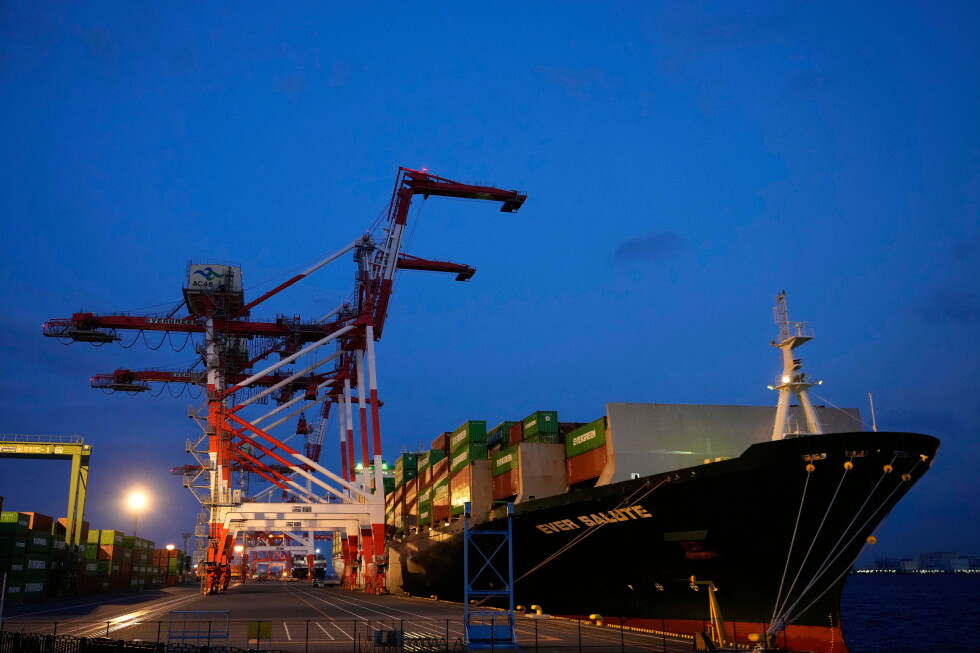
    Of the tracked vessels, 173 were oil tankers, 10 were liquefied natural gas (LNG) carriers, and one was classified as a multi-purpose offshore vessel. Every vessel tracked entered the UK’s Exclusive Economic Zone (EEZ), a maritime area extending up to 200 nautical miles off the UK’s coastline, with the vast majority of transits occurring through the busy English Channel. In at least 94 of those journeys, the vessels crossed briefly into UK territorial waters, the 12-nautical-mile zone directly adjacent to the UK coast. BBC Verify confirmed that Starmer’s announced interception policy explicitly applies to both territorial waters and the EEZ.

    MarineTraffic gathers its location data from vessels’ onboard Automatic Identification System (AIS) transponders, a mandatory tracking technology for most large commercial ships. However, AIS signals can be intentionally disabled by crews to hide a vessel’s true identity and location. The data shows significant gaps in tracking for many of the sanctioned vessels west of Scotland and Ireland, a common pattern for shadow fleet vessels attempting to avoid detection.

    The investigation also uncovered one notable incident: satellite imagery analyzed by experts from intelligence firm MAIAR confirms that a sanctioned oil tanker named *Universal* was escorted through UK waters by a Russian frigate, almost certainly the Russian warship *Admiral Grigorovich*, in early April. Ship tracking data shows *Universal* entered UK waters in the early hours of April 8 before transiting the English Channel.

    The complete lack of confirmed boardings has drawn sharp criticism from defense and maritime experts. Tom Sharpe, a former Royal Navy warship commander, described the inaction as “utterly confusing” and “pathetic.” Sharpe told BBC Verify that the UK possesses all the necessary military assets to carry out the pledged interceptions, including warships, specialized boarding teams, and customs enforcement capabilities. “We’ve got no maritime spine in us,” he said. “I see it time and time again with the way we operate our warships. We are risk averse, we’re poorly coordinated.”

    However, legal experts note that significant international maritime law constraints may explain the government’s reluctance to carry out boardings. James M Turner KC, a leading shipping lawyer at Quadrant Chambers, explained that under standard international law, coastal states are generally prohibited from seizing or boarding vessels that are legally flying the flag of another sovereign nation, regardless of sanctions status. “The position with very few exceptions is that you can’t seize vessels that are flying the flag of another country,” Turner said. “If a ship travels through UK waters under a flag it is entitled to fly then there is very little a coastal state can do – regardless of whether the vessel has been sanctioned or is carrying sanctioned goods.”

    Turner added that the policy appears to be unenforceable in all but a small number of edge cases, such as vessels sailing without a flag or falsely reporting their registration. “This is a case where rhetoric and reality do not coincide,” he said.

    Alessio Patalano, professor of war and strategy at King’s College London, noted that while no boardings have occurred, the policy has already had a measurable deterrent effect. The investigation found that multiple sanctioned vessels have altered their standard routes to avoid UK waters entirely. For example, the *Yi Tong*, an oil tanker registered to a Chinese shipping firm based in Shandong province, previously made regular trips between Russia’s Port of Ust-Luga and China via the English Channel. In the weeks following Starmer’s announcement, the vessel took a far longer route around the west of Ireland and north of Scotland, completely avoiding the Channel and UK territorial waters. Longer routes increase fuel costs and transit time for cargo operators, cutting into the profits of Russian energy sales.

    “The Russians are probably already thinking how to test the UK more, and we should expect ships taking a longer route bringing some measure of challenge to UK defences and infrastructure,” Patalano said. He also noted that the Russian naval escort of *Universal* could be interpreted as a sign that the UK’s policy is already putting Moscow under pressure.

    The Kremlin has already condemned the UK’s interception policy as “another deeply hostile step directed at Russia” and warned that such aggressive actions “have consequences.”

    When approached by BBC Verify for comment on its findings, the UK Ministry of Defence (MoD) declined to directly answer whether any interceptions or boardings had been carried out since March 25. Instead, the MoD stated it is “disrupting and deterring” shadow fleet vessels, and claimed that more than 700 suspected vessels have been “challenged” since October 2024. The department added that it would not comment on specific operational details “as this could compromise our ability to successfully take action against these ships.” Follow-up questions asking the MoD to clarify what constitutes a “challenge” were not answered with additional detail. The Royal Navy has confirmed it continues to monitor Russian vessels transiting UK maritime territory.

  • Firefighters battle to contain Florida Everglades brush fire

    Firefighters battle to contain Florida Everglades brush fire

    Firefighting crews across southern Florida have been locked in an intensive battle to halt the spread of a large brush fire that has torn through large swathes of the iconic Everglades ecosystem. As of Monday evening, official updates from state emergency management authorities confirmed the wildfire has already expanded across more than 7,000 acres of protected marsh and brushland, with containment efforts only reaching 40% completion.

    The Everglades, one of the United States’ most unique wetland habitats, hosts dozens of endangered plant and animal species, raising concerns among environmental officials about the potential long-term impact of the blaze on the region’s fragile ecosystem. Fire management teams have deployed air tankers, bulldozers, and ground crews to create firebreaks and slow the blaze’s advance, particularly as dry seasonal conditions and wind patterns have created favorable conditions for rapid fire spread. Local authorities have not yet issued mandatory evacuation orders for nearby residential communities, but have urged residents to remain alert to changing conditions and follow guidance from emergency response teams. Investigators have not yet released details on the cause of the fire, which is standard protocol for ongoing wildfire response efforts.

  • Little respite in Ukraine as air strikes ring out during Russia truce

    Little respite in Ukraine as air strikes ring out during Russia truce

    More than four years into Russia’s full-scale invasion of Ukraine, a US-brokered three-day ceasefire set to expire Monday has failed to deliver the broad relief that war-exhausted Ukrainians had hoped for, with reports of persistent air strikes, artillery fire, and mutual violation accusations lingering across frontline regions.