作者: admin

  • Madonna, Shakira, BTS to headline first World Cup final half-time show

    Madonna, Shakira, BTS to headline first World Cup final half-time show

    Football’s global governing body FIFA made a landmark announcement Thursday, confirming that three of the world’s biggest music acts — pop icon Madonna, Colombian superstar Shakira, and K-pop phenomenon BTS — will top the bill for the first-ever official half-time show at a men’s FIFA World Cup final. The star-studded event will take place on July 19 at New Jersey’s MetLife Stadium, modeled after the iconic Super Bowl half-time spectacle that has become a cultural touchstone. Overseeing curation of the groundbreaking performance is Chris Martin, frontman of British alternative rock band Coldplay, though the announcement has already sparked discussion and some concern over potential delays to match flow from an extended break. The 2026 FIFA World Cup, the first iteration of the expanded 48-team tournament, will be co-hosted across the United States, Canada, and Mexico, kicking off its opening round on June 11. The idea for a dedicated World Cup final half-time show was first teased by FIFA President Gianni Infantino in March 2024, when he pledged an unprecedented entertainment spectacle for the tournament but shared no details about performers or run time. On Thursday, Infantino framed the upcoming show as a historic milestone for the global competition, writing on his Instagram that the event would be “befitting the biggest sporting event in the world.” This step by FIFA follows a pattern established at recent major CONMEBOL and FIFA events: Shakira headlined the half-time show at the 2024 Copa America final held in Miami’s Hard Rock Stadium, and the 2024 FIFA Club World Cup final at MetLife Stadium also featured a half-time performance that pushed the break well past the standard 15-minute regulation length. Beyond the on-field performance, Infantino revealed Thursday that FIFA plans to host a major fan activation that will “take over” New York City’s iconic Times Square during the final weekend of the tournament, bringing the energy of the World Cup to one of the most visited public spaces in the United States. The half-time show will also serve a philanthropic purpose: all proceeds and associated fundraising efforts will support the FIFA Global Citizen Education Fund, an initiative that aims to raise $100 million to expand access to education for children across the globe over the course of the tournament. Shakira, who has the longest and most high-profile ties to the World Cup among the announced performers, has been building hype for her 2026 tournament involvement for weeks. Last week, the Grammy-winning artist dropped a teaser for the official 2026 World Cup song, titled “Dai Dai,” sharing a 67-second clip filmed on the pitch of Rio de Janeiro’s legendary Maracana Stadium — the site of two of the most iconic men’s World Cup finals in tournament history. In the teaser, Shakira holds the 2026 World Cup’s official match ball, the Trionda, while performing snippets of the new track in English alongside backup dancers wearing colors representing the United States, Colombia, and other participating nations. “Dai Dai” was produced in collaboration with award-winning Nigerian afrobeats star Burna Boy, and is scheduled for full official release this Thursday. The teaser has already been shared widely across the official FIFA World Cup social media accounts, closing with a rallying message for fans: “We’re ready!” This will be Shakira’s fifth major World Cup-related appearance: the singer has performed at two prior final matches (2006 and 2014) and recorded the genre-crossing 2010 World Cup anthem “Waka Waka (This Time for Africa),” which remains one of the best-selling World Cup theme songs of all time. Ahead of filming the 2026 teaser, Shakira drew a crowd of more than two million fans to a free open-air concert on Rio’s Copacabana Beach, underscoring her enduring global popularity as the tournament approaches.

  • ‘They shot my neighbour in the head’ – the lakeside city traumatised by war

    ‘They shot my neighbour in the head’ – the lakeside city traumatised by war

    Years of simmering conflict in the resource-rich eastern region of the Democratic Republic of the Congo have erupted into one of the world’s most devastating unaddressed humanitarian crises, with a new bombshell investigation from leading global human rights watchdog Human Rights Watch (HRW) exposing systematic atrocities against civilians during the weeks-long occupation of the key lakeside city of Uvira.

    The investigation, the first comprehensive on-the-ground account of abuses during the occupation, documents extrajudicial summary executions, widespread sexual violence, targeted attacks on children, and mass civilian displacement, with direct blame placed on both the M23 rebel movement and uniformed troops from neighboring Rwanda.

    M23 forces, long alleged by Western powers and United Nations experts to be militarily backed by Rwanda, seized Uvira – a strategic port city on the shores of Lake Tanganyika that serves as a gateway to Burundi, a key Congolese military ally – in December 2024. The capture came just days after then U.S. President Donald Trump brokered a high-profile peace deal between Congolese President Felix Tshisekedi and Rwandan President Paul Kagame, designed to de-escalate years of fighting in the unstable region.

    Over 130 local residents who remained in or fled Uvira during the occupation were interviewed by HRW investigators, who collected firsthand testimony corroborating 53 documented civilian executions carried out during door-to-door search raids across residential neighborhoods. The victims included 46 men, one woman, and five minor boys. Multiple witnesses described watching family members and neighbors killed in cold blood. One survivor recalled, “I wasn’t hit so I just ran to the lake. I saw my brother, his wife, and two of his children fall,” after M23 fighters opened fire on his household. Another witness described seeing fighters execute his neighbor with a point-blank gunshot to the head.

    Beyond extrajudicial killings, HRW verified eight separate accounts of gang rape and sexual assault committed by M23 fighters and Rwandan soldiers, with many survivors describing brutal violence against their families for attempting to intervene. In one account, a woman told investigators that after uniformed men sexually assaulted her, they shot and killed her husband when he tried to stop the attack. Another survivor recalled Rwandan soldiers threatening to murder her if she did not comply with their demands, while a third survivor described fighters debating whether to kill her before deciding to assault her instead.

    Children were not spared from the violence, the report confirms. Multiple children were shot and killed after being falsely accused of being pro-government informants. One 12-year-old boy survived a execution attempt, HRW says, after fighters shot him and stabbed his leg with a bayonet to confirm he was dead before leaving him for dead. Investigators also located three unmarked mass graves in Uvira, including one on a site previously controlled by United Nations peacekeeping forces.

    The Rwandan government has long rejected all claims that it provides military support to M23 or deploys its own troops inside Congolese territory, and neither the Rwandan government nor M23 leadership responded to HRW’s requests for comment on the specific allegations outlined in the report, nor to separate requests for comment from the BBC.

    Following intense regional and international diplomatic pressure, M23 withdrew from Uvira in January 2025, allowing Congolese government forces to retake control of the city. By that point, tens of thousands of residents had already fled their homes to escape the violence.

    HRW says the pattern of documented abuses – which also include widespread abductions, enforced disappearances, and forced recruitment of local residents – meet the international legal definition of war crimes. The organization is calling for immediate international accountability measures to be brought against all parties responsible for the violence.

    This report is only the latest to highlight the catastrophic scale of the ongoing humanitarian disaster in eastern DRC. A separate 2025 analysis from the United Nations Children’s Fund (UNICEF) found that more than 35,000 cases of sexual violence against children were recorded across the country in the first nine months of 2025, the vast majority in the North and South Kivu provinces, where M23 controls large swathes of territory. The persistent fighting has displaced nearly two million people in South Kivu province alone, according to UN figures, leaving millions more facing acute food insecurity and limited access to basic medical and humanitarian services.

  • Asian stocks are mixed as investors watch takeaways from Trump-Xi summit

    Asian stocks are mixed as investors watch takeaways from Trump-Xi summit

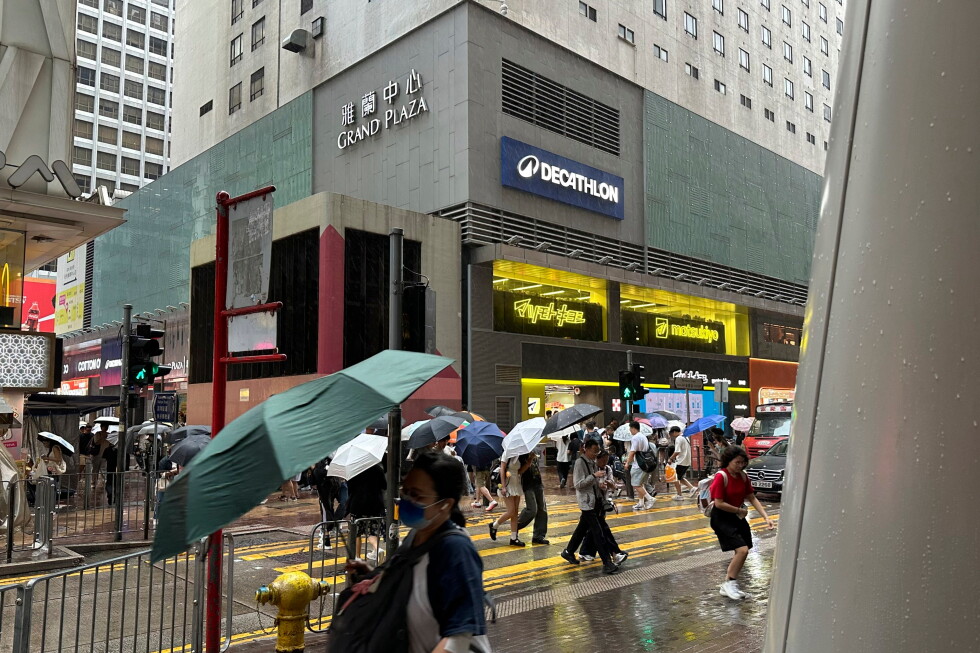
    HONG KONG – Global financial markets kicked off Thursday with uneven momentum across Asian equities, one day after major U.S. indexes notched fresh all-time records. Traders across the region were laser-focused on outcomes from the highly anticipated summit between U.S. President Donald Trump and Chinese President Xi Jinping in Beijing, looking for any shifts that could reshape trade, geopolitics and global energy flows.

    The two leaders held talks at Beijing’s Great Hall of the People, covering the full scope of U.S.-China ties including the sensitive issue of Taiwan. Most market analysts entered the meeting with tempered expectations, projecting no major breakthroughs on longstanding bilateral disputes would emerge from the one-day summit.

    Early futures trading for U.S. stocks pointed to a mild upward opening when markets resume trading stateside. Across East Asia, benchmark indexes painted a mixed picture: Japan’s Nikkei 225 gained 0.3% to close at 63,448.87, after climbing to an intraday all-time high above 63,700 earlier in the session, lifted by stronger-than-expected quarterly earnings from major Japanese corporations. South Korea’s Kospi advanced 0.5% to 7,884.71, with the biggest gains coming from the country’s technology sector. Hong Kong’s Hang Seng Index added 0.7% to reach 26,584.88, while mainland China’s Shanghai Composite Index pulled back 0.9% to 4,204.41. Australia’s S&P/ASX 200 posted a marginal dip of less than 0.1% to settle at 8,627.80, while Taiwan’s Taiex rose 0.6% and India’s Sensex climbed 0.5% by closing time.

    Beyond equities, oil prices continued their upward climb, driven by persistent uncertainty over the ongoing two-month-old war in Iran. Market participants have pinned hopes on the Trump-Xi summit to deliver diplomatic progress, after senior U.S. officials noted that Beijing maintains close economic ties with Tehran that could be leveraged to pressure Iran into reopening the critical Strait of Hormuz, a chokepoint for nearly a fifth of global oil supplies.

    As of Thursday trading, Brent crude, the global benchmark for oil prices, rose 0.4% to $106.04 per barrel. That figure is far higher than the roughly $70 per barrel price seen just before the Iran conflict broke out in late February. The uptick came one day after the International Energy Agency warned that supply disruptions stemming from the Strait of Hormuz standoff are draining global crude stockpiles at a faster pace than ever recorded. U.S. benchmark West Texas Intermediate crude also gained 0.4% to trade at $101.43 per barrel.

    Investors are also monitoring developments around China’s import policies for Nvidia’s cutting-edge H200 artificial intelligence chips. Nvidia CEO Jensen Huang is among a cohort of top U.S. business leaders including Tesla’s Elon Musk and Apple’s Tim Cook joining Trump on his Beijing trip, sparking speculation about potential shifts in tech trade rules.

    On Wednesday, U.S. markets closed out the session with tech stocks leading broad gains that pushed major benchmarks to new record highs. The broad S&P 500 climbed 0.6% to 7,444.25, notching another all-time closing high. The tech-heavy Nasdaq Composite rose 1.2% to 26,402.34, also hitting a new record, while the blue-chip Dow Jones Industrial Average posted a modest 0.1% dip to 49,693.20.

    In bond markets, the yield on the 10-year U.S. Treasury note edged down marginally to 4.46% from Wednesday’s 4.47%, but remains far above the 3.97% level recorded before the Iran war began. A government report released Wednesday showed U.S. wholesale prices spiked in April, driven largely by energy market volatility triggered by the Iran conflict. Also on Wednesday, the U.S. Senate confirmed Kevin Warsh, Donald Trump’s nominee, to serve as the next chair of the Federal Reserve, succeeding Jerome Powell, whom Trump repeatedly criticized for refusing to cut interest rates as quickly and deeply as the president demanded.

    In currency markets, the U.S. dollar dipped slightly to 157.85 Japanese yen, down from 157.86 yen in the previous session. The euro also saw a marginal uptick, rising to $1.1715 from $1.1711.

    Associated Press Business Writer Stan Choe contributed reporting to this article.

  • A quarter of World Cup games risk searing heat: scientists

    A quarter of World Cup games risk searing heat: scientists

    As the 2026 FIFA World Cup approaches, a new analysis from leading climate researchers has delivered a stark warning: climate change has significantly elevated the threat of dangerous extreme heat across the North American host region, putting one in four of the tournament’s 104 total matches at risk of searing, potentially unsafe conditions.

    The study, conducted by World Weather Attribution (WWA), an international network of climate science experts, found that the current heat risk profile is far more severe than when the U.S. last hosted the World Cup in 1994. The 2026 tournament, set to run from June 11 to July 19 across 16 venues in the U.S., Mexico and Canada, has already prompted FIFA to introduce mandatory cooling breaks in each half of play, a policy directly responding to growing heat concerns.

    WWA’s analysis uses the Wet Bulb Globe Temperature (WBGT) index, a comprehensive metric that accounts for heat, humidity, wind, and sun exposure to measure how well the human body can cool itself. Researchers estimate 26 matches could see WBGT levels reach at least 26°C – a threshold where international footballers’ union FIFPRO identifies heat strain as a meaningful risk to athlete health, justifying mandatory cooling breaks. By comparison, only 21 matches were projected to hit this same threshold during the 1994 U.S. World Cup.

    Of the 26 high-risk matches, 17 are scheduled for stadiums with installed cooling systems that reduce danger for both players and spectators. That leaves nine high-risk matches hosted at uncooled venues. Five matches across the tournament are projected to hit 28°C WBGT or higher – a level FIFPRO says warrants delaying or postponing matches until conditions become safer. That number is nearly double the projected count for 1994, making the current heat threat far more pressing.

    Crucially, the risk does not only apply to competing athletes, who have constant access to on-site medical teams. Fans, many of whom will gather for hours in unshaded outdoor areas around stadiums, face even greater potential harm, noted Friederike Otto, WWA co-founder and climate science professor at Imperial College London.

    Just three host venues – located in Dallas, Houston and Atlanta – are equipped with full air conditioning. More than a third of matches with a 1-in-10 chance of exceeding 26°C WBGT will be held at venues without any cooling infrastructure.

    Even the 2026 World Cup final, one of the most watched global sporting events of the decade, faces non-negligible risk. Scheduled for July 19 at New Jersey’s MetLife Stadium, the match has a 1-in-8 chance of hitting the 26°C WBGT threshold, and a 2.7% probability of reaching the 28°C cancellation-level mark, according to WWA’s projections.

    Otto emphasized that the final’s measurable heat risk should serve as a clear wake-up call for FIFA and tournament organizers to strengthen preparations for extreme heat, to protect the health of both athletes and the hundreds of thousands of fans expected to attend the historic 2026 tournament.

  • Cuba has run out of diesel and oil, energy minister says

    Cuba has run out of diesel and oil, energy minister says

    Cuba’s national energy system has entered a state of unprecedented crisis, with the Caribbean nation completely exhausted of its crude oil, diesel and fuel oil reserves, Energy Minister Vicente de la O Levy confirmed in an interview with local state media. The minister made clear that only limited volumes of locally extracted natural gas remain available, placing the country’s entire energy infrastructure in a “critical” condition that he directly attributes to the long-standing U.S.-led oil blockade squeezing incoming supply.

    The acute fuel shortage has triggered staggering disruptions across daily life in Cuba. Multiple districts of the capital Havana are already experiencing scheduled rolling blackouts that last between 20 and 22 hours per day, forcing residents like the man photographed cooking over open firewood during outages to adapt to crippled basic services. De la O Levy acknowledged the public mood across the country has grown “extremely tense”, and on Wednesday, scattered public demonstrations against prolonged power cuts broke out across the capital, according to a Reuters on-the-ground report.

    Critical public services have been brought to a near standstill by the energy collapse. Hospitals can no longer maintain normal operations, leaving vulnerable patients without consistent access to life-saving equipment, while schools and government administrative offices have been forced to suspend in-person operations indefinitely. The crisis has also hit Cuba’s most vital economic driver: the tourism sector, which relies on consistent power and infrastructure to accommodate international visitors, has already reported significant disruptions that threaten already fragile revenue streams.

    Historically, Cuba has depended on fuel imports from Venezuela and Mexico to feed its domestic refining network. But those shipments have all but ceased in recent years, after former U.S. President Donald Trump introduced sweeping tariff threats against any third country that continued supplying fuel to Cuba, pressuring suppliers to cut trade ties.

    Amid the deepening crisis, the U.S. has reaffirmed a controversial offer of $100 million in humanitarian aid, which it has tied directly to demands for “meaningful reforms” to Cuba’s ruling communist system. This offer follows a recent escalation of U.S. pressure: in early May, Washington expanded its blockade with a new round of sanctions targeting senior Cuban government officials, accusing them of human rights violations. Cuban Foreign Minister Bruno Rodriguez has already decried these new sanctions as “illegal and abusive.”

    Last week, U.S. Secretary of State Marco Rubio claimed Cuban authorities had rejected the $100 million aid offer outright, a claim the Cuban government has formally denied. On Wednesday, the U.S. State Department repeated the aid proposal, stating the assistance would be distributed in partnership with the Catholic Church and what it described as “reliable” independent humanitarian organizations. “The decision rests with the Cuban regime to accept our offer of assistance or deny critical life-saving aid and ultimately be accountable to the Cuban people for standing in the way of critical assistance,” the State Department said in a statement.

  • Somalia is in a deadly drought again. Most humanitarian aid isn’t there this time

    Somalia is in a deadly drought again. Most humanitarian aid isn’t there this time

    In the parched semi-autonomous region of Puntland, northern Somalia, 70-year-old pastoralist Abdi Ahmed Farah guards a rapidly dwindling stock of food that keeps his family of 23 alive. Three years of failed consecutive rains have turned his once-thriving herd of 680 goats into a pile of carcasses littered outside his makeshift tent, leaving just 110 emaciated animals barely clinging to life. Already trapped in debt from purchasing overpriced water, Farah’s family now survives on a single daily meal of rice mixed with sugar and oil. Three weeks after his youngest child was born, his wife produces barely a drop of breast milk to feed the newborn.

    “I have considered abandoning my family because I cannot provide for them,” Farah said, his voice heavy with desperation that echoes across millions of Somali households as the country faces what experts warn could be the worst drought in its recorded history. One of the world’s most climate-vulnerable nations, Somalia is now grappling with a climate-driven catastrophe that has dried up major rivers, withered entire harvests, and pushed a third of its population to the brink of starvation.

    The crisis has been severely compounded by cascading external pressures: deep cuts to international humanitarian aid, most sharply from the United States, Somalia’s former largest donor, and skyrocketing commodity prices spurred by ongoing tensions in the Middle East. Somalia relies on imports for 70% of its food supply and purchases nearly all of its fuel from the region, leaving its already fragile economy extremely exposed to global market shocks. Data from the United Nations Food and Agriculture Organization shows production of the country’s staple crops—maize and sorghum—during the key October-to-December rainy season fell to the lowest level on record this year.

    Humanitarian agencies now warn that nearly 500,000 children across Somalia are at risk of severe acute malnutrition, the deadliest form of hunger, a toll higher than that recorded during the catastrophic droughts of 2011 and 2022, according to UNICEF. “2026 is the worst year on record for Somalia in terms of drought,” said Hameed Nuru, country director for the U.N. World Food Programme (WFP) in Somalia. “Children have started dying.”

    Official joint estimates from the Somali government and the United Nations put the number of people facing crisis-level hunger at 6.5 million, a 25% jump since the start of the year that equals one-third of the entire national population. While aid organizations are stretching already thin resources to respond and the Somali diaspora has been sending critical funds to family members back home, humanitarian workers warn the support being mobilized is nowhere near enough to meet the scale of need.

    “This drought is not just another cycle of dry season. It’s a repeated climate shock with shrinking humanitarian support,” explained Mohamed Assair, a senior manager for Save the Children in Puntland.

    In Usgure, the small Puntland village where Farah and his family have taken shelter for 10 days after fleeing their depleted grazing lands, the local economy that relies entirely on pastoralist activity has completely collapsed. Almost a dozen rotting goat carcasses lie within meters of Farah’s tent, and even when herders manage to hold onto livestock, emaciated animals cannot be sold or traded for staple grains like they once could. “There is no market for my goats because they are so thin. Previously we would trade them for rice, but now we can’t,” Farah said.

    Community leader Abshir Hirsi Ali, who heads the 700-family village, says local shops have shuttered and food reserves have run dry. A brief, unseasonable shower that recently passed through the region left behind pools of contaminated rainwater, but desperate families with no other source of drinking water had no choice but to consume it. “Some families were so desperate they drank it … now there is a high number of people with fever,” Ali said. Save the Children occasionally delivers free water to the village, but private water vendors have quadrupled their prices amid scarcity. The cost of a 50-kilogram bag of flour has jumped by a third to $40, out of reach for most displaced and local households.

    For 47-year-old mother of 11 Muhubo Tahir Omar, the drought has erased even the possibility of education for her children. Like other families, she sold all her goats one by one to cover school fees, but when the money ran out, teachers abandoned the village school. Her last remaining goat is now also sick, leaving her with no assets to fall back on. “I’m not only afraid for my family but the future of the whole village,” she said.

    Decades of ongoing conflict in Somalia have already displaced millions of people across the country, and the drought has pushed an additional 200,000 people from their homes this year alone, per U.N. estimates. Many families cross hundreds of kilometers of harsh, arid terrain with almost no food or water to reach the nearest aid distribution sites, a journey that often proves fatal. “People are on the move … and when people move, people die,” said Kevin Mackey, country director for the humanitarian organization World Vision. Mackey recently met with a group of displaced people who walked for nine consecutive days across open desert to reach aid in the southern Somali town of Dollow.

    In a displacement camp outside Shahda village, Puntland, 20-year-old mother of four Shukri—who only provided her first name for safety—says she once managed to scrape together one meal a day for her children from aid handouts. Now, there is no food at all, and clean water remains almost impossible to access. “The children got diarrhea from dirty water and malnourishment worsened,” she said. “I know a few people who have died.”

    Thousands of displaced people flock to Mogadishu, Somalia’s capital, in search of better access to aid, but food scarcity plagues even the capital city. Forty-five-year-old mother of seven Fadumo fled to Mogadishu from Lower Shabelle, a region already besieged by violence from the al-Qaida-linked militant group al-Shabab. “The water sources we depended on for farming, including the river, dried up,” Fadumo said. “Conflict made our situation even worse, forcing us to flee.”

    The catastrophic 2022 drought in Somalia killed an estimated 36,000 people, per U.N. data, and today, the level of emergency aid that was rushed to the country during that crisis has all but evaporated. Total international aid funding to Somalia dropped to just $531 million in 2025, down from $2.38 billion in 2022, a collapse driven largely by deep cuts from the United States, which was previously the country’s largest donor.

    “Unless there is a sudden and substantial response from donors, the outlook is deeply concerning. A drought of similar severity in 2022 received a response five times greater than what we are seeing,” said Antoine Grand, head of the International Committee of the Red Cross in Somalia. WFP originally planned to deliver food aid to 2 million vulnerable Somalis this year, but crippling funding gaps mean the organization has only been able to reach 300,000 people to date.

    At a severe acute malnutrition treatment center run out of the main hospital in Qardho, Puntland, life-saving therapeutic milk for malnourished children is now rarely in stock, forcing nurses to rely on unfortified cow’s milk as a homemade alternative, according to center director Shamis Abdirahman. The center currently treats around 15 children a month, but staff expect cases to surge dramatically as more displaced families arrive from drought-stricken rural areas.

    Four-year-old Farhia, who weighs just 7.5 kilograms—less than 17 pounds—with sunken eyes and visible bones under her skin, is one of the children currently receiving care. Her family fled to Qardho after all of their goats died back in their home village. “I don’t know what to hope for, or see how we can get back to what we had,” said Farhia’s mother, Najma.

  • A Vienna cafe offers a welcome for Israel supporters as tensions brew at the Eurovision Song Contest

    A Vienna cafe offers a welcome for Israel supporters as tensions brew at the Eurovision Song Contest

    The iconic coffeehouses of Vienna, a city long celebrated as a global hub of music, have opened their doors to Eurovision Song Contest fans this year — but the festive atmosphere has been sharply overshadowed by escalating geopolitical tensions tied to Israel’s inclusion in the glitzy global pop competition.

    When city officials first unveiled their roster of “Eurofan Cafes,” themed venues serving cuisine and playing music from each competing nation, Israel was notably absent from the lineup. Stepping into the gap, MQ Kantine — a contemporary cafe located in Vienna’s popular arts and museums district — stepped forward to host Israeli-themed programming. Today, the space features falafel, lox bagels and kosher wine on its menu, strings of small Israeli flags strung across its ceiling, and a uniformed police officer posted permanently outside its entrance.

    Security measures across Vienna have been ramped up significantly for this year’s contest, turning the event’s unifying “United by Music” slogan into something of a hollow promise for many. Five countries have already announced boycotts of the 2026 Eurovision in response to the European Broadcasting Union’s decision to allow Israel to compete, while pro-Palestinian organizers have planned alternative protest concerts across the continent, alongside a major anti-Israel march scheduled ahead of Saturday’s grand final. At MQ Kantine, local volunteers rotate shifts to watch for potential unrest, but cafe representative Daniel Kapp — a PR consultant and pro-Israel campaigner — says community response has so far been overwhelmingly supportive.

    Sitting on the cafe’s sun-dappled terrace as guests sipped coffee and drank beer, Kapp noted that while the visible police presence confirms the situation is far from business as usual, the public support for the venue reflects a shifting cultural context in Austria. “My feeling is that Austria to a certain degree has learned from its history,” he said, referencing the state-sponsored antisemitism that killed hundreds of thousands of Austrian and European Jews under Nazi rule during World War II. “Which is why the support for Israel is a lot more normal than it is in other countries.”

    Israel has competed in the Eurovision Song Contest for more than 50 years, claiming the grand prize four times. But its participation has sparked global controversy ever since it launched its full-scale military offensive in Gaza following the October 7, 2023 cross-border attack led by Hamas that killed roughly 1,200 people and took roughly 250 hostages. According to Gaza’s Health Ministry — which operates under Hamas rule but whose casualty data is widely regarded as reliable by the international community — more than 73,000 Palestinians have been killed in the offensive to date. The Israeli government has repeatedly defended its military campaign as a necessary response to the October 7 attacks, though multiple independent experts, including a panel commissioned by a United Nations human rights body, have concluded that Israel’s actions in Gaza meet the legal definition of genocide. Israel, a country home to hundreds of thousands of Holocaust survivors and their descendants, has vehemently denied these allegations. Ongoing cross-border conflict between Israel and Hezbollah in Lebanon and recent Israeli strikes on Iranian military targets have only amplified global tensions surrounding Israel’s participation.

    Protests calling for Israel’s expulsion from the contest marred last year’s event in Liverpool, UK, and this year’s preliminary rounds hosted in Malmö, Sweden, and tensions have carried over to Vienna’s host city activities. This year’s contest has been split sharply along political lines: while the main arena at Wiener Stadthalle and the official Eurovision Village fan zone maintain an upbeat, celebratory vibe, entry requires passing through a heavy security cordon of armed officers, bag scanners and personal searches, with a total ban on all bags inside the arena. Security concerns have been heightened in Vienna after a 21-year-old Austrian man pled guilty this year to plotting a mass attack on a 2024 Taylor Swift concert, after pledging allegiance to the Islamic State group.

    Israeli contestant Noam Bettan has revealed he practiced his performance while recordings of crowd booms played in the background, following the same preparation used by 2023 Israeli competitor Yuval Raphael. When Bettan took the stage for Tuesday’s first semifinal, scattered boos rang out through the arena between cheers from supporters, but he still secured a top 10 spot to advance to Saturday’s grand final, determined by a combined vote of national juries and global viewers. Contest organizers confirmed four audience members were removed from the 10,000-person semifinal crowd for disruptive political behavior.

    Austrian Eurovision fan Ivo Herzl, who attended the semifinal, described the in-arena energy as “incredibly positive.” He has shown his support for Israel by designing and selling “Mazel Lov” T-shirts, a playful pun on the Hebrew-Yiddish celebratory phrase “mazel tov.” “Vienna has always been a city of tolerance,” Herzl said. “It’s the city of music and we’ll always do everything possible for everyone to enjoy a musical event.”

    Many Israeli fans said they have been reassured by the heavy security and widespread public support in Vienna. Oz Yona, who is attending his first Eurovision this year, said he has encountered “no hate” during his trip, and credited Austria for taking the threat of antisemitism seriously. Yona came to cheer on Bettan alongside friends, but he downplayed his chances of winning — for musical, not political, reasons. “I don’t think he will win,” Yona said. “Finland is better this year. Greece is better this year. We have a good song, but not a winning song.”

    Even among long-time Eurovision fans, the political tensions have fractured a community long known for its radical inclusivity and cross-border friendship. Birgitta Peterson and Kristina Nilsson, two Swedish fans who call themselves The Swedish Ladies and attend the contest every year to meet their network of “Eurovision family” from across the continent, plan to wave Israeli flags in the stands during Saturday’s final, breaking with the position of their home country’s contestant Felicia, who has publicly stated she believes Israel should be excluded from the competition. “The wounds are very deep at the moment,” Nilsson said. “This event should really be about ‘united by music’ and happiness. That’s what Eurovision is all about.”

  • ‘Rare, meaningful’: North Korean football team ventures into South

    ‘Rare, meaningful’: North Korean football team ventures into South

    For the first time in eight years, a sports team from North Korea is set to cross the border into neighboring South Korea this weekend, marking a rare moment of people-to-people exchange between the two divided nations at a time of high geopolitical tension.

    Naegohyang Women’s FC, the top-flight women’s football champion from Pyongyang, will arrive in South Korea on Sunday ahead of their Asian Champions League semi-final clash against South Korea’s Suwon FC Women, scheduled for Wednesday at Suwon Sports Complex, just 30 kilometers south of the capital Seoul. This landmark trip comes against a decades-long backdrop of fractured inter-Korean relations: the two Koreas have remained technically at war since the 1950-1953 Korean War ended in an armistice rather than a permanent peace treaty, and ties have nosedived since 2019 when US-North Korean nuclear negotiations collapsed, leading Pyongyang to formally declare itself an irreversible nuclear-armed state.

    This is not the first time sports has served as a diplomatic icebreaker between the two nations. Back in 2018, North Korea’s participation in the Pyeongchang Winter Olympics hosted by the South triggered a brief thaw in relations, with Pyongyang sending athletes, a high-profile delegation, and a popular all-female cheering squad. The two sides even made history by fielding a unified women’s ice hockey team for the Games. But after the 2019 breakdown of nuclear talks, cooperation has stalled, making this trip all the more unusual.

    To pull off the unprecedented visit, organizers and South Korean authorities have navigated a complex web of logistics, legal constraints, and security protocols. A 39-person delegation, including 27 players and 12 coaching and administrative staff, will travel to South Korea via air from Beijing. Both squads will stay at the same hotel in Suwon, but local media reports confirm their dining areas and movement routes will be strictly separated, making unplanned interactions between players from the two sides unlikely. The match will be held at the 12,000-capacity Suwon Sports Complex, with no North Korean fans able to cross the border due to long-standing travel restrictions.

    South Korean law adds another layer of complexity to the event. Under South Korea’s National Security Act, public display of the North Korean flag or playing of the North Korean national anthem is generally considered illegal, and separate inter-Korean exchange regulations require South Korean citizens to obtain government approval before any contact with North Koreans. However, South Korean officials confirmed the entire visit has been pre-approved by the Unification Ministry, meaning informal exchanges such as simple greetings between players and fans will not be treated as a criminal offense. Additionally, as the Asian Champions League is a club-level competition, no national symbols or anthems will be featured during the match, eliminating a potential legal flashpoint.

    For North Korea, this match carries more than just athletic significance, analysts say. “Under Kim Jong Un, sports are viewed not simply as entertainment, but as a measure of national capability,” explained Lim Eul-chul, a North Korea studies expert at South Korea’s Kyungnam University. Lim added that Pyongyang is likely aiming to demonstrate what it frames as its overwhelming sporting superiority over the South, using the high-profile match as a platform to project strength to its rival.

    North Korea has long been a powerhouse in women’s football, particularly at the youth level, where the country has claimed multiple FIFA World Cup titles in recent years. Founded in 2012 and based in Pyongyang, Naegohyang is one of the country’s fastest-rising women’s football sides. The club claimed the North Korean national league title in the 2021-2022 season after upsetting traditional powerhouse April 25 Sports Club, and already holds a 3-0 victory over Suwon FC from their group stage meeting in the 2023 Champions League.

    Despite ongoing tensions, South Korean authorities and civic groups are framing the match as an opportunity for constructive exchange. The Unification Ministry has allocated 300 million won (approximately $200,000) to support South Korean civic groups organizing cheering for both teams, covering ticket costs, supplies, and banners. Organizers expect around 2,500 spectators to attend the match. While civic groups will have broad discretion over their chants, the government has issued soft guidelines to avoid provocative content given the special nature of the event.

    Civic organizers emphasized the unique value of the cross-border exchange. “We see it as a rare and meaningful exchange between young South and North Koreans,” said Hong Sang-young, secretary general of the Korean Sharing Movement, a prominent inter-Korean exchange NGO. “Political slogans or messages could cause misunderstandings, so we intend to focus on football itself and on supporting young people from both Koreas sharing the same space.”

  • Bryce Cotton set to make Australian Boomers debut where golden run started

    Bryce Cotton set to make Australian Boomers debut where golden run started

    One of the National Basketball League’s most decorated superstars will finally get his chance to represent Australia on the global stage, with Bryce Cotton’s long-awaited Boomers debut set to take place in Perth – the city where he built his legendary domestic legacy. The American-born guard, who recently earned Australian citizenship, will pull on the iconic green and gold jersey for the first time at the upcoming FIBA World Cup Asian qualifiers, where the Boomers will face off against Guam on July 3 and the Philippines three days later at Perth’s RAC Arena.

    Cotton first arrived in Australia in January 2017, relocating from his birth state of Arizona to join the Perth Wildcats. His impact on the league was immediate and transformative: in his debut NBL season, he led the Wildcats to a championship title and claimed the Grand Final Most Valuable Player award to kick off a historic career. Over the following years, the dynamic playmaker has cemented his status as one of the greatest players in NBL history, currently sitting just one MVP award away from matching Andrew Gaze’s all-time record of seven league MVPs.

    In a statement following the announcement, an energized Cotton opened up about what the opportunity to represent Australia means to him and his family, emphasizing how deeply the nation has welcomed him since his arrival. “Representing the Australian men’s national basketball team for the first time is something I don’t take lightly,” Cotton said. “Coming from where I come from, this opportunity means a lot to me and my family. Australia has embraced me from day one, and I’m grateful for the chance to wear the green and gold alongside a great group of guys. I’m excited, motivated, and ready to give everything I have for the country.”

    Basketball Australia’s general manager of high performance Jason Smith echoed Cotton’s enthusiasm, highlighting that the star guard is a natural fit for the Boomers program both on and off the court. “We’re excited to see what Bryce looks like as part of the Boomers program,” Smith said. “We feel like he’s a great cultural fit, and obviously, he has a dynamic playmaking ability, which has been on display with his performances at the elite level over the last decade. We think he’ll suit the physicality of the international format, and the July window in Perth will give us a solid look at how he integrates into the FIBA game.”

    For Perth basketball fans, the upcoming qualifiers will hold extra significance, bringing one of the city’s most beloved sporting icons back home to play on his home court for the first time in a Boomers uniform, as he begins a new chapter of his already storied Australian basketball career.

  • Chinese-linked ships cross Strait of Hormuz on eve of Trump-Xi meeting

    Chinese-linked ships cross Strait of Hormuz on eve of Trump-Xi meeting

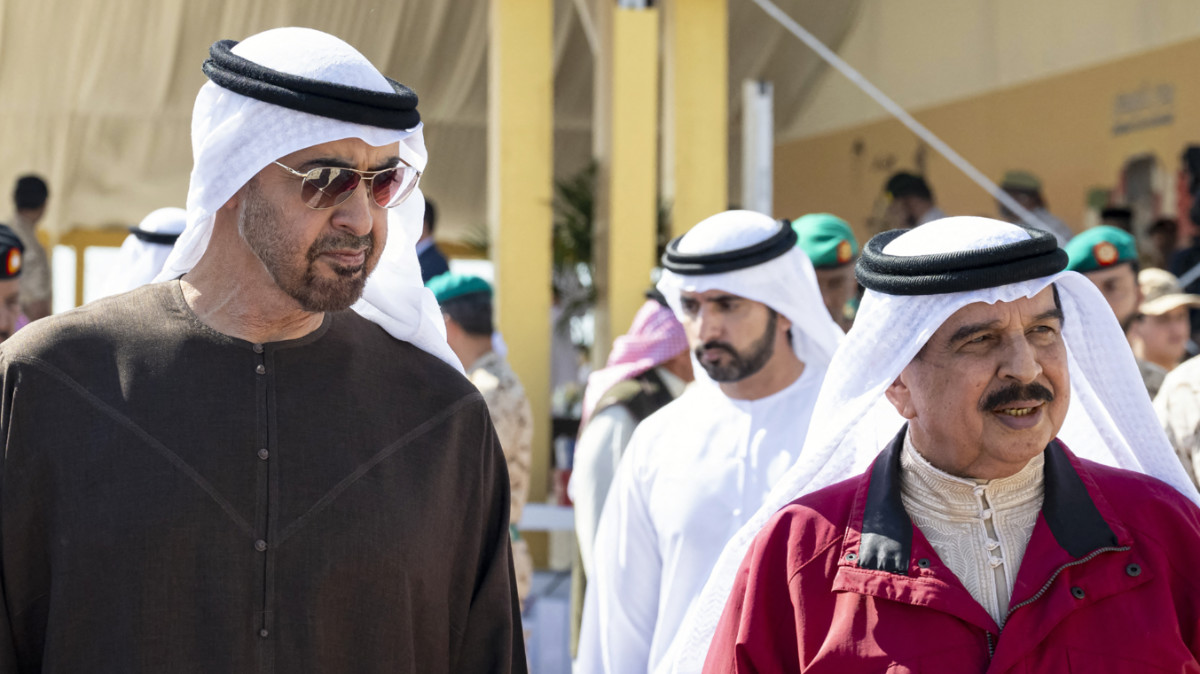
    In a development that overlaps with a high-stakes diplomatic visit to China by former U.S. President Donald Trump, multiple vessels connected to China passed through the strategically critical Strait of Hormuz within a 24-hour window this week, adding a new layer of complexity to already tense global discussions around the ongoing Iran conflict. The most closely monitored of these vessels is a Chinese-owned supertanker loaded with two million barrels of Iraqi crude oil. Ship tracking data confirms the tanker completed its passage through the strait on Wednesday, before disabling its automatic identification system transponder while navigating the Gulf of Oman — a move that has drawn heightened international attention to its movements.

    The Strait of Hormuz, the world’s most important chokepoint for global oil and gas trade, has emerged as the central flashpoint in escalating tensions between Iran and the United States. In a bid to assert full territorial authority over the waterway, Iran has moved to impose transit tolls on commercial vessels passing through the strait, while the U.S. has enforced a sweeping blockade banning any vessels with ties to Iran — or ships that have paid Iran the required transit fee — from global shipping markets. Open-source intelligence analysts, working with publicly available maritime tracking data, confirmed that a total of six other Chinese-linked vessels completed their transit of the strait just one day before the supertanker’s passage. That group included five oil tankers and one vessel carrying liquefied petroleum gas. As of this reporting, there is no public confirmation confirming whether any of the Chinese-linked vessels paid the required toll to Iran, though Iranian authorities have previously publicly confirmed they accept Chinese yuan as a valid form of payment for transit fees.

    The timing of these transits coincides with Trump’s arrival in Beijing on Wednesday, kicking off a two-day official visit to meet with Chinese President Xi Jinping. While negotiations over bilateral business and trade agreements between the world’s two largest economies top the official agenda, the escalating conflict over Iran and the status of the Strait of Hormuz are expected to dominate behind-the-scenes discussions. Speaking to reporters ahead of his departure for Beijing, Trump acknowledged that Iran would feature prominently in his talks with Xi, even as he downplayed the need for Chinese cooperation to reach a favorable deal for the U.S. with the Iranian government. “We have a lot of things to discuss. I wouldn’t say Iran is one of them, to be honest with you, because we have Iran very much under control,” Trump told reporters ahead of the trip.

    U.S.-China relations are already defined by broad systemic competition, with the two global powers vying for influence in areas ranging from artificial intelligence innovation to critical mineral supply chains and cross-strait relations around Taiwan. U.S. policy has failed to force Iran into submission on nuclear and regional security issues, a development that has been quietly welcomed by Beijing, but China has not remained a passive bystander to the conflict. According to exclusive reporting from Middle East Eye, the first outlet to break the story, China supplied advanced air defense systems to Iran in the aftermath of the June 2025 conflict between Iran and Israel, which concluded with U.S. military strikes on Iranian nuclear infrastructure. MEE further reported that on the eve of a planned February 2026 attack, China delivered kamikaze drones to Iranian forces. These reports were later corroborated by The New York Times, which confirmed shipments of Chinese shoulder-fired air defense systems arrived in Iran this past April. The Financial Times has also reported that Iranian forces used a sophisticated Chinese surveillance satellite to target U.S. military bases stationed across the Gulf region.

    Despite its military and logistical support for Iran, experts note that Beijing’s core strategic goal remains a negotiated resolution to the conflict that would reopen the Strait of Hormuz to full commercial traffic, a move critical to stabilizing global energy markets on which China’s economy depends. “China and the US are aligned in opposing Iran having a nuclear weapons and seeing the Strait of Hormuz reopened,” Ahmed Aboudouh, an associate fellow at Chatham House and head of the China Studies research unit at the Emirates Policy Center, told Middle East Eye.

    This aligns with recent public diplomatic moves from Beijing. Chinese state media confirmed on Wednesday that China’s top diplomat, Foreign Minister Wang Yi, urged Pakistan to expand its mediation efforts between Iran and the United States in a call with Pakistani Foreign Minister Ishaq Dar on Tuesday. Wang emphasized the need to resolve the issue of the strait’s reopening “properly”, adding that “China will continue to support Pakistan’s mediation efforts and make its own contribution toward this end,” according to China’s official state news agency Xinhua.