作者: admin

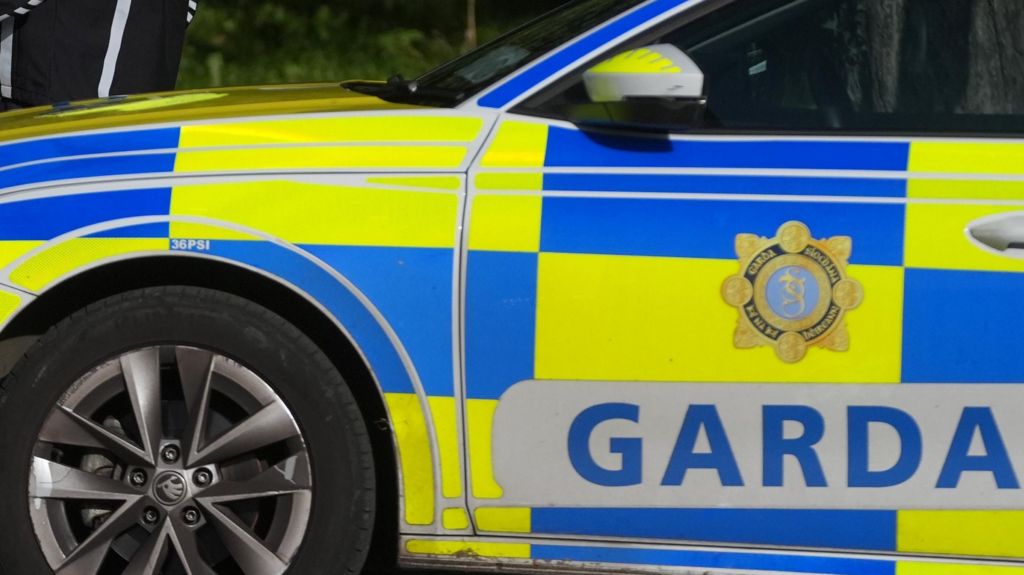
  • Latvian prime minister resigns after controversy over stray Ukrainian drones

    Latvian prime minister resigns after controversy over stray Ukrainian drones

    RIGA, Latvia – A dramatic political shift unfolded in the Baltic state of Latvia this week, as center-right Prime Minister Evika Silina tendered her resignation Thursday after her left-leaning coalition partner, the Progressives Party, withdrew its parliamentary support, stripping the ruling government of its working majority.

    The collapse of the three-party ruling coalition traces back to growing tensions over a series of high-profile incidents involving stray drones, which Latvian officials have linked to Ukraine’s ongoing conflict with Russia. The crisis first boiled over last week, when Defense Minister Andris Spruds, a Progressives Party member appointed through the coalition agreement, was forced to step down after losing confidence from both the prime minister and the Latvian public.

    Explaining her decision to remove Spruds over the weekend, Silina stated that the repeated drone incursions had exposed a critical failure at the top of the defense sector. “The drones incidents clearly demonstrated that the political leadership of the defense sector has failed to fulfill its promise of safe skies over our country,” she said Sunday.

    The most notable of the incursions occurred on May 7, when two drones presumed to be Ukrainian crossed the Latvian border. One of the unmanned aerial vehicles crashed at a domestic fuel storage facility, triggering widespread public alarm over border security gaps. Spruds had argued that the drones, originally targeting Russian positions, strayed into Latvian territory by accident. But critics pushed back on that assessment, pointing out that this incursion was just one of several similar events across the three Baltic states that have occurred since March. Every incident, critics argue, has laid bare critical weaknesses in Latvia’s ability to detect and respond to cross-border military threats, eroding public trust in the government’s national security commitments.

    Long before the drone crisis, the tripartite coalition – which also included a agrarian political party – had already been fraying for months, strained by disagreements across a range of policy and political issues. Silina’s exit from office also comes just five months ahead of Latvia’s scheduled general elections this October, leaving a period of political uncertainty as the country moves toward a national vote.

    In a public post on X Thursday announcing her resignation, Silina emphasized her commitment to national interests, saying, “My priority has always been, and remains, the well-being and security of Latvia’s people. Parties and coalitions change, but Latvia endures. And my responsibility to society comes above all else.”

    Latvian President Edgars Rinkevics, who holds the constitutional authority to appoint a new prime minister, will convene talks with representatives of all parliamentary political parties on Friday to chart a path forward for forming a new government.

    In a recent comment on the drone incidents, Ukrainian Foreign Minister Andrii Sybiha offered a counter-explanation for the incursions. Speaking Sunday, Sybiha claimed that the stray drones were the result of Russian electronic warfare operations intentionally diverting Ukrainian drones away from their intended targets inside Russia. To help prevent similar future events, Sybiha offered Ukraine’s full technical and intelligence support to Baltic states and Finland to shore up their airspace security.

    Related cross-border security issues have been rising in the region in recent months: Latvia’s security service recently reported that two individuals had set fire to train infrastructure connected to Russian logistics, and a prominent Russian academic specializing in North Korea studies was expelled from the country following a short detention period.

  • Rescuers search rubble of Kyiv flats after massive Russian strikes kill two

    Rescuers search rubble of Kyiv flats after massive Russian strikes kill two

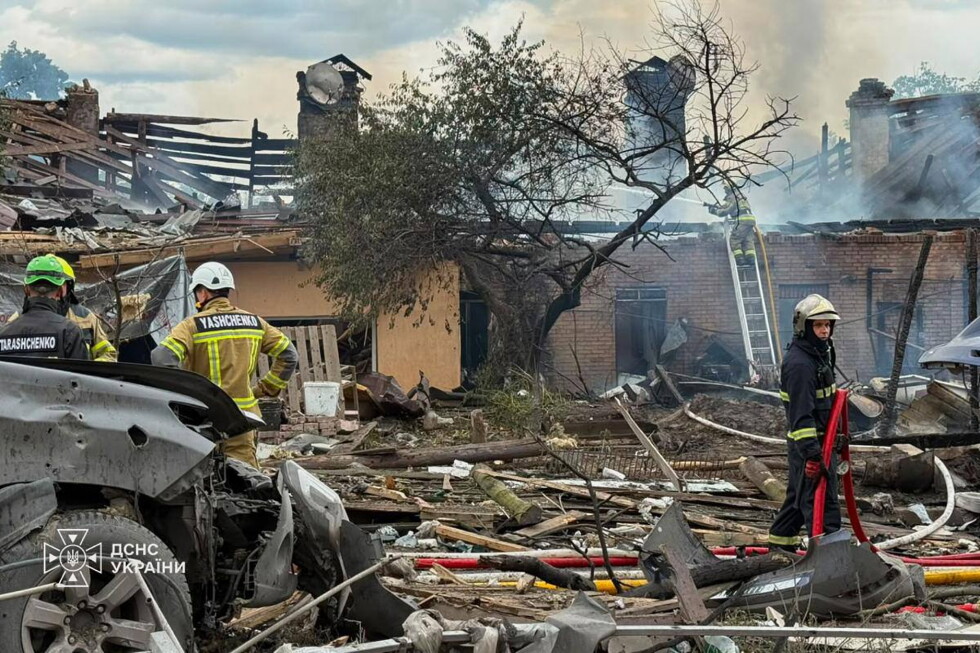
    Three straight days of deadly Russian aerial assaults have rocked Ukraine, leaving at least two people dead and 40 others injured after a massive overnight barrage of missiles and drones targeted multiple cities across the country, including the capital Kyiv. Ukrainian officials confirmed the attacks marked a sharp escalation of hostilities that began immediately after a three-day US-brokered ceasefire expired late Monday. The truce, which saw only minor violations along the frontline and no large-scale air attacks, gave way to renewed violence on Tuesday, when nine Ukrainians were killed. An additional six people lost their lives in strikes across the nation on Wednesday, three of them in the western city of Rivne.

    In Kyiv, one of the hardest-hit targets in the latest overnight wave of attacks, a nine-story residential apartment building suffered partial collapse after being directly hit. Emergency rescue teams launched a search operation at dawn Thursday to pull any remaining survivors trapped under the rubble of the destroyed structure. Kyiv Mayor Vitaliy Klychko, who toured the damaged site early Thursday, confirmed that 18 apartments were completely destroyed in the strike, and critical civilian infrastructure was also damaged, disrupting the capital’s municipal water supply for local residents. As of Thursday morning, Ukrainian President Volodymyr Zelensky announced that dozens of people had already been pulled from the rubble, though emergency workers still hold fears that more victims remain trapped beneath the debris.

    Beyond the partially collapsed apartment block, the overnight attack left damage to multiple other civilian sites, including additional residential buildings, a local school, and a veterinary clinic, Zelensky added. In a public statement following the strikes, Zelensky pushed back against any suggestions that Russia is seeking to de-escalate the conflict, saying the large-scale assault was “definitely not the actions of those who believe the war is coming to an end.” He called on Ukraine’s international allies to speak out firmly against the renewed attacks, rather than remaining silent.

    Ukrainian Prime Minister Yulia Svyrydenko described the assault as an “especially difficult night for Kyiv,” and noted that Russian drones and missiles targeted regions far beyond the capital. Strikes were also reported in Kremenchuk, Bila Tserkva, Kharkiv, Sumy, and Odesa, spread across central, eastern, and southern Ukraine. In a social media post, Svyrydenko made an urgent appeal for international support: “Ukraine needs help in strengthening its air defense. This is the only way to save our people and our cities.”

    Ukrainian Foreign Minister Andriy Sybiha condemned the attack as “barbaric” and accused Russian President Vladimir Putin of prioritizing aggression and terror over diplomatic efforts to end the war. He pointed out that the large-scale assault coincided with a high-stakes summit between US President Donald Trump and Chinese President Xi Jinping, and urged the two world leaders to use their diplomatic leverage to force Moscow to end its invasion. “I am certain that the leaders of the United States and China have enough leverage over Moscow to tell Putin to finally end the war,” Sybiha said.

    The latest round of military escalation comes as Ukrainian officials are also grappling with a domestic political corruption scandal. In a separate development in Kyiv on Thursday, a Ukrainian court ordered 60 days of pretrial detention for Andriy Yermak, formerly one of Zelensky’s closest top aides. Yermak is currently a suspect in a money laundering investigation tied to a £7.5 million luxury construction project built outside Kyiv, according to Ukraine’s national anti-corruption agencies. The court ruled that Yermak could be released on bail of £2.35 million ($3.2 million) if he wears an electronic monitoring tag, but Yermak says he does not have the funds to cover the bail amount and will seek financial support from friends and acquaintances. Yermak has forcefully denied all the allegations against him, calling them baseless. He says he will appeal the ruling, and has no plans to leave Ukraine, stating publicly: “I’m staying in Ukraine. I have nothing to hide.”

  • Dust storms and lightning kill at least 96 people in northern India

    Dust storms and lightning kill at least 96 people in northern India

    Deadly extreme weather has left northern India reeling, with official confirmation Thursday placing the death toll from a wave of dust storms, heavy rainfall and lightning at no less than 96, with dozens more injured. The destructive weather system swept across multiple districts of Uttar Pradesh, India’s largest state by population, late Wednesday, leaving a trail of destroyed property and disrupted communities in its wake.

    According to local officials, most fatalities stemmed from falling trees, collapsing poorly built structures, and direct lightning strikes, common hazards during pre-monsoon storm events. Emergency response teams including police and disaster management units quickly mobilized, deploying chainsaws and heavy cranes to clear fallen vegetation that blocked critical road and railway links across hard-hit districts.

    Pre-monsoon storms are a routine seasonal occurrence across northern India between March and June, when hot summer temperatures give way to the annual south Asian monsoon rains that replenish the region’s water supplies. But this latest event brought unusually intense and destructive conditions that have caused widespread harm.
    Narendra N. Srivastava, a senior local administrative official, noted that emergency crews have already been deployed across all impacted areas. Damage assessments confirm widespread destruction to residential buildings, agricultural crops, and electrical power infrastructure, with rural communities bearing the brunt of the impact.

    Residents of the hardest-hit districts described sudden, terrifying onslaughts of extreme wind that upended daily life in minutes. In Prayagraj district, local resident Ram Kishore recalled the rapid onset of the storm, saying that within just a few minutes of the storm’s arrival, the entire sky turned pitch black. Flying tin roofing sent residents scrambling for shelter indoors, he added, with the sound of falling trees echoing through neighborhoods throughout the evening.

    In neighboring Bhadohi district, another local resident, Savitri Devi, shared her family’s narrow escape after their mud-built home was severely damaged by strong winds. Devi said the family fled outside immediately when their home’s walls began shaking from the force of the wind; the roof collapsed just moments after they escaped. The family spent the night taking shelter at a relative’s home, left homeless by the storm.

    In response to the disaster, Uttar Pradesh Chief Minister Yogi Adityanath has issued urgent orders for all involved agencies: complete full relief operations across affected areas within 24 hours, and expedite the distribution of financial compensation and emergency life-saving aid to all families impacted by the extreme weather.

  • Madonna, Shakira & BTS to headline World Cup half-time show

    Madonna, Shakira & BTS to headline World Cup half-time show

    In a groundbreaking announcement that has sent shockwaves through both the sports and entertainment worlds, three of the biggest names in global music — pop icon Madonna, Colombian superstar Shakira and K-pop phenomenon BTS — have been confirmed as co-headliners for the first-ever half-time show at a men’s FIFA World Cup final. The 2026 tournament, a historic first co-hosted by the United States, Canada, and Mexico, will wrap up its month-long competition with the final match at New Jersey’s MetLife Stadium on 19 July, where the 11-minute star-studded performance will take place.

    This production marks a major shift in how FIFA approaches entertainment at its flagship event. While pre-match musical performances have long been standard at high-profile football showpieces including the UEFA Champions League final, this will be the first time a dedicated half-time spectacle, modeled after the iconic Super Bowl halftime tradition, has been staged for the World Cup final. The show was curated by Coldplay frontman Chris Martin, and all proceeds from the event will go toward the FIFA Global Citizen Education Fund, an initiative with a goal of raising $100 million to expand educational access for children across the globe.

    Shakira, no stranger to the World Cup stage, is set to release her official 2026 World Cup anthem *Dai Dai* this Thursday. The track, which features Afrobeats star Burna Boy, takes its name from an Italian phrase meaning “let’s go” or “come on.” This is not the 49-year-old singer’s first World Cup collaboration: she delivered the global hit Waka Waka (This Time for Africa) as the official song for the 2010 World Cup hosted in South Africa, which remains one of the best-selling World Cup anthems of all time.

    Known worldwide as the Queen of Pop, 67-year-old Madonna holds the title of the best-selling female recording artist in history, and she is gearing up to drop her 15th studio album, *Confessions II*, just two weeks before the final on 3 July. The iconic performer made headlines earlier this year with a surprise guest appearance at the 2025 Coachella Valley Music and Arts Festival, where she joined headliner Sabrina Carpenter for energetic renditions of her classic hits *Vogue* and *Like A Prayer*.

    For BTS, the performance comes in the middle of the group’s highly anticipated global comeback. The seven-member boy band, which holds the title of South Korea’s best-selling musical act of all time with over 45 million albums sold worldwide, is returning to full group activities after a three-year hiatus, during which members completed their mandatory South Korean military service. At the time of the World Cup final performance, the group will be in the middle of a massive 85-date world tour. The group previously earned a UK top three hit in 2021 with their Coldplay collaboration *My Universe*.

    FIFA president Gianni Infantino previously framed the event as a milestone for the tournament back in March, saying the half-time show “will be a historic moment for the FIFA World Cup, befitting the biggest sporting event in the world.” The unprecedented pairing of three global superstars from different genres and regions reflects the 2026 tournament’s status as the most expansive and widely accessible World Cup in history, marking a new era of blending elite sport and world-class entertainment for the global football community.

  • UK leadership contenders expected to launch bids to unseat prime minister after days of maneuvering

    UK leadership contenders expected to launch bids to unseat prime minister after days of maneuvering

    LONDON — British Prime Minister Keir Starmer is facing an imminent open challenge to his leadership of the ruling Labour Party, as two high-profile political figures have cleared the path for a leadership contest set to unfold Thursday.

    Wes Streeting, the current UK Health Secretary, has secured the required number of endorsements from Labour Members of Parliament to formally launch a challenge against Starmer for both party leadership and the office of prime minister, according to close allies of the Health Secretary. Streeting is expected to make his official challenge announcement later Thursday.

    The second major development came from former Deputy Prime Minister Angela Rayner, who confirmed Thursday she has resolved outstanding tax disputes with UK tax authorities that forced her resignation from the Cabinet in September 2024. Speaking to the Guardian, Rayner said Starmer needs to “reflect on” his hold on the premiership, adding that she stands ready to take part in any leadership contest triggered by Streeting’s challenge. A prominent figure aligned with Labour’s left wing, Rayner has long pushed for more aggressive progressive policies including a higher minimum wage and increased taxation on the wealthiest Britons.

    Calls for Starmer’s resignation have mounted rapidly over the past week after the Labour Party recorded catastrophic losses in nationwide local and regional elections. The poor election outcome amplified widespread voter frustration over what many see as the glacial pace of policy change under Starmer’s 10-month-old government.

    Despite the growing mutiny within his own party, Starmer has remained defiant, pledging publicly to hold onto his position. He has warned that opening a leadership contest at this juncture would throw the British government into crippling chaos, at a moment when the administration should be prioritizing urgent national and global issues: the ongoing UK cost of living crisis and the ongoing conflict in the Middle East.

    Under formal Labour Party rules, any candidate seeking to challenge the incumbent party leader must secure the public support of at least 81 of the party’s 403 sitting House of Commons MPs. In recent days, more than that threshold of Labour lawmakers have publicly called for Starmer to step down, clearing the signature hurdle for any challenger.

    Both Streeting and Starmer hail from the moderate faction of the centre-left Labour Party, a dynamic that could split establishment party support in a contest. Beyond Streeting and Rayner, other potential candidates are already being tipped to enter the race. Andy Burnham, the popular and widely respected Mayor of Greater Manchester, has emerged as a frequent name in leadership speculation, though he currently sits outside Parliament — a requirement for any Labour leader. Sources close to Burnham indicate that a sitting Labour MP could step down to trigger a by-election that would allow Burnham to win a parliamentary seat ahead of any leadership vote. Burnham fueled speculation this week when he canceled his regular weekly appearance on BBC local radio, citing a need to “prioritize discussions arising from last week’s elections.”

  • Watch: What happened on day one of Trump’s China visit?

    Watch: What happened on day one of Trump’s China visit?

    On Thursday, the first day of former U.S. President Donald Trump’s official visit to China, Beijing rolled out a warm ceremonial welcome for the visiting American delegation. The opening moments of the trip featured smiling, cheering Chinese children who gathered to greet Trump, alongside a formal military parade organized to honor the high-profile diplomatic visit.

    Following the opening ceremonial events, Trump held an extended nearly two-hour closed-door meeting with Chinese President Xi Jinping. The kickoff of the visit marked a key moment in bilateral diplomatic engagement between the world’s two largest economies, setting the stage for further discussions on trade, security, and cross-border issues that shape the U.S.-China relationship.

  • Bone appetit: Paris pups lap up treats at dog-centric spots

    Bone appetit: Paris pups lap up treats at dog-centric spots

    Paris, the global capital of culinary art, is expanding its gourmet tradition beyond two-legged patrons, welcoming a wave of new establishments that cater first and foremost to the city’s four-legged canine residents, filling a long-unmet need for local pet owners.

    At Casa del Doggo, a canine-focused patisserie run by Parisian entrepreneur Clara Zambuto, fluffy one-year-old Pomeranian Loulou is a regular face. After finishing his €5 “Le Merveilleux” treat—crafted with dog-safe ingredients including banana puree, cream cheese, apple, and beef—Loulou lets out a satisfied woof, a response any restaurant owner would be thrilled to receive. Nearby, the glass display case holds a lineup of pet-friendly sweets that look nearly indistinguishable from human pastries, from heart-shaped “Le Mignon” made with sweet potato, cream cheese, and blueberry to croissant and baguette-shaped treats for pups who crave a classic Parisian snack vibe.

    Zambuto’s journey into opening the dog bakery grew out of her own experience as a dog owner. After adopting her three-year-old Pomeranian Hulk, she grew frustrated that she couldn’t bring her pet along for the quintessential Parisian ritual of stopping for coffee and a snack. “I’d often go for walks with him… pop into a cafe like a proper Parisian, but he’d soon get bored,” the 26-year-old explained. “I thought it was a shame there weren’t places in Paris where, while you’re having a quick coffee, you can also treat your pet. Now dogs are really like our children for most of us—we want to be able to take him everywhere.”

    What began as homemade treats in Zambuto’s kitchen eventually grew into a full storefront, with a trained professional pastry chef now helping craft pet-safe recipes that strictly avoid ingredients toxic to dogs, including chocolate, avocado, grapes, and onions. That doesn’t mean unlimited snacking, though: Lolita Sommaire, a veterinarian specializing in canine and feline nutrition, notes that moderation is just as important for dogs as it is for humans to prevent unhealthy weight gain. “If they’ve been to a patisserie, you need to adjust their next meal, cut back a little, or get them doing more exercise,” she advised. “But if it’s once a month, it’s not a big deal.”

    Casa del Doggo is far from the only dog-first spot popping up across the city, which is home to an estimated 100,000 registered and unregistered canines. At Le Bone Appart, a dog cafe named as a playful nod to French emperor Napoleon Bonaparte, dogs can roam freely across a bench-lined outdoor terrace while their owners relax. On a recent afternoon, Marley, an American shepherd sporting a tiny fashion beret, could be found lapping up the last bits of a chantilly-based “pup cup” off the pavement.

    Le Bone Appart owner Rebecca Anhalt, a US native who moved to Paris, launched her space after she received a steep fine for letting her five-year-old whippet Napoleon off-leash in a public park. “I wanted to create a place where people could come and not fear… being scolded for having your dog,” she said.

    Local advocacy groups have long pushed for more pet-friendly public spaces in Paris. The organization Paris Condition Canine points out that while the city does offer more than 40 off-leash areas for dogs, these existing spaces are “insufficient, unevenly distributed, and sometimes ill-suited” to meet the needs of the city’s large dog-owning population. The demand for more pet-friendly amenities has even seeped into local politics: during Paris’ 2026 mayoral race, incumbent mayor Emmanuel Gregoire launched an Instagram account dedicated to photos with local dogs, while rival candidate Rachida Dati hosted a dog-focused social aperitif to win over pet owners.

    For many regulars, these dog-centric spots offer more than just treats for their pups—they create a welcoming third space outside of work and home that strengthens bonds between owners and their pets, and builds community among fellow dog lovers. Sarah Elgamal, Loulou’s owner, describes herself as the Pomeranian’s “mother,” and says trips to the patisserie boost her connection with her pet. It “improves our connection, because we’re both in a third place that’s neither work nor home,” the 32-year-old pharmacist explained.

    Anhalt notes that even with dogs as the top priority, many human visitors come for the social connection with other pet owners as much as for their pups. “Dogs are a really good connector,” she said. One recent transplant to Paris now visits the cafe every day with his 17-year-old dachshund, just to “be part of the group and meet people.” After all, Anhalt adds: “you’ll talk to anybody about your dog.”

  • Paris’ Invalides is more than Napoleon’s tomb. For 350 years, it has been a home for war wounded

    Paris’ Invalides is more than Napoleon’s tomb. For 350 years, it has been a home for war wounded

    Towering over the Paris skyline, the gilded dome of Les Invalides is recognized worldwide as the final resting place of French emperor Napoleon Bonaparte, drawing more than 1.4 million tourists to its historic museums and mausoleum every year. But few visitors understand that beneath the landmark’s iconic facade, a quiet, centuries-old core mission endures: for more than 350 years, this complex has served as a permanent home and specialized hospital for wounded veterans and civilian victims of war and terror attacks.

    First commissioned in the 17th century by King Louis XIV, the National Institution of Invalides welcomed its first group of retired and injured soldiers in 1670, marking the first time a European state took formal, long-term responsibility for caring for its war-wounded — a duty previously left entirely to religious orders. Today, the institution houses 64 residents, ranging from young combat veterans injured in overseas deployments to 90-plus-year-old Holocaust survivors who count themselves among the last living witnesses of Nazi atrocities.

    As the original facilities have aged, the French government has launched a major 100 million euro ($108 million) renovation project, with public funding covering core infrastructure and private donors invited to sponsor upgrades to individual residential rooms. This month, the institution granted exclusive access to Associated Press reporters, opening up the residential wings that sit just steps from Napoleon’s grand central sarcophagus — a rare look at the living community that shares space with one of Paris’ top tourist landmarks.

    “Les Invalides is a unique place — a magical, incredible and grand site,” explained General Christophe de Saint Chamas, the military officer who serves as the institution’s governor. He noted that from its inception, the project carried dual meaning: it demonstrated Louis XIV’s commitment to his soldiers, and it stood as one of the first formal acts of state-sponsored social care in modern history. “Before that, religious communities were taking in the wounded by obligation. Here, the state said: we’re taking care of them, over the long term, until their death,” de Saint Chamas said.

    Across its 350-year history, Les Invalides has tracked every turning point in French history: it was stormed by revolutionaries seeking weapons during the 1789 French Revolution, expanded to house thousands of veterans under Napoleon’s rule, and opened its doors to civilian war victims for the first time in the 20th century. Today, two of its most prominent residents are 101-year-old Ginette Kolinka and 98-year-old Esther Senot, both Auschwitz-Birkenau death camp survivors who have dedicated decades to educating young people about the Holocaust to ensure its atrocities are never forgotten.

    Senot, born to Polish Jewish parents in Paris, was just 15 when she was arrested by French police and deported to Auschwitz in 1943. Of the 1,000 people packed into her cattle car transport, only she and one other person survived. She spent 17 months in Nazi camps, returning to France after liberation weighing just 70 pounds, having lost 17 family members including her parents and six siblings. For decades after the war, she faced widespread indifference to the stories of deportees — it was only during a 1985 visit to Auschwitz that she began speaking publicly, after challenging a tour guide’s inaccurate account that erased the majority-Jewish identity of most camp victims.

    “When people asked me to share my story, I could not say no,” Senot recalled, showing the identification number the Nazis tattooed on her left arm. She moved to Les Invalides after her husband’s death and as her own medical needs grew, a choice shaped by her connection to the institution: her brother, a soldier in the French 2nd Armored Division that helped liberate France from Nazi occupation, lived at Les Invalides for 10 years in the 2000s. “I used to come visit him regularly, and I already knew the community here. When I found myself alone in old age, coming here felt natural,” she said.

    For younger wounded veterans, Les Invalides offers more than just medical care — it provides a ready-made community bound by shared experience of combat and injury. Master Corporal Mikaele Iva, who was left disabled after a parachute accident during a deployment to Gabon in 2021, has lived at the institution since his injury. He uses a wheelchair, but still competes in adaptive sports including fencing, archery and golf through the facility’s sports club, and represents Les Invalides at national ceremonies.

    “Over time, we become a second family here,” Iva explained. Residents gather to chat in the common coffee room, attend football matches and concerts together, and support one another through the challenges of living with disability. “We share both joyful moments and hard days. That’s the same as military life: we get back on our feet after injury, and we never leave each other behind, no matter what,” he said. Iva added that he finds deep meaning in the care France provides through Les Invalides: his former comrade, whom he pulled to safety after a severe injury during a deployment to Afghanistan, also lives at the institution, a tangible reminder of the nation’s promise to stand by those who serve.

    Caregivers share that same sense of national purpose. “We devote ourselves to them body and soul,” said Mustapha Nachet, a nurse coordinator who has worked at the residential center since 2014. “This is the nation’s way of giving back for everything they have given for our country.” Nachet noted that care at Les Invalides is deeply personalized, as the needs of a 30-year-old wounded combat veteran are vastly different from those of a 99-year-old civilian Holocaust survivor.

    Beyond residential care, Les Invalides operates a world-leading specialized hospital for people with severe war-related disabilities, with cutting-edge expertise in prosthetics and rehabilitation. Its medical teams conduct ongoing research to improve mobility for amputees and wheelchair users, and they have treated dozens of survivors of the 2015 terror attacks across Paris, including victims of the Bataclan concert hall massacre.

    General Sylvain Ausset, the institution’s medical director, notes that across centuries, the facility has documented how the nature of war injury has evolved with each new conflict. “Each conflict leaves its own mark, and none ever erases a previous one,” he explained. “In World War I, we saw severe facial injuries on a mass scale that people rarely survived before. In World War II, more soldiers with spinal cord injuries that caused paraplegia and quadriplegia began to survive. In more recent conflicts in Iraq and Afghanistan, we saw multiple amputations on a scale never seen before. Today, the defining injury we treat is psychological trauma.”

    For de Saint Chamas, the institution’s centuries-long mission remains as vital today as it was when Louis XIV broke ground in the 1600s. It is a tangible promise to active-duty troops: “It allows active-duty troops to deploy knowing that if something happens to them, France will be there.”

  • AFL 2026: Essendon coach Brad Scott on Ben McKay form, Zach Merrett commitment

    AFL 2026: Essendon coach Brad Scott on Ben McKay form, Zach Merrett commitment

    AFL side Essendon’s senior coach Brad Scott has opened up about the team’s recent selection calls, revealing that dropping underperforming key defender Ben McKay to the reserves has yielded exactly the positive results the coaching staff was hoping for, while stopping short of locking in an immediate return to the senior squad.

    McKay was a notable exclusion from the Essendon lineup that faced GWS last Saturday, a match the Bombers ended up losing by a narrow margin. The omission marked the 26-year-old’s first appearance in the state-level Victorian Football League (VFL) in seven years, coming after a prolonged stretch of underwhelming form in the team’s defensive line. The defender’s struggles were thrust into the public spotlight recently when a leaked opposition scouting whiteboard from the Brisbane Lions notably had no entry listed under McKay’s strengths.

    Speaking to media ahead of this weekend’s round of matches, Scott explained that the decision to send McKay to the VFL was designed to take pressure off the out-of-form player, and the early results have been encouraging. “We felt it was best for Ben to go back and regain some form and belief in the VFL, and he played very well,” Scott said. “This just released the shackles for him and freed him up to go and do what he does best, focus on his strengths, and he’s handled that very well.”

    Beyond his own solid performance, Scott added that McKay also stepped into a leadership role for younger developing players during his VFL run, marking a clear positive step forward in his recovery of form. With key players Nick Bryan and Mason Redman returning from injury to boost the Bombers’ selection flexibility, Scott said the club would now weigh what outcome would work best for both McKay and the senior squad. While McKay has made clear his eagerness to earn an immediate recall to the AFL side, Scott noted no final decision has been made. “He wants to get back into the senior team as soon as possible, and, as we always do and as every team does, we’ll do what’s best for him and the team,” Scott added.

    The Essendon coach also addressed ongoing off-season speculation surrounding star midfielder Zach Merrett, whose attempted trade to Hawthorn fell through during last year’s trade period. Merrett drew fresh attention last week when he declined to publicly confirm his long-term commitment to the club, but Scott moved quickly to shut down any uncertainty around the 28-year-old’s future.

    Scott, who speaks to Merrett on a daily basis, reaffirmed that the midfielder remains fully committed to seeing out his existing contract at Essendon. Merrett signed a four-year contract extension with the Bombers four years ago, leaving him with two full seasons remaining on his current deal. “I’m more focused on action and he’s delivered in spades in terms of what I knew he would this year, right from the start of pre-season, right through to now,” Scott said. “He’s fully invested in trying to make this team as good as it can possibly be, and we’re focused on right now and what we need him to do for the team. The commitment is really clear.”

  • Blow to Anthony Albanese as One Nation soars in first major post-budget polling

    Blow to Anthony Albanese as One Nation soars in first major post-budget polling

    Australia’s ruling Labor government has suffered a significant political setback, with a new post-budget poll revealing a dramatic surge in support for right-wing populist party One Nation that has shaken the country’s political landscape.

    The latest Roy Morgan survey, carried out between May 13 and 14 among 2,300 registered voters via text messaging, is the first major independent poll released since Labor handed down its controversial 2026-27 federal budget, which included proposed changes to negative gearing and capital gains tax rules for housing investors. The data shows One Nation has overtaken Labor on primary vote support, hitting 32 per cent compared to Labor’s 28.5 per cent.

    When looking at two-party preferred voting, the poll shows One Nation and Labor are neck-and-neck: 49 per cent of respondents said they would back One Nation against Labor, leaving the incumbent government with just a tiny, statistically insignificant edge. When matched against the center-right Coalition, One Nation claimed a narrow 51 per cent to 49 per cent two-party preferred lead. For context, the Coalition currently trails far behind both One Nation and Labor on primary votes, sitting at just 45 per cent, giving One Nation a clear lead over the traditional major conservative party.

    The poll also delivers a damning verdict on the performance of Prime Minister Anthony Albanese and Treasurer Jim Chalmers. A 59 per cent majority of Australian voters disapprove of Albanese’s job performance, compared to just 40 per cent who approve. For Chalmers, disapproval stands at 57 per cent. This dissatisfaction cuts across demographic lines: it spans both genders, every age bracket, and nearly all Australian states. Only Tasmania recorded a narrow majority of approval for the Prime Minister.

    A breakdown of voter motivation highlights stark differences between the two parties’ support bases. For Labor voters, top drivers are shared values around social justice and fairness, cited by 42 per cent, and alignment with party policy, named by 39 per cent. In contrast, 58 per cent of One Nation voters said cutting immigration was their core motivation, while 52 per cent identified their vote as a rejection of the two long-dominant major parties.

    One Nation’s rising electoral momentum comes off the back of a recent milestone for the minor party: it recently secured only its second ever lower house seat, with David Farley winning the seat of Farrer vacated by former Liberal leader Sussan Ley. The Coalition has already promised to repeal Labor’s controversial housing tax changes if it wins office, adding further volatility to the policy debate.

    Most critically, the poll projections indicate that if a general election were held now, the most likely outcome would be a hung parliament, regardless of whether One Nation faces off against Labor or the Coalition. This result points to a sustained collapse in support for Australia’s traditional major parties, and a growing shift toward anti-establishment politics in the country, with the 2026-27 budget’s contentious tax changes acting as a catalyst for One Nation’s latest surge.