As the 2026 FIFA World Cup approaches, a new analysis from leading climate researchers has delivered a stark warning: climate change has significantly elevated the threat of dangerous extreme heat across the North American host region, putting one in four of the tournament’s 104 total matches at risk of searing, potentially unsafe conditions.
The study, conducted by World Weather Attribution (WWA), an international network of climate science experts, found that the current heat risk profile is far more severe than when the U.S. last hosted the World Cup in 1994. The 2026 tournament, set to run from June 11 to July 19 across 16 venues in the U.S., Mexico and Canada, has already prompted FIFA to introduce mandatory cooling breaks in each half of play, a policy directly responding to growing heat concerns.
WWA’s analysis uses the Wet Bulb Globe Temperature (WBGT) index, a comprehensive metric that accounts for heat, humidity, wind, and sun exposure to measure how well the human body can cool itself. Researchers estimate 26 matches could see WBGT levels reach at least 26°C – a threshold where international footballers’ union FIFPRO identifies heat strain as a meaningful risk to athlete health, justifying mandatory cooling breaks. By comparison, only 21 matches were projected to hit this same threshold during the 1994 U.S. World Cup.
Of the 26 high-risk matches, 17 are scheduled for stadiums with installed cooling systems that reduce danger for both players and spectators. That leaves nine high-risk matches hosted at uncooled venues. Five matches across the tournament are projected to hit 28°C WBGT or higher – a level FIFPRO says warrants delaying or postponing matches until conditions become safer. That number is nearly double the projected count for 1994, making the current heat threat far more pressing.
Crucially, the risk does not only apply to competing athletes, who have constant access to on-site medical teams. Fans, many of whom will gather for hours in unshaded outdoor areas around stadiums, face even greater potential harm, noted Friederike Otto, WWA co-founder and climate science professor at Imperial College London.
Just three host venues – located in Dallas, Houston and Atlanta – are equipped with full air conditioning. More than a third of matches with a 1-in-10 chance of exceeding 26°C WBGT will be held at venues without any cooling infrastructure.
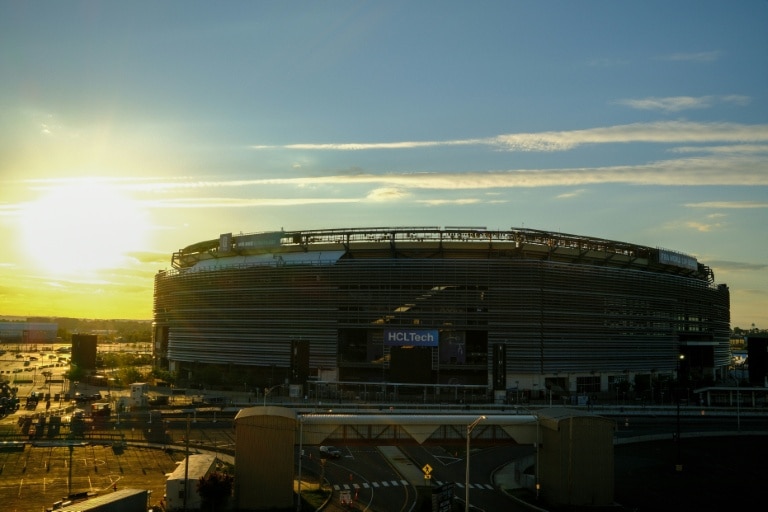
Even the 2026 World Cup final, one of the most watched global sporting events of the decade, faces non-negligible risk. Scheduled for July 19 at New Jersey’s MetLife Stadium, the match has a 1-in-8 chance of hitting the 26°C WBGT threshold, and a 2.7% probability of reaching the 28°C cancellation-level mark, according to WWA’s projections.
Otto emphasized that the final’s measurable heat risk should serve as a clear wake-up call for FIFA and tournament organizers to strengthen preparations for extreme heat, to protect the health of both athletes and the hundreds of thousands of fans expected to attend the historic 2026 tournament.