
A striking act of professional dedication has been captured on security camera footage from a major Japanese hospital, revealing medical personnel putting a patient’s life ahead of their own safety during a powerful seismic event last month. When the 6.8-magnitude earthquake rippled through central Kumamoto, shaking the walls and equipment of Kumamoto General Hospital’s operating room, the surgical team did not flee the unstable space. Instead, multiple doctors immediately moved to cover the patient lying unconscious on the operating table, using their bodies to protect the vulnerable individual from falling debris and collapsing infrastructure as tremors rocked the facility. The footage, which has since drawn widespread public attention for its raw display of medical professionalism, documents a split-second decision that highlights the life-risking commitment healthcare workers make every day, even amid sudden natural disaster. Japan, which sits on the Pacific Ring of Fire, regularly experiences significant seismic activity, but this rare look inside an active operating room during a quake offers a new window into the on-the-ground crisis response of frontline medical staff.
作者: admin
-
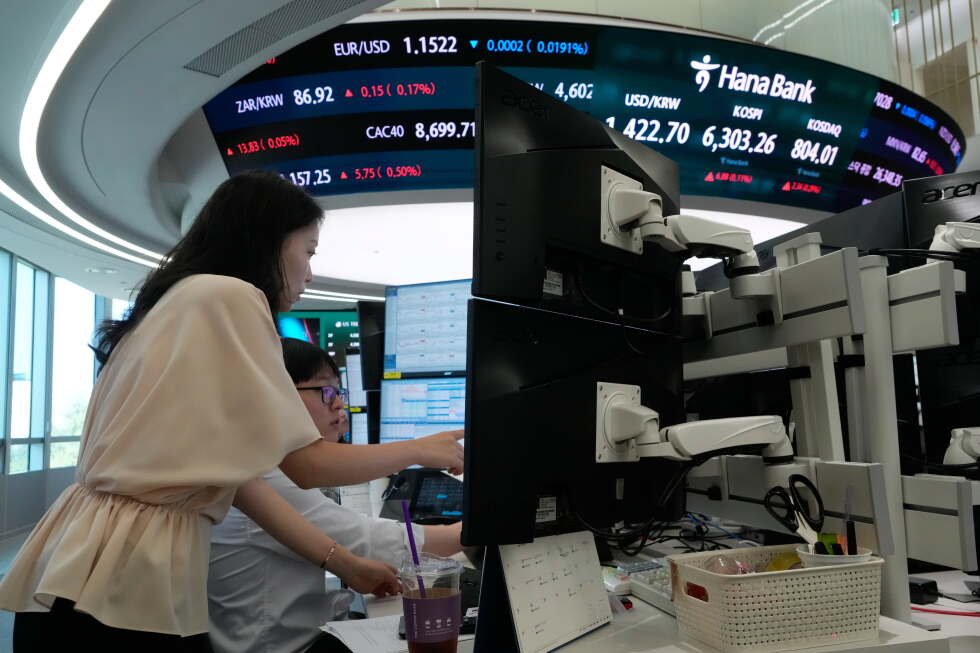
World shares are mixed after US stocks fall back, while oil rebounds
BANGKOK – Global equity markets delivered a mixed performance on Friday, a day after modest pullbacks across major Wall Street indices, while international benchmark crude oil prices climbed more than 1% amid ongoing uncertainty over the future of the Strait of Hormuz, one of the world’s most critical energy shipping chokepoints.
Early trading in European markets showed mild upward momentum across major benchmarks. Germany’s DAX gained 0.4% to settle at 26,253.77, while France’s CAC 40 edged up 0.2% to 8,715.47. The UK’s FTSE 100 posted a modest 0.1% rise to 10,879.57. Futures for U.S. markets were also split: S&P 500 futures ticked up 0.1%, while Dow Jones Industrial Average futures slipped 0.1% heading into the New York trading open.
Across Asian markets, the recent sell-off in AI-linked tech and semiconductor stocks showed early signs of easing. Japan’s Nikkei 225, a market heavy with chipmaking and AI exposure, dipped only 0.1% to 65,606.71 following several days of broader losses for the sector. South Korea’s Kospi fell 0.6% to 6,258.77, and Taiwan’s Taiex declined 0.4%, while mainland China’s Shanghai Composite Index bucked the regional downtrend with a 1% rise to 3,940.04. The gain came after China released July trade data showing export growth slowed slightly but remained robust at roughly 24%, driven by sustained global demand for electronics and high-tech manufactured goods. The country’s overall trade surplus narrowed last month, and import growth also cooled, the data showed. Hong Kong’s Hang Seng Index added 0.5% to 25,668.03, while Australia’s S&P/ASX 200 slipped less than 0.1% to 9,263.60.
The mixed global performance followed a down day on Wall Street Thursday, when major indices pulled back as oil prices climbed and the latest wave of corporate earnings reports hit the market. The S&P 500 lost 0.2%, the Dow Jones Industrial Average fell 0.9%, and the Nasdaq Composite dipped 0.1%.
Oil prices extended gains into Friday after a nearly 4% jump Thursday, driven by persistent uncertainty over negotiations to reopen the Strait of Hormuz. The strait, which once carried roughly one-fifth of the world’s globally traded oil and natural gas, has been at the center of a months-long standoff that has disrupted global energy supplies. Iran says it is close to an agreement with Oman to reopen the strategic waterway, and former U.S. President Donald Trump has previously stated a deal is imminent, but negotiations have seen repeated stops and starts over the past five months.
Reaching a workable compromise has proven elusive: the Trump administration has ruled out allowing Iran to charge passage fees for ships, but Iran insists on retaining some level of control over the waterway, rejecting calls to return it to full international free passage status. As of early Friday, Brent crude rose 1% to $83.33 per barrel, while U.S. West Texas Intermediate crude advanced 0.7% to $77.79 per barrel. Spiking oil prices, which surged as high as $113 per barrel amid the ongoing conflict, have exacerbated global inflation by pushing up gasoline prices and increasing shipping costs for nearly all sectors of the global economy.
Against this backdrop, global markets remain caught between two competing forces: ongoing anxiety over geopolitical conflict, rising energy prices, and fears of a potential bubble in high-flying AI investments, are offset by stronger-than-expected corporate earnings that have eased concerns about overvalued U.S. equities. Roughly 85% of S&P 500 companies have released quarterly results, and aggregate earnings growth for the period is on track to hit its highest level since 2021.
In standalone tech news, SpaceX shares rose 6.1% on Thursday after a lockup period expired, allowing early investors and employees to sell more than 911 million shares for the first time since the company’s initial public offering. The volume of newly tradable shares is more than double the number of shares sold in SpaceX’s IPO. Elon Musk’s aerospace firm saw its share price jump as high as $225 shortly after its June public debut, but has since fallen below its $135 IPO price, and was trading around $115 ahead of Friday’s session.
All eyes are now turning to the U.S. Bureau of Labor Statistics’ July monthly jobs report, scheduled for release Friday. The U.S. labor market has remained resilient in recent months, but hiring growth has gradually slowed. A weekly jobless claims report released Thursday showed the number of first-time unemployment benefit applications rose last week, though layoffs still remain at historically low levels not seen since the post-pandemic recovery. Hiring slowed sharply in June, with employers adding just 57,000 new jobs, marking the weakest monthly gain in months.
In currency markets, the U.S. dollar edged up slightly against the Japanese yen, rising to 158.46 yen from 158.42 yen in previous trading. The euro ticked down fractionally to $1.1520 from $1.1524.
-

After centuries in India, the last Cochin Jews try to keep their history alive
Along the sun-dappled southwestern Indian coast, in the historic port city of Kochi, two men carry the weight of an ancient community that has outlasted empires, religious persecution, and centuries of change. Today, they stand as the last stewards of Cochin Jewry — a distinct community that has called this region home for millennia, now fading into history as most of its members relocated to Israel decades ago.
At sunset on Shavuot, the Jewish holiday marking the gifting of the Torah to Moses, 70-something Keith Hallegua pulled on his gray kippah and made the quiet, solitary walk down the cobblestone lane of Kochi’s iconic Jew Town to the 458-year-old Paradesi Synagogue. For Hallegua, the last local Jew remaining in the neighborhood, this pilgrimage ended as it often does: praying alone, without the 10-person male quorum called a minyan required for formal Jewish communal worship.
Across the city at the 12th-century Kadavumbagam Synagogue, Elias “Babu” Josephai paused to remember the chukkunda — golden fried dough balls his grandmother once prepared for the Shavuot holiday. “It wasn’t much,” he said, wiping away tears. “But at that time, it was everything.”
The story of Cochin Jews stretches back more than 2,000 years, when the first Jewish traders are believed to have arrived on India’s Malabar Coast during the era of King Solomon. For centuries, the community lived in relative peace alongside Hindu, Muslim, and Christian neighbors, with no recorded history of systemic antisemitism — a rare stability that allowed their traditions to take deep root. In the 1950s, however, the vast majority of the community migrated to the newly formed state of Israel, leaving behind empty homes, silent synagogues, and generations of shared memory. Today, fewer than 5,000 Jews remain across all of India, the world’s most populous nation.
Hallegua and Josephai chose to stay, and each now tends to the legacy of their distinct branches of Cochin Jewry, even as they carry the grief of a community that is disappearing. Hallegua is a Paradesi Jew, descended from fair-skinned Sephardic Jews who fled the Spanish Inquisition in the 16th century and established dominance in Kochi’s Jewish community. For centuries, Paradesi Jews enforced rigid internal hierarchies: they brought enslaved people with them to India, and their freed descendants, called Meshuchrarim Jews, were confined to lower social standing and forced to fight for basic religious equality.
Josephai, meanwhile, is a Malabar Jew — part of the darker-skinned community that traces its roots to the earliest Jewish settlements on the Malabar Coast. Like the Meshuchrarim, Malabar Jews faced systemic discrimination from the Paradesi community for generations. While those caste and color-based divisions faded after most Cochin Jews relocated to Israel and abroad, their bitter echoes still linger in the community’s collective memory.
Though the two men rarely cross paths, both share a fierce, unshakable pride in their dual identity as Indians and Jews, and a relentless commitment to preserving what remains of their culture. Josephai spent years single-handedly resurrecting Kadavumbagam Synagogue after it was destroyed by vandals, tucking the restored house of worship behind the small aquarium shop he runs. Today, services are rare, and Josephai is almost always alone when he lights the lamps and leads prayers — a promise he made to his grandmother after his siblings moved to Israel in 1972. When he rebuilt the synagogue, neighbors of every faith stepped forward to help: a Muslim donor gifted the sanctuary lamps, a Christian neighbor gave a hand-carved Ten Commandments plaque, and a Hindu foundation covered the cost of the chandeliers.
An oil lamp burns constantly before the synagogue’s Torah ark, tended daily by Josephai. “Every Jew has a dream that his last breath should be in Israel,” he said. “I believe my last breath should be inside this synagogue.” Now 70, Josephai hopes a Jewish organization will one day take over the synagogue, library, and small museum he has built, acknowledging that once he is gone, no one will remain to carry the stories of his community. “But this is our fate and that’s how it is,” he said. Thapan Dubayehudi, a Malabari Jew who relocated to Vienna in 2022, calls Josephai “a one-man army” for his tireless work preserving Cochin Jewish history.
For Hallegua, staying in Jew Town was originally a matter of family responsibility: he remained to care for his ailing brother and aging parents, never imagining he would one day be the last local member of the Paradesi Synagogue. Today, the iconic 16th-century synagogue draws crowds of tourists every day, and relies on visiting Jewish travelers to form a minyan for rare communal services. On quiet days, when Hallegua walks the empty lanes to the sanctuary, he often questions God about his fate — though he has never received an answer.
His mind is crowded with fading memories: the unique blend of Sephardic chants and South Indian folk melodies that defined Paradesi Jewish worship, the smell of his mother’s famous chili chicken, his grandmother’s frantic pre-Passover cleaning, new clothes for the Rosh Hashanah holiday. “That’s never going to come back,” he said. Though the weight of being the last Jew of Jew Town leaves him broken some days, and he has often considered leaving, he remains rooted to his home. “I was born a Jew in India and I shall die in India, a Jew,” he said.
What makes the story of Cochin Jewish heritage preservation extraordinary is that it is not just the work of the few remaining Jewish community members. Across Jew Town, non-Jewish locals have dedicated themselves to protecting the neighborhood’s history and culture. M.C. Praveen, a Hindu who grew up in Jew Town playing cricket near the Paradesi Synagogue and eating Shabbat dinners with Hallegua’s family, now serves as a synagogue trustee and calls protecting Cochin Jewish history his life’s mission. He works closely with former Cochin Jews and their descendants scattered across the globe to ensure the community’s story is told accurately for future generations. Earlier this year, synagogue leaders opened a new museum showcasing the community’s history, centered on a 1,000-year-old charter etched into two copper plates granted by a local Hindu king that guaranteed the Jewish community full religious freedom — a document that speaks to the long history of tolerance in the region.
Shulamit Kotzer, a synagogue trustee who was born in Jew Town and moved to Israel at age 2, still considers Kochi her home, and dreams of opening a boutique hotel in the neighborhood to connect more visitors to its history. Down the street, Thaha Ibrahim, a Muslim craftsman, carries on the legacy of Sarah Cohen, the late Jewish matriarch who taught him the traditional craft of Cochin Jewish embroidery at her shop on Synagogue Lane. Ibrahim now runs the shop, teaches the craft to his son to carry on the legacy, lights Shabbat candles every Friday, and closes the shop on Saturdays in keeping with Jewish tradition. For Ibrahim, the work is not about religion — it is about human connection, even amid rising interreligious tensions in other parts of the world. “This is not about religion, it’s about human connection,” he said.
Today, the former Jewish homes of Jew Town now house spice warehouses and antique shops, a reminder of the community’s historic role as major players in Kochi’s world-famous spice trade, which for centuries shipped black pepper, cardamom, and nutmeg across the globe. But the legacy of Cochin Jewry endures, held together by two aging stewards and a multi-faith community committed to keeping their story alive.
-

Killer Adrian Basham appeals conviction and life sentence for murder of Samantha Fraser
On Friday, convicted murderer Adrian Basham, who was sentenced to life in prison in 2023 for killing his estranged wife Samantha Fraser one week before she was set to testify against him on rape allegations, brought his appeal case before Victoria’s Court of Appeal. The 49-year-old, who is required to serve a minimum 30-year term behind bars and will not be eligible for parole until 2048, twice disrupted the court proceedings, prompting a sharp rebuke from the bench and a formal warning that he could be removed from the courtroom if the outbursts continued.
During one disruption, Basham gestured toward a police informant in the court and demanded that officers check camera footage from July 20, but his legal team made no reference to any such footage during formal arguments, leaving the context of his claim unclear.
Fraser, a mother of three, left Basham in 2017, and was murdered in her Cowes home on Australia’s Phillip Island in July 2018. Court documents from the original 2023 trial lay out the brutal details of the premeditated killing: Basham lay in wait for Fraser after she dropped her children at school, attacked her in her garage, inflicting 41 separate blunt force injuries, then staged her death to look like suicide by hanging her from the garage door. CCTV footage captured Basham arriving at the property shortly before the murder and fleeing the scene just over an hour later. At trial, Basham admitted to the assault but claimed Fraser was still alive when he left, and that her death was ultimately a suicide; trial judge Justice Lesley Taylor dismissed this account as a blatant lie, or “palpable fiction”.
In the 2023 sentencing, Justice Taylor classified the killing as falling into the worst category of murder, noting that Basham targeted Fraser specifically because she had found the courage to leave him, protect their children from abuse, and speak publicly about the alleged rapes. “The steps that you took to disguise your presence on Phillip Island and stage a suicide scene shows that you had the arrogance to think that you would not be caught,” Taylor said in her sentencing remarks.
The core of Basham’s appeal centers on a claimed “fatal flaw” in the original trial’s jury instructions. His senior barrister, Dermot Dann KC, argued that while prosecutors only introduced Fraser’s three untested rape allegations to establish Basham’s motive for the killing, the trial judge’s final directions to the jury incorrectly invited jurors to decide whether the rape claims were actually true. While Justice Taylor had previously instructed the jury that the allegations were unproven and that jurors should not conduct their own independent fact-finding on the claims, Dann argued that the conflicting directions put the entire trial at risk of unfairness. “Think about the dangers associated with any juror coming to conclusion the allegations of rape were true – it would be devastating for a fair trial,” Dann told the appeal court.
Representatives for the Crown, led by barrister Stephanie Clancy, rejected the claim, arguing that Justice Taylor’s jury directions on hearsay evidence followed standard, orthodox legal procedure. Clancy contended that when read as a whole in the context of the entire trial, there was no meaningful risk that jurors misunderstood the instructions as an invitation to rule on the validity of the rape allegations. She added that the rape allegations were properly introduced as contextual evidence to prove Fraser’s well-founded fear of Basham, which explained why she would never have voluntarily let him into her home or approached her car if she knew he was waiting. Clancy also defended the life sentence, arguing there was no error in the original sentencing decision.
Members of Fraser’s family, including her father Trevor Fraser, attended the appeal hearing to observe the proceedings. The three-judge panel leading the appeal, led by Court of Appeal President Justice Karin Emerton, has reserved its decision and will deliver a judgment at a later, unspecified date.
-
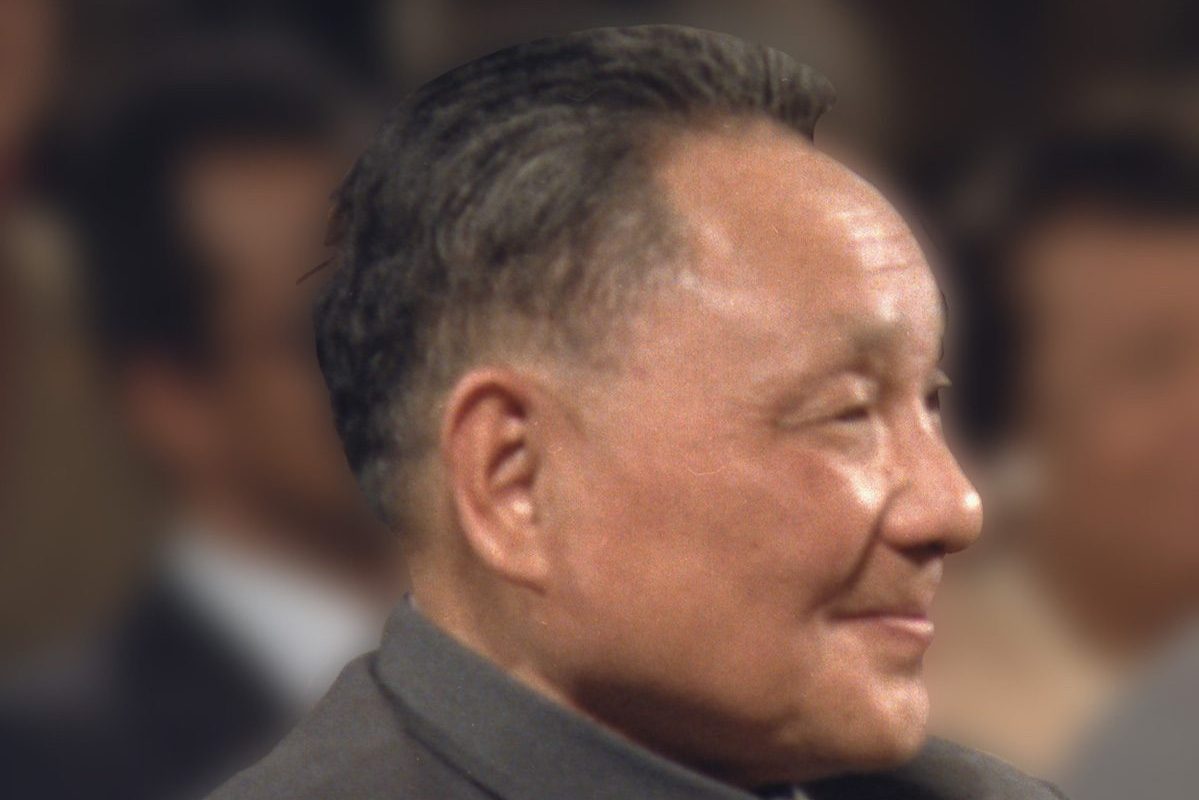
AI age demands a new political system
For decades, global discourse about China’s extraordinary economic rise has been trapped in a rigid ideological binary. Critics and analysts alike have framed the country’s transformation into the world’s second-largest economy as either a triumph of communist central planning or a quiet embrace of unadulterated capitalism hidden behind a socialist political banner. But as this analysis argues, both of these competing narratives miss a far more important and transformative reality at the heart of China’s modern development.
Modern China’s growth was not built on a pure application of either communist ideology or free-market capitalism. Instead, it has evolved a unique hybrid framework that merges the innovative, competitive dynamism of capitalist markets with the large-scale, long-term organizational capacity of a strong centralized state. The author dubs this model “capunism”: a system that draws key elements from both classical capitalism and communist state structure, with neither ideology defining the entire model.
Capunism can be clearly defined as a strategic combination of capitalism’s ability to drive grassroots innovation and a strong state’s capacity for coordinated long-term planning. Far from being an endorsement of authoritarianism or a rejection of free markets, the model addresses a critical gap exposed by the modern artificial intelligence economy: neither isolated state control nor unregulated free markets alone can meet the complex demands of 21st-century technological progress.
In fact, the defining question of the 21st century is no longer whether capitalism or communism is the superior global system. Instead, the core question now is whether a nation possesses the institutional flexibility to merge strategic state leadership with competitive private markets. Capunism is not a half-hearted ideological compromise between capitalism and socialism; it is a purpose-built institutional response tailored to the unique requirements of the AI age.
Why is this hybrid model uniquely suited to succeed in the AI era? The AI revolution differs fundamentally from the industrial revolution that came before it. Unlike 19th-century manufacturing, which could thrive with either isolated market activity or limited state planning, cutting-edge AI development requires an integrated national ecosystem that combines advanced semiconductor manufacturing, hyperscale data centers, abundant low-cost energy, nationwide high-speed digital infrastructure, top-tier academic research institutions, foundational scientific investment, cloud computing networks, and a workforce of millions of highly skilled engineers. No single private market actor, and no purely centralized state planning apparatus, can deliver all these interconnected components efficiently on its own.
As a result, the nations best positioned to lead the global AI economy will be those that can successfully pair robust state capacity with market-driven dynamism: states that set clear long-term strategic direction, while allowing competitive markets, entrepreneurs, and private firms to experiment and innovate. The AI economy demands both elements, and the hybrid model delivers this balance.
China’s decades-long growth model offers one prominent example of this approach in practice. Since the launch of market-oriented reforms under Deng Xiaoping in the 1980s, China has structured its economy to combine centralized political authority with expanding private markets, independent enterprise, and long-term national industrial planning. Regardless of one’s stance on China’s political system, the country’s track record demonstrates that strategic state coordination and competitive market innovation can coexist successfully within a single economic framework – and this combination is proving particularly effective in the AI era.
Recent high-profile milestones underscore this effectiveness. In one notable example, Chinese AI firm Moonshot AI launched its large language model Kimi K3, which outperformed Anthropic’s leading industry model Claude 3 (cited as Fable 5 in the original text) on standardized coding benchmarks. On August 3, Hugging Face CEO Clément Delangue publicly noted that China is making rapid gains in the global AI race through its open-weight model development, and could close the gap with leading U.S. frontier AI developers as early as 2026.
This progress in AI comes alongside reports that China has begun domestic production of deep-ultraviolet (DUV) lithography systems – a critical core technology for advanced semiconductor manufacturing, and one of the final key components that China previously relied on Western suppliers to provide. Combined with Kimi K3’s benchmark performance, these advances reinforce the core argument that the hybrid model of state-directed strategic coordination and market-driven competition – capunism – delivers tangible results in the AI age.
Critics of state intervention often argue that competitive free markets naturally allocate resources more efficiently than any state-led plan. While this holds true for many traditional sectors of the economy, the unique scale of AI infrastructure development exposes coordination challenges that isolated markets cannot solve. No single private company can independently build out a national electric grid, a complete domestic semiconductor supply chain, and train a workforce of millions of specialized engineers all on its own. These transformative investments require decades of long-term planning and cross-sector coordination that far exceed the short-term incentive structures of individual private firms. Markets remain irreplaceable for driving iterative innovation, but cutting-edge innovation in AI increasingly depends on foundational, strategic public investment to get off the ground.
Looking forward, the central axis of global competition in the AI era will not be capitalism versus communism. It will be institutional capability versus institutional stagnation. Nations that can adapt their frameworks to combine strong state capacity with dynamic private markets will gain a decisive strategic advantage over countries that cling rigidly to either pure market fundamentalism or exclusive centralized planning – a gap that will only widen as the AI revolution accelerates.
-

Ian Fairweather, beloved Australian TV personality known for role on Here’s Humphrey, dies in hospital at 86
A giant of Australian children’s television, Ian Fairweather — the original host of the long-running beloved program *Here’s Humphrey* — has passed away at the age of 86, his family has confirmed. The veteran broadcaster died at Gosford Hospital in New South Wales after suffering a recent fall, according to a family spokesperson who shared the news with public broadcaster ABC. The announcement was made public via a Facebook post Thursday afternoon by Bev Fairweather, who noted that the former Channel 9 personality, who graced Australian screens between the 1960s and 1980s, had lived an extraordinary life.
For nearly three decades, Fairweather was a staple of Adelaide-based programming on Australia’s Channel 9, cementing his status as a household name across the country through his work on children’s content. His most iconic role came as the founding host of *Here’s Humphrey*, the iconic children’s series centered on the beloved character Humphrey B. Bear, which was produced in Adelaide and enjoyed decades of national popularity. Beyond children’s television, Fairweather was also a core cast member of the hit science educational program *The Curiosity Show*, which ran for 500 episodes on Channel 9 throughout the 1970s and 1980s, introducing generations of young Australians to basic scientific concepts.
Colleagues who worked alongside Fairweather have paid tribute to his warm, joyful personality, remembering him as a uniquely talented broadcaster who touched countless lives. Penni Hamilton-Smith, who worked closely with Fairweather and went on to become a close personal friend, even named her son with the middle name “Ian Fairweather” after the pair made a friendly bet. “We’ve lost the most gorgeous, wonderful, talented, brilliant man,” Hamilton-Smith told ABC Adelaide. “As he got older, his face wrinkled into a smile because he was such a happy man – he was always confident, always happy, always thinking good thoughts about people.”
Though Fairweather spent the vast majority of his life and career based in Adelaide, he relocated to the NSW Central Coast in his later years, where he spent his final days. Hamilton-Smith added that Fairweather’s legacy would live on through the joy he brought to millions of Australian children and viewers over his decades-long career: “He lived a full life, and he helped a lot of people along the way, and brought a lot of joy to a lot of people. God bless him.”
-
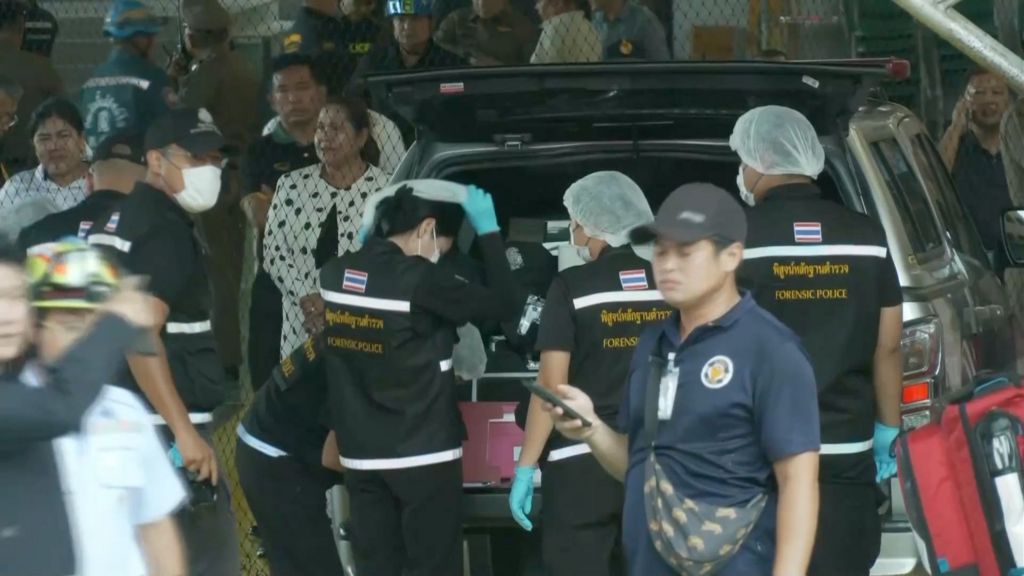
First responders in Thailand stand by following shooting
A deadly shooting incident at a school located on the outer fringes of Thailand’s capital Bangkok has left at least six people dead, according to updated information from law enforcement officials. In the wake of this tragic violence, emergency first response teams have been deployed and are remaining on standby to address any developing circumstances, potential secondary risks, and the urgent needs of survivors and affected community members. Thai law enforcement agencies have not yet released additional detailed information about the suspect, the motive behind the attack, or the identities of the victims, as the initial response and on-site investigation remain ongoing. The incident has sent shockwaves through the local community, which is now grappling with the sudden loss of life and the trauma of a mass shooting at an educational facility, a space meant to be safe for students and staff alike.
-

Four dead, 15 injured in Thailand school shooting: deputy minister
A devastating mass shooting at a Thai high school just north of Bangkok has left four people dead and 15 others injured, according to Thailand’s Deputy Interior Minister. The attack, which unfolded Friday at Debsirin Nonthaburi School in the Bang Kruai district of Nonthaburi province, claimed the lives of two students and two teachers, Deputy Minister Polapee Suwunchwee confirmed to local public broadcaster Thai PBS. All 15 injured people were students who sustained harm not from direct gunfire, but from accidents during their panicked escape from the campus, Polapee added.
Law enforcement and local media have identified the shooter as a teenage student currently enrolled at the targeted school. Multiple sources confirm the suspect is also dead, though conflicting accounts have emerged about the circumstances of his death: some reports state that responding police officers shot and killed the teen, while others indicate he died by suicide.
Polapee noted that the attacker used a handgun in the assault, and the Interior Ministry has launched a full investigation into how the underage student obtained the illegal weapon. Photographs published by local Thai media outlets show the suspect dressed in the school’s purple uniform carrying a black cross-body bag, with multiple spent bullet casings scattered across the ground near the scene of the attack.
An AFP journalist stationed near the school reported that road traffic in the immediate area came to a near-standstill in the hours after the shooting, as panicked parents flooded the neighborhood to pick up their children following the lockdown and alert.
The tragedy has reignited long-simmering debate over gun control in Thailand, which boasts one of the highest civilian gun ownership rates in Southeast Asia. Current estimates put the total number of unregistered and registered firearms in circulation at roughly 10 million — meaning one firearm for every seven Thai citizens. Despite repeated past political pledges to tighten national gun regulations, high-profile mass shootings have continued to plague the country with alarming frequency.
Just this year in February, a teenage shooter opened fire at a school in southern Thailand, killing the principal and wounding two students before being arrested by police. That attacker, who had recently been discharged from psychiatric hospitalization, stabbed an on-duty police officer and stole his 9mm service pistol before carrying out the attack. The deadliest incident in Thailand’s modern history of mass violence took place in 2022, when a former police officer entered a nursery in the country’s north and murdered 36 people, including 24 children, before killing himself.
Speaking to reporters at Government House in Bangkok shortly after the shooting, Thai Prime Minister Anutin Charnvirakul expressed shock and sorrow over the attack. “It’s such a terrible incident. It should never have happened. How could this happen in our country?” the prime minister told reporters.
-

China’s exports slow slightly in July despite robust demand for high-tech products
BANGKOK – New customs data released on Friday shows that China’s export expansion softened slightly in July compared to the previous month, even as global appetite for the country’s high-tech electronics and motor vehicles remained at robust levels. The world’s second-largest economy saw its overall trade surplus narrow to $112.5 billion in July, down from $125.6 billion recorded in June, according to the official figures.
On a year-over-year basis, July exports climbed by close to 24%, following a stronger 27% annual gain in June. Imports also grew year-on-year, rising 27.5% – a rate that fell short of June’s 36% surge.
Industry analysts point to temporary disruptions as the main driver of the slower monthly growth, with typhoon-related weather forcing disruptions to Chinese port operations that delayed the movement of goods. Julian Evans-Pritchard, a senior analyst at Capital Economics, noted in a research report that while the red-hot pace of Chinese trade cooled marginally in July, the underlying trend for both export and import values remains strongly elevated.
Evans-Pritchard added that ongoing soaring global demand for Chinese electronics and green technology products continues to support trade volumes, while geopolitical disruptions from the Iran conflict have cut off Middle Eastern aluminum shipments, pushing up demand for Chinese exports of the metal.
The latest trade figures also highlight a long-term structural shift in China’s export economy: the country has now fully shifted away from its historic reliance on low-cost mass-produced goods, and now leads in supplying critical machinery and components for advanced manufacturing sectors around the globe.
Aggregated data for the first seven months of the year underscores this shift: exports of high-tech products jumped nearly 41% compared to the same period last year, vehicle shipments soared 55%, and overall exports of electronics and industrial machinery rose 26%.
When broken down by trading partner, growth has been uneven across key blocs. For the first seven months of the year, Chinese exports to the United States rose only 2.6% year-on-year, while imports of American goods grew just 1.4% by comparison. Exports to the European Union saw a much stronger gain of nearly 17% over the same period, while exports to the 10-nation Southeast Asian bloc – which overtook other regions to become China’s largest single trading partner – surged 25% year-on-year.
-

Airport closes in Okinawa as Typhoon Dolphin hits parts of southern Japan
One of the year’s most impactful tropical cyclones to hit southwest Japan has begun wreaking havoc on the island chain of Okinawa, bringing high winds, widespread travel disruption, and minor injuries as authorities urge residents to remain indoors through the weekend.
As of Friday afternoon, the Japan Meteorological Agency (JMA) confirmed that Typhoon Dolphin was positioned just north of Okinawa’s main island, packing maximum sustained wind speeds of 144 kilometers per hour (89 miles per hour). The powerful storm system forced the complete shutdown of Naha Airport, Okinawa’s primary air transportation hub, leading to the cancellation of every inbound and outbound commercial flight, both domestic and international, on Friday.
Local officials from the Okinawa prefectural government confirm that three men in their 70s have already sustained minor injuries linked to the storm. Two of the men were knocked off balance by strong gusts, while the third fell from a stool while he was completing storm preparation work at his property, with officials confirming the fall was caused by a sudden wind blast. By midday Friday, 240 local residents had already relocated to official evacuation centers across the prefecture to wait out the dangerous weather.
The storm’s impending path has also put nearby regions on high alert. After moving past Okinawa, Dolphin is projected to reach parts of Kyushu, Japan’s southernmost main island. This extra risk comes as Kyushu is still recovering from a deadly earthquake that struck just one week prior. Many residents whose homes suffered structural damage in the seismic event have rushed to install waterproof blue tarps over broken roof sections and damaged exterior walls to prevent rainwater from leaking into their properties.
The JMA has warned that the Okinawa region will continue to face severe hazardous conditions through Sunday, including sustained strong winds, torrential downpours that could trigger flash flooding and landslides, and dangerous high ocean swells. The agency has issued a mandatory advisory urging all non-essential residents to avoid outdoor activity entirely for the duration of the storm.
Meteorologists project that Dolphin will gradually lose intensity over the weekend as it tracks northwest toward the eastern coast of China, where forecasters predict the storm will make landfall on Monday morning.