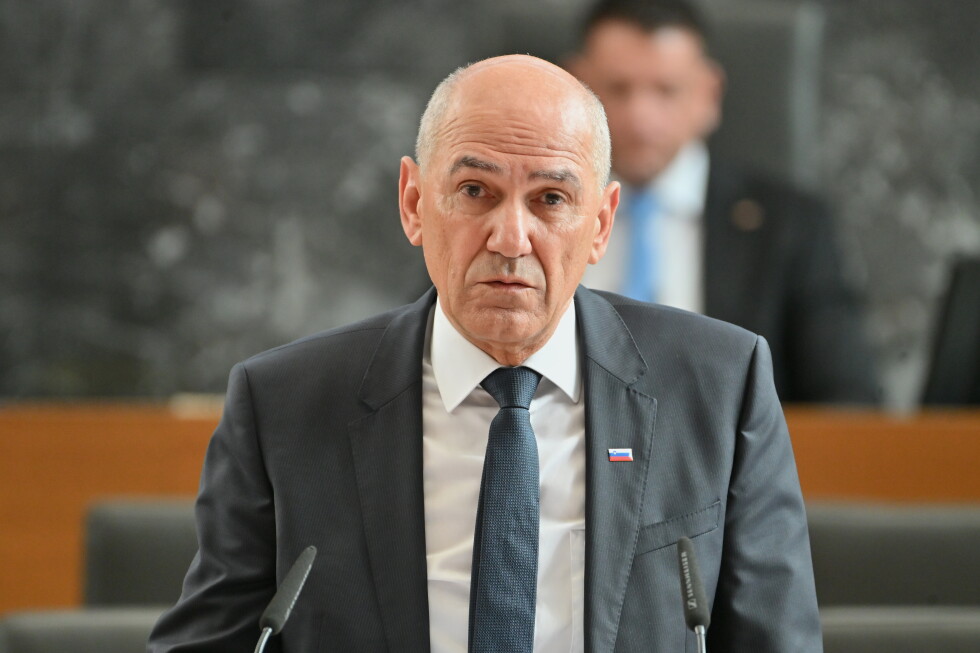
After two months of political gridlock following a tightly contested parliamentary election, Slovenia’s national assembly has appointed veteran right-wing populist leader Janez Jansa to the post of prime minister, marking a sharp ideological shift for the small Alpine European Union member state previously led by a liberal administration.
The 90-member legislative body cast 51 votes in favor of Jansa’s appointment, with 36 lawmakers voting against the nomination. The new prime minister-designate now has a 15-day window to put forward his proposed cabinet lineup, which will require a second confirmatory vote in parliament before the government can officially take office.
The political stalemate that followed April’s election followed an almost evenly split result. Former liberal prime minister Robert Golob’s Freedom Movement secured a razor-thin plurality in the vote, but failed to cobble together a workable parliamentary majority to form a new government. This week, Jansa’s Slovenian Democratic Party broke the impasse by signing a formal coalition agreement with multiple aligned right-wing factions. The incoming government also secures outside support from the non-establishment Truth party, a group that originated as an anti-vaccination movement during the height of the COVID-19 pandemic.
Friday’s appointment marks the fourth term as prime minister for the 67-year-old veteran politician, who is known for his open admiration of former U.S. President Donald Trump and long-standing close political alliance with Hungary’s populist former prime minister Viktor Orbán — who suffered a landslide election defeat just one month prior.
In his post-appointment address to parliament, Jansa outlined his administration’s core priorities: revitalizing the national economy, cracking down on systemic corruption and bureaucratic red tape, and decentralizing state power to regional and local authorities. He has pledged to cut taxes for high-income earners and expand state support for private education and private healthcare providers. Jansa sharply criticized the outgoing liberal government for what he called widespread inefficiency, promising his leadership would transform Slovenia into “a country of opportunity, prosperity and justice, where each responsible citizen will feel safe and accepted.”
Like his political ally Orbán, Jansa adopted a hardline anti-immigration stance during the 2015 European migrant crisis, and during his 2020-2022 previous term as prime minister, he faced repeated accusations of undermining independent democratic institutions and restricting press freedom. Those allegations sparked large-scale public protests across Slovenia at the time, and triggered formal oversight scrutiny from EU institutional bodies.
Outgoing prime minister Golob used his address to parliament to issue a stark warning about Jansa’s leadership, framing the right-wing leader as “the greatest threat to Slovenia’s sovereignty and democracy.” Golob also claimed Jansa had previously threatened to have him arrested, arguing that Jansa’s vision of democracy “is that anyone who dares speak a word against you deserves only the worst.”
Beyond domestic policy, Jansa is a vocal supporter of Israel, and has been a prominent critic of the outgoing Golob administration’s 2024 decision to formally recognize a Palestinian state. The April parliamentary election that set this political process in motion was marred by widespread allegations of foreign interference and campaign corruption, leaving the nation of roughly 2 million people deeply ideologically divided between liberal and conservative political blocs.