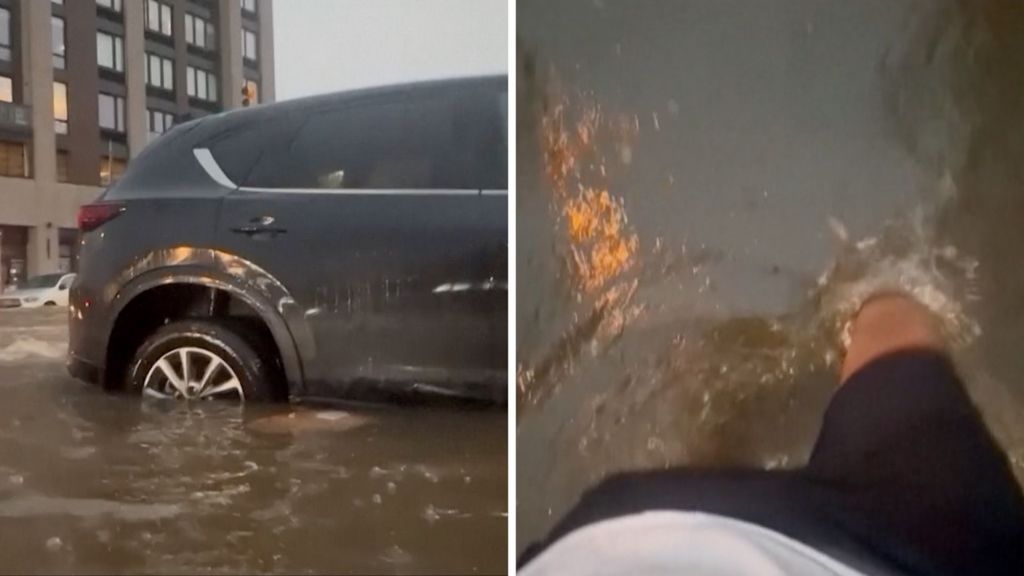
Residents across New York City have been forced to navigate waist-deep floodwaters that have swallowed entire streets and submerged dozens of parked vehicles, after an extreme weather event dumped record-breaking volumes of rain across the five boroughs. In the wake of the disaster, Mayor Zohran Mamdani confirmed that the unprecedented intensity of the rainfall overwhelmed the city’s aging municipal sewer system, leaving the infrastructure unable to handle the rapid accumulation of standing water across dense residential and commercial neighborhoods. Dozens of residential properties have already reported significant flood damage, with basements and ground-floor units completely inundated, displacing dozens of households and prompting emergency response teams to deploy swift water rescue assets to hard-hit areas. Local transportation networks have also been disrupted, with flooded arterial roads and subway entrances forcing temporary closures and snarling morning commute traffic across the city. The event has reignited public debate over the state of New York City’s aging stormwater management infrastructure, with climate advocates pointing to the disaster as evidence of the urgent need for infrastructure upgrades to address increasingly frequent extreme weather events driven by climate change.