作者: admin

  • Trump’s Cuba strategy echoes his Venezuela playbook. But there are key differences

    Trump’s Cuba strategy echoes his Venezuela playbook. But there are key differences

    WASHINGTON — The Trump administration’s hardline strategy to destabilize Cuba has increasingly mirrored the pressure campaign that led to the ouster of Venezuela’s former leader Nicolás Maduro, featuring an escalating oil blockade, expanded U.S. military presence in the Caribbean, federal criminal charges against top Cuban officials, and repeated public threats of direct military intervention. But regional policy experts warn that copying the Venezuela playbook does not guarantee a similar outcome, even as President Donald Trump has repeatedly insisted that “Cuba is next” on his list of regional regime changes.

    Brian Finucane, a senior adviser at the International Crisis Group and former State Department legal advisor, noted that Trump views the successful removal of Maduro as a major policy win and has attempted to replicate that model across adversarial regimes, including Iran. “But obviously, Cuba, like Iran, is a very different country than Venezuela,” Finucane emphasized. Unlike Venezuela, where the U.S. was able to install a compliant successor after capturing Maduro in January, Finucane says there is no obvious alternative Cuban leader willing to cooperate with the Trump administration. Unnamed Cuban officials, speaking on condition of anonymity due to restrictions on public commentary, echoed this assessment, bluntly stating “there is no Delcy in Cuba” — a reference to Maduro’s former second-in-command Delcy Rodríguez, who assumed power with U.S. backing after Maduro’s ouster.

    Finucane also pointed to key differences in U.S. military posture between the two campaigns. In the months leading up to Maduro’s removal, the U.S. assembled a massive, threatening naval buildup off Venezuela’s coast. By contrast, current U.S. military force levels in the Caribbean are far smaller and less intimidating. Additionally, while criminal charges against sitting Venezuelan president Maduro provided a legal justification for his capture, an indictment against 94-year-old former Cuban leader Raúl Castro — who stepped down from daily leadership years ago — carries far less practical impact for the current Cuban government.

    To understand the gaps between the two pressure campaigns, it is necessary to break down their core similarities and divergent dynamics:

    ### Repeated Escalating Threats of Military Action
    Months before launching the operation that removed Maduro from power, Trump steadily laid groundwork for intervention through a cascade of public threats, a pattern he has now repeated for Cuba. He has pressured Caribbean regional governments to align with U.S. policy or face consequences, and just weeks before the special operation that captured Maduro, Trump issued a final public warning to the Venezuelan leader from Florida, alongside his top national security team. “If he wants to do something, if he plays tough, it’ll be the last time he’ll ever be able to play tough,” Trump told reporters in December.

    Within days of Maduro being transported to the U.S. to face trial, Trump shifted his focus to Cuba, identifying the island as his next target. “Cuba is ready to fall. Cuba looks like it’s ready to fall. I don’t know if they’re going to hold out,” he told reporters on January 5. He followed this by threatening to impose tariffs on any country that supplies oil to Cuba, and claimed the U.S. might “have the honor of taking Cuba” after concluding operations in Venezuela and Iran. He repeated these threats last Thursday, dismissing Cuba as “a failed country” and claiming he will be the first U.S. president to resolve the decades-long standoff over the island’s governance.

    ### Divergent Goals Behind Linked Oil Embargoes
    The U.S. oil embargoes imposed on both Cuba and Venezuela share the core objective of squeezing ruling elites to force political change, but they target opposite sides of the oil trade to achieve this. For Venezuela, the Trump administration originally targeted the country’s oil exports to cut off revenue for the Maduro government. After Maduro’s ouster, the focus shifted to blocking unapproved Venezuelan oil exports to Cuba — which for years received crude in non-cash barter arrangements — while forcing Venezuela’s new government to comply with U.S. terms for oil shipments. Today, most of Venezuela’s crude output is routed to U.S. refineries.

    For Cuba, the embargo is designed to cut off the energy-import dependent island from critical oil supplies. While the U.S. has allowed a small number of limited shipments to proceed, Cuba recently publicly confirmed it has exhausted its stored oil reserves. The current embargo is an expansion of the broader U.S. trade blockade on Cuba that has been in place for decades, and it has already severely strained the Cuban government’s ability to provide consistent electricity and gasoline to civilian residents.

    Finucane warned that this pressure could spiral into unintended consequences for the U.S. If the embargo destabilizes Cuba enough, it could trigger a new wave of mass migration to Florida, similar to the refugee crisis that unfolded in the 1990s when thousands of Cubans crossed the 90-mile stretch of ocean in makeshift vessels. “President Trump especially cares about immigration. And if they push too hard on Cuba and destabilize the island, there’s the possibility of some kind of a refugee crisis,” he said.

    ### Criminal Charges Carry Different Strategic Weight
    During Trump’s first term in 2020, the U.S. Department of Justice charged Maduro with narco-terrorism conspiracy and multiple other criminal counts. That indictment was later used as legal justification for his capture, and Maduro now remains in New York awaiting trial, where he has pleaded not guilty to all charges. The removal of Maduro upended decades of U.S.-Venezuela relations, opening the door for U.S. companies to purchase previously sanctioned Venezuelan oil and allowing Venezuelan crude to re-enter global markets — a massive shift from years of near-total restrictions on dealings with Venezuela’s government and oil sector.

    For Cuba, the indictment against Raúl Castro stems from the 1996 shootdown of two civilian planes flown by Miami-based Cuban exiles, and includes charges of murder and aircraft destruction. William LeoGrande, a professor specializing in Latin American politics at American University in Washington, said the charges are primarily a tactical step to escalate the Trump administration’s pressure campaign, rather than a precursor to immediate policy change. Even if the U.S. were to detain Castro, LeoGrande argued it would not alter the day-to-day operations of Cuba’s current government. “Castro still has influence and the leadership seeks his opinion on major decisions, but he is not running the government on a day-to-day basis,” LeoGrande explained.

    ### Modest Military Buildup Versus a Massive Regional Deployment
    In the months leading up to Maduro’s capture, the U.S. deployed a large fleet of warships to waters off Venezuela, marking one of the largest U.S. military buildups in Latin America in modern history. The U.S. Navy’s most advanced carrier at the time, the USS Gerald R. Ford, was rerouted from European deployments to join the operation, while three amphibious assault ships carried a Marine expeditionary unit, attack helicopters, and Osprey tiltrotor aircraft. U.S. forces carried out months of anti-smuggling operations targeting drug trafficking vessels in the Caribbean and eastern Pacific, while fighter jets conducted regular patrols over the Gulf of Venezuela. The final mission to capture Maduro involved more than 150 aircraft deployed across the Western Hemisphere.

    Today, the U.S. maintains a much smaller military contingent in the Caribbean, consisting of two amphibious assault ships with Marine detachments onboard. This week, coinciding with the announcement of charges against Raúl Castro, the U.S. military publicized the arrival of the USS Nimitz aircraft carrier and its accompanying escort warships in the region. However, the Nimitz is on its final deployment before being decommissioned, and is only participating in routine maritime exercises. For experts, this scaled-back presence underscores the gap between the two campaigns. “They’re very different situations, and it’s very difficult to see similar outcomes,” Finucane said. “A snatch-and-grab raid against Raúl Castro or someone who’s actually in a leadership position doesn’t seem like it’s going to have the same outcome in Cuba as in Venezuela.”

    Associated Press writer Andrea Rodríguez in Havana contributed reporting to this article.

  • Russia’s Putin vows retaliation after accusing Ukraine of hitting student dormitory

    Russia’s Putin vows retaliation after accusing Ukraine of hitting student dormitory

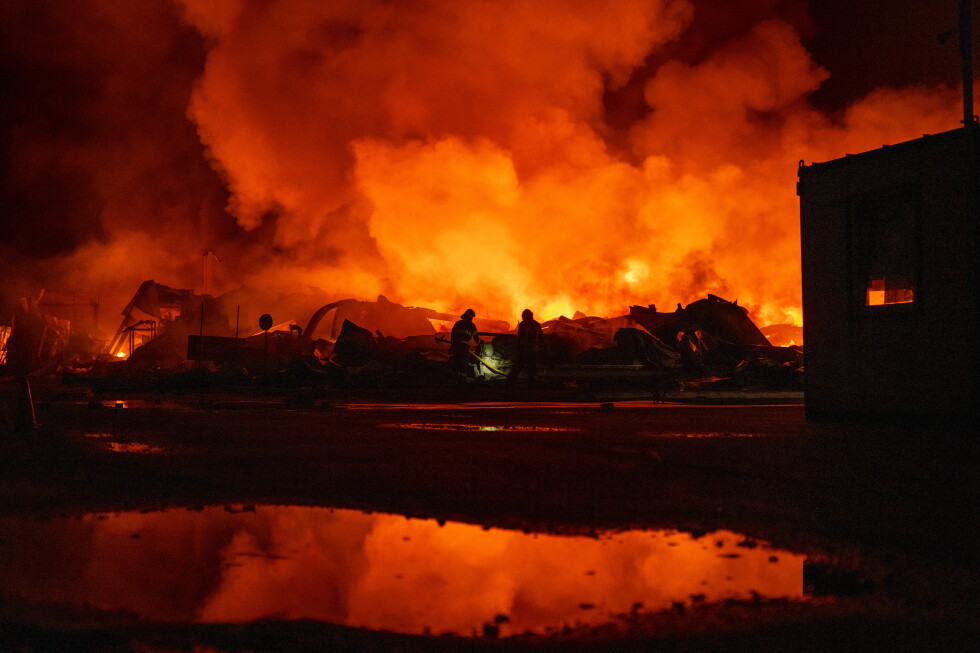
    A recent drone strike on the occupied Ukrainian town of Starobilsk has escalated cross-border tensions, with Russian authorities accusing Kyiv of targeting a civilian student dormitory and Ukrainian forces confirming the attack as a strike on an elite Russian military unit.

    According to Russian President Vladimir Putin, the overnight three-wave assault using 16 drones left six people dead, 39 wounded, and 15 others unaccounted for as of Friday. Putin emphatically rejected any suggestion that the damage to the building could have resulted from Russian air defense or electronic warfare countermeasures, claiming no military infrastructure was located near the collapsed structure in Luhansk Oblast. He has formally ordered Russia’s military leadership to draft immediate proposals for retaliation against Ukraine.

    Local officials installed by the Kremlin have released visual evidence showing the extent of the destruction, with emergency response teams combing through collapsed concrete rubble for survivors. Russian state media has also featured an interview with a 19-year-old identified as an injured student, Diana Shovkun, though no imagery has been released of the people Moscow says were killed in the incident.

    Kyiv’s account of the strike differs sharply from Moscow’s narrative. Ukraine’s military has openly acknowledged carrying out the attack, but says the target was the headquarters of Russia’s elite Rubicon drone unit. The Ukrainian statement adds that Rubicon forces have repeatedly launched attacks on Ukrainian civilian populations and infrastructure, and that Ukrainian military operations strictly follow international humanitarian law and the established customs of war.

    The Starobilsk strike follows just one day after Ukrainian President Volodymyr Zelensky announced another successful strike on Russian-occupied territory: a hit on a Federal Security Service (FSB) headquarters in Moscow-controlled southern Kherson Oblast. Zelensky claimed that the strike left roughly 100 Russian occupying personnel dead or injured. Russia’s military has not issued any official comment on the Kherson attack, though a pro-Kremlin Telegram channel has acknowledged unspecified casualties following what it described as a large-scale drone assault.

    Independent verification of either side’s claims has not been possible, as the BBC notes it cannot confirm details of the Starobilsk incident on the ground. This exchange of strikes comes amid a long-running war of words over civilian casualties that stretches back to the start of Russia’s 2022 full-scale invasion of Ukraine. Ukraine has repeatedly documented and condemned what it says are deliberate Russian strikes on civilian targets, a charge the Kremlin consistently denies. Just one week prior, Ukrainian officials reported that a Russian missile strike on a multi-story residential apartment building in Kyiv killed 24 people, including three young girls.

  • Sadiq Khan cancels Met police Palantir contract, with pressure to end all links to AI firm

    Sadiq Khan cancels Met police Palantir contract, with pressure to end all links to AI firm

    London Mayor Sadiq Khan has scrapped a planned £50 million AI intelligence partnership between the Metropolitan Police and U.S. tech firm Palantir Technologies, a move that has drawn cautious praise from pro-Palestine advocacy groups and British Green Party politicians who warn that unchallenged smaller existing contracts between the force and the controversial company still stand.

    Khan’s official rejection of what would have been Palantir’s largest ever UK law enforcement contract came on Thursday, with the mayor citing a clear, serious violation of UK public sector procurement protocols as the core justification for the decision. Under existing London governance rules, any Metropolitan Police spending exceeding £500,000 requires formal sign-off from the Mayor’s Office for Policing and Crime (Mopac), the independent oversight body tasked with ensuring legislative compliance and transparent public spending.

    According to Khan’s announcement during Mayor’s Question Time, Mopac identified multiple critical red flags during its review of the proposed deal. The Metropolitan Police failed to submit its full procurement strategy for pre-approval from the Deputy Mayor for Policing and Crime, as required under Mopac’s formal delegation rules. Instead, the force advanced procurement negotiations all the way to the final contract award stage before requesting oversight approval. Beyond procedural violations, Khan’s office added that the agreement failed to demonstrate guaranteed value for taxpayer money and would have left the force locked into a long-term proprietary technological dependence on Palantir.

    The proposed £50m deal was intended to deploy Palantir’s artificial intelligence tools to automate criminal investigation intelligence analysis, but the company has long faced widespread condemnation for its deep ties to the Israeli government and military. In January 2024, after Israel launched its large-scale military campaign in Gaza, Palantir signed a formal contract with Israel’s Ministry of Defense to provide technology for “war-related missions”. Company CEO Alex Karp has openly acknowledged strong demand for Palantir’s services following the October 7, 2023 attacks by Hamas, and the firm’s board held a high-profile meeting in Tel Aviv explicitly framed as an act of solidarity with Israel. Human rights advocates directly link Palantir’s surveillance and AI tools to Israeli military operations in Gaza that have been labeled as genocide by multiple advocacy groups and global political bodies.

    Even before the proposed £50m deal, the Metropolitan Police had already secured a series of smaller, lower-value contracts with Palantir that fall just under the £500,000 threshold that triggers mandatory Mopac oversight, a structure that critics say was intentionally designed to avoid public scrutiny. The force launched an initial pilot program with a £10,000 contract, later extending the arrangement for three months at a cost of just under £490,000, bringing the total value to just under the oversight threshold. Under the pilot, Palantir’s AI is already being used to analyze data stored on Met officers’ personal devices, a policy that has drawn fierce criticism from the Metropolitan Police Federation, the union representing Met officers. In late April, the federation warned officers to be “extremely cautious” about carrying their work-issued devices while off duty, arguing that the AI monitoring has severely eroded officer trust in force leadership and sent already plummeting morale even lower.

    During a Wednesday meeting of the London Assembly’s Police and Crime Committee, Metropolitan Police Deputy Commissioner Matt Jukes defended the force’s choice to partner with Palantir for the pilot, noting that the firm is already an approved supplier on the UK government’s G-Cloud 14 procurement framework and is widely used across multiple British government departments. Jukes acknowledged that Palantir is a “divisive supplier” from a reputational standpoint, but emphasized that the company’s existing use across 72 NHS trusts and its status on national government frameworks made it a qualified choice for the Met. When asked whether Palantir had offered the pilot at a discounted rate to intentionally avoid crossing the oversight threshold, Jukes said the full cost of the pilot had been clearly documented.

    Reaction to Khan’s decision to block the £50m deal has been mixed, with human rights and pro-Palestine groups welcoming the move while pushing for further action to cancel all existing Met contracts with Palantir. Amnesty International UK campaigns manager Kristyan Benedict called the cancellation “positive news”, noting that Palantir tools are currently deployed by the Israeli military during its military campaign in Gaza. The Palestine Solidarity Campaign (PSC), which has led widespread advocacy against the deal, credited its grassroots campaigning for pushing Khan to reject the contract, arguing that “Palantir supplies Israel with AI and surveillance technology used in its genocide in Gaza. It should not receive a penny of public money.” The group is now calling on Khan to go a step further and cancel the existing nearly £500,000 pilot contract, and is demanding the UK government scrap all national public sector contracts with Palantir, including a £330m deal with NHS England to build and maintain a national patient data platform that has been opposed by health workers, patients and human rights organizers across the country.

    Green Party London Assembly member Benali Hamdache, who first raised public questions about the Palantir partnership, also welcomed the cancellation of the large contract, but echoed calls to end existing agreements. “It’s good that this £50 million contract was blocked, but the Met still has contracts with Palantir worth nearly £500,000 that haven’t been challenged,” Hamdache said in a statement to Middle East Eye. He added that the current procurement rules, which allow deals under £500,000 to bypass mayoral oversight, create dangerous loopholes that could allow similar controversial agreements to move forward in the future. Hamdache also pointed to additional red flags around Palantir, including the company’s work with U.S. Immigration and Customs Enforcement (ICE) for immigration enforcement operations, and a recent public manifesto adapted from Karp’s writings that openly espouses far-right ideological positions and defends high-profile far-right figures including Elon Musk.

    Palantir already holds nearly $1 billion in total contracts across multiple UK government bodies, including the Ministry of Defence, NHS, and multiple regional police forces. Founded by high-profile Donald Trump supporter Peter Thiel, the firm has faced growing grassroots resistance across the UK over its human rights record and geopolitical ties. Critics argue that the current case exposes deep flaws in UK public procurement rules that allow controversial contractors to split large projects into smaller agreements to avoid oversight and public accountability.

  • Trump is putting pressure on Cuba – why and to what end?

    Trump is putting pressure on Cuba – why and to what end?

    Decades of fragile, strained relations between the United States and Cuba have plunged to new lows in recent weeks, following a series of aggressive moves by the second Trump administration that have put the Caribbean nation on high alert for potential military intervention.

    Since his return to the White House, US President Donald Trump has openly stated his goal of ousting Cuba’s current ruling leadership, even speculating publicly that the island’s government is on the brink of collapse. In March, he claimed Cuba was mired in deep crisis and teased the possibility of a so-called “friendly takeover” of the country. While no formal military invasion plans have been announced, heightened surveillance activity in the region has amplified Cuban anxieties. Over the past seven days, US military aircraft have intentionally kept their flight transponders active while operating near Cuban airspace, broadcasting their positions publicly on global flight-tracking platforms. Dr. Steve Wright, a UK-based expert in unmanned aerial and surveillance technology, called the choice to leave transponders enabled almost certainly intentional, noting the move is designed to send an unambiguous message that US intelligence maintains constant oversight of the island as it ramps up pressure.

    The most provocative recent US action came this week, when federal prosecutors unsealed an unprecedented murder and conspiracy indictment against 94-year-old Raúl Castro, Cuba’s former president and the symbolic “Leader of the Cuban Revolution.” The charges stem from a 1996 incident in which Cuban fighter jets shot down two small civilian aircraft operated by Brothers to the Rescue, a Miami-based Cuban exile group. Four people, three of them US citizens, were killed in the incident. Washington has long maintained the planes were shot down over international waters, while Cuba has consistently argued the aircraft entered its sovereign airspace after repeated incursions that posed a national security threat. Along with Raúl Castro, five other Cuban figures face charges including conspiracy to kill US nationals, murder, and destruction of US aircraft; a conviction could carry a life sentence or the death penalty. Acting US Attorney General Todd Blanche said the charges reflected that the US “does not, and will not, forget its citizens,” but Cuban leaders have denounced the indictment as a baseless political gambit to justify military action. Cuba’s current president Miguel Díaz-Canel called the prosecution “a political manoeuvre, devoid of any legal foundation,” reaffirming that the 1996 downing was a legitimate act of self-defense within Cuban national waters.

    Experts and Cuban officials note the indictment is a deliberate strike at the heart of Cuba’s ruling structure. While Díaz-Canel formally holds both the presidency and leadership of the Cuban Communist Party, the Castro name remains the most powerful symbolic and political force on the island, commanding deep loyalty within the military and security services that dominate Cuban politics and economics. Raúl Castro, who led the country from 2008 to 2018 after decades as defense minister under his older brother Fidel, remains the figurehead of the 1959 revolution that established the island’s anti-imperialist, one-party communist system. The Cuban military’s sprawling conglomerate GAESA controls most of the island’s key economic assets, underpinning the power of the ruling political-military elite. In a recent video address to the Cuban people, US Secretary of State Marco Rubio argued that GAESA operates as a “state within a state,” controlled by a corrupt, incompetent elite that blocks reform and any potential rapprochement with the US. Rubio confirmed that the White House prefers a diplomatic resolution to the current standoff, but said Trump retains the right and obligation to respond to any purported US national security threat, adding that the probability of reaching a peaceful agreement is “not high.” Cuban Foreign Minister Bruno Rodríguez has dismissed Rubio’s comments as an attempt to “instigate a military aggression.”

    Beyond the legal charges, the most impactful pressure on Cuba has come from a total US oil blockade and sweeping new sanctions that have crippled the island’s already fragile economy. For years, Venezuela and Mexico supplied the vast majority of Cuba’s crude oil and fuel, but both halted shipments after the Trump administration removed Venezuela’s sitting president in January and threatened tariffs on any country that sent petroleum to Havana. Since the blockade was implemented, only one Russian oil tanker has successfully delivered fuel to the island, leaving Cuba facing chronic fuel shortages that have sparked months of widespread, hours-long blackouts across the country. Shortages of food, medicine, and basic goods have also reached crisis levels, forcing hospitals to scale back critical care and forcing schools and government offices to close repeatedly. Public discontent has boiled over into repeated street protests across the capital Havana, including a demonstration this week where demonstrators blocked roads with burning debris and chanted anti-government slogans. This month, the US added new sanctions targeting senior Cuban officials in the energy, defense, finance, and security sectors, accusing them of human rights abuses and corruption.

    Washington has also offered $100 million in humanitarian aid to Cuba, but attached strict conditions requiring the aid be distributed through the Catholic Church and independent non-governmental organizations, completely bypassing the Cuban government. The Trump administration says Cuba has rejected the aid, but Rodríguez countered that Cuba does not refuse assistance offered in good faith, and the most meaningful help the US could provide would be lifting the blockade entirely.

    Unconfirmed intelligence reports published by US news outlet Axios have further escalated tensions, claiming that Cuba holds roughly 300 combat drones and is planning potential strikes on US targets including the Guantanamo Bay Naval Base, Key West, Florida, and US naval vessels operating in the region. The report also claimed Iranian military advisors are present in Havana, an allegation Cuban officials have dismissed as part of a fabricated pretext for military intervention. Rodríguez has repeatedly emphasized that Cuba “neither threatens nor desires war” but is fully prepared to repel any external aggression.

    Backchannel talks between the two governments were confirmed by both sides in March, but Cuba has so far responded only with formal public condemnation of US actions, characterizing the entire campaign as “collective punishment” of the Cuban people. Two of Cuba’s key international allies, China and Russia, have both spoken out against US actions, with Beijing calling on Washington to end its coercion and threats, and the Kremlin saying the pressure on Cuba “borders on violence.” As the blockade continues and rhetoric hardens on both sides, the Caribbean faces one of its most severe security crises in decades.

  • Senators from both parties push Hegseth for action on Ukraine aid

    Senators from both parties push Hegseth for action on Ukraine aid

    WASHINGTON — A cross-party coalition of U.S. senators is escalating pushback against the Department of Defense over unfulfilled congressional mandates to disburse $600 million in approved security assistance to Ukraine and three Baltic allies, delivering a formal demand letter Friday to Defense Secretary Pete Hegseth calling for the immediate release of the allocated funding. The standoff marks a deepening rift between Capitol Hill and the Trump administration, as lawmakers from both major political parties are demanding transparency and action on funding that was formally appropriated by Congress in the previous year: $400 million earmarked explicitly for Ukrainian defense capabilities, and an additional $200 million for regional defense programming in Estonia, Latvia, and Lithuania. Notably, even members of President Donald Trump’s own party have openly expressed frustration with the administration’s growing strategic disengagement from Ukraine and other Eastern European partner nations.

    In the joint letter led by top Democratic Sen. Dick Durbin and senior Republican Sen. Chuck Grassley, the lawmakers laid out the urgent case for unblocking the assistance: “Ukraine has persistently and bravely repelled a four-year Russian onslaught, but its military needs and deserves continued American support.” Four additional lawmakers — Republican Sens. Kevin Cramer and Thom Tillis, along with Democratic Sens. Michael Bennet and Catherine Cortez Masto — added their signatures to the bipartisan appeal.

    Weeks ago during a public congressional hearing, Hegseth informed lawmakers that the Ukraine funding had already been “released” and that a full spending outline would be delivered to Congress by mid-May. However, the senators confirm the Pentagon has missed its self-imposed May 15 deadline to share the mandated spending plan, prompting the formal protest.

    The coalition warned that further holdups carry severe strategic consequences, particularly amid reported plans for additional U.S. troop drawdowns in the region: “Any further delays — particularly as the Department reportedly plans troubling U.S. troops withdrawals from the region — risks our ability to adequately deter Russia.”

    This letter is the most recent public display of growing Republican discontent with the Trump administration within the Senate, coming on the heels of a week that saw the president endorse a primary challenger against incumbent Texas Sen. John Cornyn, a move that alienated dozens of sitting GOP lawmakers. In a public social media exchange with President Trump on Friday, Tillis pointed to the administration’s approach to Ukraine as one of several policies harming the Republican Party politically, specifically criticizing the White House for “Firing our very best generals and not holding Putin accountable for his systematic kidnapping, rape, torture, and murder of Ukrainian civilians.”

    Multiple Senate Republicans have also broken with Hegseth over his firing last month of Army Chief of Staff Gen. Randy George, a senior officer who had led efforts to update the Army’s battlefield doctrine to integrate modern drone warfare and had collaborated closely with Ukrainian military forces to incorporate battlefield lessons from the ongoing war.

    On the House side of Congress, a Democratic-led proposal that would impose sweeping new sanctions on Russia and authorize an additional $1 billion in military aid to Ukraine has been gaining traction among cross-party lawmakers. While the full House package is considered unlikely to pass into law in the current legislative session, it has amplified the growing pressure from Capitol Hill for sustained U.S. backing for Ukraine’s defense effort.

    Though the $400 million in blocked aid to Ukraine makes up a small share of the multi-billion dollar assistance packages Congress authorized in the immediate aftermath of Russia’s full-scale invasion, the standoff over the funding has taken on outsized symbolic importance for lawmakers as a public test of ongoing U.S. commitment to Kyiv and regional security in Eastern Europe.

  • Pakistan military chief arrives in Tehran in push to end Iran war

    Pakistan military chief arrives in Tehran in push to end Iran war

    Nearly three months after a fragile ceasefire paused the open conflict between the US-Israeli alliance and Iran that ignited on February 28, top Pakistani military commander Asim Munir touched down in Tehran on Friday, stepping into the most high-profile mediation effort to date to lock in a permanent end to the devastating regional war. As Islamabad holds the official mediator role for talks between the two adversarial sides, the visit comes as Iran evaluates a new American peace proposal that has sparked cautious optimism from Washington — even as Iranian officials warn deep divisions remain far from resolved.

  • Trump wants new Fed chair to be ‘totally independent’

    Trump wants new Fed chair to be ‘totally independent’

    At a historic White House swearing-in ceremony held Friday, former President Donald Trump publicly called on newly inaugurated Federal Reserve Chairman Kevin Warsh to maintain full institutional independence from political pressure, a remark that comes amid long-simmering tensions between the Trump administration and the central bank over monetary policy.

    This event marked the first time a Fed chair has taken the oath of office at the White House since Alan Greenspan’s 1987 swearing-in, a choice that underscores the high stakes the Trump administration places on Warsh’s appointment. The new chairman replaces Jerome Powell, with whom Trump repeatedly clashed publicly over the course of his previous tenure. For months leading up to the nomination, Trump openly pressured Powell and the Fed board to cut interest rates, arguing that looser monetary policy would unlock stronger economic growth. Trump even went as far as to tie support for immediate rate reductions to eligibility for the top Fed job.

    Despite that pressure, the Federal Reserve has stood firm against the administration’s demands, holding interest rates steady between 3.5% and 3.75% in April as policymakers assess the inflationary fallout of the ongoing US-Israel conflict and escalating tensions in Iran. Current economic projections from most analysts indicate rates will remain at this level through the remainder of 2026, with a smaller share of economists even predicting a possible rate hike to combat persistent inflation. Higher interest rates work to cool overheated inflation by raising borrowing costs for households and businesses, which in turn slows excessive consumer spending.

    During Friday’s ceremony, Trump pushed back against widespread criticism of his pick, telling the audience that “no one in America is better prepared” than Warsh to steer the nation’s central bank. “I really mean this, I want Kevin to totally independent. Don’t look at me, don’t look at anybody, just do your own thing and do a great job, okay,” Trump stated. He added that he expects Warsh to guide the U.S. economy into a new period of sustained expansion, arguing that the Fed “lost its way” under Powell’s leadership. Trump specifically criticized the previous Fed leadership for devoting resources to issues outside of its core statutory mandates of stable prices, controlled inflation, and maximum employment, naming climate change and diversity, equity, and inclusion (DEI) initiatives as misplaced policy priorities.

    Critics of the appointment, however, have raised alarms that Warsh will act as a political proxy for the Trump administration. Senior Democratic Senator Elizabeth Warren was among the most prominent voices of opposition, warning that the former Wall Street banker would be nothing more than a “sock puppet” for the president. The combination of political skepticism and ongoing economic uncertainty leaves Warsh facing an extremely delicate balancing act as he takes office: he must navigate a deeply fractured U.S. economic landscape while proving to skeptical lawmakers and the public that he can keep the Fed free from White House political interference.

    For his part, Warsh struck an optimistic tone in his inaugural remarks on Friday, committing to lead a “reform-oriented” Federal Reserve. He told Trump he believes his tenure can deliver “unmatched prosperity that will raise living standards for Americans from all walks of life.”

  • US intelligence chief Tulsi Gabbard resigns

    US intelligence chief Tulsi Gabbard resigns

    In a sudden announcement that has shaken the upper ranks of the Trump administration, Director of National Intelligence Tulsi Gabbard confirmed Friday she will step down from her post, effective June 30, to stand beside her husband as he fights a newly diagnosed rare form of bone cancer. The departure also closes out a turbulent tenure defined by longstanding ideological clashes with the president over his push for war with Iran, a rift that left the nation’s top intelligence coordinator increasingly sidelined from key national security decisions in recent months.

    In a public letter to Trump posted to the social platform X, the 45-year-old laid out the deeply personal reason for her exit, writing, “My husband, Abraham, has recently been diagnosed with an extremely rare form of bone cancer. He faces major challenges in the coming weeks and months. At this time, I must step away from public service to be by his side and fully support him through this battle.” Gabbard’s role centered on coordinating global intelligence data and presenting consolidated national security assessments to the president.

    President Trump responded to the announcement with praise for Gabbard, one of the only remaining women in his cabinet, via his Truth Social platform. “Tulsi has done an incredible job, and we will miss her,” he wrote, noting that her desire to support her husband through cancer treatment was rightful. He also confirmed that Gabbard’s deputy, Aaron Lukas, will step into the role as acting Director of National Intelligence following her departure.

    Gabbard’s appointment to lead the sprawling U.S. intelligence apparatus was controversial from the start. A former Democrat and Iraq War veteran who served in the Army National Guard, her deployment experience shaped a long career of opposition to U.S. foreign military interventions, a stance that put her at odds with administration policy long before the current conflict with Iran. Most notably, she repeatedly voiced public opposition to launching a war against Iran, and grew increasingly isolated from Trump’s inner circle as he moved forward with strikes.

    Multiple reports indicate Gabbard was excluded from high-level strategy meetings in the immediate lead-up to the joint U.S.-Israeli strikes on Iran launched February 28. After the war began, she repeatedly declined to back key administration justifications for the attack. She refused to endorse Trump’s claim that Iran posed an imminent military threat, the core assessment the administration used to justify the strikes. When testifying before Congress, she emphasized that the final call for military action rested solely with the president. Gabbard also contradicted another key administration justification, confirming U.S. intelligence had concluded Iran was not rebuilding the nuclear enrichment facilities destroyed in joint U.S.-Israeli strikes the previous year.

    Beyond her disagreements over Iran policy, Gabbard has long faced criticism from lawmakers on both sides of the aisle over past controversial positions. Her 2017 meeting with deposed Syrian leader Bashar al-Assad drew widespread scrutiny, and she has been accused of spreading Kremlin-aligned propaganda, including false conspiracy theories regarding the war in Ukraine. She also faced cross-partisan suspicion for her support of NSA leaker Edward Snowden, whose disclosures of secret U.S. surveillance programs were widely viewed as compromising American national security.

    Beyond her public service, Gabbard, a Hawaii native, was raised in the Hindu tradition by her mother, who converted to the faith; her first name, Tulsi, references a plant considered sacred in Hinduism, and she has been a vegetarian her entire life. She married Abraham, a Hawaii-based cinematographer, after the pair met while filming her campaign advertisements, and he proposed to her during a sunset surf session.

  • Tulsi Gabbard resigns as US director of national intelligence

    Tulsi Gabbard resigns as US director of national intelligence

    In a sudden announcement that has rippled through U.S. political and intelligence circles, former U.S. Director of National Intelligence Tulsi Gabbard has confirmed she will resign her post in the second Trump administration, citing an urgent personal crisis: her husband Abraham has recently been diagnosed with bone cancer.

    The resignation, which will take full effect on June 30, was revealed through a resignation letter obtained by CBS News, a U.S. partner of the BBC. In the heartfelt correspondence, Gabbard emphasized the foundational role her husband has played in her public life. “His strength and love have sustained me through every challenge,” she wrote, adding that she could not in good conscience leave him to navigate his cancer treatment alone while fulfilling the relentless, time-intensive demands of leading the U.S. intelligence community. “I cannot ask him to face this fight alone while I continue in this demanding and time-consuming position,” Gabbard stated.

    Following the official confirmation of the resignation, former President Donald Trump took to social media to publicly praise Gabbard’s service. The departing intelligence chief “has done an incredible job, and we will miss her,” Trump wrote, noting that Gabbard’s choice to prioritize her family’s health is both understandable and honorable. “She rightfully, wants to be with him, bringing him back to good health as they currently fight a tough battle together. I have no doubt he will soon be better than ever,” Trump added. To ensure a smooth transition, Trump announced that Aaron Lukas, the current principal deputy director of national intelligence, will assume the role of acting director once Gabbard departs at the end of June.

    Gabbard’s tenure at the helm of U.S. intelligence was relatively short but marked by its place in a shifting U.S. foreign policy landscape. A steadfast supporter of Trump during his successful 2024 presidential comeback campaign, Gabbard was confirmed to the top intelligence post just weeks after Trump reclaimed the White House in 2025. As Director of National Intelligence, her core responsibilities included coordinating operations across 18 separate U.S. intelligence agencies and serving as the president’s primary advisor on all national security and intelligence matters, making her one of the most powerful figures in the U.S. national security apparatus.

    Notably, Gabbard has remained largely out of the public eye in recent months, even as the Trump administration oversaw a series of high-stakes foreign policy actions: expanded military operations against Iran, increased diplomatic and economic pressure on Cuba, and the controversial removal of Venezuela’s sitting president. Her sudden departure from the role adds a new layer of uncertainty to the administration’s intelligence leadership as it continues to advance its aggressive global policy agenda.

  • Ebola risk now at highest level in DR Congo, says WHO

    Ebola risk now at highest level in DR Congo, says WHO

    On Friday, the World Health Organization announced it has upgraded the Ebola outbreak risk assessment in the Democratic Republic of the Congo (DRC) to the highest possible level — very high — as confirmed cases and deaths from the rare virus strain continue to climb faster than response teams can contain.

    Current official figures from the WHO place the count of confirmed Ebola cases at 82, with seven confirmed fatalities. When including suspected cases, those numbers jump to nearly 750 potential infections and 172 suspected deaths. WHO leaders emphasize that the true size of the epidemic is already far larger than the confirmed case count, as the virus circulated undetected for weeks before being identified.

    The outbreak is caused by the Bundibugyo strain of Ebola, an uncommon variant that has no specifically approved vaccines or antiviral treatments currently available to combat it. This critical gap in medical countermeasures has forced the global health body to fast-track testing of existing experimental treatments to assess their effectiveness against the strain.

    Speaking to reporters at WHO headquarters in Geneva, director-general Tedros Adhanom Ghebreyesus described the situation as deeply worrisome and uniquely challenging. Response teams are working in highly insecure regions of the country, scrambling to track the virus’s spread, trace close contacts of infected people, and establish full outbreak control measures. “We know the epidemic in DRC is much larger than the confirmed cases,” Tedros said.

    The outbreak is centered in the northeastern DRC’s Ituri province, where more than 1,400 contacts are currently being monitored by health teams. Anne Ancia, WHO’s representative in the DRC, reported from the field that the virus spread silently and rampantly across the region for several weeks before detection, leaving response teams in a sprint to catch up. As of now, Ancia confirmed, “the spread is not yet under control.”

    Without targeted vaccines or treatments, public health officials rely on the core Ebola control strategy of contact tracing and 21-day isolation to break chains of transmission. While rising case counts have raised alarm, WHO officials note the current increase is actually a positive sign that improved surveillance systems are working to uncover the true scale of the outbreak, rather than evidence of a sudden acceleration in new spread.

    Neighboring Uganda has so far avoided sustained community spread, with the WHO reporting a stable situation: just two confirmed cases in travelers who crossed from the DRC, and one death. Intense contact tracing efforts are credited with halting further spread in the country.

    Internationally, two U.S. citizens with links to the outbreak have been evacuated for care: one who tested positive was moved to Germany for treatment, while a second high-risk contact was transferred to the Czech Republic. The global risk level for the outbreak remains low, with regional risk assessed as high, per the WHO’s updated classification.

    Abdi Rahman Mahamud, the WHO’s director of emergency alert and response, explained the upgrade to very high risk for the DRC stemmed from three key factors: the severe threat to human health, the high potential for rapid spread, and the limited current response capacity on the ground. “The potential of this virus spreading rapidly is very high, and that changed the whole dynamic,” Mahamud noted.

    To address the gap in treatments, the WHO has fast-tracked plans for clinical trials of existing experimental drugs. The agency’s technical advisory group has prioritized two monoclonal antibodies — Regeneron’s 3479 and Mapp Biopharmaceutical’s MBP134 — for testing. It has also recommended evaluating the oral antiviral obeldesivir as a post-exposure preventive treatment for high-risk contacts. WHO chief scientist Sylvie Briand said the drug shows promise for preventing infected contacts from developing symptomatic disease.

    For vaccines, the existing widely approved Ervebo vaccine only targets the Zaire strain of Ebola, with very little evidence that it provides cross-protection against Bundibugyo. While work on a Bundibugyo-specific vaccine has begun, no doses are currently available for clinical trials, and development would likely take six to nine months even if the project is prioritized. Another candidate vaccine targeting the strain, built using the ChAdOx platform, is currently in production but has not yet completed animal testing required to move forward with human trials.