作者: admin

  • Lebanon’s talks with Israel test fragile relationship with Syria

    Lebanon’s talks with Israel test fragile relationship with Syria

    In the months following the collapse of Bashar al-Assad’s Syrian government, bilateral relations between Lebanon and neighboring Syria have hovered in a tense limbo, caught between shared strategic necessity and decades of accumulated mutual mistrust. Tied together by shared geography, intertwined history, overlapping security interests, and a sprawling backlog of unresolved bilateral disputes, neither nation has managed to shake off the heavy legacy of their fraught past.

    Lebanon has remained deeply wary of any return to the era of Syrian political dominance over its domestic affairs, while Syria’s new leadership under President Ahmed al-Sharaa is keenly alert to the risk that unilateral policy moves by Beirut could spill across their shared border and undermine Damascus at a critical transitional moment for the war-torn state. That underlying tension has now flared anew around one of the region’s most sensitive diplomatic topics: direct bilateral negotiations with Israel.

    According to a senior Lebanese official with direct knowledge of recent diplomatic exchanges between Beirut and Damascus, Syria has raised clear concerns that Lebanon’s rapidly advancing negotiation track with Israel is proceeding without sufficient coordination with the Syrian government, even as Damascus’s own talks with Tel Aviv remain stalled. The Syrian position was laid out explicitly during Lebanese Prime Minister Nawaf Salam’s recent official visit to Damascus, where he held talks with al-Sharaa.

    “The Syrian leader spoke in a diplomatic, non-confrontational tone, but made clear that coordination between the two countries on issues of vital national interest was essential to strengthening the negotiating hand of both sides,” the Lebanese official shared.

    Damascus’s unease extends beyond the simple breach of diplomatic protocol: Syrian leaders worry that Beirut’s separate negotiation path could set a precedent that international powers will later pressure Syria to follow. For months, United States officials have cited ongoing Syrian-Israeli diplomatic contacts to push Lebanon to launch its own direct talks with Israel. But with the Syrian negotiation track now largely deadlocked – in large part because Damascus judges Israel unwilling to make meaningful territorial or security concessions – the regional diplomatic dynamic has shifted dramatically. What began as a tool to pressure Lebanon to align with Syria’s approach could now become a mechanism to force Syria to adopt Lebanon’s framework.

    Lebanon’s negotiation process carries additional sensitivity given the conditions under which it has unfolded. Lebanese President Joseph Aoun previously pledged that Beirut would not enter talks until a permanent ceasefire with Israel was implemented. Yet diplomatic contacts have continued even as Israeli military strikes on Lebanese territory persist, despite a nominal ceasefire agreement reached in mid-April.

    For Damascus, this creates a core strategic threat: if Lebanon advances negotiations amid ongoing violence and makes early concessions to Israel, Syria could face mounting pressure from Washington and other global actors to accept an identical unfavorable framework. The dispute over negotiations has added a new layer of friction to an already deeply fragile bilateral relationship.

    The two neighbors are still working through a host of long-simmering unresolved issues: the status of Syrian detainees held in Lebanese prisons, unresolved land and maritime border demarcation, the future of Hezbollah’s role in regional security, the presence of former Assad regime officials in Lebanese territory, and the fundamental question of how to restructure their security relationship after decades of domination, open hostility, and mutual suspicion. Syrian unease over Beirut’s unilateral moves has already emerged across multiple of these files.

    Back in December, Damascus raised formal objections to Assad-linked military officers residing in Lebanon, with Syrian security officials sharing name lists with their Lebanese counterparts and warning that some of these figures could use Lebanese territory as a base to plot against Syria’s new government. Damascus has also framed the resolution of the Syrian detainee issue as a non-negotiable prerequisite for any meaningful improvement in bilateral ties.

    The Israel negotiation file is now the latest addition to this complex web of competing interests. For Syria, the dispute is not merely a matter of diplomatic etiquette – it is a question of strategic leverage. Damascus argues that despite their bitter shared history, Lebanon and Syria face overlapping regional vulnerabilities, meaning any concession Lebanon makes to Israel – particularly on security arrangements, border demarcation, or post-war security guarantees – will indirectly erode Syria’s own future negotiating position.

    “This is why Sharaa stressed that coordination on vital issues was not an optional courtesy, but a strategic necessity,” the Lebanese official said. “If Syria takes one step in favour of Lebanon, Lebanon should understand that its own vital interests require it to take many steps in favour of Syria.”

    That comment underscores the core asymmetry in how the two sides view their relationship: while Lebanon fears a return to Syrian dominance, Syria believes that Lebanese policy decisions can still expose it to severe strategic risk.

    The dispute over maritime energy rights adds further complexity to the dynamic. Turkey has already raised sharp objections to Lebanon’s 2025 exclusive economic zone agreement with Cyprus, arguing that the deal was reached without sufficient consideration of Syrian and Turkish economic and security interests in the Eastern Mediterranean. The incident has reinforced a widespread regional perception that Beirut often pushes ahead on sensitive cross-border issues without adequate consultation with neighboring stakeholders.

    Against this backdrop, Damascus does not view Lebanon’s separate talks with Israel as an isolated domestic decision by Beirut. Instead, it frames the move as part of a broader pattern of unilateral action by Lebanon on issues that carry implications far beyond its own borders.

    A senior Syrian official noted that Damascus has repeatedly emphasized to Arab regional states the need for coordinated diplomatic strategy and the risk of separate negotiation tracks that weaken the broader Arab position in talks with Israel. “There is a positive atmosphere, but there are realities on the ground that cannot be ignored,” the official said. “Cooperation with Lebanon is growing, but it has not yet reached the required level. The issue is less about disagreement and more about poor coordination.”

    The official added that Syria has a clear stake in a stable, prosperous neighbor: “The Syrian state wants Lebanon to be strong and capable of standing on its own feet,” he said, noting that al-Sharaa has stressed in meetings that Lebanon is navigating an unusually sensitive period and requires more innovative solutions than the outdated frameworks it has relied on in the past. Damascus believes Lebanon needs “precise tools” to navigate this transitional phase, and that Syria’s role is to support Beirut rather than add to existing pressure, the official added.

    For Lebanon, the core risk is that what appears to be an effort to expand diplomatic room for maneuver could end up narrowing its long-term options. A unilateral negotiation track with Israel could deepen Syrian mistrust, alienate Turkey, complicate Beirut’s own domestic political relationship with Hezbollah, and leave Lebanon exposed to pressure from international actors pushing for a quick, superficial deal rather than a durable, sustainable peace settlement.

    For Syria, the risk follows a different logic. Having inherited a fractured state, a weakened regional position, and already difficult talks with Israel, Damascus fears that Lebanon’s acceptance of a US- and Israeli-backed negotiation framework could create a regional precedent that Western powers will later use to pressure Syria into accepting identical terms.

    That said, the current tension does not signal an imminent slide into open confrontation between the two neighbors. On the whole, diplomatic exchanges between the two sides remain cautious and pragmatic. Both states still depend on one another: Syria needs Lebanon to prevent its territory from becoming a staging ground for anti-Damascus opposition activity, while Lebanon relies on Syria for border management, progress on the detainee file, refugee repatriation, anti-smuggling oversight, security coordination, and any credible regional peace settlement.

    For Lebanon, the central question now is whether it can advance negotiations with Israel while maintaining a coherent, aligned regional posture. For Syria, the key challenge is whether it can prevent Lebanese policy decisions from becoming a precedent that undermines its own negotiating position.

    The latest developments make clear that the post-Assad bilateral relationship has not yet evolved into an institutionalized, trust-based strategic partnership. It remains largely transactional, reactive, and still shaped by the lingering suspicions of the past. Caught between the legacy of the old order and the demands of a new regional landscape, the two neighbors face a familiar dilemma: they are no longer bound by the old hegemonic relationship, but neither can afford to ignore one another’s core strategic interests.

  • Waymo pauses robotaxis in five US cities after cars drive into flooded roads

    Waymo pauses robotaxis in five US cities after cars drive into flooded roads

    Alphabet-owned autonomous vehicle developer Waymo has temporarily suspended commercial robotaxi operations in five U.S. cities and pulled service from major freeways across multiple markets, after a critical software bug left multiple unoccupied vehicles stranded in floodwaters, sparking fresh safety scrutiny for the nascent self-driving industry.

    The series of operational changes began after an April 20 incident in San Antonio, Texas, where an empty Waymo robotaxi drove onto a flooded roadway and was swept into a nearby creek. A second identical incident was reported weeks later in Atlanta, Georgia, where another unoccupied vehicle became trapped in standing floodwater. In response to the two events, Waymo announced it would expand its initial pause on operations to include four Texas markets and Atlanta, framing the decision as a proactive precaution.

    The underlying hazard was first publicly documented earlier this month in a filing posted to the U.S. National Highway Traffic Safety Administration website. The software flaw, as described in the filing, can lead vehicles to slow down before proceeding into standing water located on higher-speed roadways, increasing the risk of flooding-related breakdowns and stranding. Waymo has since issued a voluntary recall covering nearly 3,800 robotaxis equipped with its fifth- and sixth-generation autonomous driving systems, and the company says it is developing additional software safeguards to address the vulnerability.

    Beyond the city-wide service pauses, Waymo has also temporarily suspended autonomous operations on U.S. freeways across its other core markets, including San Francisco, Los Angeles, Phoenix, and Miami. The company told Reuters the freeway suspension is intended to give engineering teams time to refine the vehicles’ performance in construction zones, a common challenge for autonomous mapping and navigation systems. Waymo has emphasized that safety remains its highest priority as it works toward launching the first commercial robotaxi service in London later this year, and it says it is continuously monitoring weather forecasts and real-time conditions to prepare for a return to service.

    “We continue to closely monitor forecasts, alerts, and live weather conditions, and we will resume serving riders soon,” the company said in an official statement to the BBC.

    Waymo currently operates the largest commercial robotaxi network in the world, delivering more than 500,000 passenger trips per week across active U.S. markets including San Francisco, Austin, and Miami. But the latest recall and service suspension come amid a growing string of high-profile autonomous vehicle incidents that have stoked public and regulatory concerns over the readiness of self-driving technology for mass deployment.

    In December 2025, a major grid-wide power outage in San Francisco caused dozens of idle Waymo vehicles to stall across the city, disrupting downtown traffic for hours. Just this past April, a widespread service outage for Baidu’s Apollo Go robotaxi service in the Chinese city of Wuhan left more than 100 autonomous vehicles stranded mid-trip, blocking traffic across multiple busy urban corridors. Industry observers note that as self-driving networks expand into new geographic and climate regions, developers will face growing pressure to address edge-case hazards that have not been fully tested in real-world conditions.

    Waymo has said it expects to resume service on paused routes and freeway corridors in the near future, once software updates have been fully tested and validated.

  • An all-women Senate delegation is heading to the Arctic to reassure US allies

    An all-women Senate delegation is heading to the Arctic to reassure US allies

    In a historic departure from traditional congressional diplomatic missions, an all-woman, evenly split bipartisan delegation of U.S. senators is set to leave Washington this week for a multi-stop tour of Arctic nations, aimed at shoring up confidence among American allies at a moment of shifting regional policy under the Trump administration.

    Led by Alaska’s Republican Senator Lisa Murkowski and Democratic Senator Jeanne Shaheen, the top Democratic member of the Senate Foreign Relations Committee, every member of the delegation—from the eight sitting senators to supporting staff and military liaison officers—will be women. The rare composition of the trip sets it apart from past congressional diplomatic visits, and the leaders say it brings unique advantages to diplomatic outreach in the strategically vital region.

    Over the course of the tour, the group will conduct official diplomatic meetings with government leaders across four Arctic and sub-Arctic jurisdictions: Canada, Greenland (an autonomous Danish territory), Norway’s remote Svalbard archipelago, and Iceland. On Svalbard, one of the northernmost permanently inhabited regions on the planet, the delegation will require armed escorts to avoid dangerous encounters with polar bears during their visit.

    The trip emerged directly from the two leaders’ longstanding work to stabilize U.S. alliance networks in northern Europe and North America, after the Trump administration adopted an aggressive, unilateral approach to Arctic policy that has raised anxiety among regional partners. Just this week, the Pentagon announced it would pause U.S. participation in a joint U.S.-Canada continental defense board that has operated continuously since World War II—a move Murkowski and Shaheen have criticized as misaligned with U.S. strategic interests in the fast-changing Arctic.

    Murkowski and Shaheen argue that the Arctic has grown dramatically in strategic importance in recent years, presenting both unique security and environmental challenges that demand close collaboration with regional allies. “We will reassure our allies that we recognize and appreciate the importance of our allies and partners in the Arctic as in so many other areas,” Shaheen told the Associated Press ahead of the trip, noting that the delegation will also explore new avenues for Congress to deepen bilateral and multilateral cooperation in the region after the visit.

    Alongside diplomatic talks, the delegation has planned a series of site visits designed to give members first-hand insight into the region’s most pressing challenges. The senators will meet with Indigenous communities that have inhabited Arctic lands for millennia, gaining on-the-ground perspective of how accelerating climate change is reshaping daily life and ecosystems. They will also observe military operations in the harsh Arctic climate, learning why remote Arctic outposts require specialized infrastructure—from climate-controlled airplane hangars to overwinter supply drops—that differs dramatically from military facilities in lower latitudes.

    Geopolitical competition in the Arctic has intensified in recent years, as climate change melts the region’s thick sea ice, opening up new international shipping lanes including the long-sought Northwest Passage, and unlocking access to trillions of dollars in untapped mineral resources. China and Russia have both expanded their military and economic activity in the region in recent years, prompting NATO to launch a series of joint military exercises to strengthen collective cooperation in the High North. The region also hosts a network of undersea communications cables that carry global data traffic, adding another layer of strategic importance to Arctic security.

    Beyond the core strategic goals of the trip, Murkowski says she hopes the first-hand exposure to the Arctic’s unique landscape and communities will leave the delegation inspired to prioritize Arctic policy on Capitol Hill. This is not the first time Murkowski and Shaheen have collaborated to defend Arctic alliances: when Trump publicly suggested the U.S. could purchase Greenland earlier the same year, the pair introduced legislation to block any U.S. military action against the NATO-aligned territory, and have pushed to add language to annual defense policy bills that would prevent the Trump administration from withdrawing security commitments to NATO allies.

    The delegation’s all-woman composition is not a gimmick, Shaheen argues, but a deliberate choice that brings tangible benefits to diplomatic engagement. Research consistently shows that agreements negotiated with women at the table have higher rates of long-term implementation, and that greater female representation in government correlates with more stable societies and greater public investment in community infrastructure, she noted. For many of the nations the delegation will visit, high female political representation is already the norm: Iceland’s parliament, for example, counts women among 46% of its members, ranking it among the top countries globally for gender parity in legislative politics. “There are very real reasons why we need to make sure that women are at the table,” Shaheen added.

  • French commission advises against deporting Egyptian-Palestinian activist

    French commission advises against deporting Egyptian-Palestinian activist

    A prominent Egyptian-Palestinian activist and academic has secured a landmark provisional legal victory over the French government, after an administrative commission ruled that his planned deportation over pro-Palestine advocacy violates fundamental European rights to privacy and free expression.

    Ramy Shaath, a veteran organizer of the 2011 Arab Spring uprisings in Egypt, had been targeted for expulsion by French authorities, who labeled him a “serious threat to public order” stemming from his participation in pro-Palestine demonstrations and leadership in Palestinian solidarity groups. But the Hauts-de-Seine departmental deportation commission determined Thursday that removing Shaath would run counter to France’s commitments to protecting fundamental civil liberties.

    Shaath’s case carries unique layers of complexity that the commission weighed heavily in its ruling. The activist spent 900 days in Egyptian state detention between 2019 and 2022, and he has since been stripped of his Egyptian citizenship. Compounding this, he cannot be transferred to his ancestral home in Gaza, where Israel’s ongoing military campaign has created an uninhabitable, war-ravaged environment. The commission also found that deporting Shaath to an alternate third country would amount to an unacceptable, disproportionate violation of his right to private and family life; Shaath resides in France with a French spouse and child.

    While the commission’s ruling is only advisory, and the French government retains the authority to move forward with a final deportation order regardless of the decision, Shaath framed the outcome as a significant embarrassment to state authorities and a turning point for pro-Palestinian advocacy in France.

    “It’s a very important win – the ruling was absolutely decisive, saying that Ramy is not a danger to public order or to France in any way,” Shaath told Middle East Eye in an interview Friday. “Nevertheless, based on the French oppressive system, their decision is advisory, so the ministry can tomorrow, or the day after, issue a final deportation order for me.”

    Shaath comes from a leading Palestinian political family: he is the son of Nabil Shaath, a veteran Palestinian chief negotiator and former Palestinian Authority prime minister, and previously advised late PLO leader Yasser Arafat as part of the PA’s peace negotiation team. Beyond his Palestinian political work, Shaath rose to prominence in Egypt as a leading organizer during the 2011 Arab Spring protests that ousted longtime autocratic leader Hosni Mobarak, and later served as coordinator of the Egyptian chapter of the Boycott, Divestment and Sanctions (BDS) movement pushing for accountability for Israeli occupation.

    After his release from Egyptian prison in 2022, following a high-profile international pressure campaign that included intervention from French President Emmanuel Macron, Shaath settled in France on a one-year residence visa. His conflict with French authorities escalated in late 2023, when he co-founded the Urgence Palestine collective. Then-Interior Minister Bruno Retailleau moved to dissolve the group, accusing it of “glorifying a terrorist organisation such as Hamas, calling for an Intifada on national territory, and inciting hatred, violence or discrimination against Jews.” The dissolution attempt drew international pushback, with a group of United Nations experts warning that the move would represent an unnecessary and disproportionate restriction on fundamental civil freedoms.

    Shaath applied to renew his French residence visa in September 2023, but never received a formal response from authorities. He filed 10 separate urgent appeals for renewal without success, despite his legal family ties to the country. On 30 April, he received formal notice at his Paris-area home that deportation proceedings had been opened against him.

    A formal document from the Nanterre prefecture outlining the deportation order cited Shaath’s public speeches, lectures, and activist appearances as core justifications. It specifically called out his connections to leading pro-Palestine organizers in France, his public descriptions of Israel’s military campaign in Gaza as a criminal occupation, his public anti-Zionist stance, and his support for a one-state solution to the Israeli-Palestinian conflict.

    Shaath has denounced what he calls a deliberate, extrajudicial administrative campaign against him. “We are facing an administrative maze that is beyond the law and every time they try to go to court they lost – but they’re still increasing those tactical games just like Third World fascist regimes and systems,” he told Middle East Eye.

    Even as the case remains unresolved, Shaath emphasized that the commission’s ruling marks a critical victory for free speech for pro-Palestinian organizers in France, who have faced growing criminalization of their advocacy since the outbreak of the latest Israel-Gaza war in October 2023.

    “It asserts that the language of Palestine and the language of calling for an end to Zionism, the right of the Palestinian people to resist even with arms…all are today cleared under the rule of freedom of expression,” he said. “We will win – they are losing the fight and that is why they are panicking.”

  • Blaze tears through Donegal warehouse

    Blaze tears through Donegal warehouse

    A devastating out-of-control fire has swept through a commercial warehouse in Donegal Town, destroying the premises of long-standing local family enterprise Cherrymore Kitchens & Bedrooms. Emergency response teams rushed to the scene at the height of the blaze, mobilizing a total of 58 firefighters to contain the spread of the inferno and prevent it from extending to surrounding residential and commercial properties. The large size of the warehouse and the combustible construction and inventory materials on site turned the fire into a major operation, requiring multiple fire crews from across the region to coordinate their response. As of initial reports, no casualties have been confirmed, but the business, which has served the local community for years with custom kitchen and bedroom solutions, has suffered extensive damage to its facility and stock. Local residents have expressed shock at the incident, with many already starting to organize support for the family behind the brand as they begin to assess the damage and plan their next steps. Investigators are expected to launch a full probe into the cause of the blaze in the coming days.

  • Ebola risk raised to ‘very high’ in DR Congo

    Ebola risk raised to ‘very high’ in DR Congo

    The World Health Organization has escalated its public health risk assessment for the ongoing Ebola outbreak in the Democratic Republic of the Congo, raising the national-level threat from “high” to “very high” in an official update released Friday.

    During a press briefing in Geneva, WHO Director-General Dr. Tedros Adhanom Ghebreyesus outlined the tiered risk framework: while the outbreak poses a very high danger within DR Congo’s borders, it carries a high risk for the broader African region, and remains a low risk at the global scale. The WHO had already declared a Public Health Emergency of International Concern (PHEIC) for the outbreak earlier this week, though it stopped short of classifying the event as a pandemic.

    The outbreak is driven by Bundibugyo, an uncommon strain of Ebola that currently has no licensed, widely available vaccine, and claims the lives of roughly one out of every three people it infects. As of the latest update, the outbreak has recorded 750 suspected cases and 177 suspected deaths across DR Congo, with 82 confirmed cases and seven confirmed fatalities. The virus has already spread beyond DR Congo’s borders: neighboring Uganda has reported two confirmed cases, linked to travelers from the affected DR Congo region, including one death. WHO officials noted that the situation in Uganda currently remains stable.

    Unlike more common Ebola variants, the rarity of the Bundibugyo strain has left public health responders with far fewer established countermeasures to slow transmission, even though it is slightly less deadly than other Ebola types. Like all Ebola viruses, Bundibugyo originates in wild animal populations, most commonly fruit bats, and typically spills over to humans when individuals handle or consume contaminated bushmeat.

    Compounding the public health challenge, persistent violence and instability in the conflict-affected eastern region of DR Congo has severely hampered outbreak response efforts. Dr. Tedros emphasized that building community trust is critical to containing the spread, noting a recent incident where angry relatives set fire to a local hospital after health workers declined to release an Ebola patient’s body over fears of viral contamination.

    Amid the growing risk, research teams are racing to develop targeted vaccines for the strain. A team of scientists at the University of Oxford in the United Kingdom is advancing a candidate vaccine that could be ready for human clinical trials in as little as two to three months. There is no guarantee the candidate will prove effective, however, as rigorous preclinical animal testing and human trials will be required to confirm safety and efficacy. A second experimental vaccine candidate is also in development, but that candidate is not expected to be ready for testing for six to nine months.

  • Chinese fast-fashion juggernaut Shein to buy eco-friendly Everlane in an unlikely fit

    Chinese fast-fashion juggernaut Shein to buy eco-friendly Everlane in an unlikely fit

    In a surprising move that has sent ripples through the global fashion industry, ethical sustainable apparel retailer Everlane has been acquired by Chinese fast-fashion conglomerate Shein, according to internal confirmation obtained by the Associated Press. The deal unites two brands with seemingly opposing business philosophies, bringing a company built on transparent ethical production under the umbrella of the world’s leading fast-fashion empire.

    The Associated Press obtained a Friday internal memo to Everlane staff from chief executive officer Alfred Chang, which formally confirmed the acquisition agreement. Neither party has publicly disclosed the financial terms of the deal: Everlane has not released a purchase price, and Shein has declined to issue any official comment on the transaction beyond internal confirmations.

    Founded in 2011 by entrepreneurs Michael Preysman and Jesse Farmer, Everlane carved out a unique niche in the fashion market by positioning itself as a deliberate alternative to the exploitative fast-fashion model. Its core mission centered on delivering moderately priced apparel made from ethically sourced materials with lower environmental impact. The brand built a loyal millennial customer base by publishing regular third-party audits of factory working conditions, worker wage levels and its carbon footprint, pioneering the radical transparency trend that many sustainable brands now follow. What began as an exclusively online retailer expanded to physical retail in 2017, opening its first brick-and-mortar location to bring its brand mission to life for in-person shoppers.

    But Everlane’s journey has been far from smooth in recent years. Multiple media investigations have exposed deep internal controversies surrounding the company’s treatment of its own corporate and retail employees, contradicting its public image of ethical leadership. Private equity firm L Catterton first began acquiring large stakes in the company in 2020, eventually taking a majority ownership position. The firm also holds major shares in other well-known consumer brands including Boll & Branch, Etro and Birkenstock. Co-founder Preysman stepped down permanently from his leadership role at the company in 2022, and Chang took over as the new chief executive officer earlier this year in 2024.

    In his memo to employees, Chang framed the acquisition as a lifeline for the struggling brand amid a shifting retail environment. “Like many brands, we’ve faced increasing pressure in a rapidly changing retail landscape,” Chang wrote. “This partnership allows us to remain independent, and gives us the stability and resources to make a larger impact, without compromising on the quality and standards that make Everlane, Everlane.”

    Chang emphasized that the deal will unlock new capital to invest in product development, sustainable innovation and workforce support. He confirmed that Everlane will retain its independent brand identity, remain committed to its founding sustainability pledges, and keep its entire existing leadership team in place, with Chang continuing to serve as CEO.

    Industry analysts note that the acquisition comes at a critical moment for Everlane, which has been grappling with severe financial headwinds. Neil Saunders, managing director of GlobalData Retail, explained that the retailer has faced sliding sales and growing debt in recent years, leaving it in need of new capital infusion to stay operational. “The company needs new ownership to survive and Shein can provide that financial stability,” Saunders said.

    For Shein, the acquisition offers a strategic opportunity to diversify its business model beyond its core fast-fashion offerings, as growth in the ultra-low-cost apparel segment slows and regulatory headwinds mount. Everlane’s established reputation in the sustainable fashion space gives Shein an instant foothold in the fast-growing ethical apparel market, a segment that has attracted increasing consumer demand in recent years. The move also comes as longstanding trade issues have disrupted Shein’s core import model: tariffs and trade restrictions implemented during the Trump administration have created ongoing cost pressures for the cheap imported apparel that forms the backbone of Shein’s business.

    Despite the strategic benefits for both parties, Saunders described the pairing of Everlane and Shein as an unusual match, given their clashing brand identities. He added that Shein is not expected to completely overhaul Everlane’s existing supply chain and operations, but the association with a fast-fashion giant could alienate the brand’s core customer base, who chose Everlane specifically for its rejection of fast-fashion practices.

    Saunders summed up the long-term outlook of the deal: “Ultimately, the deal likely saves Everlane. But that salvation comes at a price.”

  • Sabalenka cuts media short as French Open players protest

    Sabalenka cuts media short as French Open players protest

    Ahead of the 2025 French Open, elite tennis players have launched a coordinated, limited protest to draw attention to a years-long disagreement with Grand Slam organizers over fairer revenue sharing, improved player welfare, and greater decision-making input.

    The protest centers on a deliberate 15-minute cap on all pre-tournament media appearances, a symbolic choice: the 15% of total event revenue that the French Open currently allocates to player prize money. World No. 1 Aryna Sabalenka, one of the most vocal leaders of the player movement, cut her news conference short after hitting the 15-minute limit, becoming the most high-profile face of the industrial-style work-to-rule action.

    Sabalenka, a 28-year-old Belarusian star who has previously warned that players could boycott a Grand Slam over the dispute in the future, completed a five-minute on-camera interview with the host broadcaster before wrapping her meeting with written media after 10 minutes, ending the English-language segment early to reserve remaining time for journalists from her home country. “We just wanted to make our point and we are united — 15 minutes is better than zero,” Sabalenka told reporters, adding that she retained deep respect for the media while pushing for structural change.

    Sabalenka was far from alone in the action. Men’s world No. 1 Jannik Sinner and four-time French Open champion Iga Swiatek also joined the work-to-rule directive during Friday’s pre-tournament media day. Reigning women’s French Open champion Coco Gauff praised the unified action, a rare display of collective bargaining in an inherently individual sport. “I’m proud that we were all able to get on the same page,” the 22-year-old American said, highlighting the depth of anger and frustration across the player pool.

    Sinner argued that the protest stemmed from a fundamental lack of respect toward players, while world No. 8 Taylor Fritz added that players felt their repeated requests for change had been ignored by Grand Slam organizers. 24-time Grand Slam champion Novak Djokovic, one of the most long-standing advocates for player rights, did not participate in the planned protest — he was not involved in the pre-action discussions or planning — but he openly backed the players’ demands. “I have always been on the players’ side and tried to advocate for players’ rights and better future for players,” Djokovic said, noting that only a tiny fraction of professional tennis players actually earn a sustainable living from the sport.

    This coordinated protest marks the latest escalation in a dispute that has been simmering for more than a year. Players first held formal talks with Grand Slam governing bodies in 2024, but subsequent negotiations have failed to deliver the tangible progress the athlete community demands. Three core issues are at the heart of the disagreement: first, a larger share of tournament revenue allocated to prize money, with a greater portion of funds reaching lower-ranked players who struggle to cover travel and training costs; second, increased investment in player welfare programs including pensions, healthcare, and maternity support; and third, greater player consultation on key decisions that impact athlete workloads, such as scheduling, late-match finishes, and elongated tournament formats.

    The player coalition has called for Grand Slams to raise prize money allocations to 22% of total revenue by 2030, arguing that the current 15% figure offered by the French Open is far too low to reflect the value players bring to the sport’s commercial success. While this year’s Roland Garros prize pool increased by 9.5% year-over-year, that raise lags behind the 20% increase implemented by the 2024 US Open and the nearly 16% bump at the 2025 Australian Open.

    French Open tournament director Amelie Mauresmo said she was “very sad” to see players take collective action, but expressed confidence that the two sides can reach a mutually acceptable resolution. Mauresmo and French Tennis Federation president Gilles Moretton scheduled a meeting with Larry Scott, the former WTA chairman who serves as the players’ representative in the dispute, on the same day as the protest.

    When asked whether a full Grand Slam boycott could be the next step if talks continue to stall, participating players declined to rule out the possibility, but also refused to issue an explicit threat. “I don’t think we should really make big threats like that unless we’re fully ready to do it,” Fritz said. “But if it gets to a point where something does have to change if we are ignored, that’s a conversation to have.”

    Under current Grand Slam rules, all main-draw players are required to complete mandatory core media commitments before and during the tournament to maintain fan and media engagement. Players who skip required media appearances entirely face fines of up to £50,000, unless they have a pre-approved valid excuse. Because all participating players completed their mandatory core requirements before ending their sessions after 15 minutes, no penalties will be issued to any of the protesting athletes.

    The 2025 French Open runs from May 24 to June 7, with live coverage and commentary available across BBC Sport platforms.

  • ‘We’re playing dumb’: Craig Bellamy unable to work out why the Storm keep falling away in second halves as brutal schedule takes its toll

    ‘We’re playing dumb’: Craig Bellamy unable to work out why the Storm keep falling away in second halves as brutal schedule takes its toll

    The NRL’s most consistently dominant franchise of the last two decades is facing a crisis of consistency that even its long-serving, highly successful head coach cannot explain, after the Melbourne Storm suffered yet another late collapse to drop a 30-20 result against the Canterbury Bulldogs at Accor Stadium in Sydney on Friday night. Friday’s defeat follows a now-familiar pattern for the Storm that stretches all the way back to last season’s grand final, where they surrendered a comfortable first-half lead to the Brisbane Broncos to lose the premiership decider at the same Sydney venue. That bitter déjà vu hung over the club’s latest loss, which marked the fourth time this campaign that the Victorian side has blown a double-digit lead to fall to defeat.

    In a stark contrast to their dominant opening 40 minutes, the Storm carried an 18-6 advantage into the halftime break, only to implode completely after the interval. The side managed just a single penalty goal for two points across the entire second half, while leaking 24 unanswered points to the Bulldogs. Compounding their poor performance were nine unforced errors and 30 missed tackles, statistics that paint a picture of a completely disconnected side during the final 40 minutes.

    While a single upset loss during the State of Origin representative window – when top clubs are frequently missing several of their best players – can be written off as an anomaly, this collapse is the latest in a string of identical results for the Storm this season. The club has already surrendered double-digit first-half leads against the Brisbane Broncos, North Queensland Cowboys and the Dolphins, making the second-half slump a season-defining problem.

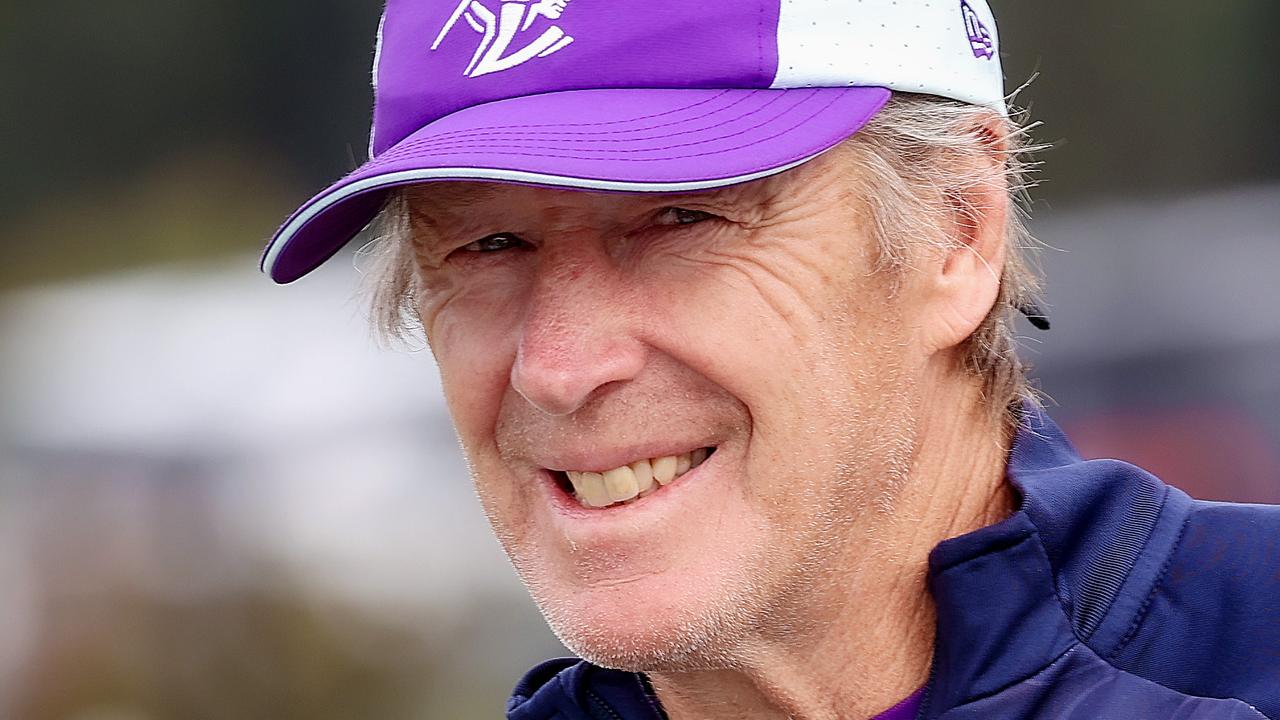
    Speaking after the final whistle, a clearly frustrated Craig Bellamy, the Storm’s veteran long-time coach, said he had no answer for the repeated collapses that have derailed his side’s season. “It’s nothing new. Our second halves have been really poor. I’m not quite sure why (but) I wish I was,” Bellamy told reporters. The coach pointed to a small handful of mitigating factors – a handful of mid-game injuries, and an lopsided 5-0 count in six-again calls that went against his side – but admitted the core issue was one the club has known about for months, yet cannot seem to fix.

    “We played some good footy in the first half. But the second half, we just couldn’t get out of our own 30-metre area,” Bellamy explained. “We aren’t getting run down; we’re getting steamrolled. We’ve always prided ourselves on if we get a lead, we’ll protect it. And we’ll protect it hard and with a bit of ferocity. But we just sort of laid down belly up and let them come and get us.”

    The Storm were already without starting stars Cameron Munster and Harry Grant, who were away on State of Origin duty for Queensland, forcing star halfback Jahrome Hughes to carry the entire load of the club’s attacking structure. Hughes, who was equally as frustrated as his coach after the full-time siren, pulled no punches in criticizing his side’s second-half attitude and decision-making.

    “I just think we’re playing dumb. We’re just doing dumb things at the wrong time,” Hughes said. “You look at our first half, it was really good and we played really well. And then we want to come out in that second half and play a completely different style of footy. You can’t do that. On top of that, we made errors – unforced errors. It was stuff that didn’t need to happen, and you can’t be doing that in today’s game. It’s just too hard to keep up if you make that many errors.”

    Bellamy admitted he still cannot identify whether the repeated collapses are rooted in physical fatigue or a mental block, but did outline a series of challenges his side has navigated through the first half of the 2026 season. The two-time defending grand final runners-up have yet to receive their first bye of the campaign, while many other competing clubs have already had two scheduled byes. The Storm have their first bye in Round 15 this year, a stark contrast to last season when the club had all three of their scheduled byes completed by the same round.

    Bellamy acknowledged that an earlier break would likely have helped his fatigued squad, but stopped short of blaming the club’s draw for the ongoing collapses. “I think if we’d had a bye by now, that would have helped, but I don’t know whether it would have solved the problem,” the coach said. “We’d be looking forward to a bye without a doubt, but we’re going to get three pretty close together by the look of it. It’d be nice if the byes were evenly spread out, but we can’t blame that on what our draw is. It probably has been a little bit tougher the last couple of weeks. We’ve had two six-day turnarounds, and they’ve been both away, so we’ve had to travel. We’ve had some injuries too, so that obviously hasn’t helped. But as I say, we should be able to do it for 80 minutes if we can do it for 40 minutes.”

    Beyond fatigue from a congested draw, the Storm have also had to navigate a devastating string of long-term injuries to key personnel that have gutted the club’s starting depth. Star edge forward Eli Katoa has missed the entire season to date after suffering a serious brain injury in pre-season, while veteran prop Tui Kamikamica remains sidelined after suffering a stroke earlier this year. In another major blow, star winger Xavier Coates has also missed every game of the 2026 campaign while recovering from an Achilles injury, with Bellamy confirming on Friday that the winger’s recovery has hit a small setback.

    Bellamy told reporters that a recent follow-up scan revealed Coates’ injury was more severe than initial assessments suggested, but added that the winger is still on track to return to the field within a month. “I think he had a second scan, and it showed up that it was worse than what they could see from the other (scan),” Bellamy said. “It’s been a long, long time. And I know X (Coates) has been getting frustrated as well. But he should be back sooner rather than later at the moment, so I think they’re thinking about three or four weeks.”

  • France’s youngest PM Attal to run for president

    France’s youngest PM Attal to run for president

    France’s political landscape has been upended by a historic announcement: 37-year-old Gabriel Attal, the youngest person to ever hold the post of French Prime Minister, officially declared his candidacy for the 2025 presidential election on Friday. The centrist contender made his announcement against a backdrop of clear blue skies in the small rural village of Mur-de-Barrez, a strategic choice aimed at addressing longstanding criticism that centrist parties lack deep roots in France’s countryside ahead of a contest that will likely be defined by the battle against the rising far-right National Rally (RN).

    In his opening remarks to supporters, Attal pushed back against the stagnation that has come to define mainstream French politics in recent years. “I can’t take this kind of French politics anymore, where it’s just 50 shades of managing decline,” he told the crowd, positioning himself as a fresh alternative to both establishment gridlock and far-right populism. When he took office as Prime Minister in 2024 at age 34, Attal made history as France’s youngest head of government, and his rapid ascent through the political ranks has already drawn widespread comparisons to current President Emmanuel Macron, who won the Elysee Palace at 39 in 2017, becoming France’s youngest head of state since Napoleon. Attal will turn 38 in March, just one month before the scheduled April presidential vote, which Macron will not contest as he steps down after two terms.

    Attal’s entry into the race creates a crowded field of high-profile candidates from across the political spectrum. He joins former center-right Prime Minister Edouard Philippe, 55, who now leads his own Horizons party, and 74-year-old hard-left leader Jean-Luc Melenchon as major declared contenders. For the far-right RN, the 2025 election represents the party’s strongest chance to seize the presidency in its history, with either party leader Jordan Bardella, 30, or former candidate Marine Le Pen expected to stand as the party’s nominee.

    A product of France’s elite education system and an openly gay politician raised in Paris, Attal has opened up about his personal identity in recent months as he lays groundwork for his campaign. In a book published last month, the candidate dedicated an entire chapter to his partner, Stephane Sejourne, a European Commissioner and former French minister whom Attal describes as “the man of my life.” Attal has also spoken publicly about his mixed cultural background and experiences of prejudice: his father is Jewish, his mother follows Russian Orthodox Christianity, and he has said he has faced both anti-Semitism and homophobia throughout his life and career.

    Attal’s short tenure as Prime Minister came to an abrupt end last year when President Macron dissolved the lower house of parliament and called snap legislative elections, a risky political gambit designed to halt the RN’s growing momentum that ultimately backfired spectacularly. The result was months of crippling political deadlock and a hung parliament, where the RN emerged as the largest single party in the legislature. Shortly after the dissolution, Attal formally distanced himself from Macron’s government, clearing the way for his independent presidential bid.

    On the campaign trail, Attal already faces stiff competition from within the centrist and center-right space, most notably from Philippe, who led Macron’s first government as Prime Minister and has built a strong independent political base. Current polling consistently shows Philippe performing better than other centrist candidates in a hypothetical runoff against the RN nominee. Still, Attal has wasted no time in positioning himself as a candidate connected to working and rural French voters, a contrast to the common critique that Macron’s Renaissance party is too rooted in Parisian elite circles. “The day we stay locked in Parisian offices, in ministries, is the day politics stops,” Attal said in his launch speech. After entering politics in his early 20s, Attal climbed the ranks quickly: he won a seat in the National Assembly in 2017, the same year Macron was first elected, before going on to serve as government spokesperson, budget minister, and education minister between 2023 and 2024. During his time as education minister, he gained national attention for his work addressing school bullying and his controversial ban on the abaya, a loose full-length garment worn by Muslim women, in public schools.

    Closing his launch speech, Attal struck an optimistic tone about France’s future, pushing back against narratives of inevitable national decline. “Having travelled a lot in France and met many French people, I’ve come to a conviction — a very strong one — that our finest chapters are still ahead of us,” he said.