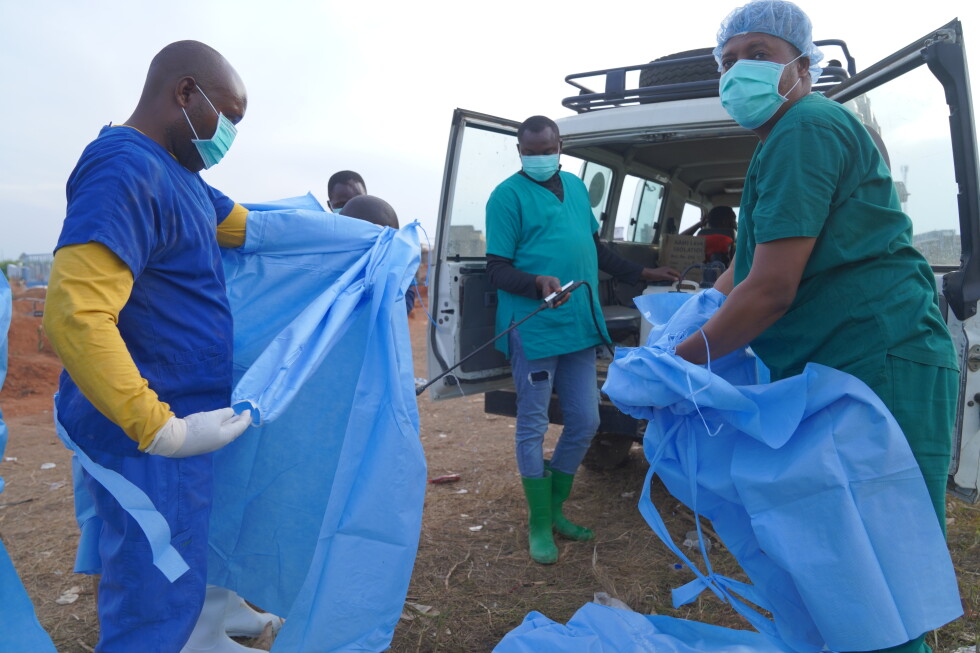
ABUJA, NIGERIA – A deadly Ebola outbreak driven by a little-understood virus strain in the Democratic Republic of the Congo has crossed a grim threshold, exceeding 5,000 confirmed cases to rank among the worst Ebola epidemics ever documented. What makes this outbreak particularly alarming for global health authorities is its origin: the Bundibugyo virus, a rare Ebola variant for which no licensed vaccine or targeted treatment currently exists. As of Sunday, Congo’s Ministry of Health has logged 5,021 total cases, with a death toll reaching 2,378, marking this not only the deadliest outbreak of Bundibugyo Ebola on record but also the deadliest Ebola outbreak in the country’s modern history. The World Health Organization (WHO) has issued a stark warning that if unbroken transmission continues, the outbreak could eventually overtake the devastating 2014–2016 West Africa epidemic that killed more than 11,000 people.
作者: admin
-

‘Incredible’: SpaceX rocket spotted off Christmas Island coast
For nearly six months, a large chunk of SpaceX rocket hardware that launched into space from the company’s Texas launch site back in July had vanished without a trace, following its controlled crash landing into the Indian Ocean. Until this week, when local residents on Australia’s remote Christmas Island made an unexpected discovery: the massive booster structure drifting off their shoreline while being towed by a commercial vessel.
Local witnesses described the sight as nothing short of incredible, with many sharing photos and videos of the large cylindrical rocket section bobbing in open water just kilometers from the island’s northern coast. The rocket had remained unaccounted for since its re-entry into Earth’s atmosphere, when SpaceX guided the discarded booster to a targeted splashdown in the Indian Ocean after completing its mission. It was expected to remain in the impact zone, but unreported ocean currents appear to have carried the large debris far off course before it was intercepted for towing.
Christmas Island, an Australian external territory located roughly 360 kilometers off the southern coast of Indonesia, is no stranger to unusual maritime sightings, but few have drawn as much immediate attention as this piece of private space infrastructure. Local authorities have not yet issued any public comment on whether the debris poses any environmental or safety risks to the island, and SpaceX has not yet responded to requests for confirmation of the discovery.
-

Julián Álvarez left out of Atletico Madrid’s La Liga opener
MADRID — A significant storyline has emerged ahead of Atletico Madrid’s 2025-26 La Liga campaign, as star Argentine forward Julián Álvarez has been omitted from the squad for the club’s opening fixture against Malaga, scheduled for Wednesday at the Metropolitano Stadium.
The situation is layered by a pre-season revelation: Álvarez made his desire to secure a transfer away from the Madrid-based club clear to Atletico’s front office during the offseason. In response, club leadership has repeatedly stated it has no intention to enter negotiations for the forward’s departure, insisting he remains part of their long-term plans.
Speaking to reporters on Tuesday, Atletico head coach Diego Simeone offered an explanation for Álvarez’s exclusion from the opening match squad, citing fitness as the core reason. The 26-year-old attacker has not yet hit the required physical match readiness after his offseason break, Simeone explained.
Despite the ongoing transfer uncertainty, Simeone made clear he still views Álvarez as a critical piece for the entire upcoming season. He went as far as naming the Argentine the squad’s top talent, and confirmed he expects the forward to be fit and available for selection for Atletico’s second league match of the season, an away trip to face Villarreal this coming Sunday.
Álvarez was not the only high-profile absence from the opening match squad. Newly signed Argentine defender Cristian “Cuti” Romero was also left out, alongside starting striker Alexander Sorloth, who is currently sidelined with an injury that rules him out of contention.
The omission comes amid ongoing speculation around Álvarez’s future, with multiple top European clubs linked with a potential move for the in-demand forward. Simeone’s comments have served to clarify the club’s current stance, quashing rumors of an intentional disciplinary exclusion and reaffirming Álvarez’s place in the team’s plans for the season, at least for the immediate future.
-

7,300 excess deaths and counting in France’s historically hot summer
As Western Europe grapples with the fallout of human-caused global warming, France is confronting the deadliest and longest sequence of summer heatwaves ever documented in the country’s modern climate record. Public health officials confirmed Wednesday that the cumulative excess death toll tied to this year’s successive extreme heat events has surpassed 7,300, a number that continues to climb as an ongoing late-season heatwave remains officially unresolved.
Three back-to-back heatwaves have stretched across France since mid-June, according to an analysis of national weather data by Agence France-Presse (AFP). The first heat spell lasted 14 days in June, followed by a 16-day event in July, and a third prolonged heatwave that began in late July had already stretched to 22 days as of August 18, with no official end declared. Combined with an earlier unseasonable warm period in late May, this brings the total number of days with extreme heat conditions to 52 since mid-June — shattering all previous records stretching back to 1947, when consistent national heat tracking began. The previous record for annual heatwave days was 33, set in 2022, while the devastating 2003 heatwave saw only 22 days of extreme heat across the country.
France’s national public health agency, Sante Public France, broke down the cumulative excess death figures: 300 excess deaths were recorded during the late May warm period, 5,764 between June 17 and 30, and an additional 1,243 between July 2 and 22, bringing the running total to 7,307. The French health ministry noted that nearly 75 percent of these excess deaths involved adults aged 75 and older, though elevated mortality was observed across all age groups starting at 45. Health officials emphasized that while the excess deaths coincide with extreme heat events, final attribution of deaths to heat will not be completed until autumn, when full mortality data is processed and analyzed.
The 2026 heat season has already broken multiple long-standing climate benchmarks for France. On June 24 and 25, the national average temperature — calculated from 30 reference weather stations combining both daytime and nighttime readings — hit 30°C, surpassing the all-time record set during the 2003 heatwave. The ongoing late-July heatwave is already the second-longest recorded nationwide, at 22 days and counting, falling just one day short of the 23-day record set in July 1983.
Unlike the 2003 heatwave, which remains the most severe on record when measuring a combination of duration and peak intensity, this year’s extreme heat has been defined by its unrelenting persistence. France has only seen two brief cool breaks between heatwaves since mid-June, lasting just three and eight days respectively, giving infrastructure and vulnerable populations little time to recover. Compounding the risk, much of France’s built environment is not adapted to sustained extreme heat: air conditioning remains relatively rare in residential and public buildings across the country, particularly in older structures.
This year’s extreme heat in France aligns with a broader trend of rising heatwave frequency across the continent and the globe. More than half of all the 54 national heatwaves recorded in France since 1947 have occurred since 2010, a trend climate scientists link directly to anthropogenic global warming. Beyond France, Western Europe saw its hottest start to summer on record in 2026, with repeated heatwaves fueling widespread drought conditions and destructive wildfires across the region.
-

Trump administration can target Ethiopians for deportation
A U.S. federal judge has cleared the way for the Trump administration to end Temporary Protected Status, a critical humanitarian immigration program, for approximately 5,000 Ethiopian nationals currently residing in the United States. This ruling marks the final step in the administration’s broader push to terminate TPS designations for more than a dozen countries, advancing its sweeping immigration enforcement agenda.
The decision by U.S. District Judge Brian Murphy reverses a prior temporary hold that had blocked the cancellation of Ethiopian TPS, and comes just months after the U.S. Supreme Court upheld similar terminations of TPS protections for thousands of immigrants from Haiti and Syria in June. Immediately following the ruling, the Department of Homeland Security issued a stark statement on social media platform X declaring that all immigrants whose TPS has been canceled are present in the country unlawfully, adding that they face only two outcomes: immediate voluntary departure or forced deportation. DHS General Counsel James Percival also celebrated the ruling in a separate post, confirming that all previously ordered TPS terminations are now fully in effect.
Temporary Protected Status is a longstanding humanitarian program that grants eligible immigrants from crisis-stricken nations temporary protection from deportation and formal authorization to work in the U.S. The designation is granted to people who have fled their home countries due to extraordinary, life-threatening circumstances such as large-scale armed conflict, natural disasters, and public health emergencies. Ethiopia was first added to the TPS program in 2022 by the Biden administration, following the outbreak of the brutal two-year Tigray war that killed hundreds of thousands of people and displaced millions more.
Today, nearly four years after the signing of the 2022 Pretoria peace agreement that formally ended the Tigray conflict, instability persists across Ethiopia. Recent weeks have seen renewed fighting and drone strikes in multiple regions of Tigray, as tensions between the Ethiopian federal government and Tigrayan regional leaders have escalated. Both sides have repeatedly accused one another of violating the terms of the Pretoria Agreement, and the TPLF, Tigray’s ruling political faction, has moved to reestablish its pre-war regional government while dissolving the interim administration appointed by Prime Minister Abiy Ahmed’s government. In turn, the federal government has accused Tigrayan leaders of colluding with neighboring Eritrea and the Sudanese military, raising widespread fears that Eritrea could reenter the conflict and spark broader regional instability. Beyond Tigray, Ethiopia also continues to face active armed insurgencies in Oromia and Amhara, its two most populous regions, leaving large swathes of the country facing ongoing violence and insecurity.
Despite this persistent crisis, DHS announced the termination of Ethiopian TPS last December under then-Secretary Kristi Noem, claiming that security conditions in Ethiopia had improved enough to no longer require the humanitarian protection. Prior to this, the administration had already ended TPS designations for multiple other nations, including Venezuela and Honduras.
Immigrant advocates and the Ethiopian plaintiffs who brought the lawsuit to block the termination have expressed deep disappointment and alarm over Murphy’s ruling, warning that the decision will put thousands of lives at grave risk. “The crisis in Ethiopia is still ongoing, and this decision puts the lives of thousands of Ethiopians living in the US at severe risk,” said Diana Konaté, deputy executive director for policy and advocacy at advocacy group African Communities Together, in comments to Reuters.
While Murphy dismissed a number of the legal claims raised by the plaintiffs in the lawsuit, he did allow challengers to move forward with litigation over one core allegation: that the Trump administration’s decision to terminate TPS for Ethiopians was motivated by illegal bias based on race or national origin, which would violate the U.S. Constitution. That legal challenge will continue even as the termination itself takes effect.
-

Angélique Kidjo makes history for Africa with star on Hollywood Walk of Fame
A decades-long career that redefined global music and bridged cross-cultural divides reached an unprecedented landmark this week, as Beninese superstar Angélique Kidjo made history by becoming the first African musician to receive a star on the iconic Hollywood Walk of Fame.
The 66-year-old five-time Grammy winner, celebrated globally for her powerhouse vocals and genre-blending sound that fuses traditional West African rhythms with funk, jazz, R&B, and pop, used the induction ceremony to highlight the foundational role African art has played in global music creation. Speaking to gathered guests at the Tuesday unveiling, Kidjo said: “We Africans just don’t know what we’ve given to the world, and what we continue giving to the world for the music to exist. Without us, there’s no music possible on this planet.”
Kidjo’s vision of global unity took center stage during her remarks, framing the honor as a validation of her long-held belief in shared humanity. “The star for me means that my vision of the world as a small village is a reality,” she said. “It doesn’t matter where we come from, what language we speak, which skin colour we have. We are human. It’s one human family.”
The ceremony drew a roster of A-list guests, including fellow Beninese-born Hollywood actor Djimon Hounsou, Academy Award-nominated actor Willem Dafoe, and Nigerian Afrobeats star Adekunle Gold, alongside Kidjo’s family and close friends. Attendees celebrated the artist’s 40-plus year career with joyous singing and dancing, honoring a discography that includes high-profile collaborations with music legends ranging from Burna Boy, John Legend and Bono to Alicia Keys.
Born and raised in southern Benin, Kidjo fled her home country for Paris in 1983 to escape oppressive rule under the then-communist government. In a 2023 interview with the BBC, she reflected on that experience, saying, “From the moment the communist regime arrived in Benin, I became aware that the freedom we enjoy can be snatched away in a second.” After building her career in Europe, she eventually relocated to the United States, where her work continued to gain international acclaim.
Today, Kidjo’s discography spans 18 full-length albums, with 17 Grammy nominations and five wins to her name. She released her latest studio project, *HOPE!!*, earlier this year, featuring production from Pharrell Williams and collaborations with Ayra Starr, Quavo, Nile Rodgers, and Diane Warren. Beyond her Grammy success, she received the 2023 Polar Music Prize and was named one of Time Magazine’s 100 Most Influential People in 2021.
Dafoe, who spoke at the induction ceremony, lauded Kidjo’s unmatched work ethic and artistic commitment, comparing her energy to James Brown, widely known as the hardest working man in show business. “She is without a doubt the hardest working woman in showbusiness,” Dafoe said. “The first time I saw Angélique perform live, I thought her music, her dancing, her commitment were incredible. She’s not only an incredible performer, songwriter and musician, but also an incredibly kind and giving person and a real deal activist.”
Beyond her artistic work, Kidjo has long been a dedicated advocate for marginalized communities. She serves as a goodwill ambassador for both Unicef and Oxfam, and co-founded the Batonga Foundation, which works to expand educational and economic opportunity for vulnerable young girls and women across Benin.
Harvey Mason Jr., CEO of the Recording Academy — the organization behind the Grammy Awards — also praised Kidjo’s cross-cultural impact during the ceremony. “She’s connected cultures, she’s crossed borders, she’s reminded audiences everywhere that while we may come from different backgrounds, her music unites in a way that few other things can,” Mason said.
Kidjo now joins more than 2,800 entertainment icons with a star on the Hollywood Walk of Fame, and is only the second person of African origin to receive the honor, following white South African actress Charlize Theron. Fans of African music can find more reporting on the continent’s vibrant creative scene at BBCAfrica.com, and follow BBC Africa on Twitter, Facebook, and Instagram for updates.
-
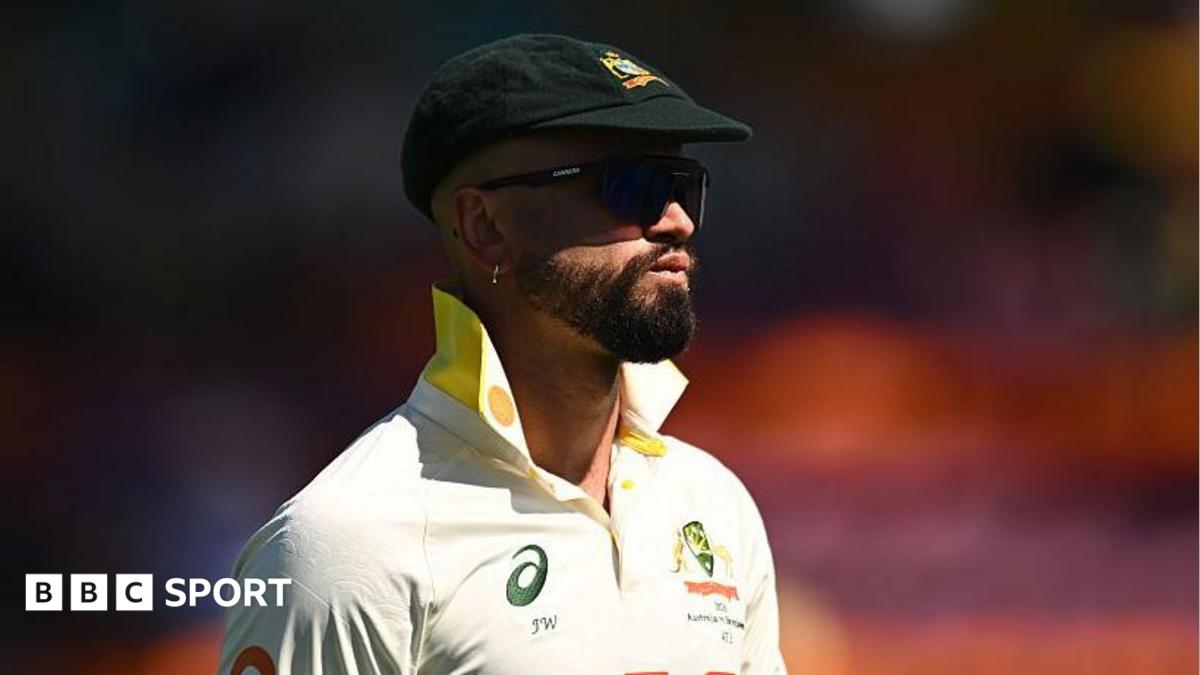
Bears sign Australia batter Weatherald for 2027
In a strategic move to bolster their batting lineup for the upcoming 2027 County Championship campaign, Warwickshire County Cricket Club has secured the signature of Australia’s Test opening batsman Jake Weatherald. The 31-year-old left-handed batter, who earned six international caps for Australia, made his Test debut during last winter’s Ashes series against England, where he notched up a total of 201 runs with a career-best Test score of 72 in Brisbane as Australia claimed a dominant 4-1 series victory.
Weatherald first appeared in English county cricket earlier this summer, signing a short-term deal with Leicestershire. His six-game stint at Grace Road proved highly productive, turning out 483 runs at an impressive average of 60.37, including one century and three half-centuries. The move to Warwickshire comes as Weatherald looks to force his way back into Australia’s national squad for the next Ashes series, which is set to take place on English soil next year. He was dropped from the Test side following Australia’s historic home defeat to Bangladesh earlier this year.
James Thomas, Warwickshire’s performance director, emphasized the club’s long-standing admiration for Weatherald’s abilities in an official statement posted to the club’s website. “Jake is a proven performer who has scored heavily at the highest level of the game, and he brings additional solid strength to our top-order batting,” Thomas explained. “He already proved his form in English conditions this summer with Leicestershire, and he will be hungry to impress selectors ahead of next year’s Ashes when he joins us.”
Across his entire first-class career, Weatherald has racked up more than 6,000 runs, including 14 centuries, cementing his reputation as a reliable and consistent run-scorer at domestic and international level. For Weatherald, the opportunity to join Warwickshire was too good to decline, with the batter highlighting the status of the club’s home ground Edgbaston as one of the most iconic venues in global cricket. “I really enjoyed my time playing county cricket in England this summer, so getting the chance to join the Bears ahead of the Ashes is incredibly exciting,” Weatherald said of his new contract.
-
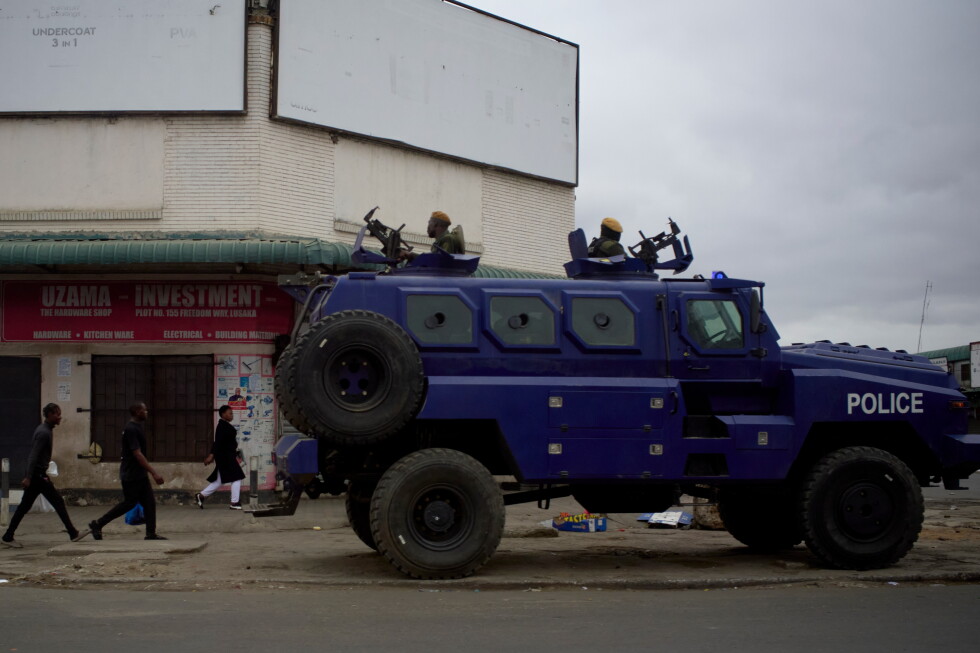
UN rights chief is concerned about arrest of opposition figures in Zambia’s election
In the wake of a contentious presidential election that has left southern Africa’s copper-rich nation in political turmoil, the United Nations’ top human rights official has sounded the alarm over the controversial arrest of 11 opposition officials, amplifying already simmering tensions over the poll’s final results.
The unrest traces back to election night last Thursday, when Zambian law enforcement units carried out a raid on a property where main opposition leader Brian Mundubile was in attendance. According to official government accounts, the operation erupted into an exchange of gunfire, after which authorities claim to have recovered high-grade military weaponry at the site. Officials assert the 11 detained opposition figures were arrested on grounds that they posed an imminent threat to national state security.
Mundubile, however, has forcefully refuted every element of the government’s narrative. He says the opposition group present at the property was entirely unarmed, and that state agents opened fire on the group unprovoked. Currently, the opposition leader says he is under informal protection over fears for his personal safety, declining to disclose his exact location to the public. He has also added another alarming allegation to the growing controversy: a former opposition minister who was present during the raid was shot and has since gone missing.
The broader election has been fraught with disruption, a notable shift for Zambia, which has a three-decade track record of largely peaceful electoral contests since it reintroduced multiparty democracy in 1991. Vote counting was suspended for multiple hours the day after polls closed, after the national electoral commission reported that election officials faced violence at scattered polling stations, and that a number of ballot papers were stolen. The commission has not named any group or individual responsible for these disruptions.
Late last week, incumbent President Hakainde Hichilema was officially declared the winner of the election, securing a second five-year term in office. Official results show Mundubile, his main challenger, garnered roughly 38 percent of the national vote. But the opposition leader has already rejected the outcome, citing widespread claimed irregularities, and has confirmed his opposition alliance intends to challenge the results in Zambia’s court system.
In a formal statement released Wednesday, UN High Commissioner for Human Rights Volker Turk called on Zambian authorities to immediately end arbitrary arrest practices, and ensure that any individuals detained in connection with post-election unrest are brought before a court without delay to face formal charges. He stressed that all detentions carried out in the wake of the election must comply fully with both international human rights norms and Zambia’s own domestic legal frameworks. As of Wednesday, the Zambian government has not publicly disclosed where the 11 arrested opposition officials are being held, nor has it confirmed what specific criminal charges they will face.
-
Iran warns Gulf countries against helping US after UAE cuts trade ties
Fresh regional tensions have erupted across the Persian Gulf this week, after the United Arab Emirates announced a full halt to all economic and commercial relations with Iran, prompting a sharp public warning from Tehran’s top military leadership against any cooperation with U.S. forces operating in the area.
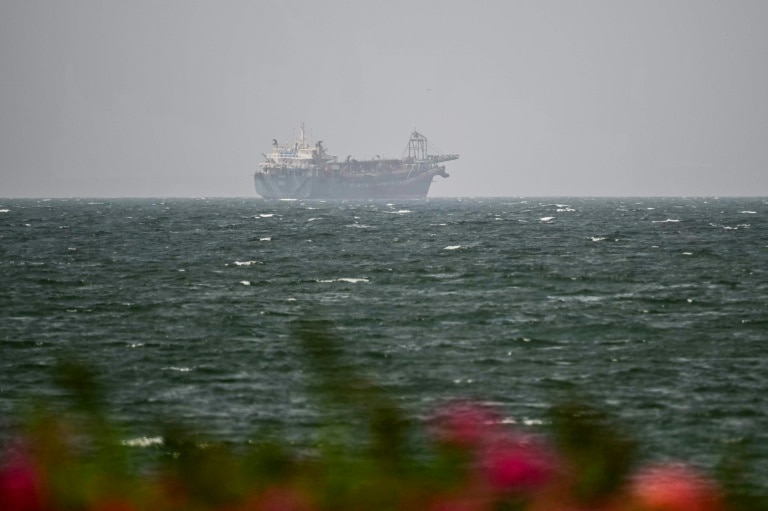
The latest escalation began on Tuesday, when UAE authorities confirmed that Iran had launched two ballistic missiles targeting commercial vessels off the Emirates’ coast. In response, the Gulf nation moved to sever all bilateral trade, financial and commercial ties with Iran indefinitely. “In light of regional escalations… all trade, commercial exchanges, and financial transactions with Iran have been halted until further notice,” Afra Al Hameli, communications director for the UAE foreign ministry, confirmed in an official statement.
This move marks a major breakdown in what had been long-standing economic ties between the two neighboring Gulf states. Prior to the outbreak of open regional conflict earlier this year, the UAE – which hosts a large Iranian expatriate community – was one of the largest trading partners for Iran, which has long been subject to sweeping U.S. economic sanctions. Since hostilities began in February, the UAE has already recalled its ambassador from Tehran and closed multiple Iran-linked community institutions including schools and a hospital. ADNOC, the UAE’s state-owned oil giant, has also seen multiple commercial tankers targeted in recent weeks amid the ongoing shipping attacks.
Just hours after the UAE’s trade cut announcement on Wednesday, Ali Abdollahi, chief of staff of Iran’s armed forces, issued a stark warning to all Gulf countries that any support for U.S. military operations in the region would be considered an act of aggression against Tehran, according to Iran’s semi-official Mehr News Agency. “Any assistance or facilitation provided to the aggressor US military amounts to participation in the US military operation,” Abdollahi said.
The Persian Gulf already hosts a sprawling network of permanent U.S. military installations, including multiple bases located within the UAE. While most Gulf states have publicly stated they will not allow the U.S. to use their territory as a staging ground for offensive attacks on Iran, Abdollahi cast significant doubt on these claims. “It seems unlikely that such a large number of military aircraft, particularly refuelling aircraft, could be present at regional bases without knowledge of host countries,” he added, noting that Iranian intelligence has full situational awareness of all military activity across the region. Multiple regional media outlets have reported that Saudi Arabia, the UAE, Kuwait and Bahrain have all launched retaliatory strikes against Iranian targets in recent weeks in response to attacks on Gulf shipping, though all four nations have publicly denied these allegations.
The current standoff centers on the Strait of Hormuz, the critical narrow trade chokepoint through which roughly a fifth of the world’s daily oil and gas shipments pass. While tensions between Washington and Tehran had seen a brief lull in recent weeks, the Strait remains one of the world’s most dangerous flashpoints. Iran imposed a blockade on the waterway months ago, and attacks on commercial transiting vessels have continued nonstop. A preliminary framework deal between the U.S. and Iran to reopen the strategic corridor collapsed earlier this year, and diplomatic efforts to restart negotiations have now fallen apart entirely.
The current cycle of open conflict began on February 28, when joint U.S.-Israeli strikes targeting Iranian assets kicked off major hostilities, to which Iran responded with a wave of missile and drone strikes targeting U.S. and allied assets across the Middle East. After months of military operations, the U.S. has failed to achieve a decisive victory over Iran, and U.S. media reports have indicated that the prolonged conflict has severely drained stockpiles of critical U.S. munitions – a claim both the Trump administration and the Pentagon have publicly denied.
In a dramatic reversal of comments made by his own senior envoy just one day earlier, U.S. President Donald Trump confirmed on Tuesday that all diplomatic talks with Iran are off the table. Trump also reiterated his extraordinary claim to the Strait of Hormuz, posting a viral social media graphic that labeled the strategic waterway “NEW U.S. Territory” – echoing a previous threat to formally annex the global energy conduit. “There are no talks or conversations going on, or scheduled, with the Islamic Republic of Iran. The Naval Blockade remains in full force and effect,” Trump wrote on his social media platform, referring to the U.S.’s own counter-blockade of all Iranian commercial ports.
Just one day before Trump’s announcement, Jared Kushner, Trump’s special envoy and son-in-law, had claimed that the two sides were holding “very positive and active conversations” to de-escalate the conflict. Trump also insisted that the Strait of Hormuz is open for commercial traffic, despite multiple shipping industry reports confirming that the Iranian blockade has cut traffic through the corridor by more than half for months.
U.S. Secretary of State Marco Rubio spoke by phone with the UAE’s national security adviser on Tuesday, reaffirming U.S. support for the Emirates and discussing joint efforts to “hold Iran and its terrorist proxies accountable” for the ongoing shipping attacks. The two sides also reaffirmed their shared commitment to ensuring unimpeded free passage through the Strait of Hormuz.
Amid the escalating standoff, Iranian officials have maintained a uniformly defiant stance against U.S. threats. Last week, Iranian parliament speaker and chief nuclear negotiator Mohammad Bagher Ghalibaf conducted an official visit to neighboring Iraq, framing the trip as an effort to build a new regional order independent of foreign interference. “The trip was aimed at strengthening the new order in the region” and boosting bilateral cooperation “without foreign interference,” Ghalibaf said. He also added that “Resistance in Iraq is also one of the elements of this country’s power,” a comment widely seen as a public endorsement of pro-Iranian armed groups operating within Iraqi territory.
-

Ukrainian man arrested in Croatia over Nord Stream pipeline blasts
Nearly three years after coordinated explosions shattered three of the four Nord Stream undersea gas pipelines linking Russia and Germany, a second Ukrainian suspect has been taken into custody in Croatia in connection with the 2022 sabotage attack, German law enforcement authorities have confirmed.
German federal prosecutors allege the detained man — identified only as trained scuba diver Vladimir Z, widely reported to be Volodymyr Zhuravlyov — was one of the underwater specialists who placed explosive devices on the pipelines in September 2022, just months after Russia launched its full-scale invasion of Ukraine. “The suspect participated in the necessary dives” to carry out the sabotage, prosecutors stated in an official release, confirming they have formally submitted a request to Croatian authorities for the suspect’s extradition to Germany.
Zhuravlyov’s path to this latest arrest dates back to 2025, when he was first detained by Polish authorities in connection with the same plot. At that time, a Polish judge rejected Germany’s extradition request, controversially ruling that if Ukraine was behind the attack, it constituted a “just” act. Zhuravlyov was subsequently released from custody, a decision that drew audible surprise from courtroom observers and left the suspect smiling as he exited the dock.
He is the second individual taken into custody in the ongoing investigation. The first, former Ukrainian military officer Serhiy Kuznetsov, was arrested in Italy in August 2025 and later extradited to Germany to stand trial. Kuznetsov has repeatedly denied any involvement in the bombings, and made his first public court appearance in Hamburg earlier this year in June.
Per the prosecution’s narrative of the plot, Kuznetsov allegedly led a small team that chartered a civilian yacht from the German port of Rostock, sailing to the pipelines’ location off the Danish Baltic Sea island of Bornholm to plant the explosives. At the time of the attack, Nord Stream 1 was actively transporting Russian natural gas to Western Europe, while Nord Stream 2 — a second parallel pipeline system — had completed construction but had not yet entered commercial operation.
If extradited from Croatia, Zhuravlyov will be brought before an investigating judge in Germany to formalize charges of sabotage and intentionally causing explosive damage. The blasts, which permanently disabled the controversial energy infrastructure project that had divided European policymakers for decades, initially triggered widespread speculation that Moscow was responsible. That narrative shifted in recent years as investigators uncovered increasing evidence pointing to possible Ukrainian involvement.
Ukrainian officials have repeatedly and unequivocally denied any connection to the attack. The case has created unanticipated diplomatic friction between Kyiv and Berlin, one of the most steadfound military and political backers of Ukraine’s defense against Russia’s full-scale invasion.
Long before the 2022 attack, the Nord Stream projects faced fierce opposition from a bloc of countries including Poland, Ukraine, and the United States. Poland was particularly vocal in its criticism, arguing the pipeline would increase Germany’s dangerous energy dependence on Russia while cutting Warsaw out of lucrative transit fees for Russian gas shipped to Western Europe.