A groundbreaking archaeological study has upended long-held scientific assumptions about the origins of human psychoactive substance use, uncovering evidence that ancient foraging communities in what is now Indonesia were consuming mind-altering betel nuts more than 25,000 years ago – making this the earliest documented case of drug use anywhere on Earth.
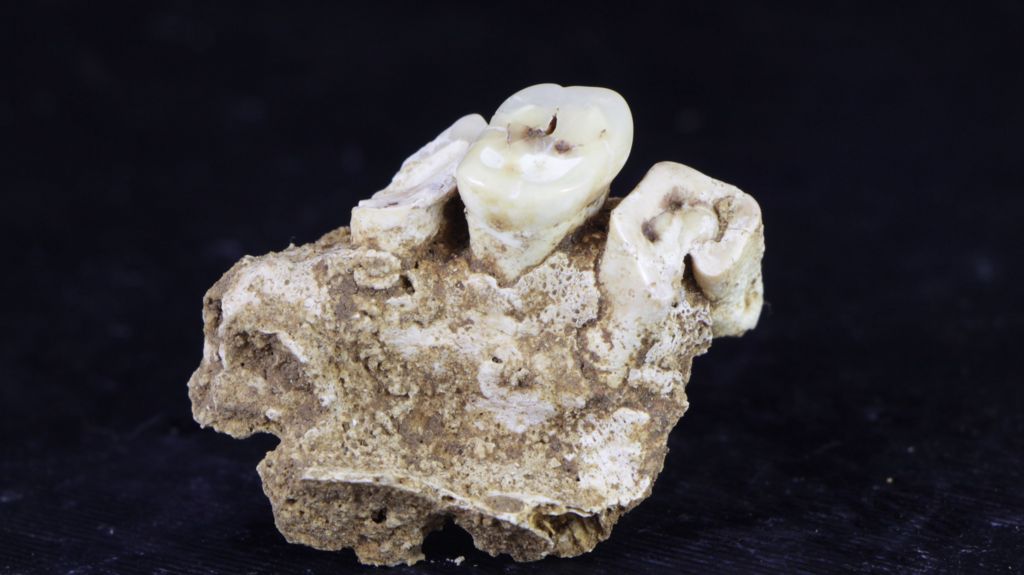
Led by a team of researchers from Australia’s Griffith University, the new study published in the journal *Science Advances* centers on a rare set of human skeletal remains recovered from the Indonesian island of Sulawesi. Two sets of forager remains were analyzed: one dated to between 25,000 and 16,000 years before present, and a second more recent specimen dating to between 7,600 and 6,300 years ago. What caught the researchers’ immediate attention was a highly unusual pattern of dental wear on both sets of remains: deep, distinct rounded grooves carved across the surfaces of the teeth.
After ruling out other common causes of dental wear, the research team linked this unique marking to the repeated practice of sucking whole betel nuts. Betel nuts, the seeds of the *Areca catechu* palm, produce well-documented psychoactive effects when consumed: users experience a mild euphoria and increased sensory alertness. Today, the substance ranks as the world’s fourth most widely used psychoactive drug, trailing only alcohol, caffeine, and nicotine in global popularity, though it remains little-known in most Western societies. Roughly 10 percent of the global population currently chews betel nut-based quid, a preparation of processed nut mixed with slaked lime and other additives that is particularly widespread across South and Southeast Asia.
Prior to this discovery, the dominant scientific consensus held that regular human drug use only emerged after the rise of agriculture, with the earliest confirmed use dating to roughly 13,000 years ago in the form of fermented alcoholic drinks. That narrative has now been called into question by the new findings. Study lead Professor Adam Brumm argues that the old framework fails to account for the deep pre-agricultural roots of psychoactive substance use.
To confirm their hypothesis about the dental wear pattern, the research team conducted controlled laboratory experiments. They soaked whole, unprocessed betel nuts in artificial saliva to replicate the conditions of prolonged sucking, and found that the practice releases enough of the nut’s active psychoactive compounds to produce measurable changes in brain function. While the mild effects of sucking whole betel nuts would likely have been less intense than the modern experience of chewing prepared betel quid, the team notes that the regular habit still carried significant health risks, including the potential to cause severe chronic gum disease.
This discovery reshapes our understanding of early human cultural practices. The research team concludes that the modern tradition of betel nut chewing can trace its origins directly back to these ancient foraging communities, indicating that many common modern drug-use behaviors have much deeper evolutionary and cultural roots than previously assumed.