作者: admin

  • Kenyan president defends US Ebola quarantine center amid protests

    Kenyan president defends US Ebola quarantine center amid protests

    NAIROBI, Kenya – A heated public and legal debate has erupted over a planned U.S.-funded Ebola quarantine facility at Kenya’s Laikipia Air Base, drawing pushback from local activists and a court suspension even as President William Ruto has publicly defended the cross-border health partnership for the first time.

    Ruto, speaking publicly on the issue for the first time on Monday evening, framed the project as a logical extension of decades of health-focused bilateral cooperation between Washington and Nairobi. He confirmed that the Laikipia site is only one of 24 Ebola preparedness facilities developed across the country under the partnership, which includes a $13 million U.S. investment in regional outbreak response. He noted that he approved the request — first made during the Trump administration — out of long-standing mutual trust between the two nations.

    The project sparked widespread public anger among Kenyans last week after U.S. officials clarified that any American Ebola patients treated under the program would not be repatriated to the United States, and would instead be held and treated exclusively at the Kenyan facility. The Law Society of Kenya and constitutional advocacy group Katiba Institute quickly filed a legal challenge to the plan, arguing that Kenya’s already overstretched, fragile public health system lacks the capacity to safely manage foreign Ebola patients.

    Kenya’s High Court acted swiftly on the challenge, first issuing an order suspending facility construction and the entry of foreign patients last Friday, before extending that blocking order this Tuesday. Despite the legal pause and widespread public protests against the project, Ruto struck a confident tone in his address, pushing back against critics by emphasizing that all 24 facilities, including the Laikipia site, would be available to treat Kenyan patients if a domestic Ebola outbreak occurs.

    “We are a responsible government. We know what we are doing. People should relax,” Ruto said. “Politicians should avoid reckless, unnecessary talk that doesn’t mean anything.”

    The debate over the quarantine facility comes as Kenya navigates a series of concurrent domestic crises, including recent deadly civil unrest linked to sky-high fuel prices, a tragic dormitory fire that killed 16 schoolgirls, and widespread public frustration over the cost of living. Ebola outbreaks across central Africa have raised regional preparedness concerns in recent years, turning this infrastructure project into a flashpoint over sovereignty, public health capacity, and bilateral cooperation.

  • Australian sharemarket slips as wage hike and Middle East uncertainty rattle investors

    Australian sharemarket slips as wage hike and Middle East uncertainty rattle investors

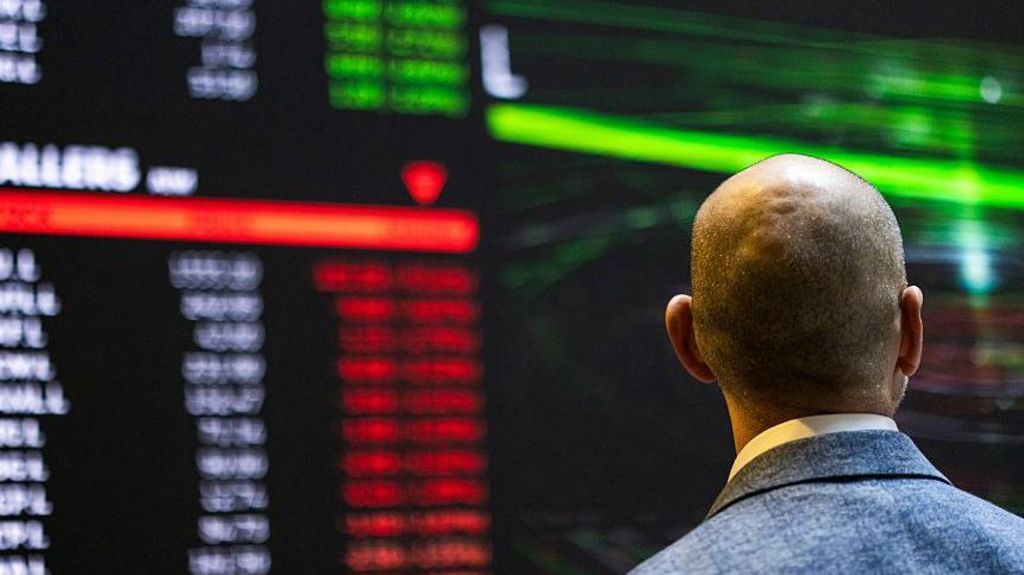
    Australia’s benchmark sharemarket delivered a rollercoaster trading session on Tuesday, closing with modest losses after a dramatic late recovery that erased most of an early 100-point drop, as conflicting geopolitical developments out of the Middle East and a larger-than-expected minimum wage hike created widespread uncertainty among investors.

    The ASX 200, Australia’s primary blue-chip index, finished the day down 20.60 points, or 0.24%, to settle at 8708.80. The broader All Ordinaries index fared slightly better, slipping just 3.80 points, or 0.04%, to close at 8966, a near-flat finish. The Australian dollar edged slightly higher, gaining 0.15% to trade at 71.75 US cents by market close.

    For market observers, the day’s wild swings were far from unusual. IG market analyst Tony Sycamore noted that Tuesday’s triple-digit intraday range marked the third such extreme shift in the past four trading sessions, and the ninth in just one month. “This is a clear sign of a market grappling for direction, primarily stuck within a stubborn 8500 to 8700 range,” Sycamore explained. The afternoon turnaround, he added, received partial support from U.S. President Donald Trump’s remarks downplaying rising geopolitical tensions that flared up over the weekend.

    Geopolitical volatility stemmed from mixed signals over a potential Middle East peace deal. While Trump posted on Truth Social that ceasefire talks between Israel and Hezbollah were “progressing”, and that a deal to extend the truce and reopen the strategically critical Strait of Hormuz could be reached within the next week, Iran pushed back against the prospect, threatening to suspend diplomatic relations and close the key shipping lane. The conflicting updates kept investors on edge through the first half of the trading day.

    Against this backdrop of macro uncertainty, the technology sector emerged as the clear outlier, driving the afternoon market recovery. The entire tech sector rallied 4.71% for the day, with standout gains from leading domestic tech names. Accounting software provider Xero climbed 7.47% to close at $87 per share, logistics tech firm WiseTech Global jumped 7.8% to settle at $42.23, and consumer safety tech company Life360 notched a 13.25% gain to reach $23.07 per share. Several other individual companies also posted strong gains on new contract wins: infrastructure firm SRG Global surged 16.56% to $3.66 after announcing $1.85 billion in new contracts spanning water, defence, energy, health and education; defence technology provider DroneShield gained 3.55% to $3.21 on a $24.9 million U.S. government contract; and medical imaging firm Pro Medicus rose an additional 10.81% to $160.08 following Monday’s announcement of a five-year contract with U.S.-based Visage Imaging.

    Offsetting these tech gains were broad declines across seven of the ASX’s 11 sectors. Healthcare stocks bore the brunt of the selling: biotech giant CSL fell 1.74% to $92.56, Sigma Healthcare dropped 1.71% to $2.87, and medical device maker ResMed slid 2.07% to $26.02.

    Retail and banking stocks also slumped after Australia’s Fair Work Commission announced a 4.75% minimum wage increase for the nation’s lowest-paid workers. The pay bump came in above current annual inflation of 4.2% and baseline national wage growth of 3.3%, stoking fears that higher labor costs will push inflation higher and force the Reserve Bank of Australia (RBA) to implement additional interest rate hikes sooner than expected.

    Major domestic retailers felt the selloff immediately: Woolworths fell 1.85% to $34.41, Coles dropped 0.74% to $21.55, and hospitality group Endeavour Group slid 1.73% to $28.40.

    AMP economist My Bui explained that while the wage adjustment was a reasonable move to prevent low-income workers from facing negative real wage growth, its broad impact across the Australian workforce could put sustained upward pressure on inflation. As a result, AMP has updated its interest rate forecast to predict a third RBA rate hike as early as November, pushing the peak cash rate for this cycle to 4.85%. Bui added that there is even a risk the hike could come sooner, in June rather than August. Prior to Tuesday’s minimum wage announcement, AMP had projected the next rate hike would not occur until August 2026.

    Despite the overall negative close, investors found some reassurance in the market’s ability to recover from early losses, with the 100-point afternoon rebound turning what looked set to be a sharp drop into a modest decline by the closing bell.

  • Social Democrat Frederiksen set to start third term as Denmark’s prime minister

    Social Democrat Frederiksen set to start third term as Denmark’s prime minister

    After two months of intensive post-election negotiations, Danish Social Democrat leader Mette Frederiksen has finalized a four-party center-left coalition government, clearing the way for her to start a third term as Denmark’s prime minister.

    The Danish Royal House confirmed Monday that the new administration will bring together Frederiksen’s Social Democratic Party, outgoing Foreign Minister Lars Løkke Rasmussen’s centrist Moderate Party, the Green Left (SF) and the Danish Social Liberal Party. In remarks Monday evening, Frederiksen outlined the coalition’s guiding mission, saying the government will govern “for the people of Denmark, for the generations to come and for the animals.”

    The path to this new government began when Frederiksen called an early general election in February. The snap vote was called amid a high-profile diplomatic standoff with former U.S. President Donald Trump over Greenland, the semi-autonomous territory within the Danish Kingdom, where Frederiksen’s straight-talking public response to Trump’s claims on the Arctic island was widely expected to give her party a popularity boost.

    When the final votes were counted in March, however, neither the left-leaning nor right-leaning political bloc secured a majority in Denmark’s 179-seat parliament. This outcome is not unusual for the Nordic nation’s proportional representation system, which almost always requires multi-party coalition negotiations to form a working government. Two initial attempts to form a government — one led by Frederiksen and a second bid by former Defense Minister Troels Lund Poulsen, who aimed to build a center-right administration — fell through before the final four-party center-left deal was reached.

    The 48-year-old prime minister, who has led the EU and NATO member state since mid-2019, saw her party take 36 seats in the latest election, a drop of 12 seats from the 2022 general election. A center-left politician with conservative positions on some key policy issues, Frederiksen has built an international profile for her unwavering support for Ukraine amid Russia’s ongoing full-scale invasion, alongside a strict approach to migration policy.

    Amid growing pressure from right-wing parties and warnings of potential increased migration flows linked to regional tensions involving Iran, Frederiksen put forward new migration proposals this year. These include a planned “emergency brake” on new asylum claims and stricter oversight of undocumented migrants convicted of criminal activity. Her outgoing administration already introduced a policy to deport foreign nationals sentenced to at least one year in prison for serious offenses.

    While Frederiksen’s popularity dipped during her second term amid a sharp nationwide rise in the cost of living, the diplomatic standoff with Trump over Greenland ultimately gave her approval ratings a significant boost. The crisis erupted when Trump pushed for U.S. control over the large Arctic island, followed by a short-lived threat in January to impose tariffs on European nations that opposed his position. Frederiksen drew a hard line in response, warning that a U.S. takeover of Greenland would lead to the collapse of the NATO alliance.

    Despite dominating the political agenda and government resources in the first months of the year, Greenland ultimately did not emerge as a major campaign issue, as all major Danish parties share broad consensus on the territory’s status within the kingdom. After Trump backed down from his tariff threat, Denmark, the U.S. and Greenland launched technical negotiations to develop a new Arctic security partnership, and the crisis has since faded from public focus. Instead, core domestic issues — including rising living costs, pension reform and a proposed national wealth tax — became the central talking points of the election campaign.

    Full policy priorities for the new coalition will be officially unveiled Tuesday, with the full list of incoming government ministers scheduled to be announced Wednesday.

  • Albanese government allocated almost $9m to defend CFMEU administrators, hearing told

    Albanese government allocated almost $9m to defend CFMEU administrators, hearing told

    The full scale of taxpayer spending on personal security for administrators of Australia’s powerful Construction, Forestry, Maritime, Mining and Energy Union (CFMEU) has been laid bare at a Senate estimates hearing, with total expenditures reaching almost $9 million amid credible death threats linked to organized crime networks.

    The disclosure on Tuesday laid out how public funds have been earmarked to protect two successive government-appointed administrators brought in to clean up the union after it was placed into voluntary administration in late 2024 over widespread allegations of organized crime infiltration.

    Michael Crosby, a former New South Wales union official who took over the administrator role last month, has been allocated $5.3 million over the next two years in the 2026-27 federal budget to cover 24/7 protective security services, officials told the hearing. His predecessor, Mark Irving, who held the position for just 20 months, received approximately $3.8 million in cumulative budget allocations for his personal safety.

    Australian Federal Police (AFP) assessments have confirmed that death threats against Irving were not only credible, but came from actors with both the means and motive to carry out the attacks, senior officials confirmed. Most threats did not originate from rank-and-file CFMEU members, instead coming from external organized crime groups that had previously operated illegal networks within the union. As of March 31, the AFP is running three active investigations into unlawful activity across the building and construction sector, and has already secured a number of high-profile arrests linked to the probes.

    The hearing also revealed that Environment Minister Murray Watt received close personal protection for an undisclosed period of time amid the ongoing tensions. Watt declined to share further details about his security arrangements in the public forum, noting that disclosing such information posed unnecessary safety risks. ACTU Secretary Sally McManus also received targeted security provision, but government officials confirmed that those costs were not covered by public funds.

    Watt, who defended the decision to draw on taxpayer funds rather than passing costs to CFMEU members, argued that the government carried a core responsibility to protect administrators appointed under federal legislation. The government’s move to place the CFMEU into administration disrupted the illegal business models of criminal networks and corrupt actors, many of whom held ties to both rogue union officials and unethical building employers, he explained.

    Pressed on why the CFMEU or its membership do not cover the security costs, Watt pushed back against alternative funding models. He questioned whether it would be fair to pass the costs to either construction workers (as CFMEU members) or to the broader industry of building employers, pointing out that the cleanup of criminal infiltration is a public responsibility mandated by the Australian Parliament. “Given the parliament had set up this administration scheme, there was a responsibility on government to pay for the personal protection of the person who took on that role from threats being made from outside the union,” Watt said.

  • Pay workers ‘as much as possible’, Nvidia’s Huang says

    Pay workers ‘as much as possible’, Nvidia’s Huang says

    As the global tech industry gathers in Taipei for the 2026 edition of Computex, one of the world’s largest annual technology trade shows, Nvidia chief executive Jensen Huang has sparked industry-wide discussion with comments on worker compensation, just days ahead of his planned trip to South Korea. Huang’s remarks came in response to questions about a recent high-profile labor dispute at Samsung Electronics, where a looming strike by the company’s union was only avoided after leadership struck a last-minute bonus agreement with staff.

  • Eels don’t name Mitch Moses in potential Origin blow as Bulldogs star misses training

    Eels don’t name Mitch Moses in potential Origin blow as Bulldogs star misses training

    The build-up to the second State of Origin clash and this weekend’s round of the National Rugby League has been thrown into disarray, with a wave of injury updates, unexpected selection calls and Origin selection dilemmas shaking up teams across the competition.

    The most high-profile disruption hits New South Wales Blues head coach Laurie Daley, who faces a critical selection call in his playmaker group just weeks out from Origin II on June 17. Eels star Mitchell Moses, who was in line for a recall to the Blues starting side after missing the series opener with a hamstring injury, has not been named in Parramatta’s squad for their Monday night showdown against Canterbury Bulldogs. Initial assessments had suggested the injury was minor, but the latest Parramatta injury update confirms Moses is not expected to return to competitive play until either round 15 or 16.

    This timeline rules Moses out of any chance to prove his match fitness before the Blues name their Origin II squad early next week. With Moses sidelined, 22-year-old Ethan Strange, who was thrown into the starting five-eighth role last minute after Moses’ injury two days before Origin I, is now the firm favourite to retain his spot in the side for the second clash.

    Over at the Bulldogs, captain Stephen Crichton’s absence from Tuesday’s training session sparked rumours of a fresh shoulder injury ahead of both Monday’s club clash and potential Origin selection. However, the club confirmed the rest was planned, as the side is gearing up for five days of leave following the match. Bulldogs winger and potential Origin debutant Jacob Kiraz, who also took a light session on an exercise bike instead of full training, backed up his captain’s fitness.

    “I’m sure ‘Critta’ will be sweet,” Kiraz told reporters, addressing the injury rumours. The young winger, who is currently in contention to earn his first Origin cap, said planned rest was a necessary move following a string of physically demanding matches. “It’s a long turnaround. We’ve had a couple of big games the last couple of weeks, so probably the best thing is to (rest a bit),” he explained. When asked about his own potential Origin selection, Kiraz remained focused on his club commitments: “I guess it’s always nice to hear (your name in the mix). I know it’s probably the answer none of you want to hear, but being honest, I’m just worried about the Bulldogs at the moment. The Blues had a good win and I thought (Blues rookie Tolu Koula) has been outstanding.”

    In another major selection shock, Brisbane Broncos coach Michael Maguire has dropped starting five-eighth Ezra Mam following the side’s embarrassing home defeat to the previously winless St George Illawarra Dragons. Tom Duffy will step into the starting five-eighth role for the Broncos, with Xavier Willison shifting to lock, and Grant Anderson returning from injury to fill the gap left by injured starter Pat Carrigan.

    South Sydney Rabbitohs have received a major boost ahead of their upcoming clash, with star trio Brandon Smith, David Fifita and Campbell Graham all named to return to the starting side. Their returns offset the continued absence of star fullback Latrell Mitchell, who remains sidelined with his ongoing injury issue.

    The Rabbitohs’ opponents Manly Sea Eagles have been given clearance to select Blues winger Tolu Koula, who missed recent action after suffering a head knock in the opening Origin clash. Koula’s Blues teammate Haumole Olakau’atu is also set to return to the Manly side this week.

    Other key selection updates across the league include: Sydney Roosters winger Mark Nawaqanitawase has been named in the reserves, in line for an earlier-than-expected return from injury; Newcastle Knights will field Fletcher Sharpe at five-eighth after regular starter Sandon Smith was ruled out with a calf injury; defending premiers Penrith Panthers have welcomed back their entire Origin trio – Nathan Cleary, Brian To’o and Isaah Yeo – who were rested for the previous round; and Cronulla Sharks will hand a starting start to hooker Jayden Berrell after rookie Blues representative Blayke Brailey suffered a broken arm in recent action.

  • China cracks down on ‘ghost kitchens’ in food delivery apps

    China cracks down on ‘ghost kitchens’ in food delivery apps

    China has rolled out new regulatory measures targeting unlicensed “ghost kitchens” — unregulated takeaway-only operations that lack physical storefronts — following a high-profile food safety scandal that exposed widespread industry misconduct. The new rules, which entered into force on Monday, require all food delivery platforms to verify that every listed merchant matches a registered physical operating location, and mandate vendors to clearly disclose if they do not offer on-site dine-in services.

    The crackdown traces its origins back to a consumer complaint filed in Beijing last year. A local customer received a poorly made cake decorated with non-edible flowers from an online merchant, prompting an official investigation that uncovered a large-scale illegal operation. Officials discovered the cake chain listed nearly 380 store locations across major Chinese delivery platforms, but operated zero physical outlets, and used falsified business licenses to pass platform reviews. Further probes found the chain outsourced all orders to a third-party order-matching platform that awarded jobs to the lowest-bidding unvetted vendors, with more than 3.6 million cake orders processed across two matching platforms.

    A subsequent national inspection uncovered 67,000 unregistered ghost shops across seven of China’s largest food delivery platforms. State news agency Xinhua reported that these illegal operations and third-party intermediaries had formed a collusive illegal supply chain, with major delivery platforms turning a blind eye to violations to retain market share. One unnamed platform employee admitted to regulators that overly strict merchant reviews would push business to competing platforms, highlighting the cut-throat competition that has long defined China’s food delivery sector.

    The hyper-competitive market has already drawn regulatory scrutiny in recent years. A destructive price war between major platforms in 2024 prompted government warnings over the “race to the bottom” that not only compromised food safety, but also pushed delivery riders to accept extremely tight delivery deadlines for meager pay. In April 2025, China’s State Administration for Market Regulation imposed a total 3.6 billion yuan ($530 million) fine on seven leading e-commerce platforms including Taobao, JD.com, Meituan and Pinduoduo, with most penalties tied to illegal ghost kitchen operations.

    As the nationwide crackdown intensifies, regulators and industry players have rolled out new targeted measures to improve transparency. In the eastern city of Hangzhou, more than 20 registered takeaway vendors have installed live-streaming “transparent kitchen” systems that allow customers to watch food preparation in real time. In neighboring Anhui province, authorities have partnered with major platforms including Meituan, Taobao and JD.com on a new enforcement agreement that uses artificial intelligence to monitor kitchen operations, and offers financial rewards to delivery riders who report unlicensed ghost kitchens.

    This latest regulatory push marks the most comprehensive effort to date to clean up China’s $100-billion-plus food delivery sector, addressing longstanding consumer concerns over unregulated food preparation and unsafe operating practices.

  • Between ballet and war: Japanese dancers pursue dreams in Russia

    Between ballet and war: Japanese dancers pursue dreams in Russia

    Deep in Russia’s historic Volga region city of Nizhny Novgorod, two Japanese ballet artists have built their entire lives around the rigorous, demanding craft they traveled halfway across the world to master – even as geopolitical upheaval and the ongoing war in Ukraine have created unexpected disruptions to their daily routines.

    Thirty-two-year-old Jotaro Kanazasi first made the decision to move to Russia 14 years ago, drawn to the country’s unrivaled legacy in classical ballet, home to world-renowned institutions like Moscow’s Bolshoi Theatre and St. Petersburg’s Mariinsky Theatre. Speaking in measured Russian, Kanazasi explains his choice was rooted in a desire to grow and reach his full potential as a professional dancer. Today, he holds the position of principal dancer at the Nizhny Novgorod Opera and Ballet Theatre, located roughly 400 kilometers east of Moscow, where he seamlessly transitions from iconic role to iconic role: the scheming sorcerer Rothbart in Swan Lake, the tragic noble Albrecht in Giselle, and more. When many foreign artists made the choice to leave Russia immediately following the start of the 2022 full-scale military campaign in Ukraine, Kanazasi made the deliberate decision to stay.

    For 20-year-old Haruka Takemi, who has now lived in Russia for six years, the draw of Russian ballet was similarly life-altering. “I love Russian ballet and I have always dreamed of being a professional dancer, but Japan does not have a national-level ballet school that offers the training I needed,” she explains. “That is why I chose to move here.”

    Both dancers say they prioritize their craft above all else, and only follow breaking news about the war in Ukraine very loosely. Takemi notes that it is her family back in Japan that monitors current events closely, constantly sharing news articles and updates to make sure she stays informed. That dynamic reflects the broader geopolitical context of their lives: Japan has stood firmly with Ukraine since the start of the Russian offensive, joining Western nations in imposing sweeping economic sanctions on Moscow, while Russia has introduced strict new censorship laws over the course of its military campaign, unmatched since the Soviet era.

    “I am either at the theatre rehearsing or performing, or at home resting – it is a constant cycle. I work all the time, and I only focus on ballet,” Takemi says, adding that her family back home is the one who carries the worry for her safety.

    Nizhny Novgorod, despite sitting more than 800 kilometers from the Ukrainian border, has not escaped the ripple effects of the conflict. In recent weeks, a major Lukoil oil refinery located in the nearby city of Kstovo was hit in a Ukrainian cross-border strike, part of Kyiv’s regular targeting of Russian military and energy infrastructure designed to weaken Moscow’s ability to sustain its offensive. The digital space has also seen significant changes: Russia has imposed sweeping new digital restrictions over recent months, particularly limiting open access to mobile internet, and many popular foreign apps are now blocked.

    “There are difficulties with internet access, so we have to use a VPN to connect,” Takemi says. “But it is important for me to stay in touch with my family, so they know I am safe.”

    Valeri Konkov, director of the Nizhny Novgorod ballet company, notes that Japanese dancers are far from an anomaly in Russia’s professional ballet scene. Many are graduates of the country’s most elite ballet academies, including the Moscow State Academy of Choreography, St. Petersburg’s legendary Vaganova Academy, and the Perm State Ballet School. For Japanese artists, building a sustainable career in classical ballet in their home country remains incredibly challenging, even now. Despite all the disruptions and uncertainties that have come with the conflict, Kanazasi says his resolve to stay has never wavered.

    “As long as I am still able to dance, I will stay here,” he says.

  • Teen, 16, dies after allegedly stolen car rolls on Stuart Hwy in the Northern Territory

    Teen, 16, dies after allegedly stolen car rolls on Stuart Hwy in the Northern Territory

    A 16-year-old boy has lost his life after a stolen vehicle, at the center of a damaging multi-vehicle crime spree through a Northern Territory town, crashed and rolled on one of Australia’s major intercity highways. The sequence of dangerous events unfolded on Monday night in Katherine, a regional community located roughly 320 kilometers southeast of Darwin, according to Northern Territory Police.

    Authorities allege the trouble began just after 10:30 p.m. Monday, when offenders broke into a residential property on Zimin Drive and stole a parked car. The group of young people driving the stolen vehicle traveled to the local Charles Darwin University campus, where they abandoned the first stolen car before stealing two additional vehicles from the area.

    Over the following hours, the young drivers engaged in reckless, threatening behavior through Katherine’s central business district, police confirmed. The occupants of the stolen vehicles taunted responding officers and hurled objects, including a hammer, at police patrol cars while driving erratically through the town center. Acting Commander Mark Grieve of NT Police clarified that officers made the decision not to initiate a pursuit, a choice driven by the extremely dangerous driving that already put innocent bystanders at risk. In a separate pre-crash incident, Grieve added, a stolen vehicle drove past a parked police car whose officers were responding to an unrelated call, and threw objects at the unoccupied patrol vehicle.

    By roughly 6 a.m. the next day, Tuesday, one of the stolen vehicles carrying a group of teenagers rolled over on the Stuart Highway just north of Katherine. First responders arrived quickly at the crash site, transporting three 14-year-olds to a local hospital for treatment of injuries. The 16-year-old driver suffered critical trauma and could not be saved, dying at the scene of the crash.

    In the aftermath of the incident, police located two additional girls near the crash site, and investigators are working to confirm how many people total were in the vehicle when it rolled. The Stuart Highway was temporarily closed to all traffic to allow for forensic crash investigation, reopening once evidence collection was completed.

    Grieve described the incident as both tragic and deeply complex, noting that the series of dangerous criminal acts put the entire local community at grave risk. “We are investigating a significant series of offences, as well as the death of a 16-year-old male following extremely dangerous driving behaviour that placed the lives of the community at risk,” Grieve told reporters. “Our investigators will work to establish the full circumstances surrounding these events, and we continue to appeal to anyone with information to come forward.”

    The acting commander also highlighted a growing, nationwide concern: rising dangerous criminal activity among young people, a trend that has impacted the Northern Territory in particular. “It’s a trend and one we’re probably starting to see more of, we’ve been seeing it for quite a bit of time, unfortunately youth engage in this type of behaviour and see it as a bit of a game,” he said. “The youth space we’re dealing with is quite complex in nature, in the NT we’re trying to grapple with an increase in youth behaviours in the criminal space. It’s not only NT but Australia-wide and it’s not just a policing problem, it needs to be a whole community approach whether education, health or parental responsibility, it’s a big question to answer.”

    NT Police are continuing to urge any member of the public with details about the sequence of events leading to the crash to contact their investigators to assist with the ongoing inquiry.

  • Steampunk festival creates an unlikely capital for Victorian style and sci-fi oddity in New Zealand

    Steampunk festival creates an unlikely capital for Victorian style and sci-fi oddity in New Zealand

    Nestled along the coast of New Zealand’s South Island, the quiet rural town of Ōamaru — population 14,000, plus a colony of 3,000 endangered native penguins — transforms every year into a bustling, fantastical parallel world where Victorian-era steam power meets imaginative science fiction, for one of the world’s most beloved steampunk festivals.

    This year marked the event’s 17th iteration, drawing thousands of enthusiasts from across New Zealand and around the globe to embrace the genre’s core ethos: the stranger, the better. For four days, the town’s perfectly preserved 19th-century Victorian harbor street becomes a playground for eccentric personas, handcrafted costumes, and one-of-a-kind creative traditions built around the steampunk movement.

    Unlike rigid historical reenactment, steampunk re-imagines the Victorian era, blending its signature aesthetics and steam-based mechanics with modern sci-fi creativity to build a world where the industrial revolution never ended and imagination sets the only limit. The movement also prioritizes do-it-yourself craft and sustainable upcycling: enthusiasts spend months honing sewing, metalworking, and hat-trimming skills to build custom outfits that match their invented alter egos.

    Many attendees lead ordinary lives as bricklayers, engineers, farmers, and artists the rest of the year, and many describe themselves as shy in daily life. But at the festival, they step into entirely new identities. For festival regular Juliet Thorn, who attends as the charismatic Lady Sarsaparilla Ovabyte alongside her partner Greg “Captain Bob McSpoon” Thorn, the experience is transformative. “The first time you dress up and go out in public is really scary and then people get such a buzz out of it,” she explained. “It’s so cool that you take on a different personality.”

    Over nearly two decades, the festival has spawned its own unique set of quirky sporting events and community traditions. Hundreds of attendees pack into historic community halls to compete in unconventional contests, from speed cookie-dunking (where the goal is to dunk, then eat a soggy cookie faster than any competitor) to theatrical parasol dueling, judged just as much on style as speed. One of the most popular events is teapot racing, created by local enthusiast Ross McKay, now known by his steampunk persona Captain Roscoe Dangerfield. In the contest, participants navigate remote-controlled vehicles fitted with teapots through a tricky obstacle course, much to the delight of cheering crowds. McKay, a retired banker and self-described history geek and sci-fi nerd, originally thought steampunk was just “a bunch of weirdos” when he first saw photos, but quickly fell in love with the community. He has since brought teapot racing to steampunk events around the world, joking that “it’s lots of fun and the judges will take bribes.”

    This small South Island town was an unlikely pick to become the self-proclaimed steampunk capital of the world. For decades, Ōamaru was little more than a rest stop for travelers driving between the larger cities of Christchurch and Dunedin, overshadowed by the dramatic Lord of the Rings-era film locations that draw tourists to nearby regions. What put Ōamaru on the global steampunk map is its architectural quirk: a fully intact Victorian-era commercial street built from pale local stone, a leftover from the 1800s when Ōamaru was a bustling export hub shipping New Zealand meat, wool, and grain to Britain. Today, those historic buildings serve as the perfect immersive backdrop for the festival, which coexists peacefully with the town’s separate, historically accurate Victorian celebration held later in the year.

    Unlike the rigid social hierarchies of the actual 19th century, steampunk rewrites Victorian social norms to create an inclusive, equal-opportunity community. “Women, unlike in Victorian times, can be anything,” explained Iain Clark, the festival’s co-founder, who goes by the steampunk name Agent Darling. “We have female engineers, captains of industry, captains of airships, adventurers, explorers, scientists.” There are no hard rules for costumes or personas: attendees regularly bring multiple outfits to swap over the four-day event, and no concept is too wild to turn heads. Over the course of the festival, a Star Wars stormtrooper might wander past a group of costumed “wolves,” while first-time attendees jump straight into the fun, no experience required.

    For long-time guests, the community’s radical acceptance and celebration of creativity is what keeps them coming back. “You can be creative and you can be somebody else and no one cares,” said John Syben, attending his fourth festival. His partner Chris Sinclair noted that the pair have grown bolder with their costumes every year, adding: “There’s always someone who’s more nuts than you.” For countless steampunks, the small New Zealand festival has become more than an event — it’s their tribe.