On a Wednesday evening just off the coast of a popular Philippine tourist destination, a routine overnight ferry journey devolved into chaos and tragedy when a sudden fire tore through the MV June Aster, leaving at least five people dead and 86 others unaccounted for in what is shaping up to be one of the deadliest maritime disasters the Southeast Asian nation has seen in recent years.
The incident unfolded roughly 1.2 nautical miles (2.2 kilometers) from Marcilla village, near the port of Coron on Palawan province – a top beach and island getaway that draws millions of domestic and international travelers annually. Owned by local operator Atienza Shipping Lines, the ferry departed Manila’s Port of Baseco at 8:13 p.m. local time Tuesday, carrying more than 100 passengers and a cargo hold loaded with vehicles including motorcycles, an electric car, a forklift, and a pick-up van, bound for an arrival in Coron by 6 p.m. Wednesday. The first alert of the blaze was raised at 6:45 p.m. Wednesday by a shipping line staff member, according to the Philippine Coast Guard. Initial accounts from survivors point to a loud explosion originating in the cargo hold that sparked the fast-spreading flames.
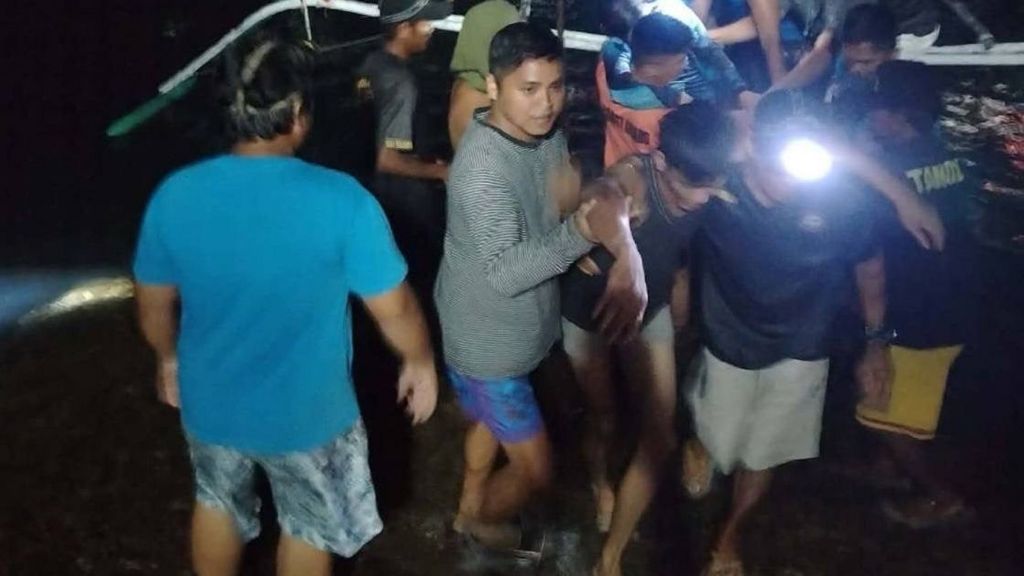
For passengers on board, the spread of fire triggered a frantic race for survival. Roland Lerma, a 30-year-old construction worker from Leyte province who was traveling to Coron for work with five neighbors, recalled how screams of panic cut through the night as hot smoke and heat rapidly filled the vessel. As he scrambled to reach the deck and escape the advancing fire, Lerma slipped and fell, where he was trampled by other fleeing passengers before he could regain his footing and jump overboard into the dark ocean. To stay afloat, he discarded all his belongings – his clothing, mobile phone, and bags – before floating on his back for nearly two hours in cold water waiting for rescuers to reach him. “If the rescue had been delayed, I would have definitely died last night,” Lerma told the BBC from a Coron hospital, where he is recovering from bruises and chest pain. He recounted seeing other passengers, including children, jump into the water alongside him, and that two Chilean travelers had been staying in the bunks adjacent to his on the overnight ferry. Authorities later confirmed that the two Chilean nationals were among the 43 people pulled alive from the water.
In the aftermath of the blaze, search and rescue operations are still ongoing, but authorities confirmed Thursday that the fire on the half-submerged ferry has not yet been fully extinguished, with visible smoke still billowing from the vessel. Many of the rescued survivors remain in a state of shock following their harrowing escapes, a Philippine Coast Guard spokesperson told local media.
For the families of the missing, the hours since the fire have been an agonizing, sleepless wait for any word of their loved ones. Anelyn Magbanua, whose husband Marlon was on the ferry returning to Coron after visiting their two college-aged children in Manila, said she had gone to bed Wednesday night expecting him home within hours, only to be woken by news of the disaster. She rushed to the local hospital Thursday hoping he had been rescued, but officials have yet to account for him. “I have been crying and praying since last night,” Magbanua told reporters outside the hospital, describing her overwhelming anxiety as she waits for updates.
Shipping accidents are a relatively common occurrence in the Philippines, an archipelagic nation where maritime travel is the primary mode of transport between islands for millions of residents. This incident has already emerged as one of the deadliest such events in recent years, with the death toll expected to rise as search operations progress and the missing are accounted for. Atienza Shipping Lines, the operator of the MV June Aster, released a statement Thursday saying it is cooperating fully with government investigations into the cause of the fire and expressed “profound sadness” over the tragic outcome.