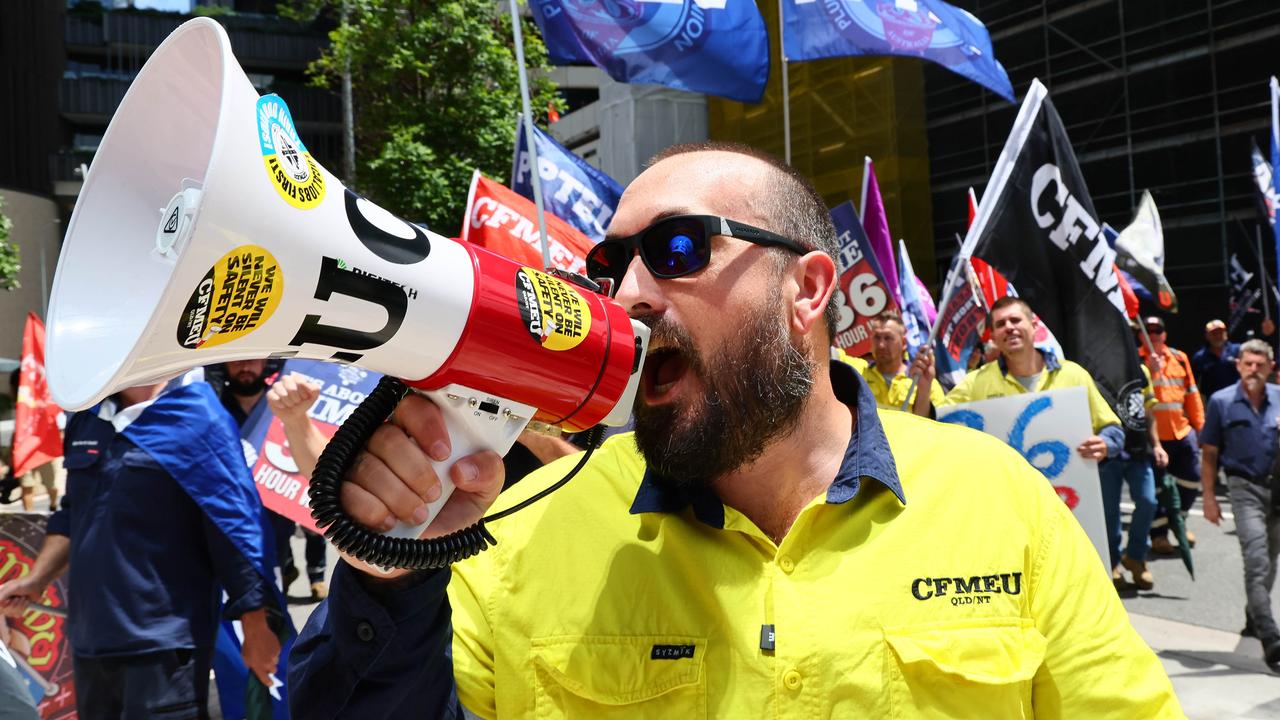
The full scale of taxpayer spending on personal security for administrators of Australia’s powerful Construction, Forestry, Maritime, Mining and Energy Union (CFMEU) has been laid bare at a Senate estimates hearing, with total expenditures reaching almost $9 million amid credible death threats linked to organized crime networks.
The disclosure on Tuesday laid out how public funds have been earmarked to protect two successive government-appointed administrators brought in to clean up the union after it was placed into voluntary administration in late 2024 over widespread allegations of organized crime infiltration.
Michael Crosby, a former New South Wales union official who took over the administrator role last month, has been allocated $5.3 million over the next two years in the 2026-27 federal budget to cover 24/7 protective security services, officials told the hearing. His predecessor, Mark Irving, who held the position for just 20 months, received approximately $3.8 million in cumulative budget allocations for his personal safety.
Australian Federal Police (AFP) assessments have confirmed that death threats against Irving were not only credible, but came from actors with both the means and motive to carry out the attacks, senior officials confirmed. Most threats did not originate from rank-and-file CFMEU members, instead coming from external organized crime groups that had previously operated illegal networks within the union. As of March 31, the AFP is running three active investigations into unlawful activity across the building and construction sector, and has already secured a number of high-profile arrests linked to the probes.
The hearing also revealed that Environment Minister Murray Watt received close personal protection for an undisclosed period of time amid the ongoing tensions. Watt declined to share further details about his security arrangements in the public forum, noting that disclosing such information posed unnecessary safety risks. ACTU Secretary Sally McManus also received targeted security provision, but government officials confirmed that those costs were not covered by public funds.
Watt, who defended the decision to draw on taxpayer funds rather than passing costs to CFMEU members, argued that the government carried a core responsibility to protect administrators appointed under federal legislation. The government’s move to place the CFMEU into administration disrupted the illegal business models of criminal networks and corrupt actors, many of whom held ties to both rogue union officials and unethical building employers, he explained.
Pressed on why the CFMEU or its membership do not cover the security costs, Watt pushed back against alternative funding models. He questioned whether it would be fair to pass the costs to either construction workers (as CFMEU members) or to the broader industry of building employers, pointing out that the cleanup of criminal infiltration is a public responsibility mandated by the Australian Parliament. “Given the parliament had set up this administration scheme, there was a responsibility on government to pay for the personal protection of the person who took on that role from threats being made from outside the union,” Watt said.