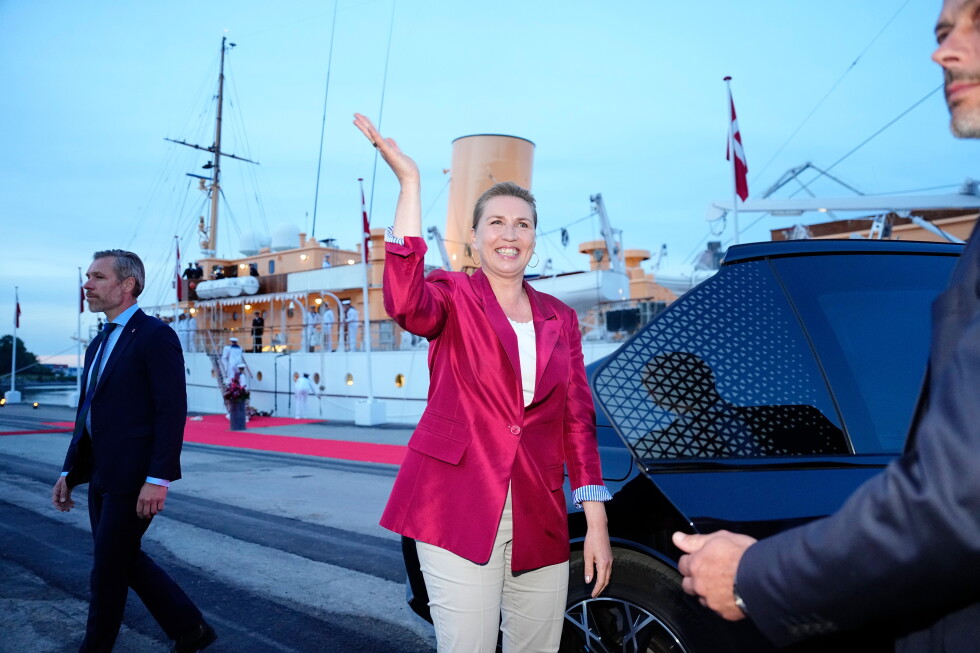
After two months of intensive post-election negotiations, Danish Social Democrat leader Mette Frederiksen has finalized a four-party center-left coalition government, clearing the way for her to start a third term as Denmark’s prime minister.
The Danish Royal House confirmed Monday that the new administration will bring together Frederiksen’s Social Democratic Party, outgoing Foreign Minister Lars Løkke Rasmussen’s centrist Moderate Party, the Green Left (SF) and the Danish Social Liberal Party. In remarks Monday evening, Frederiksen outlined the coalition’s guiding mission, saying the government will govern “for the people of Denmark, for the generations to come and for the animals.”
The path to this new government began when Frederiksen called an early general election in February. The snap vote was called amid a high-profile diplomatic standoff with former U.S. President Donald Trump over Greenland, the semi-autonomous territory within the Danish Kingdom, where Frederiksen’s straight-talking public response to Trump’s claims on the Arctic island was widely expected to give her party a popularity boost.
When the final votes were counted in March, however, neither the left-leaning nor right-leaning political bloc secured a majority in Denmark’s 179-seat parliament. This outcome is not unusual for the Nordic nation’s proportional representation system, which almost always requires multi-party coalition negotiations to form a working government. Two initial attempts to form a government — one led by Frederiksen and a second bid by former Defense Minister Troels Lund Poulsen, who aimed to build a center-right administration — fell through before the final four-party center-left deal was reached.
The 48-year-old prime minister, who has led the EU and NATO member state since mid-2019, saw her party take 36 seats in the latest election, a drop of 12 seats from the 2022 general election. A center-left politician with conservative positions on some key policy issues, Frederiksen has built an international profile for her unwavering support for Ukraine amid Russia’s ongoing full-scale invasion, alongside a strict approach to migration policy.
Amid growing pressure from right-wing parties and warnings of potential increased migration flows linked to regional tensions involving Iran, Frederiksen put forward new migration proposals this year. These include a planned “emergency brake” on new asylum claims and stricter oversight of undocumented migrants convicted of criminal activity. Her outgoing administration already introduced a policy to deport foreign nationals sentenced to at least one year in prison for serious offenses.
While Frederiksen’s popularity dipped during her second term amid a sharp nationwide rise in the cost of living, the diplomatic standoff with Trump over Greenland ultimately gave her approval ratings a significant boost. The crisis erupted when Trump pushed for U.S. control over the large Arctic island, followed by a short-lived threat in January to impose tariffs on European nations that opposed his position. Frederiksen drew a hard line in response, warning that a U.S. takeover of Greenland would lead to the collapse of the NATO alliance.
Despite dominating the political agenda and government resources in the first months of the year, Greenland ultimately did not emerge as a major campaign issue, as all major Danish parties share broad consensus on the territory’s status within the kingdom. After Trump backed down from his tariff threat, Denmark, the U.S. and Greenland launched technical negotiations to develop a new Arctic security partnership, and the crisis has since faded from public focus. Instead, core domestic issues — including rising living costs, pension reform and a proposed national wealth tax — became the central talking points of the election campaign.
Full policy priorities for the new coalition will be officially unveiled Tuesday, with the full list of incoming government ministers scheduled to be announced Wednesday.